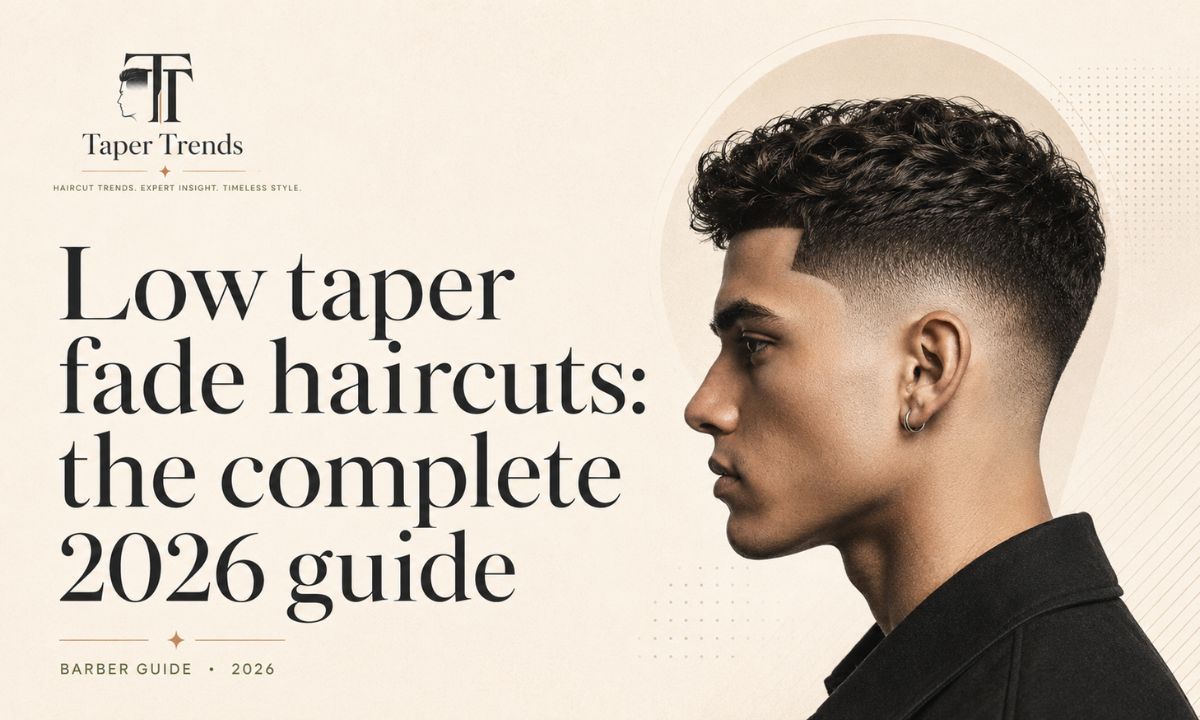
A low taper fade is the kind of haircut that quietly does a lot of work. It keeps the sides and back clean, leaves you room to do whatever you want on top, and grows out without looking like a mistake. That last part is underrated — most fades start looking shaggy within a week or two, but a low taper holds its shape longer because the contrast is gentle to begin with.
That mix is why low taper fade haircuts land on nearly every “best men's haircuts” list for 2026, and why barbers keep steering undecided clients toward the style. It's also a forgiving first fade if you've never gone shorter on the sides before, since the soft blend hides small imperfections instead of putting them on display. This guide covers what the cut is, how it differs from a plain low fade, which versions suit which hair types, and how to ask for it without walking out with something you didn't picture.
What is a low taper fade haircut?
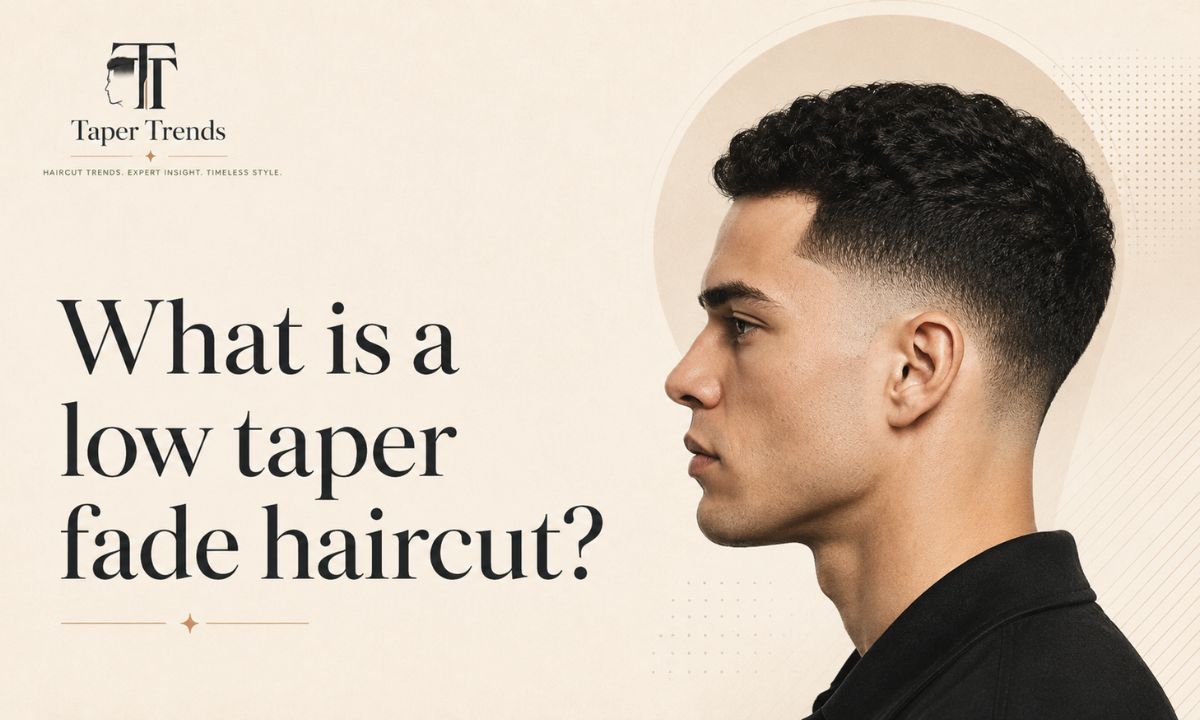
A low taper fade is a cut where the hair gets gradually shorter around the lower edges of your head: the sideburns, the area above the ears, and the neckline. The fade starts low, usually just above your natural hairline, and blends up into the longer hair on top. There is no hard line and no sudden jump in length, which is the whole point.
Most barbers begin the blend with a number 2 or 3 guard and work down to shorter settings near the skin, keeping the transition tight and controlled. The result is a clean edge that still leaves texture and movement up top. It works on straight, wavy, curly, and coily hair, and it sits well under almost any length, from a short crop to something longer you can push around. One thing it isn't: a skin fade. A skin fade drops the sides all the way to bare scalp, while a low taper keeps a little length even at its shortest point, which is what gives it that softer, less exposed finish. If you want to picture the base shape from every angle first, our guide on what a low taper fade looks like breaks it down.
Low taper fade vs low fade: what's the difference?
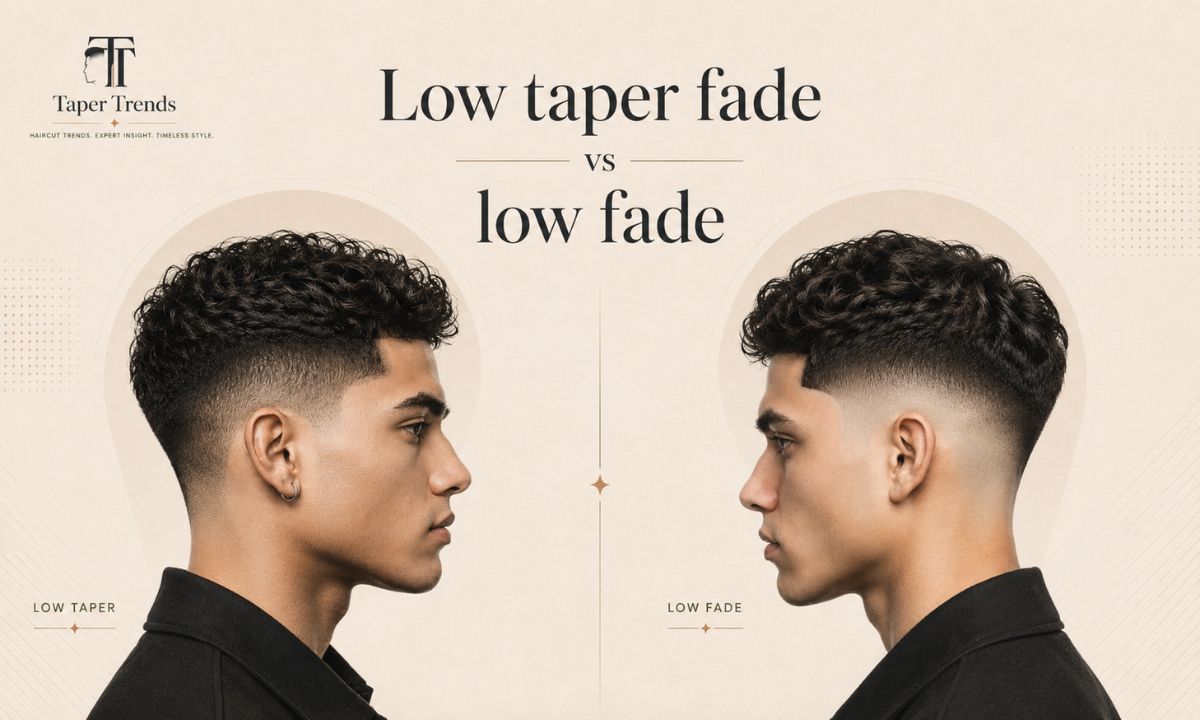
The short version: a low fade tells you where the blend sits (low, near the hairline), while a low taper tells you how softthat blend is. Every low taper fade is a low fade, but not every low fade is tapered gently. If you want soft, blended sides rather than anything sharp, asking for a “low taper” is the phrasing that gets you there.
That's the gist you need for this guide. Because it's the question that trips up the most people, we gave it a full breakdown of its own — our low taper vs low fade comparison walks through exactly how much contrast each one gives, with side-by-side photos, so head there if you're still deciding between the two. Want a touch more contrast than a plain low taper without going full mid? The low mid taper fade starts the blend a little higher, around the temple, and splits the difference.
Why low taper fade haircuts are so popular
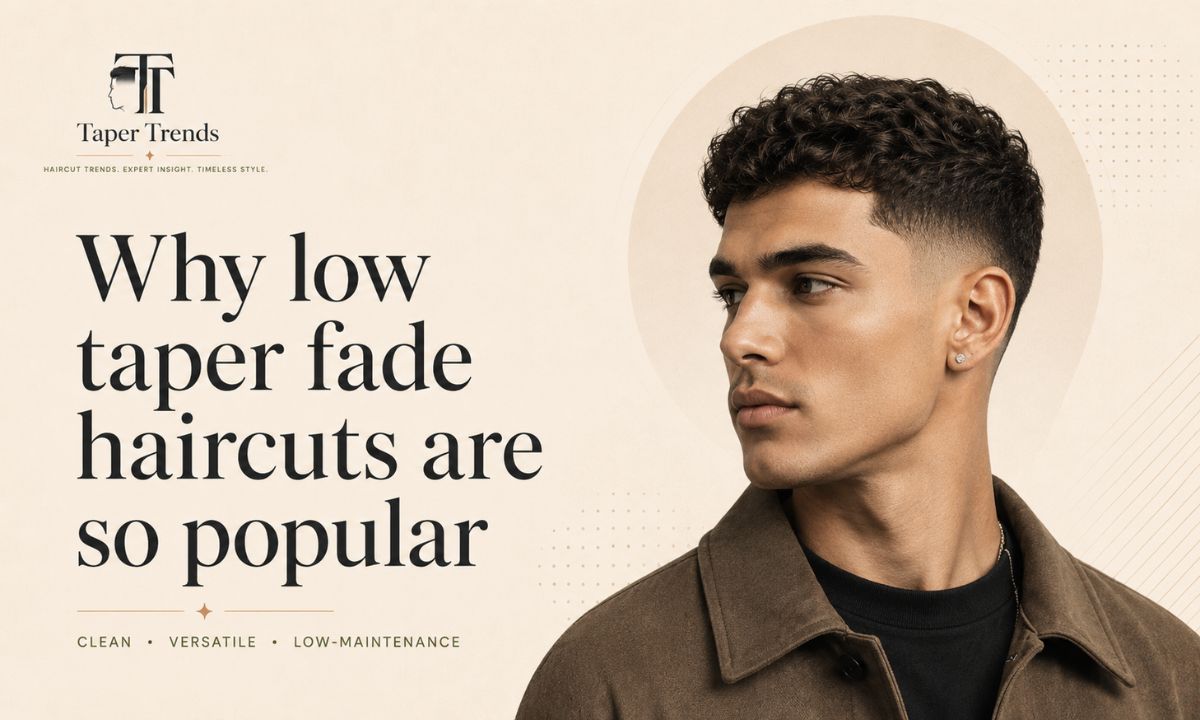
The popularity isn't random. A few grooming shifts happened to line up in this cut's favor. Workplaces have loosened their dress codes while still expecting people to look put together, and a low taper lands right in that zone: clean enough for an office, relaxed enough that you don't look stiff. Social media pushed in the same direction, normalizing tidy grooming without the extreme skin fades and hard parts of a few years ago.
Beyond the timing, the cut earns its spot on practical grounds. It suits most face shapes and every hair texture, since a gradual fade reads as natural rather than forced. It pairs with whatever you do up top, whether that's a slick back, a textured crop, curls, or a comb-over, because the sides stay quiet and don't fight the style. And it really is low maintenance: the soft contrast means regrowth creeps in slowly instead of announcing itself, so you can stretch the time between barber visits.
That combination of flexible, wearable, and forgiving is the real reason it stuck around instead of fading out the way a lot of trend cuts do.
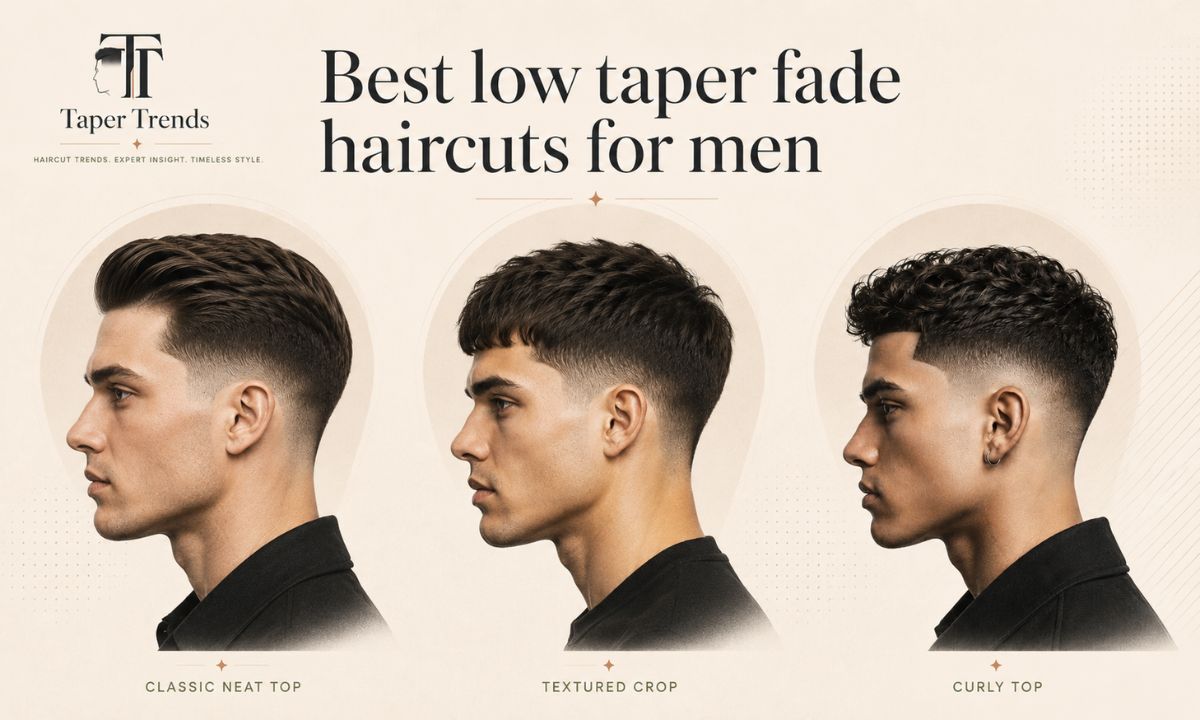
Best low taper fade haircuts for men
The low taper isn't one fixed look. The fade stays consistent while the top is where you pick a style. A few versions worth knowing before you sit down:
- The classicTop kept short and neat, combed or brushed into place. The safe, sharp choice that works in any setting, from the office to a night out.
- 360 wavesPopular with guys who brush coily or curly hair into a wave pattern. The low fade frames the waves instead of cutting into them, and it suits thick hair that holds the pattern.
- Textured cropA short, choppy top over a soft fade. Close to wash-and-go, and it leans a little modern without much daily effort.
- FringeThe top pushed forward over the forehead, which softens the face and reads slightly younger. It sits best on thicker hair that can hold the shape.
- Longer topLeaving more length up top gives you room to switch between sleek and loose, while the fade stays low and quiet underneath.
- Messy / tousledStyled to look unbothered rather than precise. The clean sides are what keep it from tipping over into looking sloppy.
Whichever you pick, the fade does the structural work while the top carries the personality. A low taper fade fringe pushed forward is one of the most-requested versions right now — our guide on the textured fringe with low taper fade goes deeper on length and styling, and if you're leaning toward a center-parted, longer top, the middle part low taper fade covers that shape in detail, and our full low taper fade middle part guide breaks down every variation and how to keep it sharp.
Low taper fade for curly hair
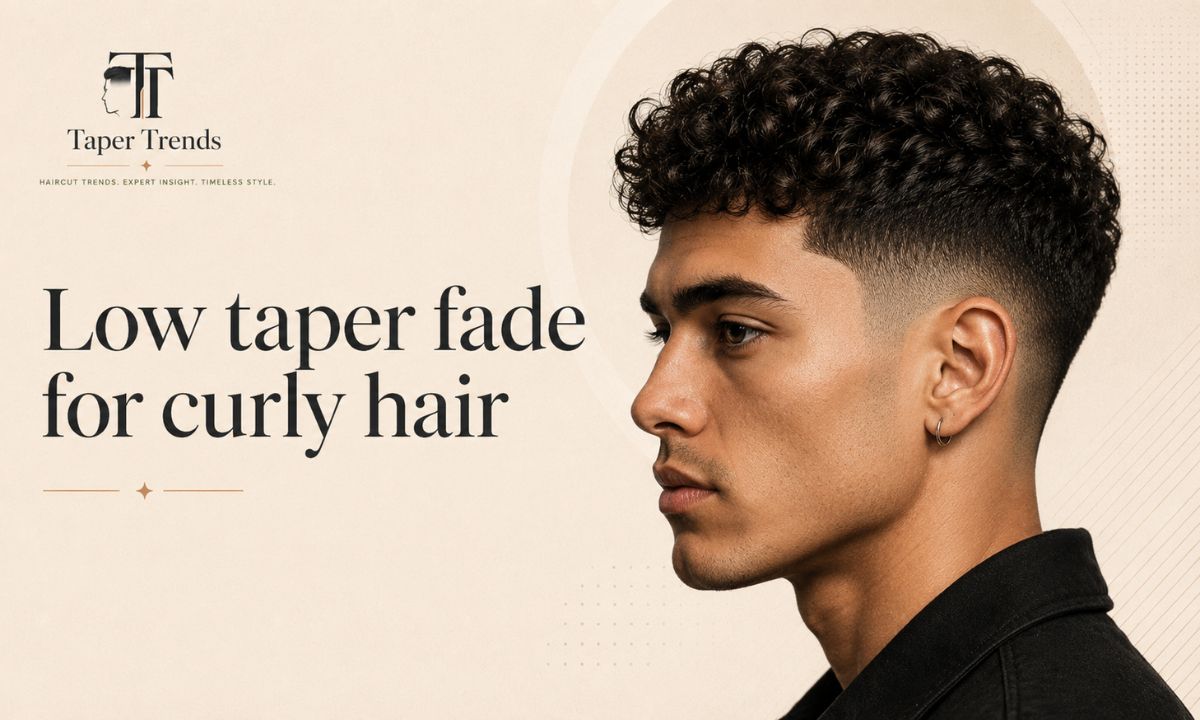
A curly low taper fade and your natural texture get along better than people expect. The fade tidies the sides while leaving the curls on top with their full volume. Curls already bring plenty of texture, so the cut doesn't need to add any. It just needs a clean base to sit on, and keeping the fade low avoids the shrinking effect you get when a fade climbs too high into curly hair.
It's a strong match if you want your curls to read as deliberate rather than overgrown, or if you've got dense curls and want less bulk around the ears. A good barber will usually cut curly hair dry first, so they can see how it falls before touching the sides. That's what stops the top from looking lopsided once everything dries and settles into place. For products, a curl cream or a light mousse worked through damp hair keeps the pattern defined, and a quick pass with a diffuser adds bounce without frizzing the edges the barber just cleaned up. If you've got coily hair or wear waves, an afro, twists, or locs, our low taper fade haircut guide for Black men breaks down the best styles, products, and beard blends for those textures. And if you wear a full, natural afro on top, our low taper fade afro guide covers the styles, guard lengths, and upkeep that keep the shape intact. And if you want the crisp-lineup, Latino-barbershop take on this cut, our Hispanic Mexican low taper fade guide walks through the Edgar, takuache, and 12 other styles by texture and face shape.
Low taper fade for straight and wavy hair
Straight and wavy hair both work with a low taper — the main thing to watch is that the top can fall flat, so a little length and some light layering or point cutting keeps it from sitting heavy. Wavy hair needs less coaxing, while straight hair benefits from matte products over heavy gels and a quick blow dry to lift the roots. Take that lift further and you get a low taper fade blowout, where the top is blow-dried up and back for full, brushed-out volume.
Straight hair is its own topic, though, so rather than repeat it all here we put the detail in one place. Our dedicated low taper fade guide for straight hair covers the best top styles, the right products, and step-by-step styling for fine and thick straight hair.
Waves get the same treatment. If your hair falls somewhere between straight and curly, our dedicated low taper fade guide for wavy hair covers the best wavy styles, how to keep the texture from going flat, and the lightweight products that hold a wave without stiffness.
How to style a textured or messy top
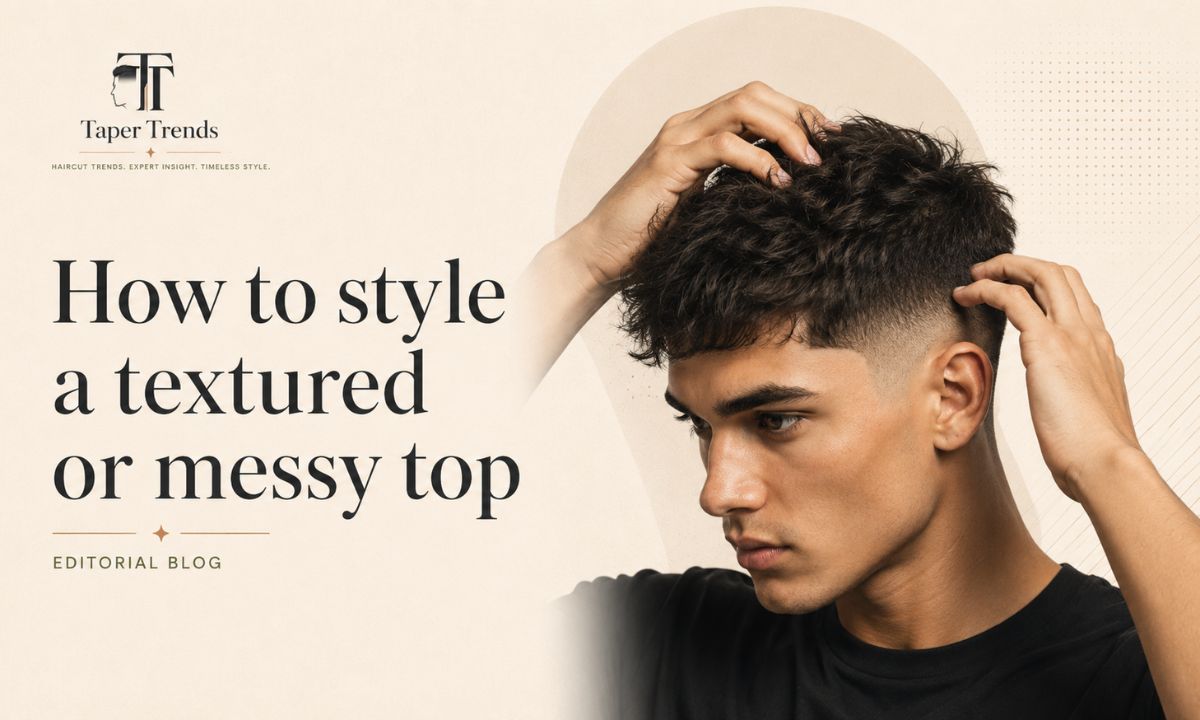
Texture is the most requested finish on top of a low taper right now, mostly because it looks deliberate without much daily effort. The work starts in the chair: ask for point cutting or texturizing shears instead of a blunt, even cut. Plain language is fine here. Tell your barber to keep some length but break it up so it isn't uniform, to thin out some weight with texturizing shears, and that you want it choppy rather than flat.
At home it's simple. Work a small amount of matte clay or paste through towel-dried or dry hair, using your fingers instead of a comb so the pieces separate on their own. The same approach covers a messy top, which isn't about looking unkempt. It's a tousled finish that the clean sides hold together. Go light on product, since too much weighs the hair down and turns texture into grease. This finish is especially friendly to thick hair, because texturizing knocks down the bulk while keeping the style easy to manage.
How to ask your barber for a low taper fade
This is where most people get tripped up, because barbershop terms aren't standardized and a low taper fade can mean slightly different things depending on who's holding the clippers. Being specific beats knowing the jargon.
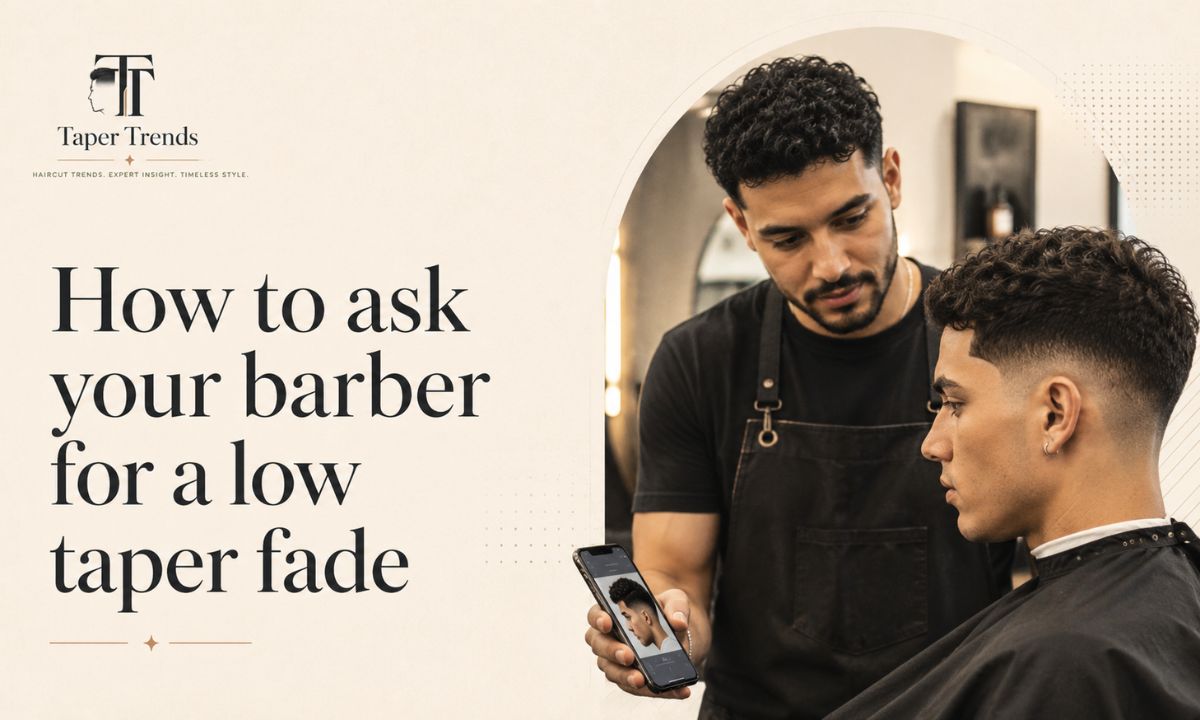
One sentence does most of the work: “I want a low taper around the sideburns and neckline, not a high fade.” That tells your barber where the fade sits, that you want it subtle, and that it shouldn't climb up the sides. A few more lines worth keeping handy: ask them to keep the sideburn taper close to your natural hairline, to clean up the neckline without anything too sharp or shaved, and to blend the sides gradually with no harsh lines.
“I want a low taper around the sideburns and neckline, not a high fade — blend the sides gradually, no harsh lines.”
And bring a photo. It's the single best thing you can do before any haircut, because everyone pictures words a little differently, and a reference gives your barber a target to match. If you're not sure how much length to leave on top, just say so. A decent barber will ask about your hair type, your styling routine, and your job before suggesting anything, so let them. One more habit worth building: if you've got a wedding, an interview, or a trip coming up, book the cut a few days ahead rather than the morning of. A fade looks its sharpest a couple of days after it settles, not fresh out of the chair.
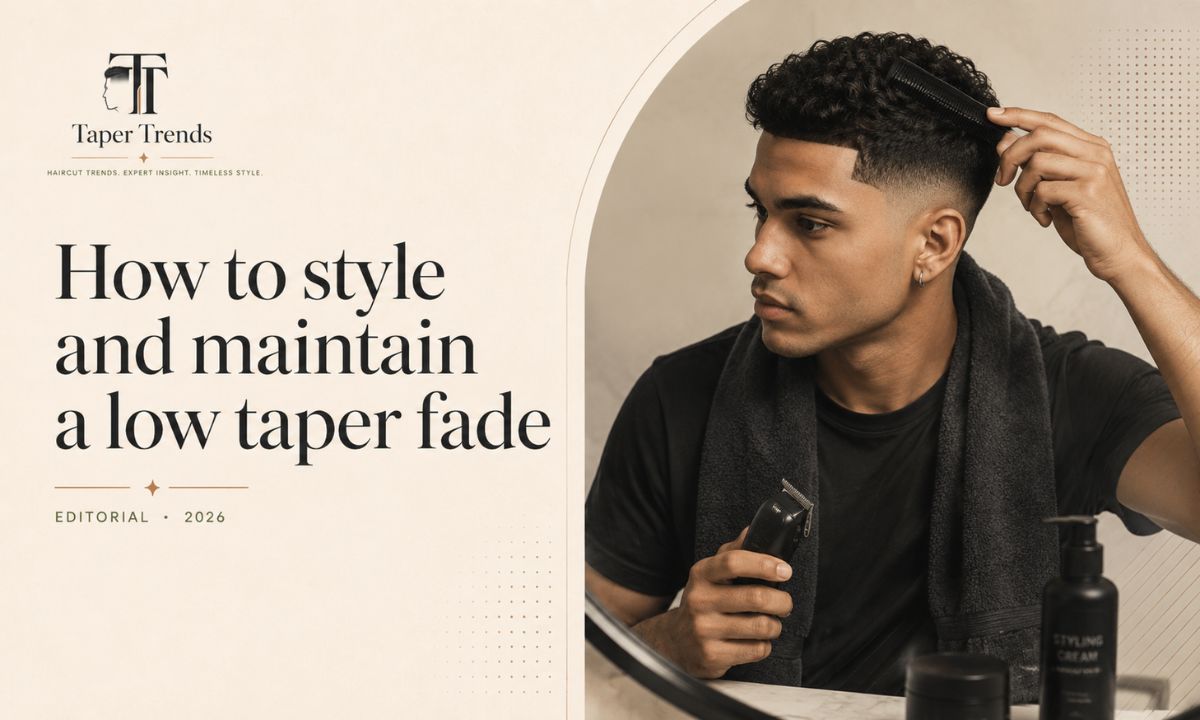
How to style and maintain a low taper fade
The day-to-day upkeep is light, which is half the appeal. Most people get a trim every two to four weeks to keep the neckline and sideburn taper sharp. Fast growers tend to land near the two-week mark, while a low taper can often stretch closer to three or four weeks before it blurs, since the soft contrast hides regrowth better than a high or skin fade would.
Washing is straightforward: a gentle shampoo a few times a week, not daily, because over-washing dries out your scalp and hair, especially if you use product often. For styling, a lightweight cream gives natural, flexible movement, while matte clay suits textured or messy looks because it grips without adding shine. Either way, go easy on the amount. Most mornings, a quick comb or some finger-styling is all it takes, and because the fade sits low, it doesn't need fussing over through the day. If you want to stretch the time between appointments, a light cleanup of the neckline and sideburns with a trimmer every few days keeps the edges honest without you having to touch the fade. Leave the blend itself to your barber, though, since that's the part that's easy to ruin at home.
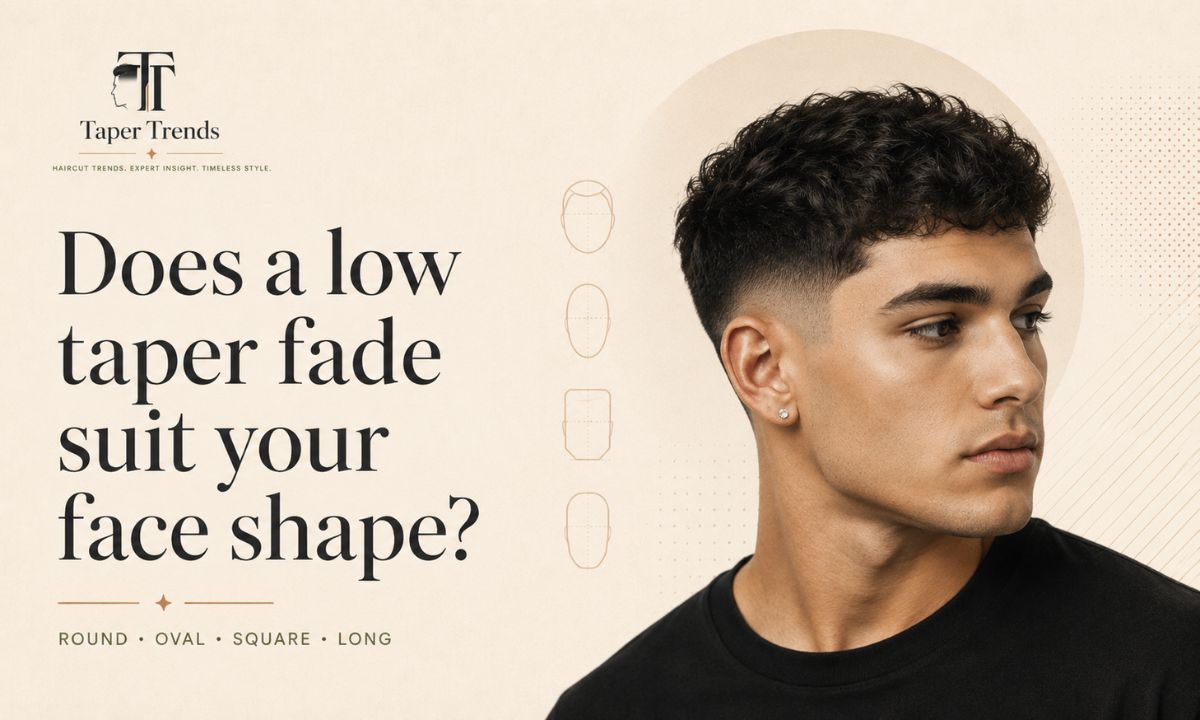
Does a low taper fade suit your face shape?
Short answer: almost certainly, as long as the top is adjusted to fit. Face shape changes how a cut reads, but the low taper is flexible enough to flatter most of them.
- RoundLooks balanced with more height on top, which adds the impression of length. A textured crop or a slightly longer top works better than anything flat.
- OvalThe easy case. Nearly every version suits an oval face without much fuss, so you can pick the top purely on preference.
- SquarePairs naturally with the cut, because the clean sides play off a strong jawline. A medium top with light texture finishes it.
- LongUsually does better with a bit of width on the sides or a fringe to break up the forehead, rather than piling on height up top.
- Heart-shapedBalances out with a textured top, where the soft sides offset a narrower chin and a wider forehead.
If you wear a beard, that's another lever: a barber can blend the fade down into your beard line so the two read as one clean shape, which tends to flatter square and round faces in particular. These are tendencies, not rules. A barber who knows what they're doing can adjust the length and texture for your features, so it's worth asking their opinion in the chair instead of guessing.
The bottom line
The low taper fade keeps showing up for a boring but solid reason: it works. It's clean enough for the office, loose enough for the weekend, and it pairs with nearly anything on top, from curls to crops to a deliberately messy finish. It doesn't demand much upkeep, and it flatters a wide range of hair types and face shapes.
If you're heading to the barber soon, the thing that matters most is communication. Be clear about where you want the fade to sit, bring a photo if you have one, and ask questions if you're unsure. Get that part right and a low taper is one of the easier cuts to nail, and one of the easier ones to live with afterward. Cutting one for a younger family member? Our low taper fade haircut for boys guide covers school rules and kid-friendly styling.
In short
A low taper fade gives you clean, soft sides and total freedom on top, with a blend gentle enough to grow out gracefully instead of going shaggy in a week.
Ask for a “low taper around the sideburns and neckline,” pick a top that matches your hair and face, bring a photo, and book a trim every two to four weeks. That's the whole formula.
Go deeper: low taper fade guides
This page is the overview. Each style, hair type, and decision below has its own dedicated guide with photos, products, and barber wording:
- For short hairCrew cut to textured crop, face shapes, and upkeep
- For long hairLength on top, man bun to curtains, and how to keep it
- Low mid taper fadeMore contrast: the mid-temple starting point
- Low taper vs mid taper fadeWhich fade height to pick, angle by angle
- Taper low burst fadeThe curved burst that wraps the ear
- Low taper vs low fadeWhich to choose, by contrast and upkeep
- Blowout, curly hairThe rounded blowout on curls, by curl type
- For straight hairTop styles, products, and styling
- What it looks likeEvery angle, before you book
- Textured fringeThe fringe-forward version
- Middle partCenter-parted, longer top
- Middle part styles & upkeepEvery variation, plus how to maintain it
- For boysSchool rules and kid-friendly styling
- Straight hair, for boysKid-friendly styles for straight hair
- Design ideasLines, patterns, and placement ideas
- With a designAdding a carved line to the low taper
- The viral memeOrigin, meaning, and why it stayed massive
FAQs about low taper fade haircuts
What is a low taper fade haircut?
It's a cut where the hair gets gradually shorter around the neckline, ears, and sideburns, creating a subtle, blended fade rather than a sharp contrast. The blend sits low, just above the natural hairline, so the look stays soft and clean.
Is a low taper fade good for curly hair?
Yes. It cleans up the sides and neckline while leaving the volume in your curls untouched on top. Keeping the fade low also avoids the shrinking effect you get when a fade climbs too high into curly hair.
How long does a low taper fade last?
Most people get a trim every two to four weeks. Fast growers may need it sooner, while slower growth can hold the shape closer to a month. The soft contrast hides regrowth better than a high or skin fade would.
What should I ask my barber for?
Try “I want a low taper around the sideburns and neckline, not a high fade,” and bring a reference photo if you can. Mention how much length you want on top and the style you're after.
Is a low taper fade better than a low fade?
Neither is objectively better — they describe different things. A low taper is about how gradual the blend is, while a low fade is about where it starts. If you're choosing between the two, our full low taper vs low fade comparison weighs the contrast, upkeep, and look of each one side by side.
Does a low taper fade suit round faces?
Yes, especially with a bit of added height or texture on top to balance out the proportions. A textured crop or a slightly longer top works better than anything flat.
Is a low taper fade professional?
Yes. The subtle, clean blend makes it one of the more office-friendly fade styles out there. It reads as groomed and put-together without looking severe.
Want more taper fade guides?
Browse clean, barber-ready breakdowns for every hair type.