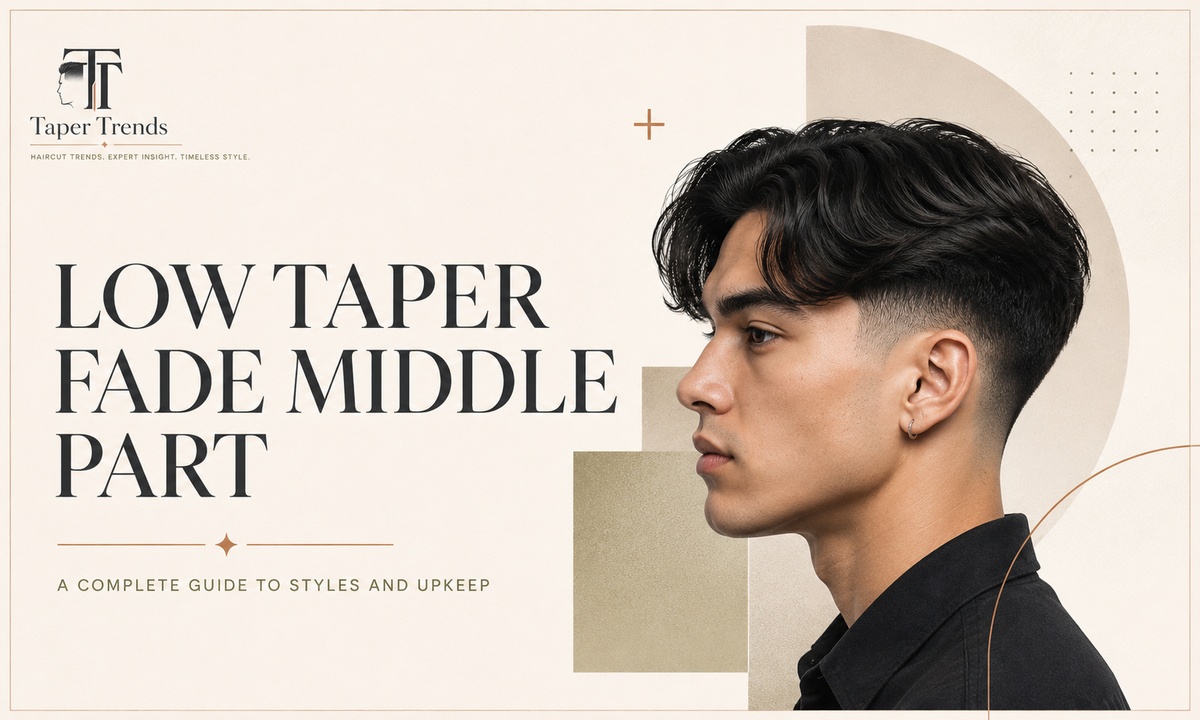
The low taper fade middle part is one of those cuts that looks like you barely tried, which is a big part of why so many guys keep asking for it. It pairs a soft fade around the ears and neckline with longer hair up top that splits down the center. Clean sides, relaxed top, not much fuss.
Barbers have been booking it steadily through 2026, and it shows up constantly on grooming feeds because it flatters a wide range of hair types and face shapes without demanding much upkeep. This guide walks through what the cut actually is, who it suits, the main variations, how to ask for it, and how to keep it looking sharp between visits. If you want the wider view of the cut first, our complete low taper fade haircuts guide covers every hair type in one place.
What is a low taper fade middle part haircut?
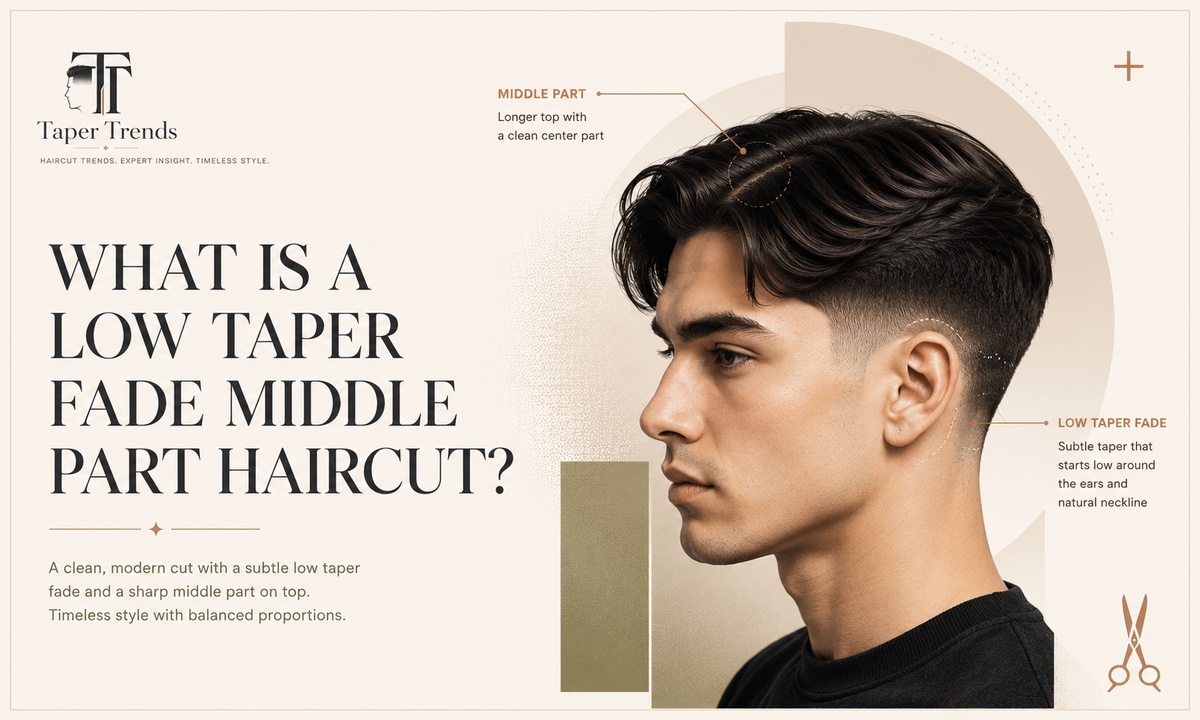
The cut has two things working together: a low taper fade on the sides and back, and longer hair on top parted down the middle. Neither one dominates, which is why the look reads as balanced rather than busy. Take the top past a few inches and it becomes a long hair low taper fade worn with a center part.
The low taper fade, explained
A taper fade gradually shortens the hair as it moves down toward the ears and the back of the neck. There's no hard line, just a smooth blend from longer hair on top to shorter hair below.
The word “low” tells you where that blend starts. A low taper fade begins close to the ears and the bottom of the head rather than higher up near the temples, which keeps it subtle compared to a mid or high fade. It's the version barbers tend to recommend when someone wants a tidy, professional finish without going too short too high on the head. Because the shortest point still leaves a little length, it grows out gently and doesn't need a touch-up every week to look intentional. If you want to see it from every angle first, our guide on what a low taper fade looks like walks through the side, back, and top.
Why the middle part works with it
On top, the hair is left long enough to comb away from a center part instead of sweeping to one side. The fade keeps the sides controlled while the top gets to carry the shape and movement. It's a cousin of the curtain look from the ’90s, but lighter and easier to live with day to day. If you grew up seeing flat, heavy middle parts on old yearbook photos, this is the reworked version: more texture, cleaner sides, less effort. Our middle part low taper fade style guide digs deeper into the curtain shape, top length, and face-shape pairings if you want to compare notes.
Why the low taper fade middle part is so popular
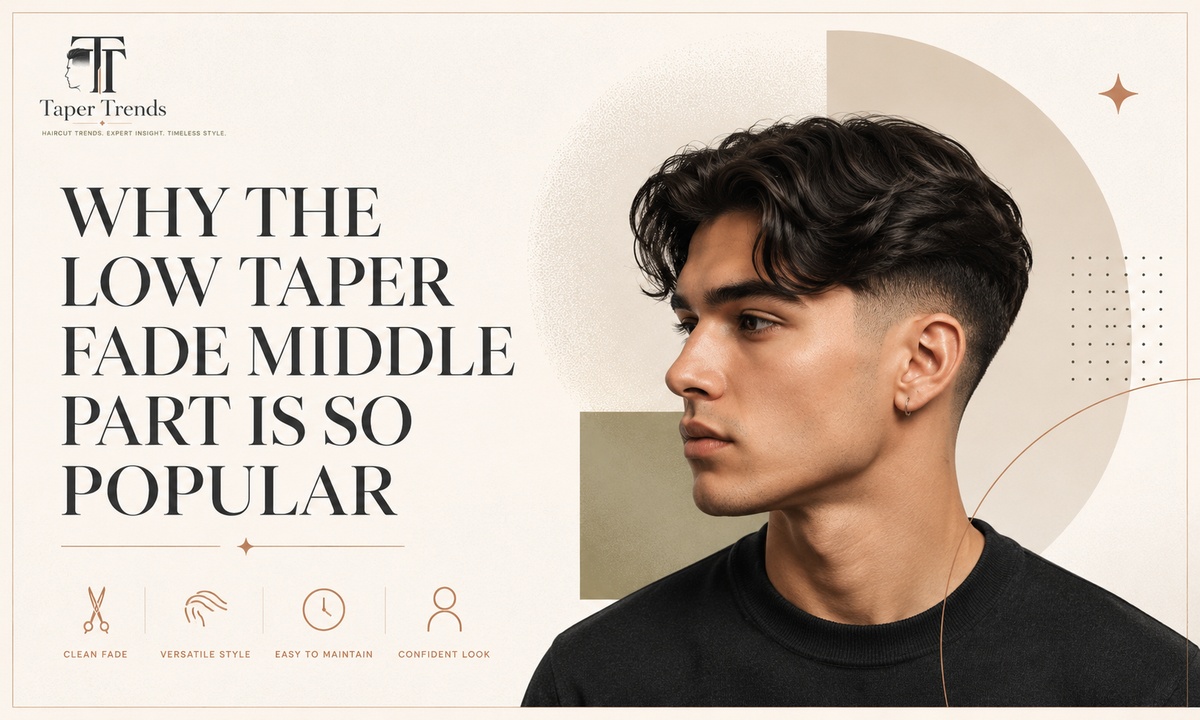
A few grooming shifts have lined up in this cut's favor. Men want styles that look deliberate but don't eat up ten minutes every morning. Workplaces have relaxed their dress codes while still expecting some polish. And the wider trend for 2026 leans toward soft fades, natural texture, and matte finishes over the glossy, over-styled looks of a few years back. This cut sits right in that sweet spot.
It also travels well. The same haircut reads fine at the office, at the gym, and on a night out, which is rarer than it sounds. A handful of practical reasons keep it in rotation:
- Low maintenance for a fade — the blend starts low, so regrowth stays subtle between visits.
- A flexible top you can wear matte and tousled one day, combed and sleek the next.
- Neat enough for formal settings but relaxed enough for weekends.
- The center part frames the face, drawing attention up toward the eyes and cheekbones.
If you're tired of frequent barber trips or you freeze up trying to style your hair each morning, this cut removes a lot of the daily guesswork.
Who does it suit best?
No haircut works for everyone, and a good barber will look at your face shape and hair type before committing. It's worth thinking about the same things yourself.
By face shape
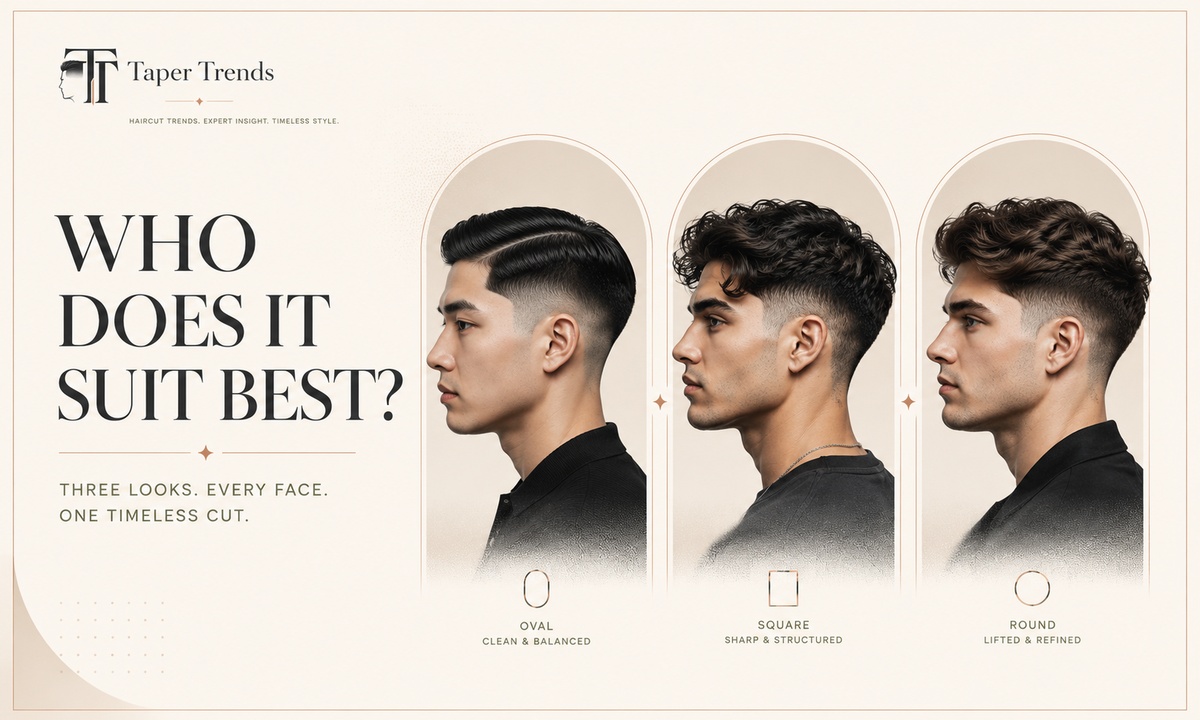
Oval and oblong faces tend to do well because the part adds a little visual width to balance out length. Square faces get a softening effect that takes the edge off a strong jawline without hiding it. Round faces can work too, but with a caveat: a flat part straight down the middle can widen a round face, so the trick is keeping height and volume on top so the eye reads length instead. If your face is very long or narrow, ask your barber to leave a bit more weight at the sides so the center part doesn't stretch things further.
By hair texture
Hair texture matters more here than most people expect. Straight to slightly wavy hair falls into a middle part most easily, often with barely any product — our low taper fade for straight hair guide covers the styling in depth. Wavy hair might be the sweet spot, since the built-in movement gives you that effortless finish people spend real time faking. Curly hair takes the cut in a bolder direction, with volume up top playing off the tight fade underneath, though curls usually need a little more length to account for shrinkage. Fine hair can pull it off as well, but it may go flat by midday without a texturizing spray or a light pomade to give it something to hold onto.
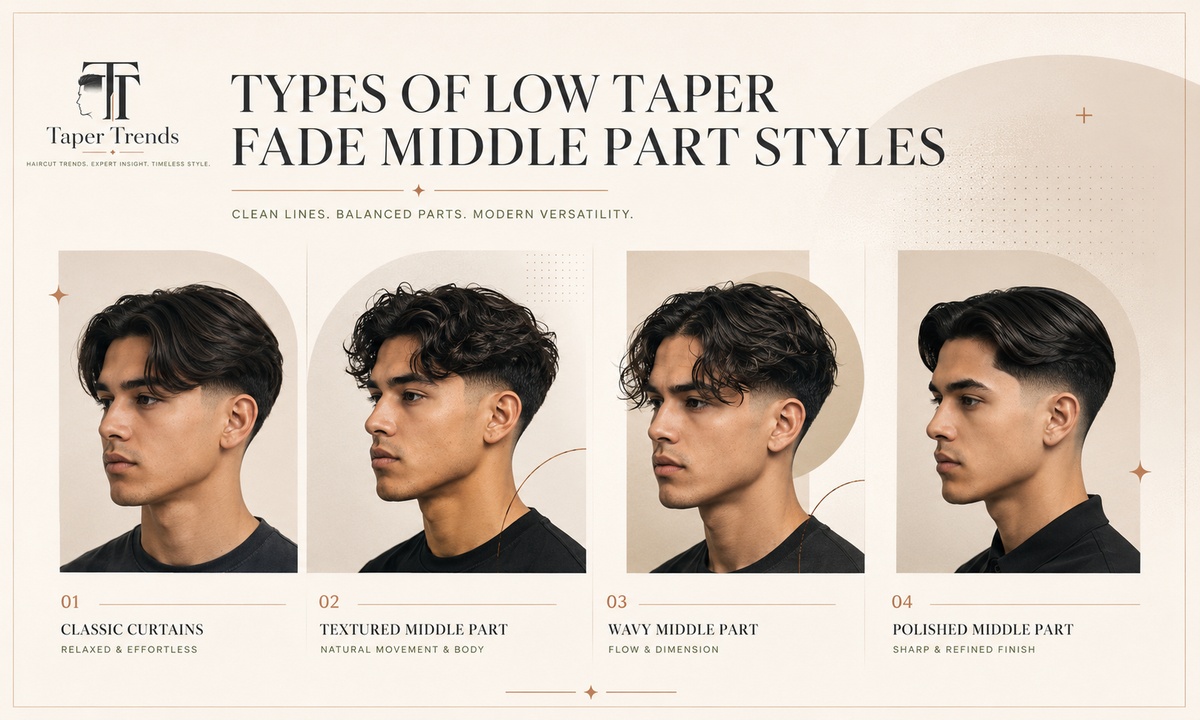
Types of low taper fade middle part styles
This isn't a one-size look. Depending on your texture, how much length you want, and how bold you're willing to go, there's a version that fits.
- ClassicLow, clean tapered sides with a medium-length top combed neatly from a center part. Styles in under five minutes — the natural starting point.
- WavyLeans on natural texture for soft movement. A light sea salt spray or texturizing cream brings the waves out without stiffening them.
- CurlyOne of the most requested right now. Curls add height while the fade keeps things tidy — ask for extra length up top to account for shrinkage.
- ShortKeeps the top minimal while still showing a visible part. The pick for anyone active or easing into the look.
- Long curtainThe boldest version. The top grows out to frame the face on both sides while the low fade keeps the sides in check.
Textured, slightly undone takes on this cut are what barbers are seeing most this year, so if you want something current, the long curtain direction is where the trend is moving. Want something choppier up front instead of a clean part? A textured fringe with a low taper fade is the closest cousin worth a look.
How it compares to other fades
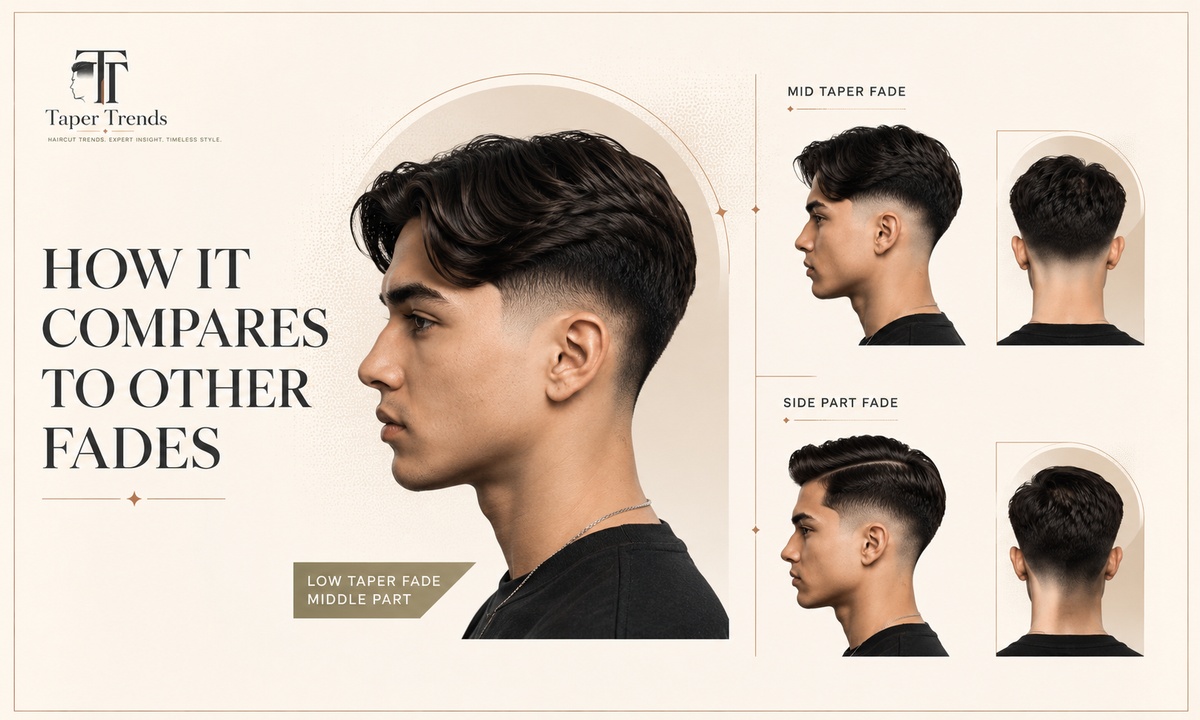
Fade names blur together fast. Here's where the low taper fade actually differs from the ones it gets confused with.
| Compared to a… | How it differs | The trade-off |
|---|---|---|
| Low fade | Often blends all the way to skin near the bottom | Sharper contrast; less forgiving as it grows |
| Mid taper fade | Starts higher, around the temples | More visible contrast between top and sides |
| Skin fade | Takes the hair down to bare skin at its lowest | Dramatic finish; needs frequent touch-ups |
Against a standard low fade, the difference is how far the hair goes down. A regular low fade often blends all the way to the skin near the bottom for a sharper contrast, while a low taper shortens the hair without necessarily hitting skin, so the transition stays softer and looks lower maintenance as it grows. Our low taper vs low fade breakdown covers that gap in detail.
Against a mid taper fade, it comes down to where the blend starts. A mid taper begins higher, around the temples, for more visible contrast; the low version stays quieter. If you're weighing the two, our low taper fade vs mid taper fade guide compares them angle by angle. And against a skin fade, the gap is contrast: a skin fade takes the hair to bare skin for a dramatic finish, while the taper keeps a little length everywhere, so there's no bald-looking strip and it ages better between cuts.
How to ask your barber for it
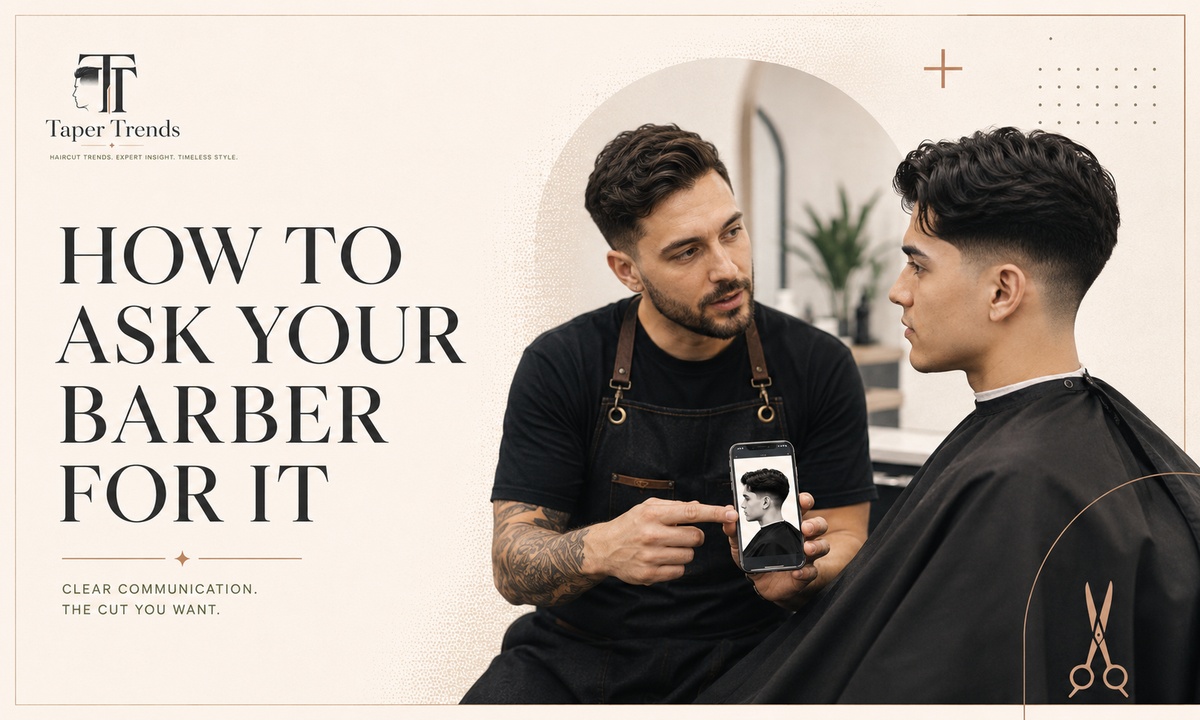
Even a great barber can't read your mind, so being specific saves you from a cut that's technically fine but not what you pictured. A reference photo helps a lot, since the same request lands differently depending on hair texture.
“I'd like a low taper fade, kept close to the ears and neckline, with enough length on top to comb into a middle part.”
Mention your hair type up front, too. Telling your barber you're curly, wavy, or fine lets them adjust the technique and the length so the finished cut behaves the way you want when you style it at home.
How much length you need on top
You generally want at least two to four inches on top to part comfortably down the middle, though this shifts with texture. Curly hair often needs a bit more because of shrinkage, and very straight hair can sometimes get away with slightly less. If you're growing out from something shorter, your barber can shape the fade now and dial in the part once there's enough length to work with.
How to style it at home
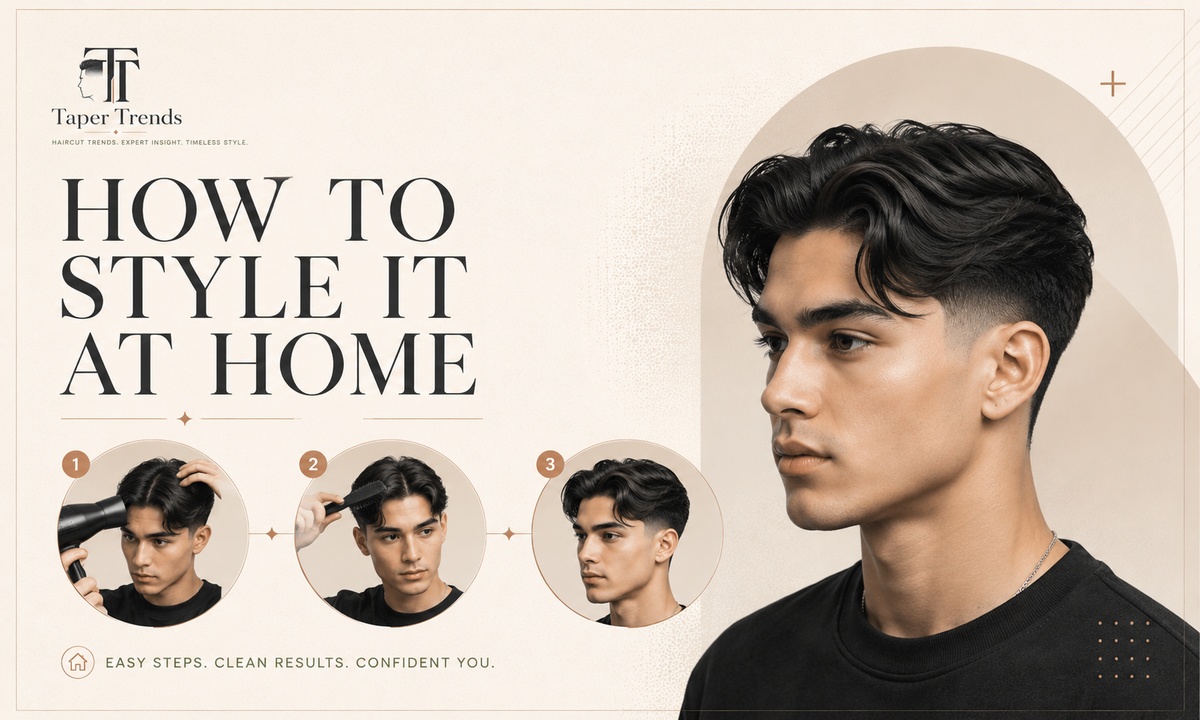
Once you have the cut, the daily routine is simpler than it looks.
- 1Start with damp, towel-dried hair.
- 2Work a small amount of product evenly through the top.
- 3Set the center part with a comb or your fingers.
- 4Blow-dry on low heat, brushing the hair away from the part on both sides.
- 5Finish with a light-hold product to lock the shape without going crispy.
Product choice comes down to your texture and the finish you're after. Lightweight creams and clays give a natural, matte look. Pomades add shine and firmer hold for something sleeker. Texturizing sprays suit the wavy and curly versions, adding definition without weighing the hair down. Keeping two or three products on hand is usually enough to switch between finishes depending on the day.
The same cut can flex to fit where you're headed. For an everyday look, keep it loose: a bit of lightweight cream, a comb through the part, and let the hair fall naturally. For work or anything client-facing, blow-dry the top with a brush for smooth direction, then use a pomade or medium-hold cream to keep the part crisp. For a night out, lean into texture instead: scrunch in a texturizing spray, let the waves or curls show, and keep the part looser rather than razor-straight so it reads relaxed rather than fussy.
Maintaining the cut
Like any fade, this one looks best when you keep up with it, though it's more forgiving than the higher, sharper styles.
Most barbers suggest a trim every three to four weeks. Because the blend starts low, regrowth is far less obvious than it is with a high or skin fade, so you can often stretch an extra week without the cut looking scruffy.
The part itself holds better when you dry the hair in the same direction each time and apply product while it's still slightly damp. A silk pillowcase or a light hair wrap overnight helps preserve the shape, which matters more once the top gets longer.
Habits that trip people up
- Skipping productExpecting the part to hold on its own rarely works — a little product while damp keeps the shape.
- Letting the fade overgrowWaiting too long before a trim erases the whole point of it starting low.
- Piling on heavy productToo much weight flattens curly or wavy hair instead of lifting it.
Avoid those three and the cut mostly takes care of itself between visits.
Picking the version that fits you
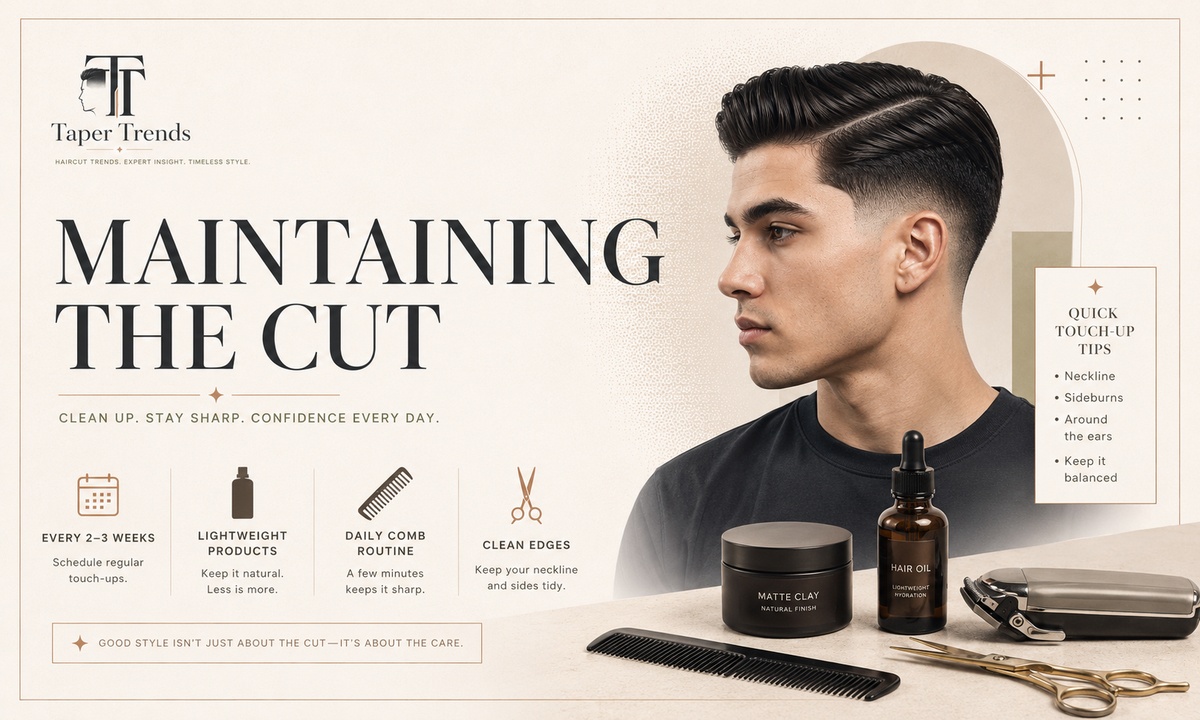
If you're low-key and want the least effort, go classic or short. If you like playing with product and texture, the wavy or curly version gives you room to experiment. And if you don't mind standing out, the long curtain style is the biggest swing. None of these is wrong. It really comes down to how much time you're actually willing to spend in the mirror each morning, so be honest with yourself about that before you commit to length on top.
Frequently asked questions
Is a low taper fade middle part good for men?
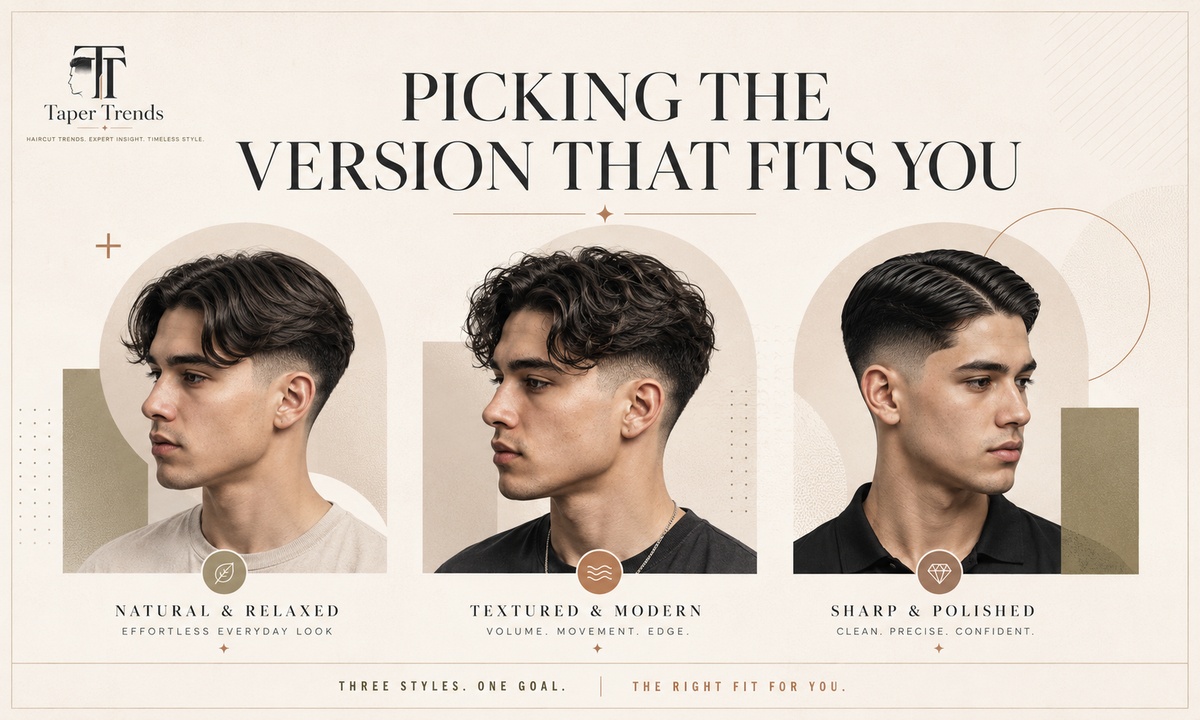
Yes. It's versatile and low maintenance, and it suits most face shapes and hair types, which makes it a safe pick whether it's your first fade or your fiftieth.
How long does it last before needing a trim?
Usually three to four weeks. The low starting point means regrowth stays subtle, so it holds its shape longer than higher fades.
How much length do I need on top for a middle part?
Two to four inches is the general range, though curly hair often needs more because it shrinks as it dries.
Can I get this cut with curly hair?
Absolutely. Curls add natural volume up top while the fade keeps the sides clean, and it's one of the most popular versions going right now.
Which face shapes look best with it?
Oval, square, and oblong shapes tend to suit it most. Round faces can work too, as long as there's height on top so the part doesn't widen the face.
How do I style it flatter, without much volume?
Use a lightweight cream or a matte paste instead of anything volumizing, and dry the hair flat against your head rather than lifting it at the roots.
Is it right for you?
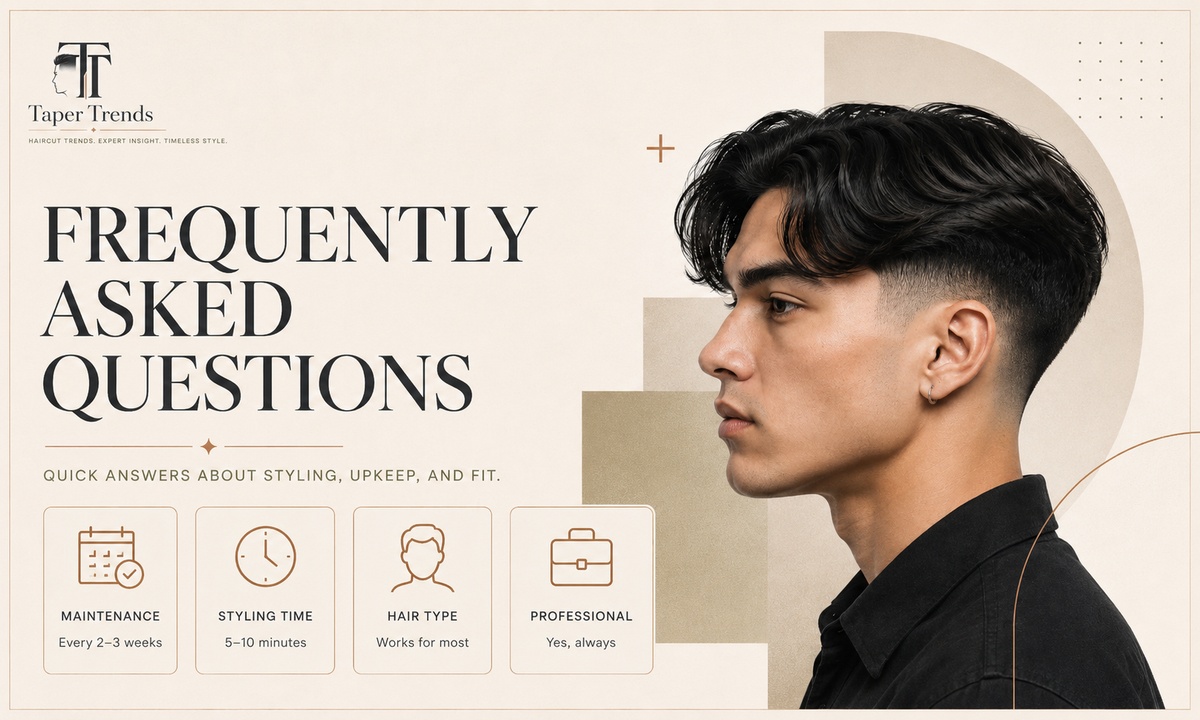
The low taper fade middle part earns its spot honestly. It adapts to different textures, forgives a few extra days between trims, and shifts from casual to polished with a change of product. If you want a cut that feels current without turning grooming into a daily project, it's a strong choice.
Still unsure which version suits you? That's what a barber consultation is for. Bring a photo, mention your hair type, and you'll walk out with something that fits your face, your routine, and how much effort you actually want to put in.
The bottom line
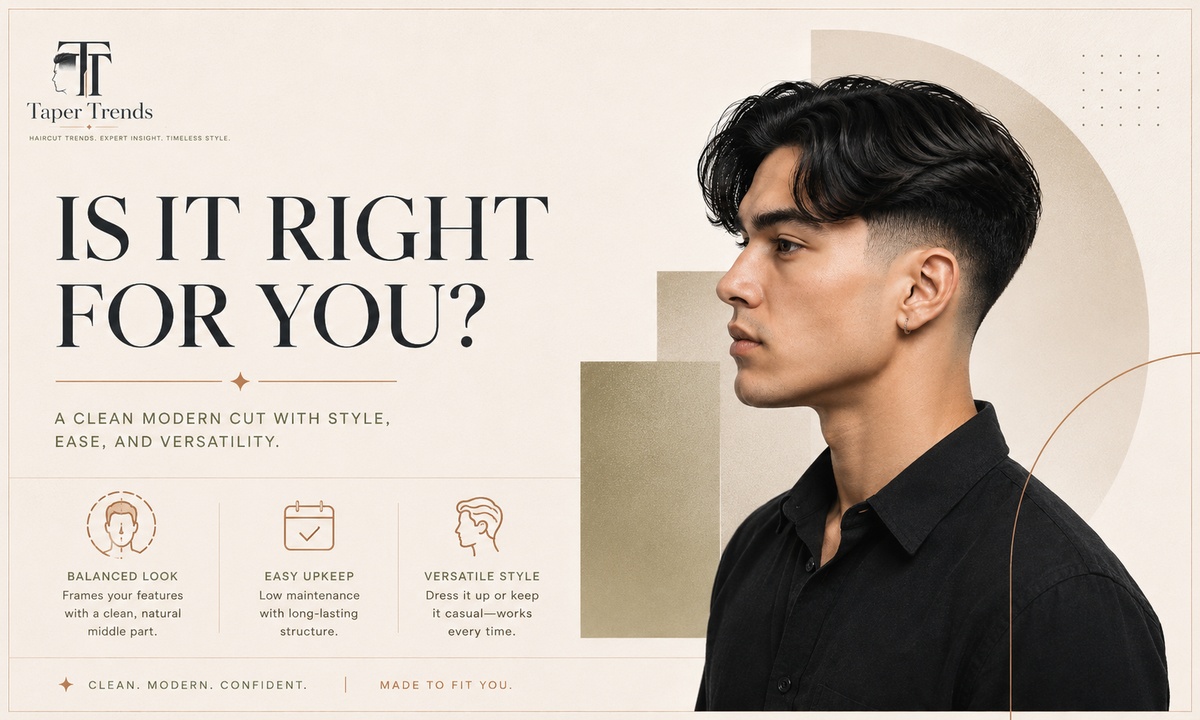
A low taper fade middle part is one of the most flexible, low-maintenance cuts around. The fade keeps the sides clean while the center-parted top carries the shape, and it works across straight, wavy, and curly hair without much daily effort.
Pick the version that matches your texture and routine, be specific with your barber, and keep up with the light upkeep. Done that way, it holds its shape and stays current well past a single trend cycle.
Want more taper fade guides?
Browse clean, barber-ready breakdowns for every hair type.