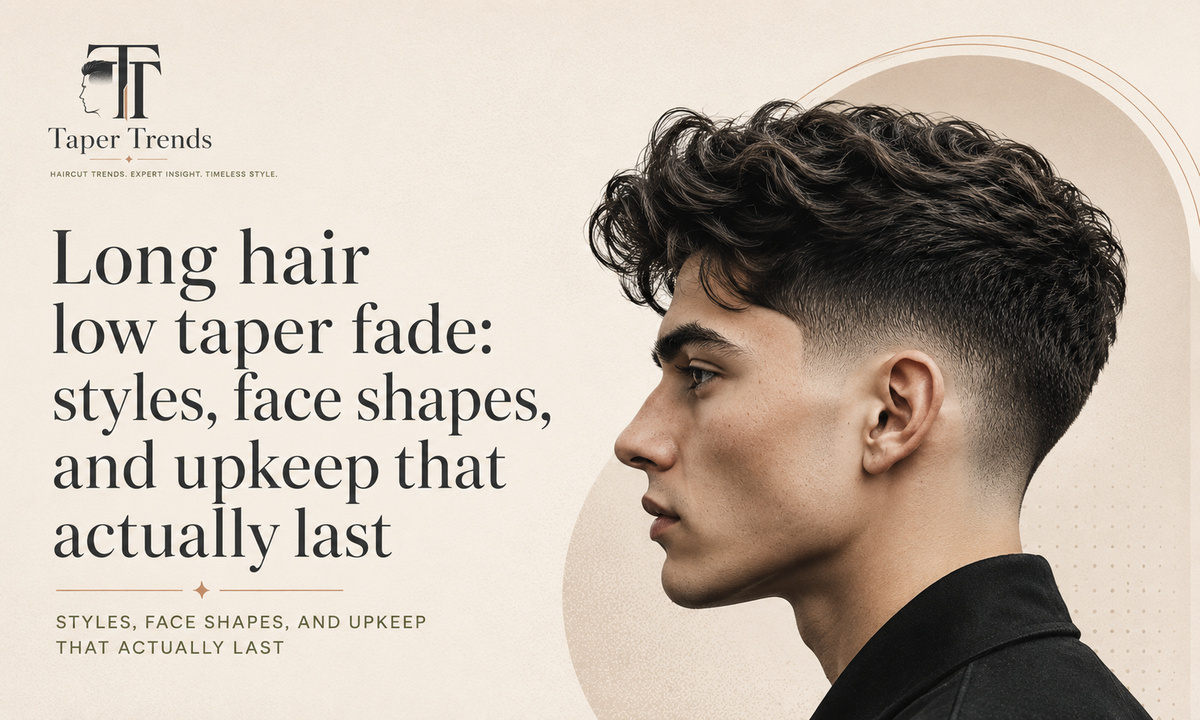
Walk into almost any barbershop and you will hear a version of the same request: keep the top long, fade the sides low, and make it look like no effort went into it. That contradiction is where most guys get stuck. Plenty leave the chair with sides that clash against the length on top, or a fade that grows into a shapeless mess inside two weeks.
A long hair low taper fade sits in an awkward middle ground. It needs more precision than a buzz cut but more daily patience than a plain long style. Get the balance wrong and the cut fights your face shape, your texture, or your morning routine. Get it right and it looks deliberate on day twelve, not just day one. If you want the broader picture first, our complete low taper fade haircuts guide covers every length and texture in one place.
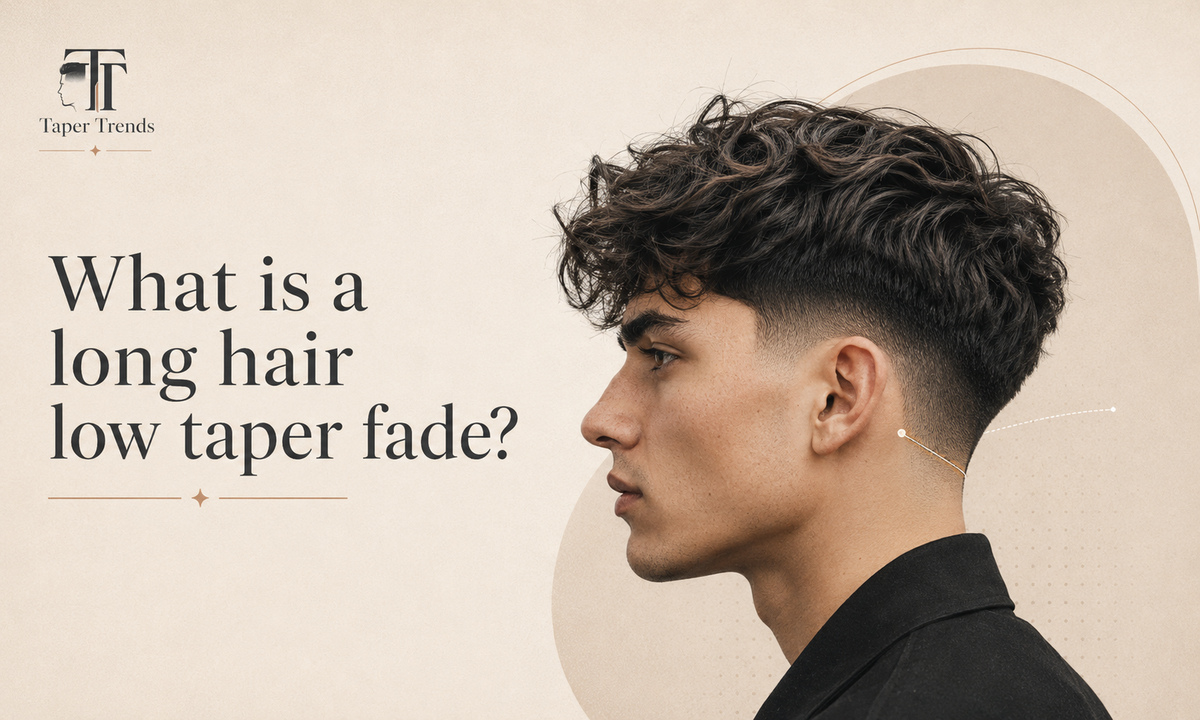
What is a long hair low taper fade?
A long hair low taper fade is a haircut that keeps length on top while the sides and back blend gradually shorter, with that blend starting low near the ears and neckline rather than up by the temples. The word “taper” describes the gradual reduction in length. The word “low” tells the barber where the blend begins.
Because the fade stays low, most of the sides are left untouched and the visual interest sits in a narrow strip near the bottom. Pair that with long hair up top and you get something that reads as clean without looking severe. The top can run anywhere from two inches to well past six, depending on how much length you want to work with. The length does the talking, and the taper just tidies the edges. If you want to see the grown-in shape from every angle first, our guide on what a low taper fade looks like walks through it.
Low taper vs. mid and high fade
The difference comes down to where the barber starts the blend, and that placement changes the whole personality of the cut. A low taper starts at or just above the natural hairline near the ears, so it stays subtle, conservative, and easy to wear in a formal office. A mid taper starts around temple height for a visible but balanced contrast. A high taper or high fade starts near or above the temple and sometimes climbs toward the crown, which makes it the first thing anyone notices.
Barbers see one scenario constantly: someone asks for “clean sides but nothing dramatic,” so they default to a low taper because it is the safest place to begin. If you want more contrast next visit, raising the fade line is easy. Going the other way, from high back down to low, means growing hair out for weeks. Our low taper fade vs mid taper fade comparison breaks down which height suits you, angle by angle.
How long does “long” actually need to be?
There is no official cutoff, but a few reference points help. Two to four inches is enough for textured, choppy styles and a proper comb-over without much product. Four to six inches opens up slicked-back looks, loose quiffs, and a visible side part. Six inches or more is long enough to tie into a small bun or ponytail while the taper keeps the sides clean. The longer the top, the more the cut leans on daily styling rather than holding shape on its own. For the opposite end of the spectrum, our low taper fade for short hair guide covers the low-maintenance short-top version.
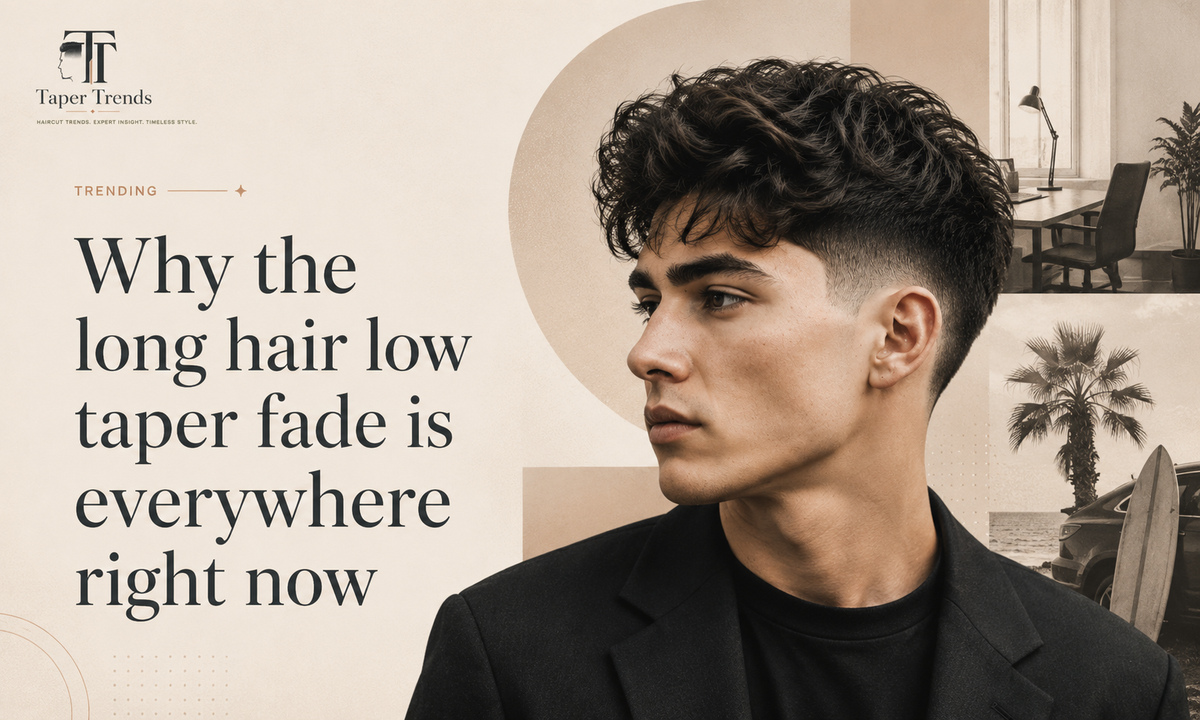
Why the long hair low taper fade is everywhere right now
A few practical reasons explain why this became a frequent request rather than a passing fad.
It works in more places than a bold fade. A high fade makes a statement whether you want it to or not, while a low taper stays quiet enough for a client meeting yet still has shape on a weekend. The personality lives on top: slick it back for the office, leave it loose and textured for everything else.
It also grows out gracefully. Because the fade line sits low near the neckline, regrowth skips the obvious halo that high fades show within a couple of weeks, so most people can stretch appointments to four or five weeks instead of two or three.
The cut adapts to nearly any hair type, too. Straight, wavy, and curly hair each take a low taper differently, but none of them fight it, which is why barbers recommend it to first-timers. It also pairs well with facial hair, blending into a beard line instead of cutting a hard border above it, and because it cleans up the perimeter rather than reshaping the head, it flatters rounder, squarer, and longer faces without much fuss.
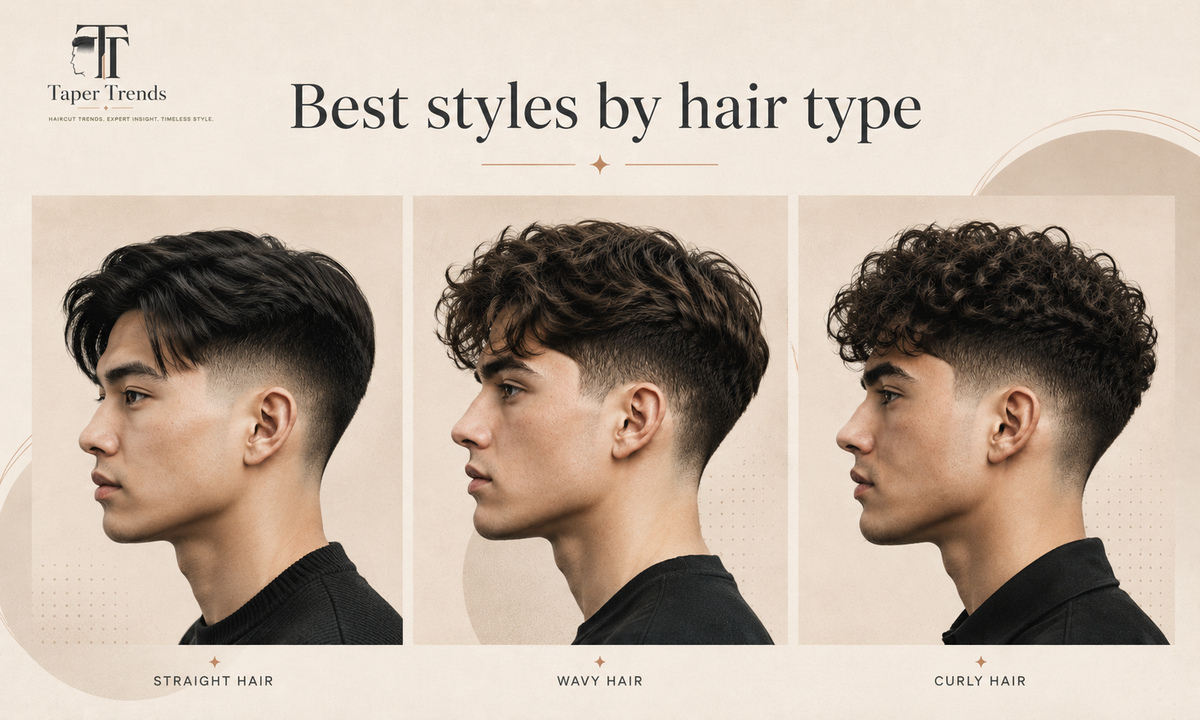
Best styles by hair type
The taper stays fairly consistent technically, but the top behaves very differently depending on your hair. What works for straight hair often falls flat on wavy hair, and curly hair usually needs a completely different product approach.
Straight hair
Straight hair has less natural grip, so these styles lean on product to hold shape. A slicked-back low taper is the classic move, combed straight back and held with a strong pomade, which works best with four to six inches. A textured comb-over uses a side part with a slight forward sweep and a lighter matte paste for texture over shine. A curtain fringe leaves length long enough to part in the center and fall on either side for a relaxed, undone look. Our low taper fade for straight hair guide goes deeper on top styles and products.
Wavy hair
Wavy hair holds texture on its own, so the goal is to enhance the natural pattern rather than override it. A textured quiff pushes the front up and back for volume, defined with a light cream or fiber paste so the wave keeps its movement. A natural wave flow uses minimal product, often just a sea salt spray, then air-dries into a beachy finish. A mid-length flow with a soft side part rewards finger-styling over a comb. Wavy hair generally needs the least daily effort of the three — our low taper fade for wavy hair guide covers the best wavy versions in detail.
Curly hair
Curly hair asks for the most deliberate routine, mainly because curls lose definition fast once they dry without moisture. A curly top with a low taper leaves the curls to sit naturally, kept defined with a leave-in conditioner and curl cream on damp hair. A more defined look uses a lighter gel or curl custard for extra hold and less frizz, which helps in humid weather. For longer lengths, gathering the top into a small ponytail while the taper keeps the sides clean is practical for the gym or hot days. If your hair is more curly than wavy, start with our curly low taper fade guide instead.
| Hair type | Best top length | Recommended product | Styling tip |
|---|---|---|---|
| Straight | 3 to 6 inches | Strong-hold pomade or matte clay | Add texturizing powder at the roots for lift before styling |
| Wavy | 3 to 5 inches | Sea salt spray or light cream | Air-dry when you can to keep the natural wave pattern |
| Curly | 4 to 6+ inches | Leave-in conditioner and curl cream | Finger-detangle on wet hair and avoid brushing once dry |
Popular variations to try
Once the low taper is settled as the base, the top is where the personality gets added, and a few variations come up more than the rest.
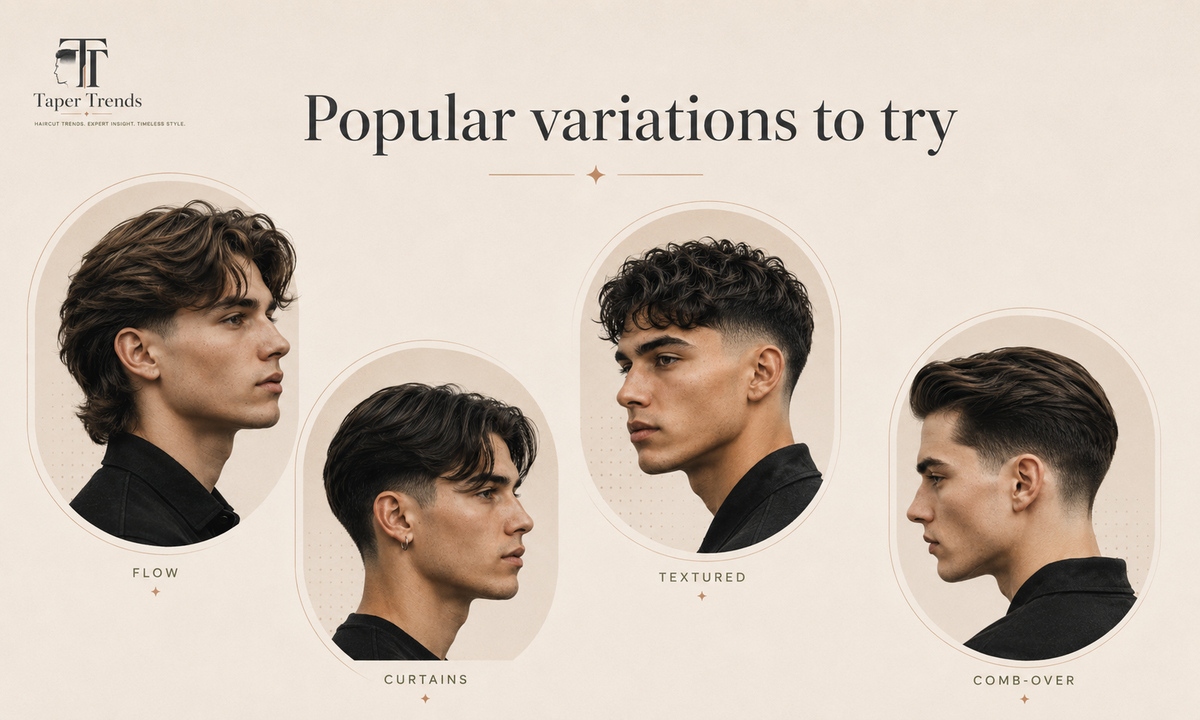
The man bun with a low taper suits hair long enough to gather: the sides stay clean while the top ties back into a small bun or half-up knot, common among guys who keep long hair for climbing, lifting, or cycling. The mullet-inspired long low taper keeps more length through the back and crown against clean sides, leaning into the current retro revival without going full vintage. The two-block style pairs a distinctly longer top against a very clean taper; it started in Korean men's grooming and has spread well beyond it. Curtains with a low taper use center-parted length that falls on either side of the forehead, effortless on the surface despite the precision underneath — the same idea as our low taper fade middle part guide, carried to a longer length. And the comb-over stays one of the most versatile options, moving between formal and casual depending on how much product you use.
The taper is the constant, and the top is the variable. You can wear a slick back one month and a textured fringe with a low taper fade the next without touching the foundation, just a trim and a different routine at home.
Which face shapes suit a long hair low taper fade?
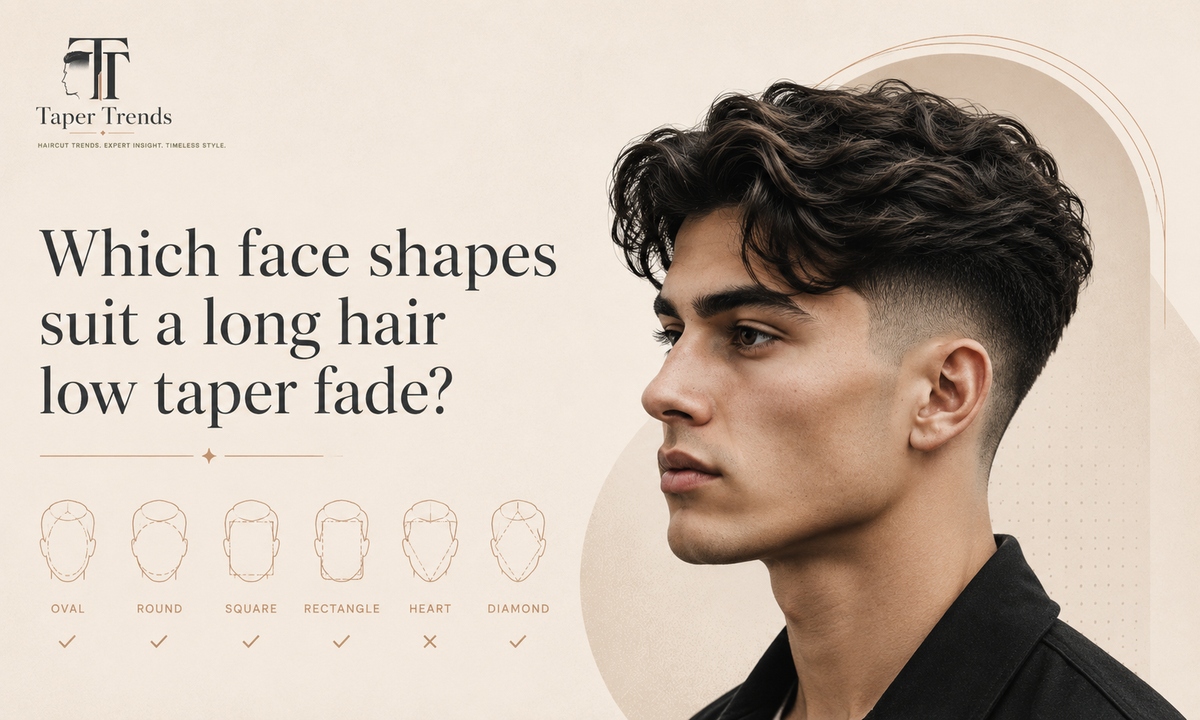
A long hair low taper fade flatters most face shapes because the low taper barely interferes with your proportions. It does not cut a hard line above the ear like a high fade, and it does not add bulk to the sides. Nearly all of the adjusting happens on top, through length, volume, and where the weight sits.
Oval faces can wear almost any version without much thought, since the proportions are already balanced, which is why barbers treat it as the safe default. Round faces benefit from height rather than width, so a textured quiff or a swept-back style that lifts hair off the forehead helps lengthen the face; avoid a heavy, blunt fringe sitting flat across the forehead. Square faces usually look better with movement and texture on top than a glass-flat slick back, since a strong jaw paired with hard lines up top can read as too angular.
Diamond faces, narrower at the forehead and chin and wider through the cheekbones, do well with some fringe or front volume to balance the narrower forehead. Heart-shaped faces, broader at the forehead and tapering to a narrower chin, look best when the top is not pushed straight back, so a side-swept fringe brings balance toward the jaw. Rectangular or oblong faces should go easy on added height, since a tall quiff stretches an already long face; a flatter, side-parted style tends to balance the proportions better.
- OvalThe safe default — almost any version works, from a slick back to a textured top.
- RoundAdd height, not width: a quiff or swept-back top lengthens the face; skip a flat, blunt fringe.
- SquareLean on movement and texture up top so a strong jaw doesn't read as too angular.
- DiamondSome fringe or front volume balances the narrower forehead and chin.
- HeartA side-swept fringe brings balance toward the jaw; avoid pushing the top straight back.
- Rectangular / oblongGo easy on height; a flatter, side-parted style balances an already long face.
Long hair low taper fade vs. low fade: the real difference
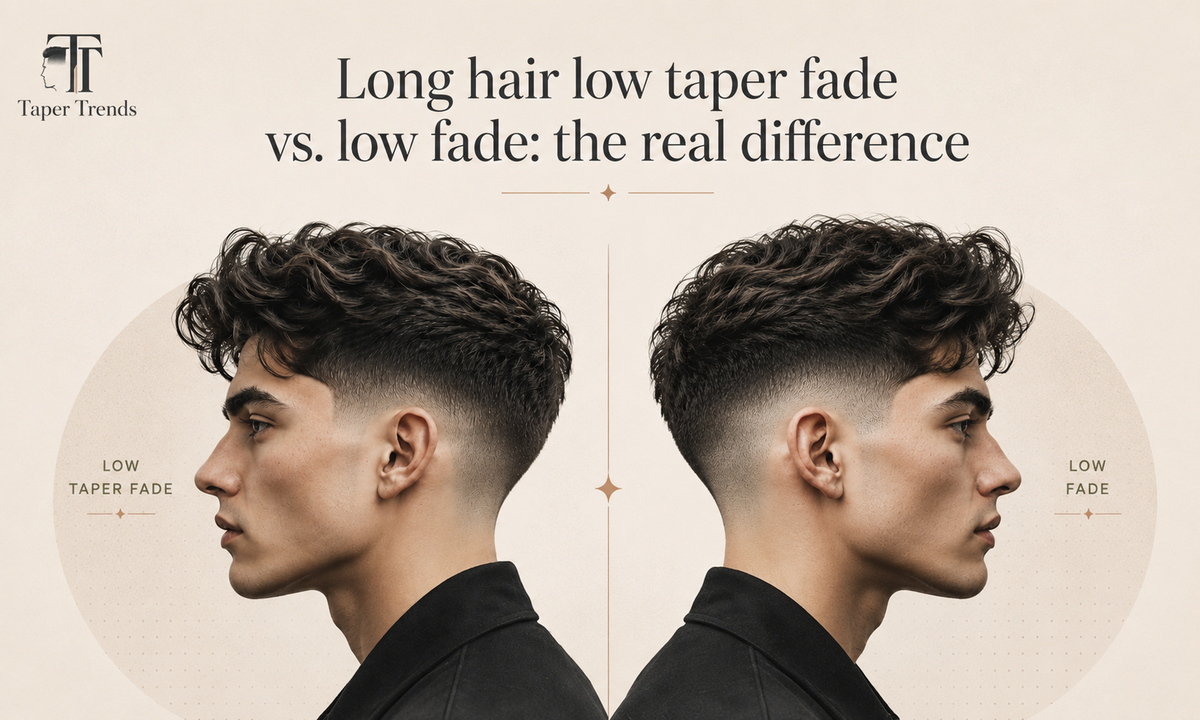
People use these terms interchangeably, but they describe different finishes, and the difference matters once you book. A taper never goes fully to the skin. Even at its shortest point near the hairline, there is still visible hair, often clipped with a number one or two guard. A low fade, by contrast, is built to reach the skin somewhere in the blend, creating a sharper line where hair meets scalp. “Low” just means that skin-level finish starts down near the ears and neckline instead of higher up. Our low taper vs low fade breakdown covers the difference in full.
| Aspect | Long hair low taper fade | Low fade (skin fade) |
|---|---|---|
| Finish at the shortest point | Keeps slight length, no bare skin | Blends down to bare skin |
| Contrast level | Soft, gradual, subtle | Sharper, more defined edge |
| Regrowth visibility | Forgiving, less noticeable between cuts | Skin line shows sooner |
| Typical touch-up | Every 4 to 5 weeks | Every 2 to 3 weeks |
| Overall impression | Natural, low-key, versatile | Crisp, deliberate, bolder |
The practical takeaway is maintenance. A skin fade, even a low one, needs more frequent trims to keep that clean line from blurring, while a taper's soft finish means a missed week or two barely shows. Both look sharp with long hair on top, so the choice comes down to how much contrast you want and how much upkeep you will commit to.
How to ask your barber for a long hair low taper fade
Miscommunication at the chair is the biggest reason people end up with a fade they did not picture, since barbers work off specific terms rather than vague descriptions.
What to say
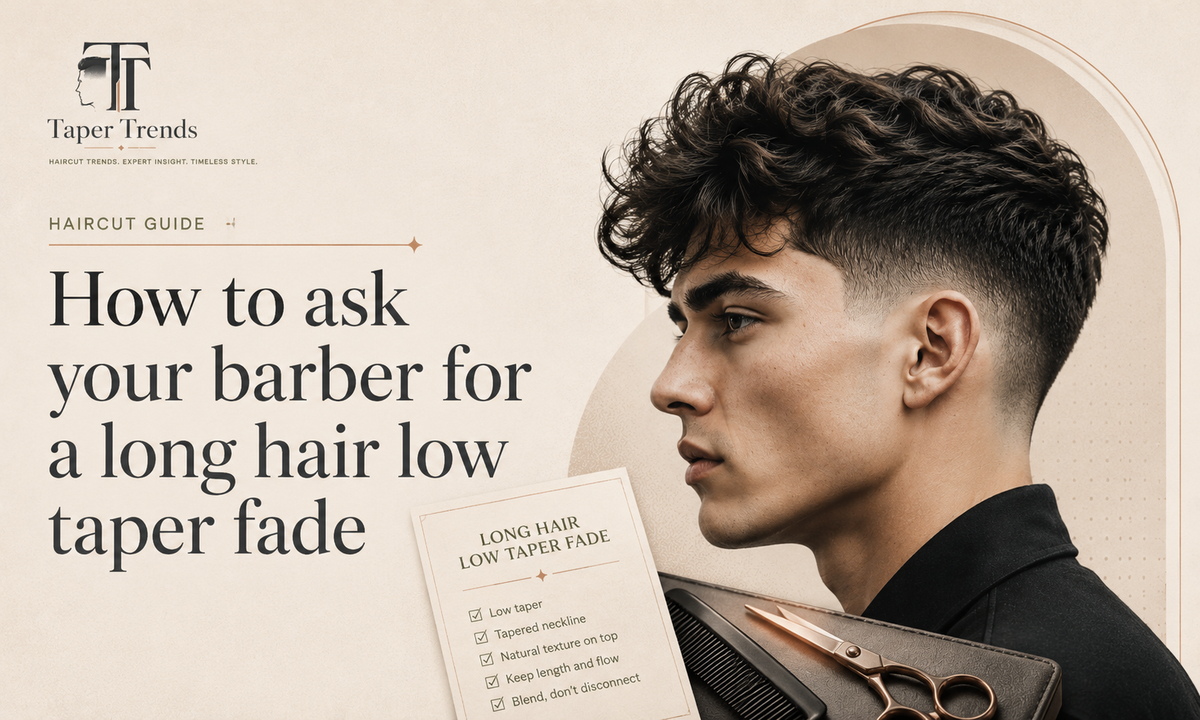
“Low taper starting near the hairline by my ears, blend down to a two — not a skin fade — and keep four to five inches of length on top.”
Name the fade height directly. Say “low taper” rather than just “fade,” since “fade” alone leaves the barber guessing between mid, high, and low. Be specific about guard numbers if you know them: a low taper often finishes around a number two or three rather than bare skin. If numbers are not your thing, “still some length at the bottom, not shiny skin” works just as well. Length on top matters just as much — vague requests like “keep it long” often come back shorter than you hoped, so give an actual measurement or point to a specific style.
A few more details help during the consultation:
- Your hair type and any cowlicks or growth patterns, since these change how the top sits.
- How much daily styling time you will realistically put in, so the barber can steer between a low-effort crop and a slick back.
- Whether you want a hard part line or a soft, blended part.
- Reference photos, ideally more than one, so a single image is not misread.
Even without guard numbers, a good photo carries most of the message. Hand over a picture of a slicked-back low taper with about five inches on top and the barber can read the fade height, length, and finish, while your words fill in what the image cannot show, like texture or upkeep between visits.
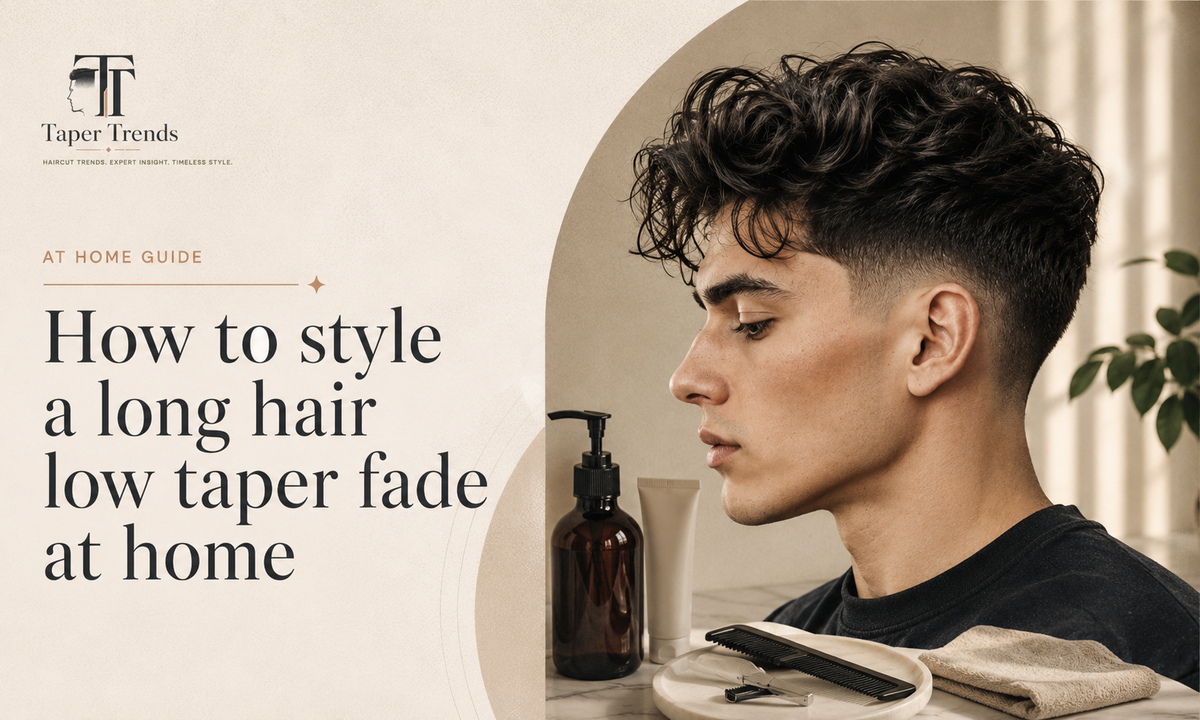
How to style a long hair low taper fade at home
A good haircut is only half the job. The daily routine is what makes the cut look intentional instead of just grown out, and once you find a routine that fits your hair, it adds only a few minutes each morning.
Start with hair that is slightly damp, not soaking and not bone dry, since product spreads more evenly with a little moisture left in. For a slicked-back or comb-over look, warm a small amount of pomade or clay between your palms, then work it from the roots first before smoothing it back. Root-first matters, because product on the ends alone leaves the base flat and the style drops by midday. For a textured finish, a blow dryer with a diffuser or a round brush lifts the roots while you direct the hair, then a lighter matte cream locks the shape once dry. Wavy and curly hair usually do better air-drying than under direct heat, so work a leave-in or curl cream through while wet and let it dry naturally or with a diffuser on low.
A few habits pay off over time. Detangle before product so it spreads evenly, and sleep on a silk or satin pillowcase, which cuts overnight friction and holds your style and curl pattern better than cotton. Skip the dry-brush restyle at midday too: if the shape falls, a light mist of water at the roots beats dragging a brush through dry hair. And if a slick back keeps ending up flat and greasy, you are almost always using too much product or applying it to dry hair, so cut the amount in half and start from a damp base.
The best products for a long hair low taper fade
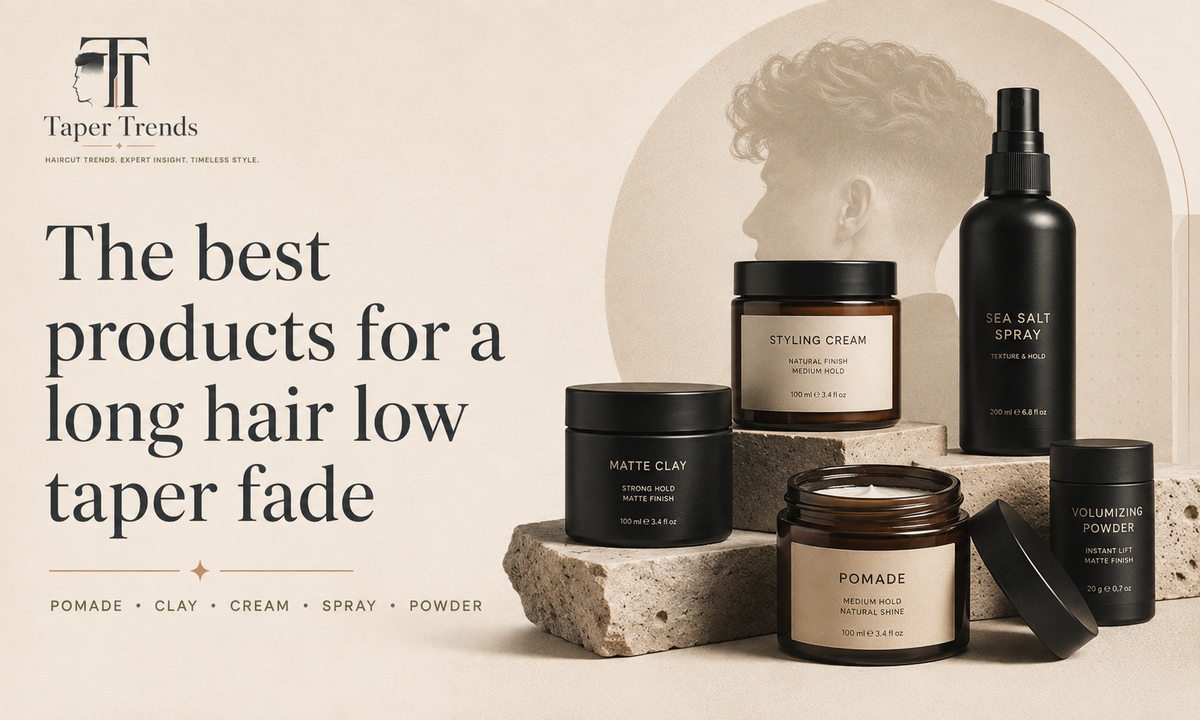
The right product depends less on the cut and more on the finish you want and the texture you are working with. Water-based pomade suits everyday slick backs since a little water reactivates it later, while oil-based pomade holds longer with more shine for days when the style has to last. Matte clay gives a strong, flat-finish hold, the go-to for textured crops. On the lighter end, a styling cream and sea salt spray both handle wavy hair, curl cream and a leave-in are essential for curls that dry out quickly, and texturizing powder adds root volume for flat-sitting straight hair. The table below sorts it out.
| Product | Best for | Finish | Hold |
|---|---|---|---|
| Water-based pomade | Straight hair, slick backs | Shiny to semi-matte | Medium |
| Oil-based pomade | Straight hair, all-day slick back | High shine | Strong |
| Matte clay | Straight or wavy, textured looks | Matte | Strong |
| Styling cream | Wavy hair, natural finish | Low sheen | Light to medium |
| Sea salt spray | Wavy hair, textured looks | Matte, tousled | Light |
| Curl cream | Curly hair | Natural, defined | Light to medium |
| Texturizing powder | Straight hair, root lift | Matte | Medium |
Most people end up using two things, something for hold and something light to finish. Buying a full shelf upfront rarely helps; pick one product suited to your hair, run it for a couple of weeks, and adjust from there.
How often should you maintain a long hair low taper fade?
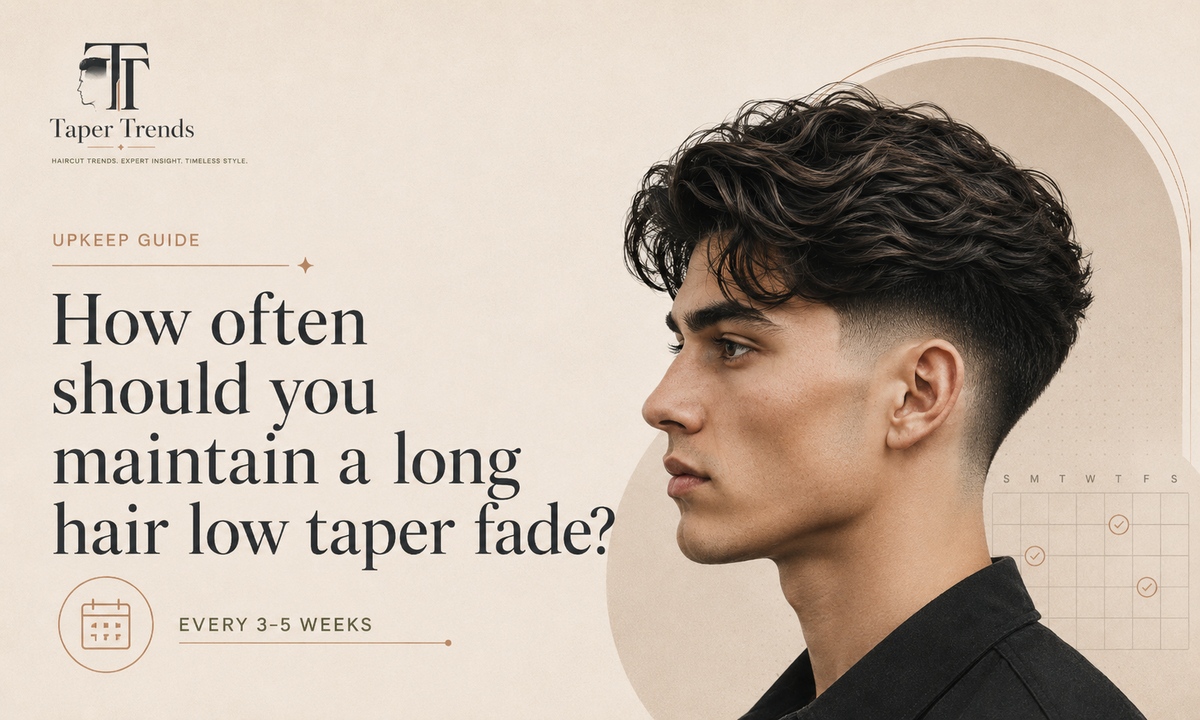
Refresh the fade every three to five weeks and lightly trim the top every six to eight weeks, since the two do not grow out at the same pace or need attention on the same schedule.
The fade line softens first. Because it starts low, regrowth skips the halo that higher fades show within two weeks, but it still blurs eventually, and once that clean line disappears the cut looks more like an overgrown buzz than an intentional style. Signs it is time: the fade has softened into a gradual blend rather than a distinct transition, the hair near your ears and neckline feels bushier, or the contrast between top and sides has flattened out. The top is usually meant to grow, so a light trim every six to eight weeks cleans up split ends and uneven length without cutting into the length you are working toward.
Average hair grows around half an inch a month, though that shifts with your body, diet, and stress. Faster growers might need the fade refreshed closer to three weeks, while slower growers can stretch to five. Between appointments, a home trimmer can clean up stray hairs at the neckline and ears without touching the blend, and most barbers are fine with that. Leave the blend itself to a professional, since an uneven fade line is far more noticeable, and harder to fix, than slightly overgrown length on top. To find your rhythm, book the first follow-up at four weeks, then adjust based on how the fade held.
Final takeaway
A long hair low taper fade rewards a little planning: match the cut to your face shape, learn a routine suited to your hair, and keep a schedule that fits how fast your hair grows. The cut works because the taper never demands much attention on its own, which leaves the top free to change with your mood or the season while still looking put-together in a meeting or a weekend photo. Bring a clear reference, ask specific questions at the chair, and give your hair the product routine it actually needs. Get those three right and this cut holds up far longer than most people expect.
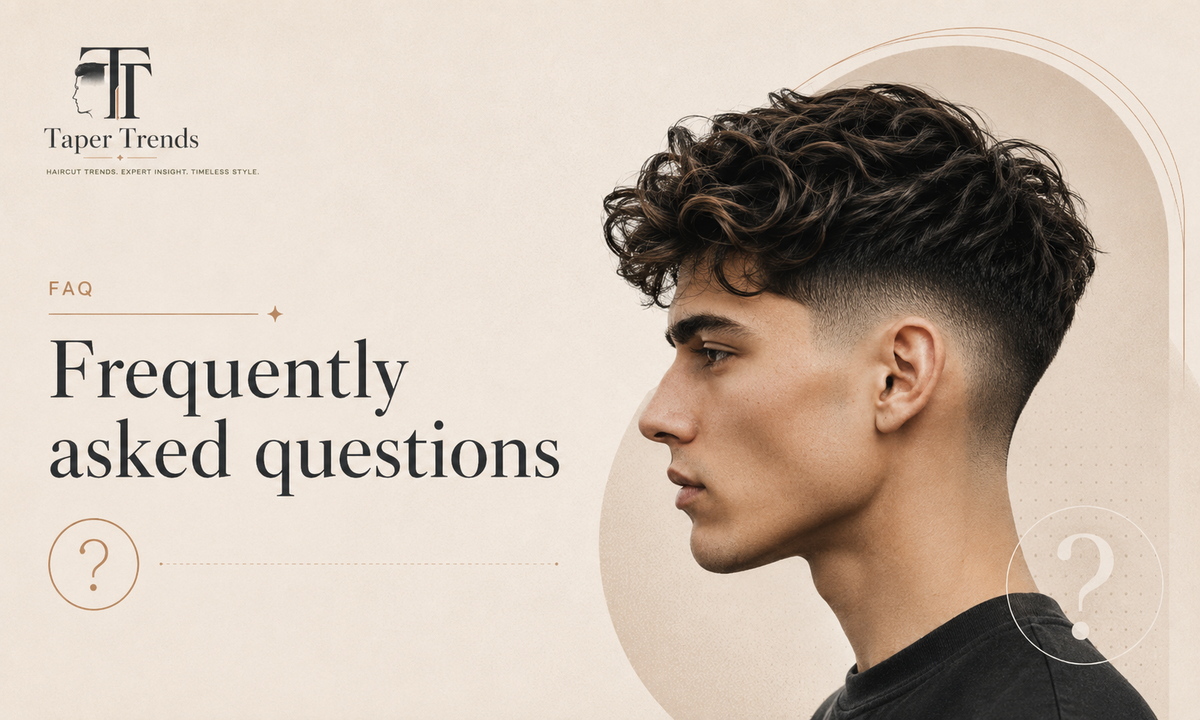
Frequently asked questions
How long does hair need to be on top for a low taper fade to work?
About two inches at minimum. Three to six inches gives you the most styling flexibility for slick backs, crops, and comb-overs.
Does a low taper fade work well with curly hair?
Yes. Curly hair suits this cut naturally, as long as the top stays moisturized with a leave-in conditioner or curl cream to keep the pattern defined.
What is the difference between a taper and a skin fade?
A taper keeps a little length even at its shortest point, usually a number one or two guard. A skin fade blends all the way down to bare skin for a sharper contrast.
How often should I get the fade touched up?
Most people schedule a touch-up every three to five weeks, since a low fade line grows out more slowly and less visibly than a high one.
Can I maintain the fade myself between barber visits?
Light cleanup around the neckline and ears is fine at home with a trimmer. Leave the actual blend to a barber, since an uneven fade line is hard to fix.
Which products work best for this haircut?
Pomade or matte clay for straight hair, sea salt spray or cream for wavy hair, and curl cream with a leave-in conditioner for curly hair.
Is a long hair low taper fade office-friendly?
Yes. The subtle fade and adjustable top length make it one of the more workplace-appropriate fade styles, since you can slick it back for formal settings and loosen it up otherwise.
The bottom line
The long hair low taper fade lasts because the taper never demands much attention on its own. It keeps real length up top while the low fade keeps the edges clean and grows out without ever looking patchy.
Whether you go for a slick back, a man bun, center-parted curtains, or a textured crop, it adapts to your hair type, your face shape, and how much time you want to spend in the morning. Keep the fade low, keep length on top, and it earns its place as a cut you come back to.
Want more taper fade guides?
Browse clean, barber-ready breakdowns for every hair type.