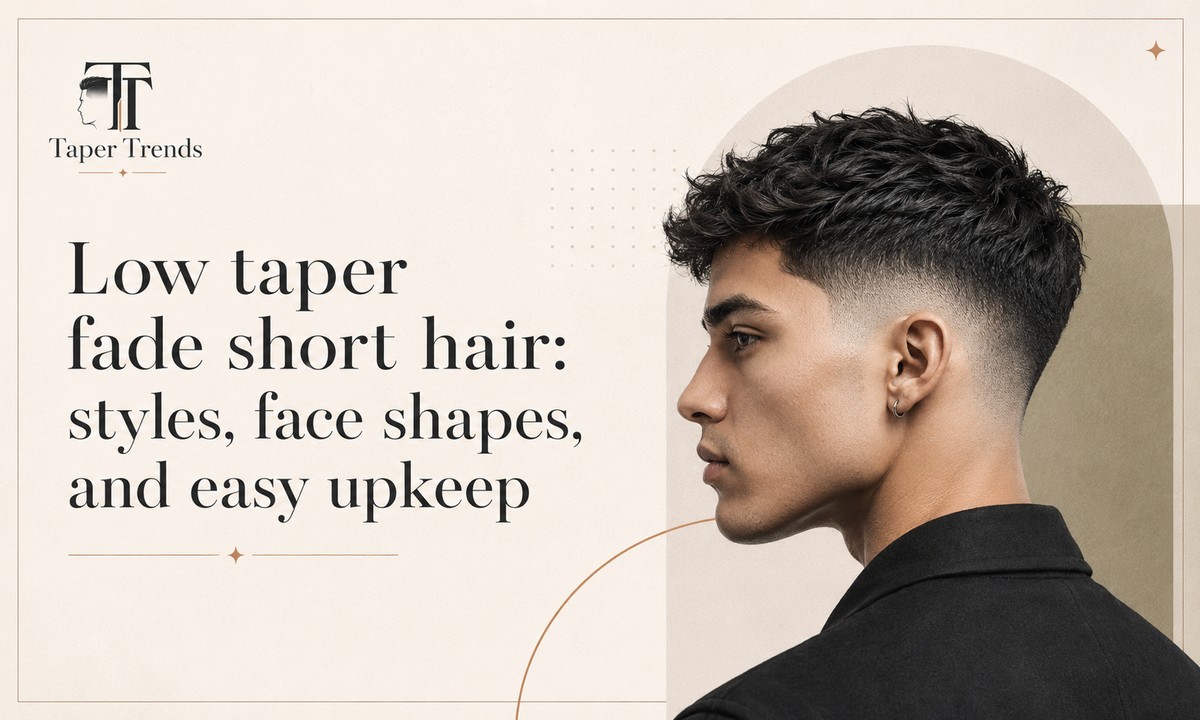
Scrolling barbershop reels looking for the right cut is practically a rite of passage now. You screenshot three photos, walk in feeling sure of yourself, and somehow still leave with something that looks nothing like what you pictured. A lot of the time the problem isn't the barber — it's language. Most guys can't actually describe what a low taper fade for short hair is, or why it looks so different from the high and mid versions their friends walk out with.
Over the last couple of years this has become one of the most requested cuts for short hair, and barbers now call it the defining fade of the moment. It looks clean without going severe, holds up well between visits, and works with almost any texture. The catch is matching the right variation to your face shape, your hair density, and how often you're realistically willing to sit in the chair. If you want the wider picture first, our complete low taper fade haircuts guide covers every fade height and texture in one place.
What a low taper fade is for short hair
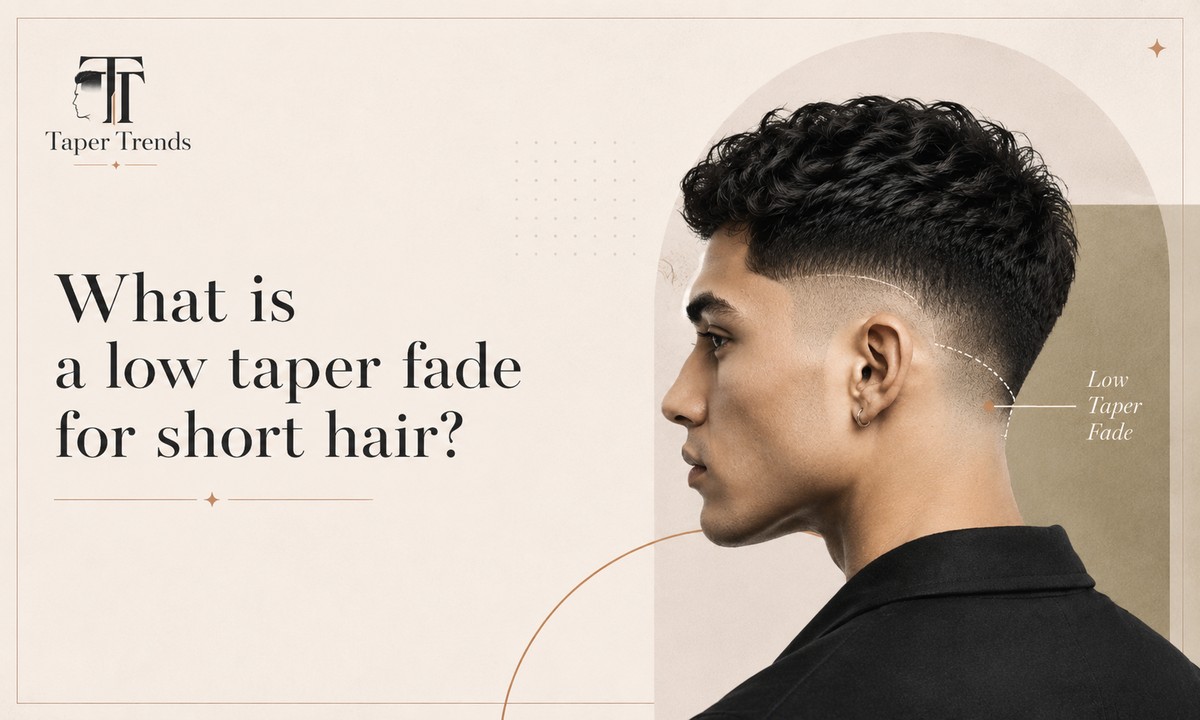
A low taper fade is a cut where the hair shortens gradually from a longer length on top down to skin or near-skin around the ears and nape, with the fade starting low — usually about an inch above the ear rather than up at the temple or crown. On short hair, that creates a tidy, compact shape. The top stays short, often between half an inch and an inch and a half, while the sides taper down smoothly instead of dropping off in a hard line. Keep real length up top instead and the same low sides carry a long hair low taper fade, a different cut built on the same blend.
The word “low”is doing most of the work in that name, and it's the part people get wrong at the chair. It refers to where the fade begins on the head, not how short the haircut is overall. A low taper keeps more length around the sides and back and blends it in gently, which is why it reads as more understated and professional than a high fade that carves a sharp line near the crown.
How a low taper compares to mid and high fades
Picture the three fade heights on a scale of boldness. A high fade starts near the top of the head and creates dramatic contrast — skin-close sides against noticeably longer hair up top. A mid fade splits the difference and starts around the middle of the side. A low taper starts closest to the ear and hairline and leaves the most natural coverage on the sides. Our low taper fade vs mid taper fade comparison walks the two side by side, and the low mid taper fade sits right between them.
On short hair this matters more than people expect. Because the top is already minimal, a high fade can push the whole thing toward looking shaved. A low taper keeps enough hair around the sides to stay soft and rounded even when the top is barely half an inch. It's the gap between a cut that looks put together and one that looks like the first day of basic training.
Low taper fade vs low fade: the difference people miss
These two terms get used as if they mean the same thing, and technically they don't. A taper, by definition, never goes bare: the hair gets shorter but always keeps a little length, even at its shortest point near the ears and neckline. A fade goes all the way to skin at some point, which is where that smooth, shaved-down edge comes from.
So a low taper fade is really a hybrid — the overall shape follows a taper's gradual, low-starting blend, but the very bottom edge at the hairline and neck fades to skin. A plain low fade usually shares the low starting point but doesn't promise the same soft gradient, and is sometimes cut with more defined stages. Our low taper vs low fade breakdown covers the distinction in full, and if you want to see it from every angle first, what a low taper fade looks like lays it out.
The distinction matters most when you're dialing in how much skin you want on show. Someone in a conservative office might ask for a low taper without stressing the fade, keeping a bit more coverage for a softer transition. Someone who wants a crisper break might ask for a low taper fade, or even a low skin fade, so the barber knows visible skin at the bottom is fine. Being clear about which you mean is often the difference between a cut that matches what you pictured and one that needs a follow-up trim.
Why the low taper fade suits short hair
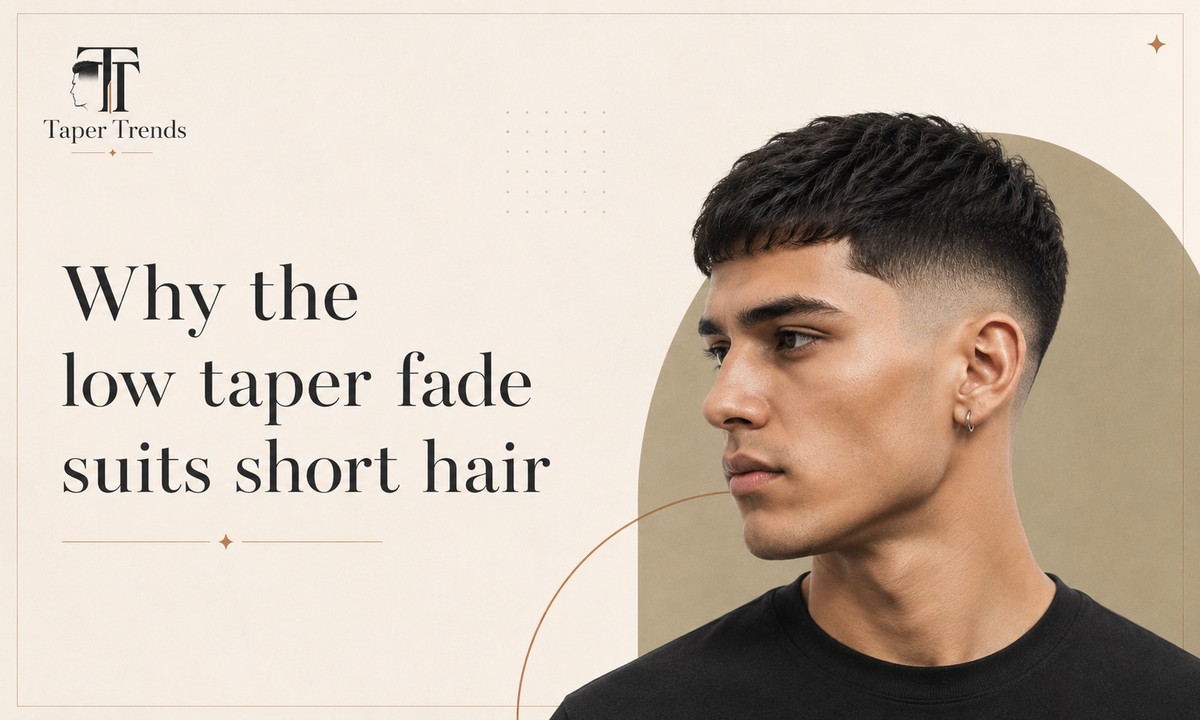
Barbers report this as one of their most requested combinations, and it isn't only trend-chasing. Search interest stayed near the top of men's haircut queries through 2025 and into 2026. The reason it holds that spot is range: a low taper fade with short hair on top looks fine in a courtroom, on a job site, or on a first date. And because the fade is subtle, it doesn't shout “freshly cut” the second you leave the chair, unlike high-contrast fades that need a day or two to settle.
It stays low-maintenance between cuts
For how sharp it looks, a low taper is one of the more forgiving fades to live with. The fade zone is smaller and lower on the head, so regrowth stays far less obvious for the first two to three weeks. A high fade, by comparison, can look grown out within seven to ten days. That buys you fewer barber trips — or more slack when your schedule won't allow a visit every couple of weeks.
It works across hair types
Thick and fine hair can both wear this cut well, which you can't say about every short style. Thick hair holds volume up top and pairs with a textured crop or spiky finish, while finer hair benefits because the eye goes to the clean line at the bottom rather than the density up top. Curly and coily textures get their own advantage, covered further down.
Best low taper fade short hair styles
The fade handles the sides. What you do on top is where personal taste and face shape come in. These are the variations that consistently land well, with a note on who each one suits.
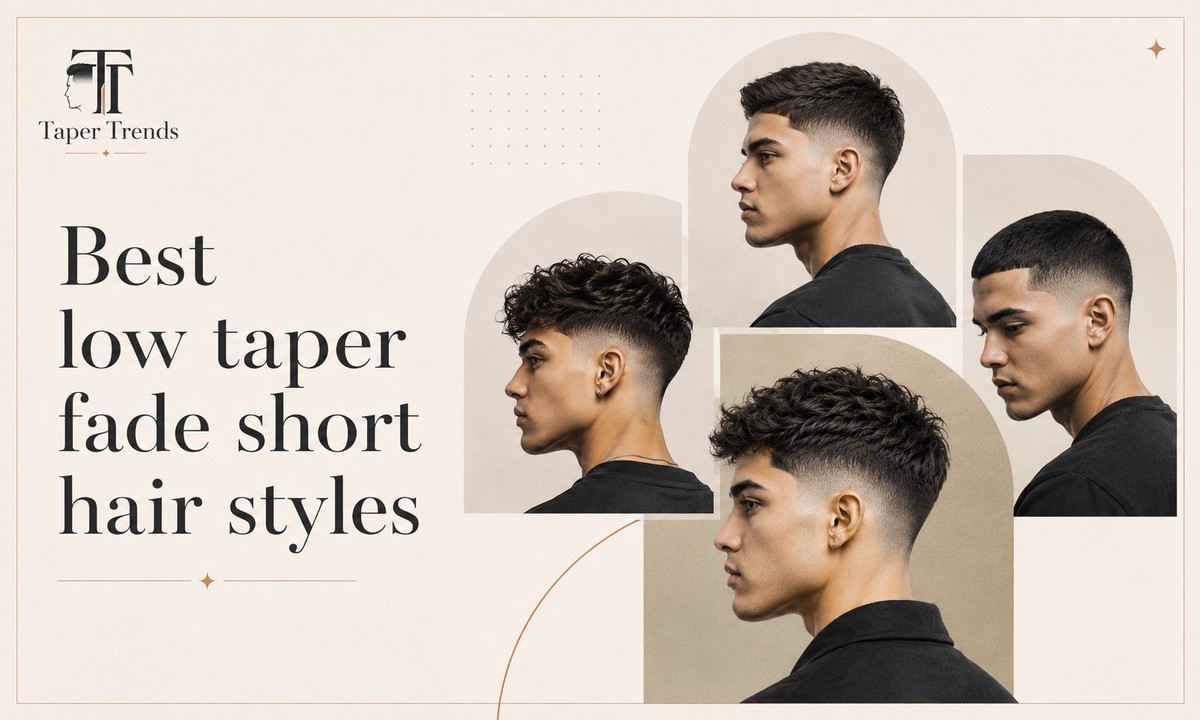
Crew cut with a low taper
The classic, no-fuss option. Short, even length on top — roughly three-quarters of an inch to an inch — tapering into the low fade. It needs almost no daily styling beyond a towel-dry and maybe a dab of matte paste, which makes it a favorite for anyone who wants to look polished without a morning routine.
Textured crop with a low taper
A slightly longer top, around an inch to an inch and a half, cut with texturizing shears for a choppy, matte finish, then blended into the low fade. It adds more interest for straight or wavy hair and feels more current than a plain crew cut without going full high-fade drama. It's a close cousin of the textured fringe with a low taper fade, with the movement spread across the whole top instead of just the front.
Buzz cut with a low taper
The lowest-maintenance pick here. An even buzz across the top, a number 2 or 3 guard, paired with a low fade. It can go three to four weeks before it needs a refresh, so it's a strong choice if you want short hair with zero styling commitment.
Slick back with a low taper
Leave the top a little longer, around two inches, comb it back with a light pomade, and the low fade underneath keeps the whole thing grounded and tidy rather than stiff or overly formal. It works well for guys who want short sides but aren't ready to go ultra-short on top. If you'd rather part it than slick it straight back, the low taper fade middle part takes the same length in a different direction.
Curly top with a low taper
For natural curls or coils, keeping the curl intact on top while fading low on the sides creates contrast that plays up the texture instead of fighting it. Curly-haired clients ask for this one a lot, specifically because the low starting point avoids the patchiness higher fades can create on tighter curl patterns. Want more volume up top? A blowout low taper fade for curly hair rounds the curls out fuller.
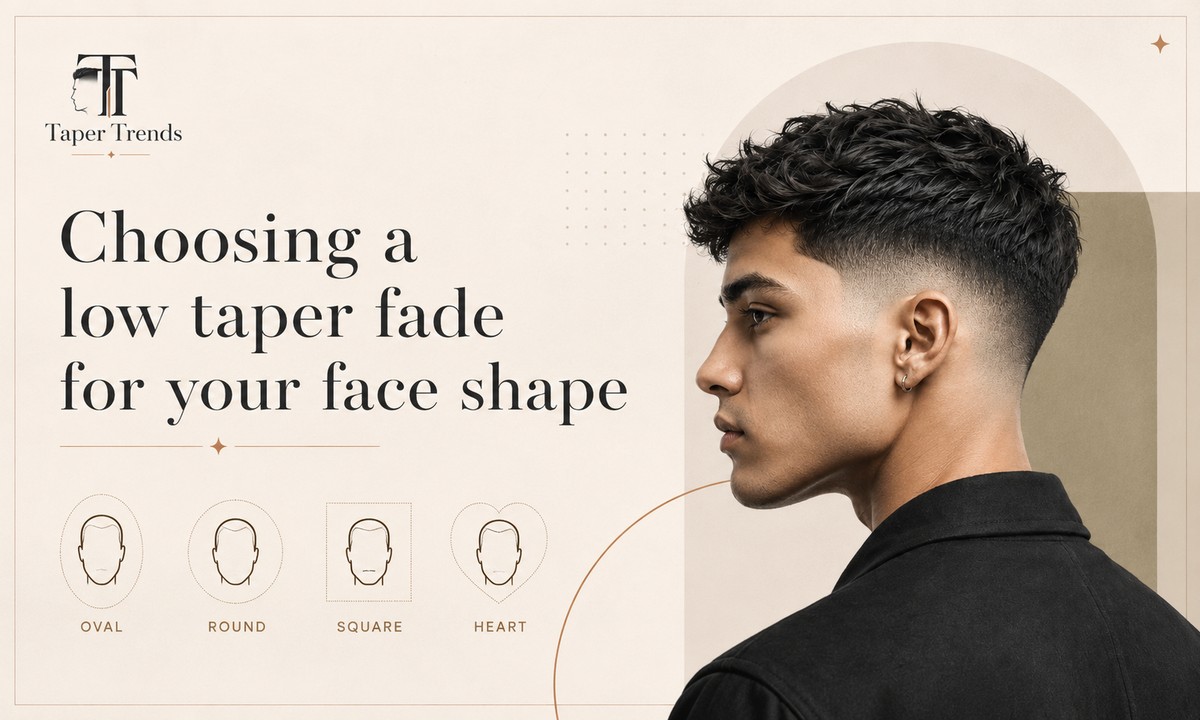
Choosing a low taper fade for your face shape
Most guys pick a cut because it looked good on someone else, then wonder why it doesn't land the same way on them. The step they skipped is a quick, honest read of their own face shape, since the same low taper fade frames different proportions very differently.
You can check this at home. Pull your hair back, look into a mirror, and compare three widths: your forehead at its widest, your cheekbones, and your jaw, along with how long your face is from hairline to chin. A face noticeably longer than it is wide usually reads oval or rectangular. Equal width and length with a rounded jaw points to round. A jaw and forehead close in width with sharper angles suggests square. A wider forehead narrowing to the chin is the classic heart shape.
Here's the useful part: once you know your shape, the adjustments that matter aren't really about the fade. The low taper handles the sides regardless. What changes is the top and the hairline.
| Face shape | Top style that works | Why |
|---|---|---|
| Round | Textured crop or crew cut with height on top | Adds vertical length to offset the width |
| Square | Slick back or crew cut, styled slightly off-center | Softens a strong jaw instead of squaring it off |
| Oval | Almost anything, including a buzz cut | Balanced proportions suit most cuts |
| Long / rectangular | Textured crop with fringe or side volume | Adds width and breaks up the length |
| Heart | Curly top or textured crop with fullness at the temples | Balances a wider forehead against a narrower jaw |
A round face benefits from a bit more length and lift at the crown, which stretches the face vertically instead of adding to its width. This is why a tight buzz with a low fade often disappoints a rounder-faced client: it emphasizes width with no height to balance it, and half an inch more on top usually fixes it. A square jaw tends to look better with the top styled slightly off-center, since a hard center part can make strong angles look boxier. Heart shapes want some fullness at the temples to balance a wider forehead.
The hairline is the other thing people forget to mention. A receding or uneven one changes how the fade should be blended near the front, and a good barber will soften the fade line around the temples rather than cutting a crisp edge that points straight at it. Bringing it up before the clippers start saves a lot of back-and-forth.
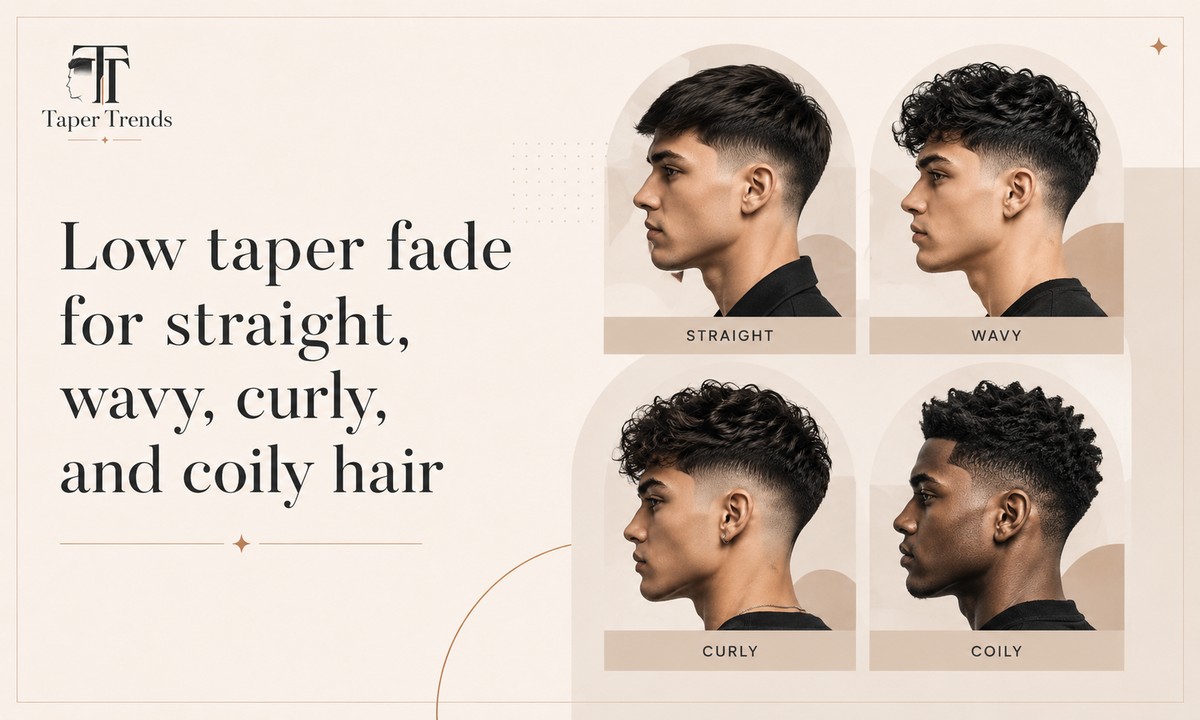
Low taper fade for straight, wavy, curly, and coily hair
The mechanics don't change much across textures, but the way the cut is blended and styled afterward absolutely does. Knowing your texture's quirks ahead of time makes for a smoother conversation with your barber.
Straight hair
Straight hair shows every line, which is both the advantage and the risk. A low taper on straight hair looks exceptionally crisp because there's no texture hiding the blend, but any unevenness shows up immediately, so precision counts for more. A light, low-shine clay or fiber paste works best, since straight hair turns greasy fast under heavier pomades. Our low taper fade for straight hair guide goes deeper on top styles and products.
Wavy hair
Wavy hair brings a bit of natural texture up top, which softens the contrast between the longer top and the tapered sides. It holds a tousled, lived-in finish well, so a textured crop or crew cut suits it better than an ultra-flat style. A sea-salt spray or texturizing cream worked into damp hair brings out the wave without weighing it down — our low taper fade for wavy hair guide covers the wavy versions in detail.
Curly hair
Curls change shape and volume with humidity and length, so the fade has to account for how much they'll spring up once dry. Barbers who work with curls often cut a little longer than you'd expect while the hair is stretched, knowing it'll shrink upward once released. The low taper suits curly hair especially well because the lower starting point avoids the patchy look you get when tight curls meet a fade line higher up. The curly low taper fade guide breaks it down curl type by curl type.
Coily hair
Coily hair has the tightest pattern and the most dramatic shrinkage. Type 4 hair commonly pulls back by half its stretched length or more once it dries, so a barber has to check the fade with the hair both stretched and relaxed. Moisture is the other piece: coily hair dries out faster than any texture, so a leave-in or curl cream isn't only for style, it's upkeep. For afro-textured tops, our low taper fade afro guide and the wider low taper fade for Black men cover waves, curls, twists, and locs.
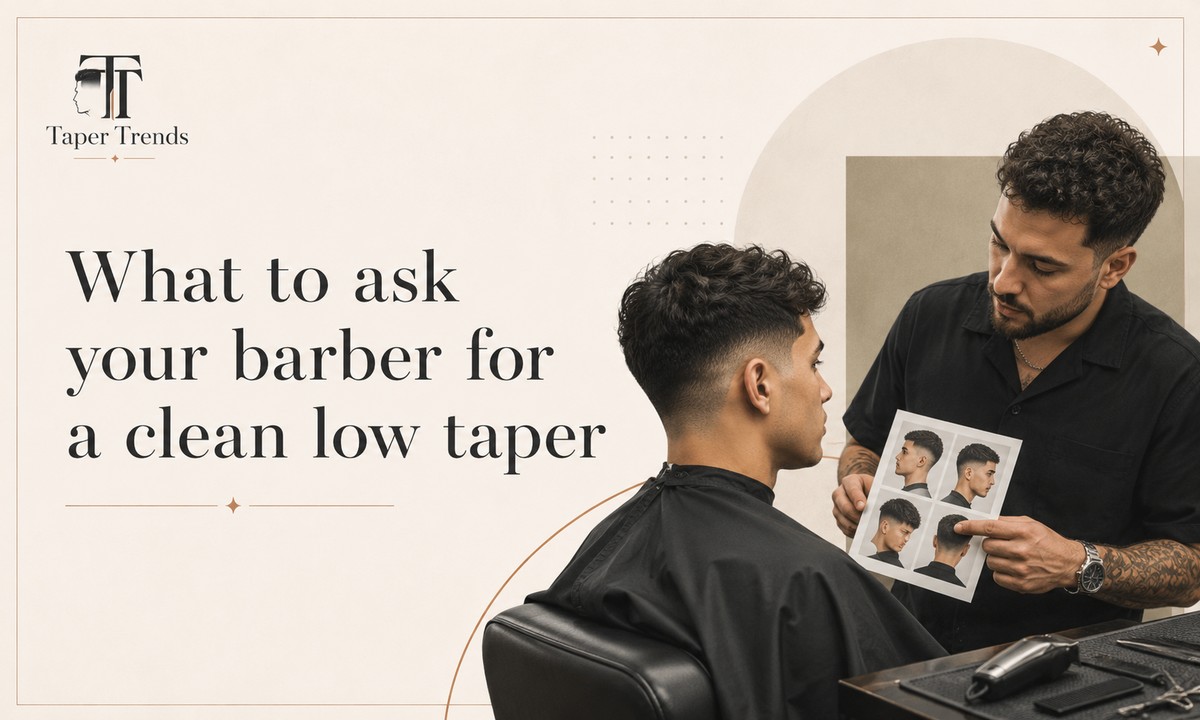
What to ask your barber for a clean low taper
Miscommunication is the biggest reason people leave the chair unhappy, and it almost always comes down to vague wording. “Just a low fade, not too short” gives a barber very little, because “not too short” means something different to everyone.
A better approach is to describe three concrete things: where the fade should start, how short the top should be, and how the two should meet. Something like:
“Start the fade about an inch above my ear, keep the top around an inch to an inch and a half, and blend it so there’s no visible line where they connect.”
If you have a cowlick, a receding hairline, or thinning spots, say so before the clippers come out, since those areas usually need adjusted blending. Bring a reference photo, but pair it with a description, since lighting, density, and camera angle can all make a fade look different from how it'll cut. And if you've had a low taper you liked and know the guard numbers used, mention them — that gives a new barber an exact starting point instead of a guess.
It also helps to know a few terms barbers use daily that clients tend to mix up.
| Term | What it means |
|---|---|
| Taper | Hair shortens gradually but never reaches bare skin |
| Fade | Hair shortens down to skin at some point |
| Blend | The transition between two lengths with no visible line |
| Skin fade | A fade that goes all the way down to the skin |
| Line up | A sharp, defined edge along the hairline or neckline |
| Guard number | The clipper attachment size that sets how much hair is left |
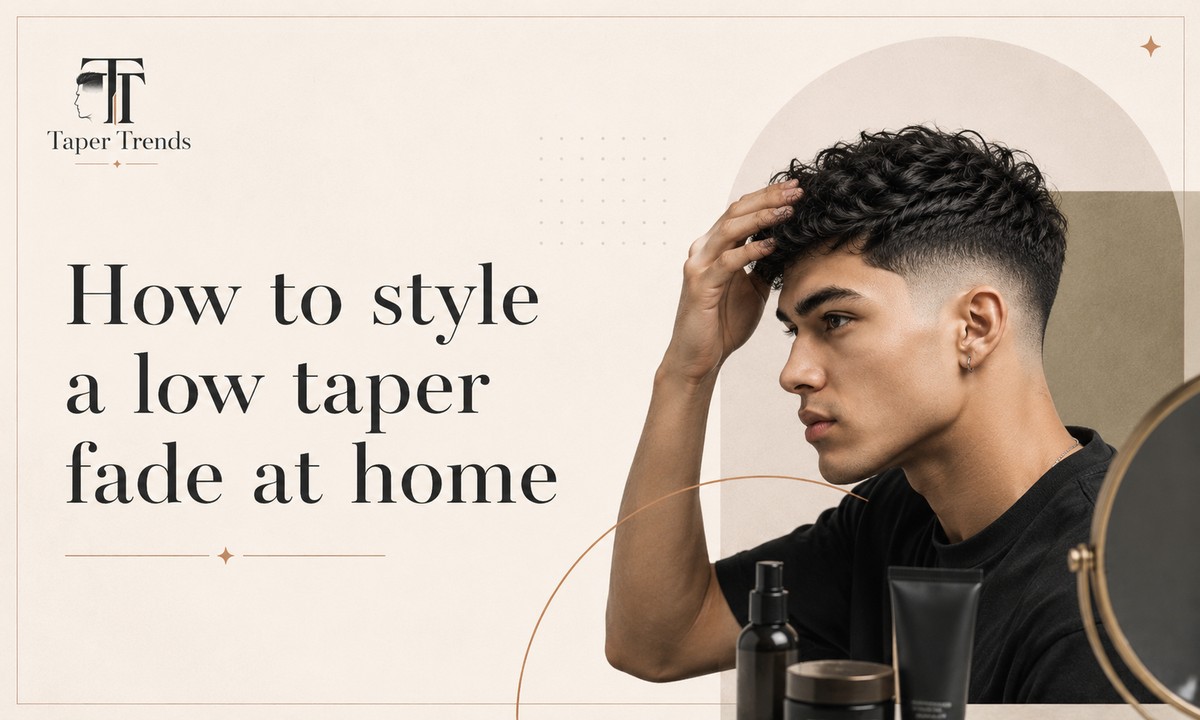
How to style a low taper fade at home
One quiet advantage of this cut is that it doesn't ask for a complicated routine. A few small habits are the difference between a fade that looks fresh all day and one that goes flat by afternoon.
Start with how you dry it. Rubbing short hair hard with a towel roughs up the cuticle and leaves it frizzy, especially on wavy or curly textures. Blot it gently, then let it air-dry for a few minutes before any product. In a rush, a blow dryer on a low, cool setting a few inches away is fine, but keep high heat off the scalp, since it can dry out the skin around the fade line.
Product depends on the finish. A pea-sized amount of matte clay or paste, warmed between your palms and worked from the roots out, gives texture and hold without shine — ideal for a crew cut or textured crop. For a slicked-back look, a little water-based pomade combed through damp hair holds the shape without the greasy build-up oil-based products leave. Curly and coily tops do better with a light curl cream or leave-in than clay, since paste flattens curl definition.
To put a number on it, a textured crop with a low taper is a three-minute job on a normal day: damp hair, a dime-sized bit of clay pressed and scrunched into the top instead of combed flat, then a quick touch-up at the fringe.
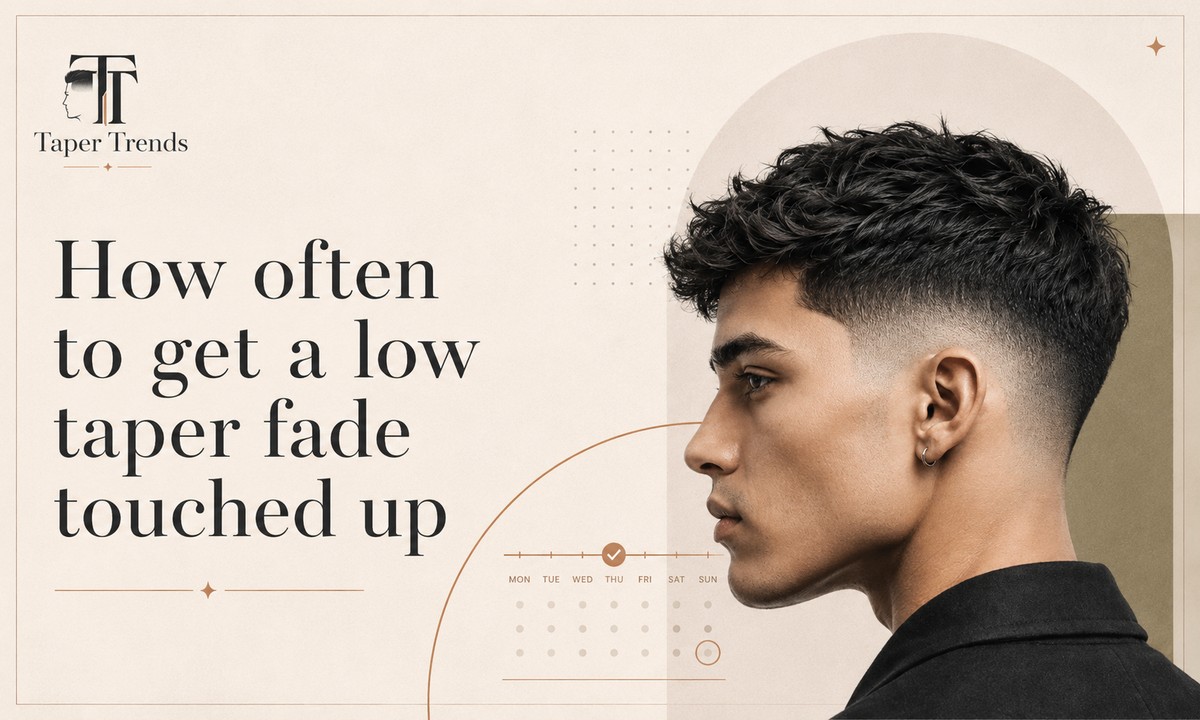
How often to get a low taper fade touched up
Timing your visits is what keeps a low taper looking sharp instead of turning into a shapeless grow-out. The American Academy of Dermatology puts average scalp growth at about half an inch a month, but the fade zone, being shorter to start, shows that growth sooner than the top does. Most barbers suggest coming back somewhere between two and three weeks for a low taper on short hair, though it depends on which style you're wearing up top and how fast your hair grows.
| Style on top | Touch-up window | Why |
|---|---|---|
| Buzz cut with low taper | 3 to 4 weeks | Uniform short length hides regrowth longer |
| Crew cut with low taper | 2 to 3 weeks | Slightly longer top shows unevenness sooner |
| Textured crop with low taper | 2 to 3 weeks | Texture needs regular reshaping to stay sharp |
| Slick back with low taper | About 3 weeks | Longer top allows a bit more flexibility |
| Curly top with low taper | 3 to 4 weeks | Curl shrinkage disguises growth between cuts |
A couple of habits stretch the life of the cut. Wash with a gentle, sulfate-free shampoo two or three times a week so paste and pomade don't build up and make short hair look dull. Between visits, a trimmer with a guard can tidy the neckline, though the blended zone itself is best left to a professional so you don't cut visible lines into it.
The most useful habit is booking your next appointment on the way out of the current one, rather than waiting until the fade obviously needs it. Once the transition line has fully blurred, the barber has to take off more hair just to reset the shape. Guys who keep a steady three-week rhythm get cleaner results over time, because the barber is maintaining an existing shape instead of rebuilding a grown-out one each visit.
Frequently asked questions
What does a low taper fade mean for short hair?
The fade starts low, near the ear, and blends gradually into short hair on top instead of a high-contrast line near the crown. On short hair it keeps a tidy, compact shape while the sides stay soft rather than shaved.
How often should I get a low taper fade trimmed?
Every two to three weeks for most short styles. Buzz cuts and curly tops can stretch to three or four weeks, since they hide regrowth better than a crew cut or textured crop.
Does a low taper fade suit curly hair?
Yes. The low starting point avoids the patchy look tighter curls can create with higher fades, which is why curly-haired clients request it often.
What's the difference between a low taper fade and a high fade?
A low taper starts near the ear with a soft transition. A high fade starts near the crown with much sharper contrast, which can push a short cut toward looking shaved.
Can I maintain a low taper fade at home between visits?
You can tidy the neckline with a trimmer, but leave the blended fade area to a professional to avoid cutting visible lines into it.
Which face shapes suit a low taper fade best?
Nearly all of them, since the adjustments happen in the top style rather than the fade. Round faces do best with added height on top, heart shapes with fullness at the temples.
Is a low taper fade a good choice for professional workplaces?
Yes. The subtle blend and short length make it one of the most workplace-appropriate fade styles, and it doesn't shout “freshly cut” when you leave the chair.
What guard numbers are used for a low taper fade?
It varies by barber and how much skin you want, but the bottom of a low taper is often worked with guards in the 0 to 3 range, blended up into longer settings. Telling your barber the guards from a cut you liked is the most reliable way to repeat it.
The bottom line
A low taper fade on short hair stays popular because it handles a lot of competing demands at once. It flatters most face shapes, works across straight, wavy, curly, and coily hair, and holds its shape longer than higher-contrast fades.
Getting the best version comes down to a few things you control: reading your face shape well enough to guide what happens on top, using the right words with your barber, and keeping a rhythm that stops the fade from growing into a shapeless mess. The best cut isn't the one trending hardest this month — it's the one that works with your features and your schedule.
Want more taper fade guides?
Browse clean, barber-ready breakdowns for every hair type.