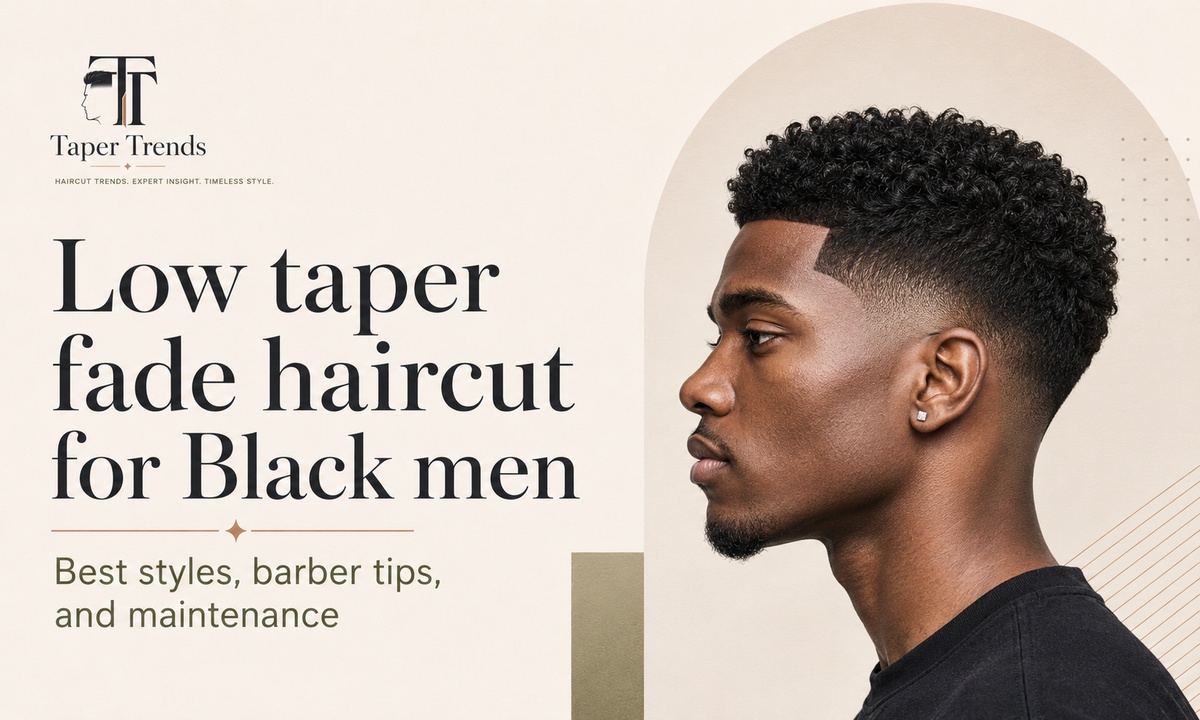
Scroll through barbershop photos or grooming clips right now and one cut keeps showing up. The low taper fade haircut for Black men has become one of the most requested styles guys bring to the chair, and the reasons are practical. It looks clean without being loud, it works with almost any texture, and it sits well next to a lined-up beard.
This guide covers what the cut is, why it suits Black hair so well, the variations worth asking for, how to brief your barber so you walk out with the right shape, and how to keep it sharp between visits. If you want the broader overview first, our complete low taper fade haircuts guide covers every hair type in one place.
What is a low taper fade haircut?
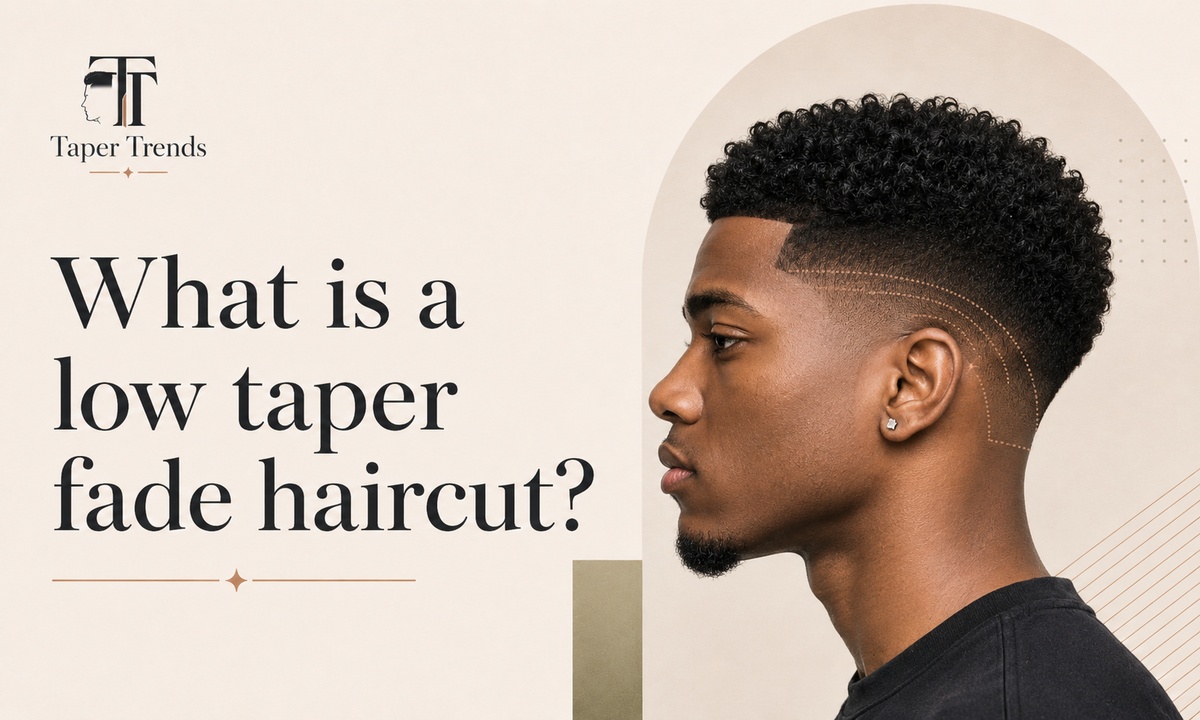
A low taper fade is a cut where the hair gets gradually shorter as it moves down toward the hairline, ears, and neckline. The “low” part means the fade begins low on the head, close to the natural hairline, instead of higher up near the temples.
Picture a soft transition. The top stays fuller and closer to its natural length, while the sides and back blend down into very short hair or skin near the bottom. If you want to see it from every angle, our guide on what a low taper fade looks like walks through the side, back, and top.
How it differs from a regular fade
“Regular fade” is a loose term that means different things in different shops. A low taper is more specific, and the difference comes down to where the fade starts:
- High fadeBegins near the top of the head and takes off a lot of length fast.
- Mid fadeBegins around the middle of the head, above the ears.
- Low taper fadeBegins low, right around the hairline and ears, so more length stays on the sides.
Because so little hair comes off higher up, the low taper reads as subtle and natural. It is a good entry point if you are new to fades and do not want a dramatic change, or if you just prefer a quieter, professional look.
Why a low taper fade works with Black hair textures
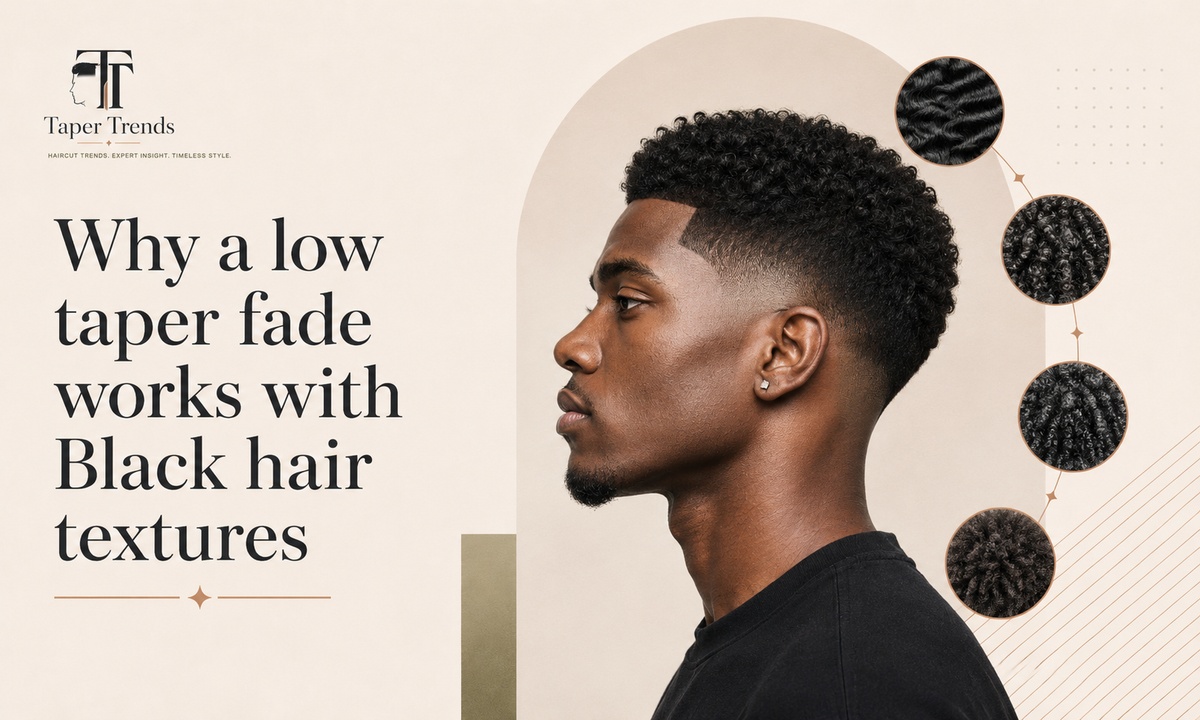
Black hair covers a wide range, from tight coils to loose curls to brushed-out waves, and the low taper does not fight any of them. Since the fade stays close to the hairline, it leaves the pattern on top alone. That is why it works as a base for waves, curls, an afro, twists, or locs without changing how the top behaves.
There is a maintenance benefit too. Because the fade sits low, regrowth is less obvious than it is with a high fade, so you can usually stretch the time between touch-ups. It also protects the hairline. A fade that does not climb too high is less likely to clash with your natural hairline shape, which can happen when a barber takes a high fade past where it should sit. For anyone easing into fades for the first time, that makes the low taper a more forgiving choice.
Best low taper fade styles for Black men
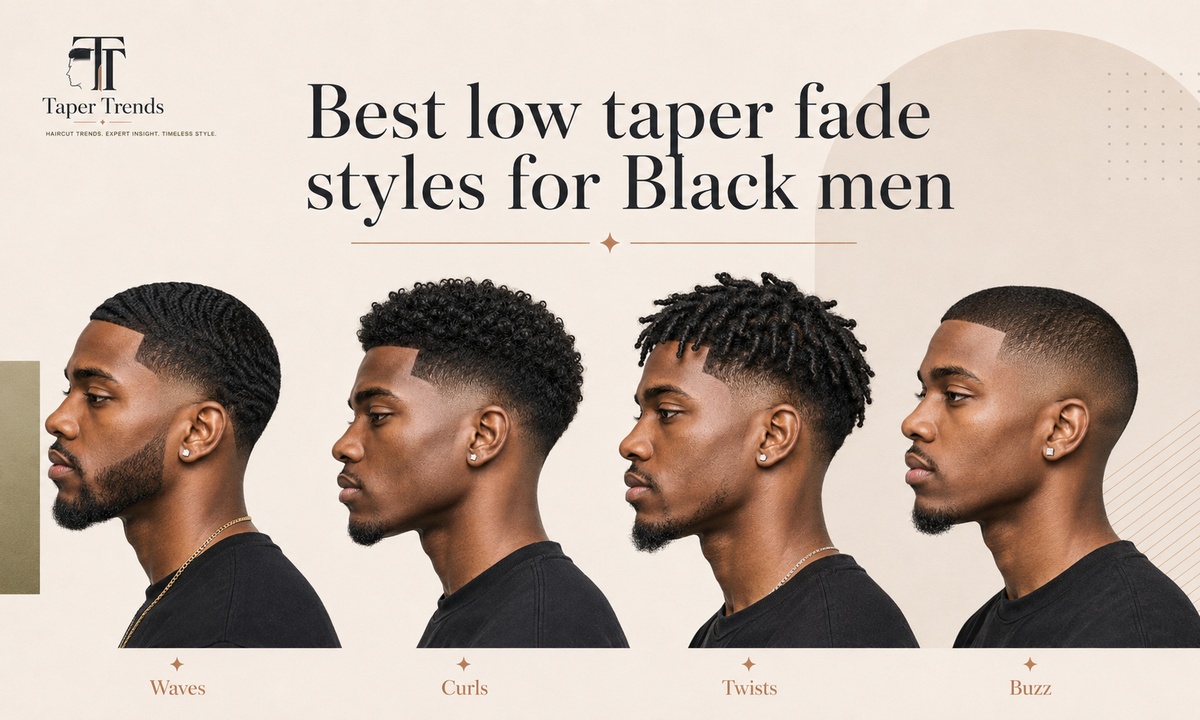
The base cut is the same every time. What changes the whole look is how you wear the top. These are the variations men ask for most.
Low taper fade with waves
A low taper with waves is one of the most requested combinations in shops right now. The fade cleans up the edges while the waves do the visual work on top.
The two patterns you will hear about are 180 and 360 waves. A 180 pattern flows in a half-circle across the top and front of the head, and it pairs easily with a low taper since the fade never interrupts the pattern. A 360 pattern wraps all the way around, and this is where the low taper earns its spot: keeping the sides short lets the full rotation show clearly against the skin. If you are early in your wave journey, 180 waves are more realistic in the short term — a 360 pattern takes longer to build and needs more consistent brushing.
Low taper fade with curls or an afro
Curly and coilier textures give you the most room to play, since the top can go short, rounded, or loosely defined depending on your mood — our curly low taper fade guide breaks that texture down by curl type. A mini afro keeps the top compact, usually an inch or less, while the fade cleans up the perimeter. A rounded afro lets the top grow fuller, closer to a classic afro shape — or, blown out for real height, a blowout low taper fade for curly hair — while the fade underneath stops it from looking bulky or unshaped. If your curl pattern is looser, a curl cream or gel helps separate the curls so they stand out against the fade. For a full, natural afro on top, our low taper fade afro guide covers the styles, guard lengths, and maintenance in depth, and our Hispanic Mexican low taper fade guide breaks down the same cut with a crisp lineup across curly and wavy textures.
Low taper fade with sponge curls, twists, or locs
Sponge curls give you uniform, defined curls without a lot of daily styling, and a low taper keeps the sides tidy around them. Two-strand twists or comb twists on top add a textured, dimensional look that works at short or medium length. Locs and a low taper are a classic pairing, with the fade keeping the sides and back clean while the length and thickness of the locs stay the focus.
Low taper fade with a buzz cut
If you want the least upkeep possible, a buzz cut over a low taper is about as simple as it gets. It stays sharp with almost no daily styling.
Low taper fade with a beard and line-up
Connecting a low taper into a well-lined beard is one of the cleanest ways to walk out of a shop. The goal is a smooth blend where the sideburns taper down into the beard with no harsh line or gap. Ask your barber to fade the sideburns into the beard using the same guards used on the sides of your head, so the whole thing reads as one cut instead of two.
The edge-up, also called a line-up, is what gives the cut its finished look. It defines the hairline, temples, and beard edges with precise trimmer work, and it is usually the last thing the barber does. Even a great fade looks unfinished without it, so ask for it specifically if it is not already part of their process. One warning worth taking seriously: aggressive edge-ups over time can make the hairline look like it is receding, even when it is not. More on how to avoid that below.
Popular low taper fade styles to ask for
- Low taper with 360 waves and a clean line-up
- Low taper with a mini afro or rounded afro
- Low taper with sponge curls, twists, or locs
- Low taper buzz cut for the lowest upkeep
- Low taper faded straight into a lined-up beard
Prefer a rounded side profile that curves around the ear instead of a straight fade line? A taper low burst fade is a popular variation, and if you want a carved detail on the side, our low taper fade design guide covers the best lines and shapes.
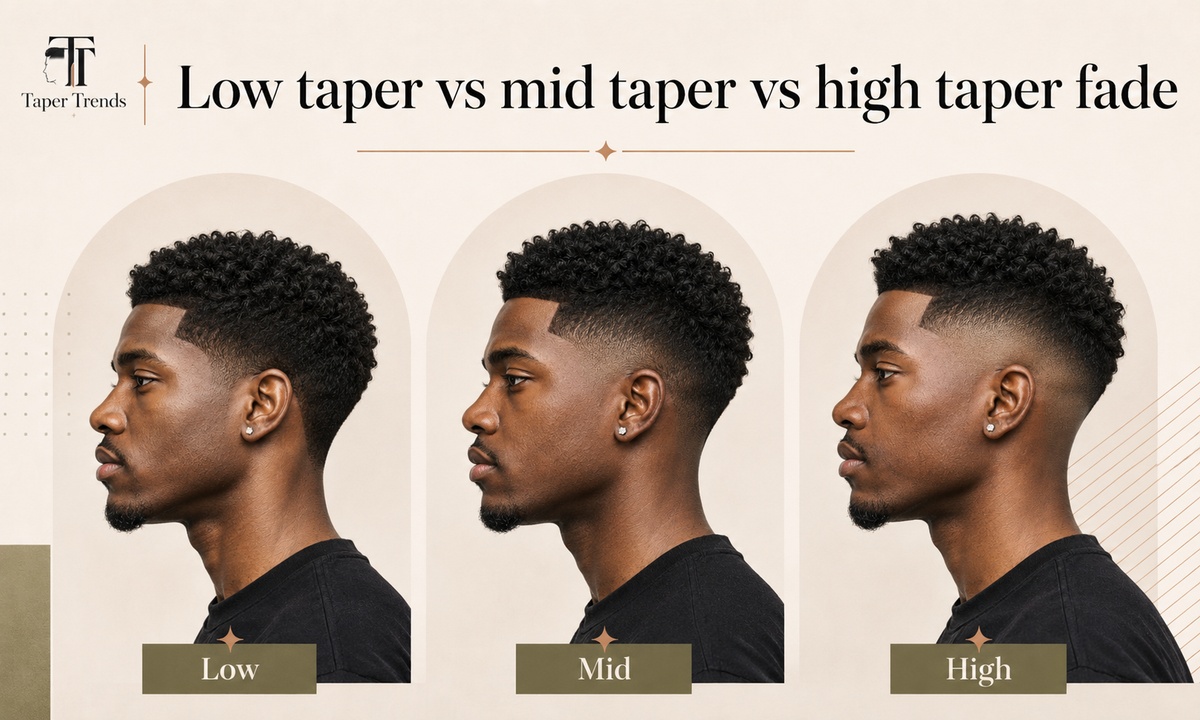
Low taper vs mid taper vs high taper fade
Knowing the difference helps you explain what you want instead of leaving it to guesswork in the chair.
| Fade type | Where it starts | Best for |
|---|---|---|
| Low taper fade | Near the hairline and ears | Subtle, natural, low-maintenance looks |
| Mid taper fade | Above the ears, mid-head | Balanced, slightly bolder contrast |
| High taper fade | Near the top of the head | Bold, high-contrast styles |
The low taper looks the most natural of the three because it removes the least hair, so there is less contrast between the top and sides. That same quality makes it the safest pick for work, school, or more conservative settings. If you are weighing the low against a step up, our low taper fade vs mid taper fade breakdown compares them angle by angle, and the low taper vs low fade guide covers taper versus a true fade.
How to choose the right low taper fade for your face shape
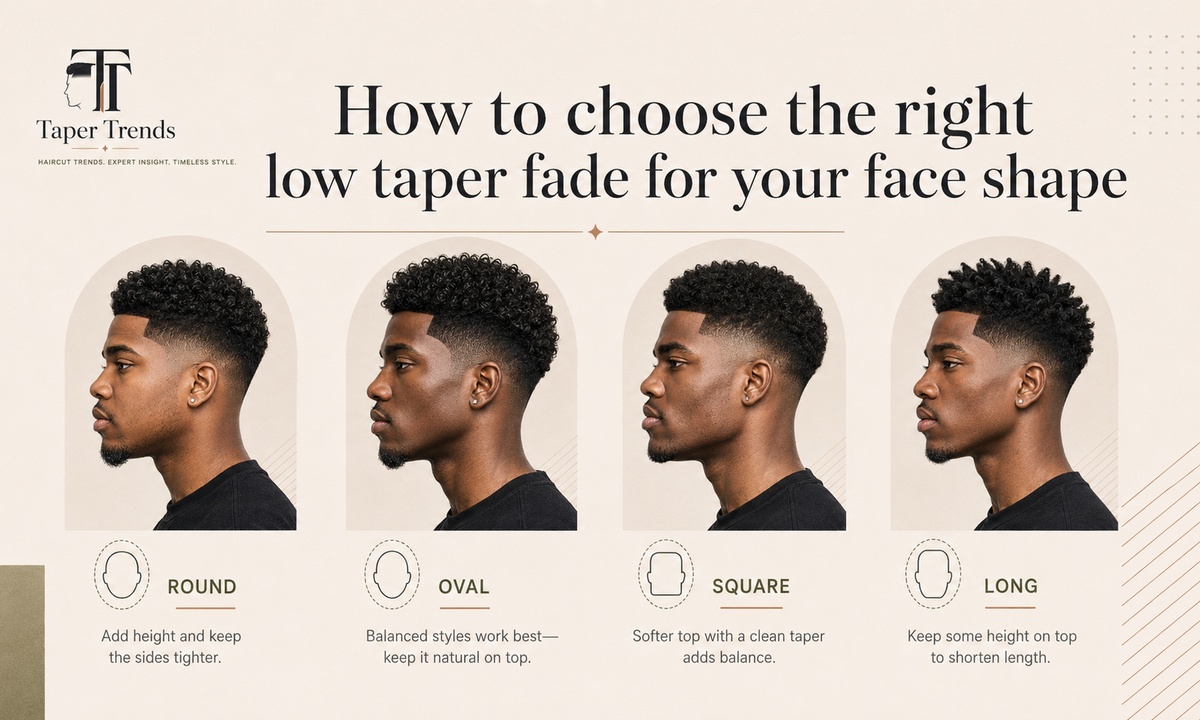
Face shape affects how a fade sits more than most people expect. Adjusting the volume on top is what keeps the whole look balanced.
- RoundBenefits from more height on top, so pair the low taper with a fuller afro or rounded curls rather than a flat style.
- LongWorks better with the opposite: keep the top shorter and avoid too much added height so the proportions stay balanced.
- SquarePairs well with a slightly rounded top, like a mini afro or soft curls, to ease the strong angles without hiding them.
- OvalThe easy case — suits almost any version, from waves to a buzz cut, with little risk of looking off-balance.
What to ask your barber for a low taper fade
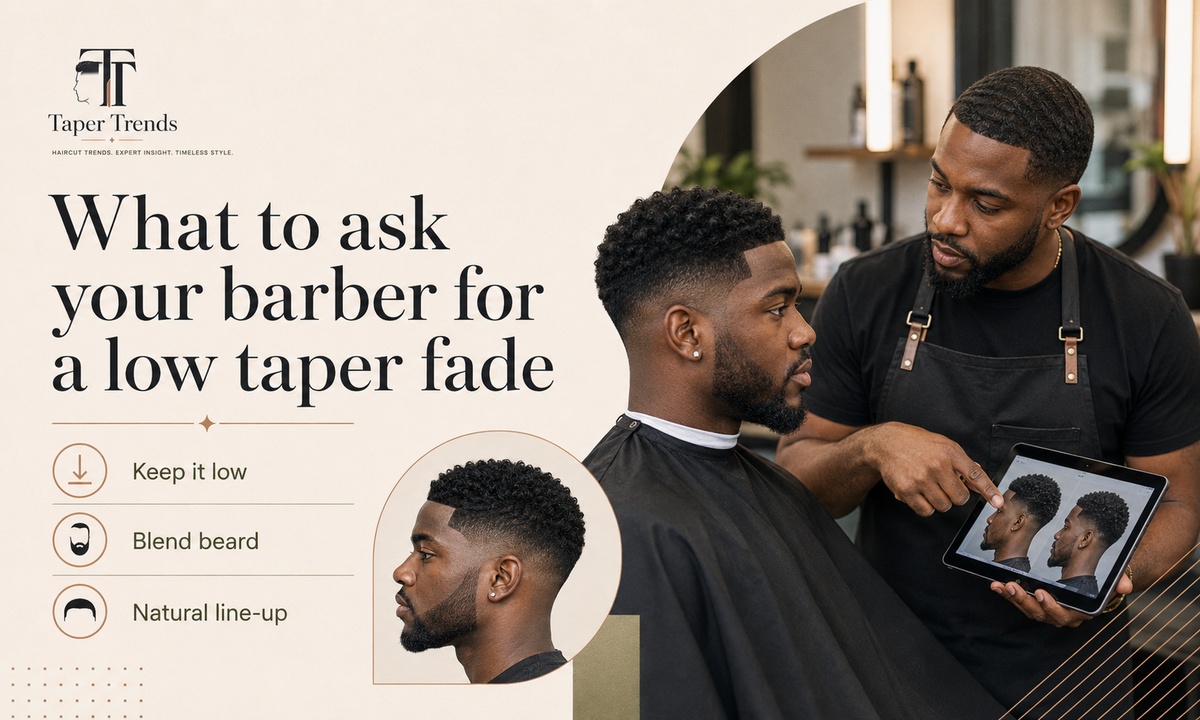
A good haircut idea still goes wrong if it is not communicated clearly. Being specific saves you from a fade that lands too high, too low, or uneven.
“I want a low taper fade, kept close to my hairline and ears, not too high up. Blend it into a natural line-up, and taper my beard into it too.”
That one sentence gives your barber the height, blend, and beard expectation in plain terms.
Guard lengths and fade height
A common starting point is a #2 or #3 guard on top, tapering down to a #1 or a 0.5 guard near the hairline, finished with a skin fade at the bottom if you want it fully bald there. Saying the word “low” out loud matters, because some barbers default to a mid or high fade if you do not.
Why a reference photo helps
Barber terminology drifts from shop to shop, so a photo removes the guesswork. Even if your texture is different from the one in the picture, it still gives your barber a clear target for the shape and fade height you are after.
How to maintain a low taper fade
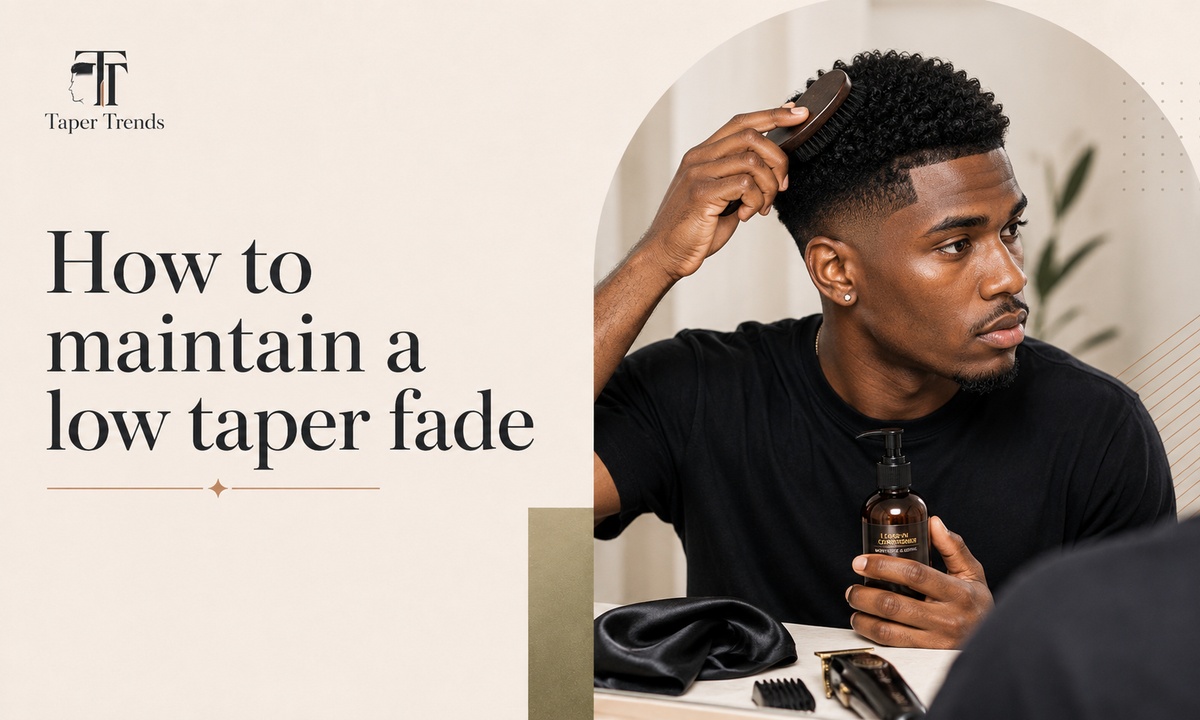
The cut looks great walking out of the shop. Keeping it sharp is the part that is on you, and a little daily and weekly upkeep goes a long way.
How often to get a touch-up
Most guys stretch a low taper to two or three weeks between visits. Because the fade sits close to the hairline, regrowth is less obvious than with a higher fade, so you have more room before it looks rough. If you keep a very sharp hairline or a tight beard blend, or you are chasing 360 waves, you may prefer a two-week schedule to keep everything crisp. Booking your next appointment while you are still in the chair is an easy way to stay on rhythm.
Daily and weekly routine
Daily upkeep depends on your style, but the basics look like this:
- Brush or comb your pattern (waves, curls, or afro) once or twice a day.
- Apply a light moisturizer or leave-in conditioner to keep the hair hydrated, especially in dry weather.
- Tie a durag or wave cap at night to protect the pattern and cut down on frizz.
Once a week, pay attention to the scalp, not just the hair. A gentle shampoo clears the buildup from product, sweat, and dust that daily moisturizers leave behind. Follow with a light conditioner or scalp oil to prevent dryness, which is common on the shorter fade sections since they get more air exposure.
Keeping the hairline fresh
Between visits, resist shaving your own hairline unless you are confident with a trimmer. A slightly grown-out line looks better than an uneven one. If you do clean it up at home, only take off the new growth instead of re-shaping the whole line. Re-cutting the same line deeper every time is the fastest way to push a hairline back.
Best products for a low taper fade on Black hair
The right products depend on what you are doing with the top.
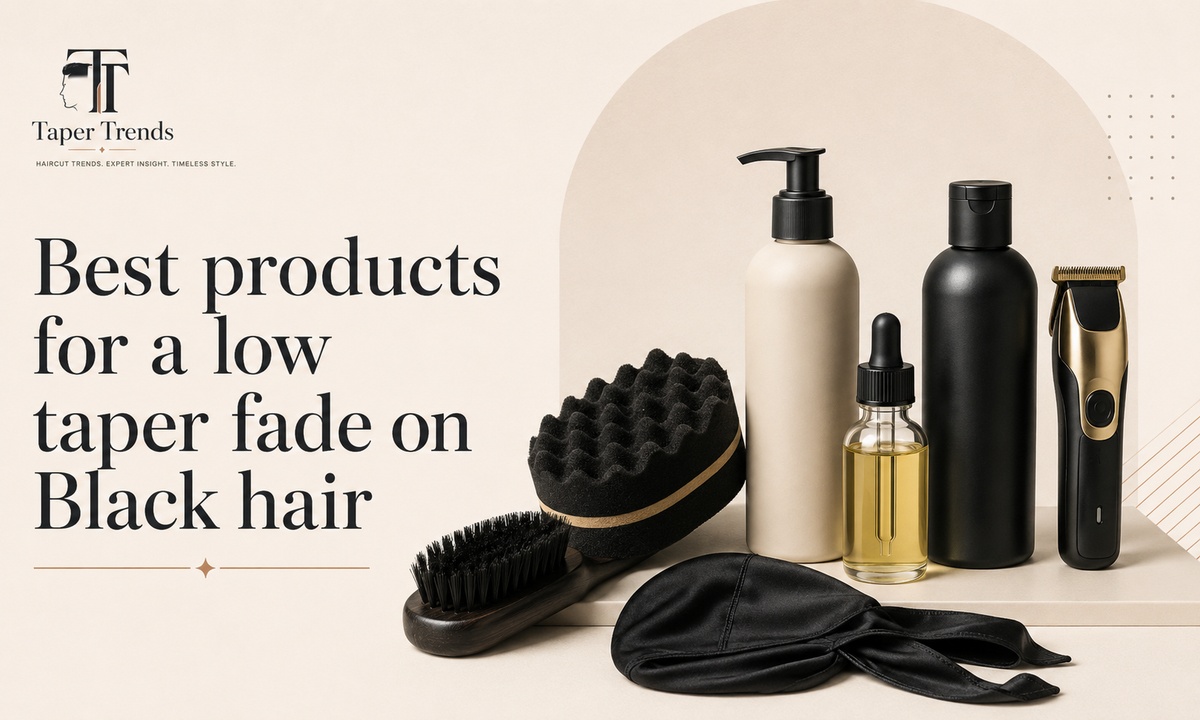
- For wavesA wave brush, a light pomade or wave grease for grip, and a durag for compression overnight. Look for anything labeled non-greasy so it does not weigh the hair down. Coarser hair usually wants a firmer bristle; finer patterns do better with a softer brush.
- For curlsA curl cream or defining gel helps loose curls hold shape through the day, and a leave-in conditioner underneath keeps them soft instead of crunchy.
- For afro stylesA lightweight moisturizer plus a wide-tooth comb or afro pick keeps the shape and volume without flattening the texture. Skip heavy oils that make the top look greasy rather than full.
- For beard blendingA beard oil or balm keeps the hair soft enough to trim evenly, and a small trimmer with adjustable guards helps you hold the connection between fade and beard at home.
Common mistakes to avoid
A handful of small errors are behind most low taper fades that do not come out right.
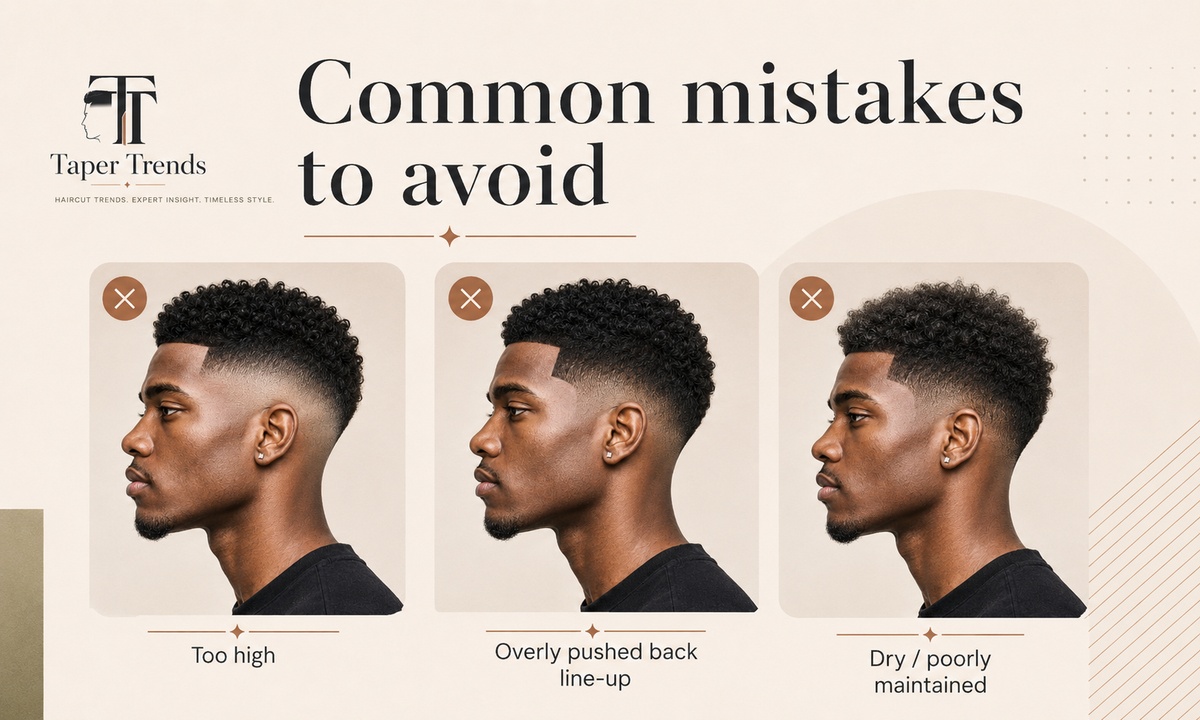
- Asking for the wrong heightIf you do not say 'low,' some barbers default to a mid or high fade. Name the height and point to your hairline or ears as the starting point.
- Overdoing the line-upGetting your hairline re-shaped every single visit, rather than just cleaned up, can push it back over time. Ask your barber to maintain the line, not re-cut it.
- Ignoring textureA style that looks great on looser curls may not translate to tighter coils. Talk to your barber about what works with your hair instead of chasing a photo.
- Skipping maintenanceThe low taper is forgiving, but not maintenance-free. Dropping the brushing, moisturizing, or scalp care makes even a fresh cut look tired fast.
- Harsh products on the scalpHeavy alcohol-based gels can cause dryness, flaking, or irritation. Stick to products made for scalp and hair rather than general styling gels.
Low taper fade cost and appointment time
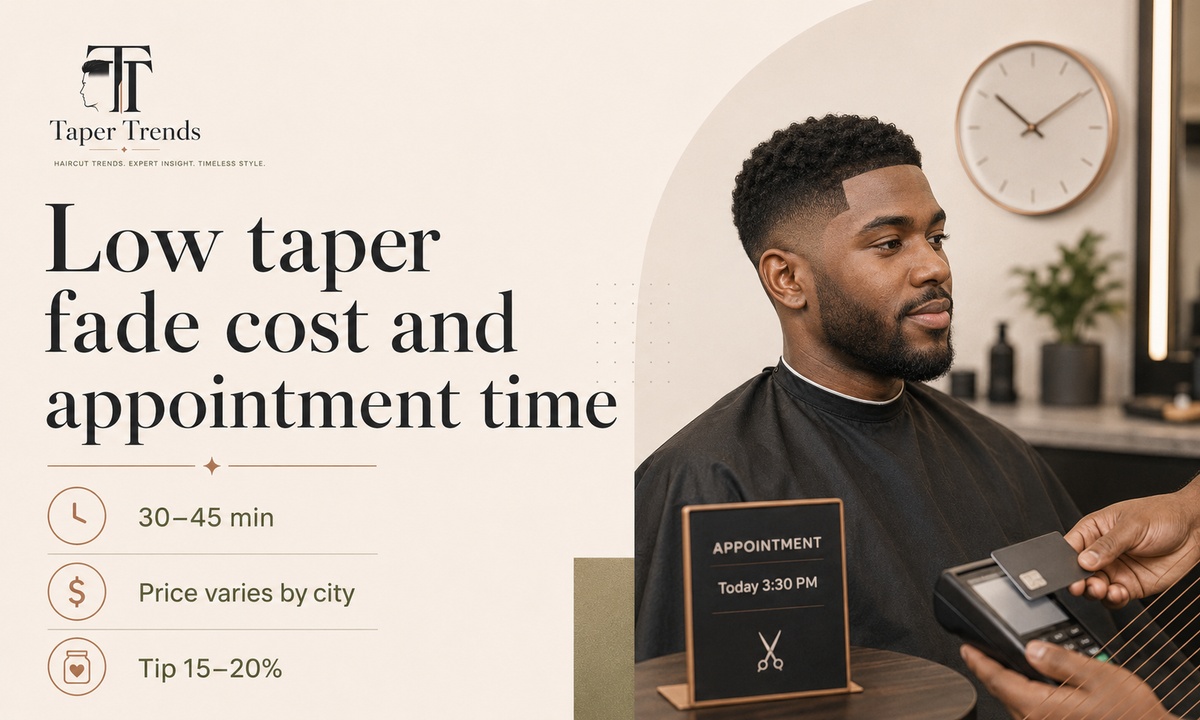
A standard low taper usually takes 30 to 45 minutes, longer if it includes a line-up, beard blend, or extra detailing.
Price depends heavily on where you are. Across the US, a men's barbershop cut averages somewhere around $40 in 2026, with fades sitting toward the higher end because of the blending work involved. Big-city shops in places like New York, Los Angeles, and San Francisco run higher than smaller towns, and add-ons like a skin fade finish, beard sculpting, design lines, or a shampoo and style push the total up further. A tip of 15 to 20 percent on top is customary.
Is a low taper fade good for work, school, and formal events?
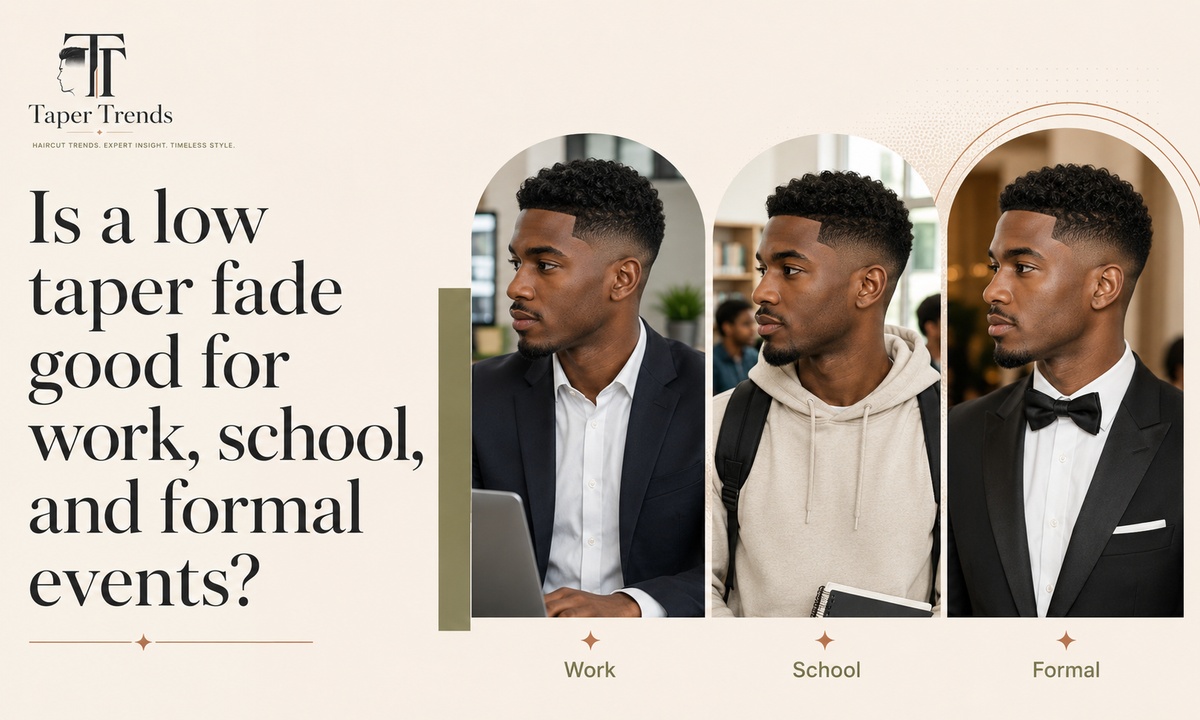
For school or work, it is one of the safest, most adaptable options out there. It looks neat and groomed without being flashy. For everyday wear, styles like waves, curls, or a mini afro keep things relaxed while still looking put-together. For formal events, a freshly touched-up fade with a sharp line-up and a defined beard blend does the job without needing a completely different haircut.
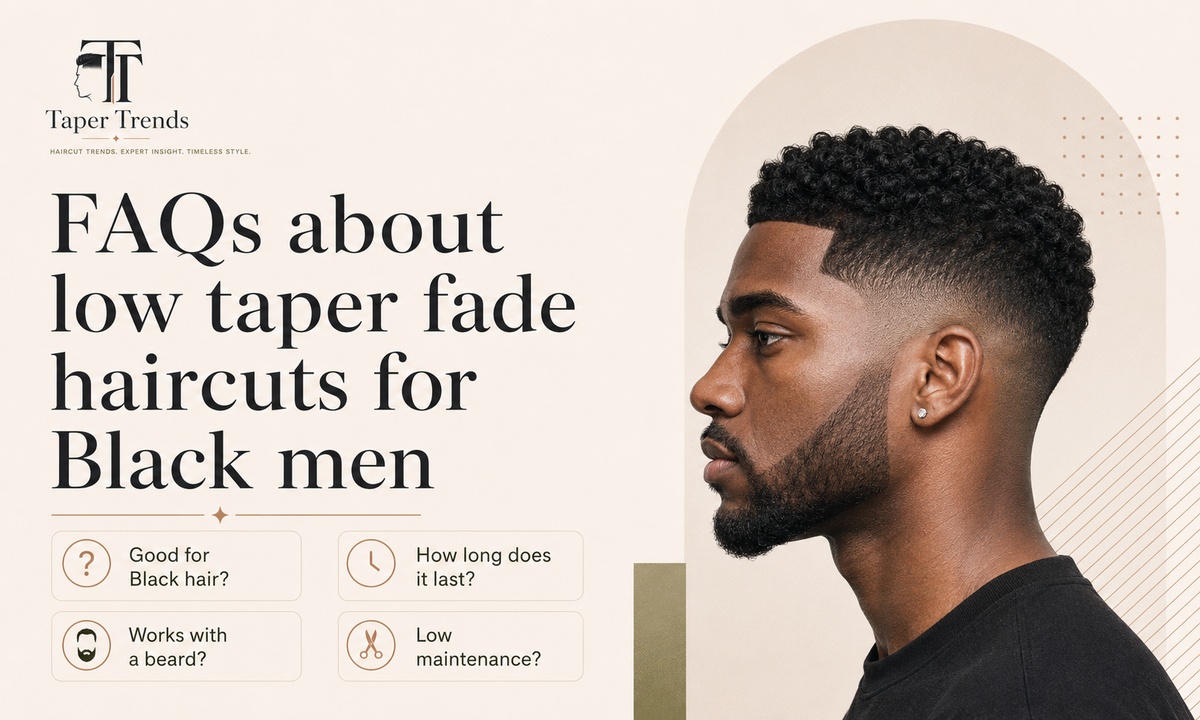
FAQs about low taper fade haircuts for Black men
Is a low taper fade good for Black hair?
Yes. It works with coils, curls, waves, and afro textures because it leaves the natural pattern on top alone. The fade stays low near the hairline, so it cleans up the edges without touching the texture that gives the cut its character.
How long does a low taper fade last?
Most men get two to three weeks before it needs a touch-up. Because the fade sits close to the hairline, regrowth is less obvious than with a higher fade, so you have more room before it looks rough.
Does a low taper fade work with a beard?
Yes. A beard blend is one of the most popular pairings with this cut. The sideburns taper down into the beard with no harsh line, so the whole thing reads as one continuous cut from the hairline to the jaw.
Is a low taper fade low maintenance?
Compared to a high fade, yes. It needs fewer touch-ups and grows out more gracefully. It is not maintenance-free, though — daily brushing, moisturizing, and weekly scalp care still matter to keep it looking fresh.
Can I get 360 waves with a low taper fade?
Yes. The low fade helps the wave pattern show by keeping the sides short and clean, so the full 360 rotation reads clearly against the skin. Just expect a two-week touch-up schedule if you want the pattern to stay crisp.
What guard length is used for a low taper fade?
It varies, but a common range is a #2 or #3 on top, tapering to a #1 or a skin fade near the hairline. Saying the word 'low' out loud matters, because some barbers default to a mid or high fade otherwise.
Will a low taper fade suit my face shape?
Most face shapes work well. You adjust the length and volume on top to balance a rounder or longer face — more height for a round face, less for a long one.
Is a low taper fade appropriate for work or school?
Yes. It is one of the most professional-friendly fade options you can get. It looks neat and groomed without being flashy, which makes it safe for offices, classrooms, and formal settings.
The bottom line
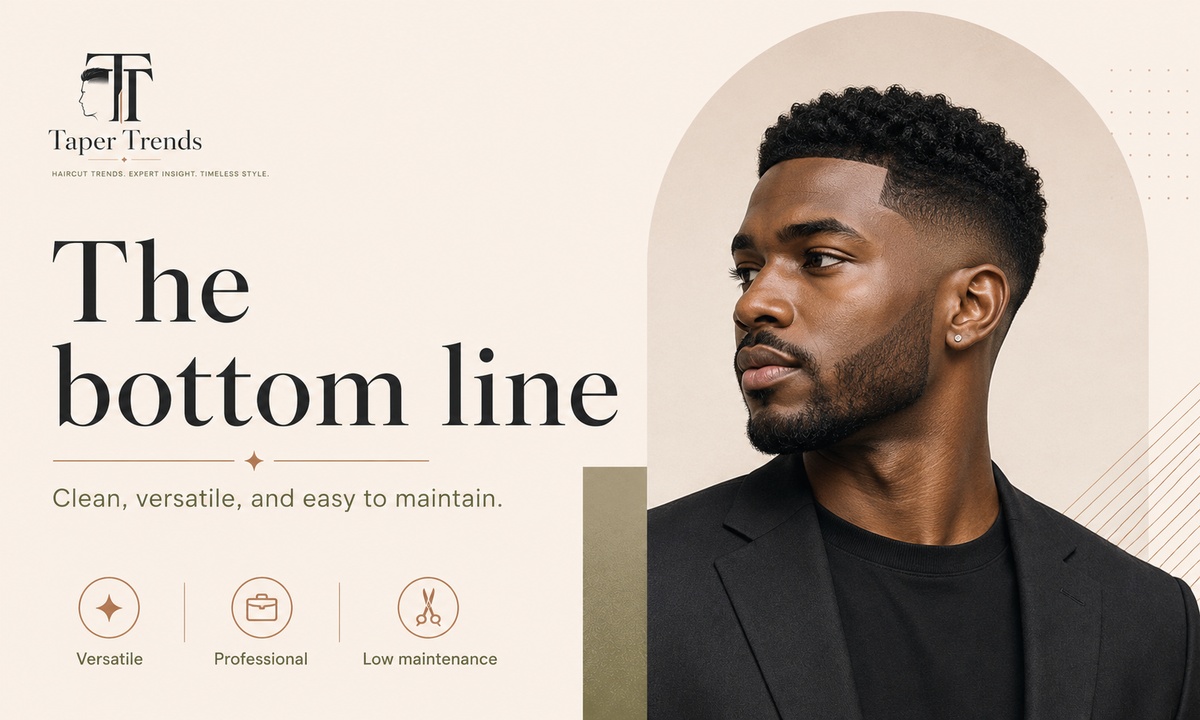
A low taper fade is one of the most flexible, low-maintenance cuts available to Black men. It works with nearly every texture, pairs easily with a beard, and holds up without constant touch-ups. Whether you wear waves, curls, an afro, twists, or locs on top, the low taper gives you a clean base to build on.
The trick is picking the version that fits your texture, face shape, and daily routine, then saying exactly what you want so you leave the chair with the cut you pictured.
Want more taper fade guides?
Browse clean, barber-ready breakdowns for every hair type.