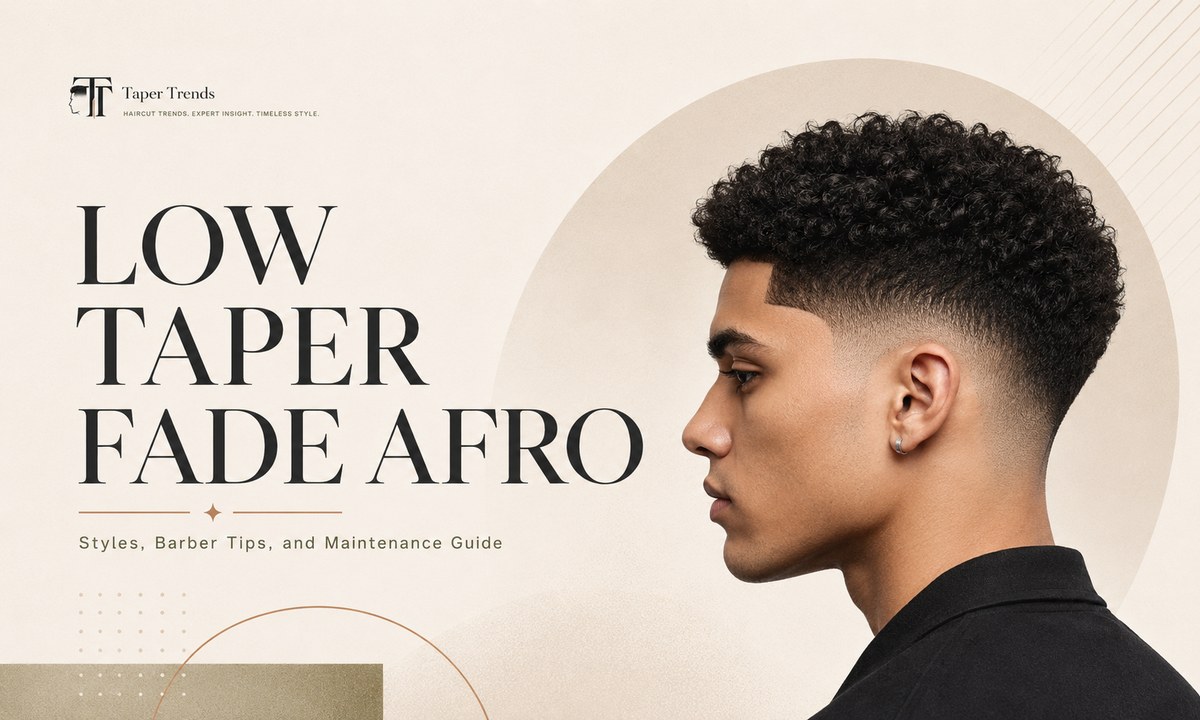
If you have natural, curly, or coily hair, you have probably run into the same problem: your cut either looks too bushy or too shaved down, with no comfortable middle. The low taper fade afro is the answer a lot of guys land on. It keeps the afro full and natural on top while cleaning up the sides, neckline, and hairline, so the shape stays intact but nothing looks overgrown.
It has quietly become one of the most requested cuts in barbershops. It reads sharp enough for the office and relaxed enough for the weekend, it grows out more gracefully than a high fade, and it works across almost every hair length and face shape. If you want the broader picture first, our low taper fade haircut for Black men guide and the complete low taper fade haircuts guide cover every texture in one place, and our Hispanic Mexican low taper fade guide covers the Edgar, takuache, and lineup-driven styles.
What is a low taper fade afro?
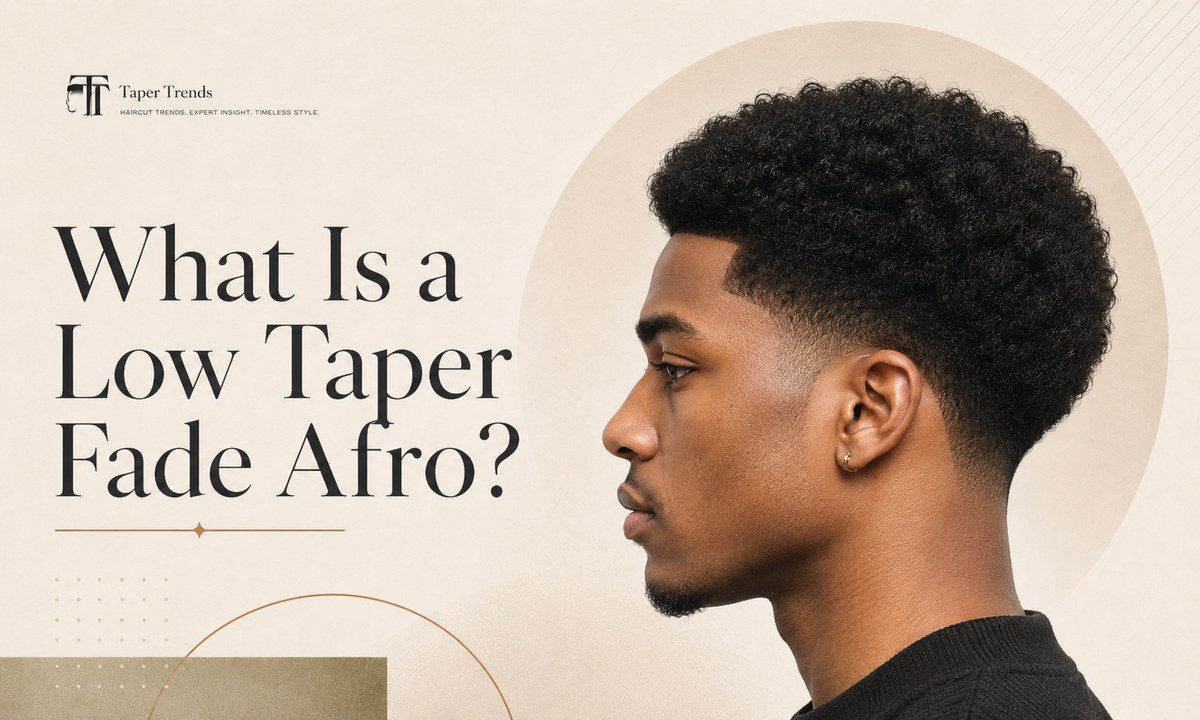
A low taper fade afro leaves the top long enough to hold its natural afro shape and volume, while the sides and back are gradually shortened with clippers, starting close to the ears and neckline.
The two words in the middle do most of the work. “Low” tells you where the blending starts. Instead of fading high near the temples, a low taper keeps most of your length and only tightens things up near the bottom, close to the natural hairline, which makes the change from long to short much more subtle. “Taper” tells you how it blends. A taper is a soft, gradual shift rather than a sharp drop, so instead of a hard line where long hair suddenly turns to buzzed skin, the length eases down slowly toward the neckline and sideburns.
Put those together and you get a cut that looks clean and deliberate while the afro on top still does its thing. The effect shifts with your length. On a short afro it looks like a neat, rounded shape with barely-there sides. On medium hair you see more separation between the top and the taper. On thicker, fuller afros the contrast is strongest, since all that volume up top has a crisp base to sit on.
Why the cut works so well
Ask any barber who cuts textured hair and this one keeps coming up. It solves the problem most guys have with other fades: how do you get a clean cut without shaving away the character of the afro itself?
A low taper barely touches the top. Because the fading happens low, near the neckline and the sideburn taper, your afro keeps its shape, bounce, and height while the sides just look tidier. That is the whole appeal for men who worry a fade will flatten or shrink their hair.
It is also about as versatile as men's cuts get, relaxed enough for casual days but sharp enough for work or a formal event, so you are not stuck choosing between professional and natural. And it takes well to extras. A crisp line up along the front hairline works. Connecting it to a beard fade works. A small design shaved into the side works too, since the taper leaves just enough room for a carved low taper fade design to show without taking over the cut.
How it compares to other fades
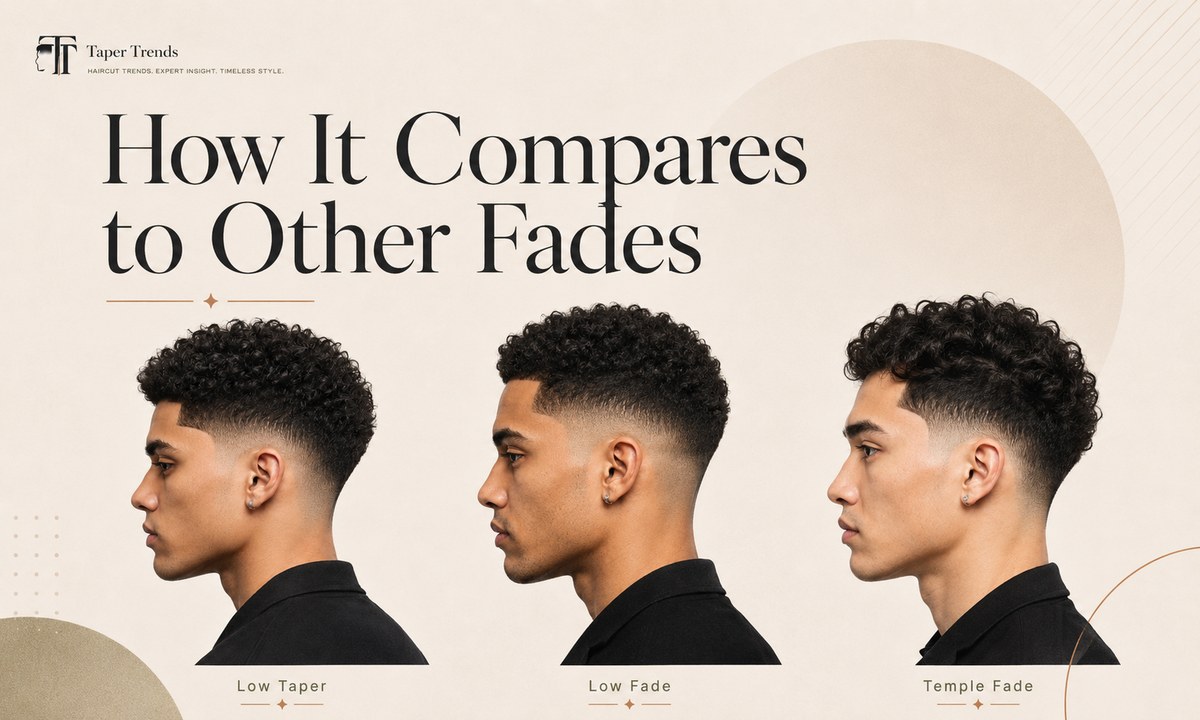
These terms get muddled constantly, especially by anyone still learning barbershop language, so here is the plain version. A taper is a soft blend from longer hair down to shorter hair that usually stops before the skin. A fade goes further and blends all the way down, creating a stronger contrast between the top and the sides.
A low fade brings that skin-close blending down near the ears and neckline, same placement as a low taper but with a sharper drop in length. A temple fade concentrates the fading around the temples to clean up the hairline without touching much of the rest of the head. So a low taper fade afro sits in a gentler middle ground: enough shape to look sharp, without going full skin fade. Our low taper vs low fade breakdown compares those two side by side.
| Style | How it blends | The look |
|---|---|---|
| Low taper fade afro | Soft blend low near the ears and neckline, stops before the skin | A clean edge that keeps the afro's shape and grows out gracefully |
| Low fade | Same low placement, but drops closer to the skin | A sharper, higher-contrast look under a fuller afro |
| Drop fade | Curves downward behind the ear instead of a straight line | A rounder, more sculpted shape around the back |
| Burst fade | Fades in a semicircle around the ear only | A concentrated, curved edge that skips the nape |
Two related styles come up a lot. A drop fade curves downward behind the ear instead of holding a straight line, giving an afro a rounder, more sculpted look around the back of the head. A burst fade fades in a semicircle around the ear and tapers down behind it without running across the nape, so it stays concentrated near the ears. A low taper is straighter and more consistent all the way around by comparison, which makes it slightly lower maintenance since there is less precise shaping to keep fresh.
Best low taper fade afro styles to try
Small changes in top length, taper height, and finishing details completely change the vibe. These are the versions worth bringing to your barber.
The classic round afro
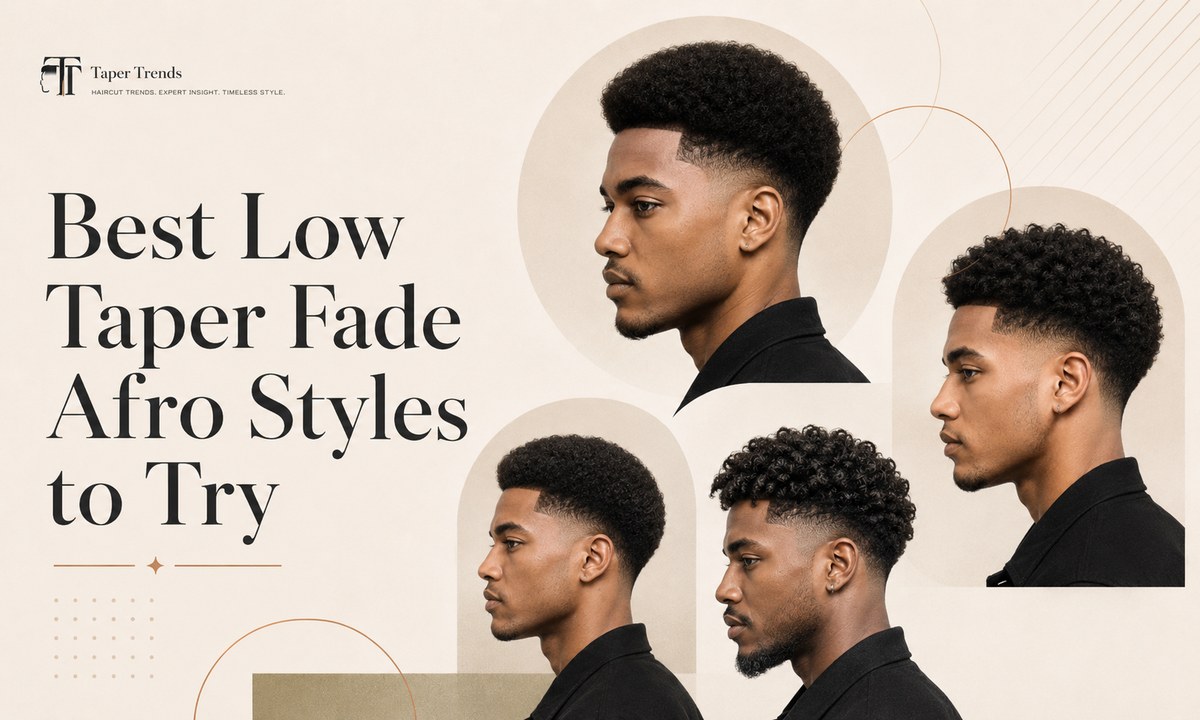
The classic version is what most people picture: a natural round afro on top with the sides tapered evenly toward the neckline. It is balanced and easy to maintain, and it suits everything from a job interview to weekend plans.
Short, medium, or full afro
Go shorter on top and you get a compact, low-effort version that holds its shape longer and needs almost no morning styling, which is a favorite for busy schedules. A medium afro gives you more visible curl pattern and definition while the taper keeps the sides in check, and it leaves room to pick or comb the top into different shapes day to day. Go bigger and the afro becomes the whole point: a fuller, taller afro over a low taper creates strong contrast, since the tight sides keep the eye on the height and shape up top. That one works especially well on thick, dense hair.
Finishing details that change everything
The finishing details matter as much as the length. Pairing the cut with a beard fade creates a clean, connected line from the sideburns down to the jaw, and a line up gives the front a sharp frame using a T-liner or edger. Looser, more defined curls tend to look softer and more relaxed than a tightly coiled afro. Sponge curls, made with a curl sponge on shorter hair, give a uniform textured look over a faded base without needing much length. And once the taper is done, the calmer fading near the temple leaves a small window for a shaved line or simple design that stays visible without overwhelming the cut.
Popular low taper fade afro styles to ask for
- Classic round afro with an even low taper
- Short afro for the lowest daily upkeep
- Full, tall afro for maximum contrast on thick hair
- Sponge curls over a low-faded base
- Low taper afro faded into a lined-up beard
Who should get this cut?
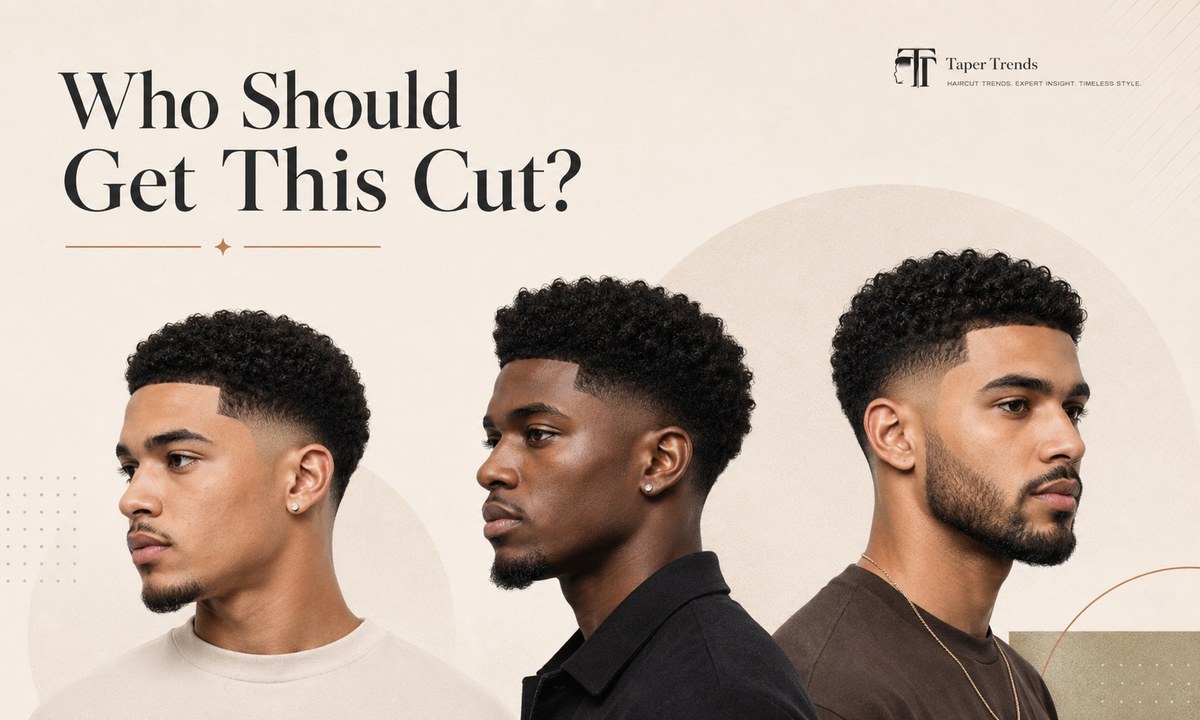
The style is flexible, but it does perform better for certain hair types and face shapes. It shines on natural, curly, and coily hair, including 4A, 4B, and 4C textures, because the whole point is preserving volume and shape rather than fighting the natural pattern. If your hair holds its shape well on top, the contrast against the tapered sides looks even sharper. Looser patterns can go shorter than a full afro, and our curly low taper fade guide covers the same low fade across every curl type; for a taller, blown-out crown, the blowout low taper fade for curly hair takes it further.
Face shape steers the details. Round faces tend to benefit from height on top, which a low taper afro provides naturally, since the volume up top helps elongate the face. Square and oval shapes have more room to play and can usually carry shorter or fuller versions equally well, and a good barber can nudge the taper height to soften or sharpen the sides against your jawline.
It is not tied to any one age group either. Younger guys often push it further with a line up and a design, while older men tend to prefer the classic or short version for something cleaner. Either direction reads well.
What guard length should you choose?
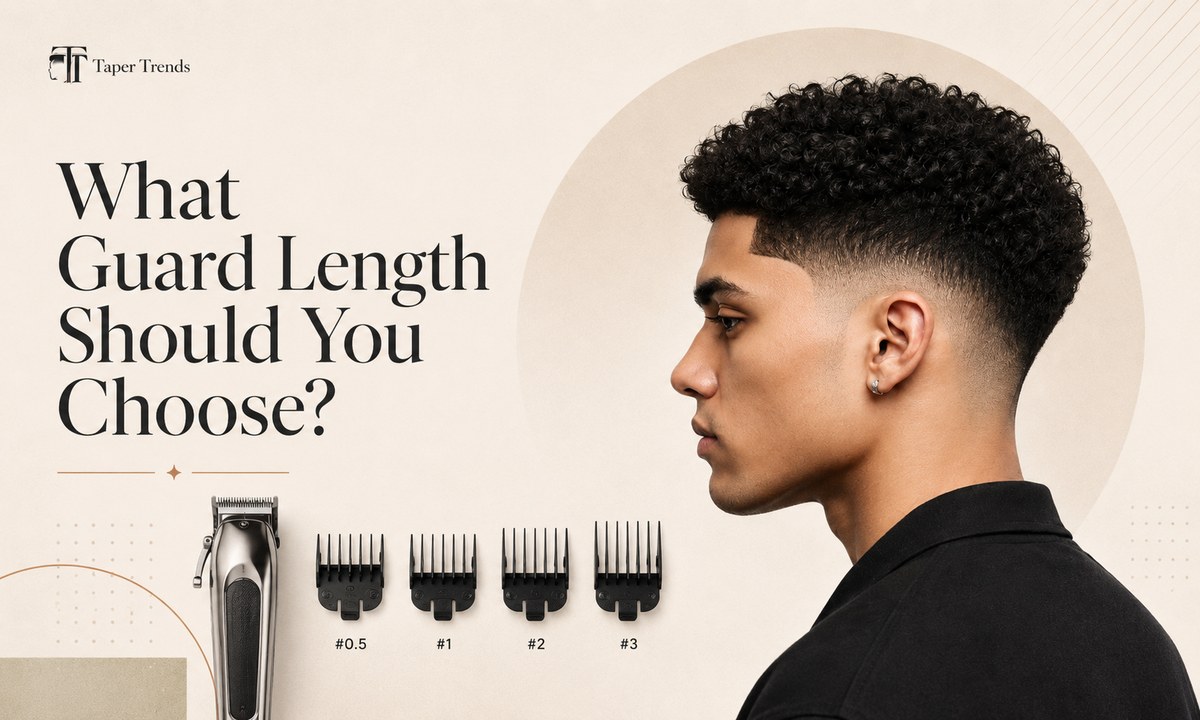
Guard length is what decides how sharp or subtle the taper looks, and it is worth deciding before you sit down.
- Low skin taperFades all the way to the skin near the neckline and sideburns for a bold, high-contrast edge under a fuller afro.
- #0.5 or #1Leaves a little stubble instead of bare skin — the middle ground most guys want, with clear definition and no harsh line.
- #2 or #3Turns the taper much softer and more gradual, which blends in naturally and stretches the time between touch-ups.
How to ask your barber for it
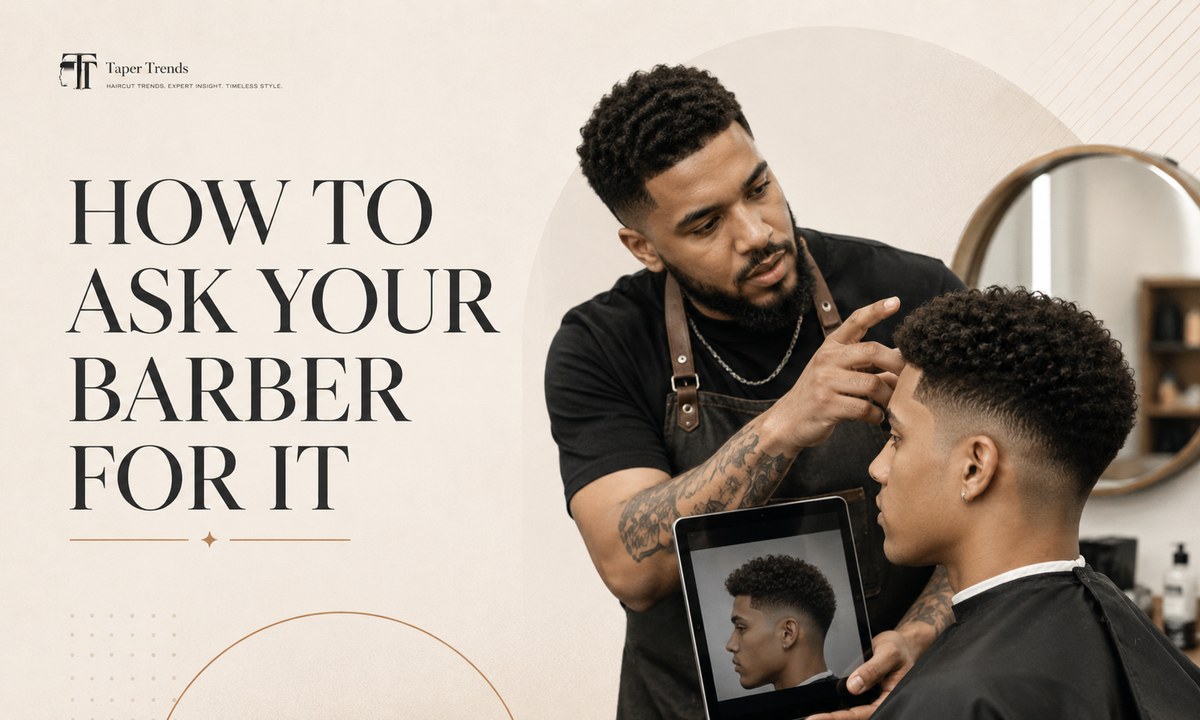
Clear communication changes how the cut turns out, especially with a style that has this many small moving parts. In one line: keep the afro shape and volume on top, taper the sideburns and neckline low, blend the edges naturally, and finish with a clean line up.
“Keep the afro full on top, start the taper right above the ears, and blend it low near the neckline.”
Be specific about two things above all: how much length to keep on top, and how low the taper should start. That one sentence removes almost all the guesswork. Bring a reference photo that shows the top length, the taper height, and the neckline shape, ideally from the front, side, and back so your barber is not working off a single angle. If you are not sure what to picture, our guide on what a low taper fade looks like walks through it from every angle.
A couple of things to avoid. Skip vague phrases like “just a little shorter on the sides,” since that means something different to everyone. And do not mix up taper and fade at the chair. If you want a soft blend rather than a sharp drop to the skin, say taper, not fade. That one word swap prevents the most common disappointment.
Pairing it with a beard
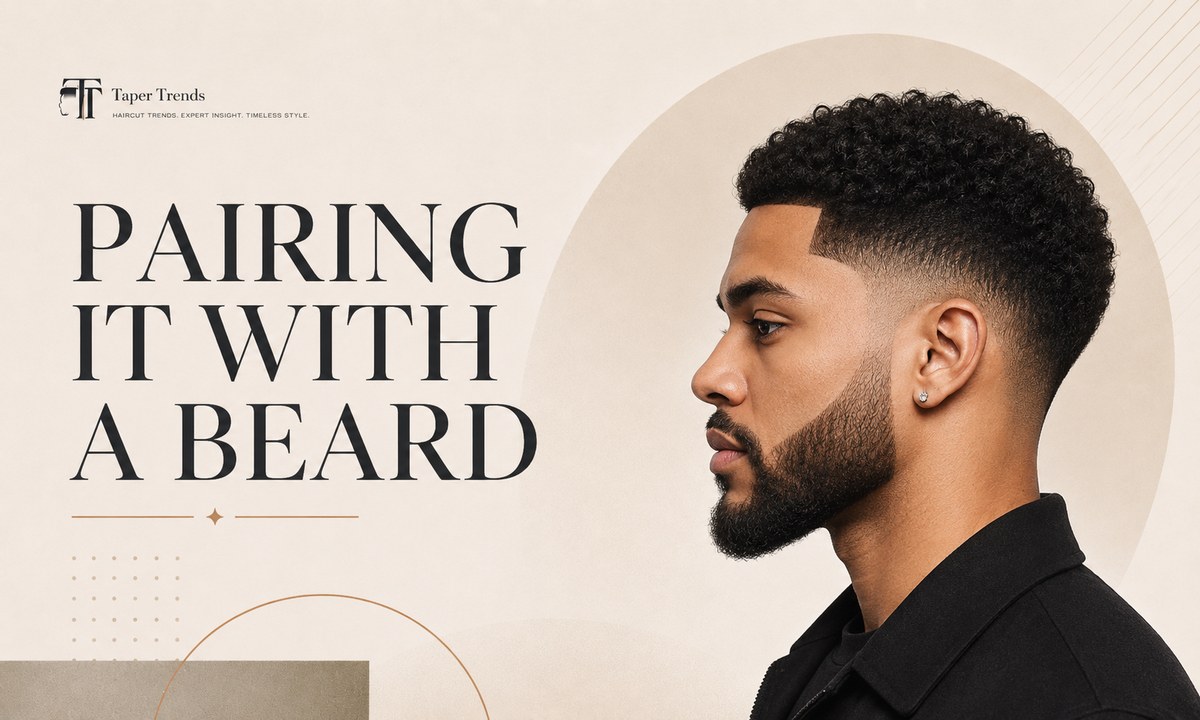
The right beard pulls the whole look together, especially when the taper and the facial hair are blended on purpose rather than treated as two separate cuts.
A full beard adds weight to the lower face and balances the volume up top, and barbers usually taper the sideburns so they run smoothly into the beard with no gap at the jaw. A goatee keeps things minimal and draws the eye to the chin, which suits guys who want facial hair without the upkeep of a full beard. Going clean-shaven puts all the attention on the cut, where a sharp line up frames the face on its own. For a more advanced finish, some barbers fade the beard itself and blend it up into the sideburn taper so there is no visible line between hair and beard. That last one takes real skill, so mention it specifically when you book.
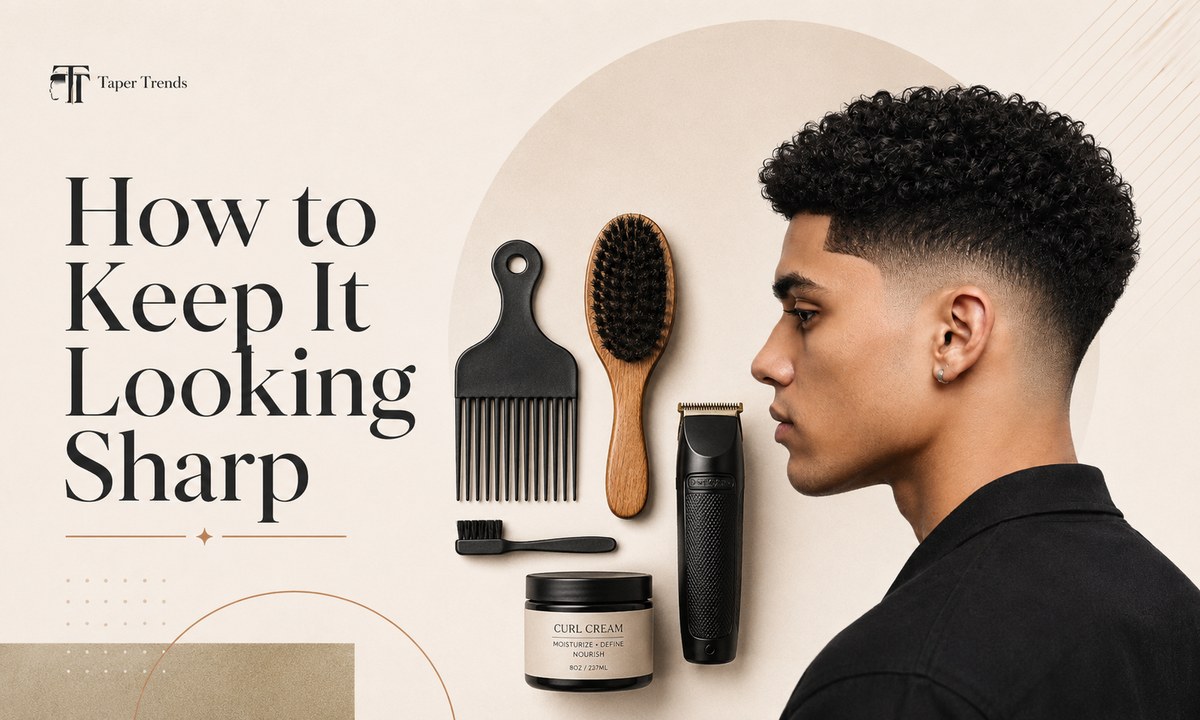
How to keep it looking sharp
Maintenance is what separates a cut that looks intentional from one that looks like it is growing out unevenly.
Most people need a touch-up every two to three weeks. Because the taper sits low rather than high, it grows out more gracefully than a high skin fade, which buys a little extra time between visits. The line up softens first, usually after about a week as new hair fills in, so light edging at home can hold the shape between appointments. The neckline also grows faster than people expect, and a quick clipper cleanup keeps things looking fresh without a full trim.
One habit worth breaking: do not trim the top every time you clean up the sides. Over-trimming slowly shrinks the afro shape you are trying to protect, so ask your barber to only touch the top when the shape actually needs it, not out of routine.
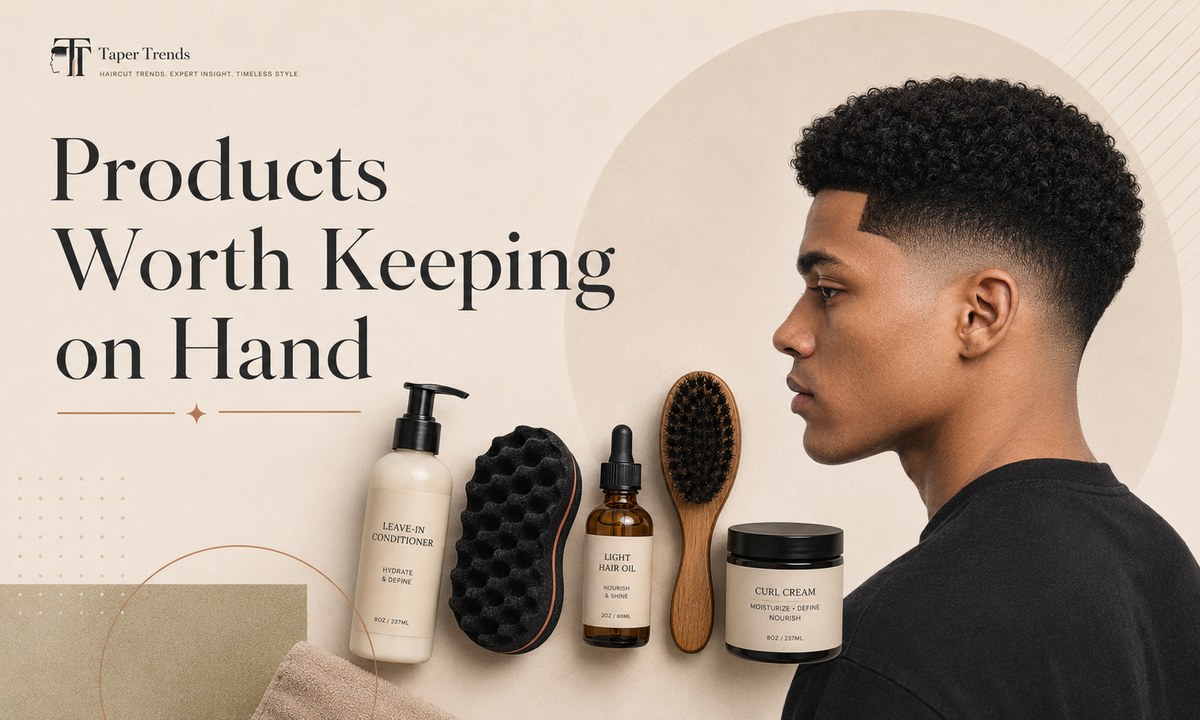
Products worth keeping on hand
The right products protect both the shape of the afro and the health of the hair underneath. Curly and coily hair loses moisture fast, so the basics matter more than any single miracle product.
- Leave-in conditionerKeeps strands soft and cuts down on breakage, which matters most for 4B and 4C textures.
- Curl or twist spongeDefines and holds curl patterns on shorter styles — the tool behind the sponge curl look.
- Hair oil or light moisturizerA small amount adds shine without weighing the afro down, so the shape stays full instead of falling flat.
- Soft brushSmooths the edges before a line up so the front reads clean and framed.
- Curl creamSharpens definition on medium and curly styles so the top looks deliberate rather than loose.
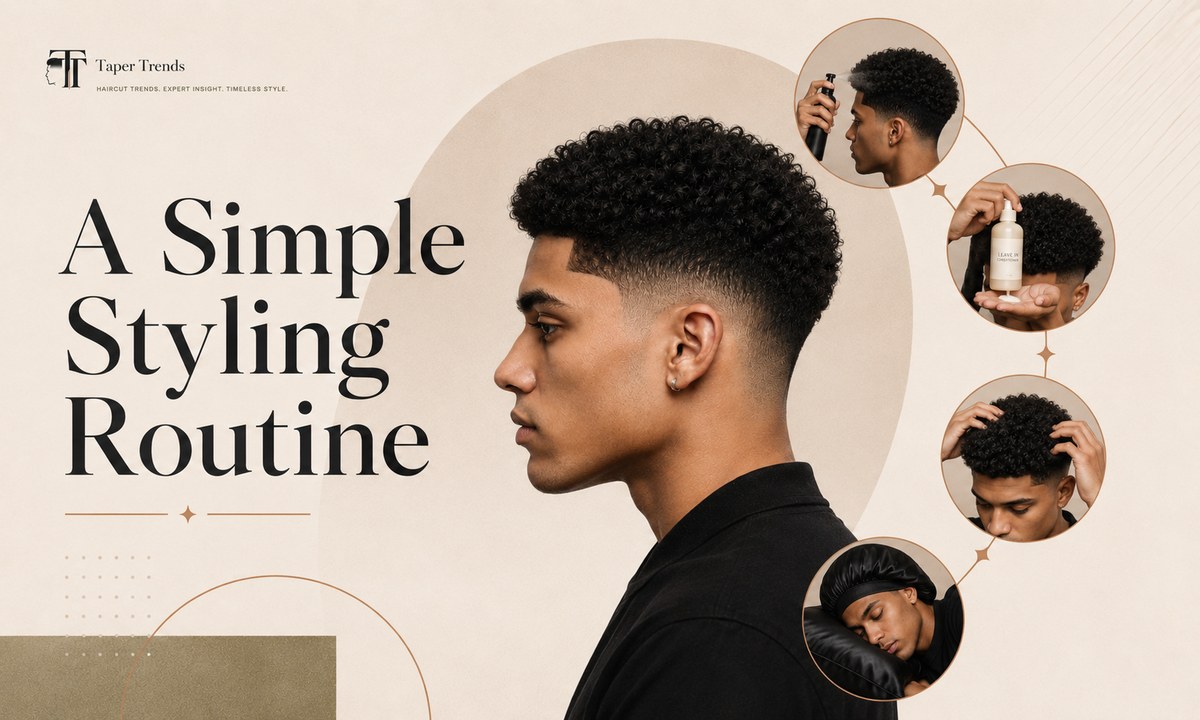
A simple styling routine
None of this needs to eat your morning. Most days, a quick mist of water or leave-in conditioner followed by light finger-fluffing or a pass with a pick is enough to refresh the shape.
On wash day, use a gentle moisturizing shampoo, follow with conditioner, and detangle carefully so you do not disrupt the curl pattern, which is also a good moment to check whether the taper needs a touch-up. At night, a satin or silk pillowcase or a bonnet prevents frizz and protects the shape, so you wake up needing far less reshaping.
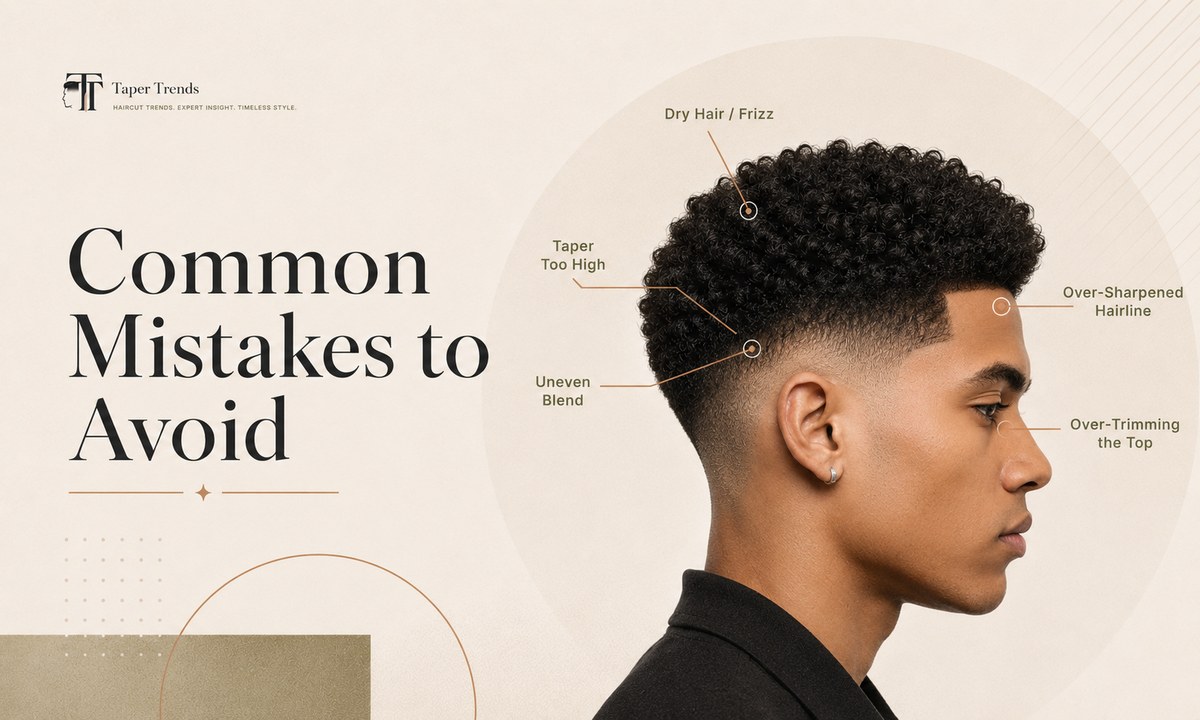
Common mistakes to avoid
A few missteps show up again and again.
- Letting the taper creep highA taper cut too high quietly turns a subtle low taper into a much bolder fade. Keep it low if low is what you asked for.
- Trimming too aggressively on topThis strips out the volume that makes the style work in the first place.
- Skipping moistureDry hair is prone to breakage and frizz, which makes the shape look uneven over time.
- Skipping night protectionNo bonnet or satin surface undoes a lot of your styling by morning.
- Over-lining the hairlineGetting the line up redone too often can irritate the skin and, over time, thin the edges you are trying to keep crisp.
Pros and cons
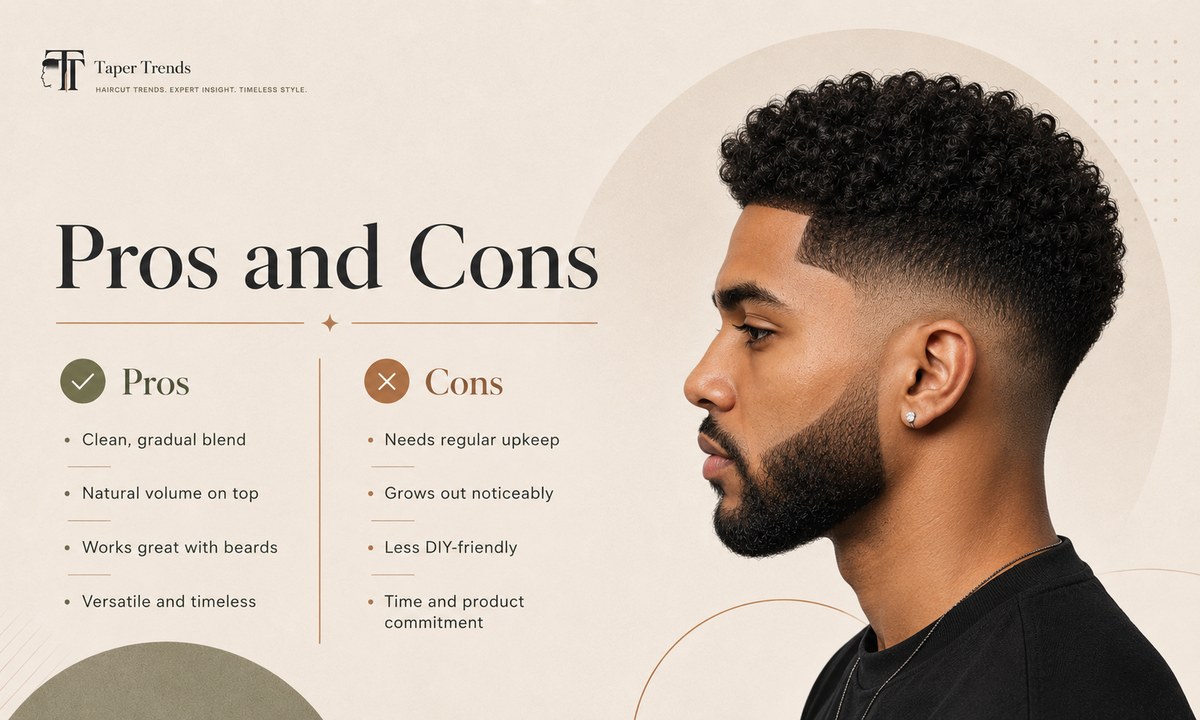
The upside is real. It preserves afro volume, moves easily between casual and professional settings, and pairs cleanly with beards, line ups, and designs. The trade-offs are honest too. It still needs regular touch-ups to keep the neckline and sideburns sharp, and the result leans heavily on finding a barber who is genuinely experienced with textured hair. If you are after a dramatic, high-contrast look, a higher fade may suit you better, since a low taper is subtle by design.
Pros
- Preserves the afro's volume and shape
- Works for both casual and professional settings
- Pairs cleanly with beards, line ups, and designs
- Grows out gracefully between visits
Cons
- Still needs touch-ups every two to three weeks
- Depends on a barber experienced with textured hair
- Too subtle if you want a bold, high-contrast look
- Requires consistent moisture and night protection
FAQs about the low taper fade afro
Is a low taper fade good for afro hair?
Yes. It is one of the most natural-friendly fades available, since it preserves volume and texture on top instead of cutting it away, and it works across 4A, 4B, and 4C hair.
How often should I maintain it?
Most people book a touch-up every two to three weeks to keep the taper and line up looking sharp. Good night protection and regular moisture can stretch a fresh cut slightly longer before it looks grown out.
Does it work with a beard?
Yes. It blends well with full beards, goatees, and faded beard styles when the sideburns connect smoothly into the facial hair.
What is the difference between a low taper and a low fade?
A low taper blends gradually and softly and usually stops before the skin. A low fade drops sharper and closer to the skin for stronger contrast.
Can I get one with short hair?
Yes. Short afro hair takes this cut well and usually needs less daily styling than the longer, fuller versions.
Is it professional enough for work?
Yes, especially the classic and short variations, which look neat and polished enough for the office or a formal setting.
The bottom line
The reason this cut has stuck around is simple: it does not make you choose between clean and natural. It keeps your afro's shape, texture, and volume while giving you a sharp, deliberate finish around the edges.
Whether you go short and low-maintenance or full and bold with a crisp line up, it adapts to your hair type, your face shape, and how much time you want to spend in the morning. Find a barber who knows textured hair, keep up with light maintenance, and it will earn its place as a cut you come back to.
Want more taper fade guides?
Browse clean, barber-ready breakdowns for every hair type.