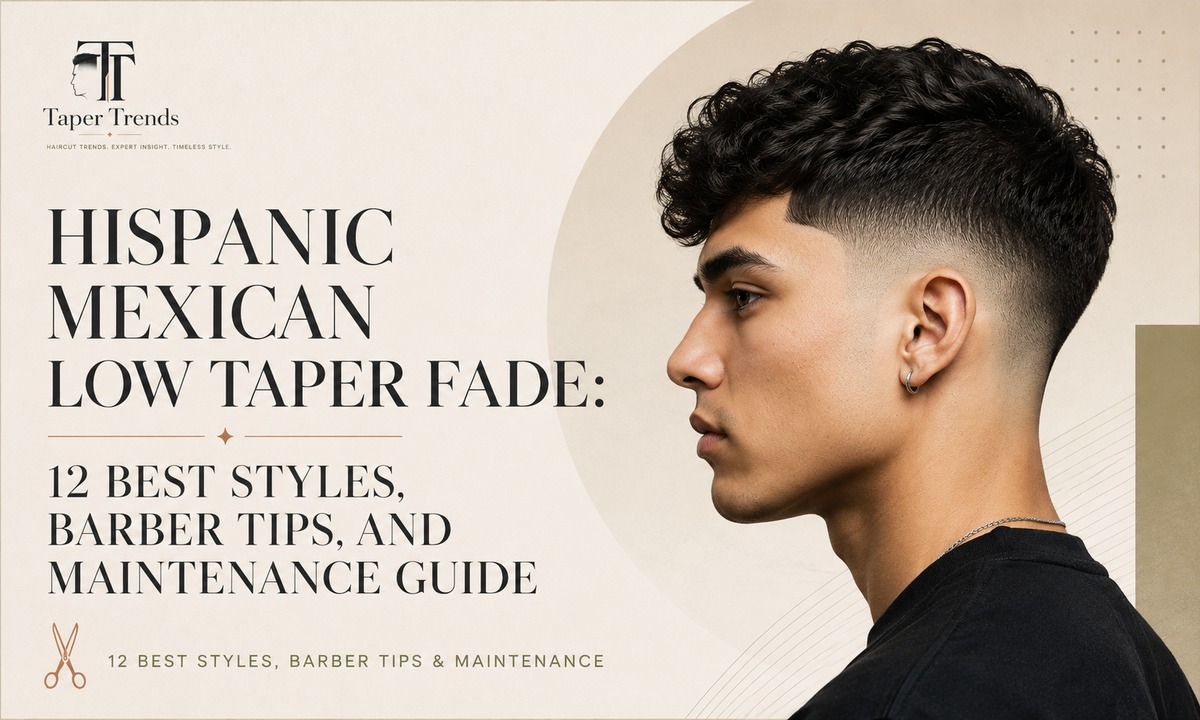
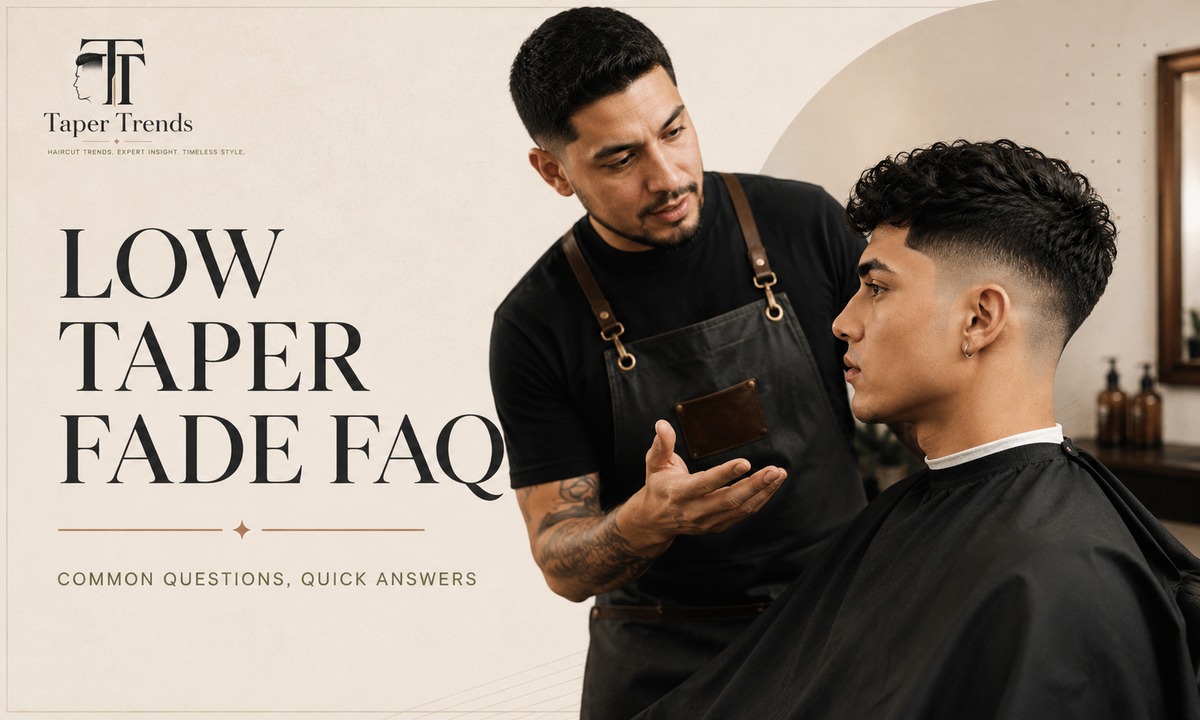
Walk into almost any Latino barbershop right now and someone in the chair is getting a version of the Hispanic Mexican low taper fade. It is clean, it grows out gracefully, and it works on nearly every hair type. The trouble usually starts at the consultation, where people know they want the look but struggle to describe it and walk out with something a little off.
This guide fixes that. You will learn what the cut is, how it differs from a plain low fade or a mid taper, which of the 12 variations suits your hair and face, and the exact words to say in the chair. Styling and upkeep tips at the end keep it sharp between visits. If you want the broader picture first, our complete low taper fade haircuts guide covers every texture in one place.
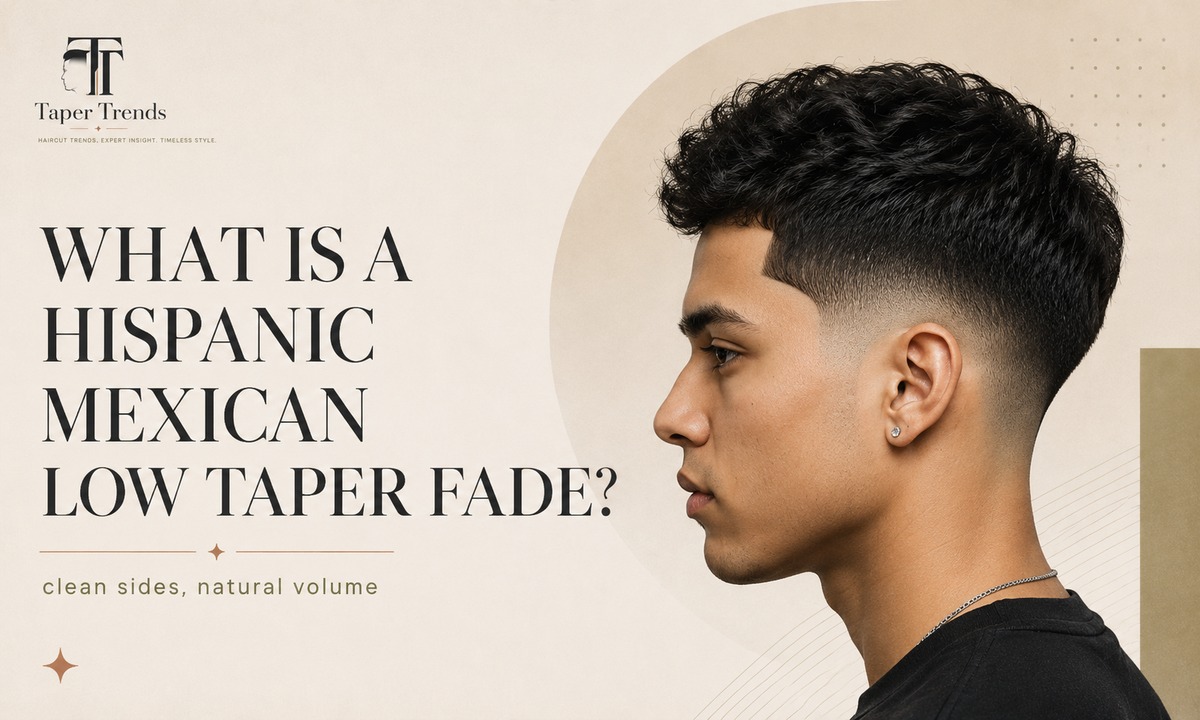
What is a Hispanic Mexican low taper fade?
The Mexican low taper fade is less a specific clipper technique and more a styling tradition. It pairs a standard low taper fade with the textures and finishing details you see in Latino and Hispanic barbershops: a crisp lineup, natural volume up top, and a fade that hugs the skin near the ears and neck without climbing high up the sides.
What makes it recognizable is how it gets worn. Guys pair it with a defined part, leave a curl pattern on top, or brush it back for a slicked finish. The result reads as sharp but not fussy, casual enough for a Tuesday and clean enough for a family photo.
A taper fade is a gradual blend from longer hair on top down to shorter hair at the sides and back. The word “low” just tells your barber where that blend starts. On a low taper it begins near the hairline right above the ears rather than higher on the head, so the transition stays subtle even after a few weeks of growth.
That forgiving grow-out is why the cut sticks around. The same haircut carries you through school, a job interview, and a weekend; you just style the top differently depending on the day. It also pairs with a clean lineup, the sharp edge traced along the forehead and temples that has long been a signature of Hispanic and Latino barbering. If you are not sure what that grown-out shape looks like, our guide on what a low taper fade looks like walks through it from every angle.
Low taper fade vs low fade vs mid taper vs drop fade
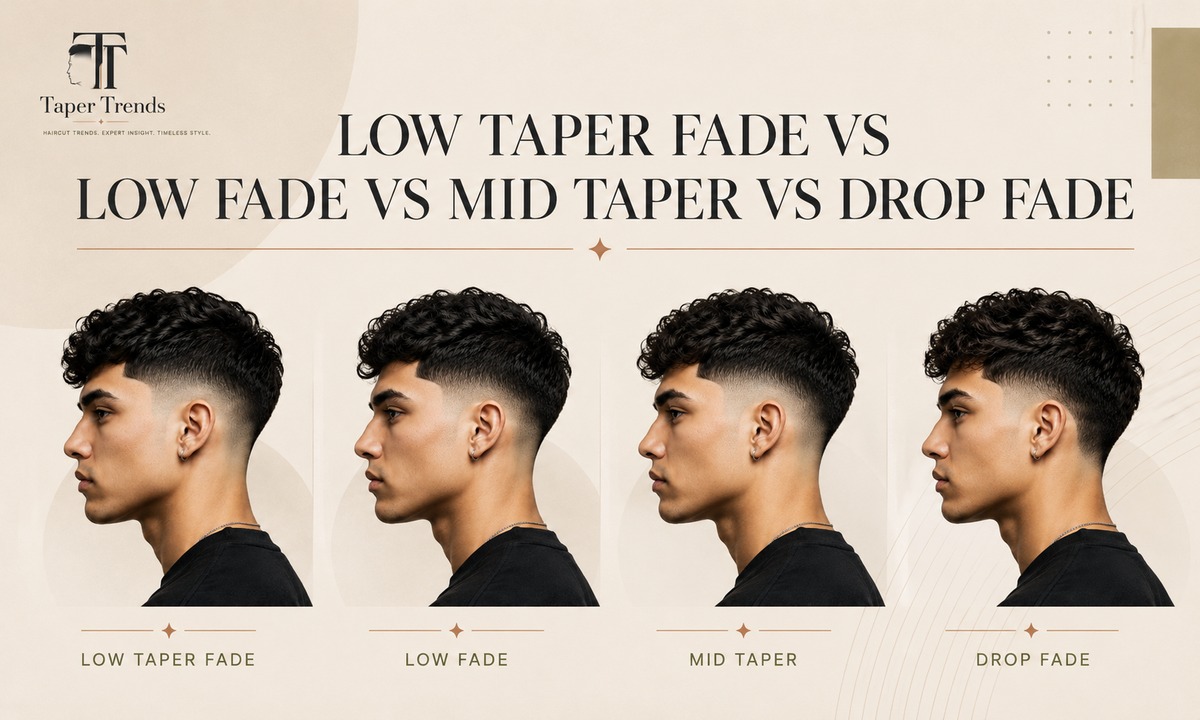
These terms get muddled constantly, even by guys who have been getting fades for years. Here is the short version. A low taper fade blends gradually and starts low, close to the ears and neckline, so the overall effect is soft. A low fade is similar but carries a bit more contrast near the bottom, sometimes dropping closer to the skin at the neckline and sideburns before it blends up.
A mid taper starts the blend higher, around the temple, so there is more contrast between top and sides. It suits thicker hair when you want the sides noticeably shorter. A drop fade curves the fade line down behind the ear instead of running straight across, giving a more stylized finish that pairs well with design lines or a fade that connects into the beard.
| Style | How it blends | The look |
|---|---|---|
| Low taper fade | Soft blend that starts low near the ears and neckline | Subtle, everyday look that grows out gracefully |
| Low fade | Same low placement, but drops closer to the skin | A touch more contrast without going dramatic |
| Mid taper | Blend starts higher, around the temple | More separation between a longer top and shorter sides |
| Drop fade | Curves down behind the ear instead of running straight | A stylized finish that pairs well with design lines |
If you are stuck, a simple rule of thumb helps: low taper for everyday, mid taper for more contrast, drop fade for something sharper. For a closer look at the two comparisons guys ask about most, see our low taper vs low fade breakdown and our low taper fade vs mid taper fade guide.
Best Hispanic Mexican low taper fade styles to try
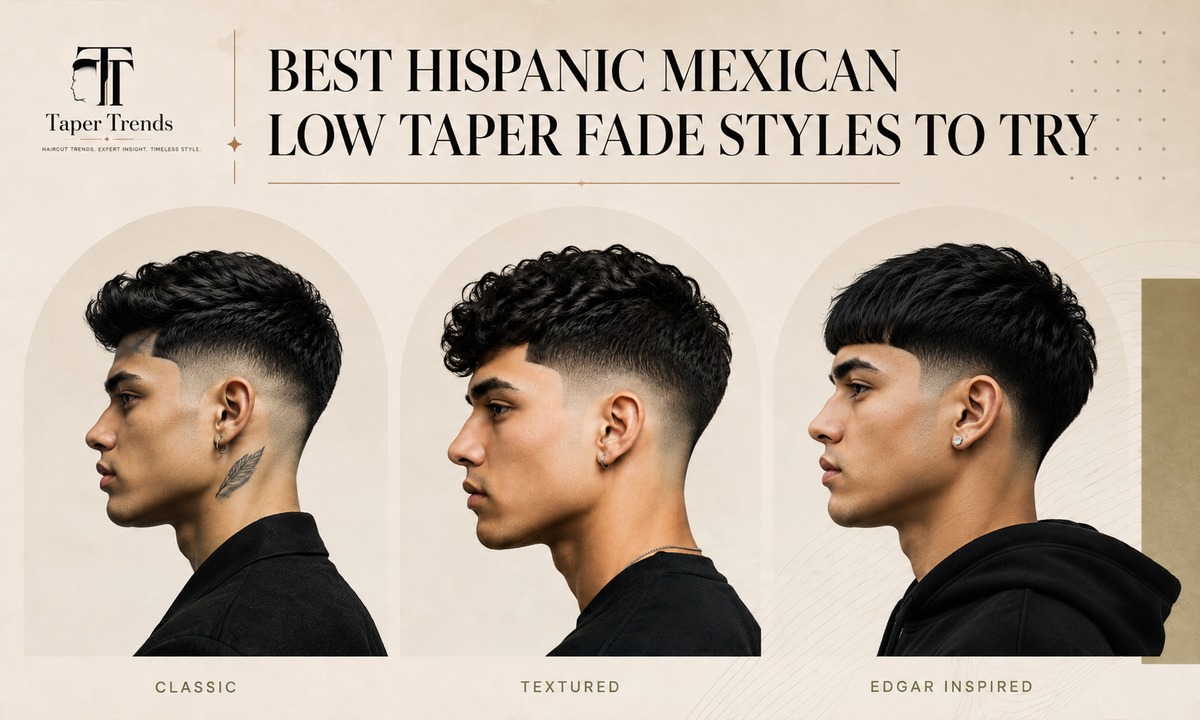
There is no single way to wear this cut. It works more like a foundation that barbers build on depending on your hair, your face, and how much time you want to spend in the mirror. These are the 12 variations worth bringing up at your next appointment.
1. Classic low taper fade
The traditional take. A low taper fade with the top left slightly longer, combed to the side or straight back. Simple, sharp, and appropriate almost anywhere. It holds up best on straight or wavy hair, since both keep a comb-over shape without much fuss.
2. Low taper fade with a textured top
Instead of a smooth combed finish, the top stays choppy and piecey for movement. It looks intentional while staying low effort, and a little texturizing spray or light pomade finishes it. Thick or wavy hair works best because the volume is already there.
3. Curly low taper fade
For natural curls, the top stays intact while the sides fade low and clean. That contrast between tight fade and loose curl is what makes the curly version so recognizable. A good barber will often cut curly hair dry first to see how it falls before touching the sides, so you do not lose definition you cannot get back until it grows out.
4. Straight hair low taper fade
Straight hair lies flat, so the fade line reads crisp and clean, which suits a no-fuss office or school look. The flip side is that it shows every flaw, so the blend has to be smooth. Any choppiness stands out more than it would on curlier hair. Our low taper fade for straight hair guide covers the top styles in detail.
5. Wavy low taper fade
Wavy hair brings texture without much product. This version keeps a bit more length on top so the waves have room to move. It sits between the polished straight-hair look and the fuller curly one, and a light sea salt spray brings the waves out without making them stiff. Our full low taper fade for wavy hair guide breaks down every wavy variation in detail.
6. Blowout low taper fade
The blowout adds height and volume up top through blow-drying while the sides stay tight, giving the cut a bolder shape. It needs thicker hair that can hold the lift, and it makes a strong statement for photos or a night out. Our low taper fade blowout guide covers the blow-dry technique and products in full.
7. Edgar cut with a low taper fade
The Edgar features a blunt fringe straight across the forehead paired with faded sides. It is a structured, modern look that took off among younger Latinos, spreading out of Texas and the Southwest through TikTok and the takuache subculture. Barbers cut it on every hair texture, curly included, so ignore anyone who says it only works on straight hair. That said, a straight or lightly wavy top holds the crisp blunt line with the least effort — the same idea as a textured fringe with a low taper fade, softened.
8. Low taper fade with a lineup
A lineup is a sharp, defined edge carved along the hairline, temples, and sideburns. It is one of the most requested add-ons because it makes the whole cut look freshly done, and it pairs with almost any version here to give that just-left-the-shop finish.
9. Low taper fade with a beard
Connecting the taper into a beard fade creates a cohesive look where the hair and beard meet at a similar length. It suits guys who already keep a beard and want everything deliberate rather than mismatched. Ask your barber to blend the taper into the beard so there is no hard line between the two.
10. Low taper fade with a fringe
A low taper fade fringe keeps a soft front instead of the sharp blunt line of an Edgar. It reads more relaxed and natural while the sides stay clean with a low fade. Good for guys who want some forehead coverage without committing to a bold, structured shape.
11. Low taper fade with a messy top
The top stays longer and deliberately tousled for an easygoing, lived-in feel against the tight sides. Thicker or wavy hair suits it best, with enough body to build texture without extra product.
12. Takuache-inspired low taper style
The takuache look, popular in Mexican and Mexican-American youth culture, usually pairs faded sides with a longer mullet-style back, a fringe, and sometimes a beard fade. It grew out of the takuache truck scene and regional Mexican music, and the classic version often runs a higher, bolder fade. Dropping it to a low taper is a softer, modern take for guys who want the shape without the extreme contrast. Either way, you need to be comfortable with a longer back section.
Most requested versions to ask for
- Classic combed low taper with a crisp lineup
- Curly low taper fade with the curls left intact on top
- Edgar cut with a blunt fringe over faded sides
- Blowout low taper for height and photo-ready volume
- Takuache-inspired low taper with a longer back
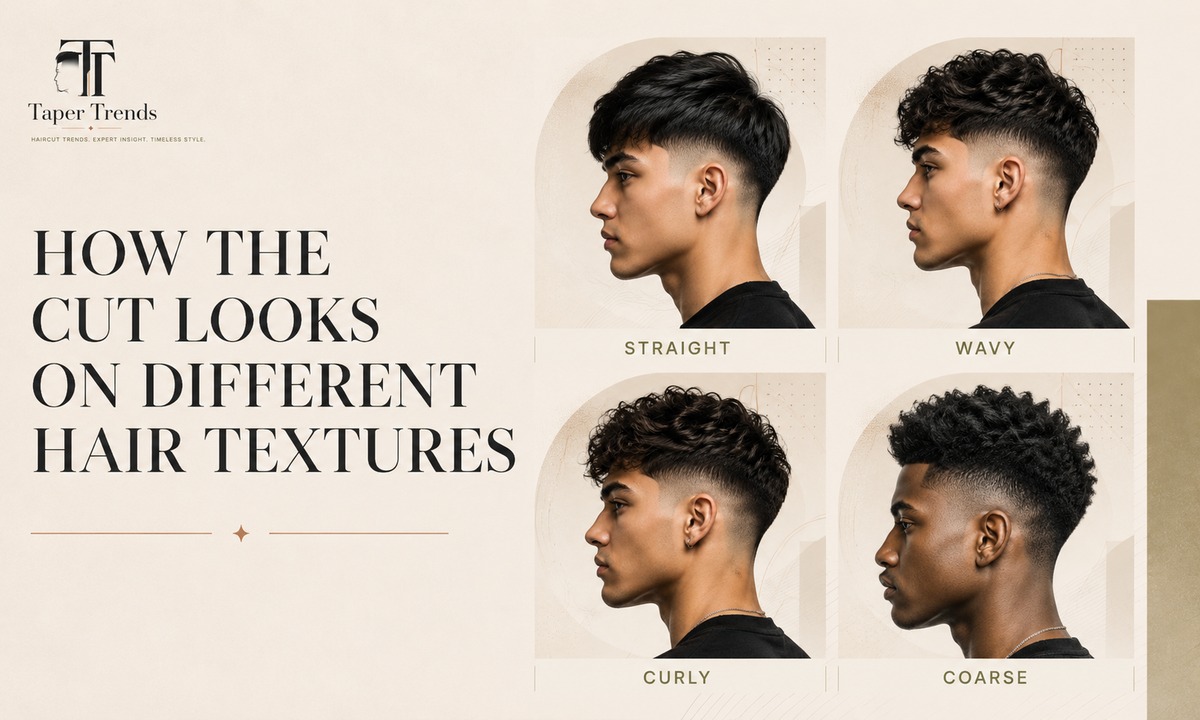
How the cut looks on different hair textures
Texture changes how any of these styles behave once you leave the chair. Thick straight hair holds shape and combs easily, but watch for bulk; your barber may thin the top so it does not sit heavy once the sides come down. Loose waves add movement with almost no effort and suit the textured and messy versions.
Tight curls need a barber who reads curl patterns, because cutting too short shrinks the curl more than you expect once it dries, which is exactly why cutting them dry first pays off. Coarse hair holds volume even at shorter lengths, so it takes well to blowouts and textured tops that rely on lift. If your hair leans coily, our low taper fade afro and low taper fade for Black men guides go deeper on preserving texture.
Best styles by face shape
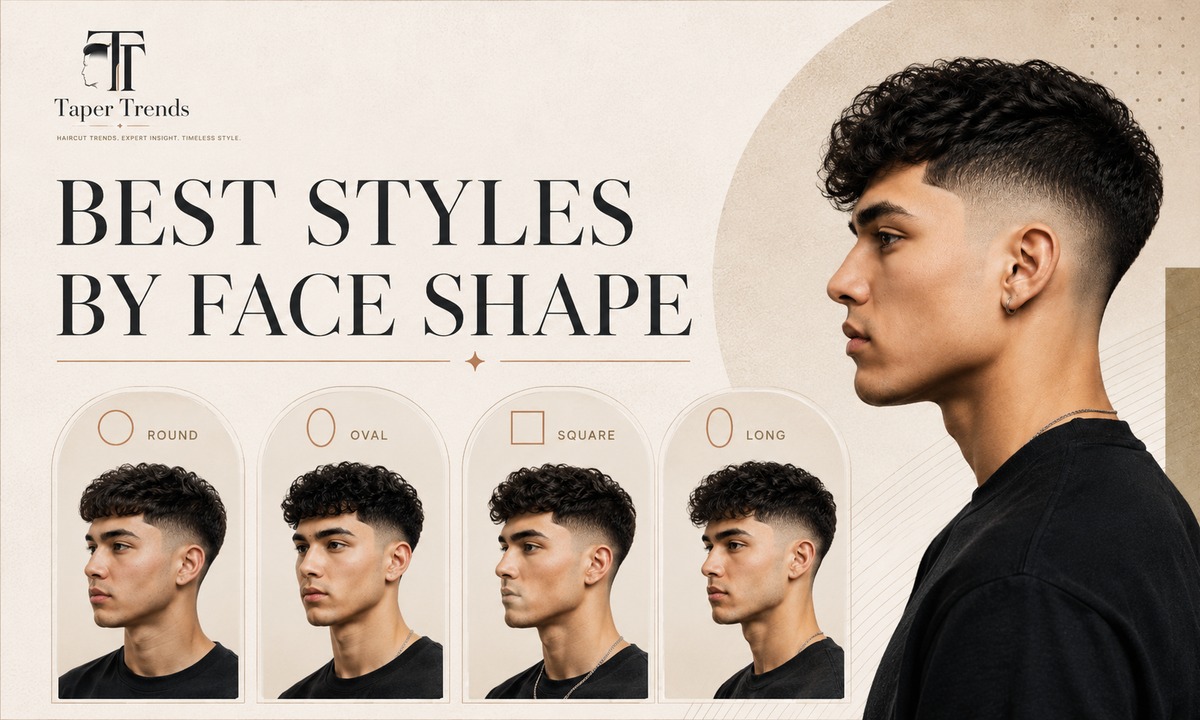
Face shape decides how much height, fringe, or sharpness will look balanced on you.
- RoundHeight on top from a blowout or textured crop helps stretch the face a little, while tight sides add structure.
- OvalThe most flexible shape — almost every version works, from a classic comb to curls to a messy top.
- SquareSome texture or a soft fringe eases a strong jawline, and a clean lineup sharpens the angles without overdoing them.
- LongKeep some length on the sides and go easy on height up top; a fringe or side-swept top balances better than a big blowout, and a low fade keeps the sides wide.
What to ask your barber for
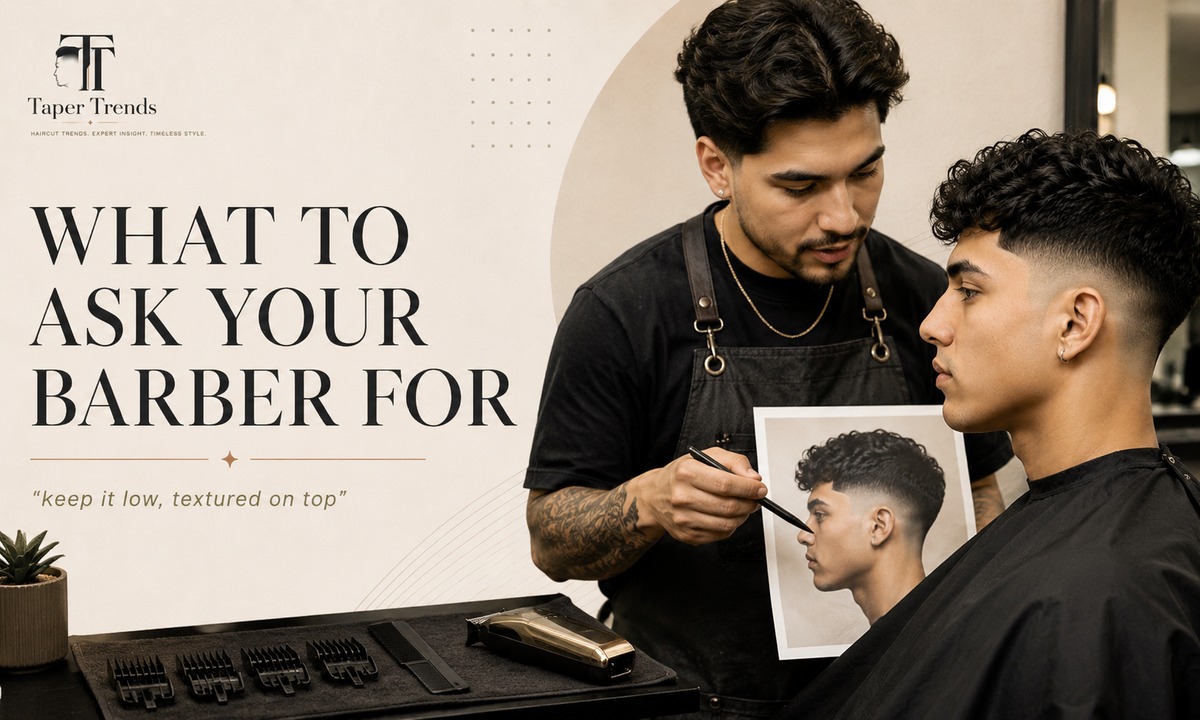
Even with a reference photo, the right words save you from a cut that misses. If you are not sure how to explain it, try this: keep it in one clear sentence that covers where the fade starts, how the top should sit, and how sharp the edges should be.
“Give me a low taper around the sideburns and neckline, keep the top textured, clean up the hairline, and blend it naturally without taking the fade too high.”
Guard numbers help too. A 1 or 1.5 on the sides blending into scissors on top tells a barber exactly how short you want it. If you do not know the numbers, just describe how short the sides should be compared to the top. Bring a photo regardless. Haircut terms mean different things to different barbers, and a photo removes the guessing. A good barber can also tell you on the spot whether your density or texture will land you somewhere slightly different from the picture.
How to style it at home
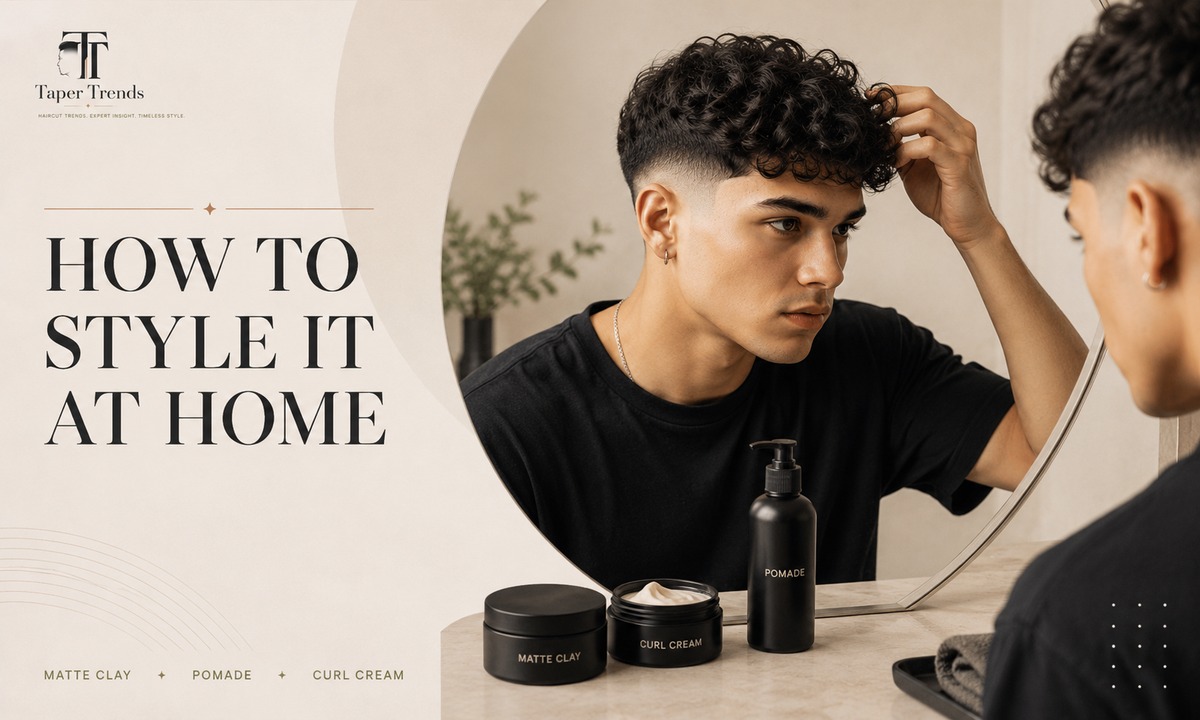
A little product and a few minutes keep the cut fresh between visits. Straight hair styles best when slightly damp. Work a small amount of product through with your fingers or a comb, then shape it into a side part, straight back, or forward fringe. Keep the product light so it does not look greasy.
Curls and waves also do better on damp hair rather than bone dry. Scrunch in a curl cream to define the pattern without weighing it down, and avoid brushing curls once they are dry, which turns definition into frizz.
- Matte clayA natural, no-shine finish with strong hold for textured and messy tops.
- PomadeA smoother, controlled look for classic combed styles.
- Curl creamDefines curls and waves while cutting frizz.
- Texture powderAdds grip and lift at the roots for finer or flatter hair.
How often to maintain it
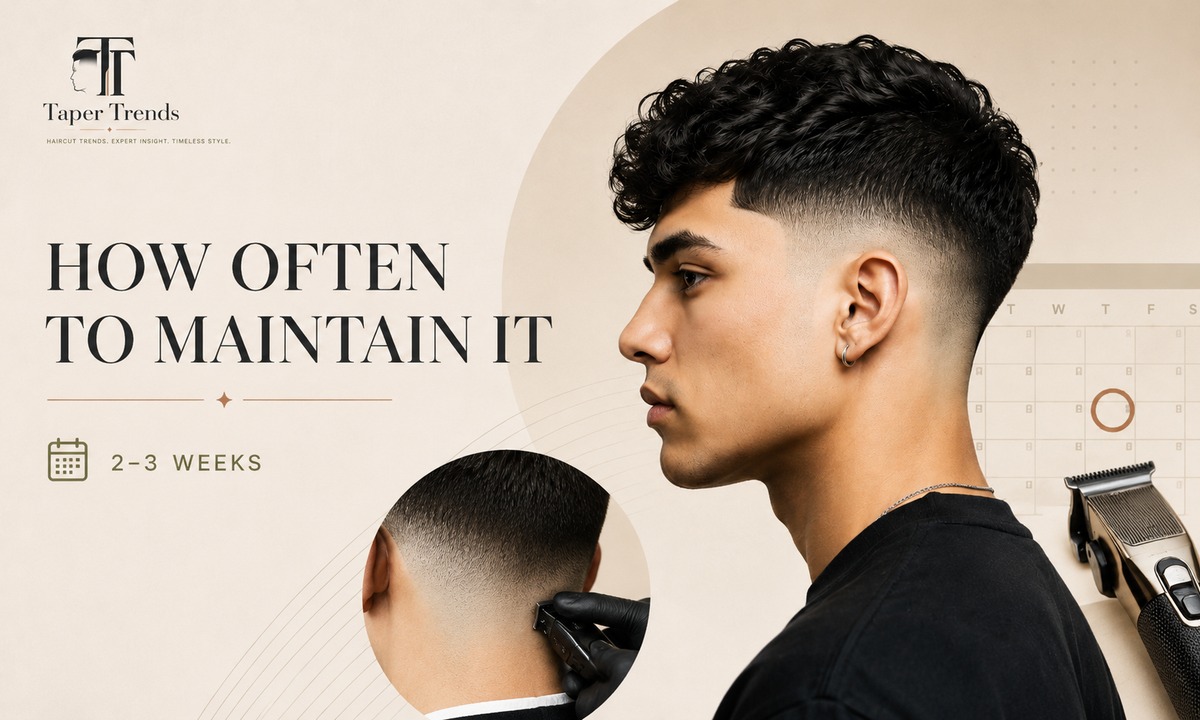
A fade looks sharpest in the first week or two, then softens as the hair grows. Most guys book a touch-up every two to three weeks. Faster growth might pull that closer to two weeks, slower growth to three or four.
The neckline and sideburns grow out faster than the rest and can look scruffy within a week. Plenty of shops offer a quick neckline cleanup between full cuts, which buys time without a full appointment. The top needs trimming less often, roughly every four to six weeks. Growing it out for a blowout or bigger messy top stretches that further.
Common mistakes to avoid
A few small missteps throw off an otherwise solid cut.
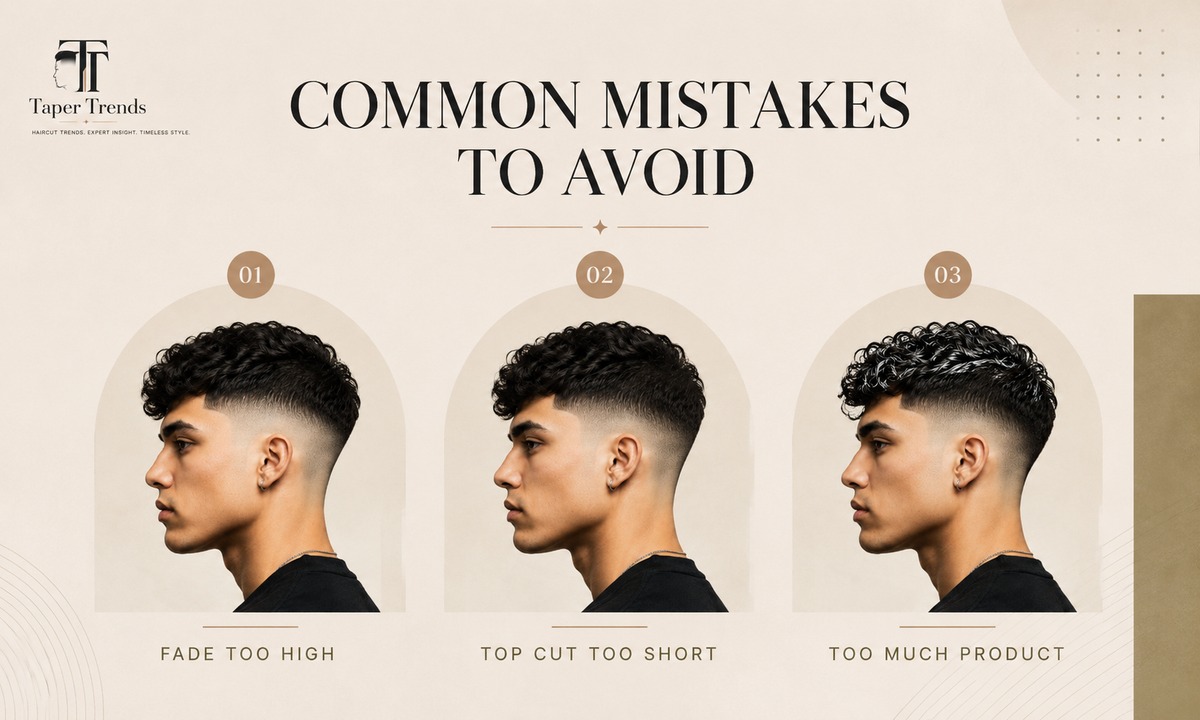
- Letting the fade creep highOver several visits this quietly turns a subtle low taper into a bolder high fade. Confirm each time that you want it kept low.
- Cutting the top too shortIt strips away the styling options that make this cut versatile, so start longer and trim gradually if you need to.
- Fighting your natural textureForcing curly hair into a straight-hair style, or the reverse, usually disappoints. Working with what you have is easier to keep up.
- Piling on productToo much pomade or gel makes hair look greasy and stiff. A little goes a long way, especially with matte clay or curl cream.
Adapting the cut for school, social media, and work
One reason this cut travels so well is that it shifts to fit the setting. For school, a classic low taper with a simple lineup and minimal product stays neat and dress-code friendly. For a bolder, photo-ready look, a blowout, an Edgar, or a takuache-inspired shape stands out on camera. For the office, a clean side part or combed top with a subtle lineup looks polished without feeling flashy.

Best beards to pair with a low taper fade
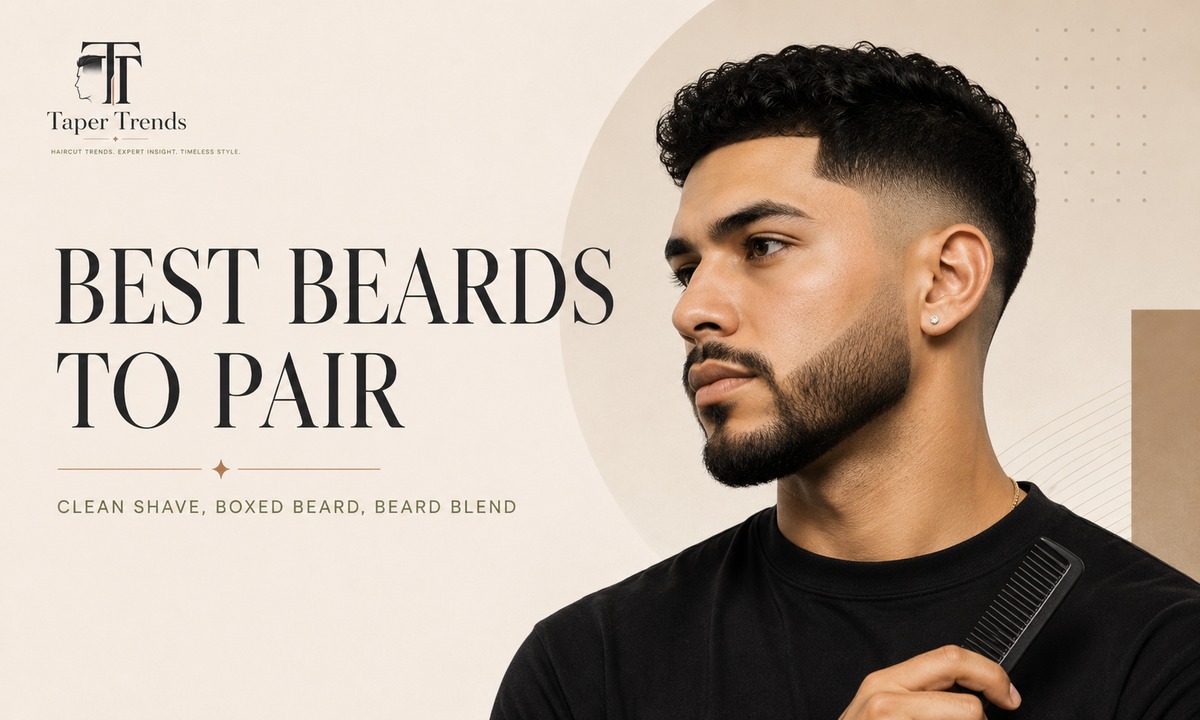
The right beard ties the whole thing together. A clean shave keeps the focus on the haircut and suits the classic and professional versions. A short boxed beard adds jaw definition while staying low maintenance and works with almost any fade.
A goatee brings a little edge without the upkeep of a full beard and plays well with sharper cuts like the Edgar. A faded beard blend connects the beard into the taper for a smooth, groomed look, popular with fuller beards. If you want the fade to carry all the way through, our low taper fade design guide covers how a lineup and a connected beard fade work together.
Quick reference: which style should you pick?
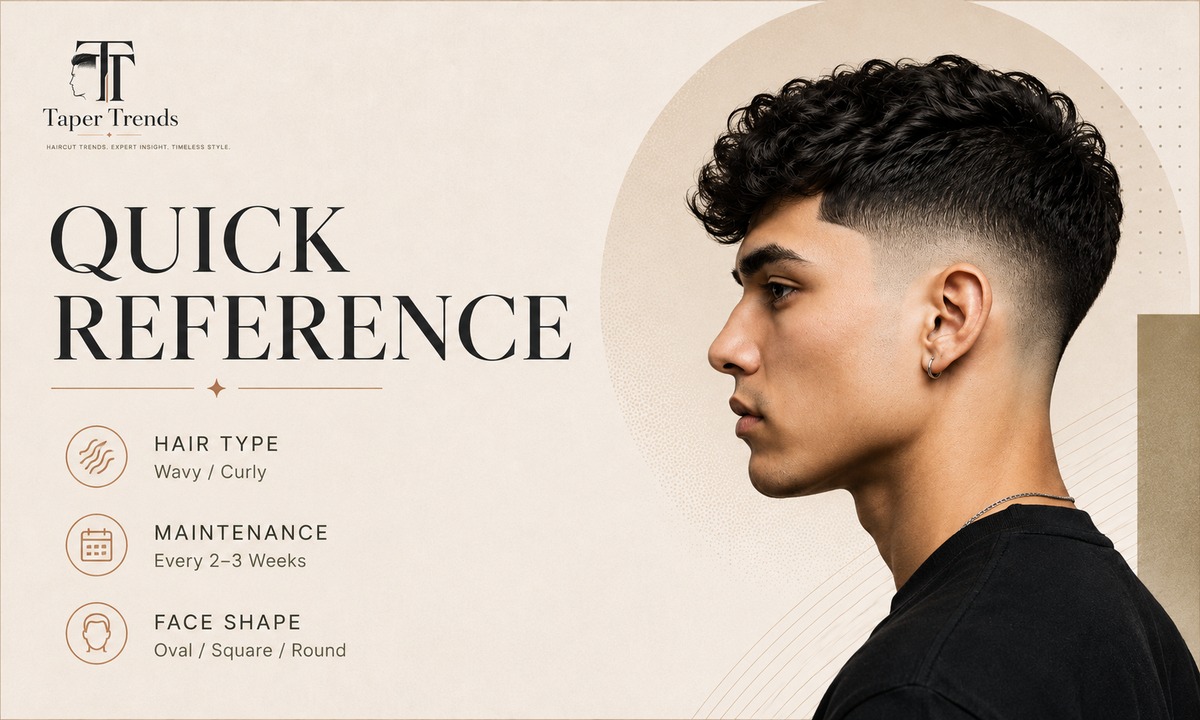
If you want the short answer, match your hair type or your priority to a starting point and bring that to the chair.
| If you have / want | Start with |
|---|---|
| Straight hair | Classic combed low taper or a crisp Edgar |
| Wavy hair | Textured top or a messy, lived-in top |
| Curly hair | Curly low taper fade with the curls left intact |
| Coarse / thick hair | Blowout for height and volume up top |
| Lowest upkeep | Classic combed style with a simple lineup |
| Boldest for photos | Blowout, Edgar, or a takuache-inspired shape |
Frequently asked questions
Is a low taper fade good for Mexican and Hispanic hair types?
Yes. It works well with the thick, wavy, and curly textures common in Mexican and Hispanic communities. The low fade keeps the sides clean while leaving enough length on top to work with your natural texture instead of against it.
Is a low taper or a mid taper better?
Neither is better outright. A low taper gives a subtler, everyday look, while a mid taper adds contrast and a bolder finish. It comes down to how much definition you want between the top and the sides.
What is the best low taper fade for curly hair?
A curly low taper fade that keeps the curls on top while fading the sides low tends to look best. Ask your barber to cut the curls dry first so they can see the real pattern before fading and avoid taking off too much definition.
Can you get an Edgar cut with a low taper fade?
Yes, and it is a common pairing. The Edgar works on any hair texture, though a straight or lightly wavy top holds the blunt fringe with the least effort.
How long does a low taper fade stay fresh?
Usually two to three weeks before it grows out and softens. A quick neckline and sideburn cleanup in between can stretch that a bit further.
Is a taper the same as a fade?
Not quite. A fade blends all the way down to bare skin, while a taper leaves a little length at the edges. A low taper fade sits between the two: short and clean near the ears and neck, but not shaved to the skin.
Is the Hispanic Mexican low taper fade worth it?
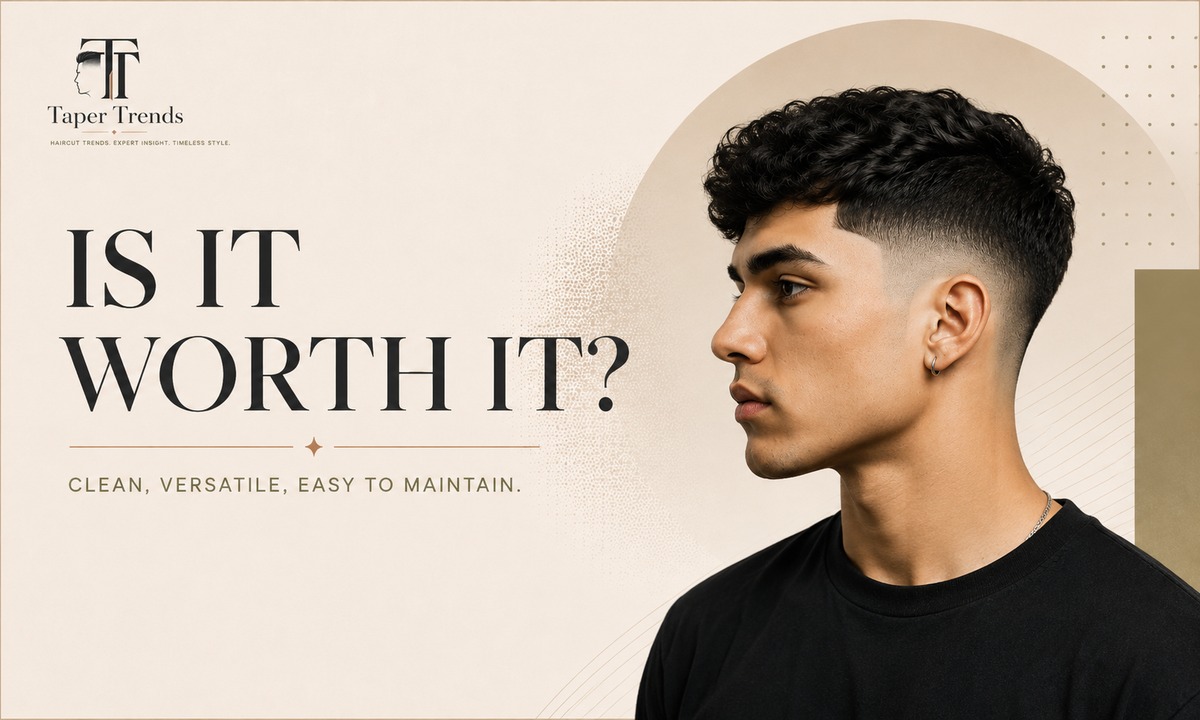
For most guys, yes. The reason it has stuck around is range. It carries you from school to work to a night out, with plenty of room to play with texture, a fringe, or a beard fade when you want something louder, and it suits straight, wavy, curly, thick, and coarse hair alike.
The path to the version that fits you is simple. Bring a photo, be clear about how low you want the fade, and talk through your hair type and face shape before the clippers come out. Get that consultation right and the cut holds up for weeks with barely any daily upkeep, whether it is your first fade or your fiftieth.
The bottom line
The Hispanic Mexican low taper fade lasts because it does not make you choose between clean and natural. It keeps your texture and volume up top while the low fade and crisp lineup keep the edges sharp.
Whether you go classic and combed, curly, Edgar, or takuache-inspired, it adapts to your hair type, your face shape, and how much time you want to spend in the morning. Bring a photo, keep the fade low, and it earns its place as a cut you come back to.
Want more taper fade guides?
Browse clean, barber-ready breakdowns for every hair type.