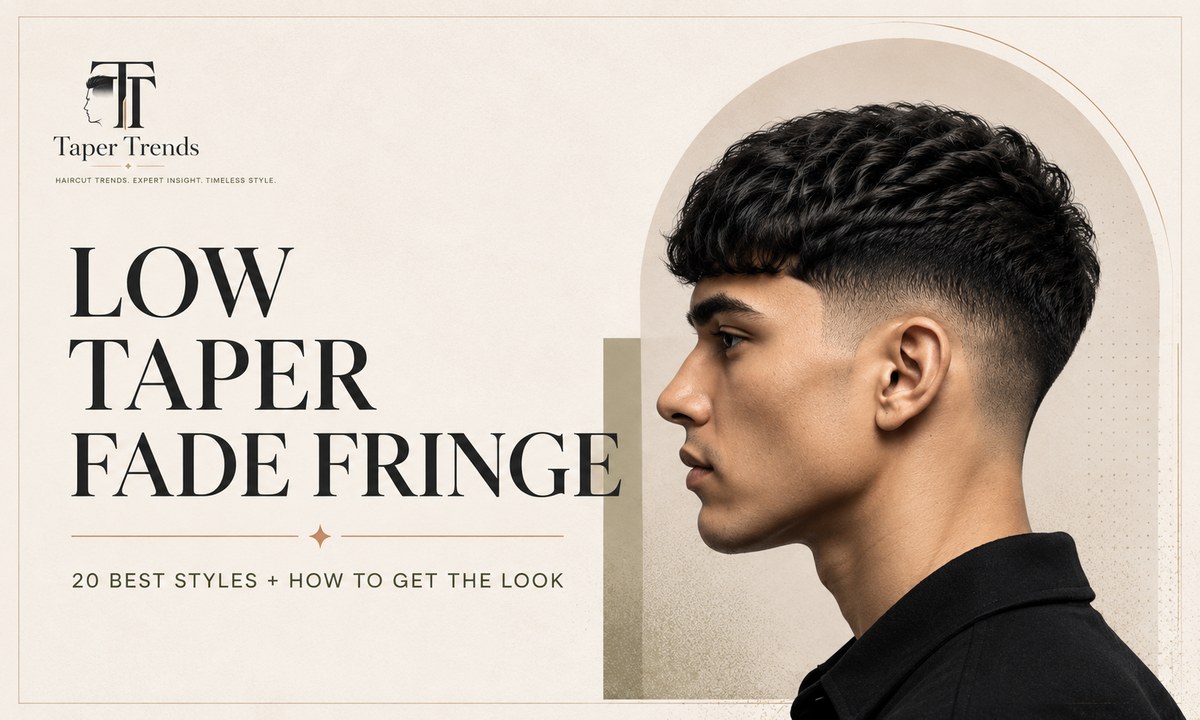
The low taper fade fringe pairs short, softly blended sides with a longer front styled over the forehead. It looks sharp without forcing the whole haircut short, which explains why the style has carried its momentum from 2025 into 2026.
The low blend keeps contrast gentle, grows out cleanly, and leaves enough hair on top to work with straight, wavy, curly, or coily texture. If you want the wider family of cuts before choosing a fringe, start with our complete low taper fade haircuts guide.
What is a low taper fade fringe?
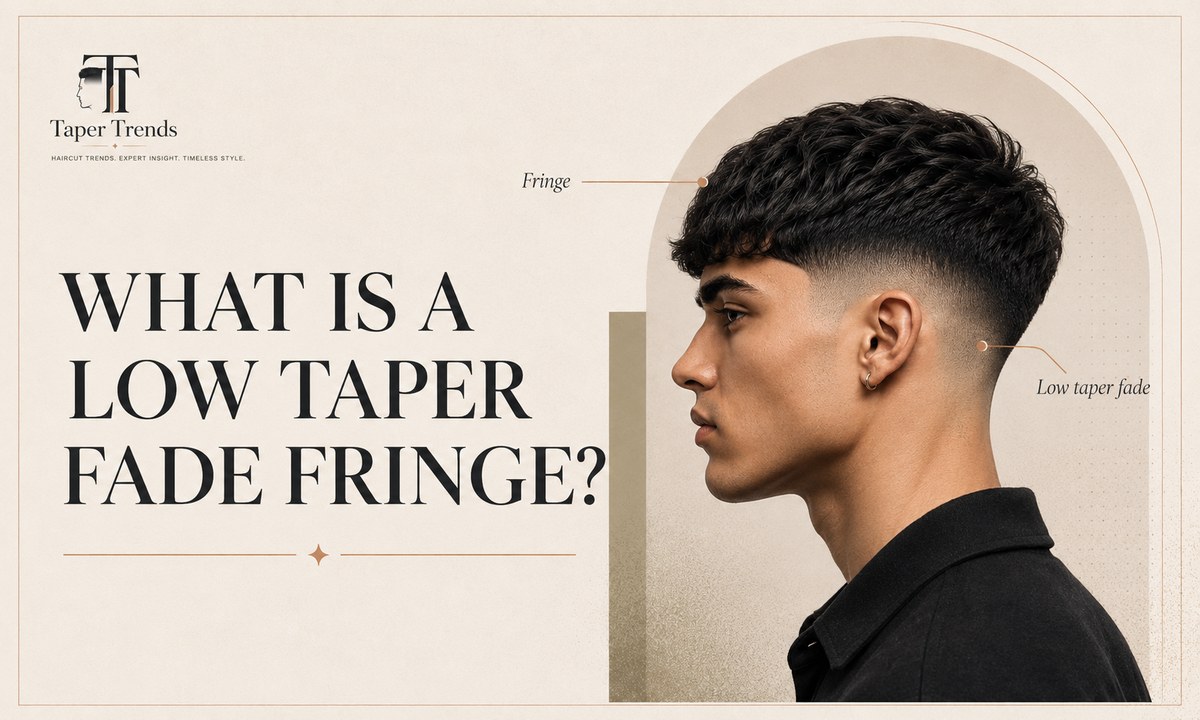
The taper gradually shortens the hair toward the hairline and neckline, while the fade blends the sides and back at a low point just above the ears. The top stays longer and finishes in a fringe that falls forward. Because the blend begins low, you retain more weight around the upper sides than you would with a mid or high fade.
The fringe can sit full and heavy for more forehead coverage or break into choppy, separated pieces for a lighter finish. Density, curl pattern, and natural growth direction decide how it hangs. Our visual guide to what a low taper fade looks like shows where that base blend should begin and end.
What it looks like from the front, side, and back
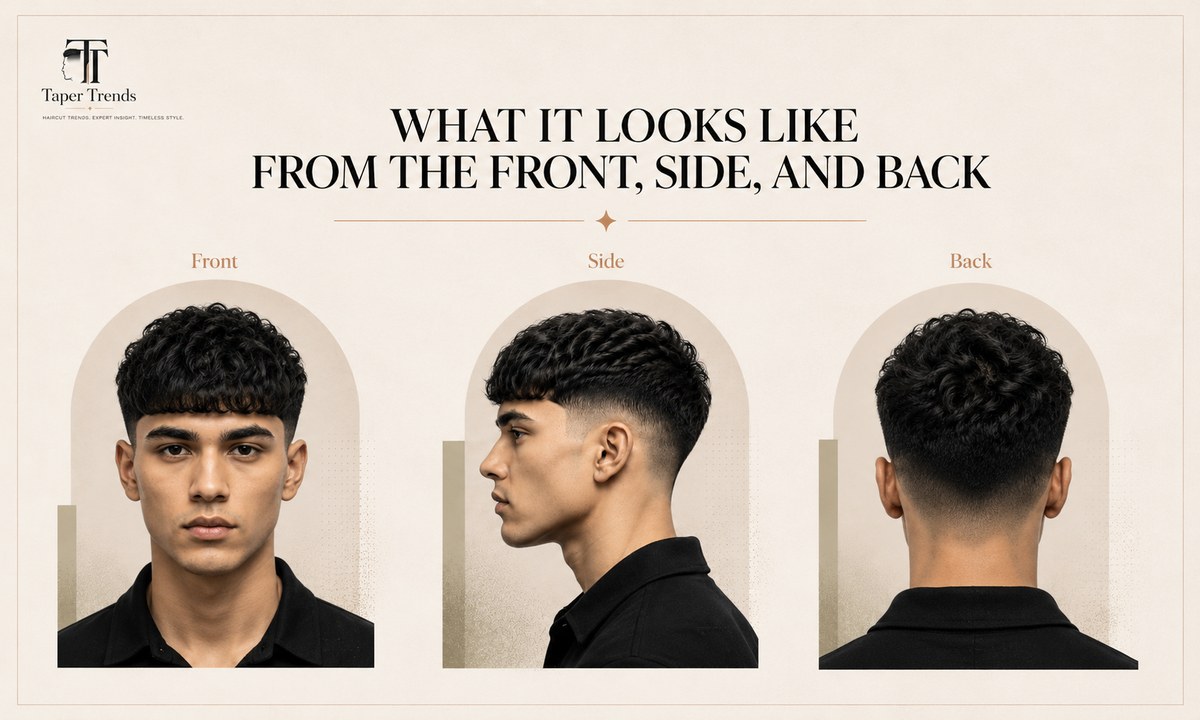
From the front, the fringe is the main event. It normally lands around the brow with texture through the ends so it does not resemble a flat curtain. From the side, the taper moves from very short near the bottom into blended length near the crown without a hard shelf.
From the back, a tapered neckline stays clean and softly rounded instead of ending in the boxy edge of a traditional short back and sides. Bring front, side, and back references to the chair because a single photo rarely shows all three decisions.
How it compares to similar cuts
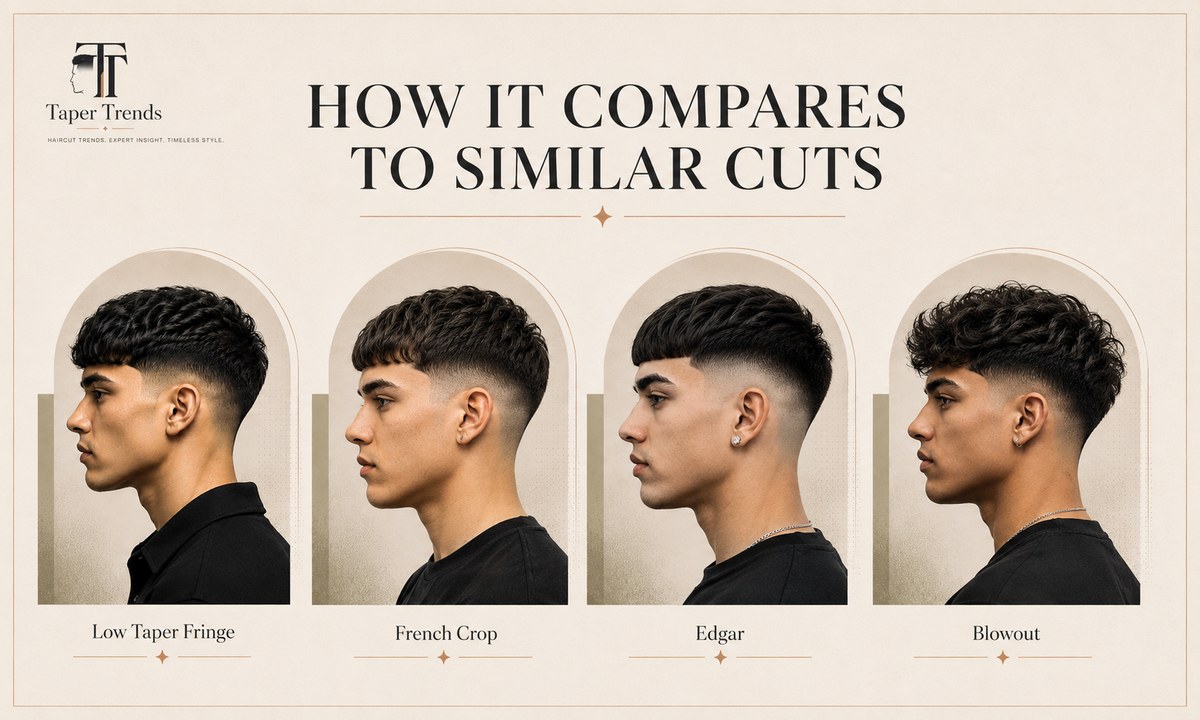
Similar names hide important differences. A mid taper begins higher and shows more contrast, while the low taper keeps the transition near the hairline. See our low taper fade vs mid taper fade comparison if fade placement is your main decision.
A French crop uses a shorter, straighter fringe. An Edgar pushes that idea toward a blunt front and a boxier outline, while a blowout sends volume upward instead of forward. The low taper fade fringe is the softer, more mobile option.
| Cut | Sides | Front |
|---|---|---|
| Low taper fade fringe | Soft blend kept low around the sideburns and neckline | Longer, textured fringe with natural movement |
| Plain low fade fringe | Sharper fade with a more abrupt drop in length | Similar forward shape with stronger side contrast |
| French crop | Usually paired with a tighter, more visible fade | Shorter, straighter fringe with a compact shape |
| Edgar | Crisp fade and boxier outline | Blunt, straight-across front edge |
| Blowout taper | Stronger taper supporting a larger silhouette | Volume pushed up and out instead of forward |
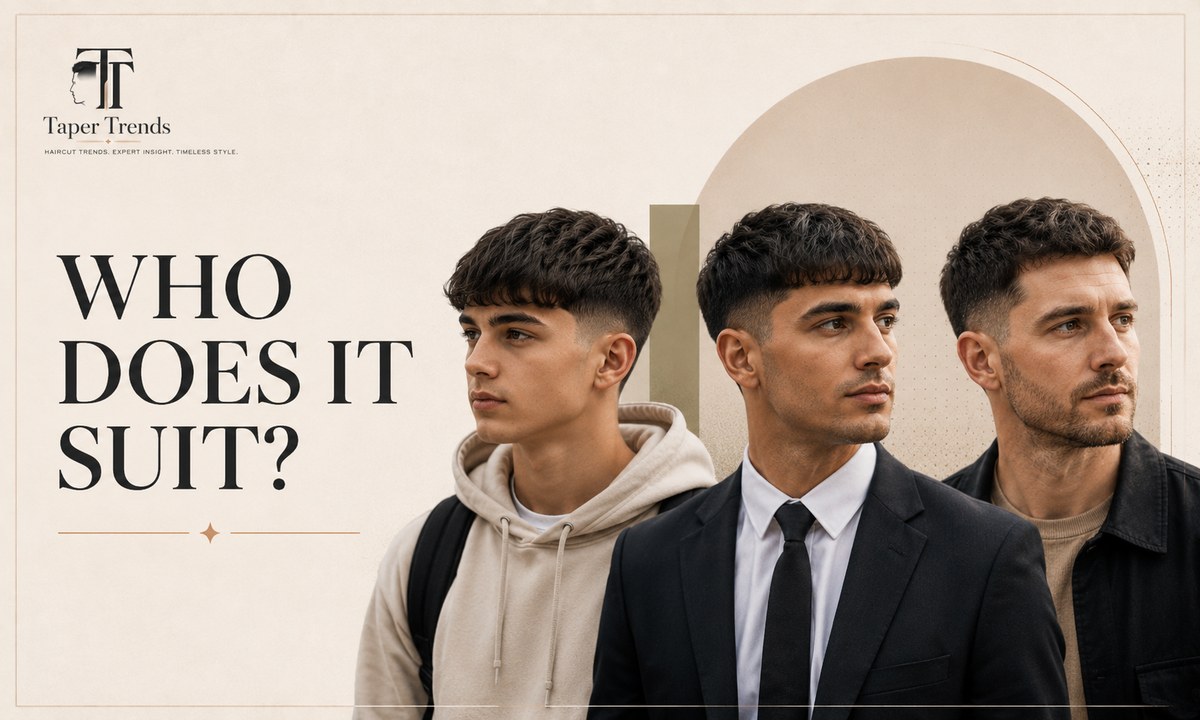
Who does it suit?
This cut works from the teenage years through the forties and beyond because the low fade does not look aggressively trend-driven. A soft version fits school with little more than a comb and light product; a shorter fringe over a tighter taper looks neat enough for an office.
Very fine hair may lose fringe shape through the day, while a strong cowlick can fight the forward direction. Neither rules the cut out, but both call for a shorter, lighter fringe and a barber who reads the growth pattern before cutting. For texture-specific options, compare our guides for straight hair and wavy hair.
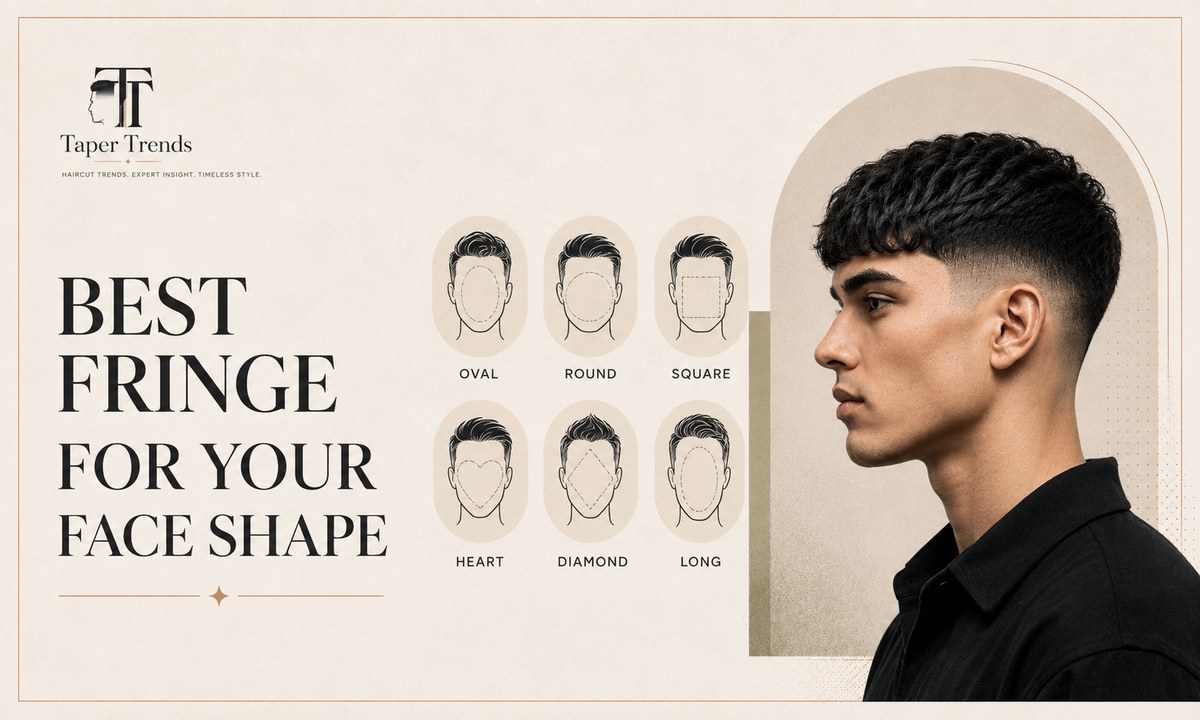
Best fringe for your face shape
Treat face-shape advice as a starting point. Fringe length, weight, volume, and your growth pattern change how the cut actually reads.
- OvalAlmost any fringe length or weight works because the proportions are already balanced.
- RoundUse a little extra length and volume for structure; avoid a very heavy, flat fringe.
- SquareA textured, uneven edge softens a strong jaw better than a blunt straight line.
- HeartA lighter or side-swept fringe balances the forehead without adding too much weight.
- DiamondWidth and movement through the fringe soften prominent cheekbones.
- Long / rectangularA fuller fringe adds forehead coverage; keep the sides close without piling height on top.
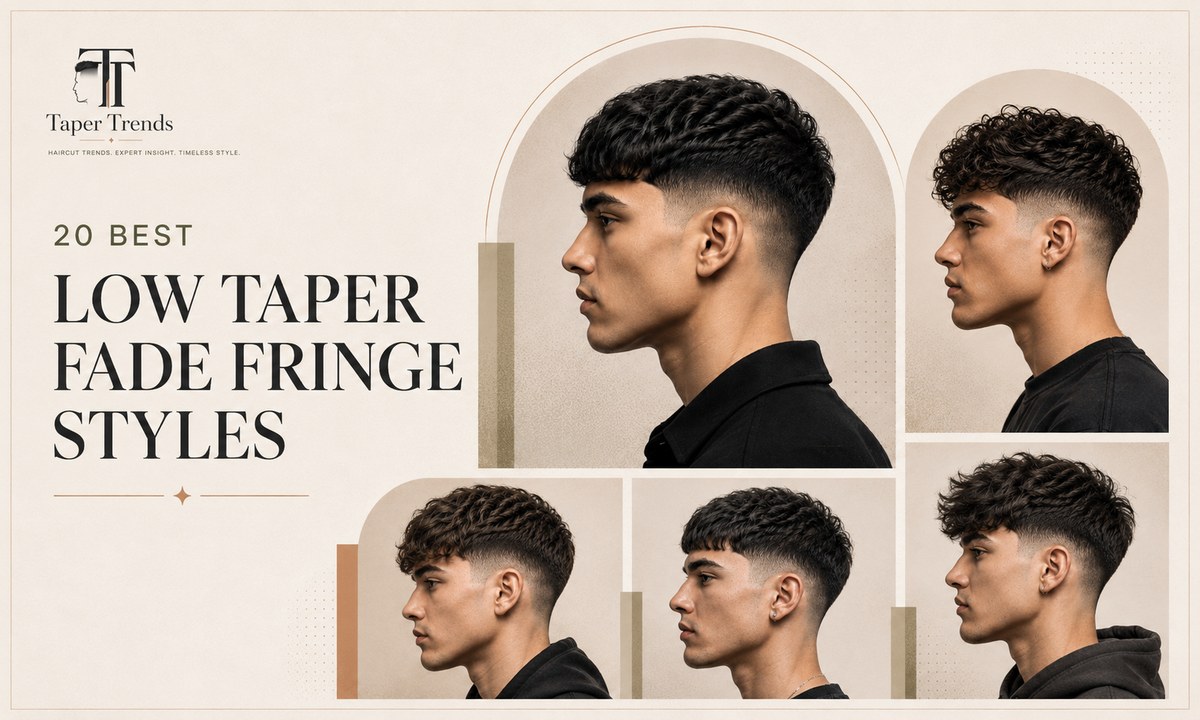
20 best low taper fade fringe styles
Save several reference photos with hair texture close to yours. The same fringe can look completely different on fine straight hair and dense curls, so use these styles as a shortlist rather than a fixed menu.
- 1. Textured fringeChoppy layers and visible movement; the versatile default for most textures.
- 2. Messy fringeA tousled, low-effort top that works especially well on thick or wavy hair.
- 3. Short fringeA clean finish just above the brow that suits straight or finer hair.
- 4. Long fringeMore swing and forehead coverage, best with thicker hair and regular blow-drying.
- 5. Curly fringeNatural curl kept intact on top with extra length left for shrinkage.
- 6. Wavy fringeNatural wave supplies texture; a light sea salt spray adds definition.
- 7. Straight-hair fringeA sleek, controlled version softened with point cutting and light cream.
- 8. Blowout with textured fringeExtra height over a stronger taper; bold but higher maintenance.
- 9. Fluffy fringeSoft, rounded volume built with thick or wavy hair and a round brush.
- 10. Side-swept fringeAn asymmetric finish directed to one side with light-hold product.
- 11. Curtain fringeA center part framing the face, best with medium-length straight or wavy hair.
- 12. French cropA short, near-straight fringe with a compact, low-maintenance finish.
- 13. Edgar fringeA sharp, blunt front line that needs regular trims to stay crisp.
- 14. Caesar fringeA short forward-brushed top that is easy to style on most hair types.
- 15. Thick fringeA dense, full front with careful weight removal to stop it looking blocky.
- 16. Fine-hair fringeA shorter, lighter version lifted with texture powder instead of heavy cream.
- 17. Asian-hair fringePoint cutting softens thick, straight strands and prevents a blocky outline.
- 18. Coily or Afro-textured fringeA shaped front that follows the curl pattern with room for shrinkage.
- 19. Low skin taper fringeA skin-level finish at the bottom creates sharper contrast and faster regrowth.
- 20. Subtle natural fringeMinimal blending and a soft front that stays close to natural movement.
If you want a narrower deep dive on the modern choppy version, our textured fringe with low taper fade guide covers its face-shape adjustments, products, and trim schedule. For blunt Edgar and takuache variations, see the Hispanic Mexican low taper fade guide.
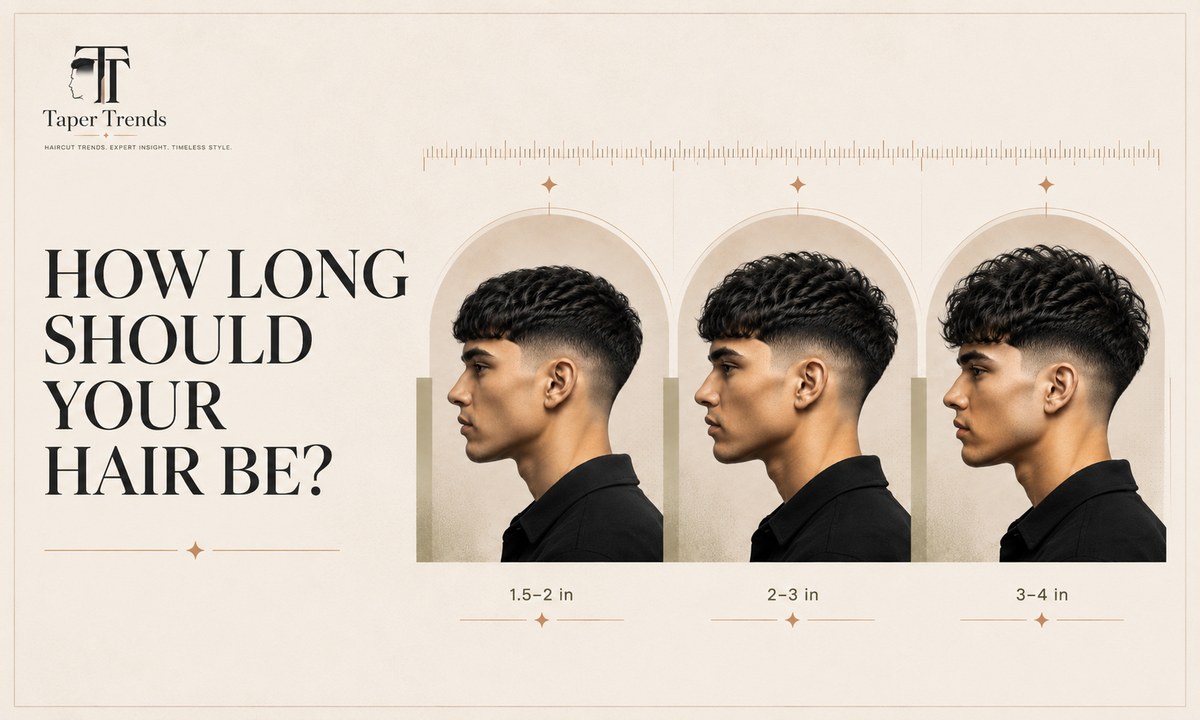
How long should your hair be?
A short, low-maintenance fringe needs about 1.5 to 2 inches, or 4 to 5 cm, on top. A textured fringe with visible movement needs roughly 2 to 3 inches, or 5 to 7.5 cm, so the barber has enough hair to point-cut and layer.
A blowout or fluffy fringe needs around 3 to 4 inches, or 7.5 to 10 cm, plus daily blow-drying. Curly and coily hair needs extra length for shrinkage, and cowlicks may change where the fringe naturally wants to sit.
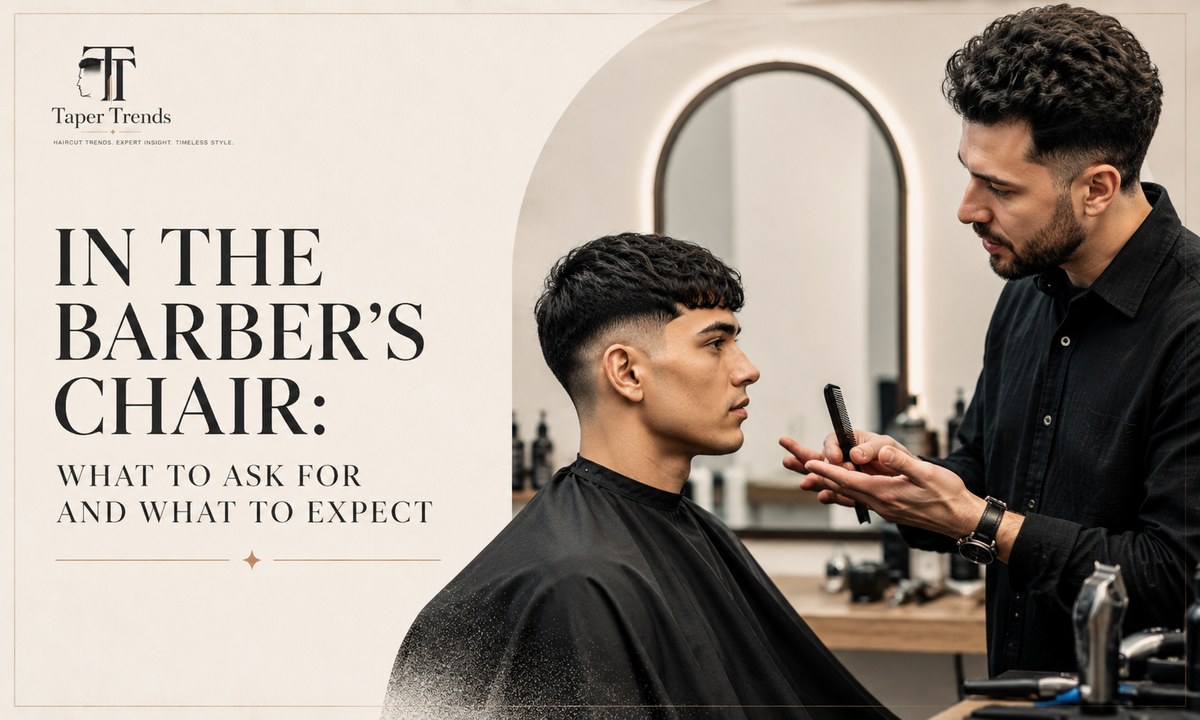
In the barber's chair: what to ask for and what to expect
Bring front, side, and back references. Ask for the taper to stay around the sideburns and neckline rather than rising toward the temples. Then describe the fringe as short, textured, messy, or long, and say whether you want a natural or polished finish. Thick hair may need bulk removed through the temples and crown, but light point cutting is safer than aggressive thinning.
“I’d like a low taper fade blended around my sideburns and neckline, not higher up. Keep the sides soft, and leave a textured fringe about two to three inches long, styled forward with a natural finish.”
Expect the barber to check density, cowlicks, and growth direction first, section off the top, build the low blend upward, cut and texturize the fringe, then finish the hairline and neckline. Clear references and exact length matter more than memorizing guard numbers.
How to style it at home
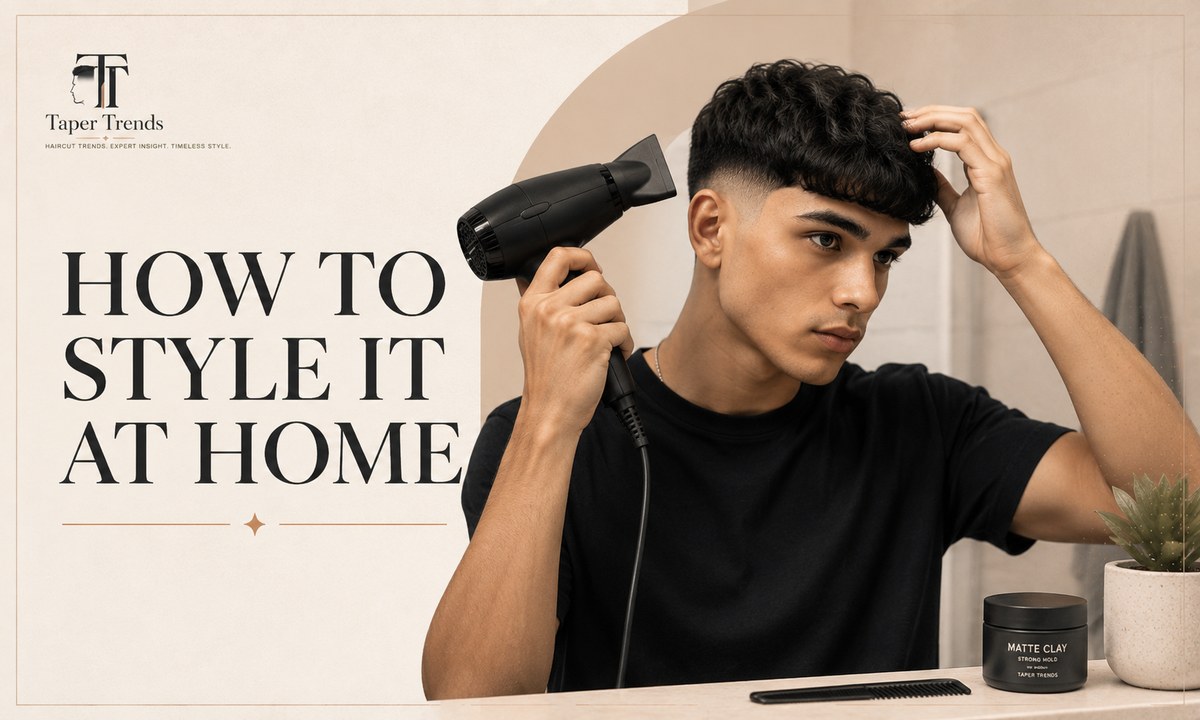
Start with clean, towel-dried hair. Work in a lightweight pre-styler or heat protectant, then push the fringe forward with your fingers while it is damp. Straight and wavy hair can use a round brush for lift; curly hair does better with a diffuser on low heat.
Once dry, use a small amount of texture powder or matte clay for separation. Start with less than you think. Too much product makes fine hair greasy, weighs curls down, and removes the movement that makes the style work. A full-volume version borrows the same drying technique as a low taper fade blowout, but directs more of the front forward.
Best products
Pick product by texture and the finish you want. Lighter formulas keep the fringe mobile; heavy waxes and gels drag fine hair down and make curls look stiff.
- Sea salt sprayAdds grip and texture to straight or wavy hair without much weight.
- Texture powderBuilds lift at the roots on fine or thin hair.
- Matte clayGives stronger, shine-free hold to textured and messy fringes.
- Styling creamControls straight or wavy hair with a softer, lighter finish.
- Curl creamDefines curls and coils while reducing frizz.
- Heat protectantLimits heat damage before blow-drying or diffusing.

Maintenance and upkeep
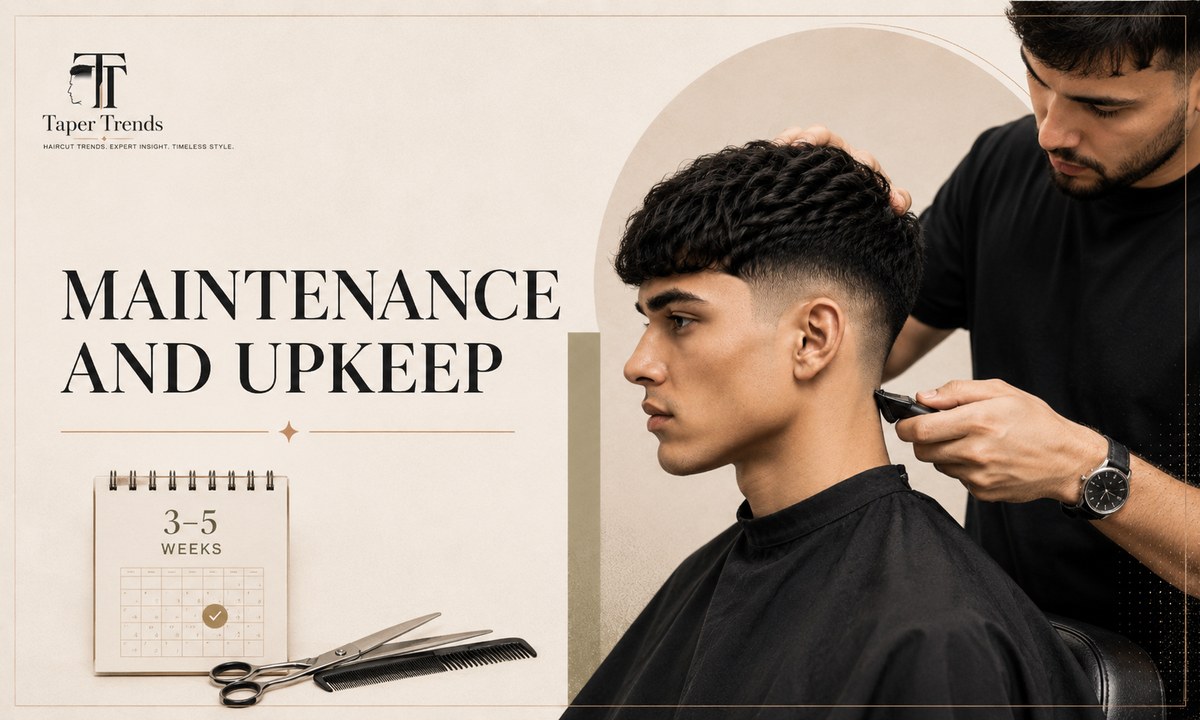
A soft low taper usually stays presentable for 3 to 5 weeks, longer than a sharp high or skin fade. A skin-level taper needs more frequent cleanups. The fringe often looks overgrown first, so trim it when it reaches your eyes or loses its shape rather than cutting the whole top on every visit.
Tidying the neckline and using a small amount of product can stretch the schedule, but do not try to rebuild the taper yourself. Fading is easy to misjudge, and a damaged blend is harder to correct than ordinary regrowth.
Common mistakes to avoid
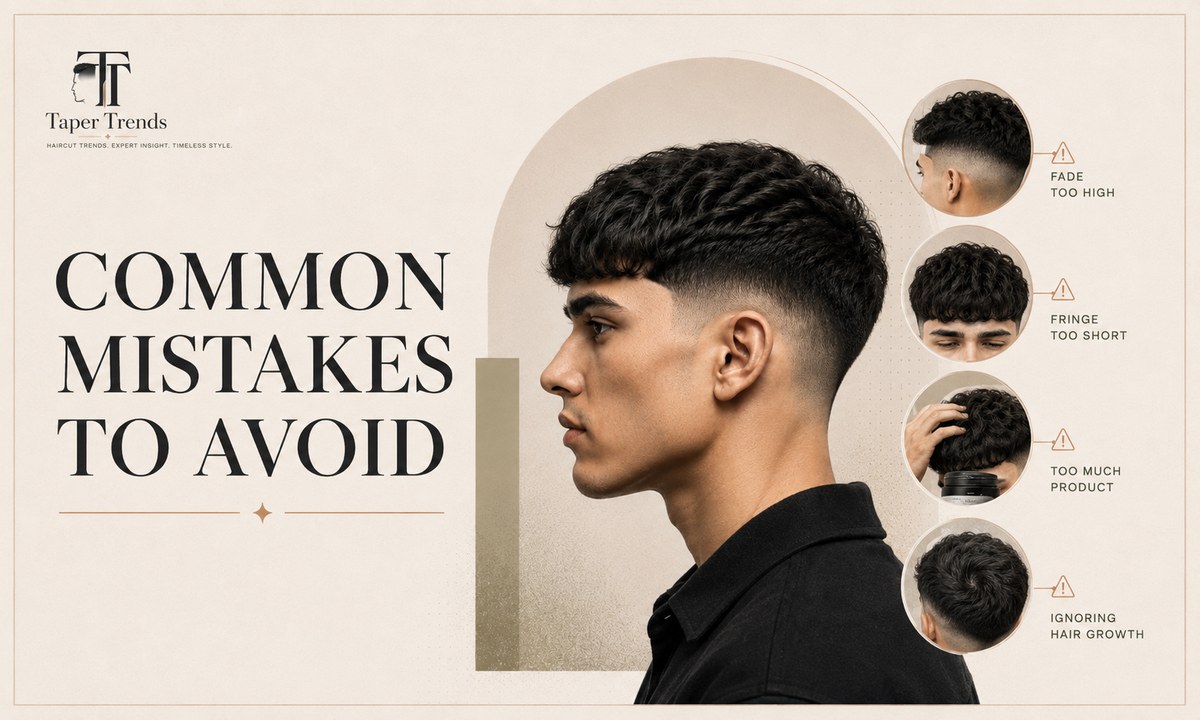
- Letting the fade creep highThe cut loses its soft, low-contrast identity when the blend reaches the temples.
- Cutting the fringe too shortStart longer and trim gradually; a short mistake takes weeks to grow back.
- Over-thinning fine hairAsk for light texturizing so the front does not look sparse.
- Using too much productHeavy application makes the fringe greasy and removes natural movement.
- Ignoring a cowlickPoint it out before cutting so the barber works with the growth direction.
- Choosing the wrong routineDo not pick a daily blowout if you will not use a dryer each morning.
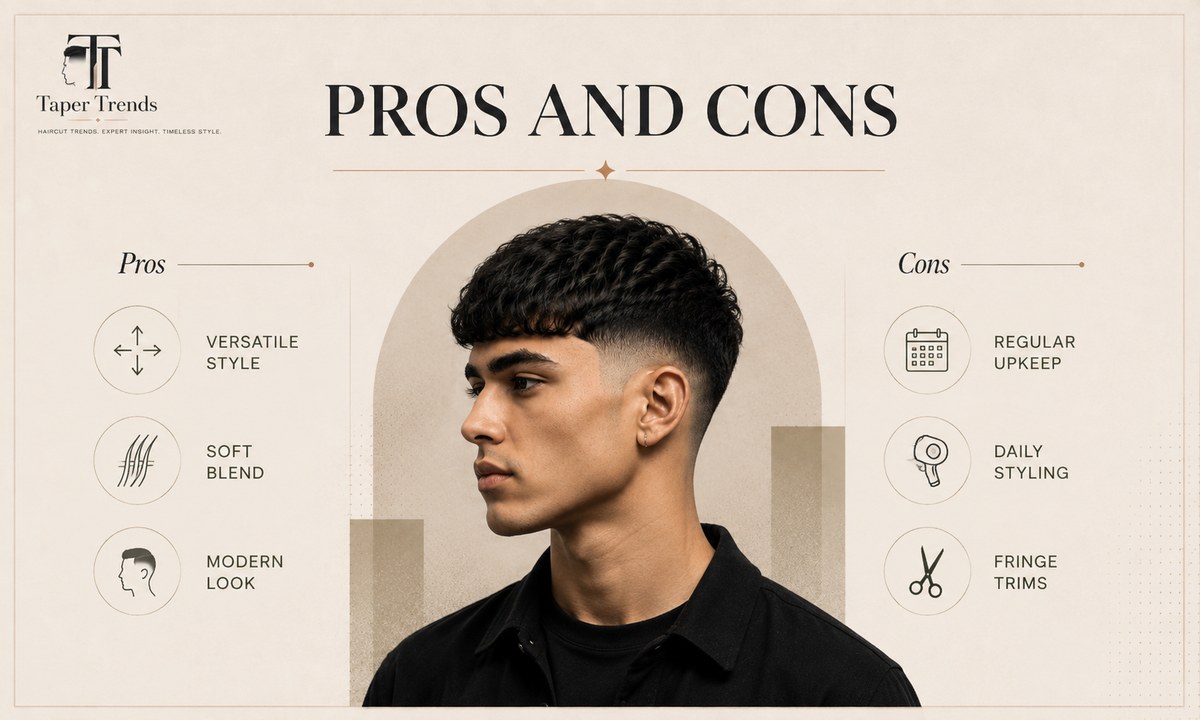
Pros and cons
What works
- Adapts to straight, wavy, curly, and coily hair
- Uses a softer blend than higher fades
- Offers several fringe shapes and lengths
- Fits casual and professional settings
- Keeps the neckline neat between cuts
What to consider
- Some versions need daily blow-drying.
- The front may need trimming before the sides.
- It is not a zero-styling cut at longer lengths.
- Weak blending becomes visible as the taper grows.
How much does it cost?
Price varies by country, city, barber experience, and shop type. Hair length, service time, a skin-level taper, and added styling can all raise the total. It often costs a little more than a basic cut because the blend and fringe detailing take extra time.
Check the barber's portfolio for similar cuts, ask for the price before booking, and confirm whether washing and styling are included. A strong fringe result depends more on demonstrated scissor work and blending than on the shop's branding.

Frequently asked questions
Is a low taper fade fringe high maintenance?
It depends on the version. A short, natural fringe over a soft taper needs little daily effort, while a blowout or fluffy fringe needs regular blow-drying and more frequent barber visits.
Can I wear it without a blow dryer?
Yes. Shorter, natural fringes can air-dry with a light product. Blowout and fluffy versions are the exception because heat creates the volume that holds their shape.
How long should the top be for a textured fringe?
Around 2 to 3 inches, or 5 to 7.5 cm, gives a barber enough length for point cutting and movement. Density, curl pattern, and growth direction can shift that target.
Does a low taper fade fringe work with curly hair?
Yes. Leave extra length on top for shrinkage once the curls dry, use curl cream for definition, and diffuse on low heat to control frizz without flattening the pattern.
Can fine or thinning hair pull it off?
Yes, with a shorter and lighter fringe. Texture powder adds definition without dragging strands down, and a soft taper keeps the contrast balanced.
What product is best for a messy fringe?
A light sea salt spray or a small amount of matte clay. Both add texture and separation without making the fringe stiff or overworked.
How is it different from a French crop?
A French crop usually has a shorter, straighter fringe and a tighter fade. A low taper fade fringe keeps more length and movement on top with a softer blend near the edges.
How do I stop the fringe looking greasy?
Use less product, keep it away from the roots, and rinse old product out regularly. Lightweight formulas preserve movement better than heavy waxes or gels.
Is the low taper fade fringe right for you?
It is a strong pick if you want more movement than a plain short back and sides without the hard contrast of a high fade. A short natural fringe asks almost nothing of you; a fluffy or blowout version needs a dryer and a few minutes each morning.
Match the variation to your texture, density, face shape, and real routine. Save several references showing hair like yours, explain where you want the taper to sit, and agree on fringe length before the first cut. Those choices matter more than the trend label.

The bottom line
The low taper fade fringe balances a clean outline with a front that still moves. Keep the blend low, choose fringe weight around your hair and face, and start longer if you are unsure.
Bring three-angle references, use lightweight product, and refresh the fringe when it loses shape. Get those details right and the cut works across textures, ages, and settings without feeling overdone.
Want more taper fade guides?
Browse clear, barber-ready breakdowns for every hair type.