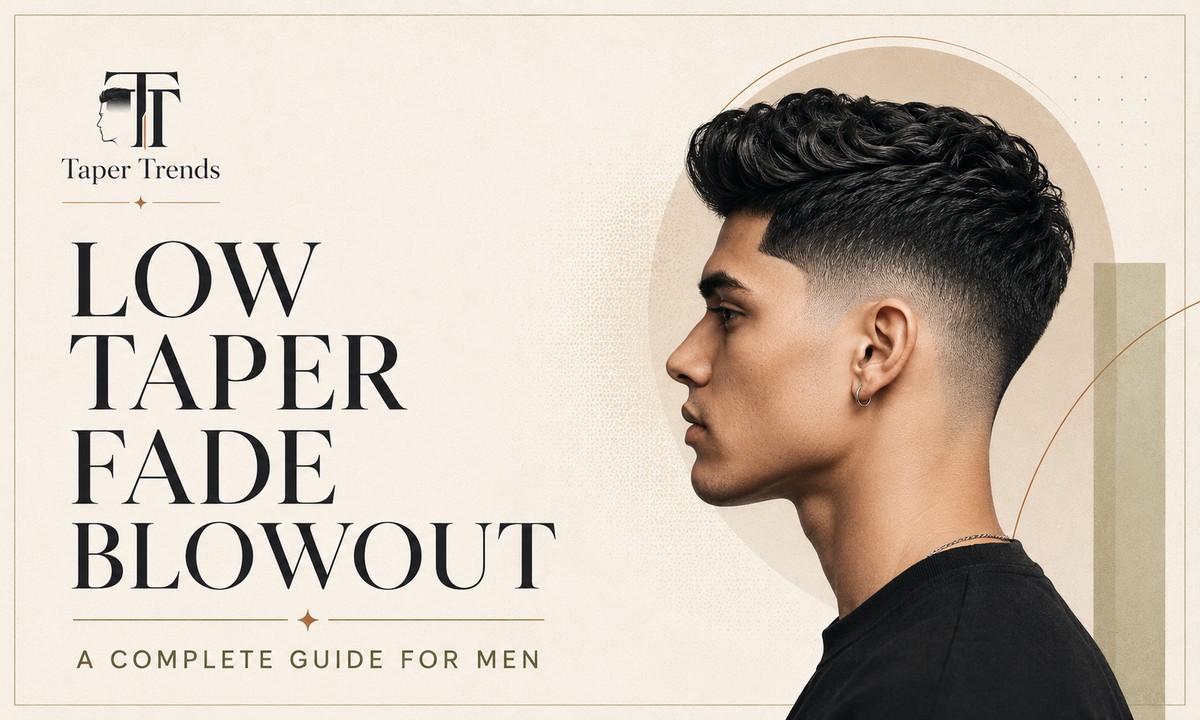
Scroll through barber reels for more than a minute and the same cut keeps showing up: short, clean sides that fade low near the ear, topped with a full, brushed-up finish that looks like it took no effort at all. That is the low taper fade blowout, and it has quietly become one of the most requested men's cuts of 2026.
The appeal comes down to balance. It reads sharp enough for work or class but relaxed enough for a normal weekend, without the severity of a high fade or the flatness of a plain trim. This guide covers what the cut actually is, how it differs from a standard blowout, who it flatters, how to ask for it, and how to keep it looking fresh between visits. If you want the broader picture first, our complete low taper fade haircuts guide covers every texture in one place.
What is a low taper fade blowout?
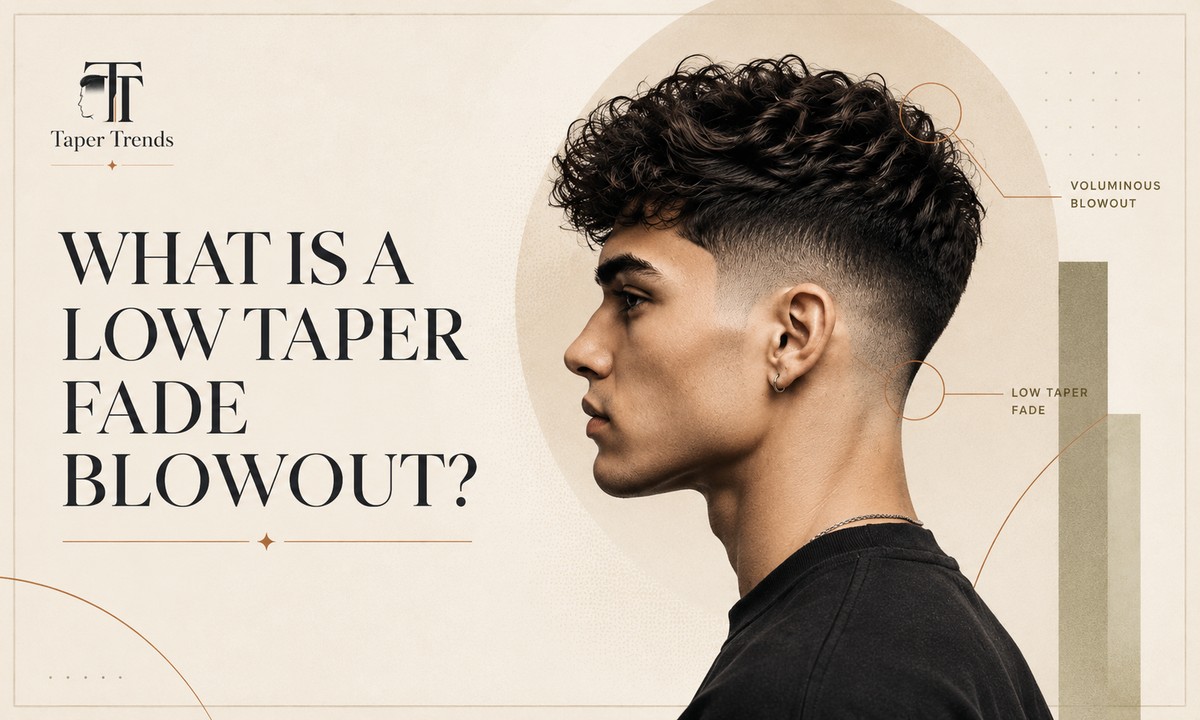
The cut combines two ideas: a low taper on the sides and back, and a blowout on top.
The taper means the hair gets gradually shorter as it moves toward the ears and neckline, but the shortest part stays close to the hairline instead of climbing up the head. That low position is what separates it from a mid or high fade. The blowout refers to the top. Rather than lying flat, the hair is dried and brushed up and slightly back so it holds natural lift and volume. Put the two together and you get a clean, blurred fade underneath with a fuller, textured shape on top. It looks pulled together without looking fussed over. If you are not sure what that low fade looks like on its own, our guide on what a low taper fade looks like walks through it from every angle.
A big reason the style has taken off is that the tools behind it are now common at home, not just at the barbershop. A blow dryer, a round brush, and a bit of the right product get most guys close to the barbershop version. It also photographs well, since the height on top adds shape, which is part of why it shows up constantly on social feeds and in grooming roundups. Grooming publications and barbers have tagged the blowout taper as one of the defining young men's cuts of the year, and shops report it as a regular request.
The other draw is range. The same cut can look tidy for an interview and easy for a night out, so you are not locked into one vibe. The low taper keeps things subtle enough that it never screams “fresh from the chair,” and the lift on top gives you volume that still feels manageable rather than stiff.
Low taper fade blowout vs a regular blowout
People mix these two up, so it is worth drawing the line clearly.
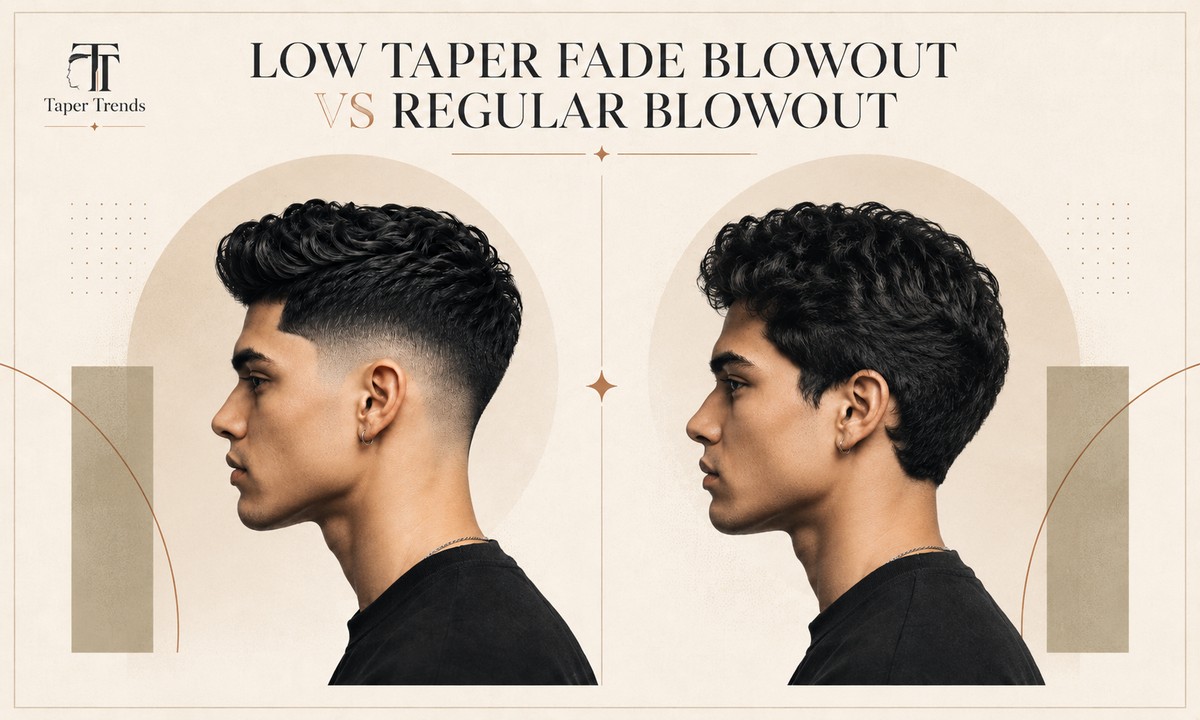
A regular blowout usually skips the fade. The focus sits almost entirely on the top, and the sides are left longer or just trimmed to an even length. A low taper fade blowout adds a defined taper to the sides and back, which builds a cleaner base for the volume to stand against.
That base does real work. With a plain blowout, the fullness can read as messy because there is nothing framing it. The low fade acts like a border: it keeps the sides neat and lets the top carry the look, so the whole thing feels intentional instead of just big.
Who does the low taper fade blowout suit?
Best face shapes
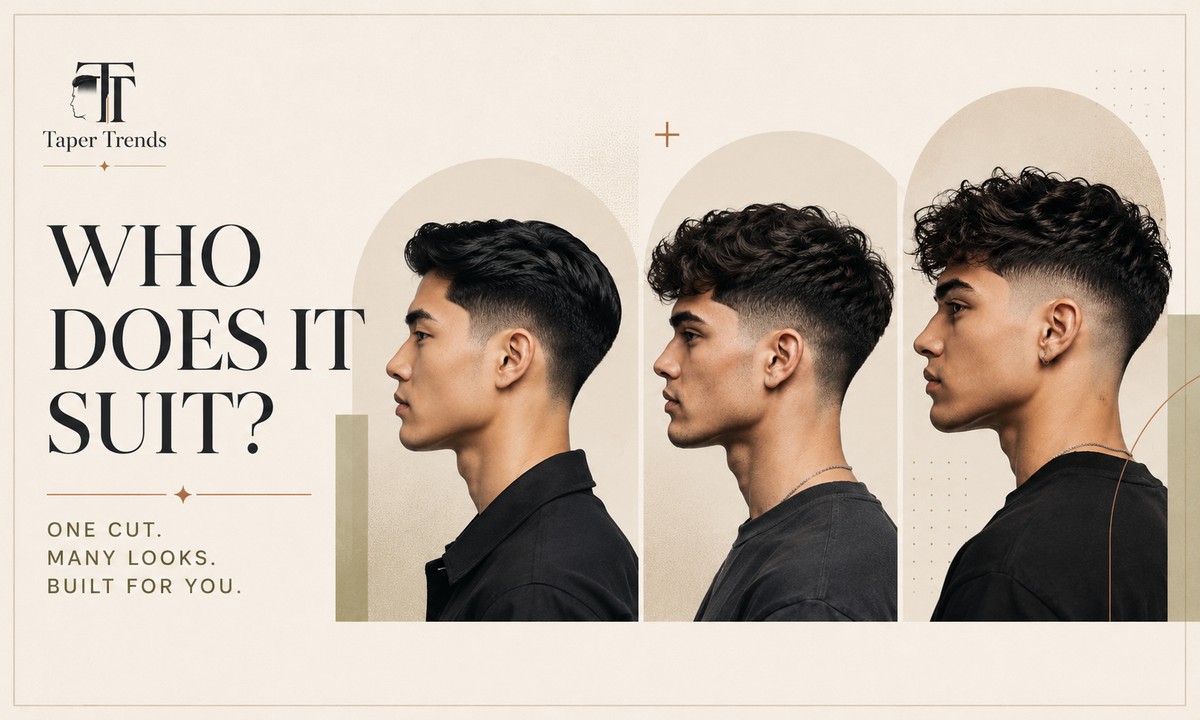
The cut works well on oval, square, and round faces. Height on top adds vertical length, which balances a rounder face, while the clean sides keep the jawline visible on square and oval shapes. If your face is on the longer side, ask your barber to keep the volume moderate so you are not adding extra length up top.
- RoundHeight on top adds vertical length to slim the face, while the clean low sides add structure.
- OvalThe most flexible shape — the lifted top and tapered sides balance naturally with almost any product.
- SquareThe volume softens a strong jaw a little, and the low taper keeps the angles clean without overdoing them.
- LongKeep the volume moderate rather than exaggerated so you are not adding extra length up top.
Hair types and textures
Medium to thick hair is the easiest to work with, since the density gives you obvious volume. That does not shut out finer hair, though. Barbers often use shorter layers and a lighter product to fake fullness, and the emphasis on top actually flatters thinner hair by drawing the eye up rather than to the scalp.
Straight, wavy, and curly hair
This is one of the reasons the style spread so fast: it adapts to whatever texture you have. Straight hair gives a smooth, lifted finish. Wavy hair brings movement and a looser, beachy shape. Curly hair almost does the job for you, since the curls already carry lift, and our blowout low taper fade for curly hair guide breaks that version down by curl pattern. A good barber shapes the cut around your natural texture instead of fighting it, which is why it looks at home on so many different heads. If your hair leans coily, our low taper fade afro and low taper fade for Black men guides go deeper on preserving texture.
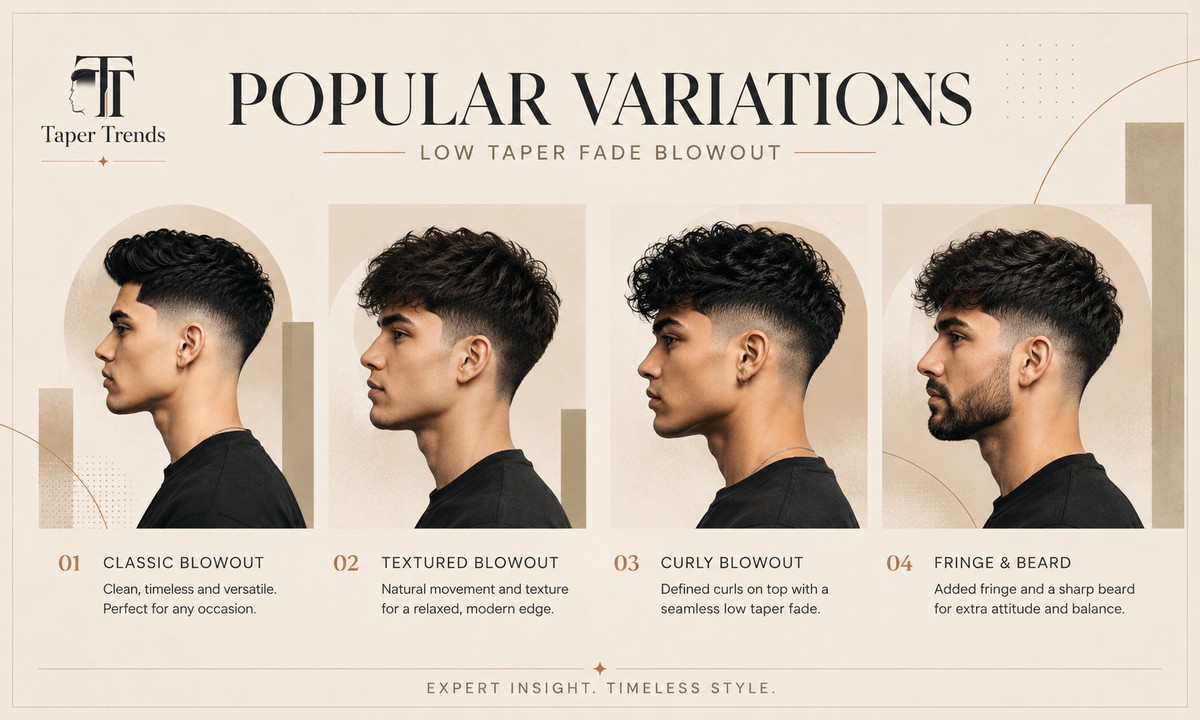
Popular low taper fade blowout variations
The cut behaves more like a base than a single fixed look. Depending on your texture and how much daily effort you want, here is what men are asking for.
Classic
The standard version: a clean low taper on the sides and back with a smooth, lifted top. Simple, flexible, and fine for almost any setting.
Textured
Choppy layers replace the smooth finish for a more lived-in look. A textured top hides small imperfections and needs less precision day to day, which makes it forgiving if you are still learning to style it yourself.
Curly
Instead of smoothing the curls out, this version leans into them. The low taper keeps the sides tight while the curls sit up top with some lift underneath. A diffuser and a curl cream help hold the shape without frizz.
Wavy
Same idea, less curl. Wavy tops carry more loose movement and a relaxed finish, kept in check by the tapered sides. If a blowout is more lift than you want day to day, our low taper fade for wavy hair guide covers softer ways to wear the waves.
With a fringe
Here the top comes forward instead of straight back, dropping into a soft fringe. It reads a little younger and more casual, and it overlaps with the Edgar-style looks that have been popular lately, though the low taper keeps it softer than a blunt Edgar. Our textured fringe with a low taper fade guide covers that forward-styled version in detail.
With a middle part
A middle part splits the volume evenly and adds structure. It suits thicker hair and cleans up nicely for more polished occasions. See our middle part low taper fade guide for how to build and hold that center split.
Messy
The low-effort option. The top is tousled or scrunched for a deliberately undone finish, with the low taper underneath stopping it from tipping into sloppy.
With a beard
Pairing the cut with a beard adds balance, which helps round and oval faces in particular. When the fade blends down into the beard along the sideburn, you get one connected line from hairline to jaw.
Most requested versions to ask for
- Classic low taper with a smooth, brushed-up blowout
- Textured blowout for a lived-in, low-precision finish
- Curly blowout with the curls left intact and lifted
- Fringe or middle-part version for a younger, structured shape
- Blowout with a connected beard fade from hairline to jaw
How to ask your barber for a low taper fade blowout
What to say
Barbers hear a lot of vague requests, so being specific gets you closer to what you pictured. Something like this works:
“I'd like a low taper fade on the sides and back, kept close to my ears and neckline, with extra length and volume left on top for a blowout.”
That tells them where the fade should sit and how much to leave up top.
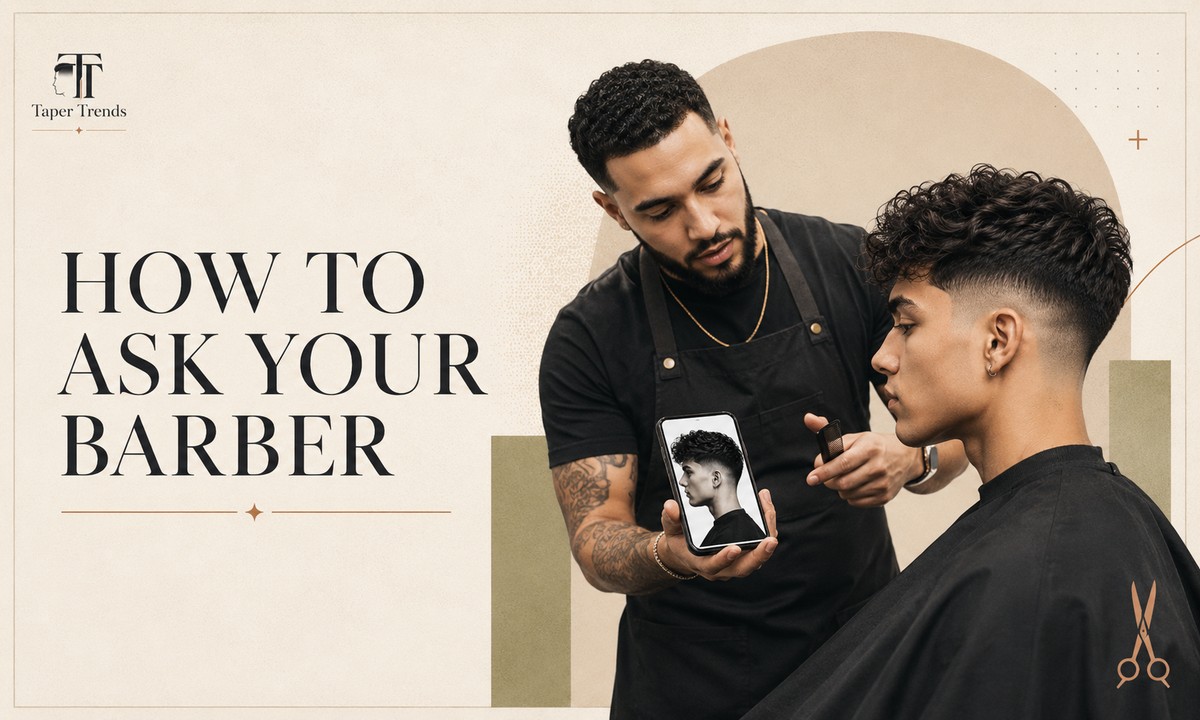
Reference photo tips
A photo is the fastest way to avoid a mismatch. Pick one where the hair type matches yours, since the same cut looks different on straight versus curly hair. If you can, bring a couple of angles, including a side view, so your barber can see exactly how low the fade should sit near the sideburn.
Barber terms worth knowing
A few words speed up the conversation. A low taper is fading that stays close to the hairline. The neckline taper is how the back of the neck is finished, and the sideburn taper is how the fade blends near the sideburns. The blowout is the volume and lift on top, usually built with a dryer. Knowing these keeps the fade from ending up higher or shorter than you wanted.
What happens during the cut
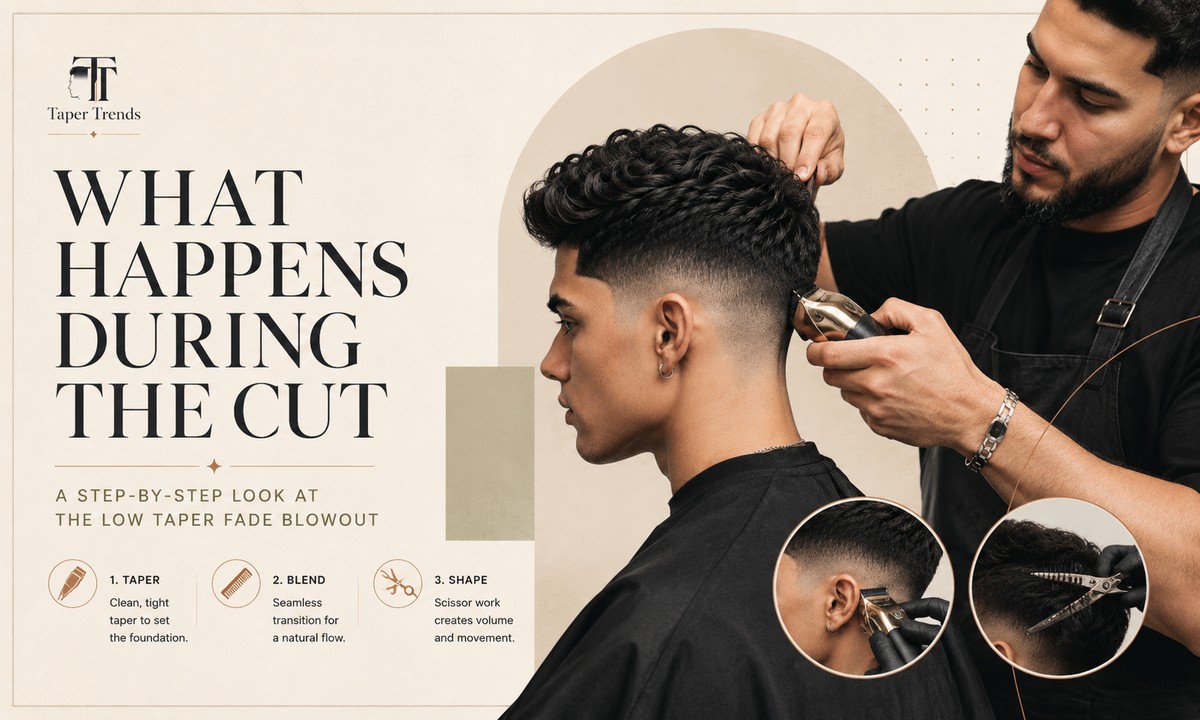
The barber usually starts at the edges, setting the neckline and sideburn tapers first. That establishes how low the fade will sit before any blending begins.
While the sides get worked down, the top is left noticeably longer. That extra length is what makes the blowout possible later, so a careful barber avoids taking too much off up top at this stage. Once the taper is set, they blend the sides upward into the top so there is no harsh line between the short sides and the longer crown. That blend is the difference between a smooth result and a choppy one.
How to style a low taper fade blowout at home
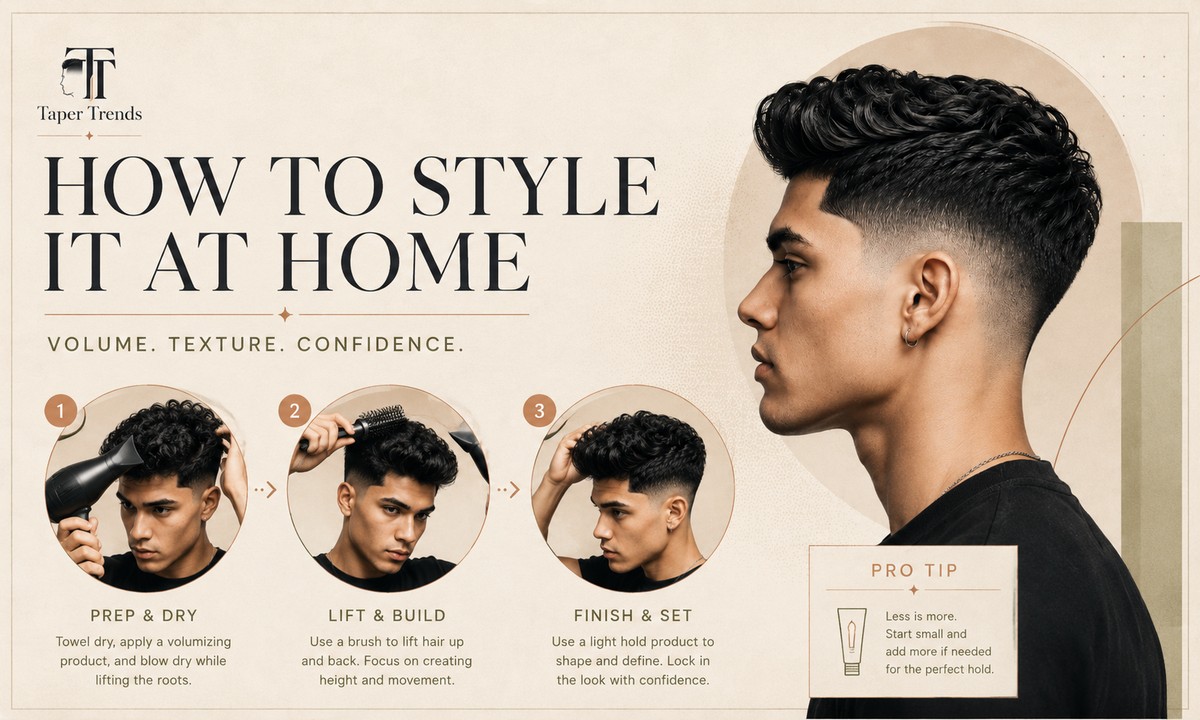
Step by step
- 1Start with damp, towel-dried hair.
- 2Work a small amount of product evenly through the top.
- 3Use a blow dryer with a round brush or just your fingers to lift the roots.
- 4Direct the hair up and slightly back as you dry.
- 5Let it cool for a few seconds before touching it, since hair sets its shape as it cools.
Blow dryer technique
Keep the dryer a few inches from your head on a medium heat setting. Aim the air at the roots first to build the base, then follow the length as you brush upward. Do not dry it flat. The goal is lift, not a smooth press.
Adding texture and volume
If your hair has natural wave or curl, go easy on the brush, since over-brushing flattens the texture you want. Shape it with your fingers once it is mostly dry and finish with a light texturizing product. Fully drying the hair matters more than people expect; stopping at eighty percent is the fastest way to watch your volume collapse an hour later.
Best products to use
Match the product to your hair and the finish you are after. Whatever you reach for, use less than you think you need, because heavy product is the quickest way to kill a blowout.
- Sea salt sprayAdds grit for wavy or curly hair and helps the shape hold without looking overworked.
- Texture powder / matte clayGives grip and volume without shine — best for the textured or messy versions.
- Lightweight pomade or creamKeeps control for a smoother, classic blowout while letting the hair move.
- MousseA solid pick for finer hair because it lifts without weighing anything down.
- HairsprayA light mist once the shape is set locks it in for a longer day.

Maintenance and upkeep
How often to get a touch-up
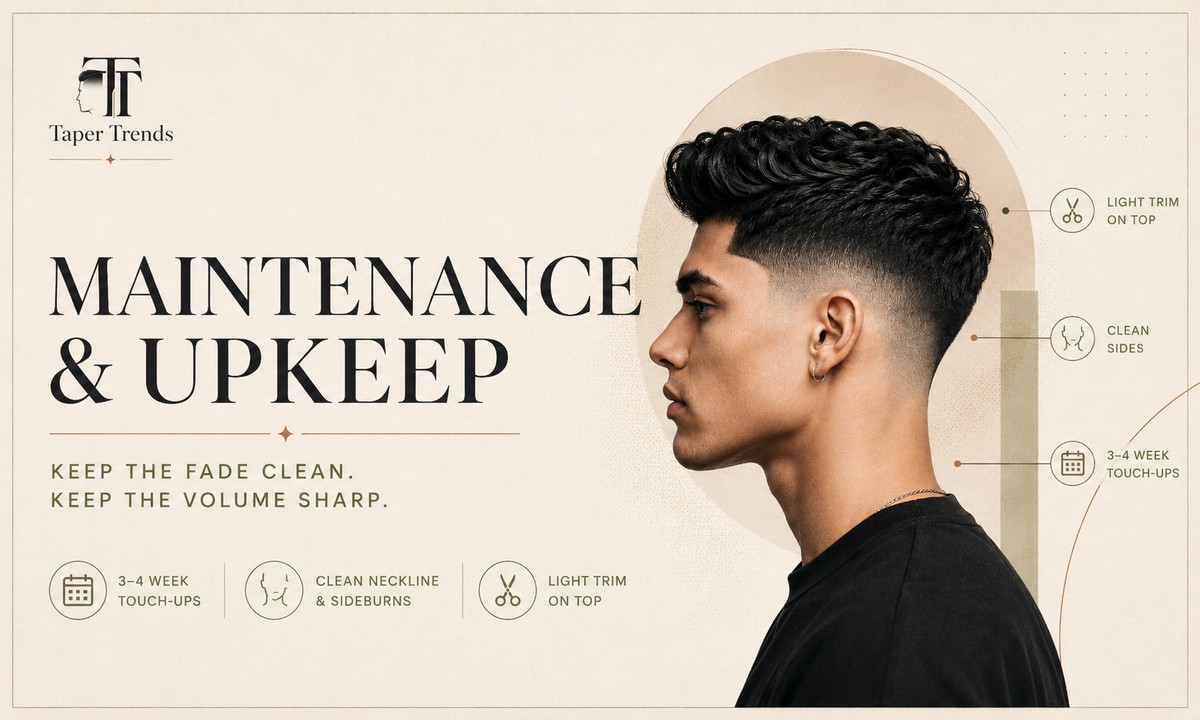
A low taper fade blowout holds its shape for roughly three to four weeks before it starts to look uneven. Because the fade sits low, it grows out a little slower than a high or mid fade, but the edges still soften first. Most guys book a barber visit every few weeks to keep the neckline and sideburns crisp.
Keeping the fade clean
Between cuts, watch the neckline and sideburns, since those go first as the hair grows. A quick neckline cleanup around the two-week mark can stretch the time between full haircuts without letting the shape drift.
Maintaining volume between cuts
As the top grows, the volume gets heavier and can start to flop. A light trim of the top layers keeps the lift without changing the overall shape.
Common mistakes to avoid
A few small missteps throw off an otherwise solid cut.
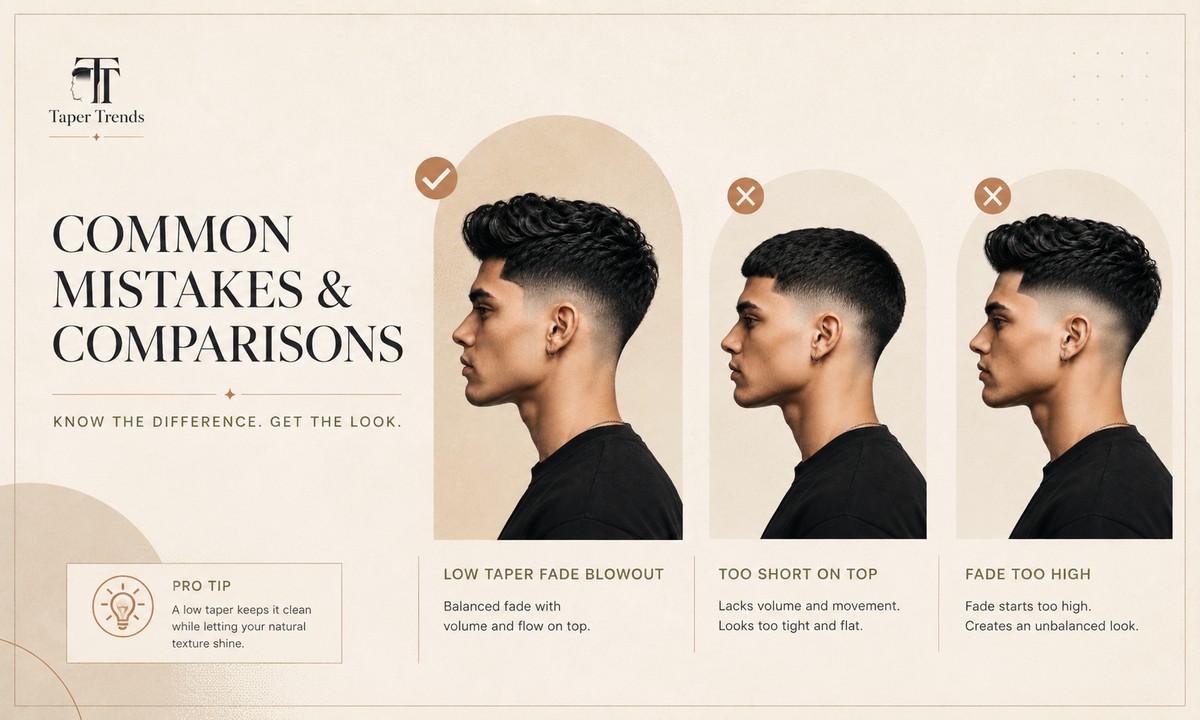
- Cutting the top too shortWithout enough length there is nothing to lift, and the blowout disappears. Start longer and trim gradually if you need to.
- Asking for the wrong fade heightIf you are not clear, a low taper can drift up into a mid or high fade. Say plainly that you want it low, near the ear and hairline.
- Overdoing productMore clay or pomade does not mean more volume; past a certain point it drags the hair down and works against the whole look.
- Skipping the blow dryIt leaves the top flat and lifeless. Even a couple of minutes with a dryer changes how the style sits for the rest of the day.
Low taper fade blowout for different hair lengths
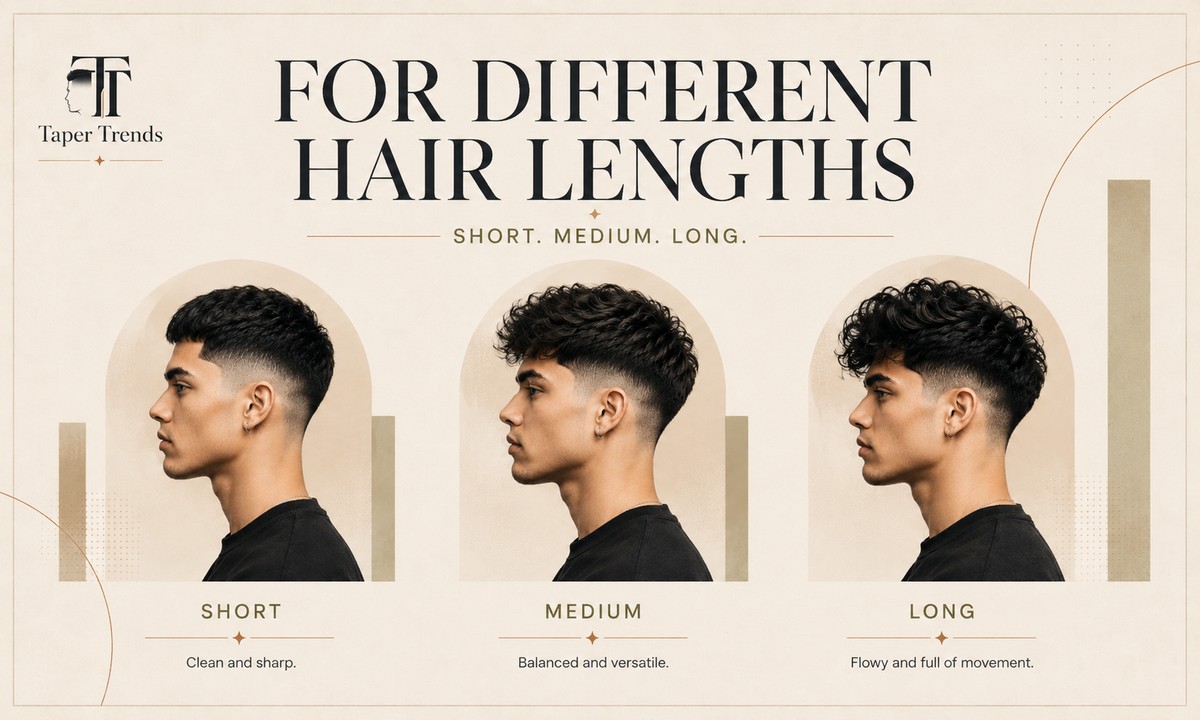
On shorter hair, the blowout effect is subtler, but there is usually enough to work with if you use the right product. Medium length is the sweet spot: enough to build real volume without constant restyling. Longer hair opens up more options, from a soft fringe to a fuller brushed-back shape, at the cost of a bit more styling time.
How it compares to other fades
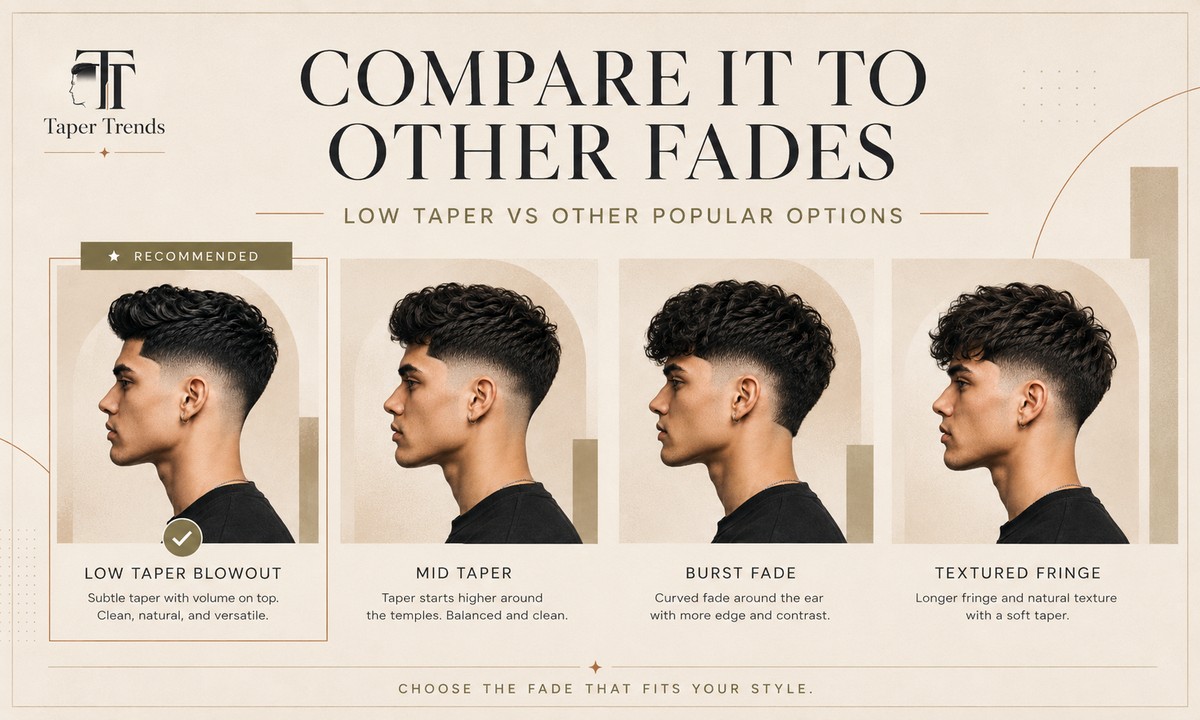
A mid taper blowout brings the fade higher up the sides for more contrast, while the low version stays subtle and low-key. A burst fade blowout curves around the ear in a semicircle instead of running straight down, which gives a more stylized edge; the low taper keeps things simpler and more traditional. A textured fringe pushes the hair forward over the forehead, whereas the blowout keeps the top lifted and back. And a mullet taper leaves extra length at the back; the low taper fade blowout stays even all around, with the volume concentrated on top.
| Style | How it's cut | The look |
|---|---|---|
| Low taper fade blowout | Low fade near the ears with the top lifted up and back | Subtle, low-key sides with real volume on top |
| Mid taper blowout | The fade climbs higher up the sides for more contrast | A bolder split between short sides and full top |
| Burst fade blowout | The fade curves around the ear in a semicircle | A more stylized, modern edge |
| Textured fringe | The top pushes forward over the forehead | Casual, younger look instead of lifted volume |
For a closer look at the comparison guys ask about most, see our low taper fade vs mid taper fade breakdown, our taper low burst fade guide, and our low taper vs low fade explainer.
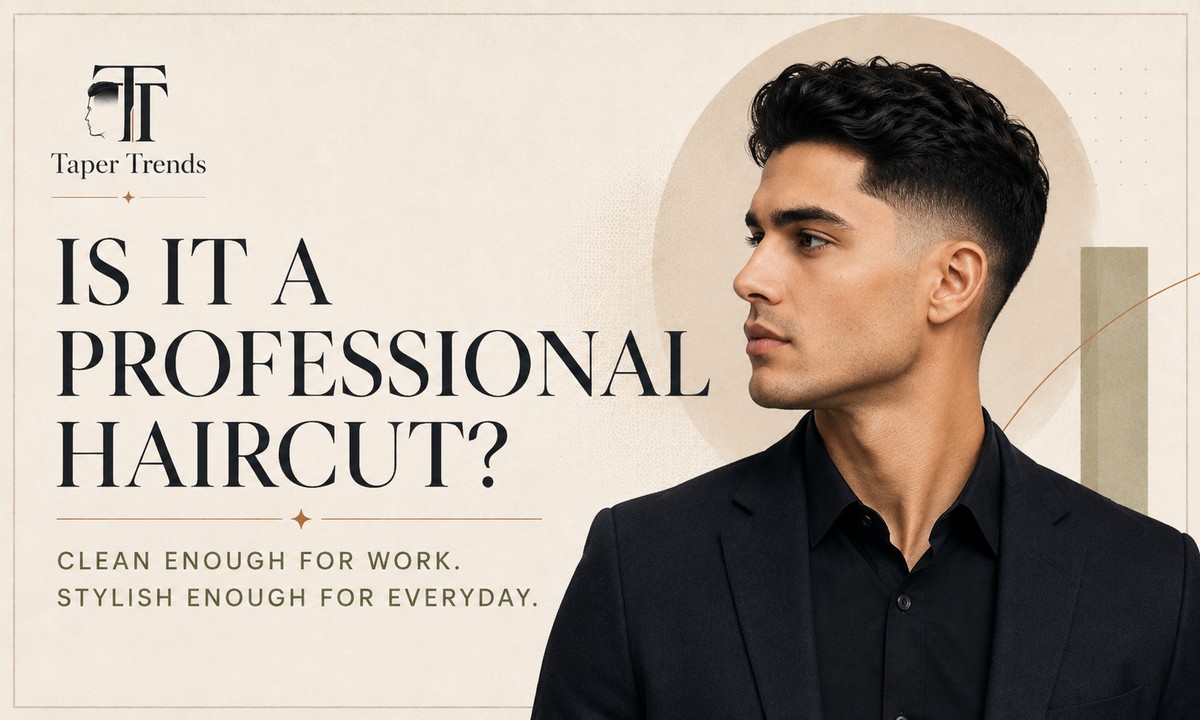
Is it a professional haircut?
For the most part, yes. Because the fade stays low and understated, the cut reads as neat, which makes it a safe bet for school, college, or the office. If you want to lean formal, keep the volume moderate rather than exaggerated and stick to a smooth or lightly textured top instead of a messy one.
Frequently asked questions
What is a low taper fade blowout?
A low fade on the sides and back combined with a full, blown-out top. The fade stays low near the ears and neckline while the hair on top is dried and brushed up for natural lift and volume.
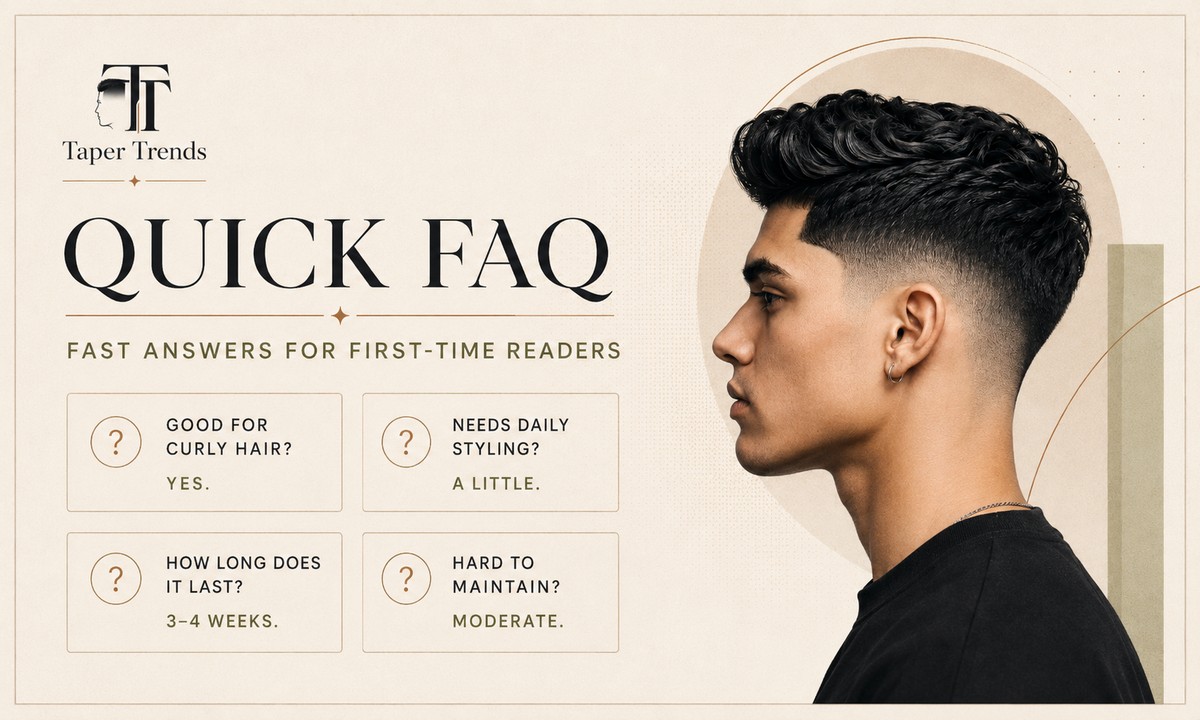
Is a low taper fade blowout good for curly hair?
Yes. Curls add their own lift and texture, which suits the style well. A diffuser and a curl cream help the curls sit up top with volume underneath while the low taper keeps the sides tight.
How long does a low taper fade blowout last?
About three to four weeks between touch-ups keeps the fade and shape sharp. Because the fade sits low, it grows out a little slower than a high or mid fade, but the neckline and sideburns soften first.
What should I tell my barber?
Ask for a low taper fade on the sides and back, kept close to the ears and neckline, with extra length left on top for a blowout finish. Bring a reference photo where the hair type matches yours.
Does a low taper fade blowout need daily styling?
Usually a little, mostly to rebuild the volume, though it can be quick with the right product. A blow dryer and a couple of minutes are enough to bring the lift back each morning.
Which face shapes does a low taper fade blowout suit?
It generally flatters oval, square, and round faces. Height on top adds vertical length, so it balances rounder faces, while the clean sides keep the jawline visible on square and oval shapes.
Is a low taper fade blowout hard to maintain?
Moderate. It mainly needs regular touch-ups every few weeks and a short daily routine to rebuild the volume. Fully drying the top is the single biggest thing that keeps the shape from collapsing.
Final thoughts
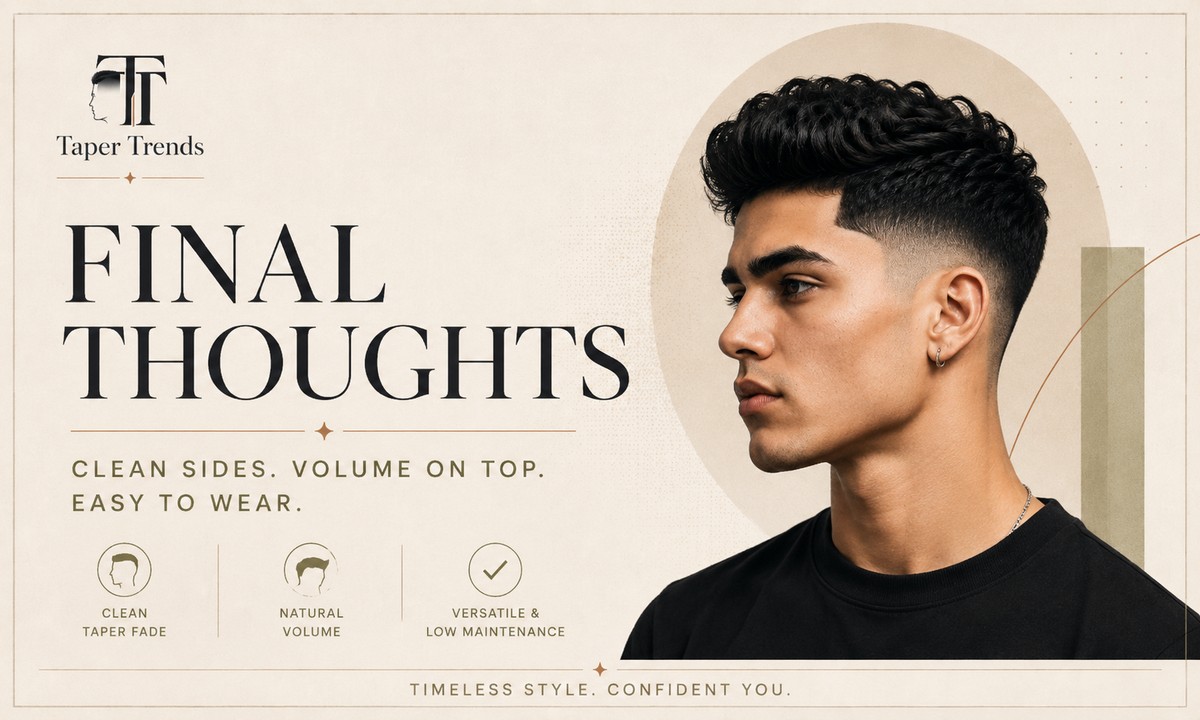
The low taper fade blowout earns its spot as a go-to because it solves a common problem: it looks clean without looking severe and stays stylish without demanding much upkeep. It works across straight, wavy, and curly hair, adapts to different lengths, and sits comfortably in casual and professional settings alike.
If you want a modern cut that pairs a subtle fade with real volume on top, it is an easy one to recommend for your next visit.
The bottom line
The low taper fade blowout lasts because it does not make you choose between clean and relaxed. The low fade keeps the sides subtle and neat while the blowout carries real volume up top.
Bring a photo, be clear that you want the fade low near the ear and hairline, and leave enough length on top to lift. Fully dry the top, keep the product light, and it earns its place as a cut you come back to.
Want more taper fade guides?
Browse clean, barber-ready breakdowns for every hair type.