Wavy hair puts you in a tricky spot at the barbershop. Cut it wrong and you either flatten the texture that makes it look good or end up with a shapeless mess on the sides. A low taper fade for wavy hair solves both problems, which is a big part of why it has turned into one of the most requested cuts heading into 2026.
The idea is simple. You keep your natural waves and length on top, and the fade quietly cleans up the area around your ears and neckline. You get groomed edges without the stiff, over-barbered look a lot of guys with waves try to avoid. It works with your hair instead of against it, and it looks fine straight out of the shower or styled with a bit of product. If you want the broader picture first, our complete low taper fade haircuts guide covers every texture in one place.
What a low taper fade is
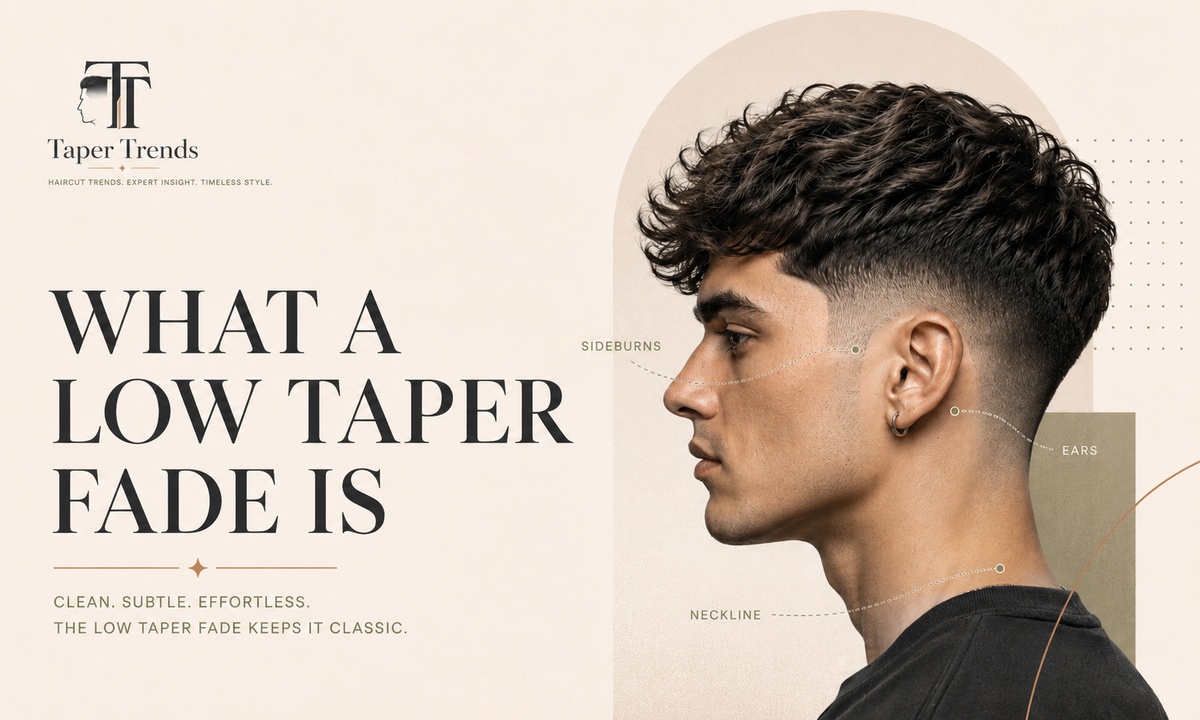
A low taper fade is a haircut where the hair gets gradually shorter near the bottom, starting around the sideburns, ears, and neckline, and blending down close to the skin. The word “low” is doing real work here. It means the fade stays near your hairline instead of climbing up the sides of your head, so most of your length up top stays untouched. The result is a soft transition rather than a hard contrast.
That softness is exactly why it pairs so well with waves. Wavy hair has natural movement, and a fade that sits low doesn't compete with it. Your texture stays the focus while the sides just look tidy. Guys who normally steer clear of fades because they worry about looking too “barbered” tend to get on well with this one for that reason. If you are not sure what that grown-in shape looks like, our guide on what a low taper fade looks like walks through it from every angle.
Low taper fade vs low fade
People mix these two up constantly. A taper means the hair gets gradually shorter toward the neckline and sideburns without necessarily dropping to bare skin. A fade blends the hair down to very little length, sometimes all the way to the skin. A taper fade combines the two: the gradual shortening of a taper plus the smooth blend of a fade, usually finishing subtly rather than at the skin.
For wavy hair, that gradual blend tends to look more natural than a plain low fade with a harder edge. If you want your waves to flow into the sides without an obvious line, it is worth asking for a “low taper fade” by name rather than just “a low fade.” Barbers treat them as slightly different requests, and the wording nudges them toward the softer version. Our low taper vs low fade breakdown covers the difference in full.
| Term | How it blends | On waves |
|---|---|---|
| Taper | Hair gets gradually shorter toward the neckline and sideburns, never dropping to bare skin | The softest, most grown-in edge |
| Fade | Blends down to very little length, sometimes all the way to the skin | Sharper contrast near the bottom |
| Low taper fade | Combines both — a gradual taper with a smooth low blend that finishes subtly, not at the skin | Clean sides that let waves flow in without a hard line |
Who it suits: face shapes and hair types
This is a forgiving cut, but a few details matter depending on your face and hair.
Face shapes
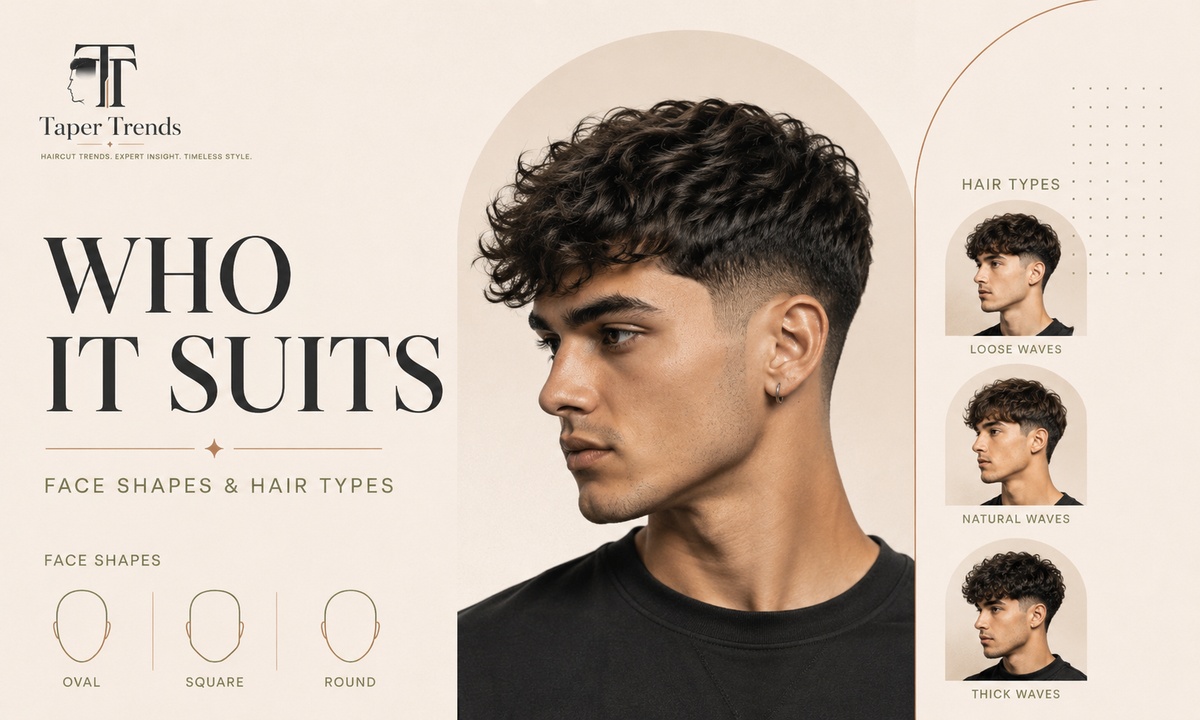
Round faces do well because the length up top adds a little height and structure, which balances out the width. Square and oval faces are easy wins too, since the cut works with a strong jaw rather than hiding it. Oval is about as flexible as face shapes get.
Longer or oblong faces need one small adjustment. Keeping the fade low leaves hair on the upper sides and avoids the pinched, top-heavy look you get from a high fade. The thing to watch is height. Piling volume on top of an already long face makes it look longer, so ask your barber to keep the top moderate and style it forward or to the side rather than straight up. A fringe or a side part helps break up the length.
- RoundLength and a little height up top add structure and balance the width, while the low fade keeps the sides clean.
- OvalThe most flexible shape — almost every wavy version works, from a textured top to a side part.
- SquareThe cut works with a strong jaw rather than hiding it; soft waves ease the angles without losing definition.
- Long / oblongKeep the top moderate and style it forward or to the side; a fringe or side part breaks up the length.
Hair type and density
Medium to thick wavy hair shows this cut off best, since more density means more visible movement on top. Thick hair is an especially good match: the fade strips the bulk off the sides so nothing looks heavy or overgrown, while the weight up top gives the waves real presence. If your hair is thick, don't be shy about asking your barber to leave extra length on top so the waves have room to move.
Finer wavy hair can still pull it off, it just needs a bit more help. Slightly shorter layers on top create the look of more density, and a light texture powder at the roots adds lift without weighing anything down. The mistake with fine hair is leaving it too long and loose, which reads as flat rather than textured.
Best low taper fade wavy hair styles
There is no single version of this cut. The right one depends on your length, your density, and how much time you want to spend in the mirror. These are the ones barbers are cutting most.
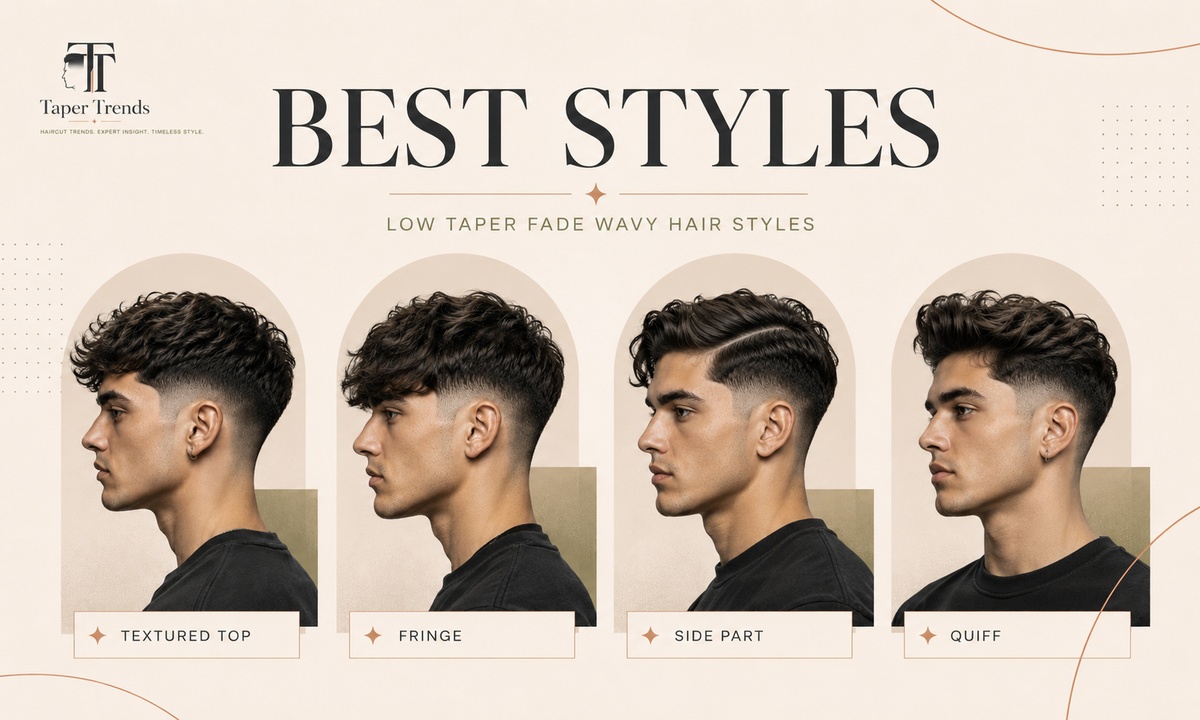
1. Textured wavy top
The default, and the one to start with if you are unsure. The top is left a little longer with layers cut in to encourage movement, while the fade keeps the sides clean. It isn't tied to a specific length or part, so it suits almost anyone. It is the same idea as a textured fringe with a low taper fade, with the movement carried across the whole top rather than just the front.
2. Wavy fringe
A low taper fade fringe leaves the front section longer and pushed forward so the waves fall over the forehead, with the clean sides keeping attention on the front. It works best if your waves are more defined at the front than anywhere else.
3. Messy waves
The lived-in, didn't-try look. The top stays longer and unstructured, styled with your fingers instead of a comb. It is ideal for a low-effort routine, though it needs medium to thick hair to avoid looking flat.
4. Side part
The polished option. A defined part with the waves brushed to one side gives you enough structure for work or formal settings while still showing the natural pattern, and the fade keeps the sides sharp. If you like a center-parted version, our low taper fade middle part guide covers the curtain shape.
5. Wavy quiff
Adds height and volume brushed up and slightly back at the front, with the low fade providing contrast against the fuller top. It suits thicker hair, since you need the density to hold the shape. If you want maximum lift, a low taper fade blowout takes the same idea further with a blow-dry.
6. Curly-wavy version
For hair that sits between wavy and curly. It leans into the curl instead of fighting it, leaving the top long enough for loose curls to form while the fade grounds everything. Good if your hair shifts with the weather; if it's more curly than wavy, our curly low taper fade guide is the better starting point, or the blowout low taper fade for curly hair if you want a fuller, rounded top.
On length, medium is the sweet spot for most guys. There is enough hair for the waves to move and catch light, but not so much that mornings turn into a project. Short keeps things simple and grows out gracefully — the same short-top logic behind our low taper fade for short hair guide — while going long gives you the most versatility, the route our long hair low taper fade guide walks through, at the cost of more upkeep.
| If you have / want | Start with |
|---|---|
| Not sure where to start | Textured wavy top — the forgiving default |
| Defined waves at the front | Wavy fringe pushed forward |
| Lowest-effort routine | Messy waves, styled with your fingers |
| Work or formal settings | Side part with the waves brushed over |
| Thick hair, want height | Wavy quiff brushed up and back |
| Hair between wavy and curly | Curly-wavy version left a touch longer |
How to ask your barber
Barbers hear vague requests all day, so specifics help.
What to say
Try something like:
“I’d like a low taper fade, keeping it close to my ears and neckline, and I want to keep length and texture on top since my hair is wavy.”
That tells them where the fade should sit and that you don't want the top touched much.
Length and guard numbers
If you're not sure how to describe length, compare it to what you've got now. “Keep it about the same” or “an inch shorter than this” gives a clear reference. Guard numbers vary between brands and barbers, so treat them as a starting conversation rather than a fixed rule. Your barber will adjust based on your hairline and thickness anyway. If you've had a fade you liked before, mention it.
Reference photos
Photos are the most useful thing you can bring. Look for images where the hair type matches yours, ideally wavy rather than straight or curly, so your barber can judge how the cut will sit on your texture instead of guessing.
Styling it at home
Daily routine
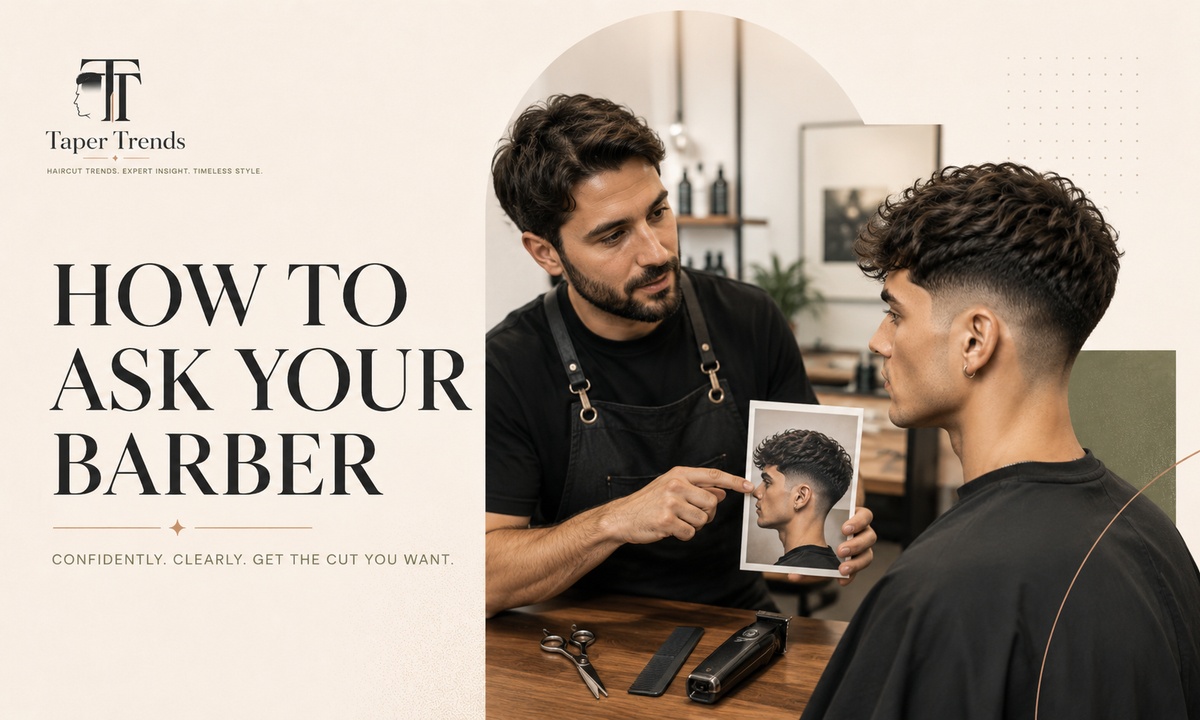
A simple routine beats a complicated one. After washing, work a small amount of product through damp hair, scrunch gently to bring out the wave pattern, then let it air dry or use a diffuser on low heat. Don't brush waves when they're dry, since that breaks up the pattern and invites frizz.
Controlling frizz and keeping waves visible
Two habits make the biggest difference. Apply product to damp hair rather than dry, and scrunch instead of rubbing so the wave clumps stay intact. If frizz keeps coming back, use less product and reapply a light layer the next day rather than piling more on at once. Past that, keep it simple: let hair dry mostly on its own, skip heavy brushing, and stick to lightweight products. Thick waxes and heavy pomades drag waves down and flatten the texture you're trying to keep.
Products that work
Whatever you reach for, start with less than you think you need, roughly a dime-sized amount, and work it through the mid-lengths and ends rather than packing it into the roots. Product at the roots is what leaves waves looking greasy and flat by midday. You can always add a touch more once the first pass dries.
- Sea salt sprayAdds texture and a matte finish. Use on damp hair before air drying for an easy, beachy look.
- Curl creamDefines the wave pattern and adds light moisture that cuts frizz — a solid daily option for medium to thick hair.
- Matte clay / texture powderLighter than pomade; adds grip without shine. Powder lifts the roots without flattening anything.
- Light hold pomadeMore control if you want it, but use it sparingly — heavier application kills the movement that makes this cut work.
Wearing it for work, casual, and formal settings
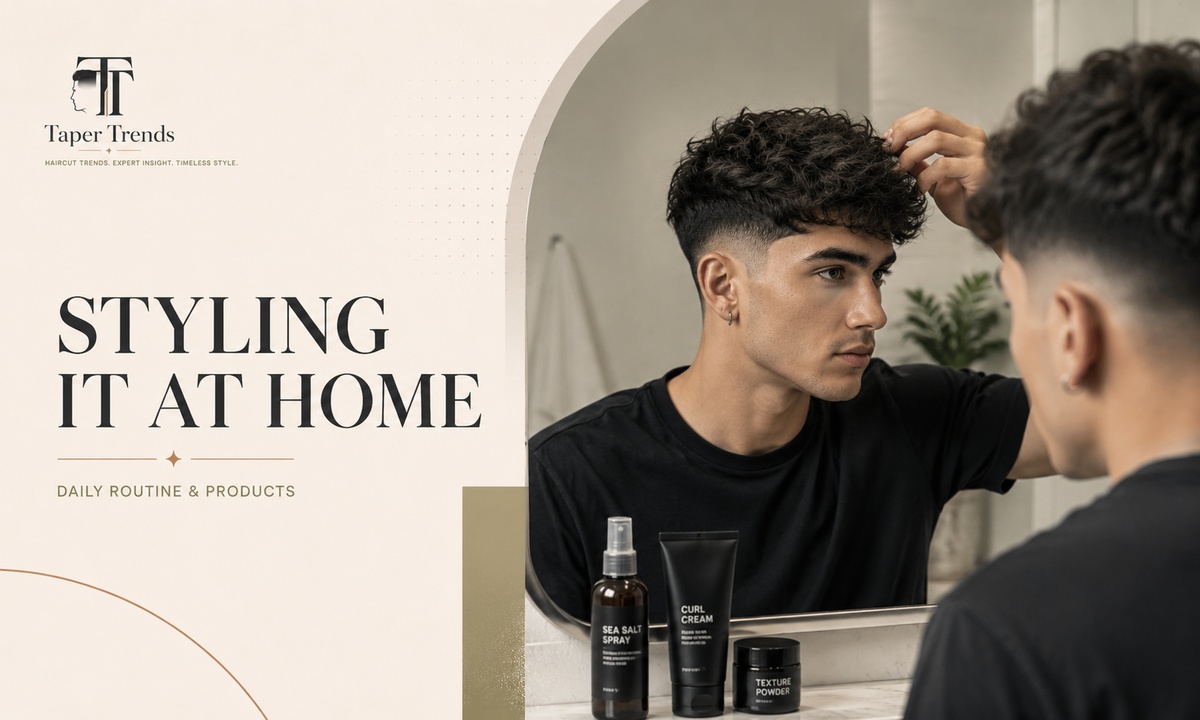
The same cut adapts to almost any setting depending on how you style it, which is part of the appeal. The low, subtle fade reads as neat without looking severe, so it's comfortable in an office, a classroom, or a weekend out.
For work or anything formal, comb the top into a side part or brush it back and use a light pomade or cream to keep flyaways down while the wave still shows. For everyday wear, let the waves do their thing: a little product, a scrunch, no comb. If you're going for the current textured look, lean into piece-y layers and a slightly longer fringe, where the point is movement rather than symmetry.
Pairing it with a beard
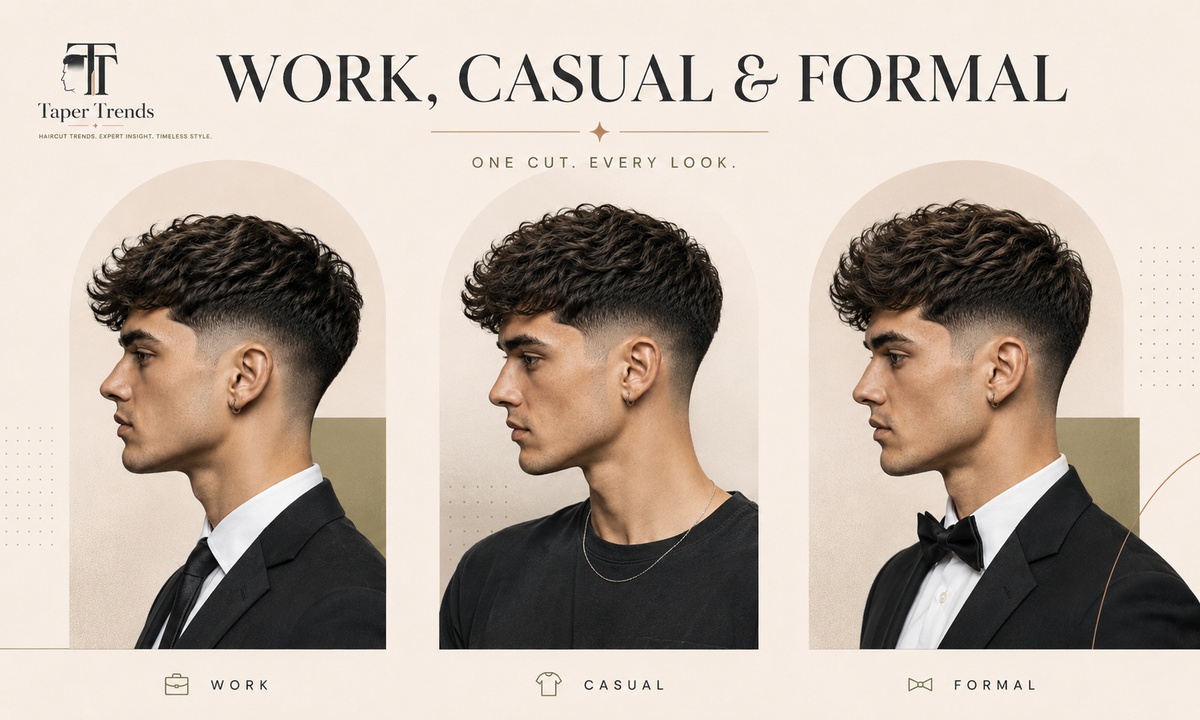
A low taper fade looks most cohesive when it flows into the beard instead of stopping dead at the jaw. Ask your barber to connect the fade into a beard fade so the hair-to-beard transition feels continuous rather than like two separate cuts. Our low taper fade design guide covers how a lineup and a connected beard fade work together.
Shorter, well-defined beards pair nicely with waves because they balance the volume on top. A fuller beard works too if you like a rugged look, but it needs more regular trimming to stay in proportion with clean sides.
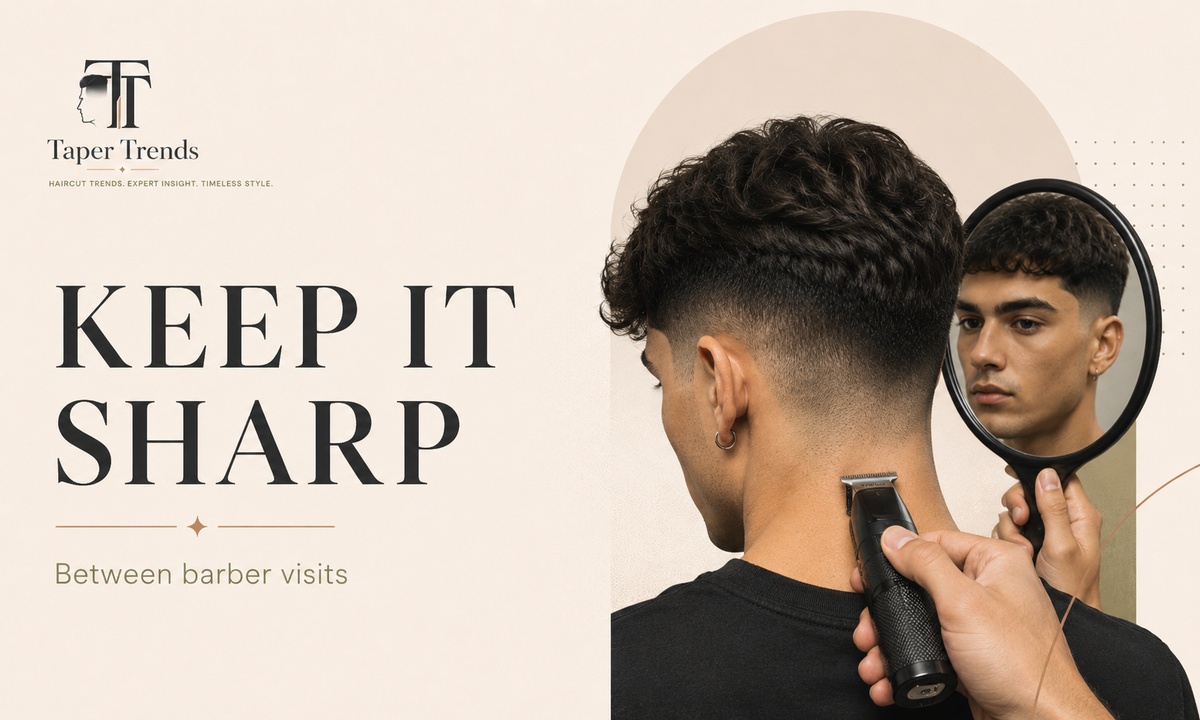
Keeping it sharp between visits
How often to refresh it
There's no universal rule, since it depends on how fast your hair grows and how crisp you like the fade. Most guys land somewhere around every two to four weeks to keep it looking fresh without the top growing out too much. If you prefer a softer, grown-out fade, you can stretch that a bit.
One advantage worth knowing: a low taper grows out more gracefully than a skin fade or a high fade. Because the shortest hair sits low and there's no bare skin to fill back in, the blur between visits looks intentional rather than patchy. That gives you more slack if you can't get to the barber on schedule, which is one reason it's an easy first fade to try.
Neckline and volume
The neckline is usually the first thing to look overgrown, even while the rest still looks fine. A quick cleanup there, at home with clippers or a fast barber touch-up, buys you extra time between full cuts. To keep the top looking healthy, avoid over-washing (it dries hair out and flattens texture) and keep using a light product as the cut grows rather than skipping styling altogether.
Mistakes to avoid
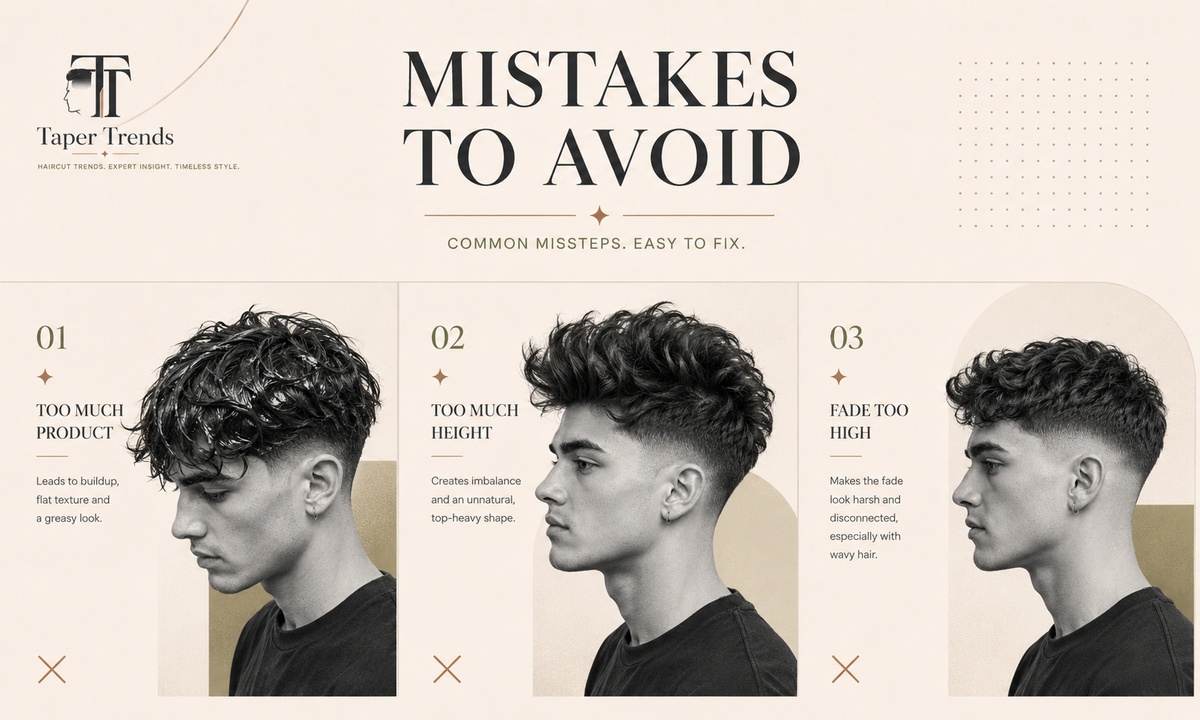
A few small missteps throw off an otherwise solid cut.
- Cutting the top too shortTake off too much and the waves lose the room they need to move, and the whole thing goes flat. Ask your barber to stay conservative on top — it is easier to trim more later than to wait for it to grow back.
- Letting the fade start too highA fade that climbs up the head creates a harsh line that clashes with waves instead of blending into them. Keeping it low, near the ears and neckline, keeps everything balanced.
- Using heavy productThick waxes and pomades weigh waves down and flatten the texture. A small amount of a lightweight product on damp hair is all you need.
- Skipping product entirelyGoing without, especially after washing, lets frizz take over. A dime-sized amount on damp hair keeps the pattern intact.
Frequently asked questions
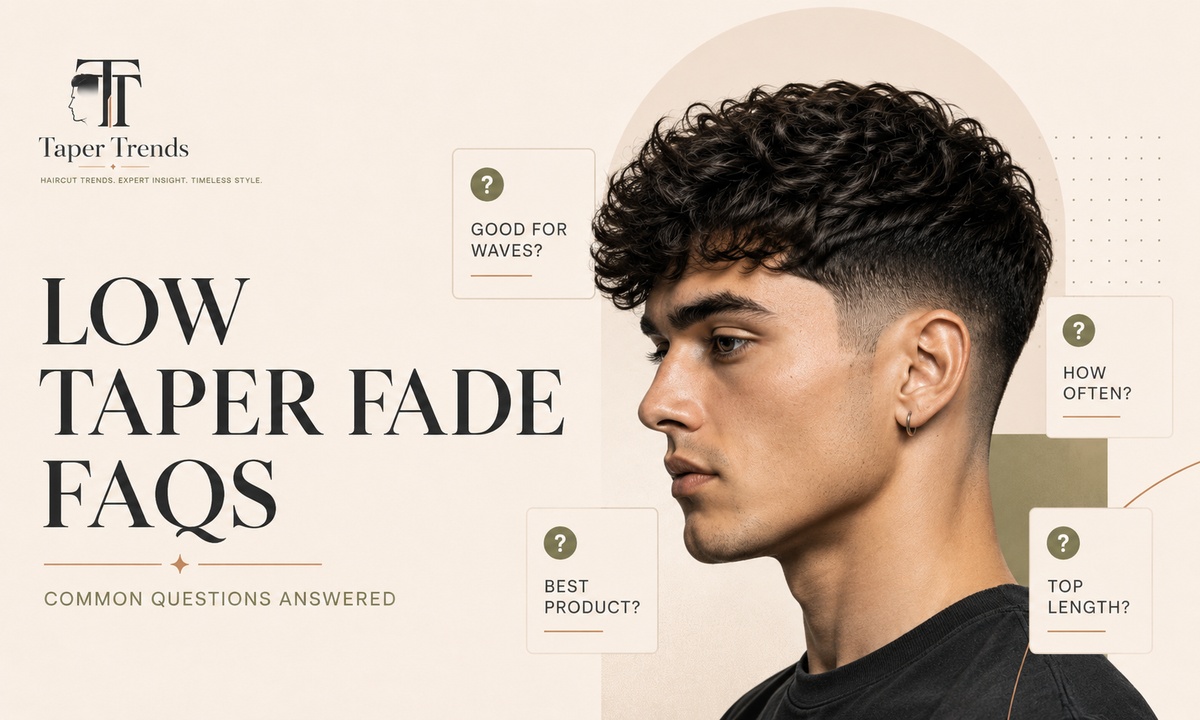
Is a low taper fade good for wavy hair?
Yes. It keeps the sides clean while letting your natural texture stay visible on top, which is why it is such a popular pairing. The low, gradual blend flows into your waves instead of cutting them off with a hard line.
What do I tell my barber?
Ask for a low taper fade that stays close to the ears and neckline, and say you want to keep length and texture on top because your hair is wavy. Bring a reference photo with hair like yours so the barber can see how the cut should sit on your texture.
How long should the top be for wavy hair?
Medium length is a safe starting point. It shows the waves without demanding much daily styling, and you can go shorter or longer from there. Thicker hair can carry extra length so the waves have room to move.
Is a low taper fade better than a mid taper fade for waves?
Neither is better outright. A low taper gives a softer, subtler look that flows into waves naturally, while a mid taper creates more visible contrast between the top and the sides. It comes down to preference.
How often should I get a low taper fade cut?
Roughly every two to four weeks, though it varies with how fast your hair grows and how sharp you want the fade. A low taper grows out more gracefully than a skin or high fade, so you get more slack between visits.
What product works best for a low taper fade on wavy hair?
Lightweight options like sea salt spray, curl cream, or texture powder, since they add texture without flattening the waves. Apply to damp hair, use less than you think, and keep it off the roots to avoid a greasy, flat look by midday.
Is it worth it?
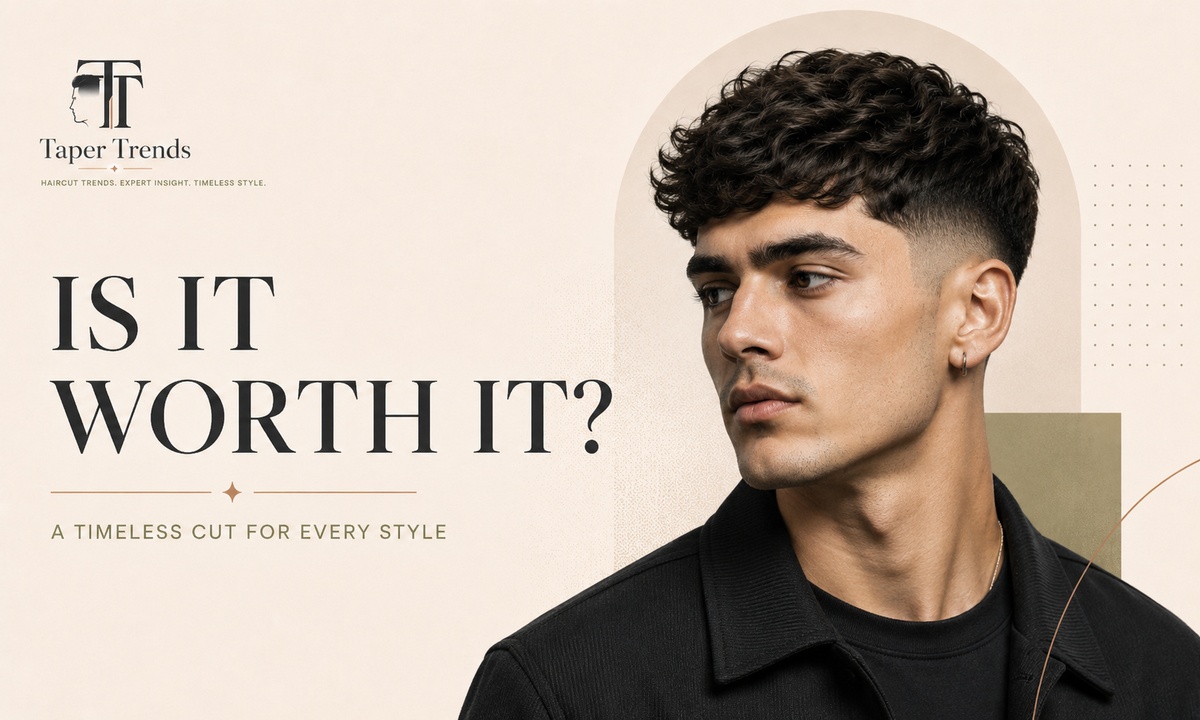
It's easy to see why this cut has stuck around. It dresses up for work and down for the weekend, it flatters a wide range of face shapes and hair densities, and it lets your waves stay the main event instead of getting trimmed away. Fine waves, thick texture, loose curls, or something that shifts with the humidity, there's a version that fits.
The two things that make or break it are simple: be clear with your barber about keeping length on top, and bring a reference photo with hair like yours. Get those right and you've got a cut that's easy to live with and easy to adjust as your style changes.
The bottom line
The low taper fade for wavy hair lasts because it doesn't make you choose between clean and natural. It keeps your waves and length up top while the low fade keeps the edges sharp and grows out without ever looking patchy.
Whether you go for a textured top, a wavy fringe, a side part, or a quiff, it adapts to your hair density, your face shape, and how much time you want to spend in the morning. Keep the fade low, keep length on top, and it earns its place as a cut you come back to.
Want more taper fade guides?
Browse clean, barber-ready breakdowns for every hair type.