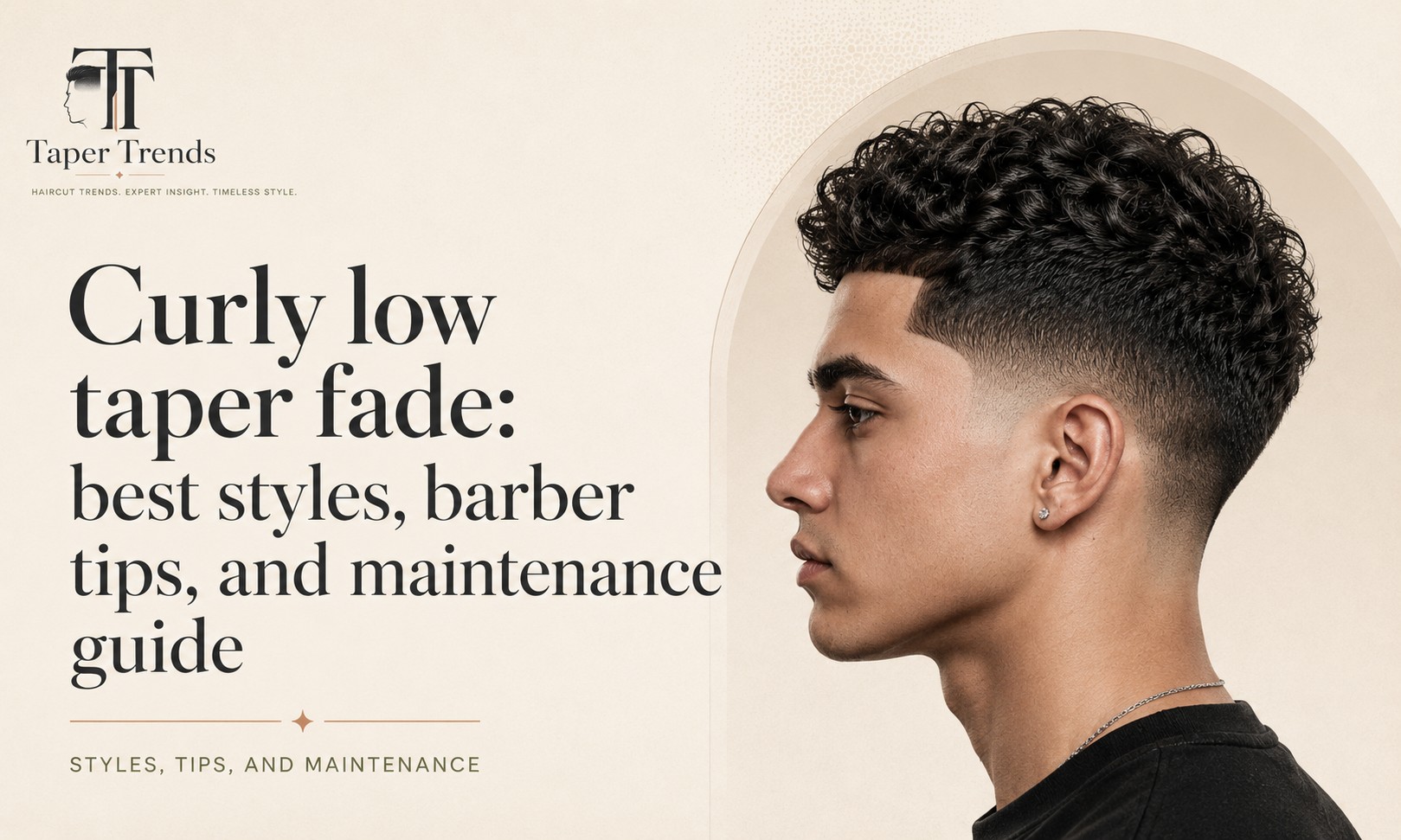
If you have curly hair, you have probably had the same worry in the barber's chair. How do you clean up the sides without flattening your curls, and without ending up with a hard, awkward line where the short hair meets the texture on top? The curly low taper fade is the cut that answers that. It keeps length and movement up top, tidies the sides and neckline, and blends the two so gently that nothing looks forced.
That balance is the whole appeal, and it is why so many barbers now build the fade around your curls instead of fighting them. If you want the broader picture first, our complete low taper fade haircuts guide covers every texture in one place.
What a curly low taper fade is
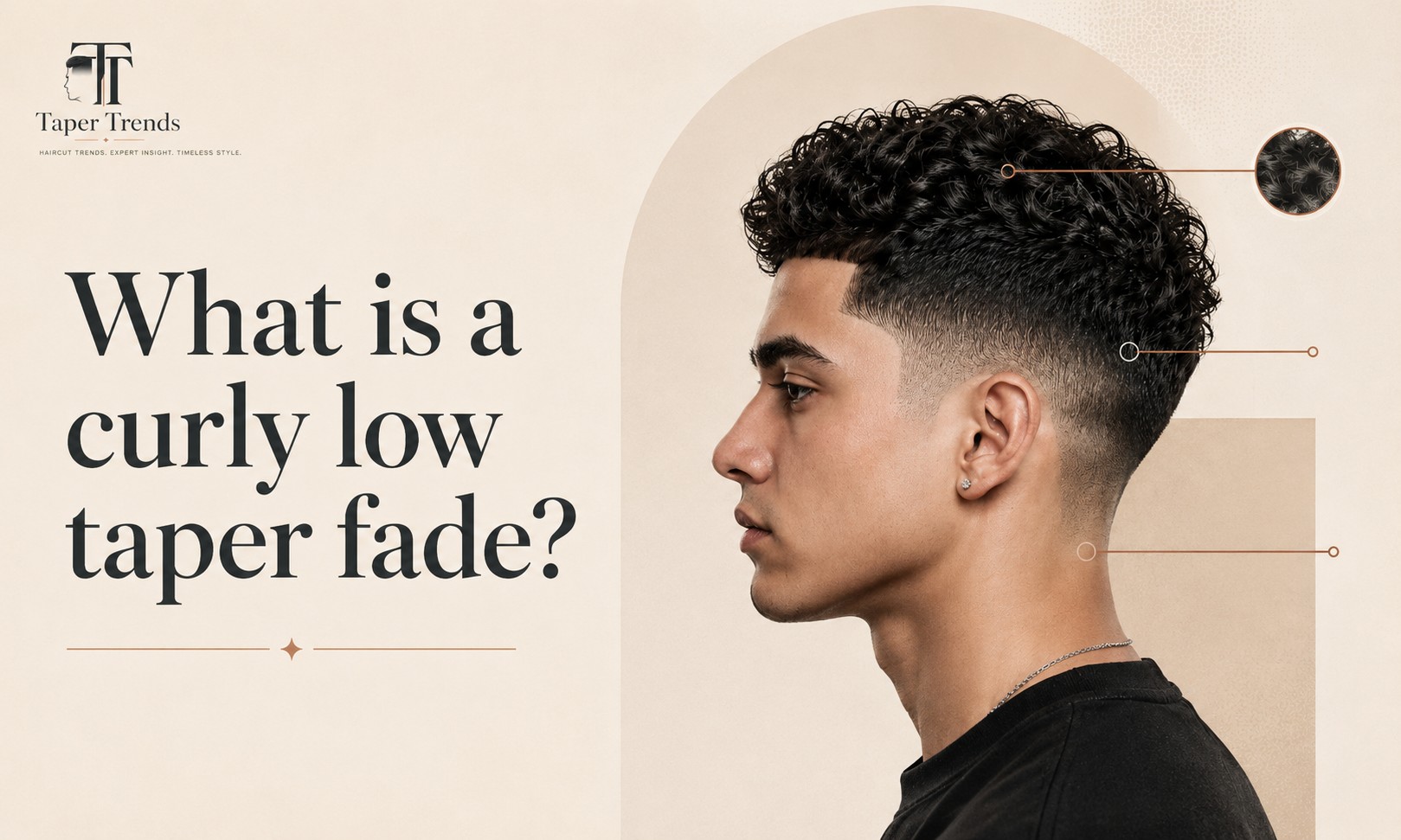
A low taper fade is a haircut where the hair gets gradually shorter as it moves down toward your ears and neckline, with the shortest point sitting low and close to the skin. The important word is “low.” Unlike a mid or high fade, the blending stays near the bottom of your head instead of climbing up the sides, so you keep more length and shape overall.
Three terms get tangled up here, so it helps to pull them apart. A taper means the hair gets shorter toward the edges without necessarily going down to bare skin. A fade means the hair blends all the way to the skin at some point. A low taper fade combines both: a soft taper that eases into a fade, with that fade kept low on the head. So every low taper fade is a fade, but not every taper is one. If you want to see the shape from every angle, our guide on what a low taper fade looks like walks through it.
Now add curls on top. Because the blend sits low, it never competes with the volume up top; instead, it frames it. Curly hair already carries plenty of width and height on its own, and a low fade trims the bulk on the sides without touching the part everyone looks at. The top can stay long for bounce and definition or, as our low taper fade for short hair guide shows, shorter for a tighter, compact curl. Either way, the clean base keeps the cut from reading as overgrown, which is why it works so well for textured hair.
Low taper fade vs low fade vs mid taper
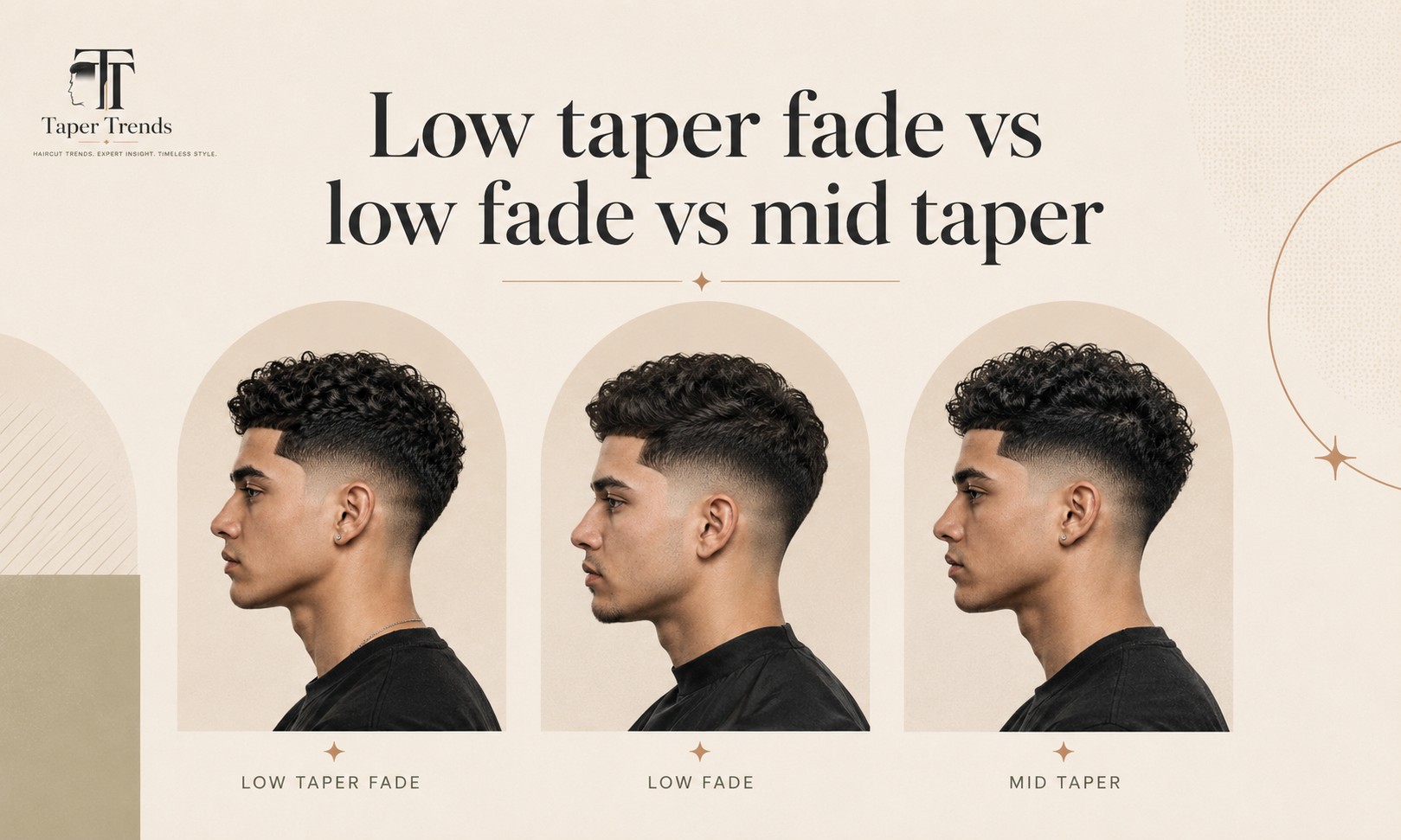
People use these names loosely, so here is the practical difference. A plain low fade tends to move fairly quickly into the fade with a sharper edge. The taper version keeps the transition softer and usually starts a little higher, around where the curls begin, then eases down. Both expose very little skin, but the taper avoids the abrupt contrast that shows up when curly hair hits a hard fade line. For most curl patterns, that softer blend simply looks more natural, which is why it tends to be the safer, lower-maintenance pick. Our low taper vs low fade breakdown covers that difference in full.
A mid taper sits higher on the head and creates more contrast between the short sides and the curls. It can look excellent, especially on looser curls and waves, but on tighter, fuller textures it can read a little severe. If you are on the fence, start low; you can always go higher next time. Our low taper fade vs mid taper fade comparison lays out where each one starts and how the contrast differs.
| Cut | How it blends | On curls |
|---|---|---|
| Low taper fade | A soft taper that eases into a fade kept low near the neckline and sideburns; very little skin shows | The most natural on curls — no hard contrast line |
| Low fade | Moves more quickly into the fade with a sharper, more defined edge | Still sharp, but suits guys who want a harder line |
| Mid taper | Sits higher on the head, creating more contrast between the short sides and the curls | Great on loose curls and waves; can read severe on tight, full textures |
Is this cut right for you?
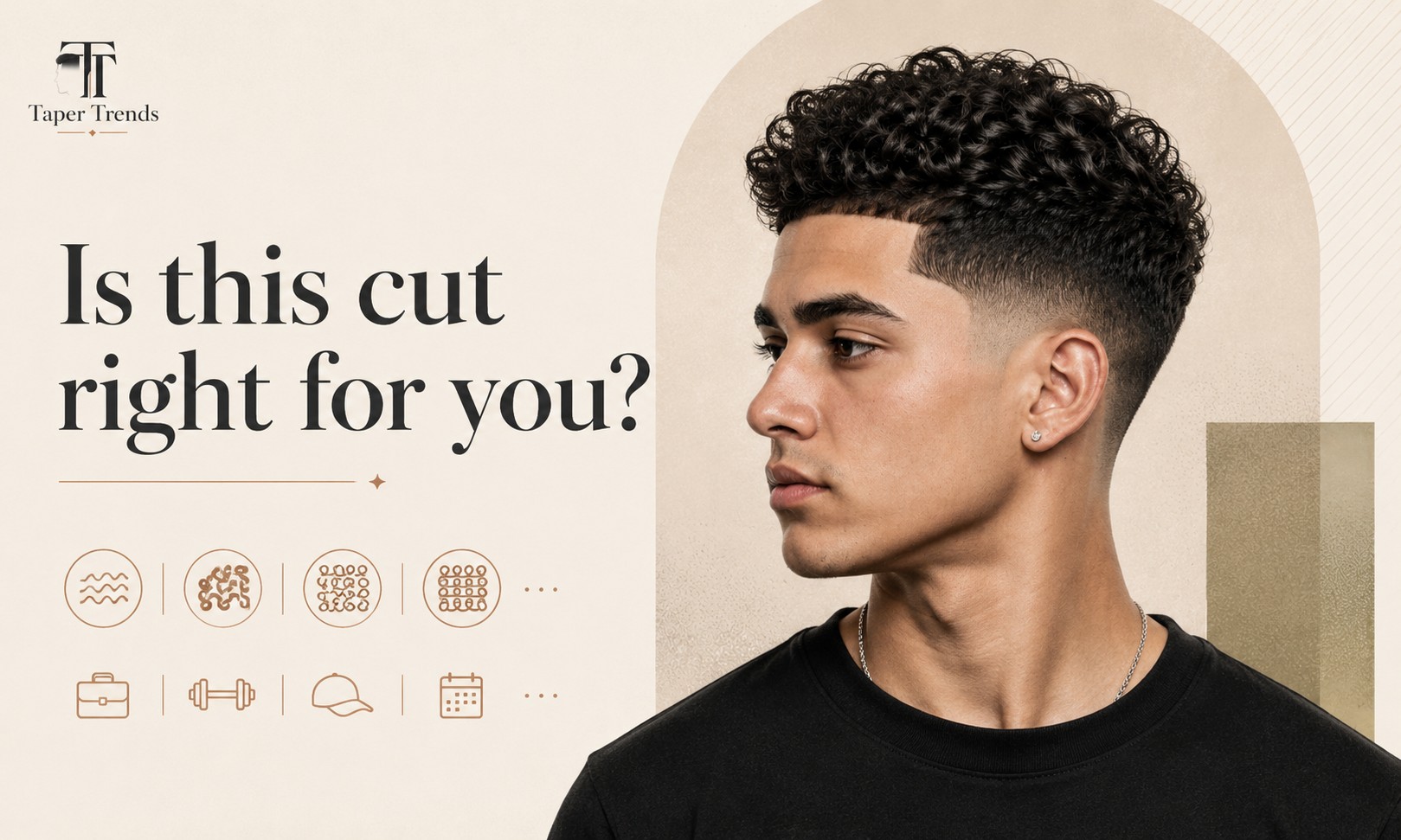
This cut is flexible enough for almost every curl pattern, from loose 2-type waves to spiral 3-type curls to tight 4-type coils. Thick, dense hair tends to get the most dramatic before and after, because the low fade strips real weight off the sides while the top stays full. It also flatters most face shapes, which I break down further below.
Who might want to skip it? If you like everything short and genuinely wash and go, a curly top is more upkeep than you may want. And if your curls are very fine or sparse, a low taper leans on some volume up top to look its best, so a simpler curly cut without a fade may suit you better.
Is a curly low taper fade professional?
Yes. Kept at a moderate, controlled length with tidy sides, it reads as neat and put together in nearly any workplace. For an interview or a formal event, define your curls with a light cream rather than a wet, shiny finish, and time your fade cleanup for a day or two before. A fresh fade does most of the work for you.
For kids and teens
For younger kids, a short curly top over a soft low taper keeps mornings simple, holds its shape between cuts, and needs little or no product. Teens usually want more, often a bit of length on top with a fringe or textured curls and a defined lineup for a current look; our guide to the low taper fade haircut for boys covers school-code-friendly options. Both stay within most dress codes while still feeling personal, which is a big part of its appeal for that age group.
Best curly low taper fade styles
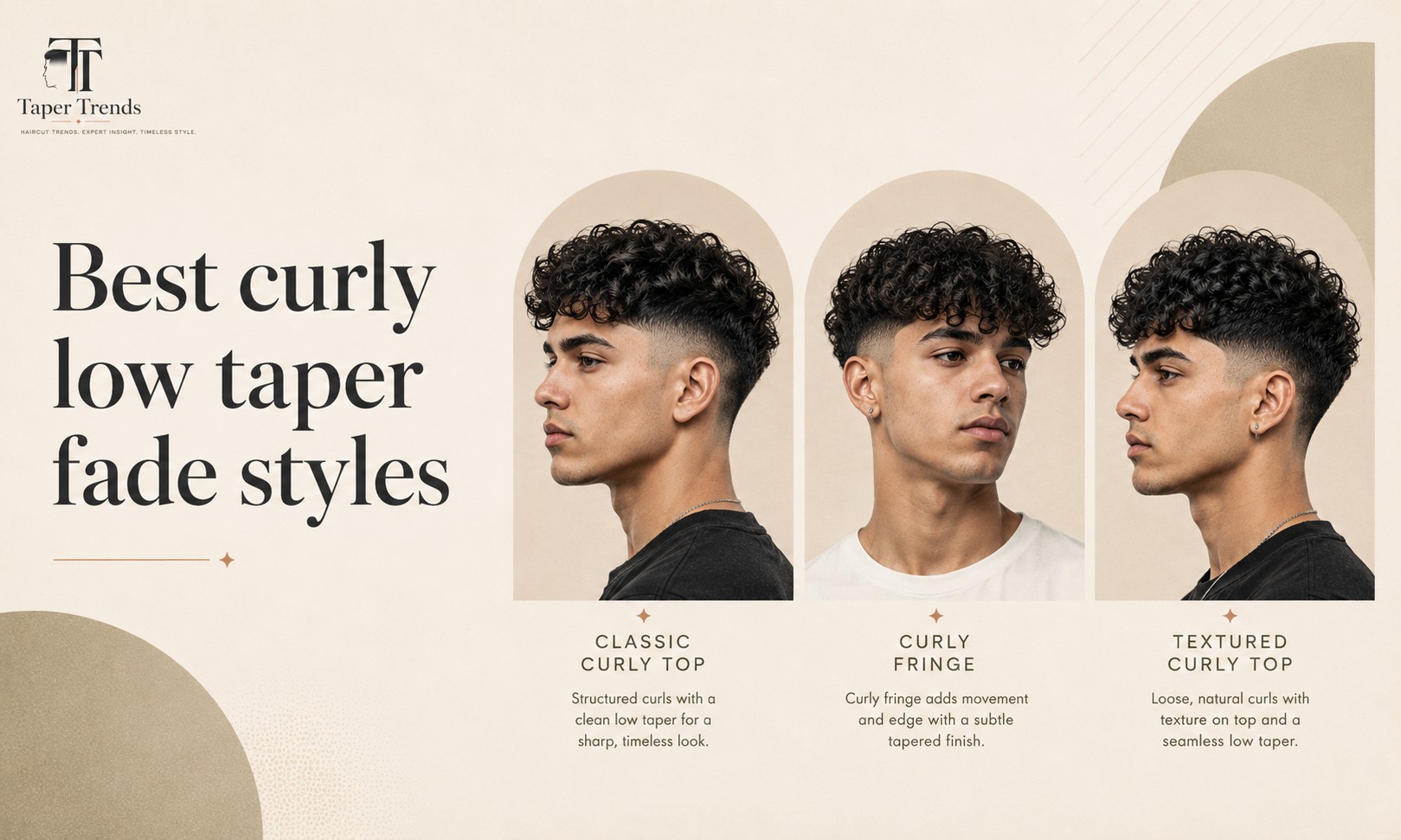
The classic version is the one most guys ask for, and for good reason: a clean low taper on the sides and back, natural curl length left on top, easy to live with day to day. From there you can push it depending on how much attention you want it to draw. Adding a crisp lineup at the hairline and temples gives the whole thing a finished edge and helps it hold up between visits.
- Classic curly taperClean low taper, natural curl length on top — the everyday default most guys ask for.
- Curly fringe / French cropThe front left longer and pushed forward to frame round or square faces; a standout look this year.
- Afro taperBig, rounded Type 4 volume up top while the low fade does the tidying, so the shape stays the focus.
- Textured curlsA matte cream or paste separates strands for a lived-in finish that still reads as deliberate.
- Curly blowout taperDries the top up and out for maximum height over the clean low sides.
- Messy topMinimal product and a deliberately undone top that still looks put together thanks to the taper underneath.
The curly fringe is often built into a French crop shape — the same idea as a textured fringe with a low taper fade with more curl left in. For fuller Type 4 textures, an afro low taper fade keeps the rounded volume as the focus, and if you want maximum height, a low taper fade blowout dries the curls up and out — our blowout low taper fade for curly hair guide breaks that version down by curl pattern.
Choosing your length: short, medium, or long
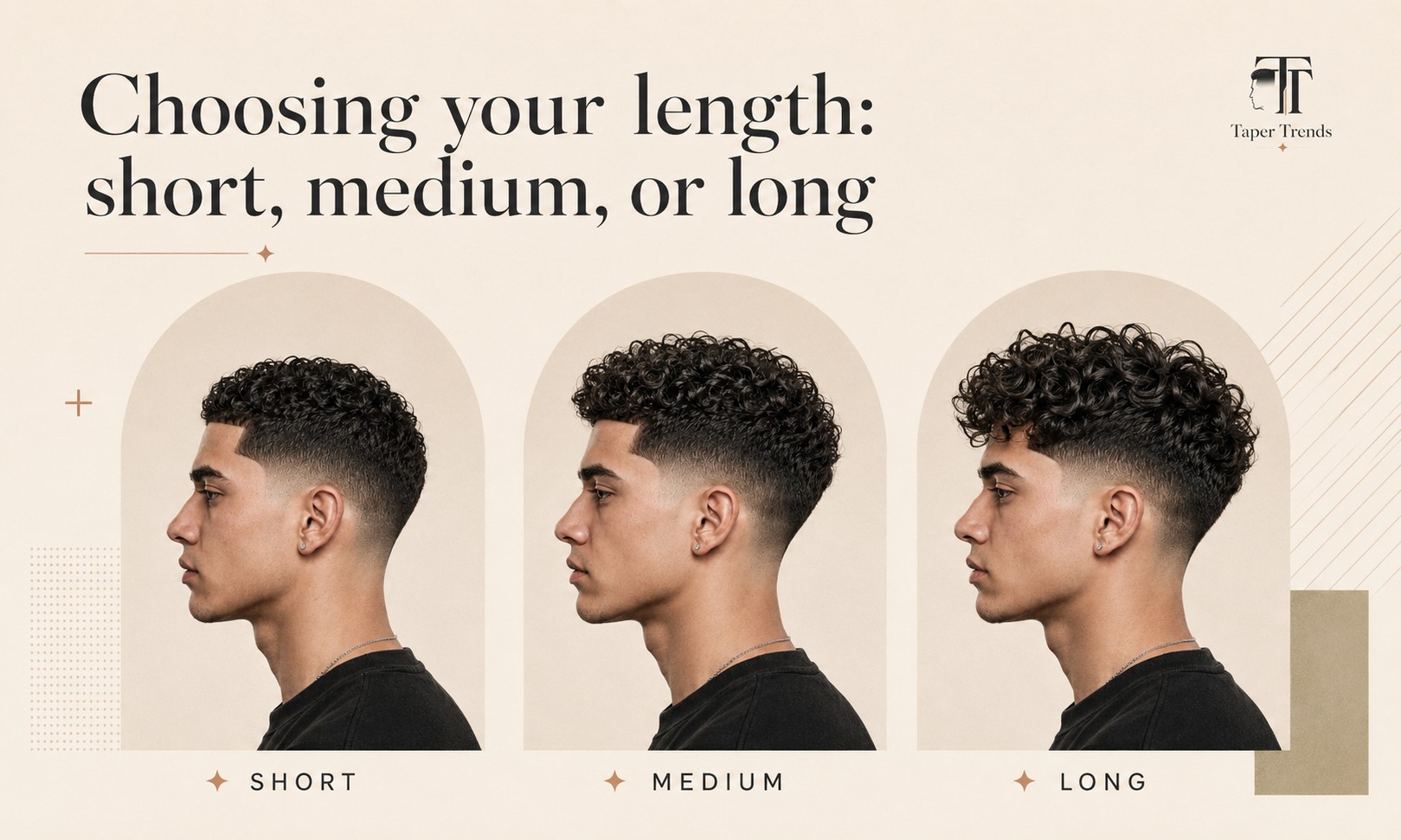
How much length you leave on top changes the look far more than the fade itself does. Shorter lengths make the cut look tighter and more structured; longer lengths shift the weight and the personality up top. Pick based on how much time you want to spend, not on how good the photo looks. If you are growing your curls out long, our long hair low taper fade guide covers the man-bun and curtain routes.
| Length | Upkeep | Best for |
|---|---|---|
| Short curls | Lowest — almost no daily styling | A solid first fade; a tight, structured shape close to the head |
| Medium curls | Moderate — a quick weekday routine | The sweet spot: real curl definition and volume, still manageable |
| Long curls | Higher — daily product and a proper drying routine | The biggest statement; curls that coil, bounce, and hang |
One warning applies to every length: curls shrink as they dry. Hair that looks like a good length when wet can end up noticeably shorter once it springs back, so always tell your barber to account for shrinkage before the first snip.
How each curl type wears it
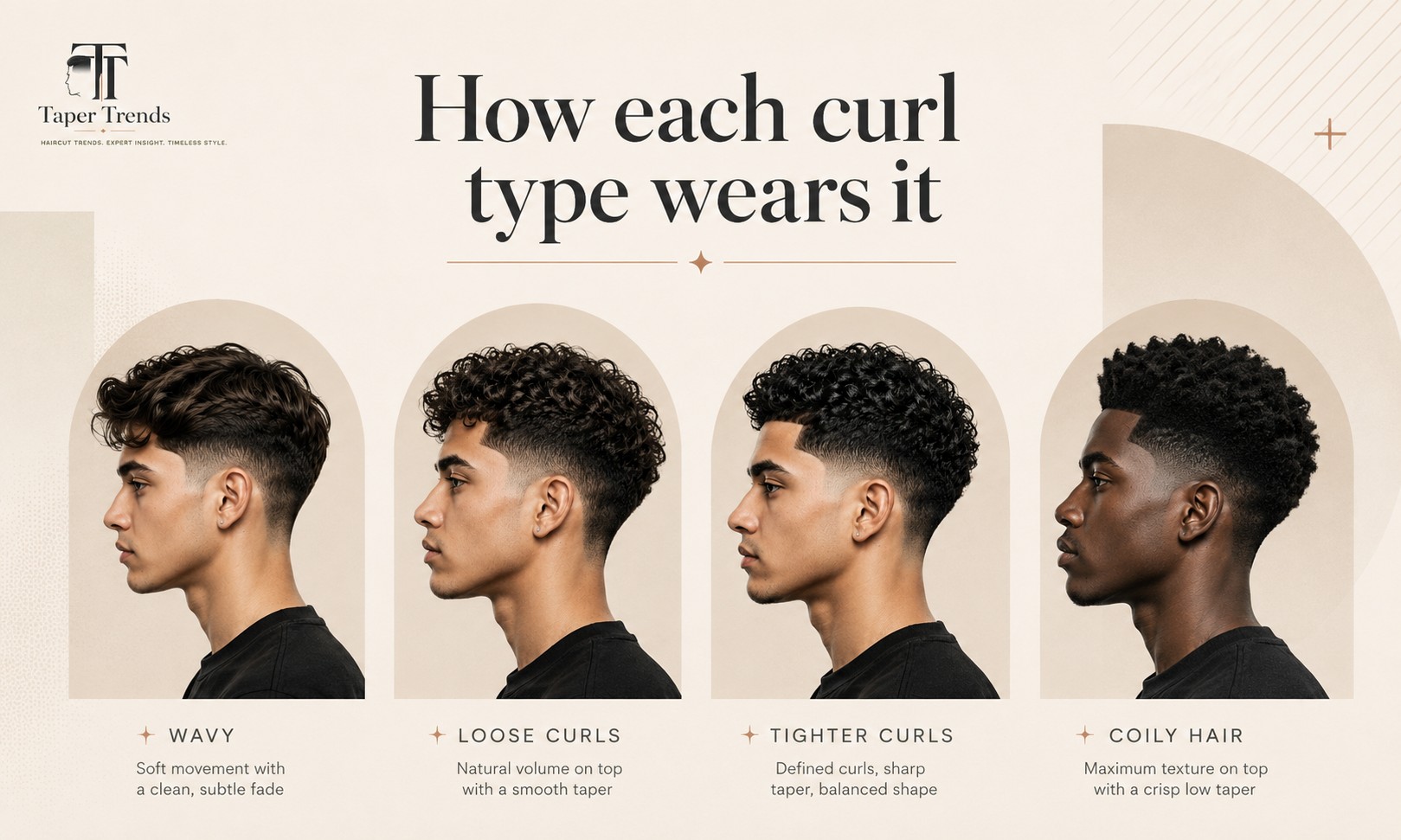
The low taper adapts to every pattern, but small tweaks help each one look its best.
- Waves (2-type)A slightly looser blend lets the movement show; a little light product is usually all they need.
- Loose curls (3A–3B)The most versatile of the bunch — holds length well and adapts to short or long tops without much fuss.
- Tight curls (3C)Compact and full of definition, especially with a curl cream worked into damp hair, while the fade handles the sides.
- Coily / kinky (4-type)Needs the most moisture to hold off dryness and frizz; the low taper keeps side volume in check and it rewards a weekly deep conditioner.
Every texture works here, which is also why the low taper anchors so many low taper fade styles for Black men. If your pattern sits closer to loose waves than spirals, the low taper fade for wavy hair guide has more on keeping that looser movement.
Best styles for your face shape
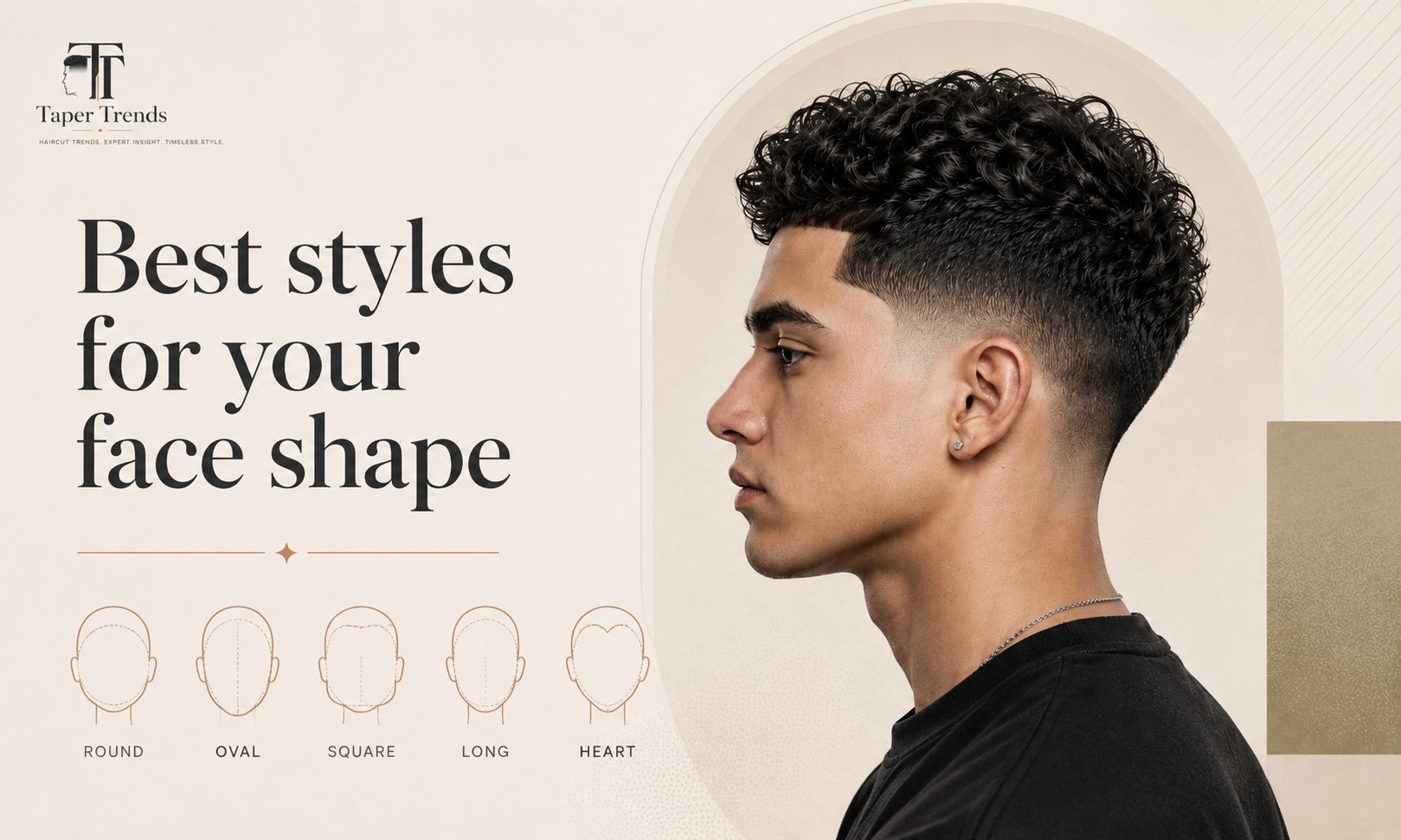
The low taper flatters most faces, but small tweaks help.
- RoundKeep a bit of height on top and the sides tight; the added height lengthens the face rather than widening it.
- OvalThe easy case — it can carry almost any version, short or long.
- SquareSofter, rounder curls up top balance the strong angles while the low taper keeps the sides from adding sharpness.
- LongResist going too tall on top; a short-to-medium curly length stops you from stretching it further.
- HeartSlightly fuller sides with a low taper — rather than a close, high fade — help balance a narrower jaw against a wider forehead.
How to ask your barber for a curly low taper fade
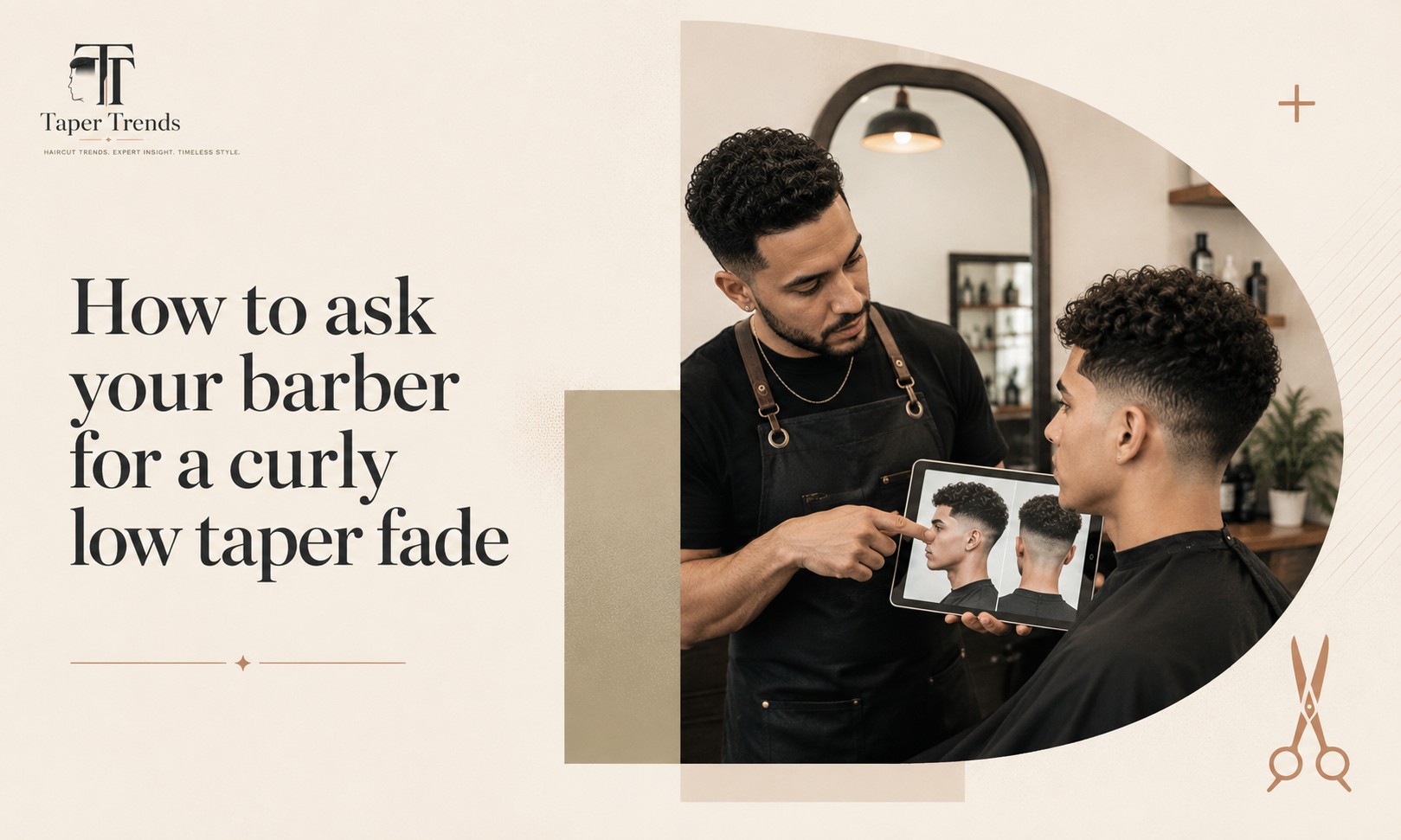
Barber terminology trips people up, so keep the request plain. Something like:
“Low taper fade, keep the fade low around my neckline and sideburns, and don’t take much off the top. I want to keep my curl length and definition.”
That one sentence prevents most of the usual misunderstandings.
Bring reference photos
Photos help more than names do. Bring two or three from the front, side, and back, ideally of someone with a curl pattern close to yours, because a style shown on straight hair will not translate the same way to curls.
Settle the details first
Before the clippers start, agree on a few specifics: a natural or blocked neckline (natural is more forgiving as it grows out, blocked looks sharper up front), how long you want the sideburns, how much taper at the temple, and how much length to leave on top. Those small calls decide the final result more than the style name does.
Pairing your fade with a beard
A low taper fade and a beard can read as one clean line from hairline to jaw when the sideburn taper flows straight into the beard without a gap or a sudden jump in length. Most barbers handle both in the same visit so the blend stays even. Short-to-medium beards tend to balance the volume on top best; a very long beard can work, but it pulls more visual weight downward. Our low taper fade design guide covers how a lineup and a connected beard fade work together.
Styling, products, and upkeep at home
How to style your curls at home
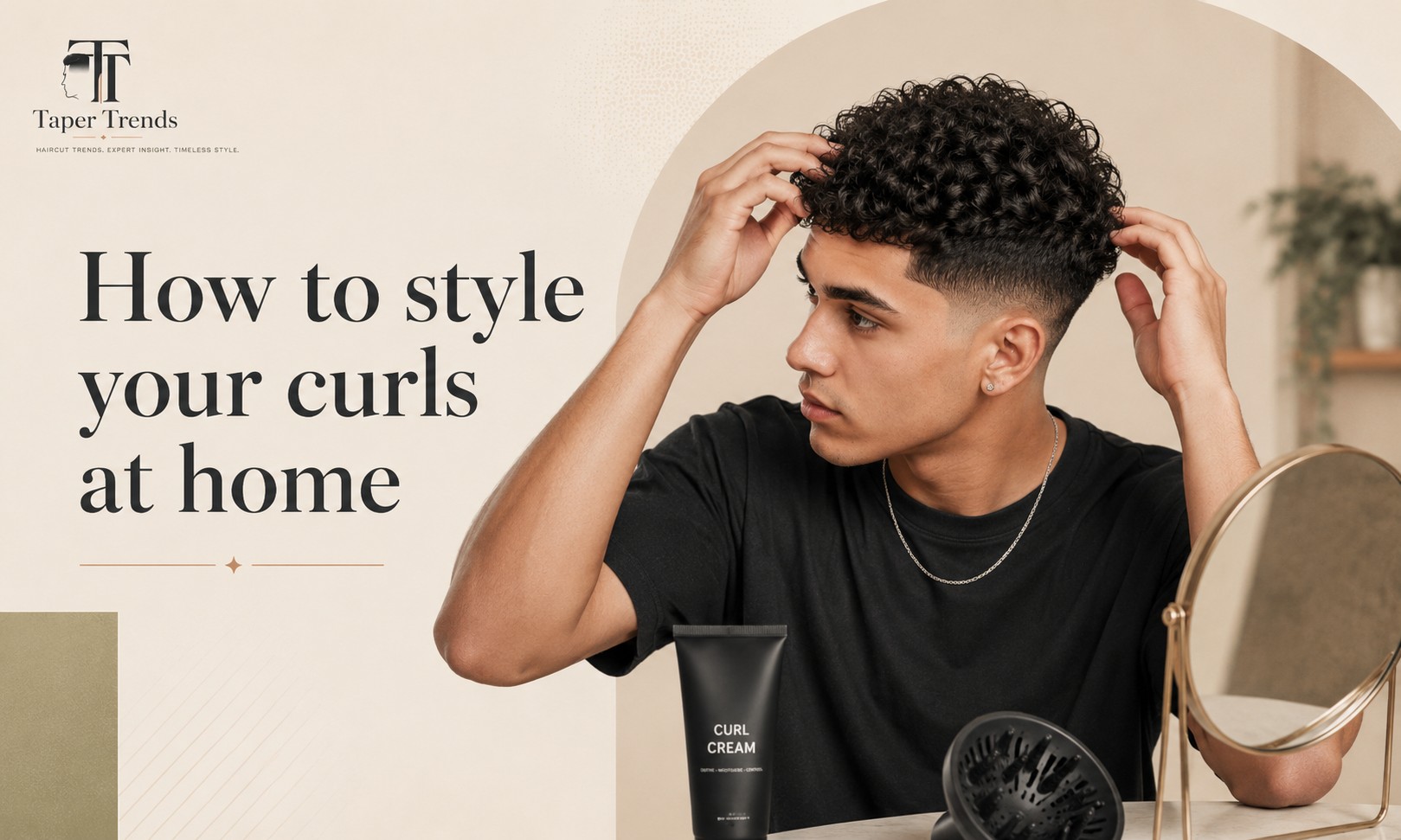
Start with damp hair, not soaking wet. Work in a leave-in conditioner first, then scrunch a curl cream through section by section. Let the curls air dry or diffuse on low heat, and resist touching them until they are fully dry, since that is where most frizz comes from. If you have a few extra minutes, “plopping” the wet top in a cotton t-shirt before you dry helps the curls clump and set.
For definition without the crunch, go easy on straight gel — a lighter curl cream, or a small amount of gel layered under a cream, holds the shape while keeping curls soft once they dry. To build volume, dry with your head tipped slightly forward to lift the roots, and use a diffuser or your fingers rather than a brush so the curls do not pull flat. To fight frizz, skip rough towel drying and blot with a microfiber towel or an old cotton tee instead.
Best products for curly hair
You do not need a shelf full of bottles. Start with less than you think you need and add from there.
- Curl creamThe base for most curl types — defines without weighing hair down.
- Leave-in conditionerGoes on first to add moisture and stop curls drying out.
- Lightweight gelFor medium or long tops that want more hold, without a hard, crunchy finish.
- MousseWeightless volume for fine curls that fall flat by midday.
- Sea salt sprayA relaxed, beachy finish for looser, wavy textures — tighter curls usually want moisture instead.
- Sulfate-free shampoo & conditionerKeeps curls hydrated and cuts down on buildup underneath it all.
Washing and maintenance
The fade is the part that grows out fastest. Most guys book a cleanup every two to four weeks depending on how sharp they want the sides to stay; the curls on top can usually wait longer. Getting to the shop only monthly? Ask for a softer, lower-contrast blend so the grow-out is less obvious.
Wash curly hair once or twice a week at most — washing more often strips the natural oils curls need to stay defined and frizz-free, which is one of the most common self-inflicted mistakes. On the days in between, a light mist of water and leave-in scrunched back in revives the curls without a full wash. At night, sleep on a silk or satin pillowcase, or loosely gather your curls into a “pineapple” on top of your head, to keep them from flattening while you sleep.
Common mistakes to avoid
- Cutting the top too shortUsually because the barber did not plan for shrinkage. Ask for a touch more length than you think you need, every time.
- Heavy gels and waxesThey drag curls down and leave them looking greasy instead of defined. Keep products light.
- A hard, unblended lineWhere the fade meets the sideburns or neckline is a giveaway of a rushed cut, so make sure your barber softens that transition.
- Over-washingQuietly erodes curl definition — keep it to a couple of washes a week.
- Lining up your own edgesA shaky freehand line shows more on a fresh fade than a little grow-out ever would.
Frequently asked questions
Is a low taper fade good for curly hair?
Yes. It controls the sides without cutting into the volume on top, which makes it one of the more forgiving fades for curls.
How long does a curly low taper fade last?
The fade stays crisp for about two to three weeks before the grow-out starts to show. The curls on top can go longer, depending on the length you are keeping.
Is this cut low maintenance?
The short versions are. Longer curly tops need daily product and drying time, so it really depends on the length you choose.
Low taper or mid taper for curly hair?
A low taper usually looks more natural on curls because it avoids a hard contrast line higher up the head. A mid taper works better on straighter or looser patterns.
Can you get a low taper fade with thick curls?
Yes, thick curls are ideal for it. The low fade trims bulk from the sides while leaving the natural fullness on top intact.
How do I keep my curls defined after a taper fade?
Keep it simple: leave-in conditioner, a light curl cream, and air drying or diffusing on low heat. Avoiding heavy products and over-washing makes the biggest difference.
The bottom line
The curly low taper fade earns its popularity because it works with your hair instead of against it. It keeps the sides clean, adapts to almost any curl pattern and face shape, and dresses up or down depending on how much length you keep.
Keep your products light, wash only a couple of times a week, and get the fade tidied every few weeks, and it holds its shape with very little effort. Before your next appointment, save a couple of reference photos with a curl type like yours and decide how much length you want on top — that short conversation is the difference between a cut you tolerate and one you are genuinely happy with.
Want more taper fade guides?
Browse clean, barber-ready breakdowns for every hair type.