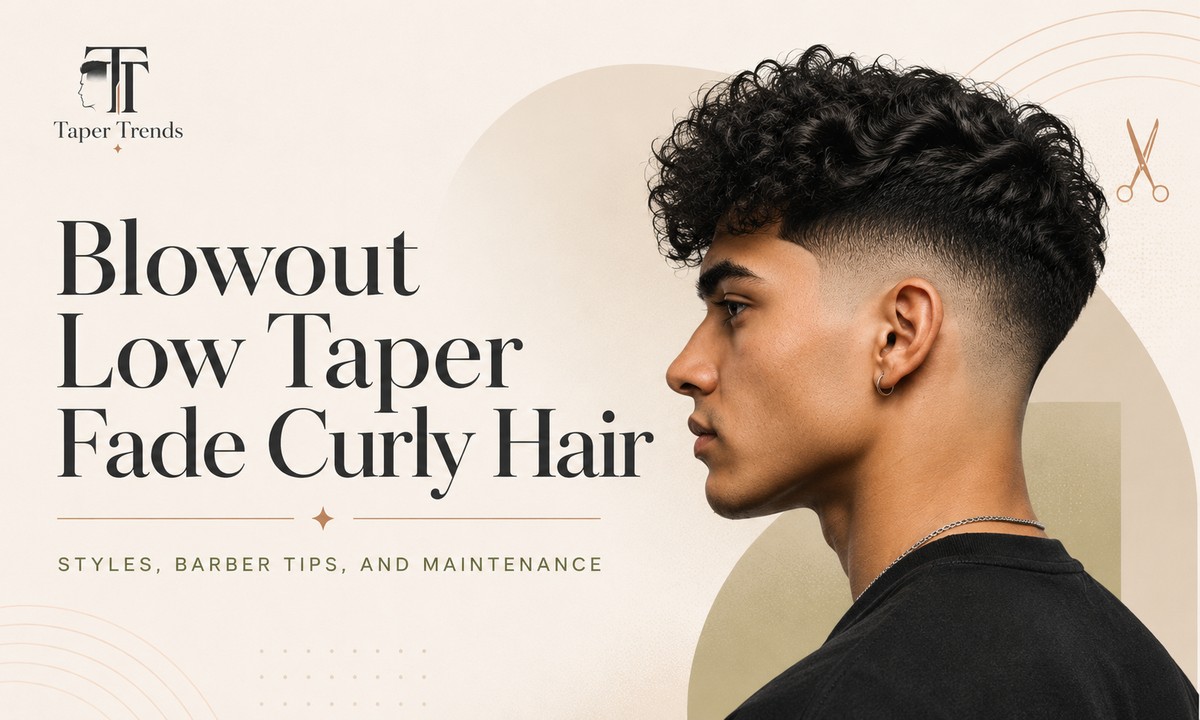
Curls and fades used to feel like they were working against each other. Cut too aggressively and the texture disappears; leave it too long and the whole thing turns shapeless. The blowout low taper fade curly hair combination fixes that middle ground — but only when the barber understands how curl pattern, density, and fade placement work together.
This guide covers what the cut actually is, why it suits curly and coily textures better than most fades, and which version fits your pattern. You will also get the language to use with your barber, the products that hold the shape, and a realistic upkeep schedule. If you want the wider picture first, our complete low taper fade haircuts guide covers every texture in one place.
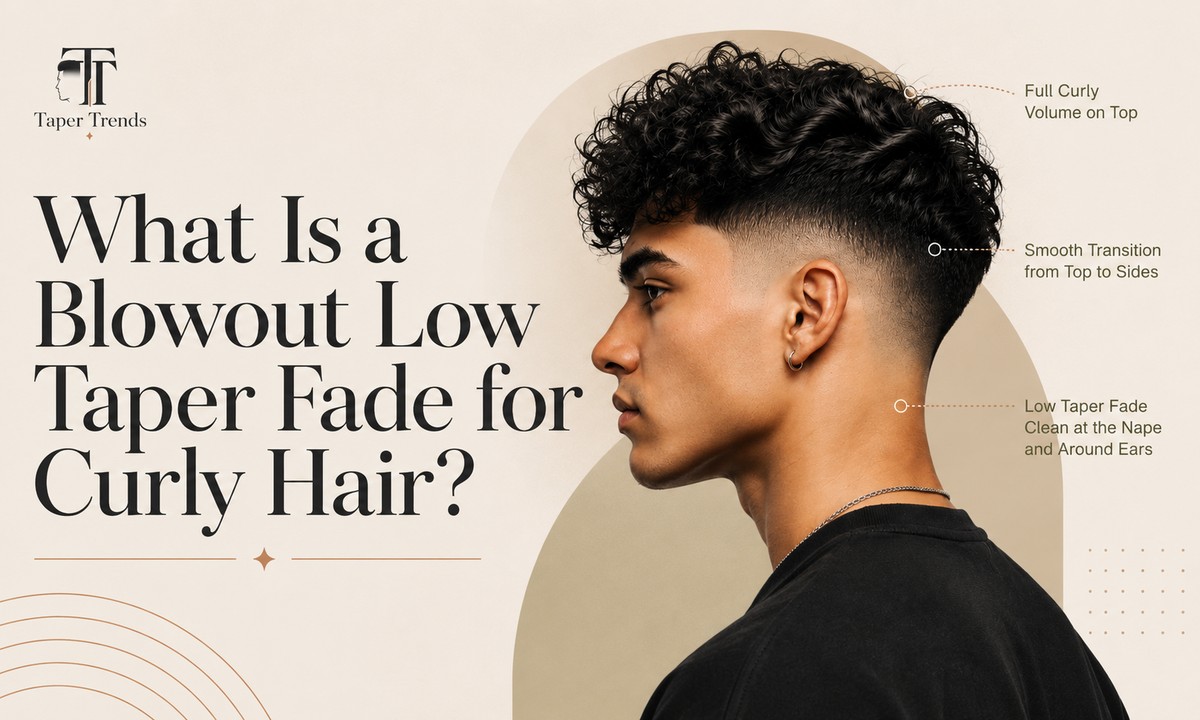
What is a blowout low taper fade for curly hair?
The word “blowout” causes more confusion at the barbershop than almost any other curly-hair term. In everyday speech it just means drying curly hair with a dryer and a brush or diffuser. In barbering it means something else: a haircut with a rounded, full, often boxy top that has real height and volume, usually shaped with shears or clippers-over-comb rather than a straight buzz. You will see the same silhouette listed as a “curly fro fade,” “blow fro,” or “afro fade” on shop menus, popular with 3B through 4C patterns because it gives coiled hair room to breathe instead of compressing it.
A low taper fade describes something different: where the fade begins and how gradual it is. A mid or high fade starts around the temple or above the ear and creates a sharp break. A low taper starts just above the ear and near the nape, blending so gradually into the skin or a short guard that there is barely a hard line to see. It is the most conservative fade height, which is why it sits so comfortably next to curly texture.
Put them together and you get a cut that keeps length and roundness on top — enough for the curl to show its coil or wave — while the sides and back stay clean and low-key. Done right, it reads as one style, not two competing halves. That is where cheaper versions fall apart: the fade goes too harsh and creates a helmet effect, or the top is left shapeless and loses the crispness the fade was meant to give it. For the volume-first version on any texture, the low taper fade blowout guide breaks down the top-shaping side in more detail.
Blowout fade vs. skin fade vs. regular taper
Barbers and clients throw these terms around loosely, so it helps to know how they differ. A skin fade takes the sides down to bare skin for high contrast against the top, which tends to compete with curly hair rather than flatter it, especially on denser textures. A regular taper is a light trim at the sides and back without much blending, usually paired with a longer, less structured top; it is low-maintenance but skips the sculpted shape. A blowout low taper fade sits between them, keeping the rounded, voluminous top while the sides blend softly and quietly.
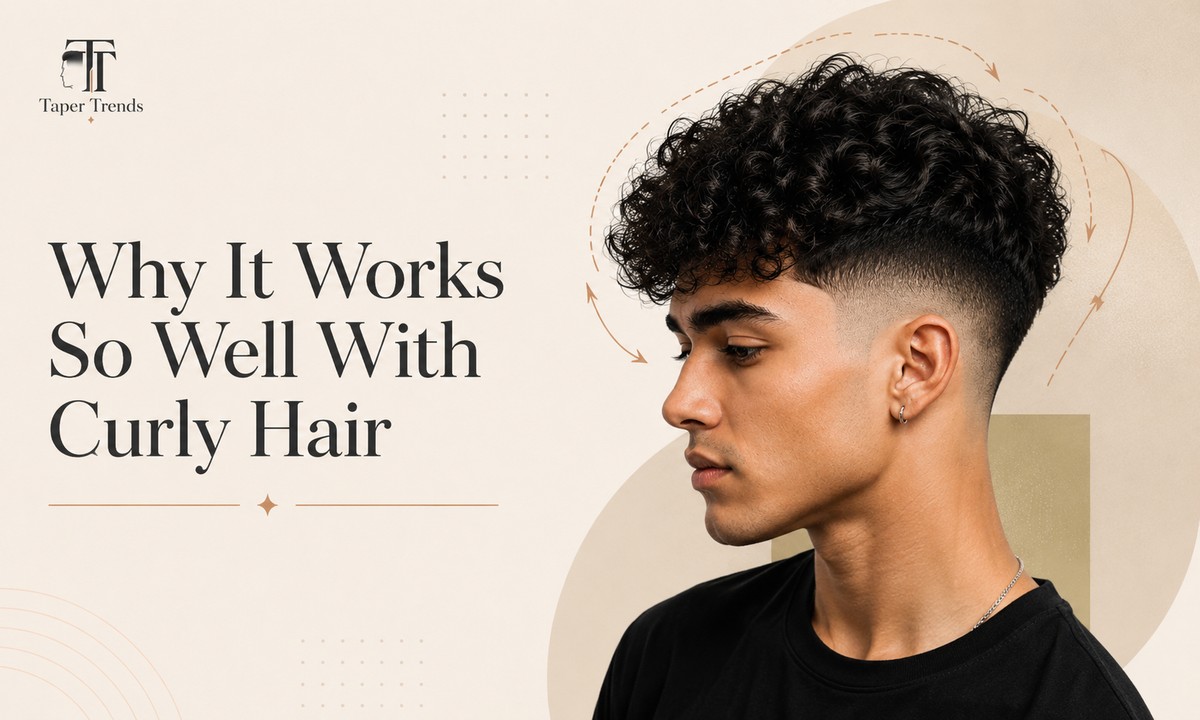
Why it works so well with curly hair
Curly and coily hair behaves nothing like straight hair once clippers are involved, and that is why this pairing became a standard recommendation instead of a passing trend. Curls need a certain amount of length to show their pattern at all — cut a 3C or 4A curl too short and it reads as stubble rather than a defined coil. The blowout leaves enough length for the curl to loop the way it wants, while the low taper strips bulk exactly where curly hair gets unruly: the sides, nape, and around the ears, where density peaks and product struggles to hold frizz down.
The “low” part earns its keep too. A high or skin fade drops a hard line right where the fullest curl volume starts, and on textured hair that line looks abrupt, like the top and sides came from two different appointments. A low taper blends closer to the neckline, so the eye travels from skin to short hair to full volume without a jolt. That is why many barbers steer curly clients away from high skin fades, especially for rounder faces or thicker necks where extra contrast up top reads top-heavy. If you want the fade without the full blowout volume, a curly low taper fade keeps the same low blend under a more natural, less-structured top.
Density matters as well. Thick, coarse curls carry weight at the sides that an ordinary trim never touches, and the taper thins that bulk without cutting into the shape on top. Finer curls benefit the other way: because a low taper keeps so much length up top, the style never looks sparse the way finer curls can under a high fade.
How curl pattern affects fade placement
No two curl patterns take the fade the same way. Roughly, the tighter the coil and the more it shrinks, the longer the blend zone a good barber leaves at the sides:
| Curl type | Best fade height | Why it works |
|---|---|---|
| 2A–2C · loose waves | Low taper, barely visible | Keeps focus on soft wave movement without harsh contrast |
| 3A–3B · springy curls | Low to mid-low taper | Preserves curl bounce while cleaning up the sides |
| 3C–4A · dense coils | Low taper with an optional line | Cuts bulk at the temples without flattening the crown |
| 4B–4C · tight coils | Low taper, longer blend zone | Avoids the two-texture look between top and sides |
The cut also sticks around because it is less work than most alternatives. With the sides short, there is almost no definition needed below the crown, so no separate detangling or product down there. All the styling attention goes to the top, which turns a ten-minute frizz fight at the temples into something you can skip once the sides are faded clean.
Best styles for different curl types
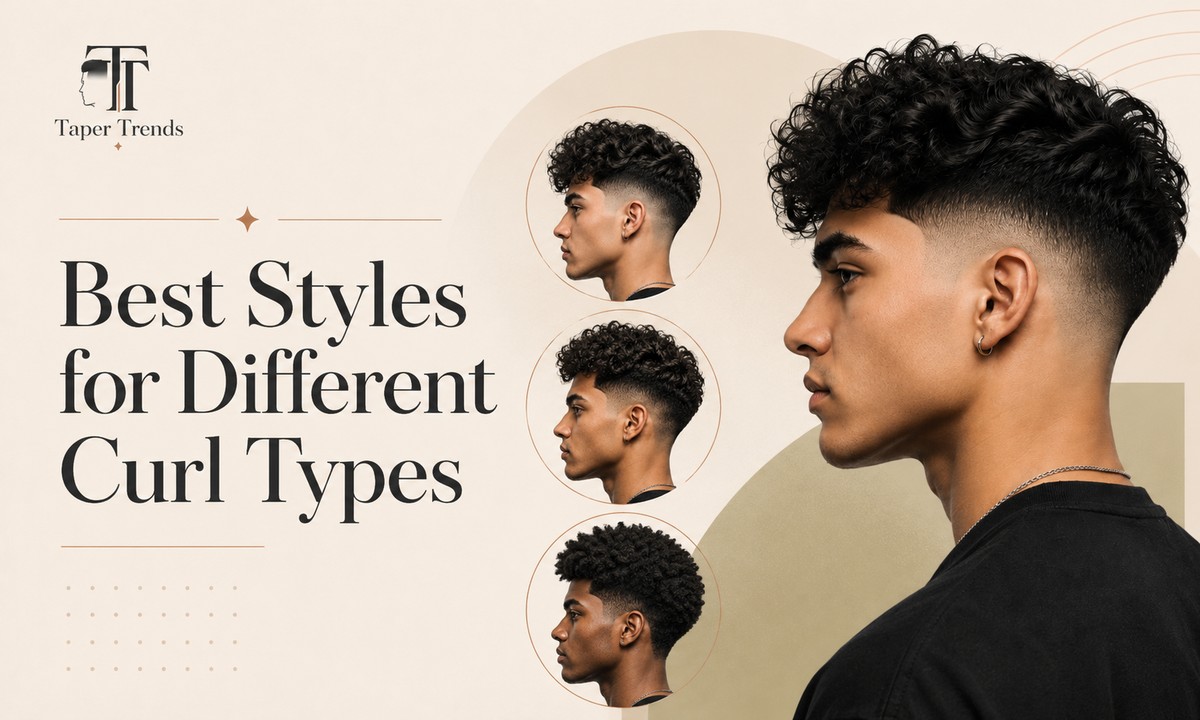
No two curl patterns wear this cut the same way, and good barbers adjust based on how tightly the hair coils, how much it shrinks, and how much sits on the crown. Here are the variations that tend to land, with the barber language and upkeep each one needs.
Loose waves and curls (type 2A–3A)
Looser waves do not need much height to look full, since the movement is already there. The aim is soft shape, not dramatic volume. A common request is a soft blowout fringe with a low taper, where the front is left a little longer and swept forward while the fade stays quiet enough that it barely registers in normal light. This suits anyone who wants a groomed, office-friendly look without the sides pulling focus. If your hair is more wave than curl, our low taper fade for wavy hair guide is the better starting point.
Defined curls (type 3B–3C)
This is where the classic rounded blowout really lands. Clients with 3B and 3C curls often ask for a curly top with a low taper and a hard part, adding a shaved line above the temple for definition against the fade. These patterns hold shape well after a twist-out or wash-and-go, so the top can be shaped into a rounded dome or a slightly angular box, with the low fade keeping the edges clean without stealing attention.
Coily and kinky hair (type 4A–4C)
For denser, tighter coils, this cut is often called a taper afro or afro fade at the chair, and it is arguably where the combination pays off most. Because 4A–4C hair shrinks a lot when dry, barbers usually cut it stretched — blown out or braided — to judge true length, then run the blend slightly higher than on looser textures so the tight coil does not slam into a fade that starts too low. An edge-up and clean neckline finish it. The low taper fade afro covers this coily version in depth, and our low taper fade for Black men guide walks through pattern, density, and lineup choices.
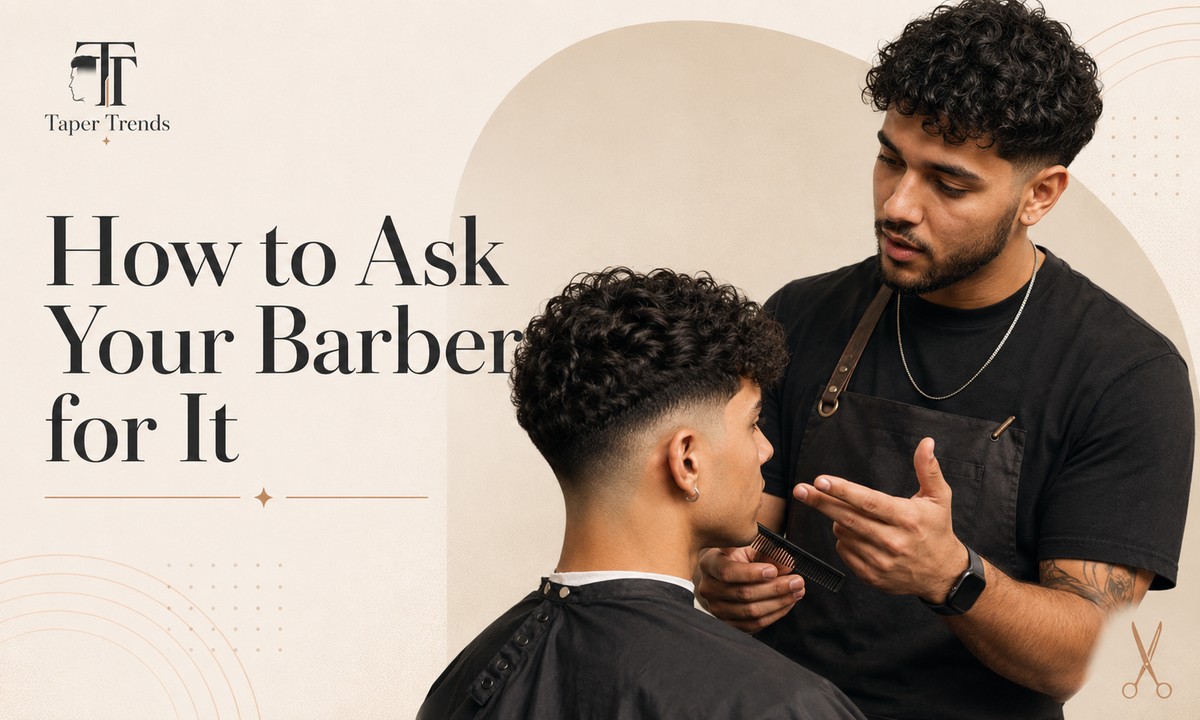
How to ask your barber for it
Miscommunication is the single biggest reason this cut goes sideways, since “blowout” and “taper” both get used loosely from one shop to the next. Name the two parts separately rather than assuming your barber will connect them:
“Blowout on top, low taper fade on the sides and back — keep it low, not a skin fade.”
That describes both the shape and how aggressive the fade should be. Barbers hear “fade” dozens of times a day, and without a height reference plenty will default to whatever is trending that month.
Curl details matter as much as fade height. Describe your texture in plain terms if you do not know the classification: “tight curls,” “loose waves,” or “coily, shrinks a lot when it dries” all tell the barber what they need to judge real length before cutting.
Tools are worth mentioning if you have been burned before. Asking for the top to be shaped with shears rather than clippers alone protects looser curl patterns, which can get shredded and uneven after repeated clipper passes. If you want a hard part above the temple, say so upfront, since that is a separate request from the fade. Bring a reference photo too, since verbal descriptions of curl height and blend vary wildly between people.
Choosing the right version for your face shape
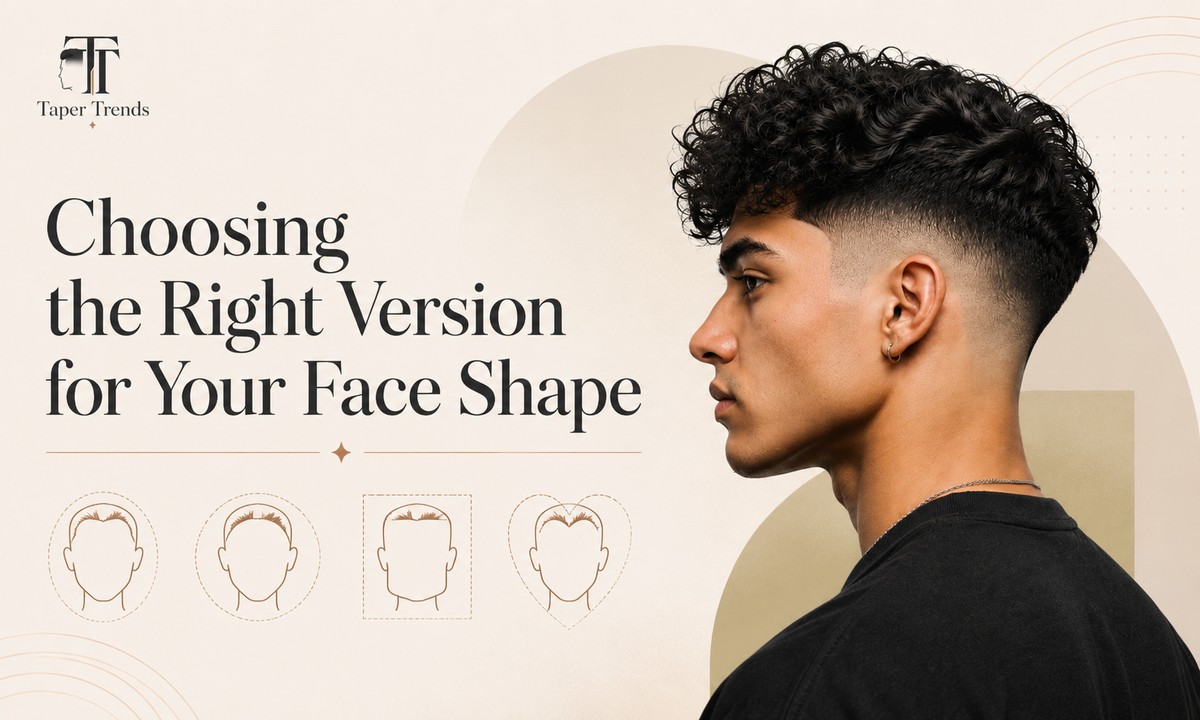
A cut can be technically clean and still look off if it fights your face. This style is forgiving, mostly because the low fade skips the hard geometry that high and skin fades bring, but small changes to height and roundness still make a difference depending on your bone structure.
- RoundBuild the blowout tall rather than wide — height adds length and breaks up a soft jaw, while going wide and bushy only emphasizes the roundness.
- SquareA slightly rounded top softens a strong jaw and broad forehead, and the low taper avoids adding more hard lines to a face that already has structure.
- OvalThe easy case — nearly any proportion looks right, so pick based on curl type and preference alone.
- Diamond / heartWider at the cheekbones or forehead: a top that is fuller at the sides and a touch less towering softens the width and pulls balance toward the jaw.
Across all of them, the low taper itself rarely needs to change much. Height, roundness, and density on top are where the real customizing happens, and a good barber will read your face shape before deciding how tall to leave the crown.
How to style it at home
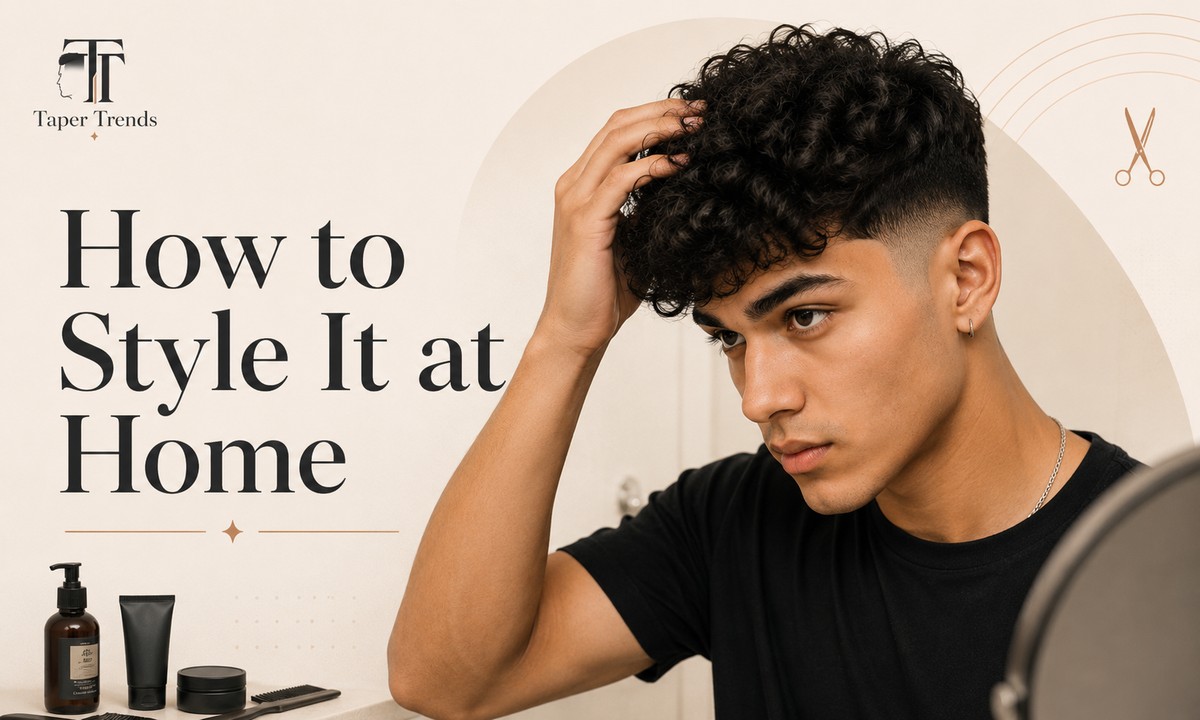
Once the cut is done, styling is what brings the blowout to life day to day, and it is simpler than most people expect once you settle into a routine.
Start with clean, conditioned hair. Wash with a sulfate-free shampoo or co-wash so you are not stripping natural oils, then follow with a conditioner that has enough slip to make detangling easy. Detangle while the hair is still wet, working from the ends up with a wide-tooth comb or your fingers, since detangling dry, set curls just breaks the pattern and adds frizz.
Next, work a leave-in or curl cream through damp hair, concentrating on the crown where the shape needs the most definition. Then dry with a diffuser on low or medium heat, cupping sections and pushing up toward the scalp rather than dragging the dryer through, which builds volume instead of flattening it. This step takes the longest and makes the biggest difference. While it is still a little damp, lift and round the crown with your fingers or a pick into whatever profile you want, then leave it alone — overworking damp curls is one of the most reliable ways to create frizz.
Products, by the job they do
You do not need a shelf full of them. Think in three jobs: volume at the root, definition through the curl, and frizz control at the surface.
- Mousse / root-lift sprayA light mousse or root-lifting spray before diffusing helps the crown hold its round shape without weighing anything down.
- Curl cream / custardDefines the curl without the stiff, uniform set of gel, which clashes with the soft roundness of a blowout. Richer creams suit denser 4A–4C coils.
- Leave-in conditionerThe real frizz fighter — paired with the diffusing technique it does more than any serum, especially on hair that runs dry.
- Light oil (argan / jojoba)A little over the dry top layer smooths flyaways. Keep heavy butters on the ends, since rich product near the scalp kills volume.
A satin or silk pillowcase and a bonnet at night round it out, and a mid-week refresh is just a light mist of water and leave-in plus a finger-fluff of the crown.
Keeping the fade sharp and curls fresh
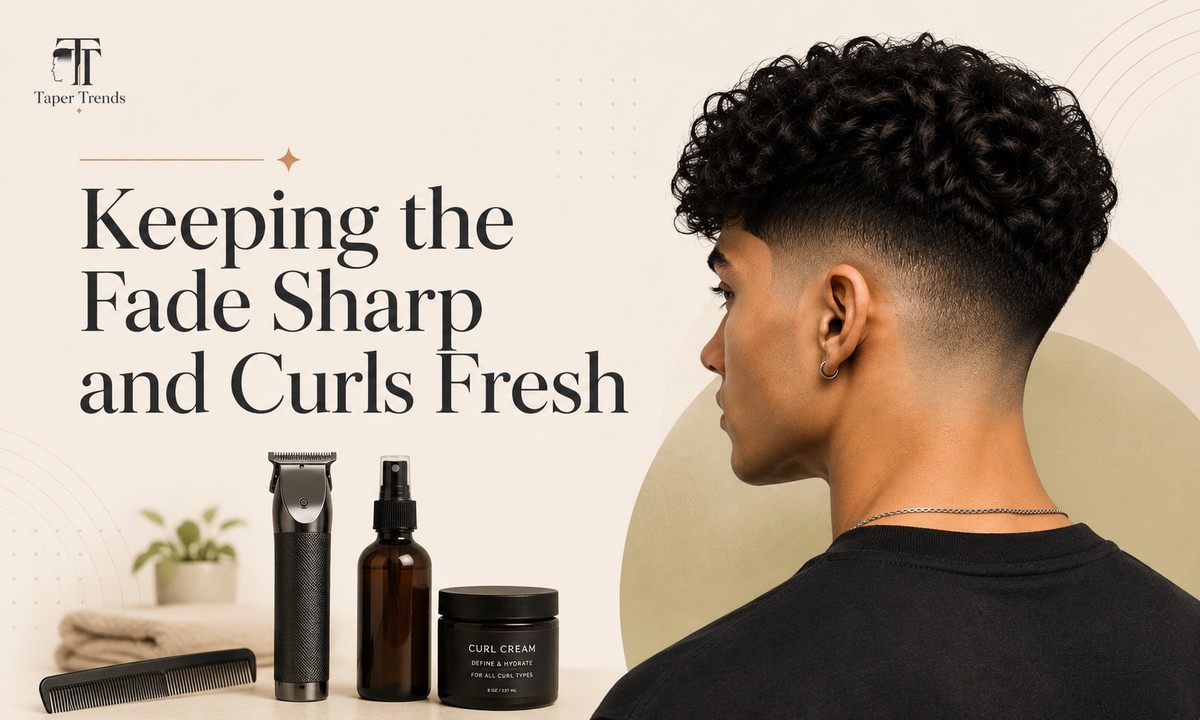
Getting the cut right is half the job. Keeping it sharp between visits is where the style either holds or quietly slips.
The fade needs attention long before the top does. Hair at the nape and around the ears grows in faster than it looks, so the clean blend you left with can go patchy within two to three weeks while the crown still looks full. Booking your next appointment on the way out of the current one keeps the fade from cycling between fresh and overdue. Trims on top run on a different schedule: since the point is to let curls keep their length, over-trimming the crown every time you fade the sides slowly shrinks the volume, so most barbers only dust the ends every six to eight weeks.
Night protection matters as much as anything done at the chair. Cotton pillowcases pull moisture out of curly hair and create the friction that flattens volume and sparks frizz by morning, so a satin or silk pillowcase or a bonnet before bed protects both the shape and the moisture.
Two other things quietly wreck a blowout. Product buildup is the first: layering creams and oils daily without a real wash leaves curls greasy instead of defined, so a weekly clarifying or gentle shampoo resets the hair. Sweat is the second, since it loosens definition at the hairline faster than normal wear, so rinse with water after a workout and reapply a little leave-in. In humid weather, a stronger-hold cream or anti-humidity spray keeps the top from expanding past its shape.
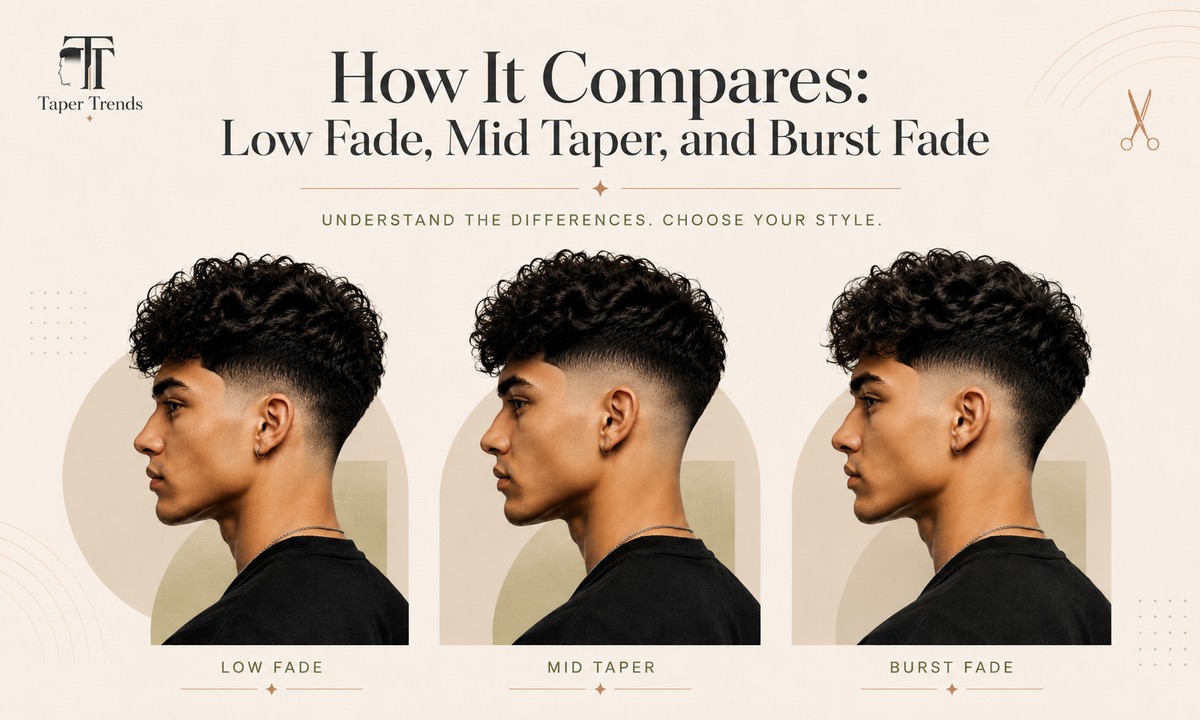
How it compares: low fade, mid taper, and burst fade
Shop menus list these side by side without much explanation, so it helps to see how the blowout low taper fade stacks up against its closest neighbors.
A standard low fade on its own only describes the sides and back; it says nothing about the top. Plenty of people confuse it with the full style here, but it is really just the bottom half of the equation — our low taper vs low fade breakdown covers the difference in full. A mid taper fade starts its blend higher, around the middle of the side, so there is more contrast; that can look sharp on shorter curls but tends to compete with denser, fuller volume. A burst fade is a different shape entirely, curving around the ear rather than blending straight around the head, so it suits fringe-forward looks more than a full rounded blowout.
| Fade style | Where the blend starts | Best paired with |
|---|---|---|
| Low taper fade | Near the ear and nape — subtle, gradual | Rounded blowout tops, dense curls |
| Standard low fade | Near the ear and nape — subtle | Shorter, unstyled tops |
| Mid taper fade | Mid-side of the head — moderate contrast | Shorter curls, straighter textures |
| Burst fade | Curved around the ear — localized, high | Fringes and fauxhawks |
For curly and coily hair specifically, the low taper stays the most forgiving of the group. It blends gently enough to avoid harsh contrast against dense volume, needs less upkeep than a mid taper, and skips the localized emphasis of a burst, which is why it is the default recommendation for anyone pairing a fade with a full, textured top.
Frequently asked questions
Does a low taper fade work on very tight, coily hair?
Yes. It is often the most flattering option for coily hair because it avoids the harsh contrast that higher fades create against dense curl volume, blending gently from the neckline into a full crown.
How often do I need the fade touched up?
Most people need a refresh every two to three weeks, since the nape and hair around the ears grow in faster than they look, even though the top can go six to eight weeks between trims.
Will blow-drying my curls damage them?
A diffuser on low or medium heat with a leave-in keeps damage low. Regular high heat with no protectant is what dries curls out over time, so keep the heat gentle and the product on.
Can I get this style with fine hair or looser waves?
Yes, usually with a softer, less rounded top and a very subtle fade. Looser waves do not need much height to look full, so the aim is soft shape rather than dramatic volume.
What is the difference between a blowout and just blow-drying my hair?
A blowout is the rounded, shaped haircut with real height and volume on top. Blow-drying is just the drying technique used to style it. On a shop menu, the blowout is the cut, not the dry.
Is this style office-appropriate?
Generally yes. Because the fade is low and quiet rather than dramatic, it reads as polished and professional while still keeping your natural curl on show.
Is the blowout low taper fade worth it?
A blowout low taper fade gives curly hair the best of both: enough length and roundness on top to let the texture show, with a fade subtle enough to stay clean without ever looking harsh. Which version fits comes down to your curl pattern, your face shape, and how much volume you want.
Get the barbershop conversation right — down to tool preferences and a reference photo — and you avoid walking out with something you did not picture. After that, a simple, consistent routine keeps it looking fresh week to week. Bold rounded crown or something softer, the low taper foundation adapts either way, which is what keeps it one of the most reliable ways to make curly hair look intentional and completely your own.
The bottom line
The blowout low taper fade lasts because it doesn't make curly hair choose between clean and natural. It keeps length and roundness up top while the low fade keeps the edges sharp and grows out without ever looking patchy.
Match the top to your curl pattern and face, name the blowout and the low taper separately at the chair, and protect the curls at night. Keep the fade low, keep the volume on top, and it earns its place as a cut you come back to.
Want more taper fade guides?
Browse clean, barber-ready breakdowns for every hair type.