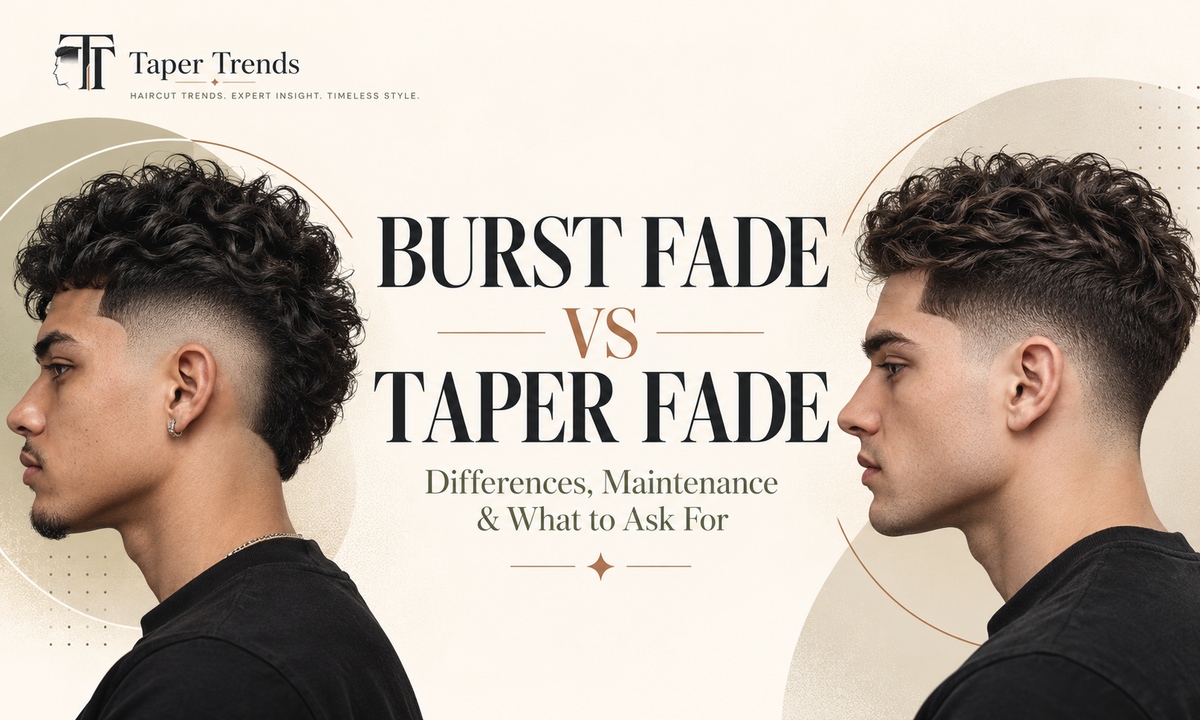
A burst fade and a taper fade differ in where the short hair goes and what shape it follows. A burst fade curves in a half-moon around the ear and usually leaves the back longer. A taper fade keeps its shortest work at the sideburns and neckline and leaves more weight on the sides. Neither name tells you how short the cut gets: either one can finish at skin, a zero, or a shadow.
Barbers don't all use these words the same way, so this guide defines each cut by placement and shape rather than by name. For the wider picture, our complete low taper fade haircuts guide is the hub for every fade on the site, and our rundown of every kind of fade haircut sets both of these shapes beside low, mid, high, skin, and drop.
Burst fade vs taper fade: what's the difference?
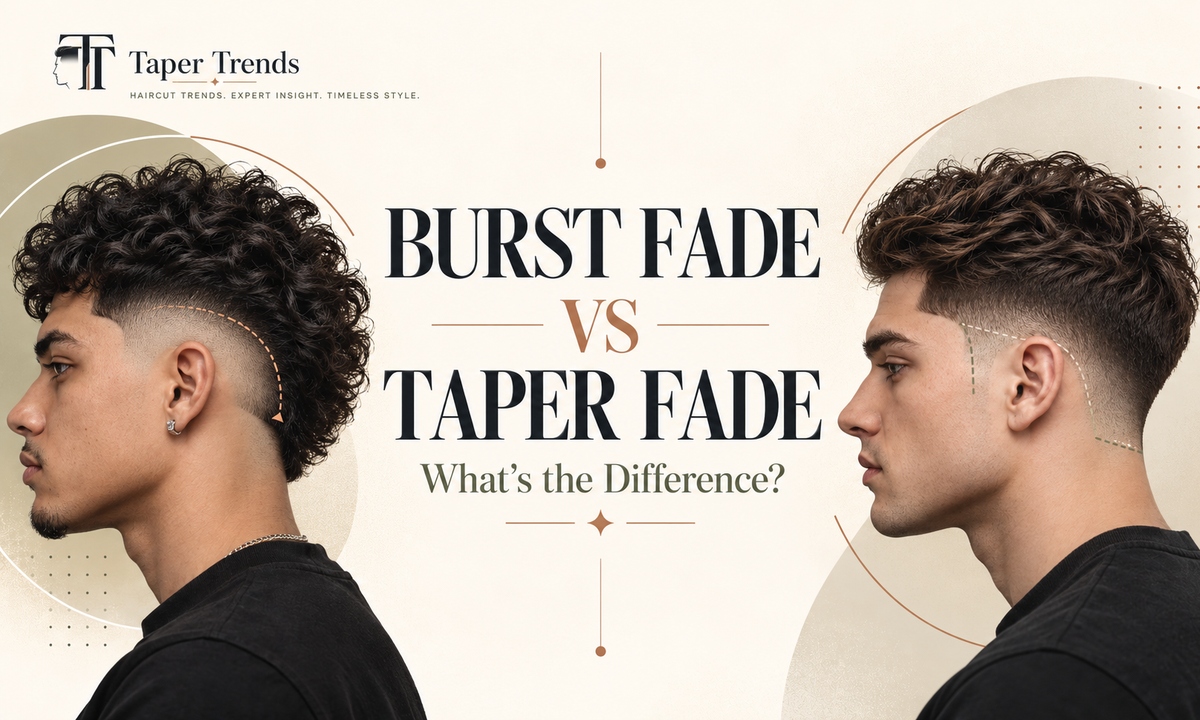
The difference between a burst fade and a taper fade is geometry. A burst fade puts its shortest point behind the ear and grades outward in a curve, so the ear sits inside a rounded arc. A taper fade shortens the hair along the hairline at the sideburns and nape and leaves the side panel between them mostly alone. How short either one goes is a separate choice.
Burst fade and taper fade side by side
| Burst fade | Taper fade | |
|---|---|---|
| Shortest hair | Behind and around the ear | Sideburns, temples, and neckline |
| Shape of the fade line | Curved, half-moon arc around the ear | Follows the natural hairline |
| Sides | Shortened only where the arc passes | Most weight kept between the tapered edges |
| Back and nape | Often left longer; can be tapered on request | Neckline cleaned up and blended |
| Shortest finish | Skin, zero, or shadow | Skin, zero, or shadow |
| How it reads from the side | A visible curved outline around the ear | Clean edges with the side shape mostly intact |
| Where regrowth shows first | The tight area behind the ear | The neckline |
| Common top pairings | Mohawk, faux hawk, mullet, textured crop | Side part, flow, curls or afro, crop |
One row people often expect is missing: contrast. A high skin taper can look sharper than a low shadow burst, so how bold a cut looks depends on its height and finish more than on its name.
The four variables that decide the result
A haircut name is shorthand. The result comes down to four choices:
- The geometry, meaning the shape the short area follows: a burst's curve around the ear or a taper's edge work at the sideburns and nape.
- The height, meaning where the graduation starts: low, mid, or high.
- The base finish, meaning how short the shortest point gets: skin, zero, or shadow.
- The retained weight, meaning how much length stays on the side panel, the back, and the nape.
Retained weight is worth naming as its own variable, because it's what separates a taper from a full fade. Our taper vs fade explainer works through that distinction, level by level, and is worth reading first if “taper,” “fade,” and “burst” still feel like they're fighting each other.
What is a burst fade?
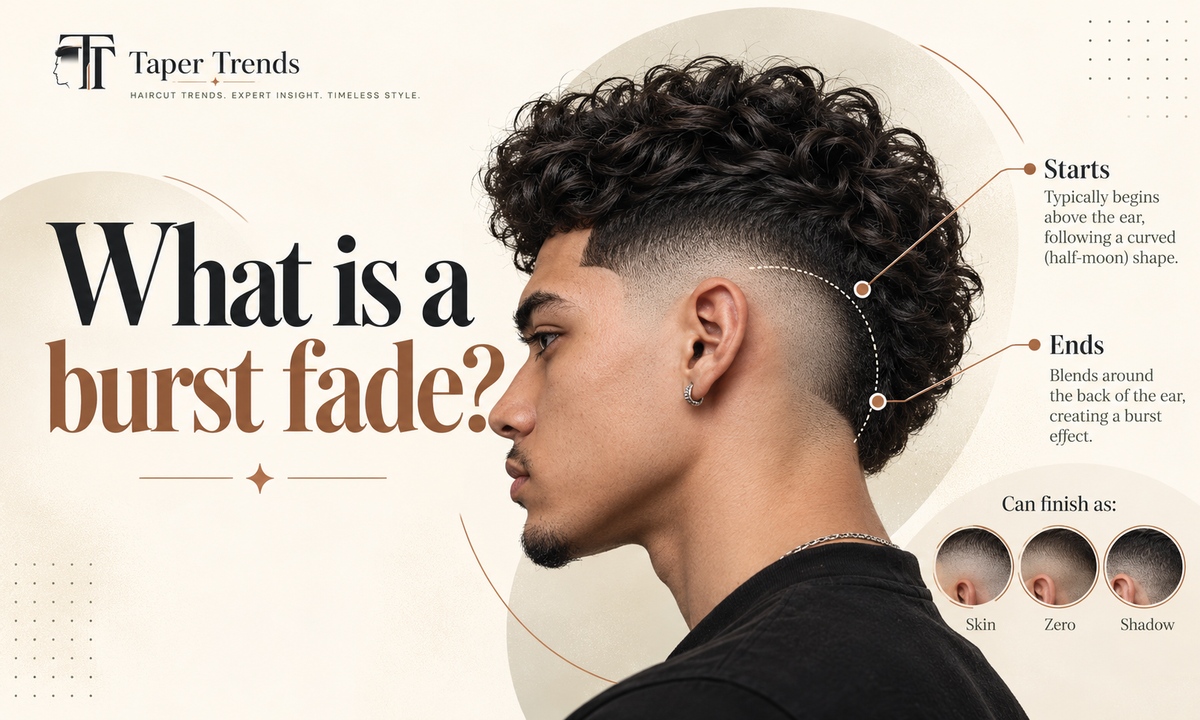
A burst fade is a fade whose lowest point sits directly behind the ear, with the hair getting longer as it moves up and outward in a curve. Seen from the side, the short area looks like a half circle radiating around the ear rather than a flat band across the head. The shape defines the cut, not the hair on top. Our full burst fade haircut guide covers the arc end to end, including low vs mid vs high and the five-point barber brief.
The burst is a side technique that works with any texture on top, which is why the same arc can sit under a mohawk, a mullet, or a short textured crop.
Where does a burst fade start and end?
A burst fade is anchored at the ear. The arc is highest behind it and curves down toward the front of the ear and toward the neckline, so hair in front of the ear and at the nape can keep more length. A low, mid or high burst changes how far that arc climbs. There's no standard measurement for any of these; placement depends on your head shape and your barber's eye, which is why a side photo beats a description.
Does a burst fade have to go to skin?
No. “Burst” describes the shape of the fade, not how short it gets. A burst fade can finish at bare skin, at a zero that leaves light stubble, or at a shadow that keeps a visible layer of hair. If you want the curve without the shaved look, ask for a shadow burst and say so before the clippers come out.
What is a taper fade?
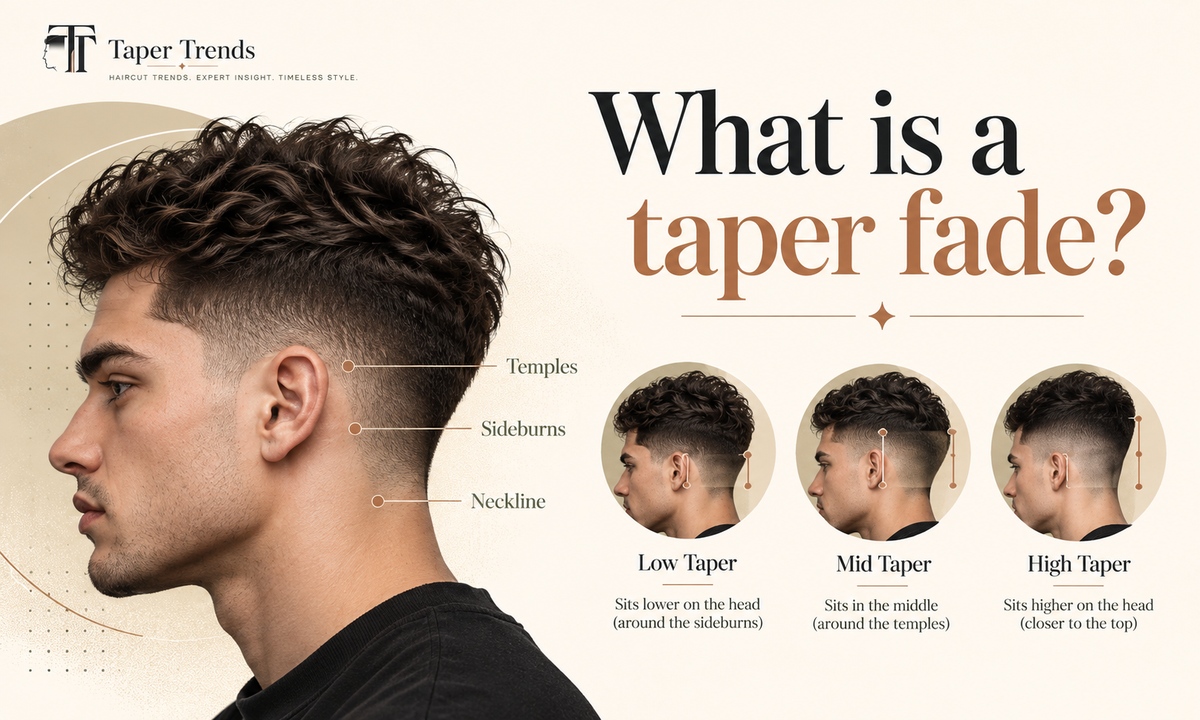
In this guide, a taper fade means a cut that concentrates its shortest graduation at the sideburns, temples, and neckline instead of fading the whole side and back. The hair blends from a longer top down to a short, clean hairline, and the side panel keeps more of its length than it would in a full fade. Our full taper fade guide breaks the phrase into the variables that actually decide the result.
Where does a taper fade sit?
A taper fade sits on the edges of the haircut. The sideburn, the temple, and the nape get shortened; the side panel between them keeps most of its natural weight. A full fade is different because it grades the hair continuously around the sides and back instead of only at the edges.
Some barbers carry taper work further up the side than others. If where the taper stops matters to you, point to the spot rather than trusting the word.
Do low, mid, and high describe height or shortness?
Low, mid, and high describe where the graduation starts, not how short it ends. A low fade sits just above the ear, a mid fade around the temples, and a high fade near the top of the head's curve.
So a low taper can still finish at skin, and a high taper can stop at a soft shadow. Mixing up “low taper” and “skin fade” is how you and your barber agree on the height while picturing very different amounts of scalp. Our low vs mid vs high skin fade breakdown shows how the same three heights behave once the finish reaches skin.
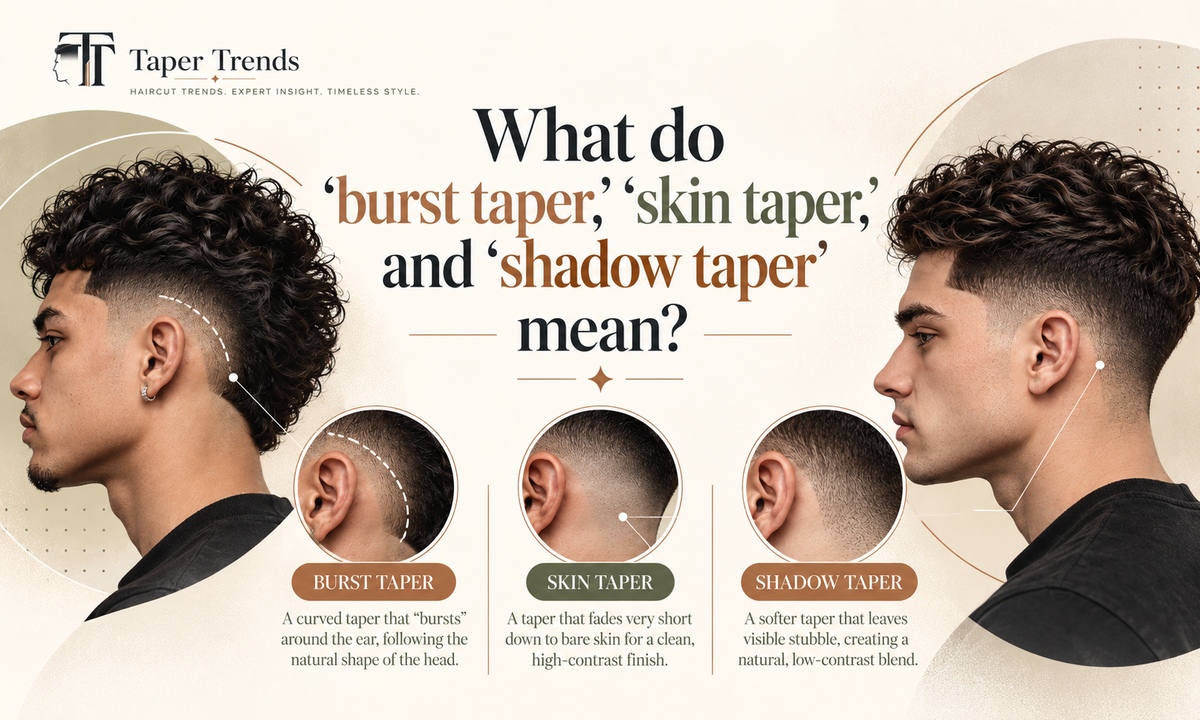
What do “burst taper,” “skin taper,” and “shadow taper” mean?
These phrases mix shape and finish, and shops don't use them consistently. Treat them as the start of a conversation, not a specification.
| Term | What it usually describes | What to confirm |
|---|---|---|
| Burst taper | A burst-shaped arc around the ear, often with extra taper work at the nape or a softer blend | Whether the nape gets tapered or stays long |
| Skin taper | A taper whose shortest point reaches bare skin | Height, and how far up the skin area goes |
| Shadow taper | A taper that stops at short, visible stubble instead of skin | How dark or visible the shadow should be |
| Taper (on its own) | Anything from edge cleanup to a full fade, depending on the shop | Where the short work sits and how short it goes |
The gentlest version of that first row has its own guide: our taper low burst fade walks through the styles and barber wording for a burst arc paired with extra taper work at the nape.
Why barber terminology varies
Fade vocabulary grew up shop by shop, and even reputable sources disagree on where “taper” ends and “fade” begins. The practical fix is to stop arguing about labels. Describe placement with body parts (ear, temple, sideburn, nape), describe the finish as skin, zero, or shadow, and bring photos from the side and the back.
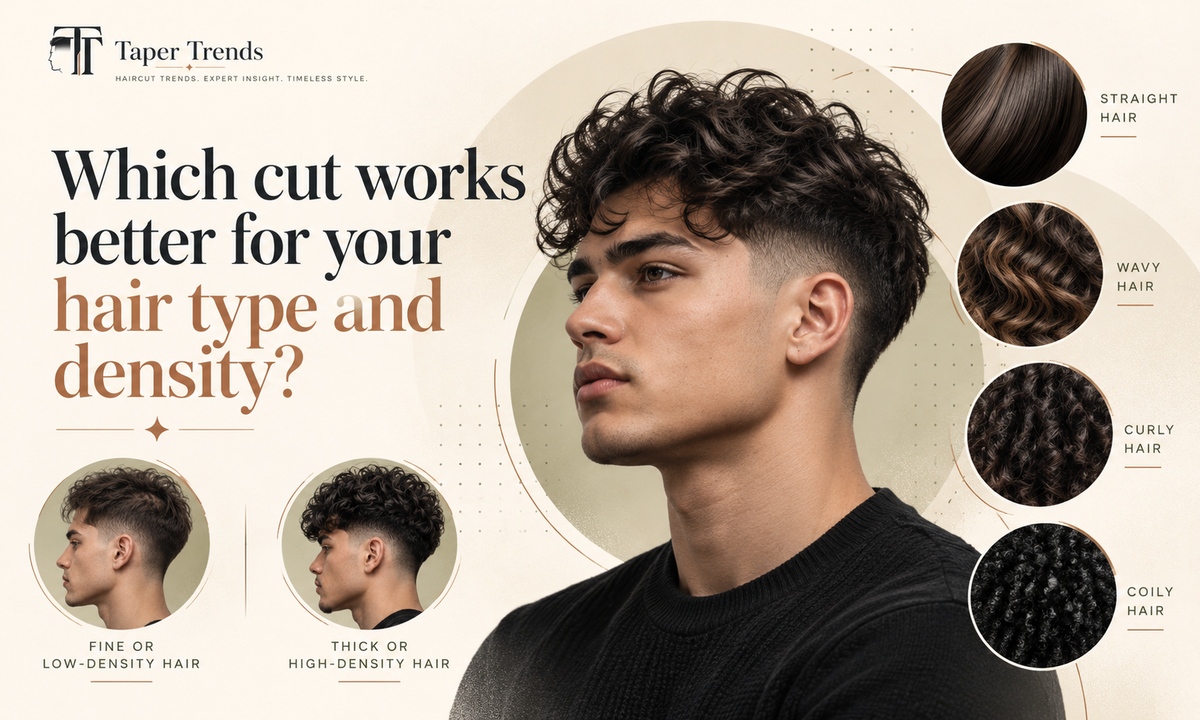
Which cut works better for your hair type and density?
Neither a burst fade nor a taper fade belongs to one hair type. Texture changes how visible the transition looks, and density changes how much scalp shows through the short areas. Pick the cut for the contrast and side weight you want, then let your barber adjust the finish for your hair.
Straight and wavy hair
Straight hair shows a fade's edges with almost no softening, so a burst's arc and a taper's hairline both read as crisp shapes. That precision is the appeal, and also why small blending errors show. Our burst fade for straight hair guide ranks the tops that carry that precision best, and our drop fade for straight hair guide does the same for the curve behind the ear.
Wavy hair blurs the boundary between short and long sections, which softens either cut. A taper's retained side panel holds wave movement well, while a burst stays readable on wavy hair because the curve carries the shape.
Curly and coily hair
On curly hair, volume on top frames a burst's arc and makes the curve stand out — the pairing our burst fade for curly hair guide covers in full, including shrinkage and side weight. A taper keeps more curl through the sides, which suits anyone who wants less scalp showing overall.
Coily hair works with both cuts. Tighter coils shrink well below their stretched length, so the top often sits closer to the head than its cut length suggests, and that changes how strong the fade contrast looks. Blending short, dense coils smoothly takes practice, so a barber who cuts tight curl patterns regularly is worth seeking out; our burst fade guide for Black men runs through the styles and bump-safe finishes for coils, twists, and locs.
Fine or low-density vs thick or high-density hair
Strand thickness and density are different things. Thickness is how wide each hair is; density is how many hairs grow in a given area. Low-density hair shows more scalp through the short sections of either cut, so even a shadow finish can look higher-contrast than expected. High-density hair holds more visual weight on the sides, which makes a taper's retained panel look full and gives a burst's arc a strong outline against the hair around it.
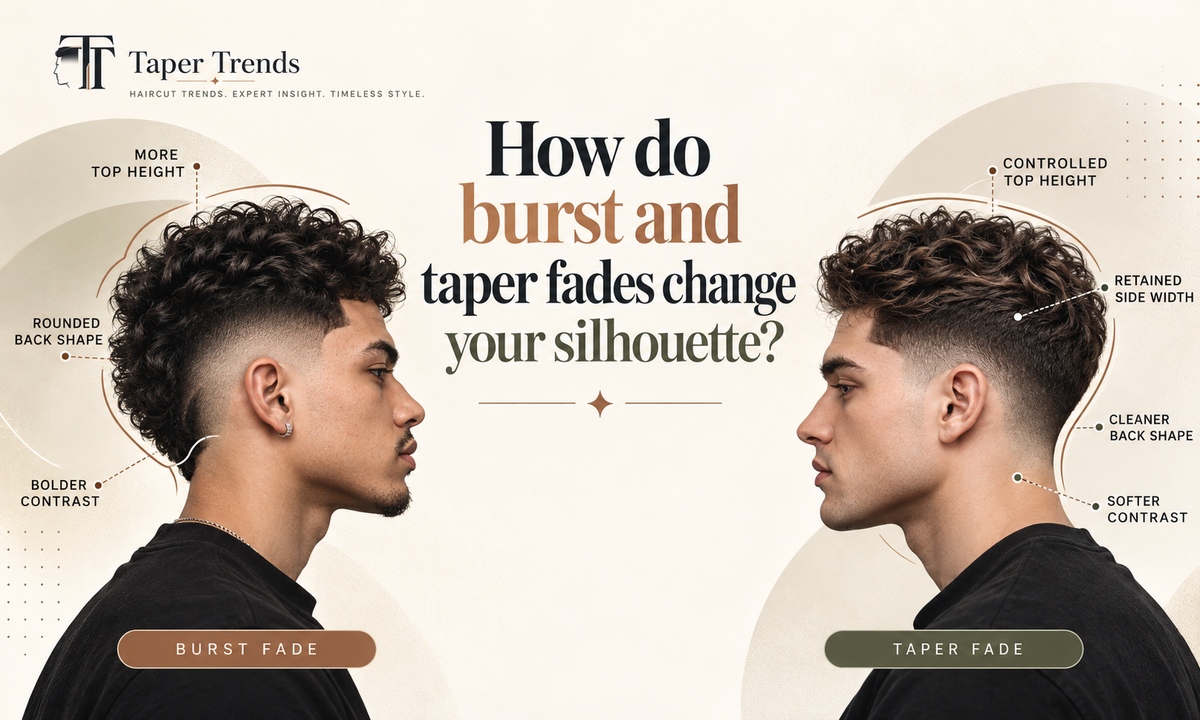
How do burst and taper fades change your silhouette?
Neither cut is tied to a face shape. What changes how your head and face look is top height, how much width the sides keep, the shape of the back, and how sharply the short areas contrast with the rest. Those levers matter more than which fade name goes on the booking.
Face shape is a modifier, not a rule
Face shape can guide choices without dictating them. More top height reads as added length. More retained side width reads as added structure. Sharper contrast pulls the eye toward the outline of the head and the ears. Use those effects on purpose instead of following a “round face needs X” formula, because your hairline, head shape, ears, and beard all interact with the fade too.
Top and back style pairings
The rest of the haircut usually shapes the final look more than the fade does. A burst fade pairs most often with mohawks, faux hawks, mullets, and blunt-fringe shapes like the burst fade Edgar, since those styles depend on the crown and nape length the arc leaves behind. A drop fade mullet can keep that length too, but only if the barber stops the drop behind the ear.
A taper suits styles built on horizontal movement or natural volume: a flow, a side part, curls, an afro, or a simple crop. The perimeter stays clean while the rest of the head keeps its shape.
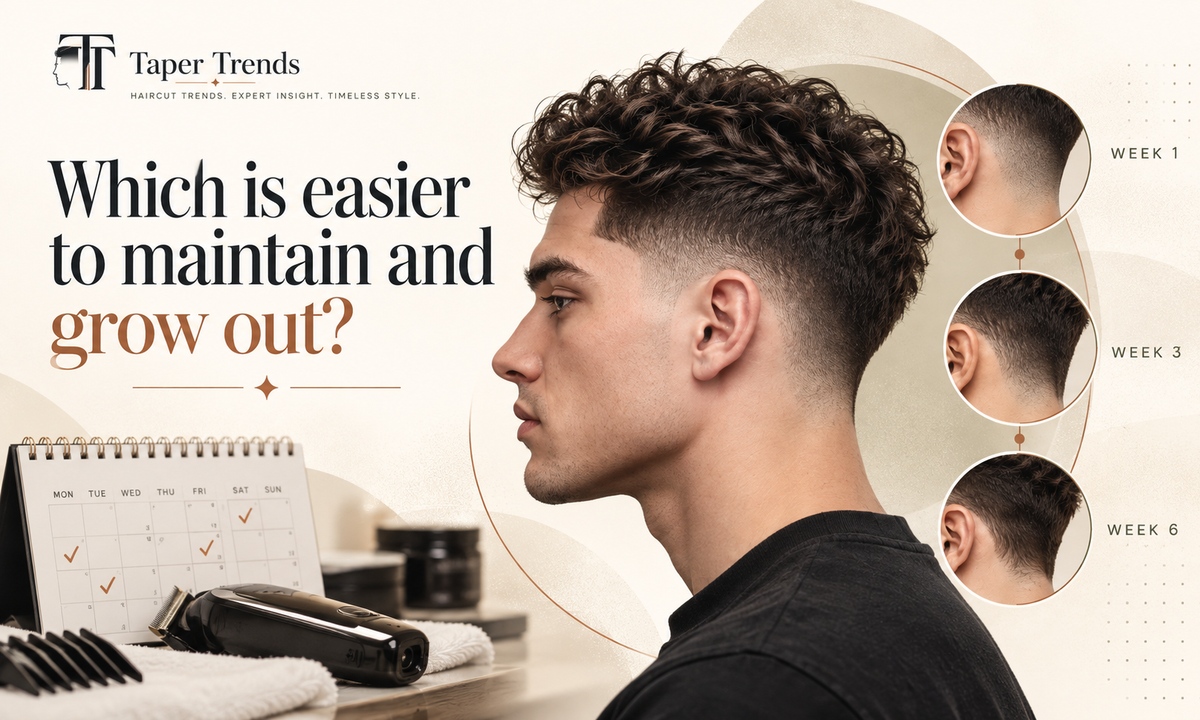
Which is easier to maintain and grow out?
Neither cut is low-maintenance at a close finish; they just lose sharpness in different places. A burst softens first behind the ear, where the arc is shortest, and a taper loses definition at the neckline. Skin versus shadow affects how fast either looks grown out more than the cut's name does.
The full arc on a burst fade blurs noticeably by week three or four, and clients who want it at its sharpest tend to rebook every two weeks. A taper fade is described as high-maintenance too, since it grows out quickly and the neckline is the first thing to go. Our guide to how often you should get a haircut sets both against every other cut.
Why base finish matters more than the label
Comparing a skin burst with a shadow taper tells you about finishes, not shapes. A skin finish shows regrowth first because it starts with the most contrast to lose. A shadow finish starts with less, so the same growth is harder to notice. If low upkeep is the priority, a shadow or zero finish at a low height will buy you more time with either cut.
What changes week by week
Healthy scalp hair grows about half an inch a month, roughly an eighth of an inch a week, though rates vary from person to person. For a fresh fade, that usually looks like this:
- Day 0: The arc or the hairline is crisp against skin or shadow.
- Around week 2: A skin finish has a small amount of regrowth, close to the length a low guard leaves on many clippers. The sharpest edges soften first, and the transition starts to look blended rather than cut.
- Weeks 3 to 4: Contrast drops further. A burst's arc and a taper's neckline both lose their outline.
- Week 4 and beyond: Most close finishes need a cleanup, though a shadow finish or lower placement can stretch that.
Which should you choose?
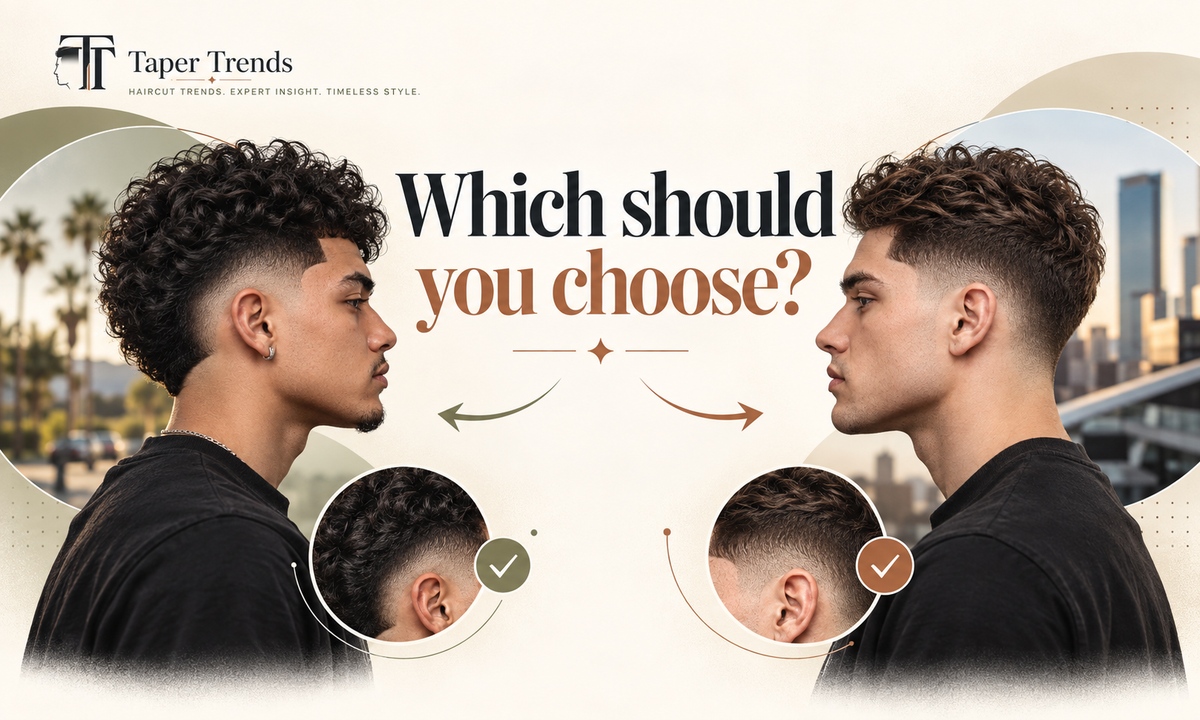
Choose by the shape you want to see in the mirror. A burst fade suits someone who wants a visible curve around the ear with length kept at the back. A taper fade suits someone who wants clean edges without giving up volume on the sides. Neither is better; they solve different problems.
Choose by the result you want
| If you want | Ask for |
|---|---|
| A subtle, office-friendly outline | A low taper, with a shadow finish |
| The fade itself as a style feature | A burst — decide how high the arc should climb |
| Growing a mullet, mohawk, or faux hawk | A burst, which keeps the back length those styles need |
| Curls, waves, or a side part that keeps their width | A taper, which leaves the side panel alone |
| Fewer barber visits | Either cut, low, with a shadow finish |
If height is the piece you're still deciding, our low taper vs high taper fade and mid taper vs high taper fade comparisons walk through how much scalp each height shows and how it grows back.
Work, school, and dress codes
A lower, softer finish tends to draw less attention in conservative settings, but a written grooming policy decides what's allowed, not the haircut's name. If a school or employer has rules about hair, read them rather than assuming either fade qualifies.
How to ask your barber for the cut you want
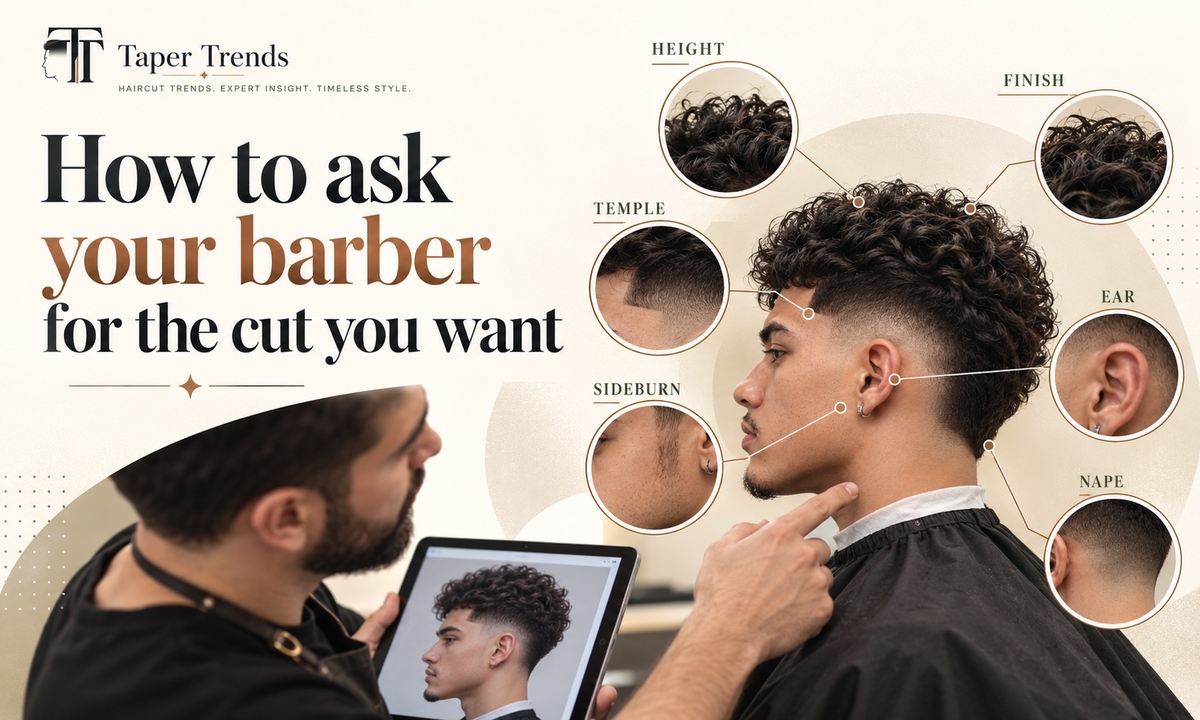
Saying “burst fade” or “taper fade” on its own leaves too much open. Tell your barber the shape, the height, the shortest finish, what happens at the back and nape, and what you want on top, then show a side photo and a rear photo of the cut, following the steps in our guide on how to ask for a fade.
Five things to specify
- 1The geometry. Name the ear as the reference point for a burst, or the sideburns and neckline for a taper.
- 2The height. Say low, mid, or high so the barber knows where the short work starts.
- 3The finish. Say skin, zero, or shadow, separately from height. Skin removes all visible hair, a zero leaves light stubble, and a shadow keeps a soft, visible layer.
- 4The back and nape. Say whether they stay long, get partly tapered, or match the sides. This is the detail people most often leave out.
- 5The top and edges. Describe the top length and texture, and say whether you want a sharp line-up or a softer, natural edge.
Bring photos of hair with a texture and density like yours.
Burst fade request template
“I’d like a [low/mid/high] burst fade curving around my ear, finished at [skin/zero/shadow], with [amount] kept at the back and nape, and [length and style] on top.”
Taper fade request template
“I’d like a [low/mid/high] taper at my sideburns and neckline, finished at [skin/zero/shadow], keeping the sides at their natural length, with [length and style] on top.”
Common mistakes that change the result
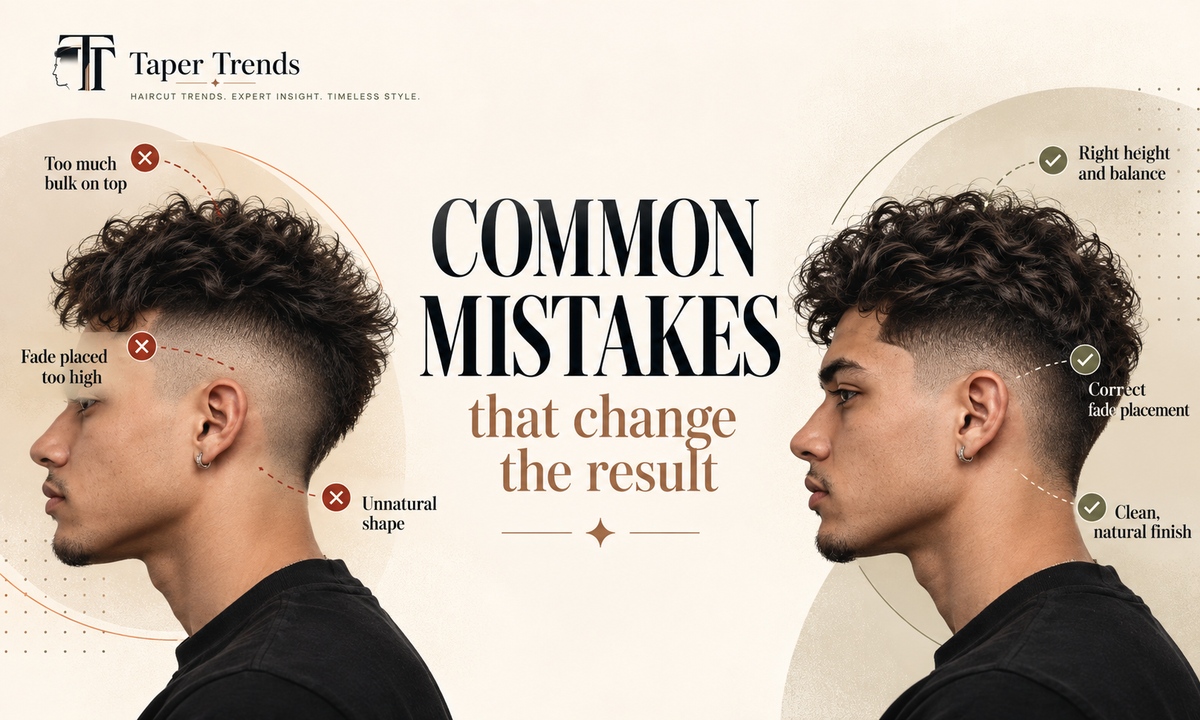
Most disappointing haircuts come from describing the cut by name only. The usual gaps:
- Saying only “taper fade” or “burst fade.” Add height, finish, and what happens at the nape.
- Assuming a burst means shaved to skin. It doesn't; ask for zero or shadow if you want hair left.
- Leaving the nape unmentioned. Length removed there takes weeks to return.
- Bringing only a front-view photo. From the front, a burst and a taper can look almost identical.
- Treating guard numbers as universal. Sizes don't always match across clipper brands, and the same length looks different on different hair.
- Letting the arc travel too far. If you want back length for a mullet or mohawk, say so, or a burst can drift into a drop fade.
What if neither cut is right?
If a burst feels too bold and a taper too plain, a nearby technique might fit. These mostly change where the fade line travels, not how short it gets.
Drop fade
A drop fade runs around the head and dips lower behind the ear before continuing to the neckline. A burst centers on the ear; a drop keeps going around the back, and our drop fade vs burst fade comparison covers that choice in full. Our low taper drop fade guide covers the softer, low-contrast version of that same arc, our low drop fade guide covers the fuller fade at the same height, our mid drop fade guide starts that arc near the temple, our high drop fade guide starts it well above the ear, and our drop fade guide for Black men shows it under waves, coils, an Afro and locs.
Temple fade
A temple fade keeps the short work at the front, near the temple and sideburn, and doesn't necessarily touch the nape. Some shops use “temple fade” and “taper fade” interchangeably, so confirm whether the neckline will be cleaned up too — our guide to every kind of fade haircut covers the temple, Brooklyn, and blowout naming in full.
Full low or mid fade
A full low or mid fade grades the entire side and back continuously. It covers far more area than a burst's arc or a taper's edge work, and it gives up most of the side weight both of those keep.
Frequently asked questions
Is a burst taper the same as a burst fade?
Not necessarily. “Burst taper” isn’t a standardized term, and some barbers use it for a burst-shaped arc combined with extra tapering at the nape or a softer blend overall. “Burst fade” more often means the arc alone. Ask your barber to point out where the short work will go instead of relying on either label.
Does a burst fade always leave the nape long?
No, though it usually does. Keeping length at the back is common with a burst because the arc curves down toward the neckline instead of running straight across it. A barber can still taper the nape if you ask. That’s a separate decision from the arc itself, so state it before the cut starts.
Is a taper fade the same as a temple fade?
They overlap, but they aren’t always the same. A temple fade concentrates the short work at the front of the side, near the temple and sideburn. A taper fade, as defined here, also cleans up the neckline. Some barbers use the terms interchangeably, so confirm which areas will be shortened.
Can I switch between a burst and a taper later?
Going from a taper to a burst is usually easy, because a taper leaves the side panel long enough for a barber to cut the arc. Going from a burst to a taper takes longer, since the hair behind the ear has to grow back toward the length of the surrounding side. At roughly half an inch of growth a month, a close-cut arc can take a few months to blend back in.
Does a burst fade still show with a short top?
Yes, but it reads as a detail rather than the main feature. With a short top, the burst shape is still there but looks subtle. The curve stands out most against a longer or fuller top, such as a mohawk, a mullet, or a textured crop.
Do I need a specialist barber for a burst fade?
Usually not. A burst uses the same fading technique as other fades; only the guideline shape changes. A barber who is strong at standard fades can typically learn it in a few practice sessions. Still, look at a barber’s portfolio for curved fades before booking, since the arc has to match on both sides.
Before you book
Compare geometry, not labels. A burst curves around the ear, a taper stays at the sideburns and neckline, and either can finish at skin, zero, or shadow.
Settle the shape, height, finish, nape, and top before you sit down, and bring side and rear photos of hair like yours. That brief will do more for the result than any haircut name.
Want more fade guides?
Browse clean, barber-ready breakdowns for every fade shape and hair type.