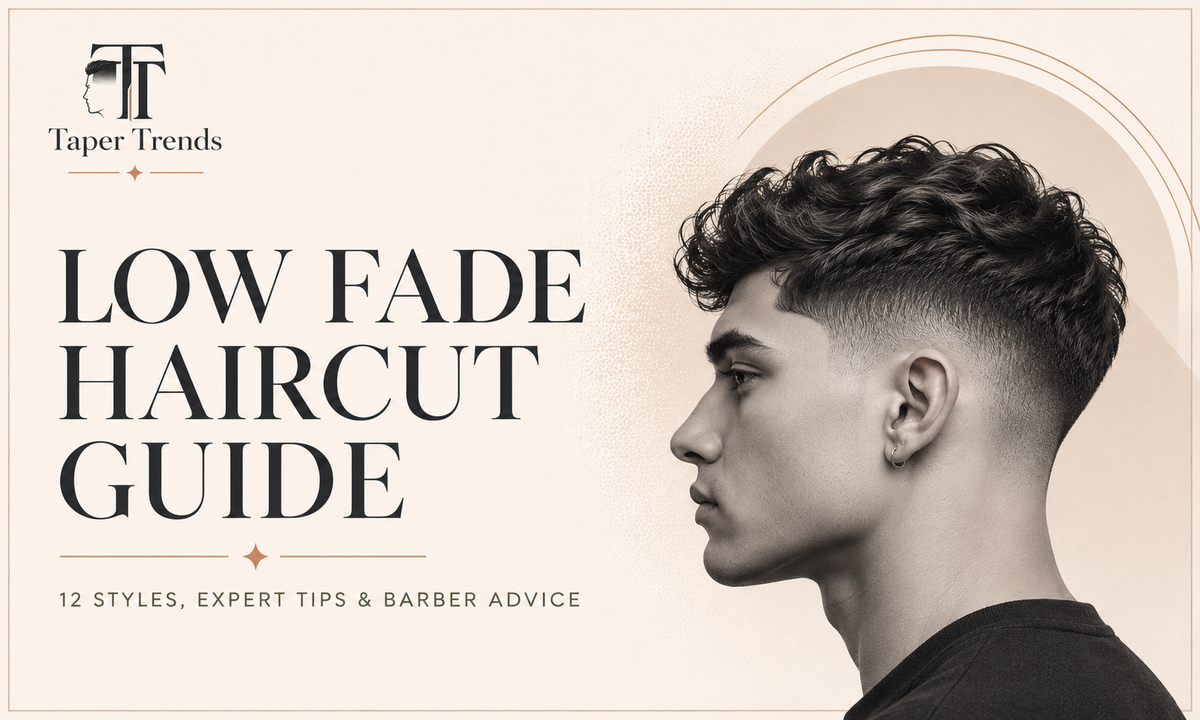
A low fade haircutkeeps the shortest hair close to the ears and neckline, then blends it into longer hair above. Most of the side hair stays, so the cut looks clean rather than dramatic, and it pairs with anything from a buzz cut to a pompadour. The catch is vocabulary: “low fade” tells your barber where the blend starts, not how short it goes or what happens on top.
This guide covers the low fade on its own terms. If you're still choosing a height, low vs mid vs high fade compares all three; if you want the softest version of the cut, the low taper fade guide covers it in depth; and types of fade haircuts maps every fade name you're likely to hear.
What is a low fade haircut?
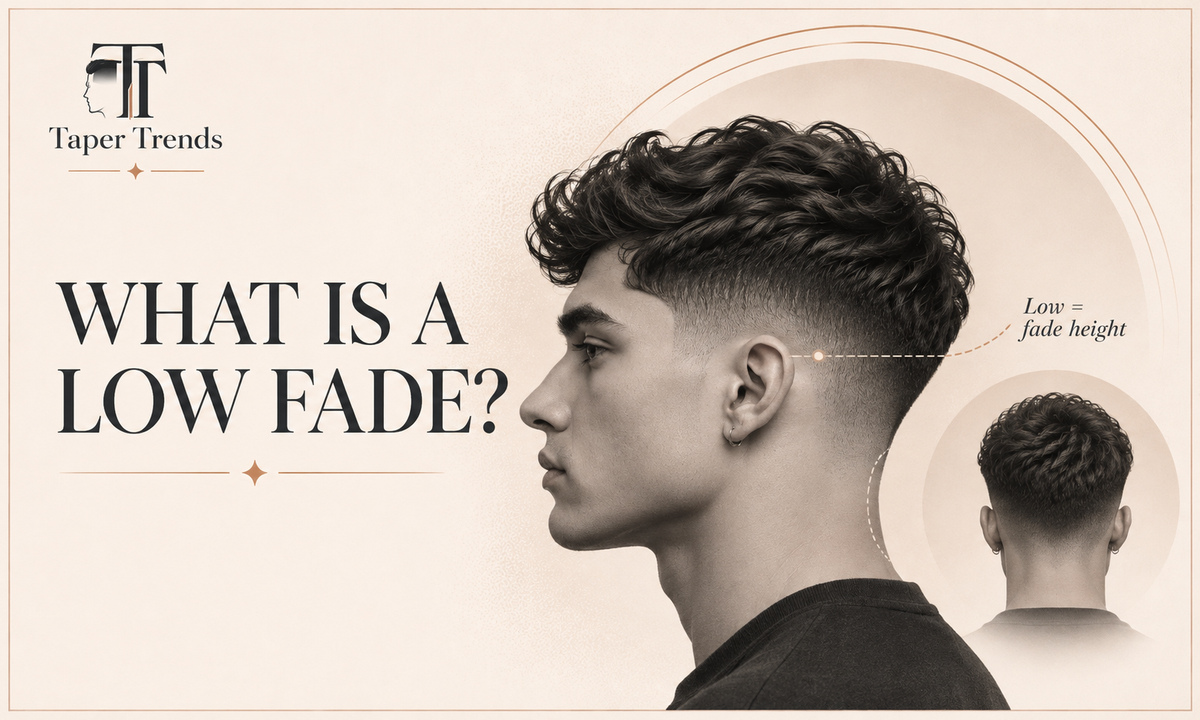
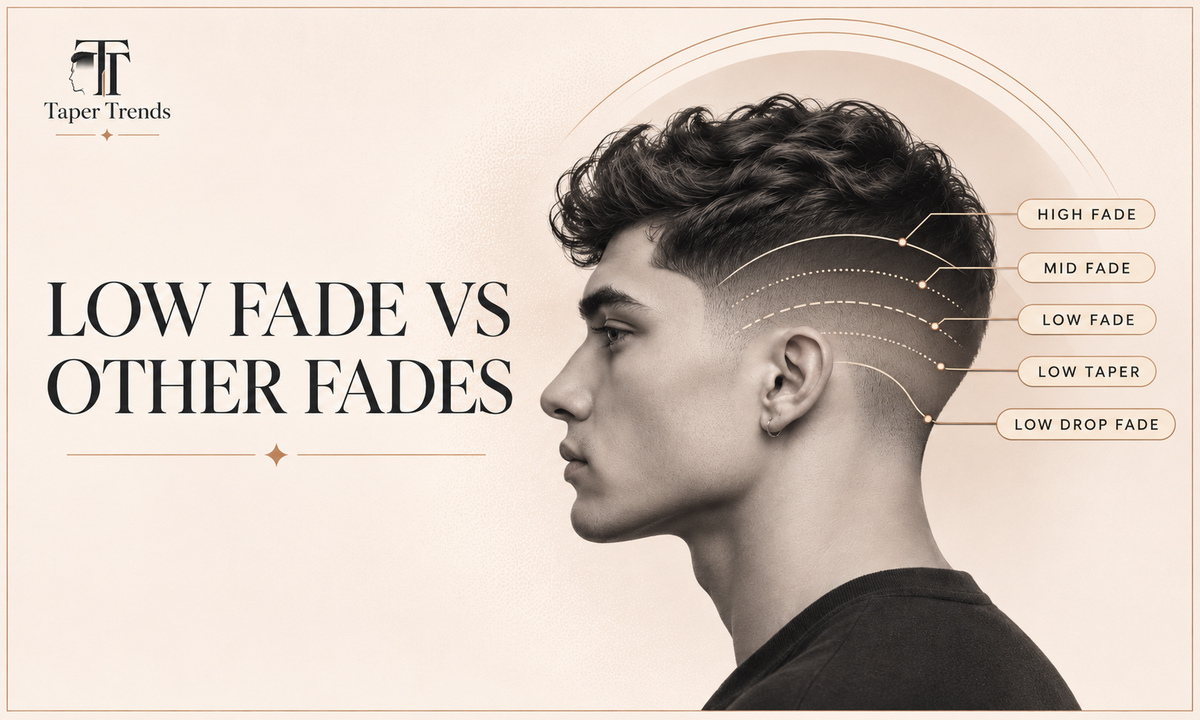
A low fade is a graduated haircut in which the sides and back get shorter toward the ears and neckline, with the blend starting just above the ear. Hair above that band stays longer. Fade height, shortest length and top style are three separate choices.
Wahl separates low, mid and high fades by where the fade line starts on the side of the head. Sources disagree slightly on the exact low-fade starting point. Hair.com puts the start about an inch above the ears, while Haircut Inspiration suggests asking for roughly half an inch. Treat that as a range and point to the spot on your own head. The free taper height diagram marks the low, mid and high zones if you want to see them before your appointment.
What does a low fade look like from the side and back?
From the side, a low fade shows a narrow band of very short hair around the ear that gets longer as it rises. From the back, the same band runs along the neckline and meets the fuller hair above. In a well-cut low fade, you cannot see a line where one length changes to the next. Our walkthrough of what a low taper fade looks like shows the softer cousin from the same angles.
Wahl's guard-size guide gives a simple example: a #1/2 guard on the lower sides and back, with a #2 on the upper sides. If guard numbers are new to you, haircut numbers explained lists every size.
Does “low” describe the fade height or the shortest length?
“Low” describes where the fade starts, not how short the hair gets. The shortest length is a separate decision: bare skin, a very close guard, or a longer guard such as a #1. Two low fades can look quite different if one finishes at skin and the other keeps visible stubble.
- A low skin fade takes the bottom of the blend to bare skin, usually with a foil shaver, open blades or a razor. Contrast is sharp. See skin fade and low vs mid vs high skin fade.
- A low #1 fade stops at a #1 guard, which Wahl describes as a short buzz, so the blend looks softer. That stubble finish is what barbers call a shadow fade.
Wahl calls its #1/2 guard the shortest length outside of bald, which puts it between those two finishes.
12 low fade haircut styles to consider
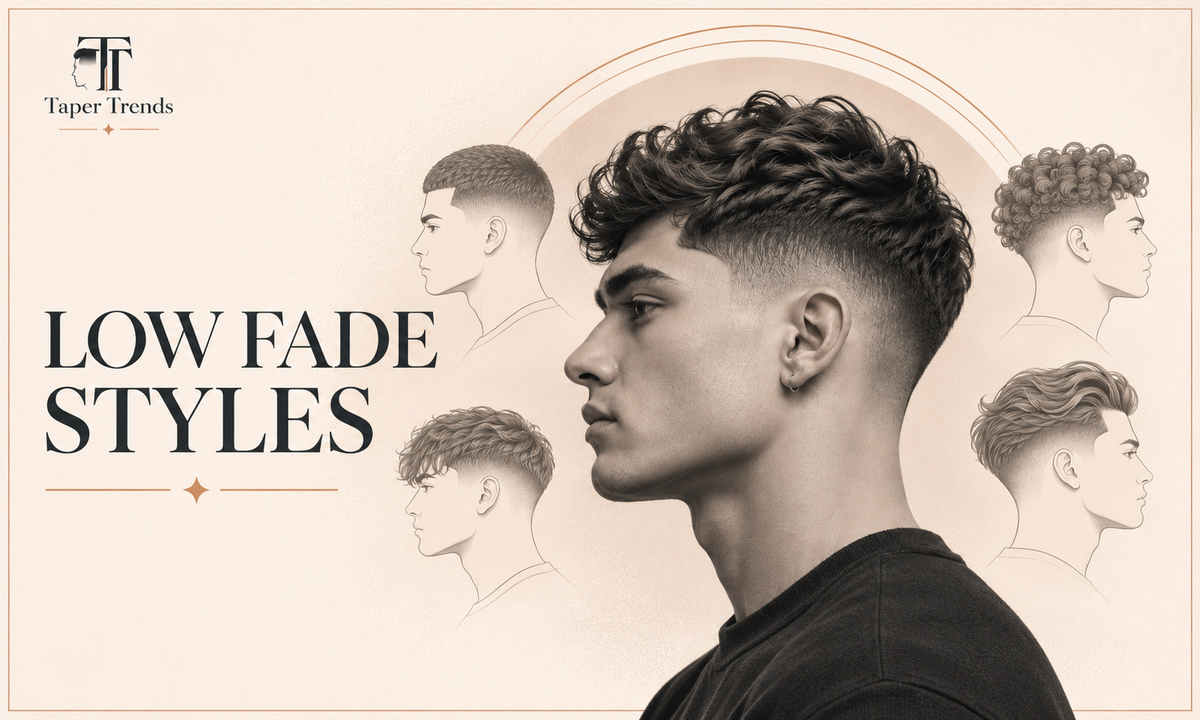
These 12 styles share the same low placement but differ in top length, texture and finish. Pick the group that matches your hair, then compare the three options inside it.
Short and sharp low fades
Short low fades need almost no daily styling. They differ in side contrast and top length.
Classic low fade
The sides blend from a guarded length into a short, combable top. Hair.com notes a low fade can be as edgy or conservative as you like; this is the conservative end. The short hair low taper fade shows similar short tops.
Low skin fade
Here the bottom of the blend drops to bare skin. Hair.com describes skin fades as a dramatic, tiered look, because exposed scalp makes the gradient easy to see. Skin fade vs taper fade compares the finish with a softer one.
Buzz cut with low fade
A plain buzz cut is one short length all over. Wahl's fade guide describes a buzz cut fade as still very short but with more tapering on the sides and back. See the low taper fade buzz cut for guard pairings.
Textured and fringe low fades
These keep enough hair on top to show movement. They differ in fringe position and top separation.
Textured crop with low fade
Short layers on top create visible separation, so the hair looks tousled rather than combed flat. Neat sides make the mess look deliberate. The textured fringe with a low taper fade is the closest match.
French crop with low fade
The top is cut and pushed forward to frame the face, as Haircut Inspiration shows, above neatly faded sides. More versions are in the French crop low taper fade guide.
Low fade with messy fringe
The same gallery pairs a low drop fade with longer, wavy hair on top. Clean sides draw the eye to the looser, softer fringe, so it suits hair with natural movement, like the low taper fade fringe.
Curly and coily low fades
A low fade can leave curls, coils or waves intact on top while cleaning up the sides and neckline.
Curly top with low fade
Hair.com notes that the barber trims away the curls everywhere except the top, leaving fewer to manage, with a little gel to hold the rest. Compare the curly low taper fade and the drop fade on curly hair.
Low fade afro
A low fade gives a short afro a clean perimeter while the top keeps its natural volume. Hair.com suggests the pairing especially for men with a strong jawline. See the low taper fade afro for shapes.
Low fade with waves
A fade does not create waves; those come from your hair's pattern and care. The low fade cleans up the sides so an existing pattern is easier to see, as in the low taper fade with waves.
Longer-top low fades
These pair the low blend with enough length to part, sweep back or lift, so styling and product matter more.
Side part with low fade
Long hair on top with a crisp side part over faded sides is what Hair.com calls a disconnected undercut. It looks at home with a suit. The side part low taper fade and low taper comb over show the softer take.
Slick back with low fade
Wahl's slick back guide describes the style as longer hair on top pulled back. Hair.com advises asking your barber for a product recommendation before committing, and ideally a quick styling lesson. See the low taper fade slick back.
Low drop fade with pompadour
In a pompadour, the longest hair sits at the forehead and is combed straight back. A low drop fade adds a curve: the fade line swoops back and down toward the neckline instead of running level around the head. For lift without the drop, try the blowout taper fade or the low taper fade blowout.
Which low fade suits your hair type and face shape?
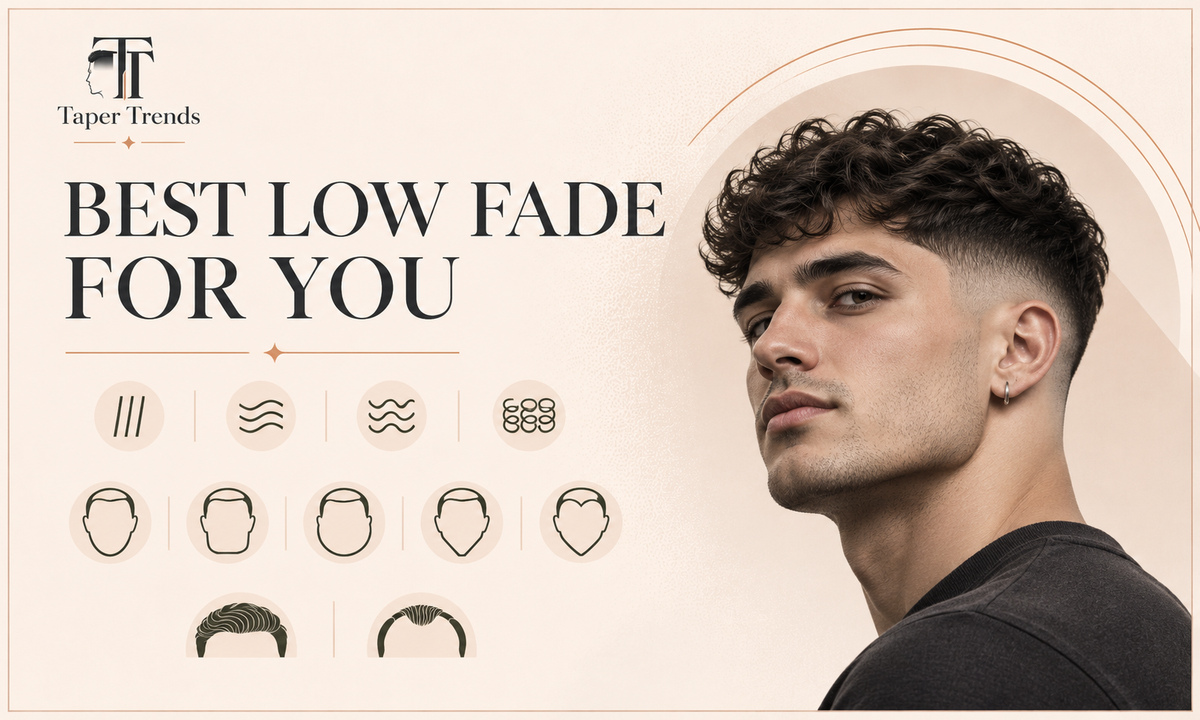
The best low fade depends on your hair texture, density, head shape and the top style you want, not on a single universal rule. Match the top to how your hair naturally behaves, keep the fade low if you are unsure, and treat face-shape advice as a starting point, not a measurement. The hair type quiz helps if you're not sure where your texture falls.
Best low fades for straight, wavy, curly and coily hair
Choose the top first; the low fade adapts to any texture.
| Hair type | Tops that pair well | What to check |
|---|---|---|
| Straight | Side part, pompadour, messy textured cut | A clean blend, since straight hair shows every line |
| Wavy | Longer, free-flowing top | Enough length left for movement |
| Curly | Forward-facing crop, such as a Caesar or French crop | Weight removed from the sides, volume kept on top |
| Coily | Afro, twists or locks on top | A barber with real experience fading coily hair |
These pairings come from former barber Nick Hall's taper fade guide for Man of Many. Hall advises checking a barber's portfolio for Afro-textured work, because dense, coarse hair can be harder to fade cleanly. Our low taper fade for Black men and low taper fade with locs guides cover what to look for.
How face and head shape affect a low fade
Face shape changes how top height and side fullness read, but no fade is guaranteed to flatter one shape. Haircut Inspiration suggests pompadours, quiffs or messy crops to add height on round faces, and says oval faces can wear almost any variation. Judge every reference photo against your own profile. The face shape detector gives you a starting point, and the best fade for your face shape guide goes shape by shape.
Can a low fade work with thin or receding hair?
Yes, but a low fade changes contrast, not density. Clean sides with a textured top can pull attention from the hairline, but a fade will not add hair or slow hair loss, so ask how much length to keep on top.
Salena Dowdy, a master cosmetologist and trichologist interviewed for a Hims article syndicated by Stacker, says faded sides and back can draw attention away from the hairline. If the hair loss itself worries you, a board-certified dermatologist can find the cause and talk through treatment. For cut ideas, see haircuts for a receding hairline and the thin and thick hair guide.
Low fade vs. low taper, mid fade, and high fade
These cuts differ in three ways: how far around the head the short hair travels, where the blend begins, and how short it finishes.
Low fade vs. low taper
A low fade blends a band of short hair all the way around the lower sides and back, while a low taper mainly shortens the sideburns and neckline. Barbers use these words differently, so confirm the shape with photos.
Hall describes a taper as a gradual change usually noticeable only at the sideburns and neckline, and a fade as one that goes around the entire head. StyleSeat adds that tapers usually leave more hair on the sides than fades do, and that many people, barbers included, use the two terms interchangeably. Our low taper vs low fade comparison puts the two side by side, and taper vs fade explains the difference at every height.
Low fade vs. mid and high fades
Low, mid and high fades differ by where the blend begins. The higher the start, the more scalp shows and the stronger the contrast. Our mid fade haircut guide covers the next height up.
| Low fade | Mid fade | High fade | |
|---|---|---|---|
| Blend starts | Close to the ear | Above the ear, below the temple | Around the temples |
| Contrast | Softest | Moderate | Strongest |
| Best fit | Subtle, versatile looks | A sharper shape without going high | Short tops, tight curls, textured crops |
| Trade-off | Less dramatic | Regrowth shows sooner than a low fade | Can feel too bold for conservative settings |
The mid and high columns follow Hall's guide, which applies the same height logic to tapers.
For the full breakdown, read low vs mid vs high fade. The same logic runs through the taper comparisons: low taper vs mid taper, low taper vs high taper, and the in-between low mid taper fade. If you decide to go higher, the mid taper fade and high taper fade guides pick up from there.
Low skin fade vs. low drop fade
A skin fade describes the shortest finish, while a drop fade describes the shape of the fade line. A low skin fade ends at bare skin. A low drop fade curves down behind the ear toward the neckline. One haircut can be both. The low drop fade and drop fade guides cover the curve, and the taper low burst fade shows another shape that starts at the same height. Different kinds of fades lines all of these up together.
What should you ask your barber for a low fade?
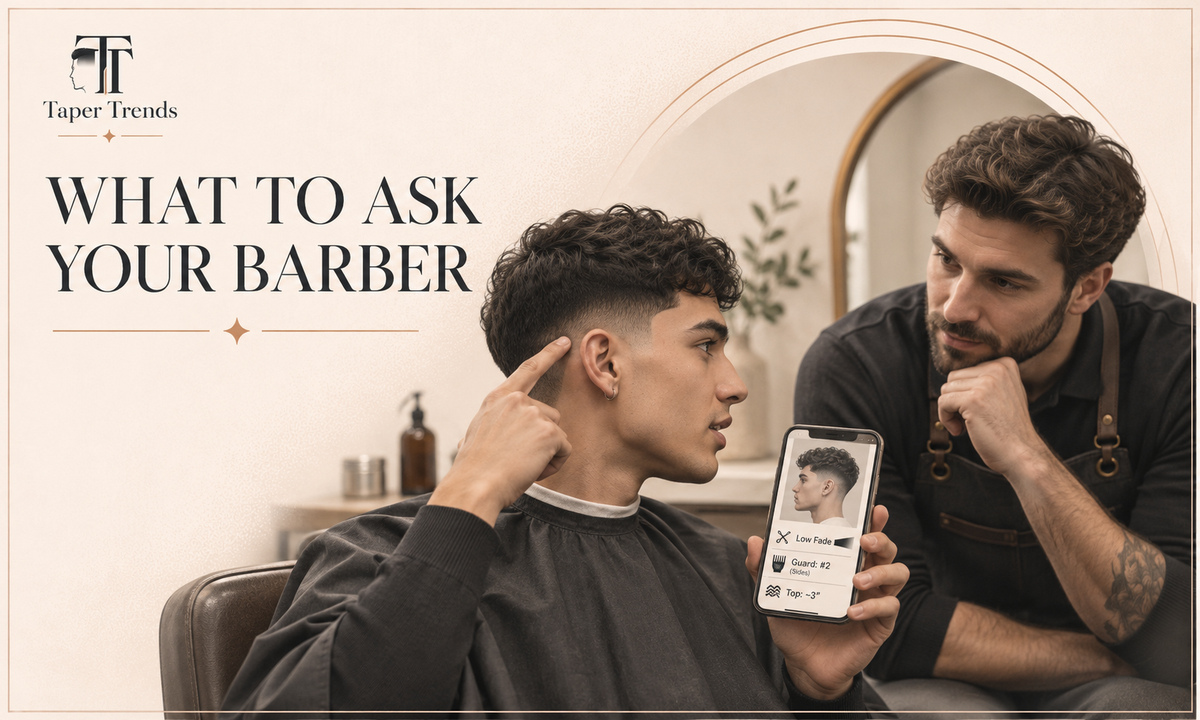
Agree on four details before the clippers start: fade position, shortest length, top length and neckline. Bring front, side and back photos, and start lower than you think you want. As Hall puts it in his guide, a barber can always take a fade higher, but nobody can put the hair back. For scripts covering every fade type, see how to ask for a fade.
A four-part script for describing your low fade
Give the details in this order: position, shortest length, top, then neckline. Leading with position keeps the fade from drifting high. Ask your barber to repeat the plan back.
- Position. Low, starting close to the ears and wrapping around the back, not only the sideburns.
- Shortest length. Bare skin or a guard number. Skin looks sharper but shows regrowth sooner.
- Top. Describe what you want to do with it: part it, push it back or leave it textured.
- Neckline. Tapered or squared off. Hall recommends tapering, which he says helps the nape and sideburns grow out more naturally.
A sample request:
“I'd like a low fade around the ears and back, blending down to a number one rather than skin. Keep the top long enough to push back, taper the neckline, and start the fade low so we can raise it if needed.”
Swap in your own guard number and top length. The barber brief generator builds the same request from your answers, and barber terms explained decodes anything your barber says back.
Which guard number and top length should you request?
Ask for the shortest length by guard number or by skin, and describe the top by what you want to do with it. On Wahl clippers, a #1/2 cuts to 1/16 inch, a #1 to 1/8 inch and a #2 to 1/4 inch. Guard numbers vary between clipper brands, so check your barber's.
| Wahl guard | Cutting length | How Wahl describes it |
|---|---|---|
| #1/2 | 1/16 in (1.5 mm) | Shortest guard outside of bald |
| #1 | 1/8 in (3 mm) | Short buzz |
| #2 | 1/4 in (6 mm) | Traditional buzz |
| #3 | 3/8 in (10 mm) | Longer buzz; a fade can climb to here |
Lengths come from Wahl's #1/2 guide comb and 10-piece comb set product pages. Wahl's guard-size guide says a fade can climb from a #1/2 at the bottom to a #3, and that the clipper's taper lever adjusts closeness between guard sizes. So ask for “down to a #1” rather than one number for the whole fade.
For the top, the same guide links a #6 to enough length to part the hair and a #7 to side parts and Caesar cuts. A #8, at one inch, is the longest standard clipper guard. Anything longer is usually cut with scissors, so bring a photo. The clipper guard sizes tool converts every number to inches and millimeters, and scissor cut vs clipper cut explains when the top needs shears.
How do barbers cut a low fade?
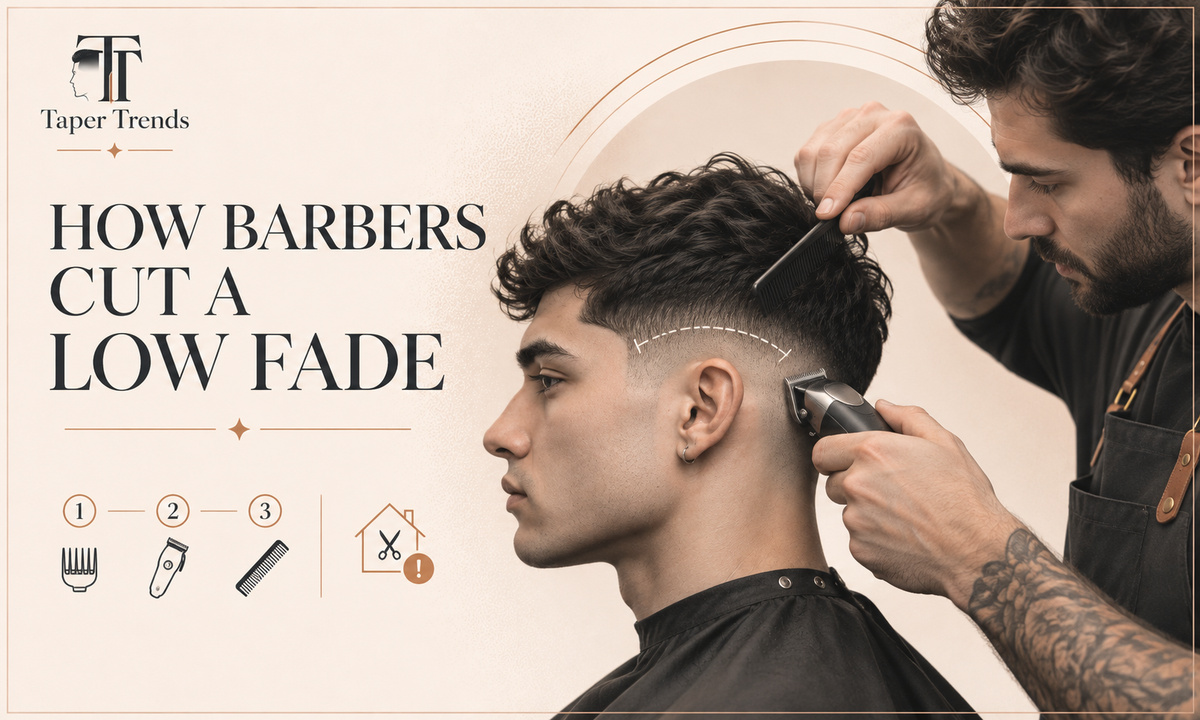
Barbers set a low guideline, step the length up through shorter and longer guards and taper-lever positions, blend away any visible lines, then detail the edges. Methods vary by barber, clipper and texture.
The usual low fade cutting process
Wahl UK's fading tutorial, led by Wahl educator Sam Campagna, shows one professional version.
- Assess and confirm. The barber checks growth direction, density and head shape, then confirms your plan.
- Set the guideline. Campagna starts with a #1.5 guard and the taper lever closed to create the base line, then takes the line down further with an unguarded clipper.
- Fade up. A #1 guard, first with the lever open and then closed, blends upward toward the transition.
- Remove leftover lines. A #0.5 guard, then open blades with no guard, softens any visible edge.
- Detail and finish. A trimmer lines up the edges, and a razor can shape the perimeter.
The result should show no visible steps. Check the back in a hand mirror before you leave.
Can you cut a low fade at home?
Yes, but it is hard to do on yourself because you cannot see the back, where an uneven blend shows most. Wahl recommends a well-lit bathroom, a good mirror and starting with a larger guide comb, since you can always go shorter. Ask someone to check the back before you finish. Our step-by-step how to cut a fade guide covers the full process, and best clippers for fades compares the tools.
How do you style and maintain a low fade?
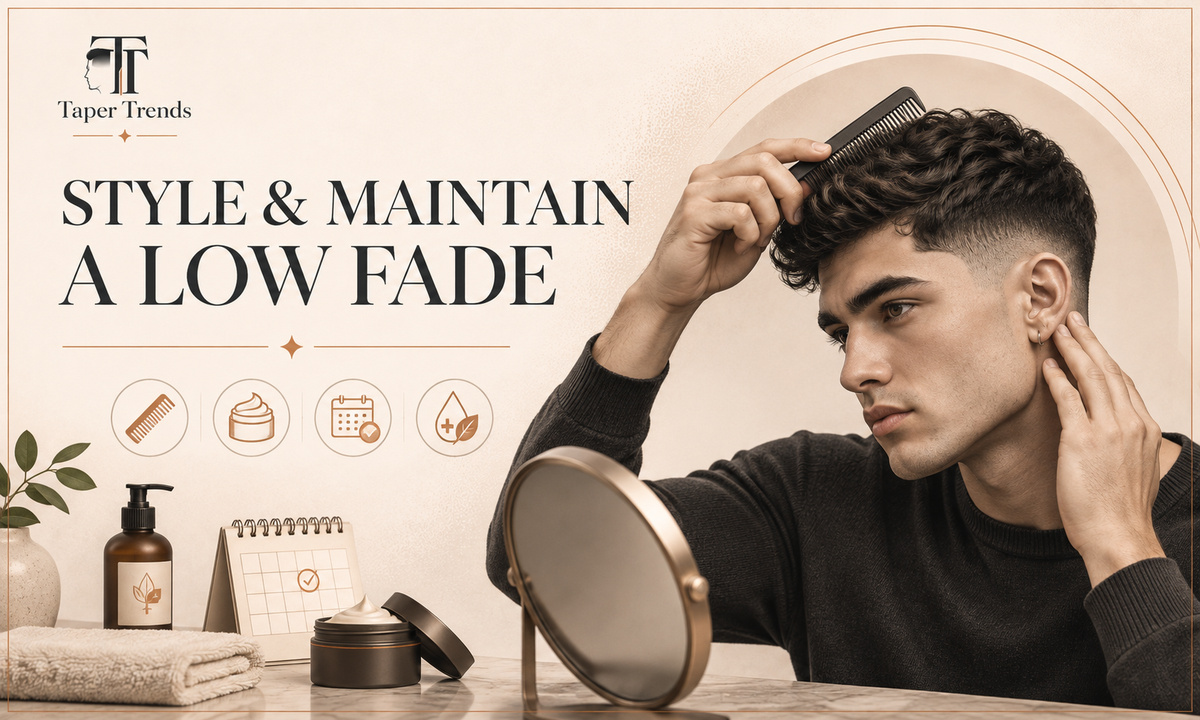
Styling depends on the top hairstyle, while maintenance comes down to keeping the lower blend and neckline clean.
Daily styling by hair texture
Style the top to suit its texture and the finish you want. Wahl notes that product can either add texture or smooth hair down for a sleeker look, so pick the finish first.
- Straight or wavy, textured: Haircut Inspiration suggests a blow-dryer or diffuser to build texture, and Hall recommends a small amount of matte paste or styling cream.
- Sleek parts and slick-backs: use enough product to smooth the top and no more. Hall warns that overloading the top with wet-look product works against you.
- Curly or coily: stick with the moisture and definition routine you already use. The fade changes the sides, not the top.
For routines by top style, see how to style a low taper fade, and best hair products for fades matches a paste, clay or cream to each finish.
When to schedule low fade touch-ups
Published guidance runs from about two to four weeks, depending on how fast your hair grows and how crisp you like the edges. Hall suggests a clean-up every two to three weeks for mid and high fades, while Haircut Inspiration says most low fades need maintenance every three to four weeks. Skin finishes show regrowth first, so expect shorter gaps if you go to bare skin. The haircut frequency calculator sets a date for you, and how often to get a haircut compares intervals by style. If you'd rather let it grow, how to grow out a fade walks through it week by week.
How to reduce irritation from very close cuts
If you get razor bumps, ask for a guarded clipper finish at the neckline instead of a razor-close shave. The American Academy of Dermatology says shaving causes razor bumps and that letting the hair grow removes the cause. Persistent bumps warrant a board-certified dermatologist.
The AAD also warns that shaving the back of the neck and head can make acne keloidalis nuchae flare, and its self-care advice recommends haircuts that avoid shaving those areas and stopping pomade or hair grease. A close fade does not mean you will develop either condition. The advice applies if you are already prone to them.
Low fade haircut FAQs
Can a low fade blend into a beard?
Yes. Wahl UK's beard-fading guide starts with a guide comb one size shorter than the beard, trims from the bottom of the ear up to the sideburn, then switches to shorter combs and repeats until the sideburns match the haircut.
Related: Low taper fade with beard · Skin fade with beard · Drop fade with beard · Burst fade with beard
Can you keep a natural neckline with a low fade?
Yes. The neckline is a separate choice from the fade, so you can ask for it tapered or squared off. StyleSeat notes that a tapered neckline grows out most naturally, while rounded or blocked necklines need more upkeep to hold their shape.
Related: Taper haircut · Haircuts that grow out well · Barber terms explained
Will a low fade work with a cowlick or uneven hair growth?
Usually, as long as your barber knows where the cowlick is, so point it out before the cut. Wahl advises cutting a cowlick against its growth direction, and its guard guide recommends cutting against growth in general so every hair feeds through the guard evenly.
Related: How to cut a fade · Scissor cut vs clipper cut
Can you get a low fade without using a razor?
Yes. Clippers alone can finish a low fade, and Wahl calls its #1/2 guard the shortest length outside of bald. A razor gives a fully bare finish but adds the shaving irritation the AAD describes, so mention it if your skin reacts easily and ask for a clipper finish instead.
Related: Shadow fade · Skin fade vs taper fade · Clipper guard sizes
How long does a low fade haircut appointment take?
No standard time exists. It depends on hair thickness, the top style, how much edge work you want, and extras such as a beard blend or razor finish. Wahl UK's textured-fade tutorial alone runs to twelve steps. Ask when you book.
Related: How much to tip your barber · How often to get a haircut
What should you do if your low fade is cut too high?
Say so straight away, before the barber moves on to detailing. A fade cannot be lowered, but a barber can soften the blend, even out the sides or adjust the top to rebalance the shape. Otherwise, regrowth is the only fix. Next time, ask for a check after the first pass.
Related: How to fix a bad fade · How to grow out a fade · Barber brief generator
Sources named in these answers: Wahl UK's beard-fading guide and StyleSeat.
Is a low fade haircut right for you?
The bottom line
A low fade suits you if you want a visible blend without much scalp exposure, a top you can style several ways, and a finish that looks neat at work and on the weekend. If you want as little side hair removed as possible, a low taper is the better fit. A skin finish gives the sharpest contrast but needs more frequent touch-ups and may irritate sensitive skin.
Before you book, choose your top style, decide between skin and a guard length, and save front, side and back photos. Ask your barber to start the fade low, and note when it starts to look grown out so you can time your next visit. The barber brief generator and the low taper fade guide will help you put it together.
Keep reading
Fade heights and finishes
Low tapers and low fades
Low drop and burst fades
Low fades by hair type
Top styles over a low fade
Face shape, hairline and beard
Asking, cutting and upkeep
Want more fade guides?
Browse clean, barber-ready breakdowns for every hair type.