
Last reviewed October 27, 2026. Specifications and prices were checked against manufacturer pages on that date. We have not yet hands-on tested these clippers, and the methodology section explains what that means for each claim.
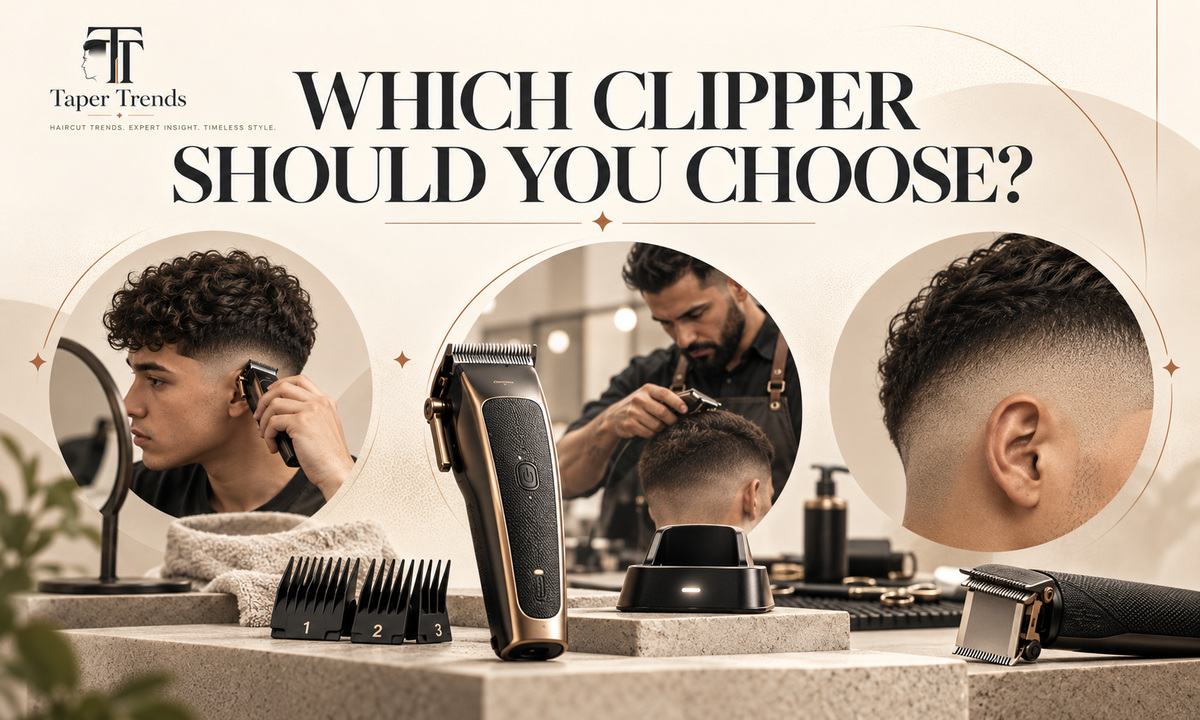
The best clippers for fades have an adjustable taper lever, a blade designed for blending, guards that stay put, and a body you can hold steady while working blind behind your own head. For most people, the Wahl 5-Star Cordless Magic Clip is the place to start. Choose the Wahl Vapor if skin fades are your main job, the Wahl Color Pro Lithium-Ion if you are learning at home, and the BaBylissPRO FXONE or JRL Onyx for long days behind the chair.
A clipper is only half of a good fade. Our how to cut a fade guide covers the technique step by step, haircut numbers explains what each guard leaves, and the low taper fade guide shows the gentlest fade to practice on before you try anything closer. If you are weighing clippers against shears for a particular cut, read scissor cut vs clipper cut.
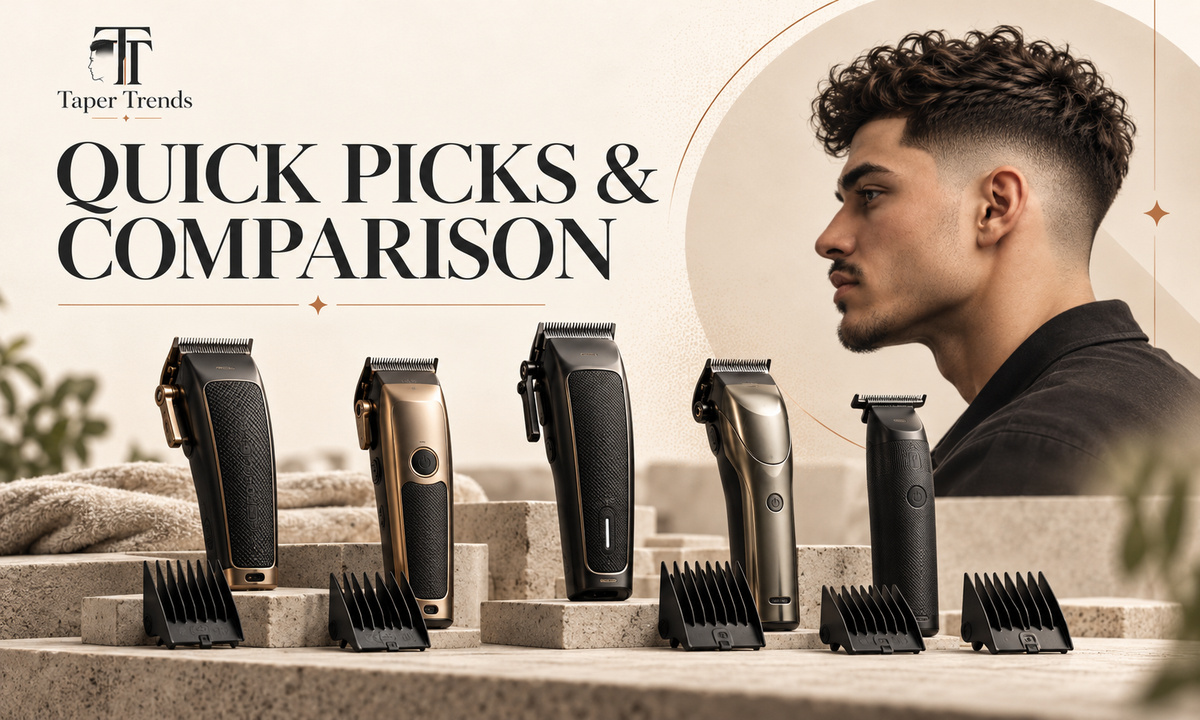
Best clippers for fades: quick picks and comparison
The Wahl 5-Star Cordless Magic Clip is our best overall pick for fades because Wahl built its Stagger-Tooth blade and taper lever specifically for blending, and the kit includes eight guides. The other six clippers suit narrower jobs. Our picks rest on manufacturer specifications and published independent testing, not on our own side-by-side test.
| Clipper | Best for | Blade and lever | Rated runtime | Main trade-off |
|---|---|---|---|---|
| Wahl 5-Star Cordless Magic Clip | Most fades | Stagger-Tooth blade, taper lever | Up to 100 min | 5,700 RPM motor is the slowest Wahl option here |
| Wahl 5-Star Vapor | Skin and bald fades | F32 FadeOut blade, zero-gap adjustable | Up to 150 min | $199.99; no independent test found |
| Andis reVITE Black (86000) | Switching blade styles | Removable Fade blade (00000–000); Taper blade optional | Up to 2 hr | Taper blade costs $39.99 extra |
| BaBylissPRO FXONE Lo-ProFX (FX829BL) | Premium modular setup | Zero-gap fade blade, 5-position locking lever | Up to 2.5 hr | Six combs; some editions sold tool-only |
| JRL Onyx (2020C-B) | Long cutting sessions | Fade Precision blade, 5-position lever | Up to 5 hr | Rated, not measured; 375 g |
| Andis Master Cordless (12660) | Traditional pro cutting | Adjustable carbon-steel blade, 000–1 | Up to 90 min | Guard sets bought separately |
| Wahl Color Pro Lithium-Ion | Beginners at home | Taper lever; 12 guards, 1/16–1 inch | Up to 2 hr | Home tool; no zero-gap adjustment listed |
Prices checked October 27, 2026: Wahl lists the Color Pro Lithium-Ion at $78.99 and the Vapor at $199.99, and Andis lists the reVITE Black at $149.99. JRL shows the Onyx at $185 before tax on its international site. The Magic Clip, Master Cordless, and FXONE vary by retailer and edition, so compare current listings before you buy.
Which row fits you depends on the fade you cut most. If you are not sure yet, our types of fade haircuts guide sorts every fade by height and finish, and skin fade vs taper fade explains why a bare-skin finish asks so much more of a clipper than a taper does.
What features matter most in clippers for fades?
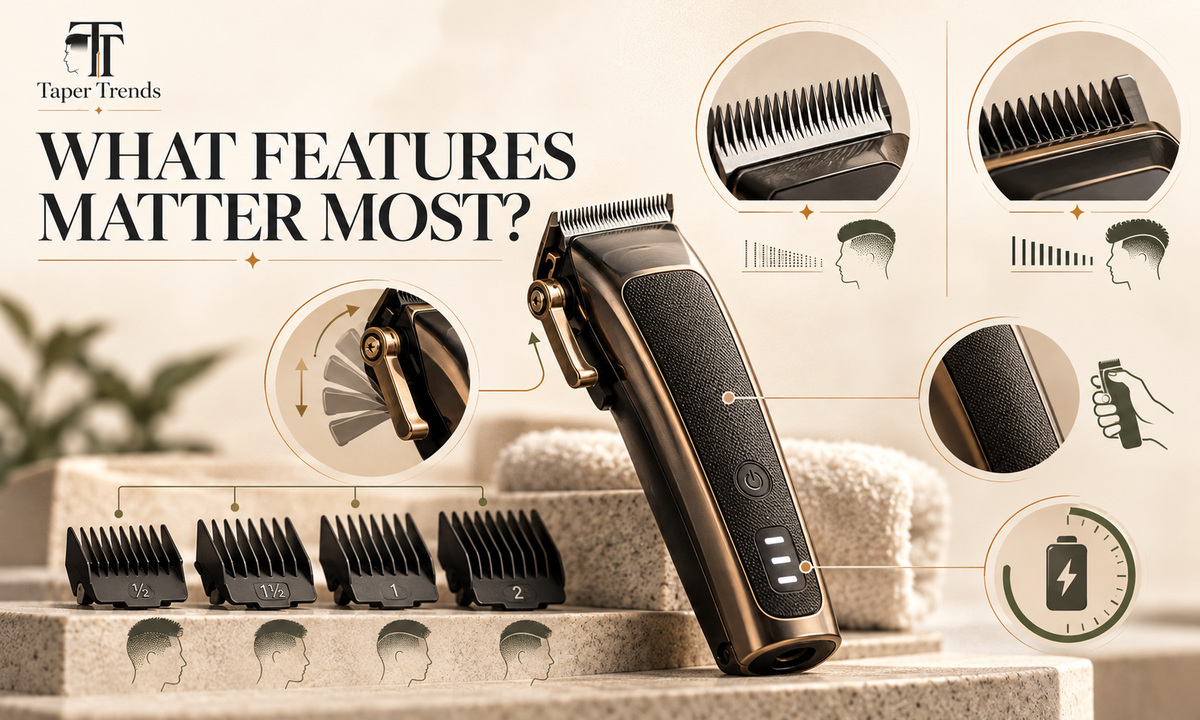
A clipper that fades well gives you fine control over cutting length, a blade suited to the closeness you want, steady power when the hair gets dense, and guards that fit without wobbling. Headline motor speed matters least. Barber Cameron Wickliffe told Forbes Vetted the adjustable lever is the first feature he looks for, because it blends lengths without constant guard changes.
Is a fade blade or a taper blade better?
Neither blade is better for every fade. A fade blade cuts closer and suits tight, low transitions, while a taper blade works across longer settings for general graduation. Andis makes the difference easy to see: the black reVITE's Fade blade adjusts from 00000 to 000, while the gray reVITE's Taper blade covers 000 to 1. Pick by the haircut you cut most often. If that is a skin fade or a low fade, lean toward the fade blade. If it is a taper haircut or a shadow fade that stops short of skin, a taper blade covers it. Technique still decides the finished result, whichever blade you choose.
How do taper levers and clipper guards affect a fade?
The taper lever moves the top blade to make small length changes, while guards set the bigger steps. Used together, they let you step down gradually instead of leaving a visible line where one guard ends. Lever travel is short: Wahl lists the blade-only cutting range of both the Magic Clip and the Vapor at 0.5 to 1.2 mm. That range fills the gap between guards. It does not replace them. Our how to cut a fade guide shows exactly where in the blend the lever does its work.
Closed, half-open, and open lever positions
On most clippers, the closed position gives the shortest cut and the open position the longest. Wahl's home clipper manual describes it as lever up for the closest cut and lever down for the longest. Direction and the number of stops vary by model, so check your manual. The FXONE and Onyx both have five lever positions, and the Onyx adds fine adjustment between them.
Standard guards and half guards
Half guards fill the gaps between whole numbers. On the Color Pro Lithium-Ion, No. 1 cuts to 1/8 inch (3 mm), No. 1½ to 3/16 inch (4.5 mm), and No. 2 to 1/4 inch (6 mm). Other brands label and size their guards differently, and guards rarely cross brands, so check fit before ordering extras. The haircut numbers guide compares Wahl, Andis and Oster labels side by side, and the clipper guard sizes tool converts any guard to inches and millimeters.
How important are motor power, battery life, and ergonomics?
Consistent cutting, grip, and weight matter more than headline speed. A clipper that bogs down in dense hair or tires your wrist will hurt your blending more than any spec-sheet number. Cordless designs make self-cuts easier, but long sessions demand attention to runtime and charging. Use this checklist:
- Motor: Compare RPM with RPM and SPM with SPM. BaBylissPRO lists the FXONE at both 6,800 RPM and 13,600 SPM, which shows how easily the two figures get mixed up.
- Weight: The Vapor weighs 280 g (9.9 oz), the Magic Clip 10.2 oz, and the Onyx 375 g.
- Runtime:Treat rated times as ceilings. Forbes Vetted measured 30 minutes from the Master Cordless against Andis's 90-minute rating.
- Upkeep: Replacement fade blades cost $39.99 for the reVITE and $32.99 for the Master Cordless at Andis.
Power matters most on dense texture. If you cut afro hair, curly hair or a thick head of thick hair, a motor that holds its speed under load saves you from going over the same area again and again.
How we selected these fade clippers
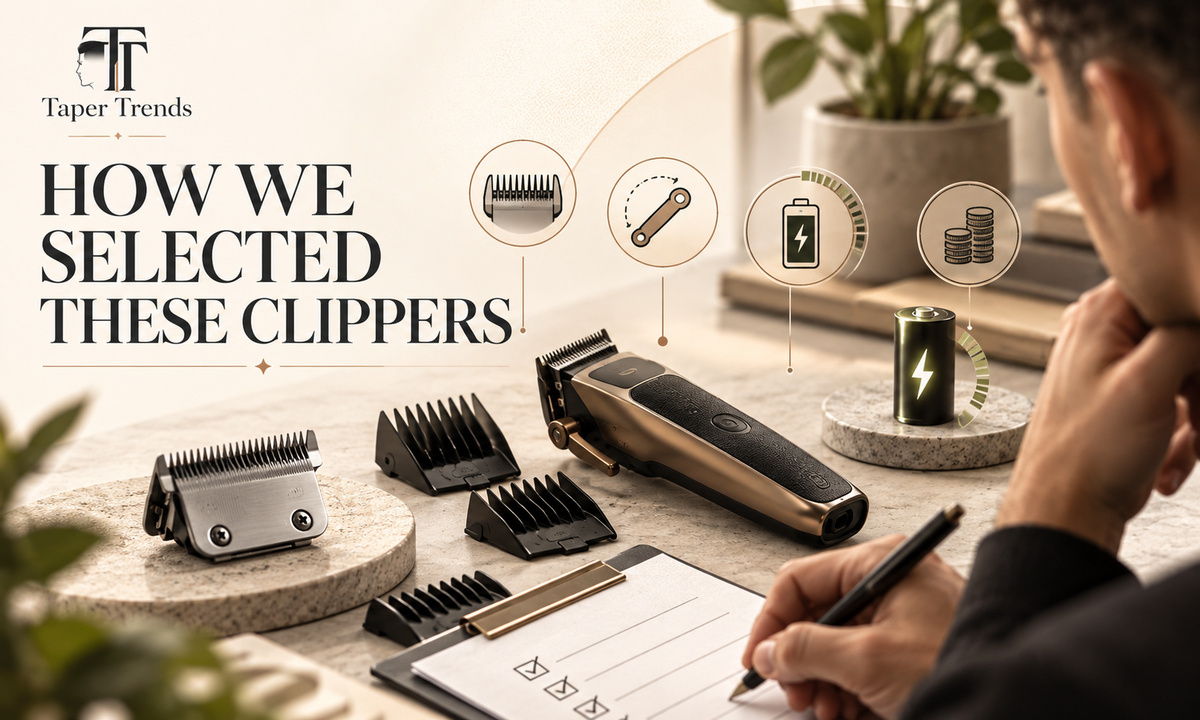
We picked these seven by checking exact model numbers against manufacturer pages, then comparing blade systems, lever design, included guards, runtime, and ownership costs. We have not hands-on tested them, so every claim falls into one of three evidence levels:
- Manufacturer specifications, such as rated runtime, weight, and motor speed.
- Third-party testing, mainly the September 2026 Forbes Vetted hair clipper guide.
- Original measurements, which this article does not yet include.
Only two of our picks, the reVITE and the Master Cordless, appear in that Forbes test. Forbes also reviewed an older Color Pro Cordless rather than the Lithium-Ion model, so its results do not carry over. Gaps like these are why we label sources throughout, following Google's guidance on product reviews. Our recommendations stay provisional until we add our own testing.
The 7 best clippers for fades compared
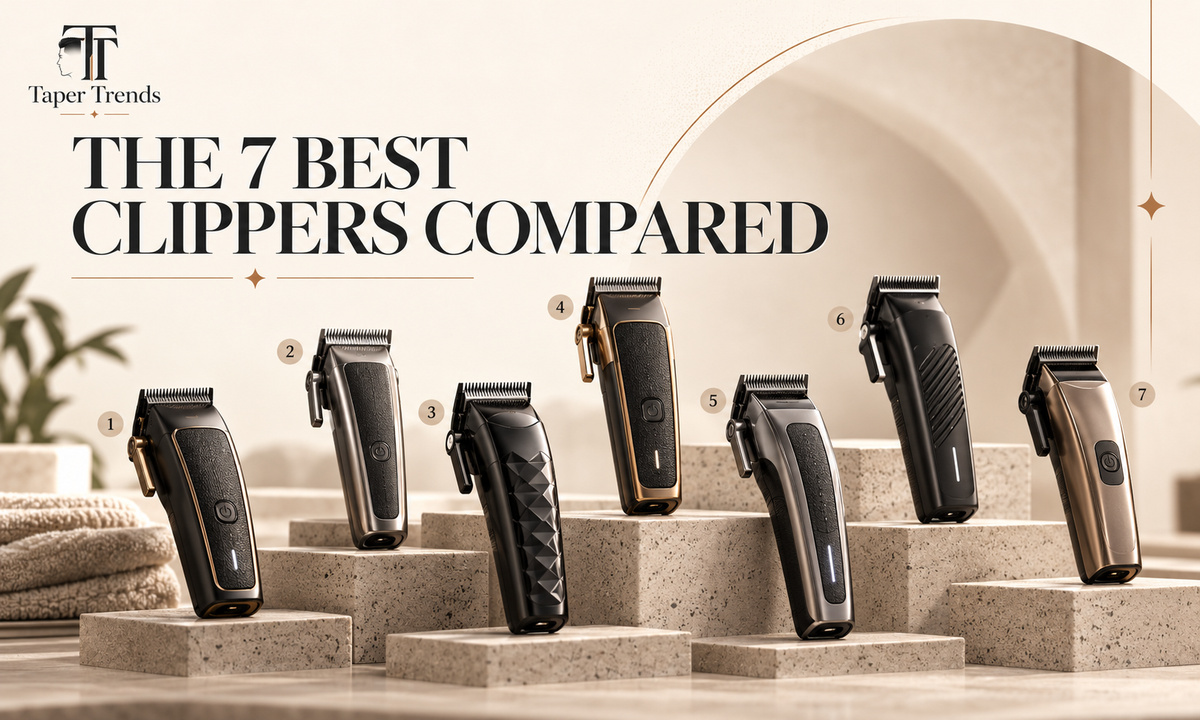
Each clipper below is judged on four things: blade system, lever control, power and runtime, and ownership cost. Specifications come from manufacturer pages checked on October 27, 2026. Independent findings appear only where a published test covers that exact model.
Wahl 5-Star Cordless Magic Clip: best overall for fades
The Magic Clipearns the top spot because it is built around blending. Wahl says its patented Stagger-Tooth blade reduces lines of demarcation, and the same taper lever handles bulk removal and free-form texturizing. It runs corded or cordless, recharges in 60 minutes, and ships with eight guides from 1/16 to 1 inch. Wahl sells Gold and Black editions with upgraded motors, so don't mix their specs with the standard model's. One caveat: on paper the Vapor is faster, lighter, and longer-running. The Magic Clip wins on blade design for blending, not on raw specifications. That blending focus makes it a natural fit for a low taper fade, a mid taper fade or a drop fade, where the transition is the whole look.
- Buy it if you want one dependable clipper for fades, bulk removal, and texturizing.
- Skip it if you need the closest skin-fade finish, which is the job Wahl designed the Vapor for.
Wahl 5-Star Vapor: best for close and skin fades
The Vaporis Wahl's blade-first answer to bald fading. Its F32 FadeOut blade has 32 fine, ball-pointed teeth, which Wahl says is 50% more than its standard blade, and it adjusts to zero gap. A brushless motor with Adaptive Speed Control runs at 8,000 RPM, and the kit includes seven guides and a one-year warranty. If you want a charging stand, Wahl says the Vapor fits only its Single Power Station. Wahl's claims about comfort and fewer nicks are its own descriptions, and we found no independent test of this model. Keep in mind that a close clipper cut is still not the same as a foil-shaver finish, which our low, mid and high skin fade guide explains height by height.
- Buy it if skin and bald fades make up most of your work.
- Skip it if price matters most, since it lists at $199.99.
Andis reVITE Black: best for switchable blade systems
The black reVITE (86000)swaps blades without tools, so one body can handle close fading and general tapering. Andis's launch announcementpitches the black model for clipper-over-comb work, bald fading, and freehand cutting. The gray model (86100) ships with the Taper blade and a lighter composite housing instead. Adding a Taper blade to the black clipper brings the total to $189.98 at Andis's listed prices. Forbes Vetted named the reVITE its top overall clipper, counted 12 guards in the kit, and liked that the blade pops off for cleaning. Its tester also found it louder than smaller clippers and noted that no carrying case is included. If you switch between a skin fade one week and a taper fade the next, this is the clipper that follows you.
- Buy it if you want to try both blade styles on one clipper.
- Skip it if you want a quiet clipper or will only ever use the Fade blade.
BaBylissPRO FXONE Lo-ProFX: best premium modular clipper
The FXONE Lo-ProFX is our premium pick because one interchangeable battery powers every FXONE tool, and its five-position lever locks in place. The FX829BL kit pairs a zero-gap-adjustable fade blade with an N1 brushless motor, a quick-release battery, a four-stage LED charge indicator, a dual-voltage charging base, and a two-year warranty. BaBylissPRO rates it at up to 2.5 hours. Only six combs are included, so check guard coverage before relying on it for longer taper work. Our low vs high taper fade comparison shows how much longer the sides stay on a low taper, which is where the longer combs earn their place.
Tool-only package vs complete kit
FXONE limited editions are not always sold the same way. The black-and-blue FX829BL kit includes the battery and charging base, while an authorized dealer's Neon Yellow listing is tool-only at $139.99, with the FXBB24 battery and charger sold separately. Confirm the SKU and box contents before ordering.
- Buy it if you work long days and want swappable power across several tools.
- Skip it if you want a full guard set in the box.
JRL Onyx: best for long cutting sessions
The Onyx (2020C-B)is built for full workdays, with an LED display that shows remaining runtime at the current speed. You can switch between 6,000 and 7,500 RPM, and JRL's Smart-Clip system raises motor speed when it senses blade resistance. Ten combs from 1.5 to 25 mm come in the kit. JRL rates the battery at up to five hours but does not say which speed setting produced that figure. Charging takes 2.5 hours in fast mode or five hours in its RESET IQ mode. JRL's site is international, so confirm US pricing and warranty terms with your retailer.
- Buy it if you cut back-to-back clients and want two speed settings.
- Skip it if you want independent test data, because we found none for this model.
Andis Master Cordless: best traditional professional workhorse
The Master Cordless (12660) suits experienced cutters who prefer a classic adjustable-blade clipper in an aluminum body. Its carbon-steel blade adjusts from 000 to 1, driven by a 6,500 SPM rotary motor. In Forbes Vetted's test, the tester faded his sides and lined up his sideburns cleanly, though his curly hair needed several passes. Guards are the hidden cost. Forbes received only a zero guard, and Andis sells its Master magnetic comb sets separately, at $28.99 for four large combs and $32.99 for five small ones. Reaching the closest lengths also means buying the separate 00000–000 fade blade. Plan around Forbes's 30-minute tested runtime rather than the 90-minute rating. Its adjustable blade is at its best on the classic shapes, like a high taper fade or a temp fade, where a barber works the blade by feel.
- Buy it if you want a proven professional platform with a charging dock.
- Skip it if you expect a full guard set in the box.
Wahl Color Pro Lithium-Ion: best for beginners on a practical budget
The Color Pro Lithium-Ion is the easiest way in, because its 12 SNAP-N-LOCK guards match a color key on the clipper, so you never have to memorize sizes. Wahl adds a taper lever for blending, left and right ear-taper guards, and a 15-minute quick charge that gives five minutes of cutting. It charges over USB-A, and Wahl says the battery holds its charge for up to nine months in storage. The five-year warranty is the longest in this group. Treat it as a home tool. Wahl lists no zero-gap adjustment or motor speed, and Forbes Vetted reviewed the older Color Pro Cordless, so those results do not transfer to this model. It is well matched to forgiving home cuts such as a low taper fade buzz cut or a boys' low taper fade.
- Buy it if you are learning fades on yourself or family.
- Skip it if you cut daily or want skin-fade closeness. Step up to the Magic Clip or Vapor.
Which clipper should you choose for your type of fade?
Match the clipper to who will hold it and how close the finish needs to be, rather than buying the most expensive model. Self-cutters need clearly labeled guards and a light body. Barbers need repeatable lever settings and a plan for battery life. Skin fades need a close-cutting blade plus finishing tools.
The fade itself narrows the field. Our different kinds of fades overview and the taper vs fade comparison show how much short hair each cut leaves, and the less hair a cut leaves, the closer your clipper has to reach.
What should beginners and self-cutters buy?
Buy the simplest clipper with a lever you can feel and guards you can identify at a glance. The Color Pro Lithium-Ion fits that description, and the Magic Clip is the natural upgrade. Start with a longer guard than you think you need, as Wahl's manual also advises. When you cut your own hair, you work by mirror behind your head, and you cannot add length back. If a home cut does go wrong, read how to fix a bad fade before you pick the clipper up again.
What should professional barbers prioritize?
Prioritize a lever that returns to the same setting every time, a backup plan for a battery that runs low mid-client, and affordable replacement blades. The FXONE leads on swappable power, the Onyx on rated runtime, the Master Cordless on a proven blade platform, and the Vapor on closeness. Handle a clipper before committing if you can, because balance over a full day is personal.
What is the right setup for skin and bald fades?
A close-cutting clipper blends the fade, a detail trimmer draws the outline, and a foil shaver finishes the lowest section when you want bare skin. The Vapor or the black reVITE covers the clipper role. Skip the shaver if a soft, shadowed finish suits the client better. Our skin fade guide breaks down what each finishing tool adds, and skin fade on curly hair and skin fade with a beard cover the two cases where the trimmer does the most work.
| Your situation | Start with | Also consider |
|---|---|---|
| Learning on yourself or family | Wahl Color Pro Lithium-Ion | Wahl Magic Clip as the upgrade |
| Low, mid or taper fades at home | Wahl Magic Clip | Andis reVITE with the Taper blade |
| Skin and bald fades | Wahl Vapor | Andis reVITE Black, plus a foil shaver |
| Full days behind the chair | BaBylissPRO FXONE or JRL Onyx | Andis Master Cordless with a spare dock |
Texture changes the list too. Cutters working on waves, mid taper fades on curly hair or a low taper fade for Black men should weigh steady power under load above a light body.
How do you use clippers to create a smooth fade?
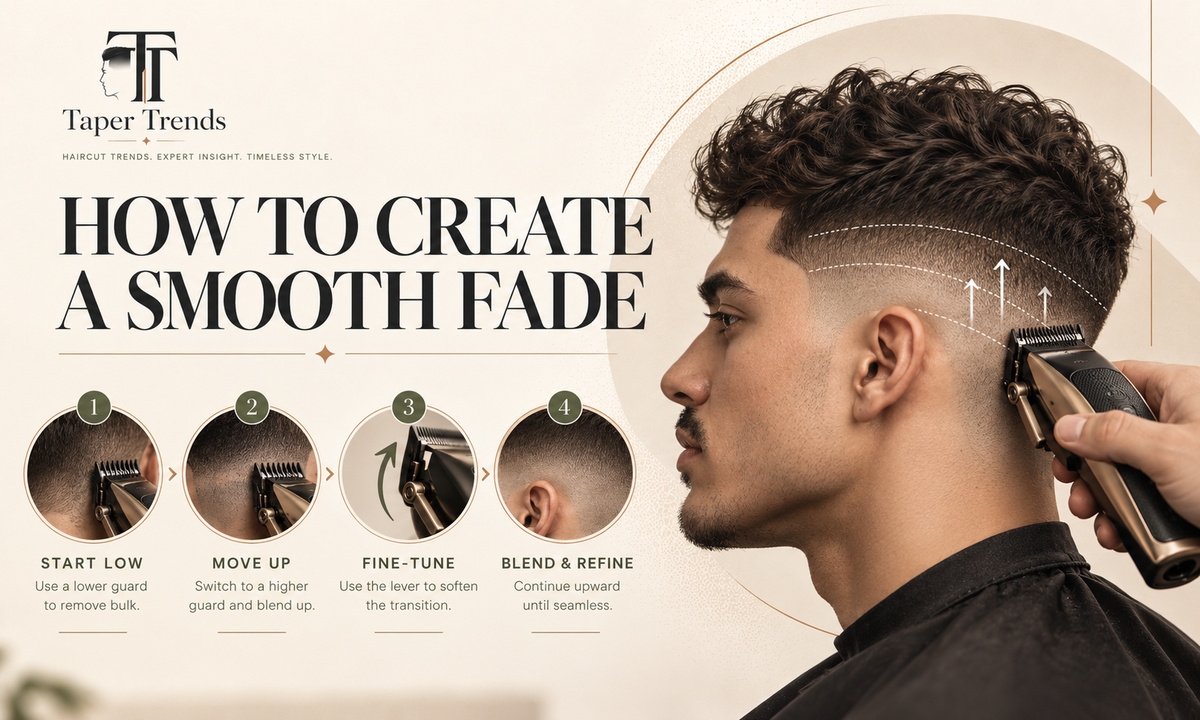
To cut a smooth fade, set a guideline at your chosen height, then work upward in small length steps, using the taper lever and guards to erase each transition. Brush and oil the blade before you start, and keep a hand mirror nearby to check the back.
- Remove bulk from the sides with a longer guard.
- Set the guideline with the lever closed, at the height you want. A line placed too high cannot be undone.
- Move up one guard length with controlled, upward strokes.
- Blend each boundary by opening the lever in small increments and rocking the clipper out of the hair as you go.
- Check both sides and the back from a few feet away, then clean up stray lines with a detail trimmer.
The finished fade should look like a gradual shadow with no visible shelf. If a line remains, adjust the lever before you reach for a different guard. For the full method, including how to reach the back of your own head, follow how to cut a fade. Choosing the height comes first, and our low vs mid taper fade comparison shows where each guideline sits.
How should you clean, maintain, and safely adjust fade clippers?
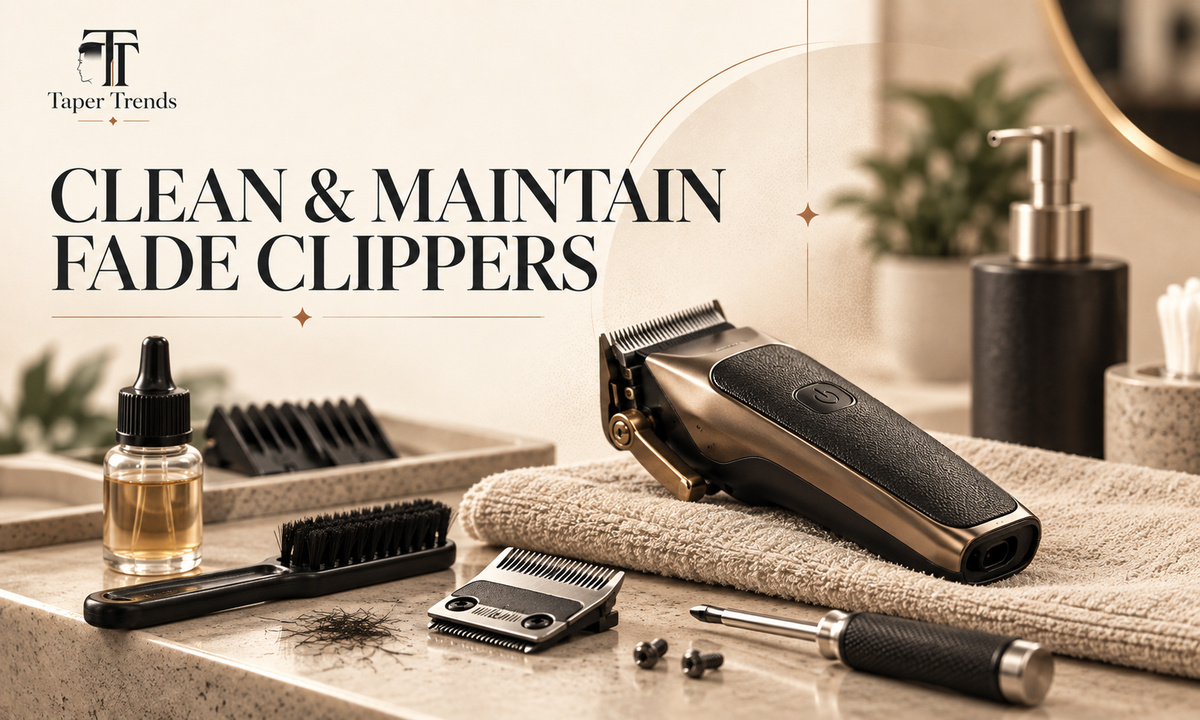
Brush hair off the blade after every cut, oil it as your manual directs, and disinfect only in the way the product label specifies. Switch the clipper off first, and never assume a whole electric clipper can go under water.
- Oil: Wahl's home clipper manual calls for oiling every few haircuts, with three drops across the front of the blade and one on each side of the heel, then wiping off the excess. It also warns against over-oiling and against cleaning blades with water.
- Disinfect: The EPAsays to follow the disinfectant's label directions, including the application method. Shops should also follow their state barbering board's sanitation rules.
- Align:Realign screw-adjusted blades if they get bumped or removed for cleaning, following your model's instructions.
- Replace: If cutting stays rough after cleaning and oiling, replace the blade. Stop and let the clipper cool if the blade feels hot against the skin.
How often you clean depends on how often you cut. A skin fade needs touching up far more often than a taper, and our how often should you get a haircut guide lays out those intervals by style, so you can plan blade oil and replacement blades around them.
Frequently asked questions about fade clippers
Can you create a fade using only one clipper?
Yes, for most basic fades. A single clipper with an adjustable taper lever and a full guard set can blend lengths on its own. Very close skin fades and sharp outlines usually call for a detail trimmer and a foil shaver as well.
Are cordless clippers good enough for professional fades?
Yes. Barber Cameron Wickliffe told Forbes Vetted that newer models have largely solved the battery and power problems that once made corded clippers the safer choice. Still, keep a spare battery or a corded backup, because real runtime depends on your workload and charging habits.
Which clippers work best for thick, curly, or coily hair?
No clipper can be called best for a hair type on current independent evidence. Stylist Sunnie Brook told Forbes Vetted to look for a strong rotary or pivot motor and sharp blades. Several picks here claim speed control under load, including Wahl's Adaptive Speed Control, JRL's Smart-Clip, and Andis's Constant Speed Technology on the reVITE, but those are manufacturer claims. Expect extra passes on dense hair, and keep blades clean and oiled.
What do #0.5 and #1.5 clipper guards mean?
They are half sizes that sit between whole guard numbers for finer transitions. On Wahl's Color Pro Lithium-Ion, No. ½ cuts to 1/16 inch (1.5 mm) and No. 1½ to 3/16 inch (4.5 mm). Brands label sizes differently, and JRL, for example, lists its combs in millimeters, so use each manufacturer's own chart.
Is zero-gapping necessary for a good skin fade?
No. Zero-gapping is a closeness adjustment, not a requirement, and technique matters more. Because the moving blade sits nearer the skin, the risk of nicks rises, so follow your model's manual exactly. Wahl's home clipper manual, for example, sets the top blade teeth about 1/32 inch (0.64 mm) behind the bottom blade, which is deliberately not a zero gap.
Can you use a beard trimmer instead of hair clippers for fades?
Only for small jobs. Forbes Vetted's fade pick, the Philips Norelco All-In-One 9000, is a multi-tool trimmer whose guards top out at 16 mm, and the reviewer said thick or curly hair would give it trouble. Forbes actually tested its discontinued predecessor, the Multigroom 9000. For full-head fades, a dedicated clipper is the safer choice.
For more on guard sizes, the haircut numbers guide lists every whole and half guard, and how to ask for a fade shows how to turn those numbers into a request your barber can follow. Beard owners can see where the clipper hands off to the trimmer in low taper fade with a beard.
Final verdict: the best fade clipper depends on the job
For most people, start with the Wahl 5-Star Cordless Magic Clip. Choose the Vapor if skin fades are most of your work, the Color Pro Lithium-Ion if you are learning at home on a budget, and the reVITE if you want to try both blade styles. Barbers on long days should compare the FXONE, Onyx, and Master Cordless on lever feel, backup power, and running costs.
Whatever you buy, confirm the exact model and kit contents first, treat rated runtimes as upper limits, and budget for guards, finishing tools, and blade oil. Then decide what you will cut with it: the what a low taper fade looks like guide is a good first target, and the barber brief generator writes up the cut if you would rather hand the clipper to a barber.
Keep going: fade guides worth reading next
A clipper is a tool for a specific cut. These guides cover the cuts themselves, the textures they work on, and how to ask for them.
- How to cut a fadeThe guarded step-by-step method these clippers are built for
- How to fix a bad fadeWhat a barber can still correct when a pass goes wrong
- Haircut numbersEvery guard size in inches and millimeters, and how brands differ
- Low taper fade guideThe pillar guide to the gentlest fade, and the easiest one to cut at home
- How to ask for a fadeThe height, finish and guard numbers to name at the chair
- How often to get a haircutHow long each fade holds, and how often you will reach for the clipper
- Types of fade haircutsEvery fade by height and finish, so you buy for the cut you want
- Different kinds of fadesThe fade overview, with the terms barbers use
- Taper vs fadeWhy a taper asks less of your clipper than a full fade
- Undercut vs fadeOne guard length under a long top vs a blend through several
- Taper fadeThe broad guide to the blend itself
- Taper haircutA neckline-and-sideburn cleanup any home clipper can handle
- Skin fadeThe bare-skin finish, and the tools past the clipper it needs
- Skin fade: low, mid, highWhere each skin fade starts, and how much bare scalp it shows
- Mid fade haircutWhere a mid fade starts, and the skin, shadow or guard finish to aim for
- Skin fade vs taper fadeClipper-close or razor-close, and which finish forgives mistakes
- Shadow fadeA softer bottom finish a home clipper reaches without zero-gapping
- Temp fadeA small fade at the temples, and a good first project
- Drop fadeThe curve behind the ear, and why lever control matters there
- Burst fadeThe curved fade around the ear, best left to a barber
- Low taper vs low fadeThe same height, two very different amounts of short hair
- Low vs mid taper fadeHow much height each start line takes on
- Low vs high taper fadeWhy a higher start line leaves less room for error
- Mid taper fadeThe in-between height, and how it blends
- High taper fadeThe start line with the least room for error
- Low taper fade buzz cutA one-guard top over a taper, the easiest cut to keep up at home
- Curly low taper fadeHow curl pattern changes the way a fade is cut
- Low taper fade for afro hairFading dense, coily texture
- Low taper fade with wavesGuard lengths that keep a wave pattern intact
- Low taper fade with a beardWhere the clipper hands off to the trimmer at the sideburn
- Low taper fade for thin or thick hairHow density changes what a blend shows
- What a low taper fade looks likeA clear picture of the target before you start cutting
The bottom line
Buy for the fade you cut most. The Magic Clip covers most fades, the Vapor covers skin fades, and the Color Pro Lithium-Ion is the easiest way to learn at home.
A smooth taper lever and a full guard set do more for your blend than any motor speed on the box.
Want more haircut guides?
Browse clean, barber-ready breakdowns for every hair type.