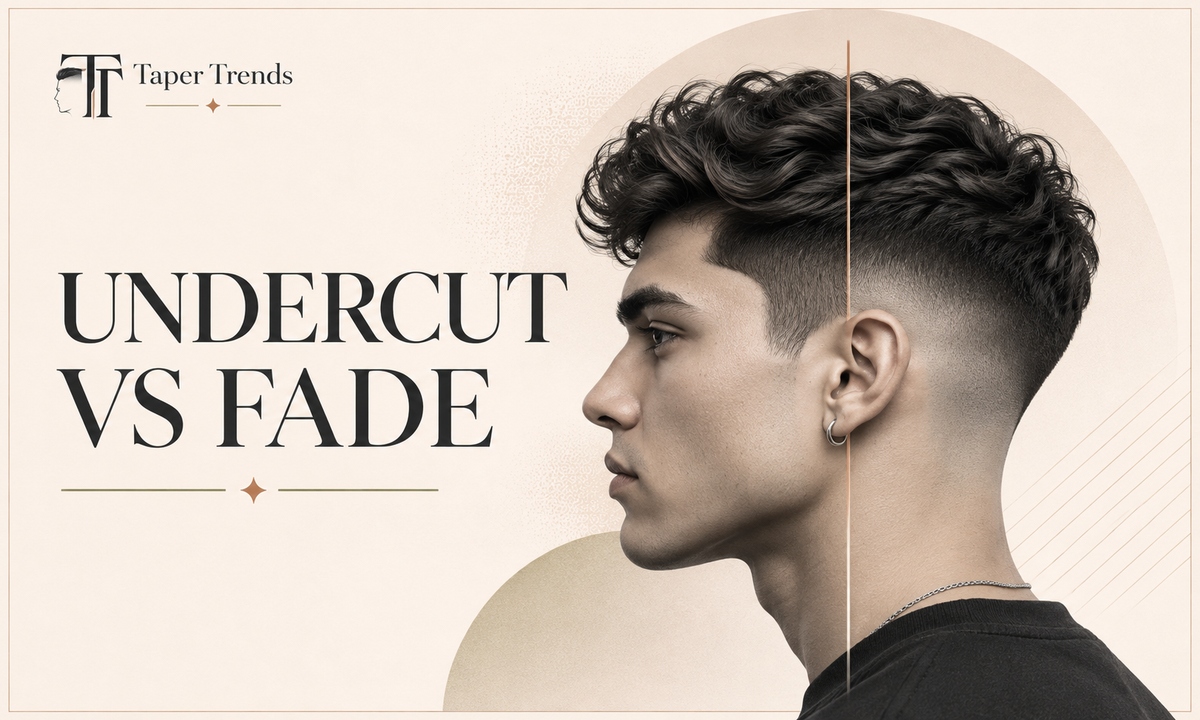
In the undercut vs fade question, both cuts leave the sides shorter than the top, but they get there in different ways. An undercut clips the sides and back to one short length and stops, leaving a visible break under a much longer top. A fade steps the sides through several lengths, shortest at the bottom, so no line shows.
Most confusion comes from treating two choices as one: how the sides are graded, and whether the top joins them. Separate those and the rest gets easier. If the word “fade” itself is the sticking point, taper vs fade sorts out the vocabulary, types of fade haircutsmaps every fade name you're likely to hear, and the low taper fade guide covers the softest blended option in depth.
Undercut vs fade: what's the difference?
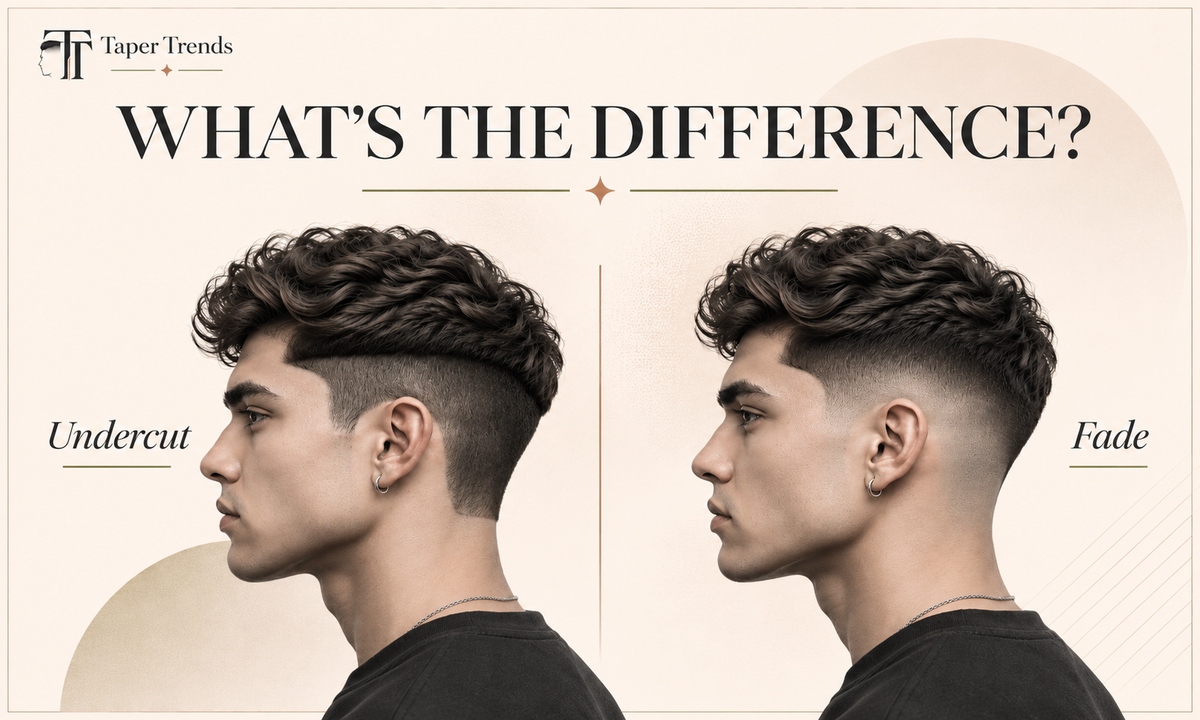
The main difference between an undercut and a fade is how the sides meet the top. An undercut keeps the sides at one short length and leaves a hard edge where the longer top begins. A fade blends the sides through progressively longer lengths, so the transition is smooth. Fades work under almost any top length, while undercuts need enough length on top to create contrast.
Great Clips draws the same line: fades move smoothly from long to short, while undercuts show sharper contrast.
| Feature | Undercut | Fade |
|---|---|---|
| Sides | Usually one short length | Several blended lengths |
| Where sides meet top | Often a visible break | Usually seamless |
| Top length | Long enough to contrast and hang over | Short, medium or long |
| Overall look | Bold and defined | Smooth and adaptable |
| First sign of regrowth | The break softens | The shortest area turns shadowy |
| Growing it out | Sides stick out under the top for a while | Grows into a short back and sides |
Fades also come in many shapes and heights, which our different kinds of fades guide lines up side by side.
What is an undercut haircut?
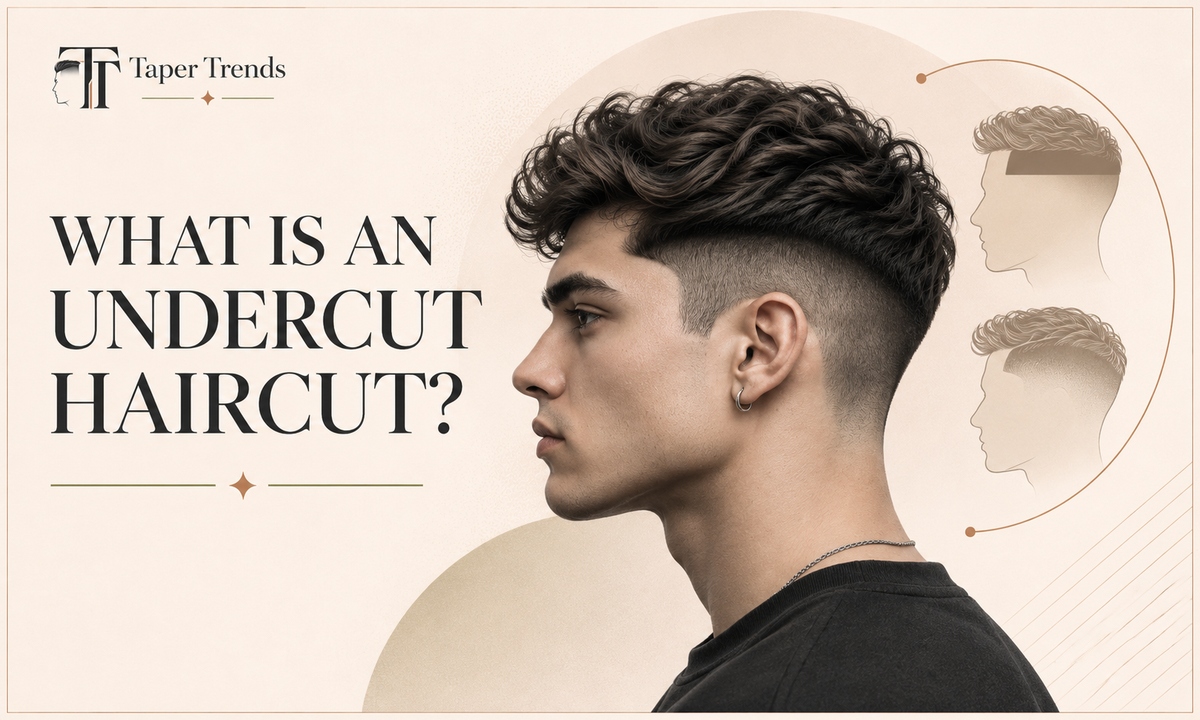
An undercut is a haircut that clips the sides and back very short while leaving the hair on top significantly longer. Its defining feature is contrast. The short section is usually one length rather than a gradient, and the long top often hangs over it, hiding the clipped area when the hair is worn down.
To cut one, a barber sections off the top and clips everything below it. In Wahl's step-by-step undercut guide, the lower sections get a #1 (1/8 inch) or #2 (1/4 inch) guide comb, and the top section should be at least 5 inches long if you plan to slick it back or sweep it to one side. Markcutit, a barbershop in Mississauga, Ontario, recommends a top of 10 cm (about 4 inches) or more. If guard numbers are new to you, haircut numbers explained lists every size. Undercuts come in two main versions.
What is a disconnected undercut?
A disconnected undercut leaves a visible step between the short sides and the longer top, with no blending between them. In Wahl's method, the barber cuts the rim of the head with the same guide comb used below it, so the top starts abruptly. It's the sharpest version of the cut. Our barber termsguide explains “disconnected” and the other words barbers use for it.
What is a connected undercut?
A connected undercut softens that step while keeping the long top. Wahl blends the clipped lower sections into the rim of the head with a guide comb two numbers longer (a #3 after a #1, for example), then works a #5 (5/8 inch) comb around the edge of the top section with an upward rocking motion. Barbers don't all use “connected” the same way, so bring a photo.
What is a fade haircut?
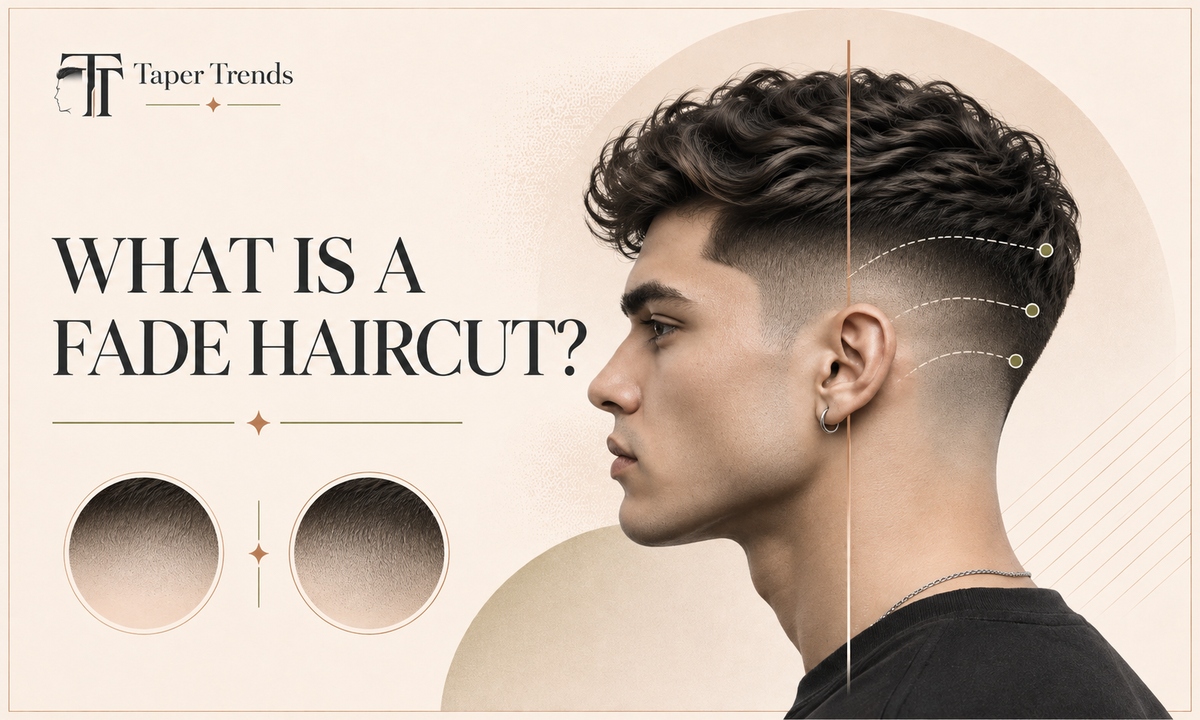
A fade is a haircut that blends very short hair at the bottom of the sides and back into progressively longer hair above, so no hard line appears. Barbers build it by moving between clipper guards in steps and softening each transition, often with the clipper's taper lever or an upward rocking motion. Our step-by-step how to cut a fade guide shows each stage, and best clippers for fades compares the tools.
Wahl's guard size guide gives a simple example: start with a #1/2 at the bottom and work up to a #3. A fade describes only the sides and back, so the top can be any length. Wahl's fade tutorial, written by Men's Health fashion editor Dan Michel, points out that leaving more length on top pushes a fade toward a modern undercut. The clipper guard sizes tool converts every guard number to inches and millimeters, and the taper fade guide covers the softest blended version.
How do low, mid, and high fades differ?
Fade height is where the blend starts on the side of the head. Suavecito's fade guide places a low fade just below the ear, a mid fade at the temples and a high fade at the corners of the forehead. The higher it starts, the stronger the contrast with the top. Shops vary, so point to the spot on your head. Our low vs mid vs high fade comparison goes height by height, the low fade haircut guide covers the subtlest option, and the taper height diagram marks each zone.
What's the difference between a skin fade and a shadow fade?
A skin fade takes the shortest section down to the skin or very close to it, while a shadow fade stops at a short length so a faint shadow of hair stays visible at the base. Wahl's guard guide pairs its #1/2, the shortest guard before bald, with a skin fade. The names aren't standardized: Great Clips describes fades as blending into the skin, while Suavecito separates bald, skin and shadow fades. Ask for a length, not just a label. See the full skin fade and shadow fade guides, or skin fade vs taper fade for the softer alternative.
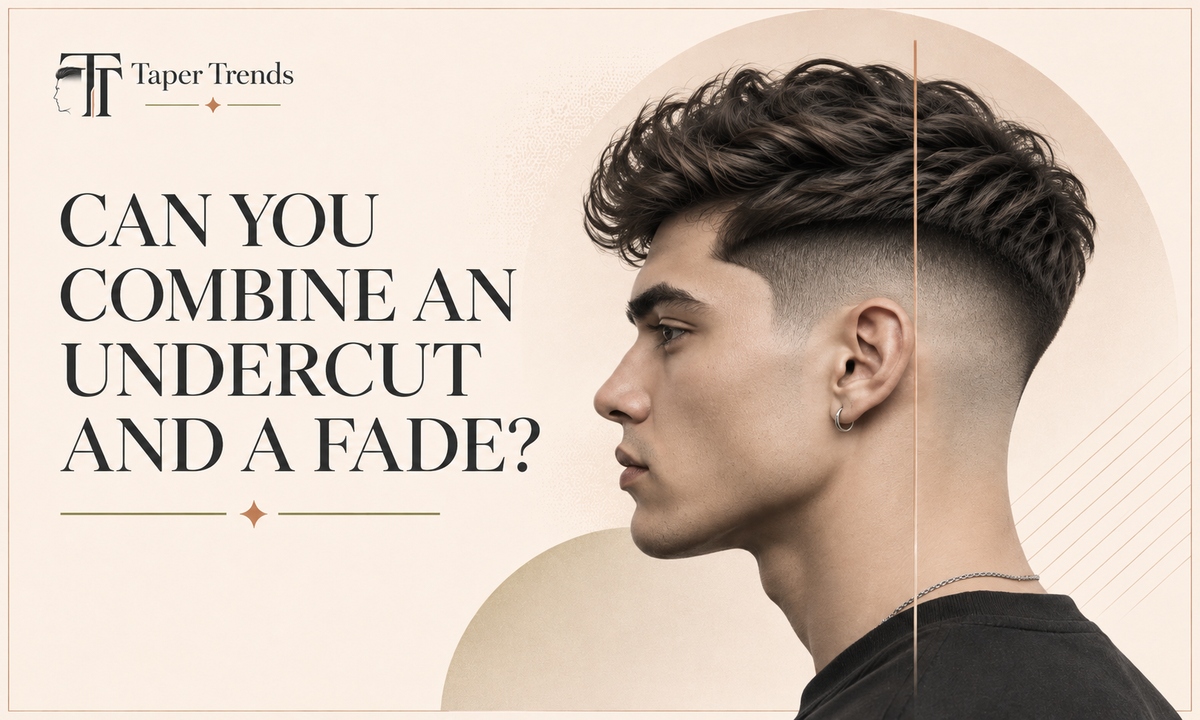
Can you combine an undercut and a fade?
Yes. A faded undercut fades the lower sides and back but leaves a longer top that stays disconnected from them. The fade handles the gradient along the sides, and the undercut supplies the hard break and the long top. Some barbers call this a disconnected fade, and the name changes from shop to shop.
The barbers at Markcutit say many clients ask them to fade only the lowest part of an undercut, which cleans up the neckline while keeping the hard break up top. They also offer a useful test: if your reference photo shows a visible line between the sides and the top, you want an undercut, even if the photo is labeled a fade.
The same choice between a blend and a break shows up in mullets. The mid taper fade mullet and high taper fade mullet guides compare each one with an undercut mullet, and the low taper fade mullet keeps the softest blend.
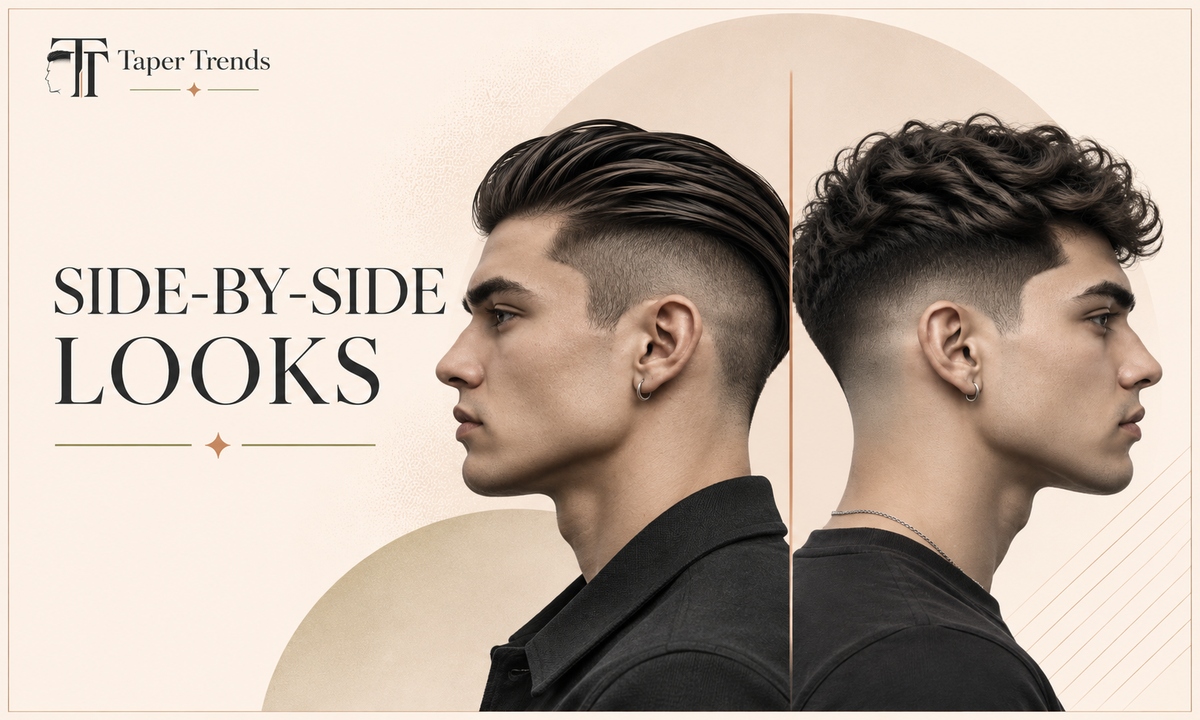
What do undercuts and fades look like side by side?
Keep the top length and styling the same and compare only the sides: where they meet the top, how much bulk remains and the outline from the side and back. A front view often hides the connection. Our walkthrough of what a low taper fade looks like shows the blended side from every angle.
Slicked-back undercut vs mid fade
A slicked-back undercut shows a clear step beneath the combed top, and the sides look flat and even. Put a mid fade under the same top and the step disappears. The sides darken gradually from the temple upward, and the outline tapers instead of stepping. See the low taper fade slick back and the mid taper fade for the blended versions.
Textured undercut vs low fade
A textured undercut keeps the sides at one short length under a messy, piecey top, which can make the head look top-heavy. A low fade tapers only near the ears and neckline and keeps more weight on the upper sides, so the silhouette is softer and the contrast with the top is lower. The textured fringe with a low taper fade and low taper fade fluffy hair guides show that softer silhouette.
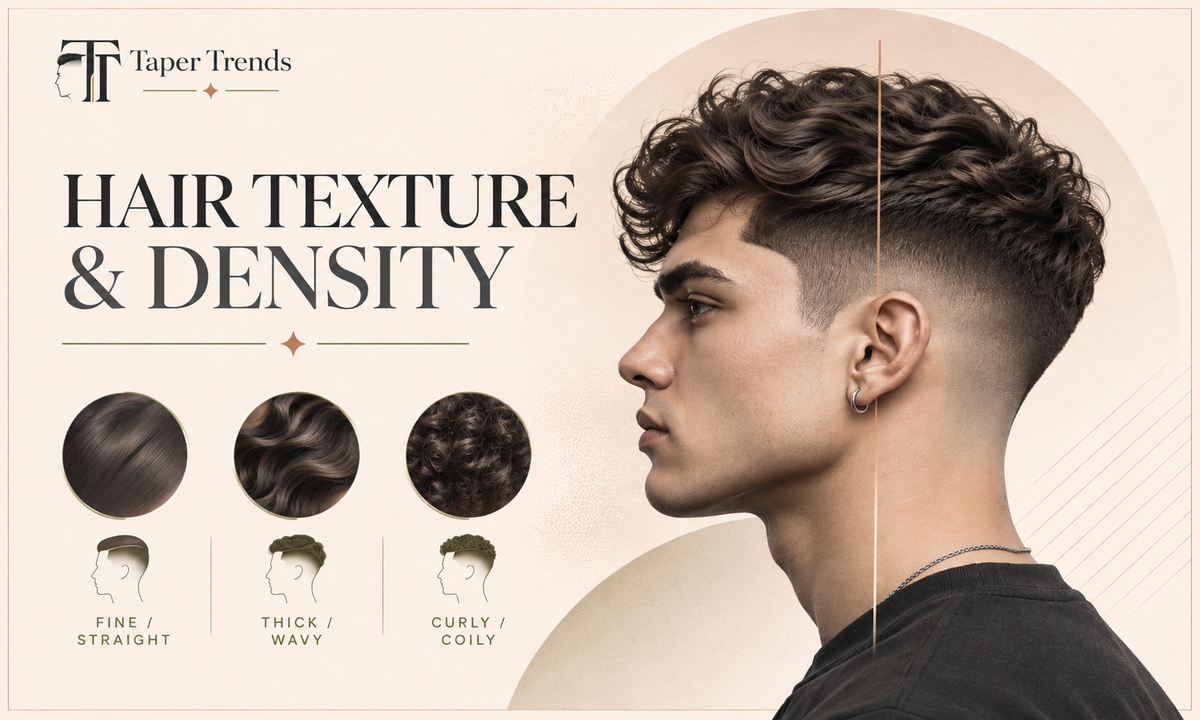
Which cut works best with your hair texture and density?
Neither haircut belongs to one hair type. Texture and density decide how the top behaves, how much bulk the sides carry and how clean a blend or a break looks once the hair dries. Judge by what your own hair does when dry, not by a photo of someone with different hair. The hair type quizhelps if you're not sure where your texture falls.
Which is better for fine or straight hair?
For fine or straight hair, the real question is whether the top has enough density to hold up against very short sides. A long top over a disconnected undercut can look thin when the strands lie flat. A fade lets you keep the top shorter and build lift with styling. Great Clips suggests blow-drying straight hair while lifting at the roots. See the low taper fade for straight hair, the drop fade on straight hair, and the thin and thick hair guide.
Which works better for thick or wavy hair?
Thick or wavy hair works with either cut, since both take bulk off the sides. A fade removes that bulk gradually. An undercut removes it in one step and leaves the full weight of the top sitting above a clean base. Either way, keep enough top length for the wave to show. The low taper fade on wavy hair and mid taper fade on wavy hair show how much length to keep, and the low taper fade for Asian hair covers thick, straight hair that sticks out at the sides.
Can curly or coily hair suit either cut?
Yes, with some adjustments. Markcutit usually recommends a fade for curly or coily tops because it frames the curls without a shelf, while an undercut needs a top long enough to hang over the break. Curls shrink as they dry, so judge length on dry hair. Great Clips says its bald fade suits textured and non-textured hair alike. Our curly low taper fade, skin fade on curly hair, low taper fade afro and low taper fade for Black men guides go deeper on each texture.
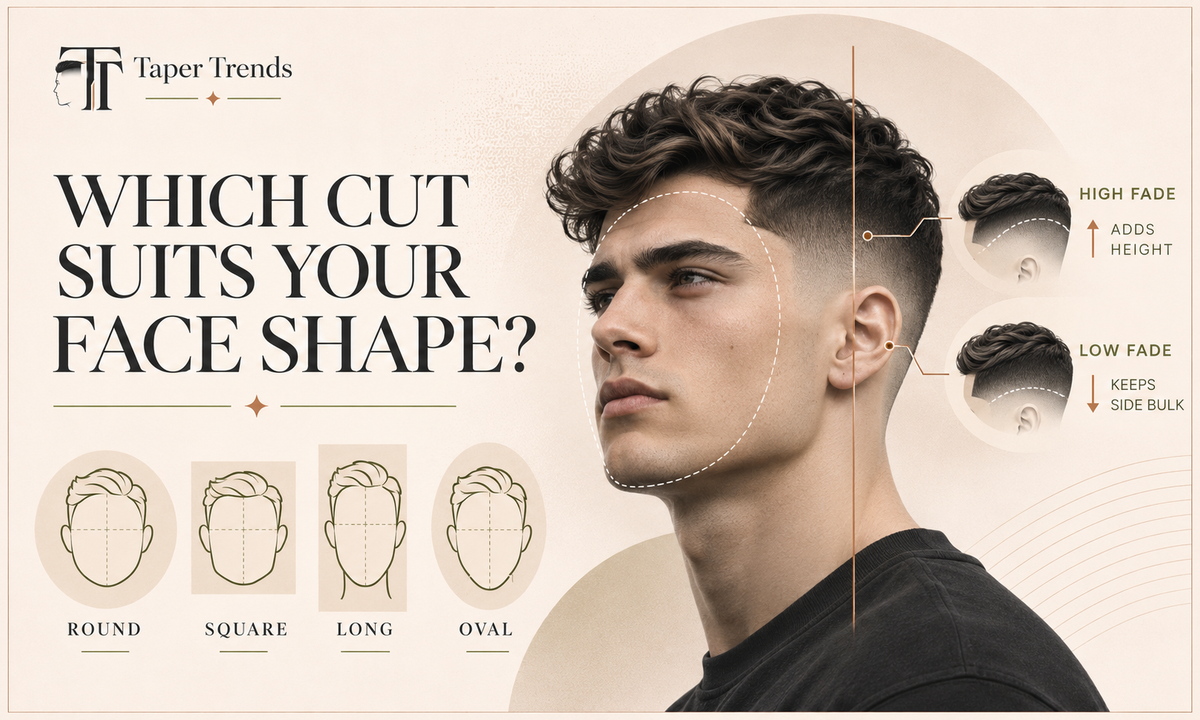
Which haircut suits your face shape?
Face shape changes how a haircut reads, mostly through proportion. Height on top makes a face look longer, bulk at the sides makes it look wider, and a higher fade narrows the sides. These are rules of thumb, not laws, and Suavecito recommends discussing face and head shape with your barber. The face shape detector gives you a starting point, and the best fade for your face shape guide goes shape by shape.
How should round or square faces be considered?
Round and square faces read wider, so the usual approach is more height on top and less bulk at the sides. A mid or high fade does that, and so does a disconnected undercut with a lifted top. A square face with a strong jaw can also carry a very short, high-contrast cut. For the higher options, see the high taper fade and low taper vs high taper fade.
How should long or oval faces be considered?
Long faces already read tall, so limit top height and keep some fullness at the sides. A low fade, or a connected undercut with a modest top, avoids stretching the face further. Oval faces are balanced, so hair type and upkeep should drive the choice. Low taper vs low fade compares the two lowest options.
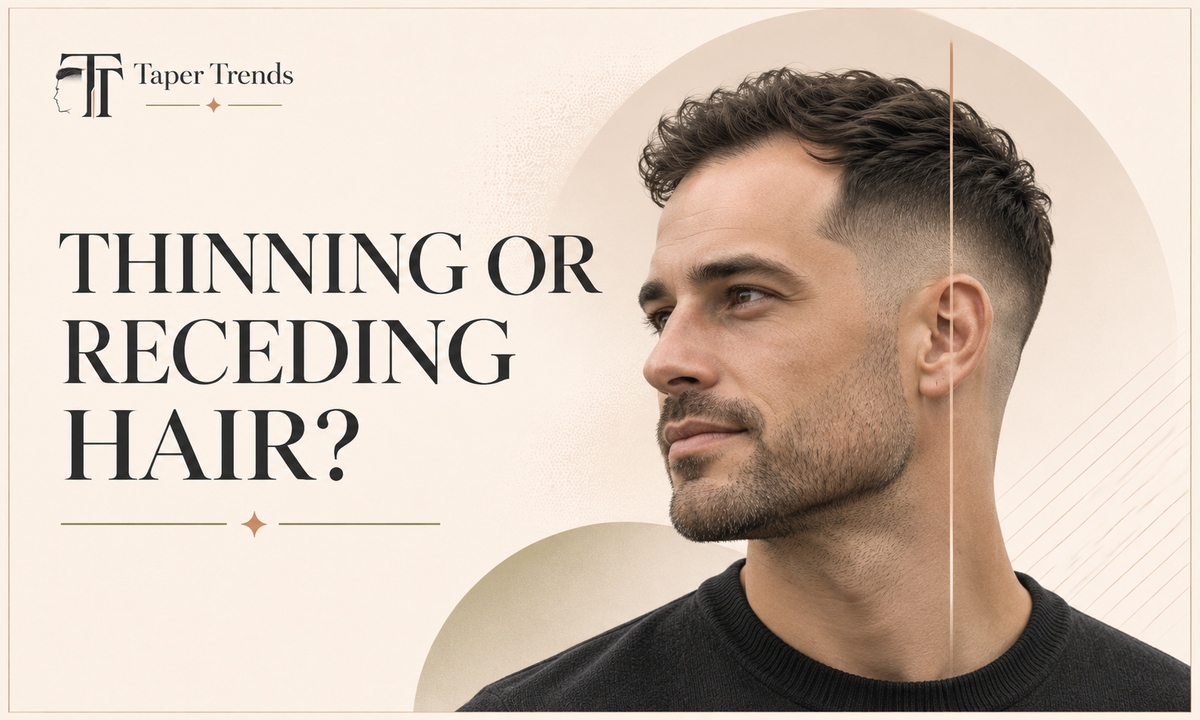
Is an undercut or fade better for thinning or receding hair?
Either cut can work for thinning hair. What matters is where the hair is thinning and how much density remains on top. In general, a smaller length difference between the top and sides draws less attention to thinning than a long top over very short sides. A haircut changes how thinning looks, not what causes it, and Cleveland Clinic advises talking to a healthcare provider if hair stops growing where it used to.
| Where the hair is thinning | Option to discuss with your barber | Why it can help |
|---|---|---|
| Temples or hairline | Fade with a short, textured top | A blend keeps the hairline from standing out |
| Crown | Fade with a shorter top | Less length to part or separate over the thin area |
| All over | Short fade or connected undercut | A smaller gap between top and sides |
Show your barber exactly where the thinning is before any clipper touches the sides. For more cut ideas, see haircuts for a receding hairline and the low taper fade for white guys, which covers hiding early recession on finer hair.
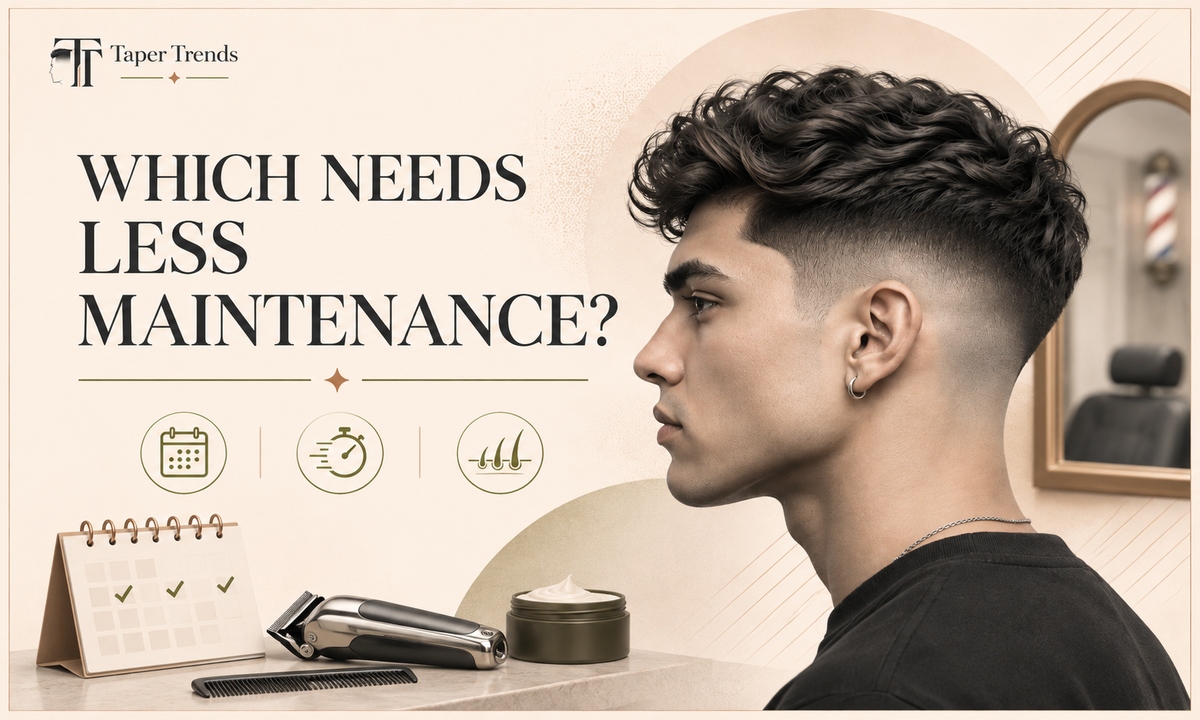
Which needs less maintenance: an undercut or a fade?
Keeping a haircut sharp and styling it every morning are two separate jobs. A fade usually needs more frequent barber visits because its shortest area shows regrowth first. An undercut can go longer between visits, although the break gradually softens. Daily styling time depends mostly on the top, and neither cut is maintenance-free.
How often should you trim an undercut or fade?
Plan on roughly two to four weeks between fade appointments and about four to six weeks for an undercut's sides, depending on how crisp you like it. Great Clips lists a two-to-four-week cut frequency for its bald fade. Markcutit says a fade's base turns shadowy after one to two weeks, while an undercut's line softens after three to four. Treat these as starting points. The haircut frequency calculator sets a date for you, and how often to get a haircut compares intervals by style.
Which haircut is easier to style every morning?
The top decides how long you spend at the mirror. A long slicked-back top needs product, a comb and sometimes a blow-dryer, while a short textured top takes a few minutes. Great Clips rates its flat-top bald fade as easy and about five minutes to style for both textured and straight hair. For routines by top style, see how to style a low taper fade, and best hair products for fades matches a pomade, clay or cream to each finish.
Which haircut is easier to grow out?
A fade is usually easier to grow out. According to Markcutit, a fade looks like a neat short cut after about a month, while growing out an undercut means a few months of sides sticking out under longer hair until they catch up. Cleveland Clinic puts scalp hair growth at about 1 centimeter a month during the growth phase, so regular tidying of the sides keeps that stage under control. Our how to grow out a fade plan walks through it week by week, and haircuts that grow out well lists the cuts that pass through the awkward stage fastest.
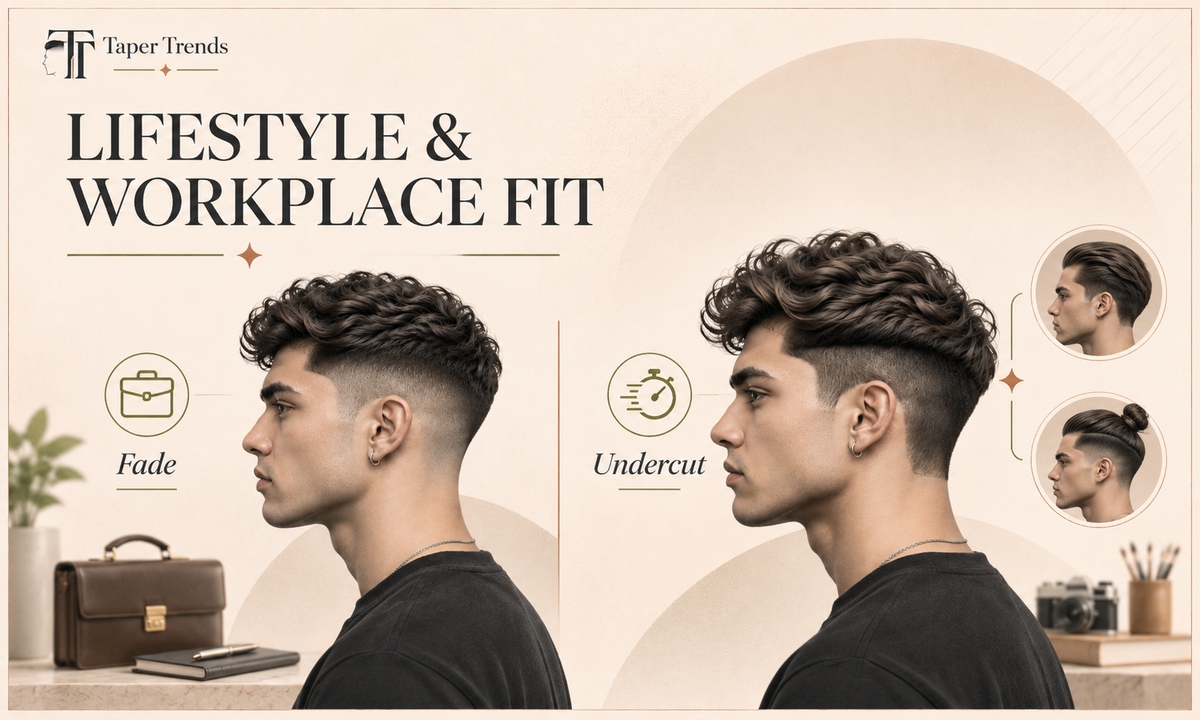
Which cut fits your lifestyle and workplace?
A fade suits people who want a tidy look from every angle and an easy exit if they change styles later. An undercut suits longer tops that get slicked back or tied up, and it tolerates longer gaps between visits. Wahl's fade tutorial calls the fade equally at home in the boardroom and on the street.
| Situation | Better fit |
|---|---|
| Minimal morning styling | Fade with a short top |
| Long top, slicked back | Undercut |
| Man bun or top knot | Undercut |
| Conservative workplace | Blended fade |
| Maximum contrast | Disconnected undercut |
| Fewer barber visits | Undercut |
| Might change styles soon | Fade |
If your employer has a written grooming policy, check it before going high-contrast. A blended fade is the safer choice when unsure. For a conservative blended look, see the side part low taper fade or the low taper fade comb over; for a top long enough to tie up, the long hair low taper fade covers man buns over blended sides.
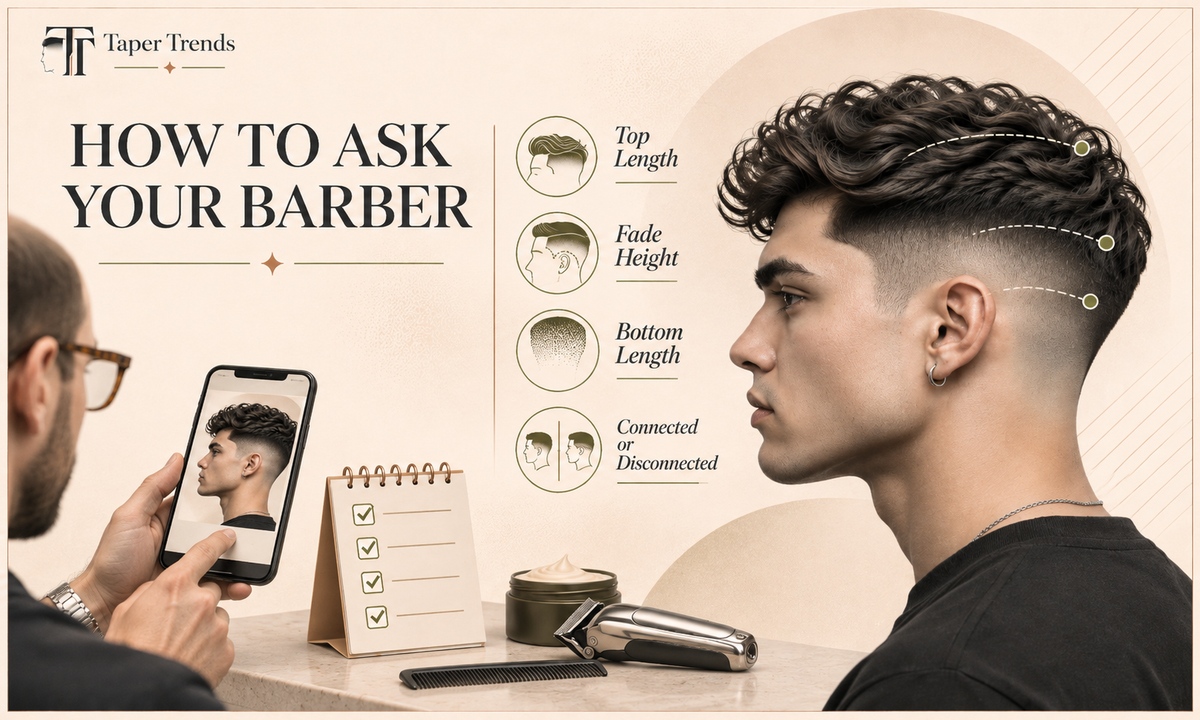
How do you ask your barber for the right cut?
Tell your barber four things: how much length stays on top, the side guard or fade height, how short the bottom goes and whether the top connects to the sides. Bring photos from the front, side and back. Barbers use the same words differently, and a picture settles it. For scripts covering every fade type, see how to ask for a fade.
- Save reference photos from at least three angles.
- Say how much length stays on top and how you'll style it.
- Name the side guard or fade height, and whether the bottom is skin or stubble.
- Say whether the top should be connected or disconnected.
- Ask for the neckline to be cleaned up.
Wahl lists its #1 guide comb at 1/8 inch (about 3 mm), #2 at 1/4 inch (about 6 mm), #3 at 3/8 inch (about 10 mm) and #5 at 5/8 inch (about 16 mm). Other brands may number their guards differently, so confirm the length rather than the number alone. If you're unsure, start longer. As Wahl's fade tutorial notes, you can always go shorter, but hair can't be added back. If a cut does go too short, how to fix a bad fade covers what a barber can still correct.
What should you say for a disconnected undercut?
Name the side guard, where it stops and how long the top stays, then say not to blend. For example:
“A number 2 on the sides and back, up to the rim of my head, with no blending into the top. Leave the top long enough to slick back.”
What should you say for a low or mid fade?
Name the fade height, the shortest length and how the sides should meet the top. For example:
“A mid fade down to skin at the bottom, blending up to a number 2 on the upper sides and into the length I have on top. Clean up the neckline.”
Asking for “a fade” alone leaves too much open, so confirm where the blend starts and whether the bottom is skin or stubble. The barber brief generator builds the same request from your answers, and barber terms explained decodes anything your barber says back.
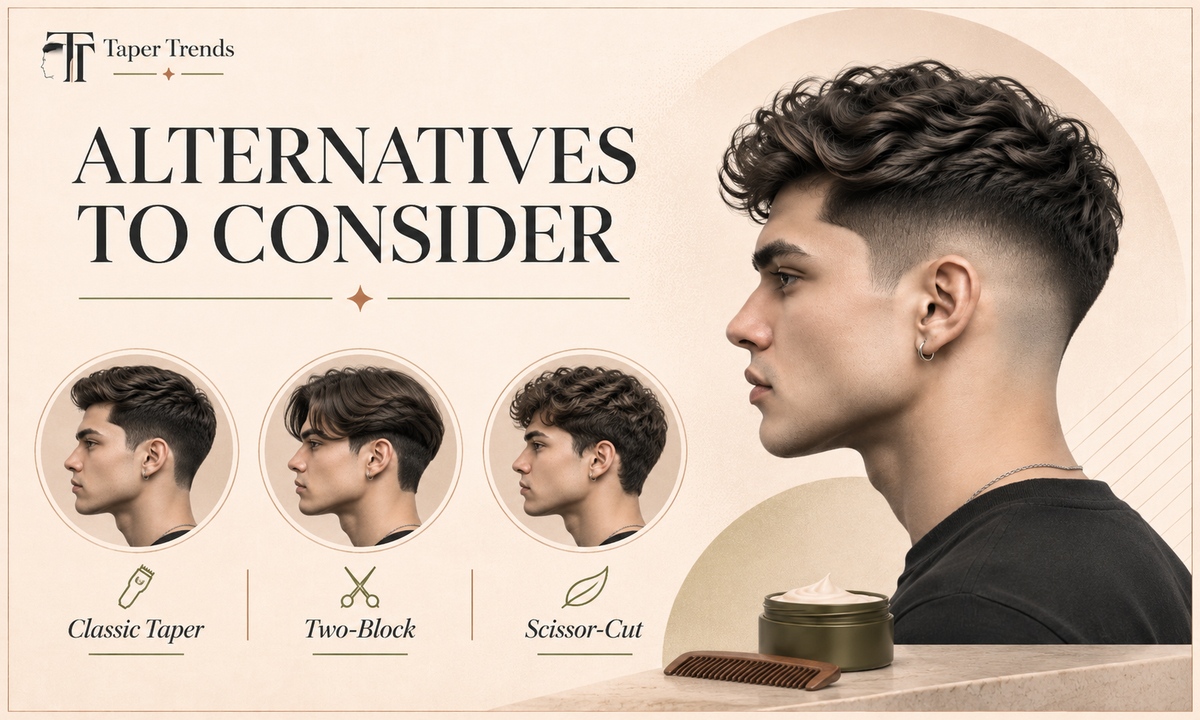
What alternatives should you consider?
If sharp disconnection or heavy side fading doesn't appeal, consider:
- A classic taper, which Great Clips describes as a gradual shortening that keeps some length at the neck instead of fading into skin. Our taper haircut guide covers the classic, low, mid and high types.
- A two-block cut, with a long top falling over short, unblended sides. Markcutit treats it as a type of undercut. The mid taper fade for Asian hair compares it with a blended taper.
- Scissor-cut sides, which stay longer and softer because they're shaped by hand rather than with clippers. Scissor cut vs clipper cut explains when each technique fits.
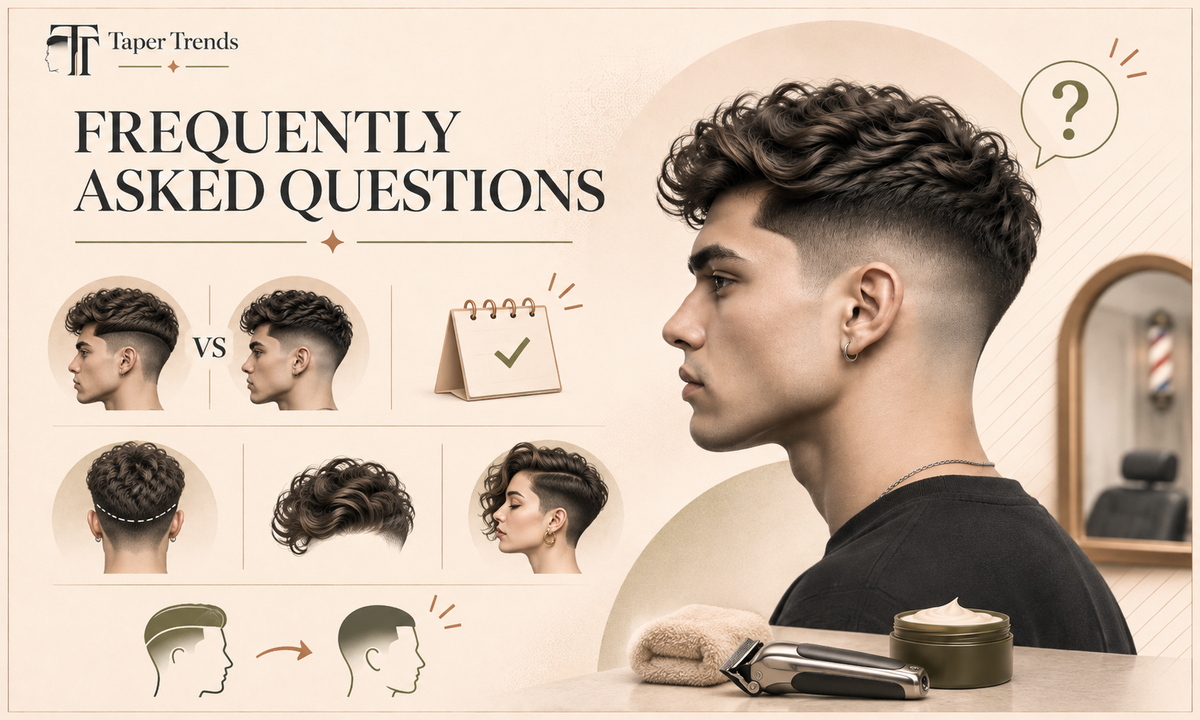
Undercut vs fade: frequently asked questions
Is a skin fade the same as an undercut?
No. A skin fade describes how short the bottom of the sides goes, while an undercut describes how the sides relate to a longer top. A single haircut can be both, either one or neither. When you book, ask for the shortest length and the connection to the top as two separate details.
Related: Skin fade · Low vs mid vs high skin fade · Skin fade vs taper fade
Is the undercut out of style?
No, though the look has changed. Markcutit's barbers say the very high-contrast slicked-back version peaked years ago, but undercuts under long hair, man buns and two-block cuts are still common. How current it looks depends on the top you pair it with.
Related: Long hair low taper fade · Mid taper fade, Asian hair · Low taper fade slick back
Which cut hides a flat back of the head better?
A fade usually hides a flat back of the head better. Markcutit explains that a barber can shape a fade's blend to the head, while an undercut is one length and follows whatever shape is already there.
Related: Drop fade · What a low taper fade looks like
Can you get a disconnected undercut with curly hair?
Yes, as long as the top is long enough once the curls have dried and shrunk. A curly top needs extra length to hang over the break without leaving a gap. Choose a barber who regularly cuts your texture. If your top is fairly short, a fade will usually sit more naturally.
Related: Curly low taper fade · Skin fade, curly hair · Mid taper fade, curly hair
Are undercuts and fades suitable for women too?
Yes. Both are clipper and sectioning techniques, not gendered styles. An undercut can sit only at the nape or behind the ears, hidden under longer hair until it's tied up, and a fade can blend into a short crop or pixie cut.
Related: Low taper fade for Black women · Taper haircut
Can a barber turn an undercut into a fade in one visit?
Partly. If the sides are still short, a barber can fade the lowest section even shorter in one visit and leave the break above it, creating a faded undercut. A full blend into the top usually needs more side length or a shorter top. Ask your barber for a realistic plan before the first cut.
Related: How to grow out a fade · How to fix a bad fade · Barber brief generator
Source named in these answers: Markcutit.
Undercut or fade: which should you choose?
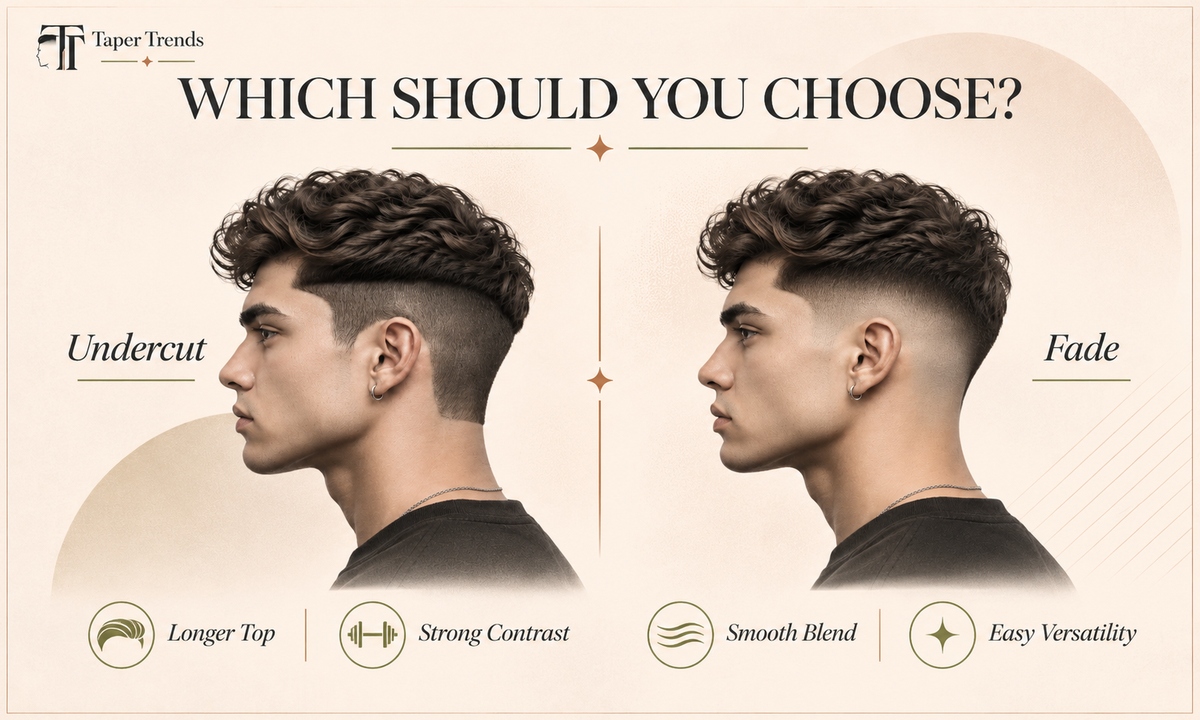
Choose an undercut if you have a longer top and want strong contrast with a defined break, especially if you slick it back or tie it up. Choose a fade if you want a smooth, adaptable side profile under a top of any length and an easier grow-out. If you want a bit of both, ask for a faded undercut.
Before you book:
- Pick a top length you'll actually style every day.
- Decide between connected and disconnected.
- Choose a fade height and how short the bottom should go.
- Save front, side and back photos of the cut you want.
The bottom line
An undercut is about contrast: one short length under a long top, with a break you can see. A fade is about the blend, and it works under a top of any length. Pick the one that matches the top you'll actually wear, or ask for a faded undercut if you want both.
Show those photos to your barber and ask what your hair will actually do. A good barber can adjust for density, texture and growth patterns in ways no guide can. The barber brief generator and how to ask for a fade will help you put the request together.
Keep reading
Fade basics and comparisons
Skin, shadow, drop and burst fades
Fade heights
Longer tops that suit an undercut
- Low taper fade slick back
- Low taper fade comb over
- Side part low taper fade
- Long hair low taper fade
- Mid taper fade, long hair
- Medium length low taper fade
- Low taper fade middle part
- Low taper fade blowout
- Low taper fade fluffy hair
- Low taper fade mullet
- Mid taper fade mullet
- High taper fade mullet
- Low taper fade mohawk
Shorter tops that suit a fade
By hair type
Face shape, hairline and beard
Asking, cutting and upkeep
Want more fade guides?
Browse clean, barber-ready breakdowns for every hair type.