Last reviewed October 28, 2026. Specifications and prices come from each manufacturer's US website and were checked on that date. These are not hands-on test results, so treat the picks as well-matched candidates rather than ranked winners.
The best hair product for a fade depends on the hair left on top, not on the fade itself. For a textured crop, start with a matte clay or fiber. For a side part or slick back, use a pomade. Fine hair that lies flat usually does better with a styling powder, and a curly or coily top needs a leave-in cream first, with gel added only when you want firmer definition. Your hair texture and the finish you want matter far more than whether the fade is low, mid, or high.
Product is the last step of a good fade, not the first. If you cut your own, our best clippers for fades roundup and how to cut a fade guide cover the blend, and how to fix a bad fade covers what to do when it goes wrong. Growing a fade out instead? How to grow out a fade matches product weight to each stage. Once the sides are clean, this guide helps you style what is left on top.
What hair products do you actually need for a fade?
A fade is a cutting technique, not a hair type. Low, mid, high, skin, and taper fades all do the same basic thing: they blend the sides and back from very short to longer. Our types of fade haircuts guide sorts them by height and finish, and the taper vs fade comparison shows how they differ. None of them calls for a particular product on its own. What you need depends on the hair left on top, meaning its length, its texture, and the style you want. For most people that adds up to one styler plus ordinary shampoo and conditioner.
Which parts of a fade need styling product?
Styling product belongs on hair that's long enough to shape, which is usually the top and front. The faded sides and any exposed skin rarely need it. Heavy product there mostly adds shine and residue in the one place a clean skin fade or taper fadeshouldn't have either.
There's a skin reason as well. The American Academy of Dermatology (AAD) explains that oil in hair products can reach the skin and clog pores along the hairline, the forehead, and the back of the neck, and it names oil-rich stylers such as pomade as a likely culprit. Keeping product on the hair and off the skin is an easy habit to build.
When can you skip styling product?
If the top is very short, you probably can. A buzz-length fade, like the one in our low taper fade buzz cut and mid taper fade buzz cutguides, usually looks finished with nothing more than regular washing, and a slightly longer top that sits neatly on its own may not need help either. A styler starts to earn its place when the top falls flat, sticks up, or won't hold the shape you're after. Not sure how much length you are working with? The haircut numbers guide and the clipper guard sizes tool show what each guard leaves.
Which product type is best for your desired finish?
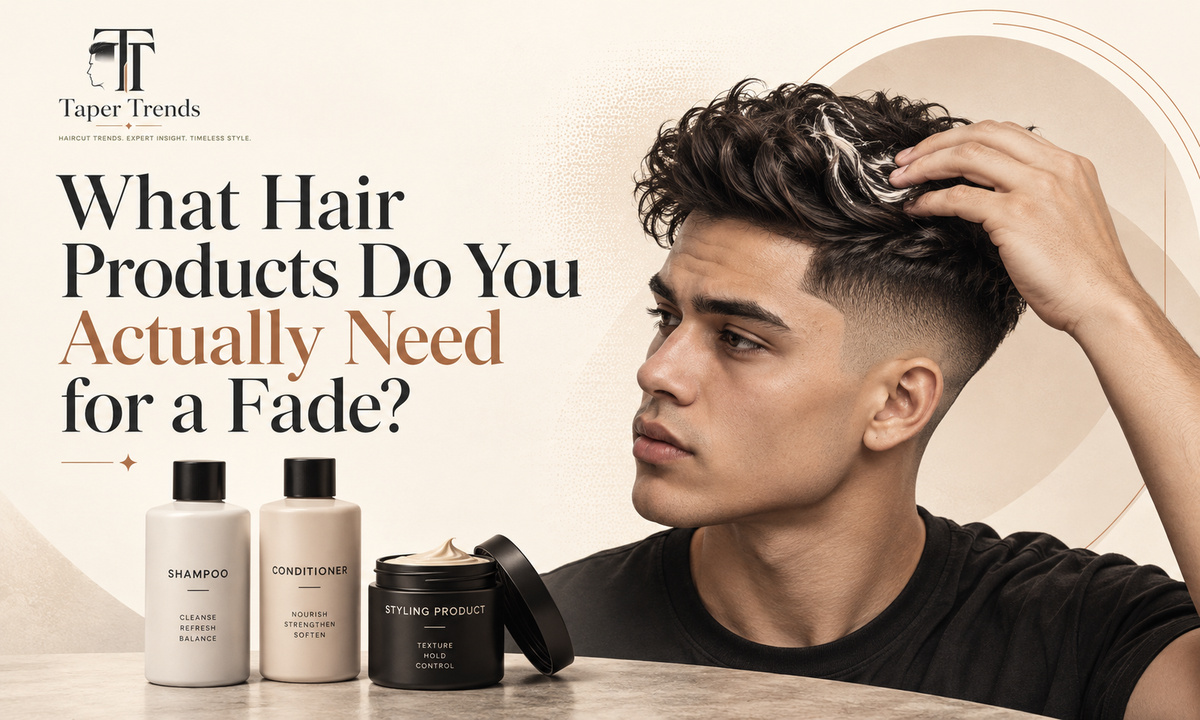
Choose a styling product by three things: finish (matte or shiny), hold (light or firm), and how easily it washes out. Category names like “clay” and “pomade” are only a starting point, because two formulas with the same label can behave very differently. Check the maker's stated hold, shine, and washing instructions before you buy.
The table below shows how each category tends to behave. Individual formulas vary.
| Product type | Typical finish | Typical hold | Best styling use | Main limitation |
|---|---|---|---|---|
| Clay | Matte | Medium | Textured crops | Little to no shine |
| Paste or fiber | Low shine | Medium to high | Short, structured styles | Can feel heavy on fine hair |
| Powder | Natural, matte look | Light, buildable | Volume in fine hair | Hard to wash out for some |
| Pomade | Natural to glossy | Medium to strong | Side parts, slick backs | Oil-heavy types leave residue |
| Cream | Soft, natural | Light | Moisture and soft texture | Little structure |
| Gel | Wet look to firm set | Medium to extreme | Defined curls | Can feel stiff |
Clay, paste, fiber, or powder for matte texture?
Clays and fibers add texture and control. Pastes are usually a little more pliable, and powders give lightweight grip and volume. Heavier formulas in any of these groups can weigh down fine hair, so start with a small amount. They pair naturally with the tousled, matte tops in our textured fringe with a low taper fade and French crop low taper fade guides.
Manufacturer specs show how wide the range is. Reuzel Clay Matte Pomade rates itself 6/10 for hold and 1/10 for shine. American Crew Fiber claims high hold with low shine, and Uppercut Deluxe Styling Powder is meant to go on completely dry hair.
Pomade, cream, or gel for shine and definition?
Pomade suits combed, polished styles like a slick back, side part, or comb over. A light cream keeps hair soft and manageable without much structure, while gel gives the strongest definition or set. Once you know the finish you want, check whether the formula is water-based, since those generally rinse out more easily than traditional oil-based pomades. Layrite Original Pomade, for example, is water-based, and Layrite says it washes out with water alone.
When is a pre-styler worth using?
A pre-styler helps when a style needs lift or direction before you dry it, which is common with fine hair that falls flat, and with blowout styles. Uppercut Deluxe Salt Spray is a light-hold example. Uppercut suggests misting it onto damp hair, then air-drying for a relaxed look or blow-drying for extra volume. If one product already holds your style, skip this step.
How should you choose for your hair type and fade style?
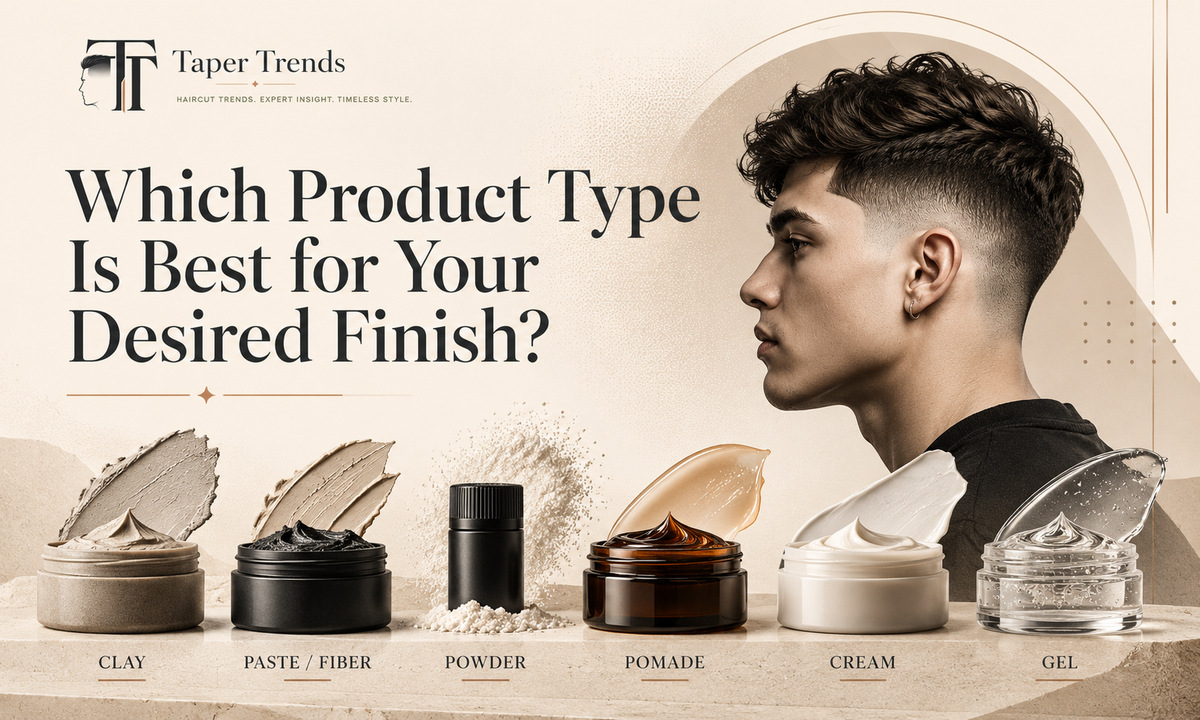
Two people with identical low fades can need completely different products. Strand thickness, density, curl pattern, and the length on top all change what works, so match the product to your hair first and treat fade height as secondary. The AAD's general advice points the same way: learn your hair type and choose products made for it. Our low taper fade for thin or thick hair guide shows how density changes what a blend and a top look like.
Straight or fine hair with a low or mid fade
Fine or flat-lying hair usually responds best to lightweight texture, such as a styling powder, a small amount of fiber, or salt spray before blow-drying. Go easy on quantity. Heavy formulas make fine hair look thinner and clumped, which is the opposite of what you want. Uppercut says its powder suits any hair type but excels in thinner or finer hair. See low taper fade for straight hair, mid fade haircut, mid taper fade for straight hair and low taper fade for short hair for cuts that suit this texture, and wavy hair or mid-fade waves if yours has a little bend.
Thick or coarse hair with a high fade or slick back
Match the hold to the style. A slick back usually calls for a pomade with some shine, while a textured top suits a clay or fiber. Thick, coarse hair often needs firmer hold than fine hair does, so compare stated hold levels rather than category names. Reuzel, for instance, steers thick or unruly hair toward its Extreme Hold Matte Pomade instead of its medium-hold clay. Longer tops, like those in low taper fade for medium-length hair, long hair with a low taper fade and mid taper fade for long hair, give you more to hold, so firmer products make sense there. For high fades with texture on top, see high taper fade with a textured fringe.
Curly or coily tops and 360 waves
For curls and coils, start with moisture and add definition only if you want it. The AAD notes that thick, curly hair is more prone to dryness and breakage than other hair types and recommends applying a leave-in conditioner or oil after washing and conditioning. Our curly low taper fade, low taper fade for afro hair, mid taper fade for curly hair and high taper fade for curly hair guides show how those tops are cut and worn.
A leave-in cream such as Curlsmith's Weightless Air Dry Cream covers the moisture side, and a gel such as Curlsmith's In-Shower Style Fixer adds hold when you need it. Both are reviewed below.
Brushed 360 waves are a different project. They come from a brushing and wave-training routine rather than a natural wave pattern, so ask your barber about technique before buying products for them. Start with low taper fade with waves and high taper fade with waves, and see low taper fade for Black men and high taper fade for Black men for more on texture-specific styling.
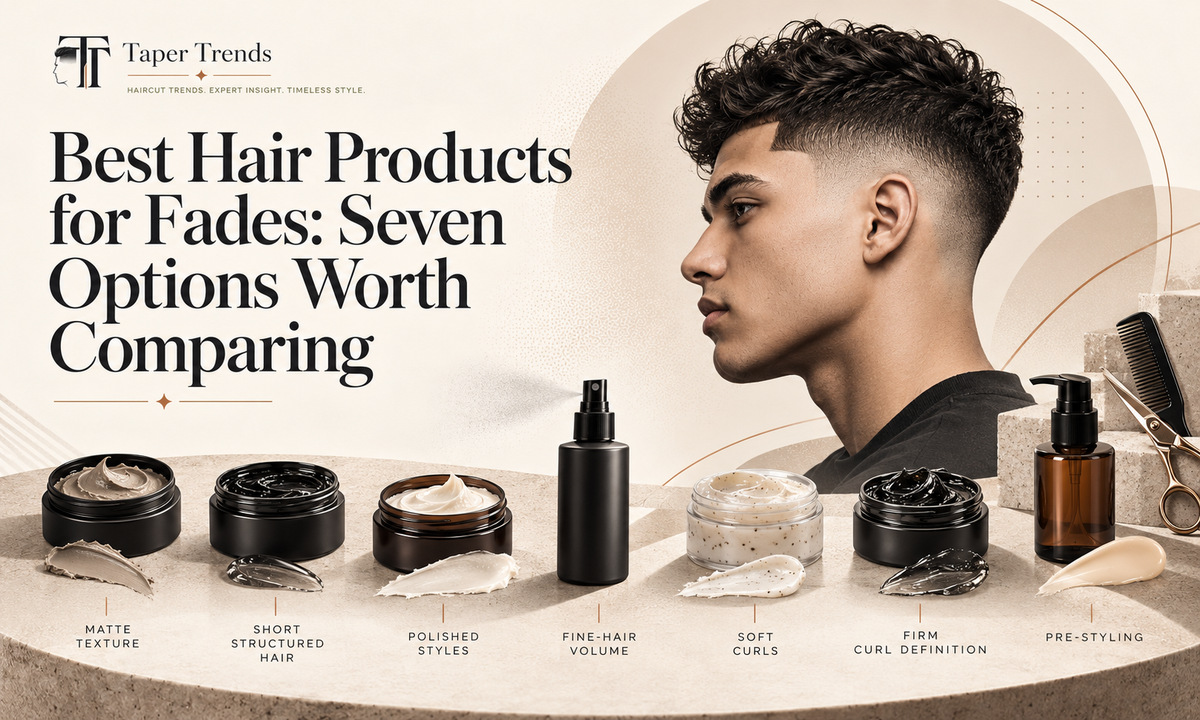
Best hair products for fades: seven options worth comparing
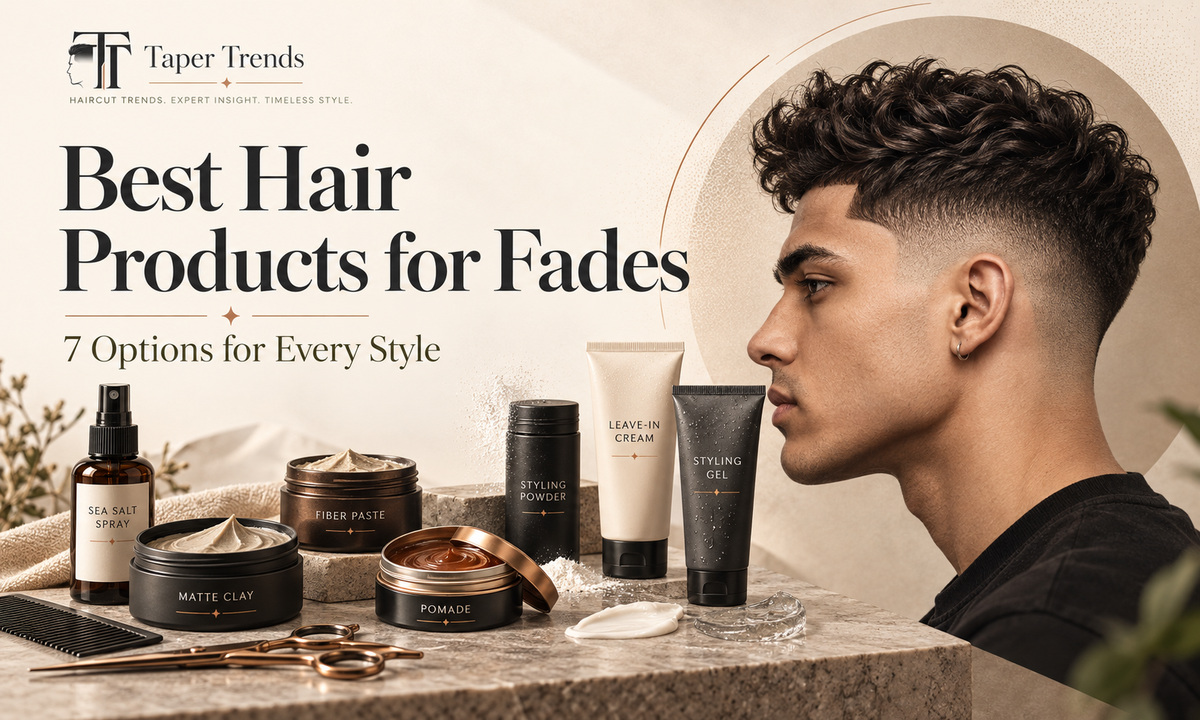
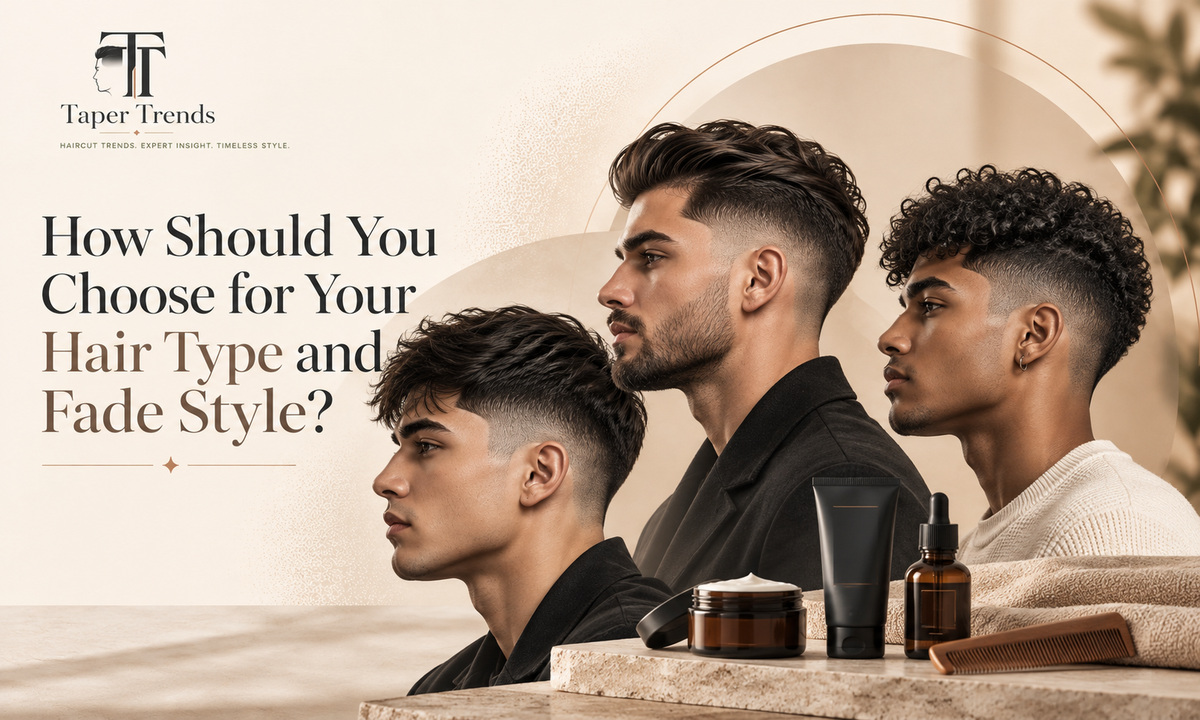
These seven products cover seven different jobs: matte texture, short structured hair, polished styles, fine-hair volume, soft curls, firm curls, and pre-styling. Each was chosen because it fills a distinct styling need, is sold through the maker's US store, and publishes clear hold, finish, and usage details.
Specifications and prices come from each manufacturer's US website and were checked on October 28, 2026. These are not hands-on test results, so read them as well-matched candidates rather than ranked winners. Prices and stock change often, so confirm both before you buy.
| Product | Best for | Maker-listed hold | Finish | Sizes | Price checked |
|---|---|---|---|---|---|
| Reuzel Clay Matte Pomade | Matte texture | Medium (6/10) | Matte (1/10 shine) | 1.3 oz, 3.38 oz | $20.95 for 3.38 oz (sold out) |
| American Crew Fiber | Short structured tops | High | Low shine | 1.75 oz, 3 oz | $13.50 to $23.00 MSRP |
| Layrite Original Pomade | Polished, combed looks | Medium | Medium shine | 1.5, 4.25, 10.5 oz | $24.00 for 4.25 oz |
| Uppercut Deluxe Styling Powder | Fine-hair volume | Flexible, buildable | Natural, matte look | 20 g | $22.00 |
| Curlsmith Weightless Air Dry Cream | Soft curls | Leave-in, no hold claim | Soft, hydrated | 2, 8, 16 oz | $27.00 for 8 oz |
| Curlsmith In-Shower Style Fixer | Firm curl definition | Extreme | Shine, temporary cast | 2, 8 oz | $28.00 for 8 oz |
| Uppercut Deluxe Salt Spray | Pre-styling, loose texture | Light | Natural | 150 ml | $20.00 |
Best for matte texture: Reuzel Clay Matte Pomade
Choose this for a textured crop or casual quiff with a lived-in, no-shine look. Reuzelbuilds it on kaolin clay, calls it water-soluble, and says it rinses out with regular shampoo. Damp fingers reactivate it later in the day, and the brand positions it for fine to medium hair. The tradeoff is polish. A matte, medium-hold finish won't give you a sleek combed part, where Layrite fits better, and Reuzel itself points thicker hair toward firmer formulas. Both sizes showed as sold out on Reuzel's US store when checked, so confirm stock first. For the look it creates, see textured fringe with a low taper fade and mid taper fade with a textured fringe.
Best for short structured hair: American Crew Fiber
Pick Fiberwhen your top is short and you want grip, thickness, and separation without shine. American Crew describes a pliable, fiber-like formula best suited to shorter styles and suggests starting with about a fingertip's worth, worked into damp or dry hair. Dry application brings out the most texture, according to the brand. Lanolin and beeswax are among its featured ingredients, so check the label if you avoid either. On a longer, looser top, a lighter product such as salt spray or powder makes more sense. The brand lists MSRP and sends buyers to retailers, so street prices vary. It suits the short tops in low taper fade for short hair, mid taper fade for short hair and high taper fade for short hair.
Best for classic side parts: Layrite Original Pomade
Layrite Originalis built for classic, polished looks on fine to medium-thick hair at short to medium lengths, though the maker also pitches it for messier styles with natural shine. It combines kaolin clay with natural waxes, and Layrite says it rinses out with water and leaves no buildup. For maximum control, the brand suggests prepping damp hair with its Grooming Spray, which is a separate purchase. The drawback is shine. If you want a completely dry, matte look, Reuzel's clay or American Crew Fiber will get you closer. For the styles it suits, see side part low taper fade, low taper fade slick back and middle part low taper fade.
Best for fine-hair volume: Uppercut Deluxe Styling Powder
Use the powderwhen the top lies flat and you want lift without a sticky, product-heavy feel. Uppercut's directions are simple: dry your hair completely, shake the powder lightly over it, then rake it into place and pinch sections for texture. Add more for more control. Because the hold is flexible rather than rigid, very thick or long hair may need something stronger, such as Fiber. Uppercut also warns that the powder can be tough to remove in certain hair types and recommends a full wash. It is a natural fit for fluffy hair, mid-fade fluffy hair and blonde hair, where a light touch keeps the top from looking heavy.
Best for soft curls: Curlsmith Weightless Air Dry Cream
This suits a curly or coily top that needs moisture and softness more than hold. Curlsmithdescribes a lightweight leave-in made with hyaluronic acid and aimed at fine to medium textures. Start with a dime-size amount, rake it through soaking-wet hair, and follow with a styler if you want definition. Curlsmith also advises focusing the cream on mid-lengths and ends rather than the scalp, which keeps it away from your fade line. It isn't a hold product, so pair it with Style Fixer for a firmer set. The formula contains fragrance, and Curlsmith sells a separate fragrance-free leave-in. For curly tops over a bare-skin finish, see skin fade for curly hair, and for a blown-out curly top see blowout low taper fade for curly hair.
Best for defined curls with firm hold: Curlsmith In-Shower Style Fixer
Choose this gel when you want curls that stay defined through humidity. Curlsmith labels it extreme hold and protein-free. Apply it to soaking-wet hair, scrunch or finger-curl, then air-dry or diffuse without touching. Once your hair is completely dry, scrunch out the cast with a little oil or serum. The drawback is stiffness until that cast is broken, and Curlsmith rates it best for medium to coarse textures, so fine curls may do better with the cream alone. The AAD lists long-lasting-hold styling products among habits that can damage hair, so save extreme hold for days you need it. Looking for locs or longer coils? See low taper fade with dreads and mid taper fade with dreads.
Best lightweight pre-styler: Uppercut Deluxe Salt Spray
Reach for Salt Spraywhen a loose top needs light control or extra volume before blow-drying. The 150 ml non-aerosol bottle sprays a fine mist. Uppercut suggests applying it to damp hair, then air-drying for a relaxed finish or blow-drying for volume before adding another styler. You can also use it on dry hair for a casual look. Its light hold won't set a structured crop by itself. The ingredient list includes denatured alcohol and fragrance, so check the label if your scalp runs dry or sensitive. It works well under blowout and mid taper blowout styles.
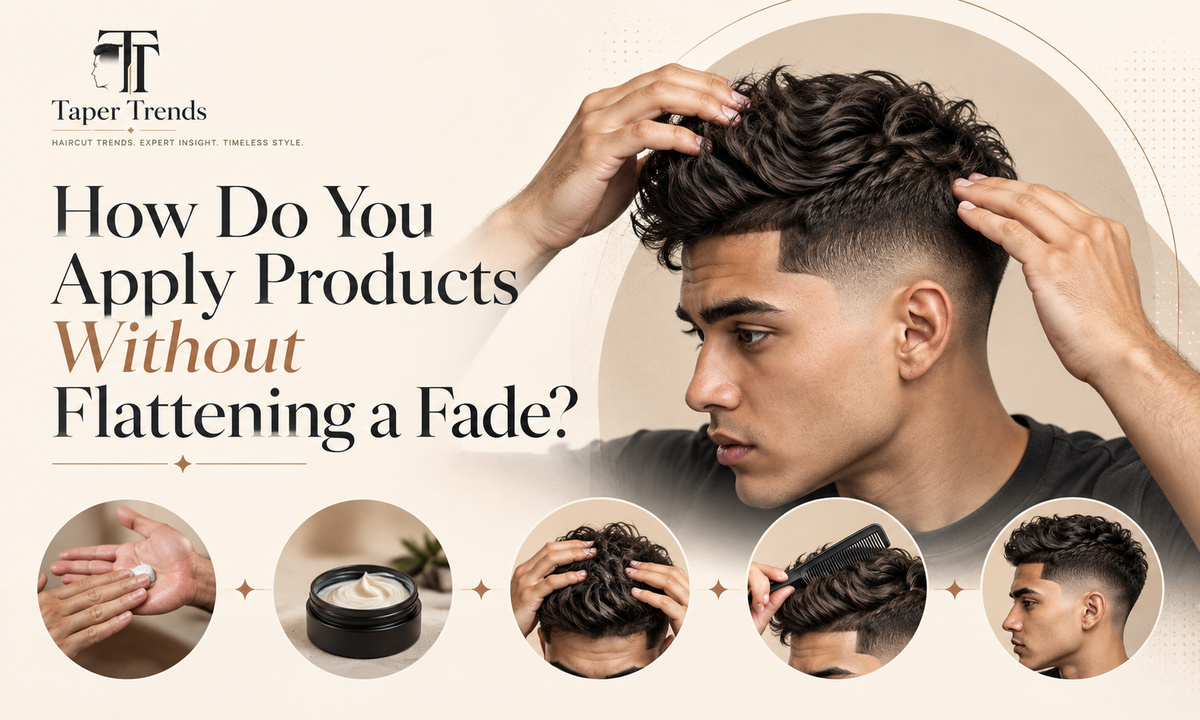
How do you apply products without flattening a fade?
Use less product than you think you need. Warm it between your palms until it disappears, work it into the longer hair on top, and keep it away from the faded sides. Shape the style first, then add a little more only where the hair separates or falls flat. American Crew notes that too much product weighs hair down and dulls texture. Our how to style a low taper fade guide walks through full routines for the top.
What is the five-step styling order?
Prepare the hair, choose one product, start with a small amount, shape the top, and adjust only where needed.
- Prepare.Towel-dry gently. Apply any pre-styler or leave-in first, and dry your hair completely if you're using powder.
- Choose one product. Stacking stylers adds weight and rarely improves the result.
- Start small.Try a fingertip of Fiber, about one knuckle of Reuzel's clay, or a dime-size dab of curl cream. Rub it between your palms until it's spread thin.
- Shape. Work from the back of the top toward the front, using fingers for texture or a comb for a part.
- Adjust. If a section still looks flat, add a little product there only. If the whole top looks greasy, wash it out and start again with less.
You should end up with a defined top and a clean fade. With reworkable formulas such as Reuzel's clay or Uppercut's powder, a midday reshape with damp fingers usually works better than adding more product. If the fade itself looks uneven once styled, our how to fix a bad fade guide explains whether it is a blend problem or missing length.
Should you apply hair products to damp or dry hair?
Follow each product's directions, because the answer changes from formula to formula. American Crew says damp application spreads product evenly and boosts hold, while dry application brings out the most texture in products like Fiber. Uppercut's powder needs dry hair, its salt spray goes on damp hair, and Curlsmith's cream and gel go on soaking-wet hair.
If you blow-dry, the AAD advises air-drying when possible and using the lowest heat settingwhen you can't.
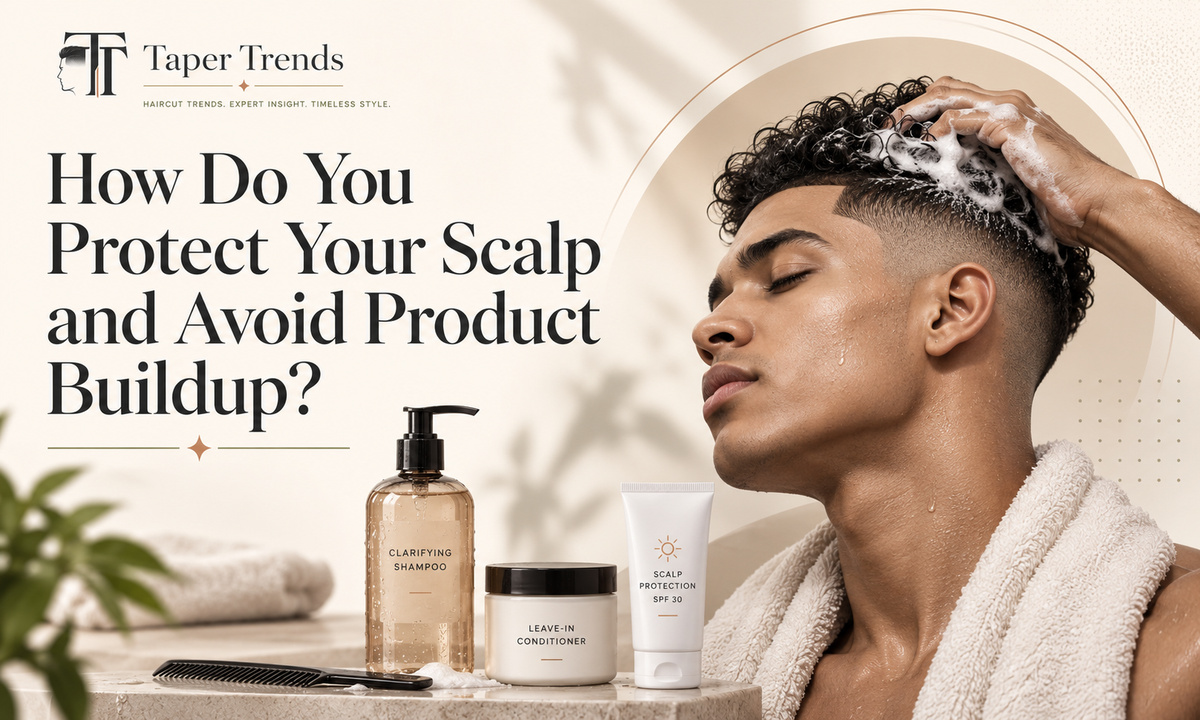
How do you protect your scalp and avoid product buildup?
Small amounts, a product-free hairline, and regular washing do more for your scalp than any extra product. Residue and irritation are the usual downsides of styling, and a few habits limit both. Styling products also aren't treatments, so persistent scalp symptoms belong with a dermatologist, not a different pomade.
If you use gels, creams, or pomades often and your hair starts to feel coated, a clarifying wash can help. The AAD's curly-hair guidance suggests using a clarifying shampoo before your regular moisturizing shampoo when you style with those products.
Can pomades and oils cause hairline breakouts?
Yes, for some people. The AAD calls this acne cosmetica, and it usually shows up as whiteheads and tiny bumps along the hairline, forehead, or back of the neck. The bumps can be subtle enough to feel before you see them. Oil-heavy pomades are a common trigger, but the AAD notes that shampoos, conditioners, gels, waxes, pastes, and sprays can contain oil too. A “water-based” label doesn't automatically mean oil-free.
If you're breaking out, look for products labeled oil-free, non-comedogenic, non-acnegenic, or “won't clog pores.” Wash anything your head touches, including pillowcases, sheets, caps, hats, and headbands, because product residue transfers. Once you stop using the cause, the AAD says the acne can take 4 to 6 weeks to clear. If it hasn't cleared by 6 weeks, see a dermatologist. Beard wearers should also read skin fade with a beard and low taper fade with a beard, since product can travel from the hairline to the beard line.
What about flaking, sunscreen, and heat damage?
Flakes can come from dandruff, a dry scalp, or leftover product, and swapping stylers won't tell you which. For dandruff, the AAD suggests over-the-counter shampoos containing zinc pyrithione, salicylic acid, sulfur, selenium sulfide, ketoconazole, or coal tar, and recommends seeing a dermatologist if flaking doesn't improve, since it can signal conditions such as seborrheic dermatitis or psoriasis.
A skin fade or high fadealso leaves more scalp exposed to the sun. On that same page, the AAD recommends shade, a wide-brimmed hat, and a broad-spectrum, water-resistant sunscreen with SPF 30 or higher for scalp skin that hair doesn't cover, and notes that powder or spray sunscreens are easier to apply there. Keep blow-dryer heat low for the same reason you keep product light: less damage to fix later.
How can you compare price, size, and value?
Compare price per ounce only between products that are measured the same way and do the same job, then think about how much you actually use each time. A cheap jar that doesn't suit your hair costs more in the end than a pricier one you finish. Confirm current prices and sizes on each maker's US store, since promotions and stock change.
What is a fair way to compare styling products?
Convert to price per ounce only within one category and one unit. Jars sold by net weight compare directly with each other. A gel's fluid ounces, a salt spray's milliliters, and a powder's grams don't belong in the same calculation.
The table uses prices shown on the makers' US websites on October 28, 2026. American Crew's figures are its listed MSRP.
| Product | Net weight | Price | Per ounce | |
|---|---|---|---|---|
| Layrite Original Pomade | 4.25 oz | $24.00 | $5.65 | |
| Reuzel Clay Matte Pomade | 3.38 oz | $20.95 (sold out) | $6.20 | |
| American Crew Fiber | 3 oz | $23.00 | $7.67 | |
| American Crew Fiber | 1.75 oz | $13.50 | $7.71 | — |
Two things stand out. The smaller Fiber tin costs almost exactly the same per ounce as the larger one, so buying small to test a formula carries little penalty. And Layrite works out cheapest per ounce here, but that only matters if you want its shine. For a matte crop, the “cheaper” jar is the wrong buy. Remember that styling is only part of upkeep: regular trims, covered in how often should you get a haircut, keep a fade looking sharp far more than any product does, and a clipper you own, such as one from our best clippers for fades guide, can stretch the time between barber visits.
Frequently asked questions about hair products for fades
These answers cover the questions that usually come up after choosing a product.
Will styling products make my fade last longer?
No. Styling products keep the longer hair on top looking shaped, but they do nothing to slow regrowth on the sides, so the fade softens on its own schedule. When the blend starts to look fuzzy or the lines lose their edge, the fix is a trim from your barber, not more product.
Do you need styling products for a buzz cut fade?
Usually not. A very short top has too little length to hold a shape, and heavy product mostly adds shine or residue. Regular shampoo and conditioner are enough for most people. If you want a bit of definition anyway, start with the lightest option, such as a small dusting of styling powder.
Can dry shampoo replace texture powder?
Not reliably. Dry shampoo is made to absorb oil, and AAD dermatologists point out that it doesn't actually clean hair, so it shouldn't replace regular washing. A styling powder is formulated for texture and flexible hold instead. Check each label for the job you need, and keep washing with shampoo and water either way.
Can you use curl cream and styling gel together?
Yes, when the products are designed to work in sequence. Answering a customer question on its product page, Curlsmith says to apply Weightless Air Dry Cream first and In-Shower Style Fixer second. Other pairings may not behave the same way, so start with small amounts and watch for a coated or waxy feel once your hair dries.
Are fragrance-free hair products better for sensitive skin?
Only if fragrance is what irritates you. DermNet cautions that fragrance-free and unscented labels don't always mean a product contains no fragrance chemicals, since some use a masking fragrance. Other ingredients can cause reactions too. Read the full ingredient list, try a small amount first, and stop using anything that itches or burns.
How can you restyle a fade after wearing a hat or helmet?
Reshape the top with your fingers first. Reuzel says damp fingers reactivate its clay pomade, and Uppercut describes its powder as reworkable throughout the day. If the style stays flat, add a small amount of the same product rather than layering a different one on top, which tends to leave hair heavy and stiff.
Sources for these answers: the AAD on dry shampoo, DermNet on fragrance labels, Curlsmith's Style Fixer page, and Reuzel's clay pomade page. For help putting a style into words at the chair, read how to ask for a fade, or use the barber brief generator to write up the cut and top length you want.
What should you buy first?
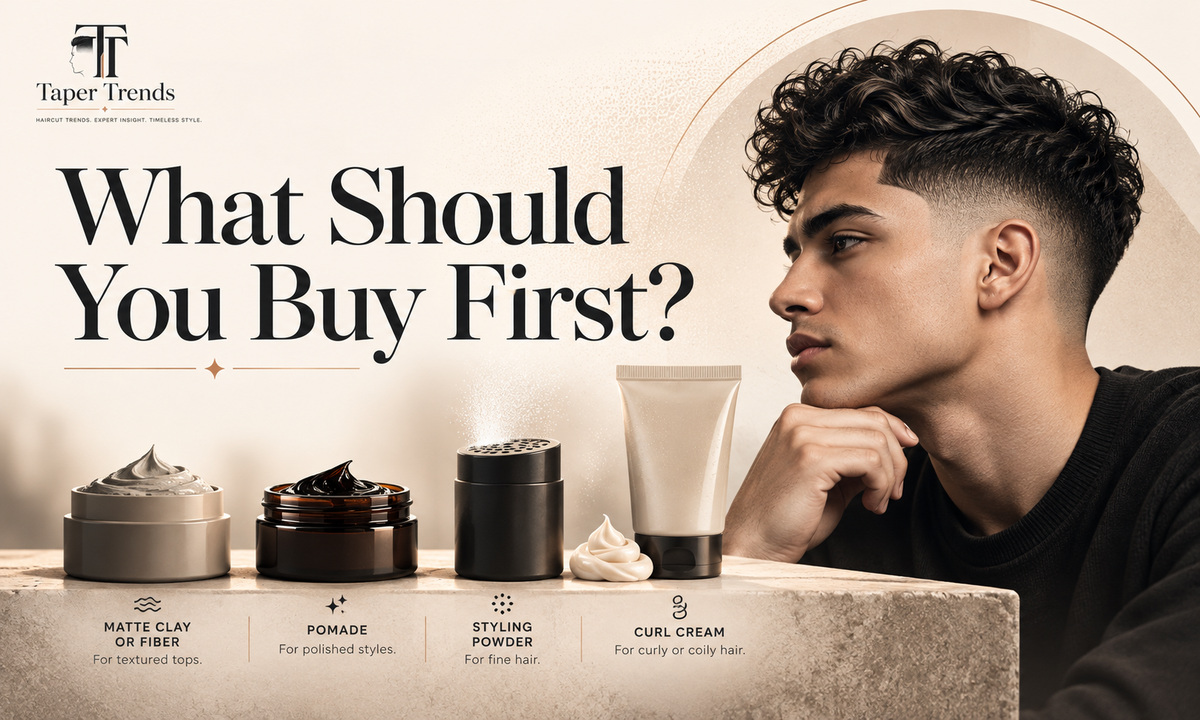
Start with one product matched to the hair on top, not to the height of your fade, and buy the smallest size available while you figure out whether it suits you. Use a small amount, keep it off your hairline, and wash it out regularly. Switch only when the result feels heavy, won't hold, or irritates your skin.
- Matte, textured top: clay or fiber
- Polished, combed top: pomade
- Fine hair that needs lift: styling powder
- Curly or coily top: leave-in cream, with gel only for extra definition
- Very short buzz fade: no styler needed
Hold off on a second styler until you know exactly where the first one falls short. Then pick your next cut: the low taper fade guide is the pillar for everything above, and types of fade haircuts helps you choose the height and finish to style.
Keep going: fade guides worth reading next
Product is only the finish. These guides cover the cuts, the textures they work on, the tools behind them, and how to ask for them.
- Best clippers for fadesThe tools behind the cut, so the product has a clean fade to sit above
- How to cut a fadeThe guarded step-by-step method for a blend you can then style
- How to grow out a fadeWhich product weight to use at each stage of the awkward in-between phase
- How to fix a bad fadeWhat a barber can still correct when a cut or a product goes wrong
- How to style a low taper fadeStyling routines for the top once the blend is done
- Low taper fade guideThe pillar guide to the gentlest fade and what to put on top of it
- How to ask for a fadeThe height, finish and top length to name at the chair
- How often to get a haircutWhy trims, not product, keep a fade looking sharp
- Haircut numbersEvery guard size, and how much top length you have left to style
- Types of fade haircutsEvery fade by height and finish
- Taper fadeThe broad guide to the blend itself
- Taper haircutA softer cut that leaves plenty of length to style
- Skin fadeBare-skin sides, and why product belongs on the top only
- Skin fade for curly hairMoisture and definition for a curly top over a skin fade
- Mid taper fadeThe in-between height, and the tops that suit it
- High taper fadeA higher start line with more contrast on top
- Low taper fade buzz cutA one-guard top that usually needs no styler at all
- Textured fringe with a low taperThe matte clay and fiber look in full
- Low taper fade slick backA pomade-led, polished style
- Undercut vs fadeWhy a long undercut top needs product and a comb, and a short faded top needs little
- Side part low taper fadeClassic combed styling over a clean blend
- Low taper fade middle partA parted top that needs light, flexible hold
- Low taper fade comb overA combed style where finish and hold matter
- French crop low taper fadeA short, structured top for fiber or paste
- Low taper fade blowoutWhere pre-stylers and blow-drying earn their place
- Curly low taper fadeMoisture-first care for a curly top
- Low taper fade for afro hairCaring for dense, coily texture over a fade
- Low taper fade with wavesBrushing and wave-training routines
- Low taper fade for wavy hairLight products that keep a wave pattern loose
- Low taper fade for thin or thick hairHow density changes the product you reach for
- Low taper fade for fluffy hairControlling volume without weighing the top down
- Low taper fade with a beardWhere beard care and hair care overlap
The bottom line
Buy for the hair on top, not the fade. Clay or fiber for matte texture, pomade for polish, powder for fine hair, and cream before gel for curls.
A small amount, a product-free hairline, and regular washing keep the fade clean and your skin clear.
Want more haircut guides?
Browse clean, barber-ready breakdowns for every hair type.