To grow out a fade, stop having the sides clipped short, pick the haircut you're growing toward, and keep seeing a barber every four to six weeks for neckline and ear cleanups only. Once the sides have enough length, have them shaped with scissors. Barbers generally put a skin fade two to three months from a short scissor cut, and four to six months or more from a medium-length style.
The fastest way out is usually a taper, and the slowest is a long style that starts from a high skin cut. If you're not sure what you're growing out of, our guides to types of fade haircuts and different kinds of fades sort out the heights and finishes, and the complete low taper fade guide shows the softer landing spot most people aim for. If the fade went wrong rather than simply getting old, start with how to fix a bad fade.
What happens when you grow out a fade?
A fade is a gradient: skin or very short hair at the bottom, blending into longer hair above. When you stop recutting it, the shortest hair gains length, the gradient flattens, and the sides start widening your outline. Nothing is going wrong. The haircut is simply losing the contrast that made it look sharp. That applies whether you started from a skin fade, a shadow fade, a temp fade, or a curved burst or drop fade.
Why the fade loses its shape as hair grows
Scalp hair grows at roughly the same pace everywhere, so after a few weeks the shortest band isn't short anymore and the blend turns into one heavier mass. Two things make it look worse than it is. Highgate Cuts, a London barbershop, notes that side hair tends to stick out rather than lie flat at about one to three centimeters, especially above the ears. And the top, which was cut to sit over tight sides, now rests on a bulkier shape it was never designed for.
That puffiness is ordinary regrowth. A visible step or shelf between the sides and top is a different problem, usually left over from a disconnected cut like an undercut, and it's worth pointing out to your barber. Our guide to fixing a bad fade explains which problems are blend issues and which are simply missing length.

How long does it take to grow out a fade?
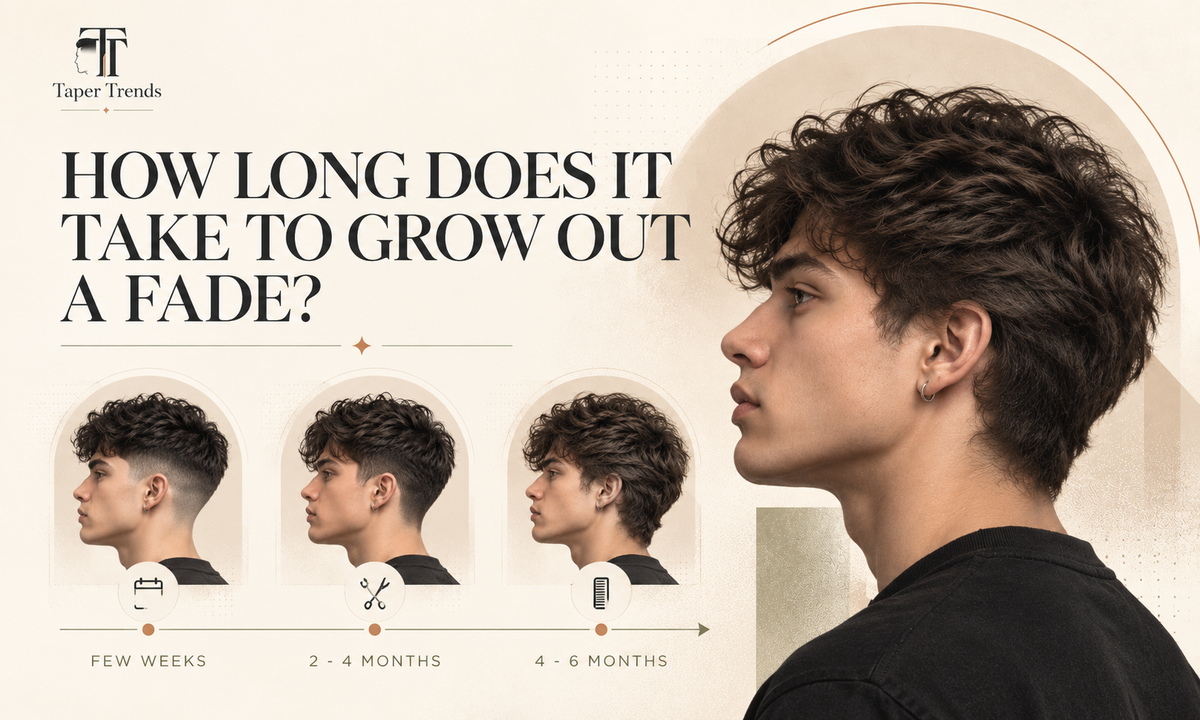
Growing out a fade takes a few weeks for the fade line to disappear, roughly two to four months for the sides to reach a length scissors can shape, and four to six months or more for a medium-length style. These are barber estimates, not promises. Your growth rate, starting fade, and target haircut all move the finish line. The same logic sits behind our how often to get a haircut guide and the haircut frequency calculator.
Scalp hair grows about half an inch a month, according to MedlinePlus and Johns Hopkins Medicine. That's an average. A hair-physiology summary from the Agency for Toxic Substances and Disease Registry cites a range of 0.6 to 3.36 centimeters a month between individuals, so two people starting from the same fade can finish weeks apart.
How long until the sides can be shaped with scissors?
Scissor shaping depends on workable length, not the calendar. Markcutit, a barbershop in Mississauga, Ontario, treats sides of about three to four centimeters (roughly 1.2 to 1.6 inches) as ready for scissors, a point its clients from a mid skin fade usually reach 11 to 16 weeks in.
Texture changes the picture. Tight curls shrink, so the same length looks shorter, and a rounded outline needs more length to hold than a tapered one. A quick test: if you can't lift the side hair between a comb and your fingers, it probably isn't ready. If you do reach for clippers at this point, our haircut numbers guide shows how much length each guard actually leaves behind.
Why the starting fade and target haircut change the timeline
Your starting fade decides how much hair has to regrow, and your target haircut decides how much length you need. A low fade leaves only a narrow band above the ears and nape to recover, while a high skin fade leaves most of the side of the head (see different kinds of fades and low vs mid vs high skin fade).
There's also a catch many guides skip. The top grows at the same pace as the sides, so the gap between them never closes on its own. If the top is three inches longer today, it will still be about three inches longer in four months. Only selective trimming changes the proportions.
| Starting point | Target haircut | Typical barber estimate |
|---|---|---|
| Skin or mid fade | Taper (short, no bare skin) | 2–4 weeks |
| Skin or mid fade | Short scissor cut | About 2–3 months |
| Skin or mid fade | Medium length, partly over the ears | 4–6 months |
| Skin or mid fade | Long enough to tuck behind the ears | 6–9 months or more |
These ranges come from Highgate Cuts and Markcutit, and the two shops don't fully agree: Highgate allows short scissor work from six to ten weeks, while Markcutit puts it closer to 11 to 16.
How to grow out a fade step by step
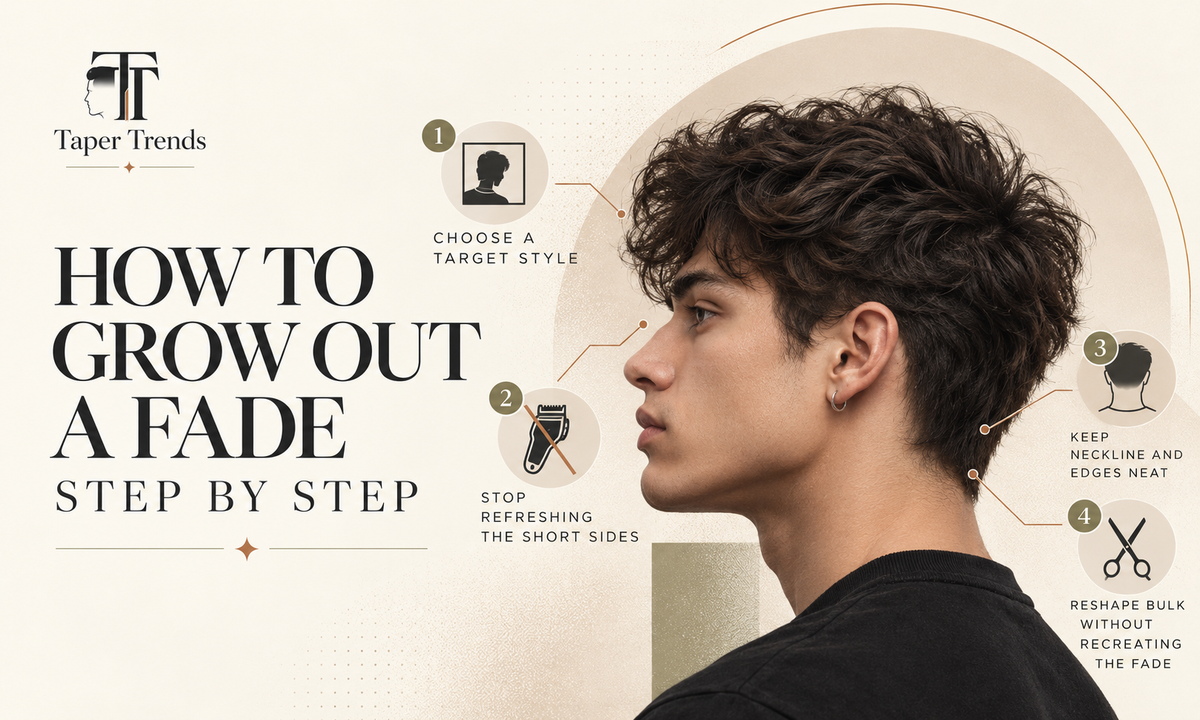
Growing out a fade comes down to four moves in order: choose a destination, stop cutting the sides short, keep the edges tidy, and reshape bulk once there's length to work with. Done in sequence, they let you keep every week of growth while the haircut still looks deliberate.
Step 1: Choose your target hairstyle
Decide where you're headed before your next appointment: a taper, a short scissor cut, or a longer style. A taper is the quickest exit, and longer styles take real patience. Browse low taper fade for short hair, for medium-length hair or for long hair to see the finish line. Save two or three reference photos and settle three things:
- How long you want the sides
- How long the top should be
- How often you're willing to see a barber
Step 2: Stop refreshing the short sides
Every skin-short reset or high blend removes weeks of growth and starts the clock again. Say it plainly at the chair: “I'm growing out my fade, so please don't use clippers on the sides.” Highgate Cuts points out that asking for “just a tidy” is how a lot of men lose six weeks of growth in one visit.
Step 3: Keep the neckline and edges neat
Book a cleanup, not a full haircut. The barber tidies the neckline, sideburns, and the area around the ears, and leaves the upper sides and top alone. The barbershops reviewed for this guide suggest visits every four to six weeks, which reflects their experience rather than a tested schedule.
Leave the neckline to the barber if you can. Highgate warns that home-trimmed necklines tend to sit too high and then have to be taken back further, though Markcutit says a quick home tidy is fine if you stay below the old fade line. If you're tempted to do it yourself, read how to cut a fade and check the best clippers for fades first.
Step 4: Reshape bulk without recreating the fade
When the sides start to puff out, ask for shape, not shorter. A barber can remove weight with thinning or point cutting, then refine the outline with scissor-over-comb so your head looks rounded rather than boxy. Try: “Take the bulk out above the ears, keep the length, and no clippers.” Highgate calls this the visit most people skip and the one that matters most.
Fade grow-out timeline: weeks 1–16 and beyond
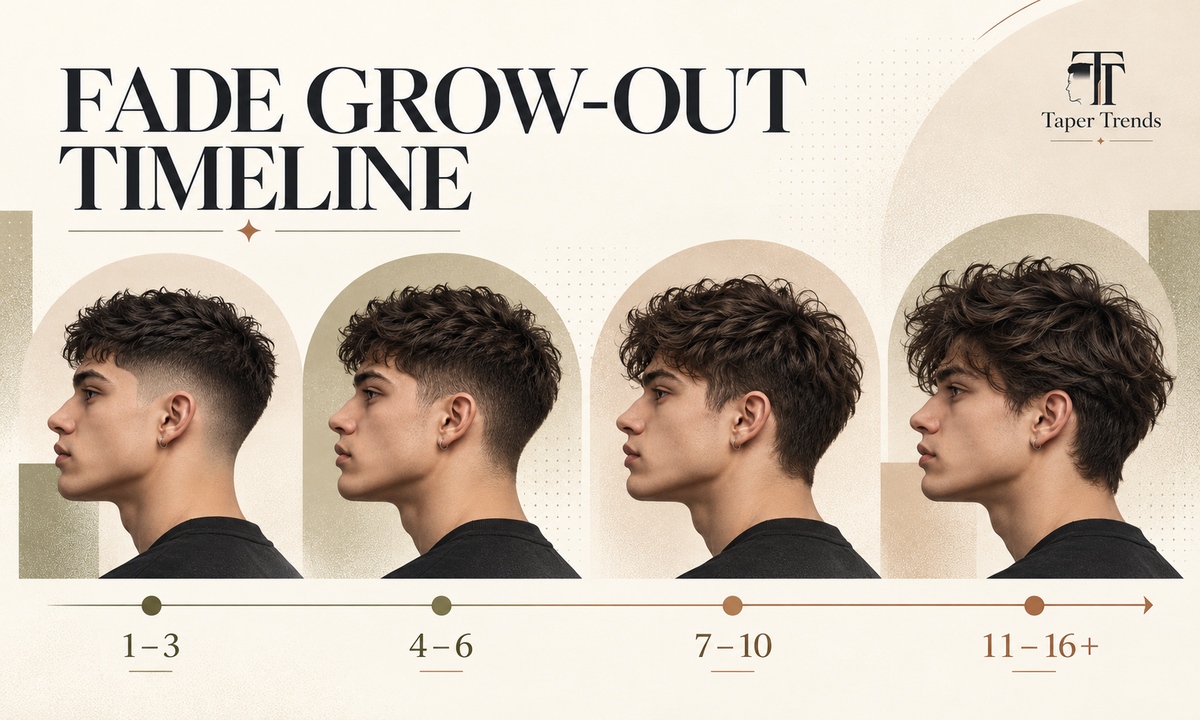
Most fade grow-outs follow the same arc. The fade blurs, the sides flare, the head starts to look wide and bulky, and real styling options open up after about three months. Barbers draw the stage lines a week or two apart, so read this as a planning guide for a skin or mid fade rather than a schedule.
| Weeks since last fade | Likely change | Next action |
|---|---|---|
| 1–3 | Fade softens; bare skin fills in | Preserve length |
| 4–6 | Sides fuzzy and flaring; neckline messy | First cleanup: neckline and ears only |
| 7–10 | Sides bulky; head looks wider than tall | Ask for targeted bulk removal |
| 11–16+ | Sides reach roughly 3–4 cm | Shape toward your target cut |
Weeks 1–3: Let the fade soften
Doing nothing is a perfectly good plan here. The fade line blurs, bare skin fills in with stubble, and your top still looks close to normal. BB's Barbers in Penrith, England, calls this the easy stage. The only real risk is panic, because a clipper pass now throws away length you just gained.
Weeks 4–6: Manage fuzzy edges and puffy sides
The sides are long enough to flare but too short to lie flat, especially around the ears and temples. Markcutit books the first grow-out visit in this window: clean the neckline and around the ears, and leave everything else. Between visits, press a little matte product into the sides and push them back or down. Our best hair products for fades guide covers what to reach for.
Weeks 7–10: Control side bulk
This is the hardest stretch. The sides add width while the top hasn't gained matching height, a shape BB's Barbers compares to a mushroom. Shaping fixes it and shortening doesn't. A barber can take bulk out while keeping the length, and a blow dryer aimed up and back on the top adds height that rebalances the outline. It's also when most people quit and go back to clippers. A low taper fade blowout is one way to turn that extra top volume into a deliberate look.
Weeks 11–16 and beyond: Shape the new haircut
Judge readiness by length, not the calendar. Once the sides can be pushed back or down and the top has real length, check whether your target cut holds together: a balanced silhouette, sides that connect to the top, and layers where they're needed. If the sides still spring out, give it another four to six weeks.
What should you ask your barber while growing out a fade?
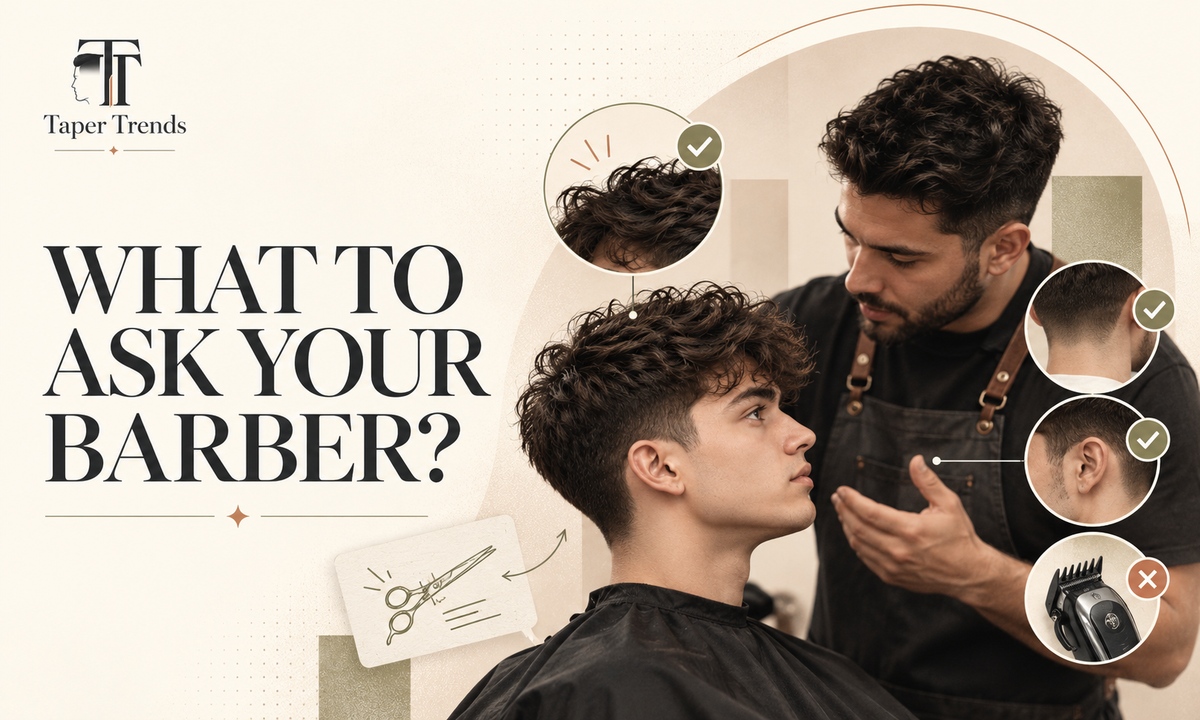
Tell your barber three things before any cutting starts: the haircut you're growing toward, the areas to protect, and the edges they may tidy. Then ask what they plan to cut. Clear instructions are the difference between a cleanup and an accidental reset, and they're worth repeating at every visit.
A barber script for your grow-out appointments
“I'm growing this out toward a [textured crop / side part / medium cut]. Please keep the length on the upper sides and top. You can clean the neckline, sideburns, and around my ears, and thin the bulk above them with scissors. Before you start, what are you planning to cut?”
That last question catches a stray clipper pass before it happens. Modern Grooming Co, a barbershop in Queensland, Australia, also advises saying you're growing it out at every visit. For wording beyond grow-outs, see how to ask for a fade, or build a ready-made script with the barber brief generator.
What can a barber trim without resetting progress?
A barber can tidy the perimeter and remove bulk without costing you progress. Shortening the sides with clippers or re-blending the old fade line does reset it.
| Usually preserve | Usually fine to adjust |
|---|---|
| Upper-side length | Neckline and nape |
| Side panels | Sideburns and ear edges |
| Top length, unless out of proportion | Bulk above the ears |
| Crown and cowlicks | The back, if it outgrows the sides |
The back is the usual exception. From around month three, Highgate Cuts recommends keeping it level with or a touch shorter than the sides.
How do you style a fade during the awkward stage?
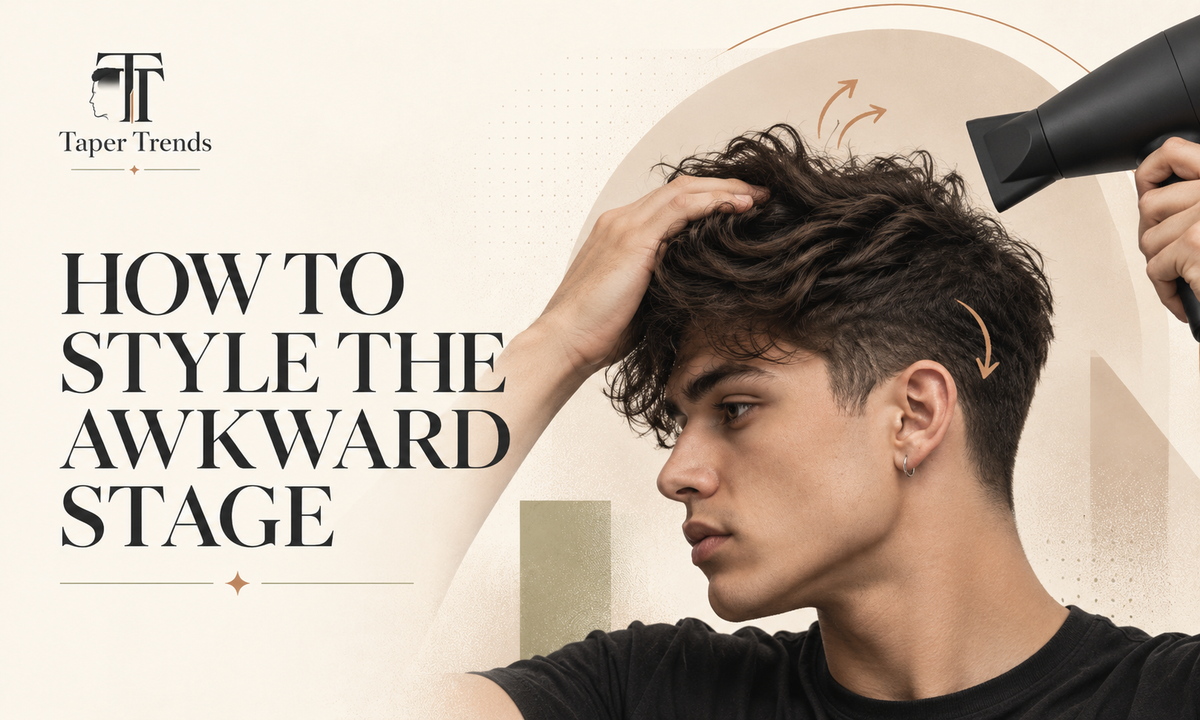
Styling a growing fade comes down to direction, product weight, and gentle heat. Press a matte paste or cream into the sides, dry them down or back, and add texture or lift on top so the proportions look balanced. Styling changes how hair sits, not how fast it grows, so pick your product by stage and keep the heat low. The full routine lives in our guide on how to style a low taper fade.
Control puffy sides with styling direction and light hold
- Dry the sides down. Towel-dry gently, then aim a blow dryer downward while pressing the sides flat with your fingers for about half a minute, a trick Highgate Cuts recommends. The American Academy of Dermatology (AAD) advises limiting blow-drying, sticking to low or medium heat, and using a heat protectant.
- Put product on the sides, not just the top. A small amount is enough to stop them flaring.
- Move your part. A side part spreads the top over the grown-out side and hides the old fade line, and a comb over or middle part does the same job in a different shape.
Choose styling products based on hair texture
Match product weight to your stage and texture. BB's Barbers suggests matte clay or wax for the first six weeks, a medium-hold clay or styling cream from around week seven, and lighter creams once you pass week 12. Modern Grooming Co warns that heavy, shiny products make growing hair look greasy. For category comparisons, see best hair products for fades.
| Product | Best fit | Watch out for |
|---|---|---|
| Matte clay or paste | Short sides, early weeks | Buildup; shampoo the scalp to clear it |
| Styling cream | Longer hair, later weeks | Less hold on stubborn sides |
| Leave-in conditioner | Curly or coily hair | Pair with gentle, wide-tooth detangling |
If your hair is curly, moisture usually matters more than hold. The AAD notes that curly hair is drier than other hair types. Soft, lifted tops are covered in low taper fade for fluffy hair and mid taper fade for fluffy hair.
Which haircut should you transition to after a fade?
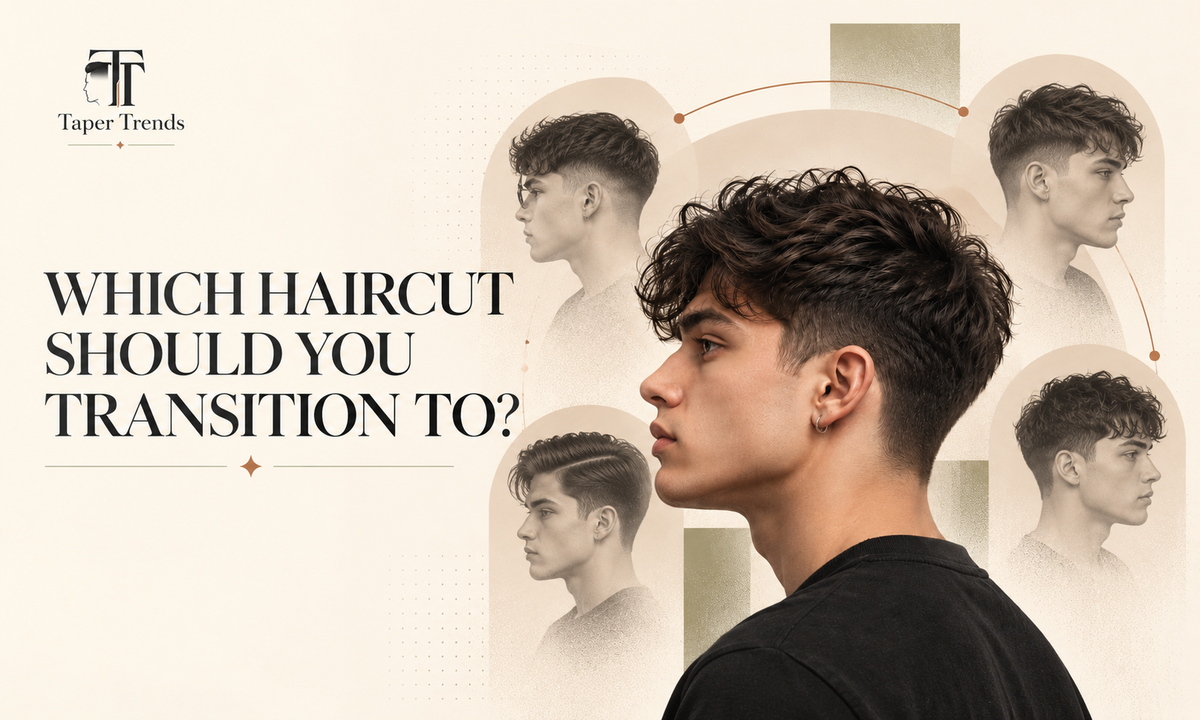
Choose your transition haircut with three checks: how long your sides are now, how much daily styling you'll put up with, and the look you want at the end. A low taper or a classic short back and sides works earliest. A textured crop or side part needs more length on top, and a medium scissor cut takes the most patience.
Low taper or classic short back and sides
A low tapershortens only the sideburns and nape, so nearly all of your side length stays. It's the earliest workable transition, though the sides will still read short. If you want something a touch higher, the low mid taper fade and mid taper fade sit a step up, and low taper vs mid taper fade compares them. A classic short back and sides is shaped with scissors once the sides can hold some length, and scissor cut vs clipper cut explains how scissor-over-comb differs from clippers. It softens every edge, but it depends on a barber with solid scissor-over-comb skills, so ask before you book.
Textured crop, side part, or medium scissor cut
A textured crop hides uneven lengths well, according to Modern Grooming Co, as long as the top can carry the texture; the French crop low taper fade and textured fringe with a low taper are good examples. A side part needs a top long enough to sweep over the sides, and BB's Barbers lists it among the options that open up around weeks 12 to 16. Markcutit describes medium-length men's haircuts as roughly 7 to 15 centimeters (about 3 to 6 inches) on top, and curl shrinkage can make hair look shorter than it really is.
If you're aiming even longer, look at long hair with a low taper fade, mid taper fade long hair, low taper fade with a fringe, or a deliberate low taper mullet. Not sure which suits your head? The best fade for your face shape guide and the face shape detector narrow it down.
How does fade type and hair texture change the plan?
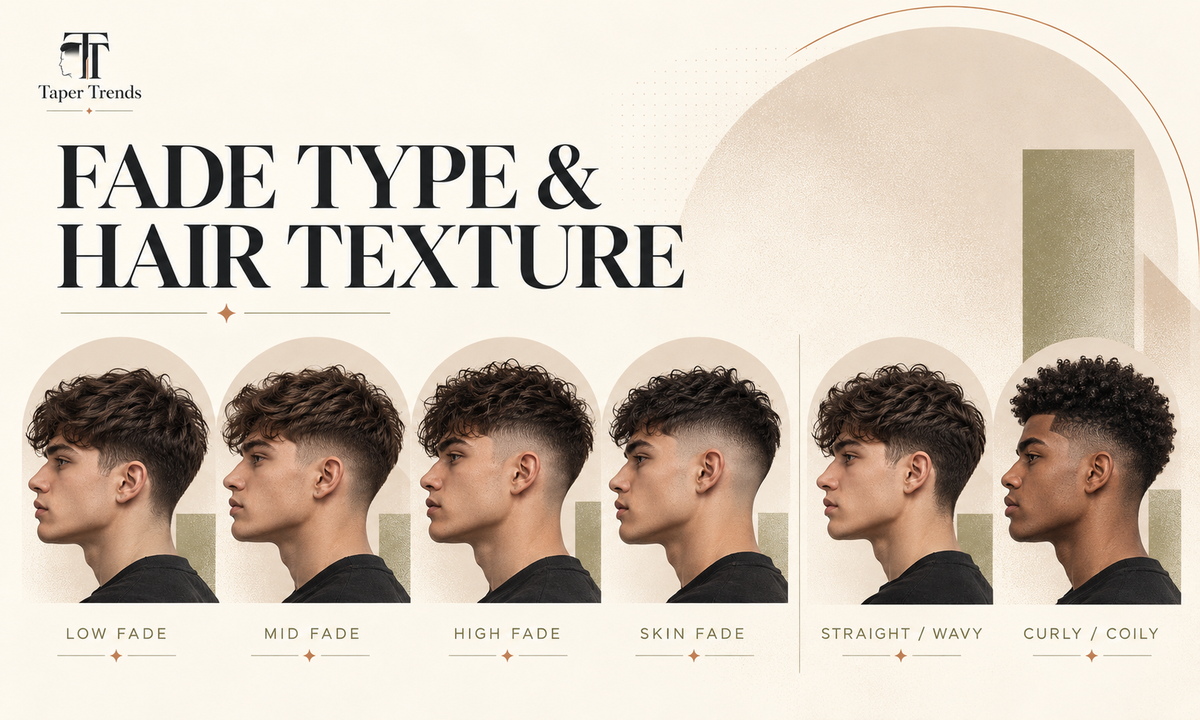
Fade height, the shortest finish, and hair texture decide how soon regrowth shows and how much reshaping the sides will need. Plan around your own starting cut and hair rather than someone else's grow-out photos. Height and finish are separate choices: a high fade can end in bare skin or in a short guard length, as low vs mid vs high fade explains.
Low, mid, high, and skin fade differences
| Starting fade | Where regrowth shows | Likely plan |
|---|---|---|
| Low | Narrow band above the ears and nape | Often just a taper-style cleanup |
| Mid | Middle of the sides | Scissor shaping as bulk builds |
| High | Most of the side of the head | The most visits and the longest wait |
| Skin finish (any height) | Stubble shows almost immediately | The earliest fuzzy stage |
Each starting point has its own guide: the skin fade, the taper fade, the mid taper fade and the high taper fade. The taper height diagram shows where each one sits on the head.
Straight, wavy, curly, and coily hair
Texture changes how regrowth sits and how fast progress feels. BB's Barbers notes that curly hair takes longer to show visible length because the curl pattern compresses it, while straight, thick hair shows change the fastest.
Straight and wavy hair
Straight or slightly wavy sides tend to drape over the tops of the ears instead of curling away, according to BB's Barbers, so styling direction and thinning around the ears matter most. With fine hair, a little lift on top helps balance sides that puff out. See low taper fade for straight hair, mid taper fade for straight hair, low taper fade for wavy hair and mid taper fade for wavy hair. Fine or very dense hair? Try low taper fade for thin and thick hair.
Curly and coily hair
Curls often disguise the in-between stage, and Highgate Cuts says barbers usually shape the outline of curly or afro hair rather than thinning it. Moisture is the bigger concern. “Thick, curly hair is more prone to breakage and dryness,” says board-certified dermatologist Temitayo Ogunleye, MD, FAAD, in AAD guidance on curly hair. The same guidance recommends detangling wet hair with leave-in conditioner and avoiding brushing curls dry. For curls and coils specifically, see curly low taper fade, high taper fade for curly hair, low taper fade afro, low taper fade for Black men and low taper fade with dreads.
Which mistakes spoil a fade grow-out?
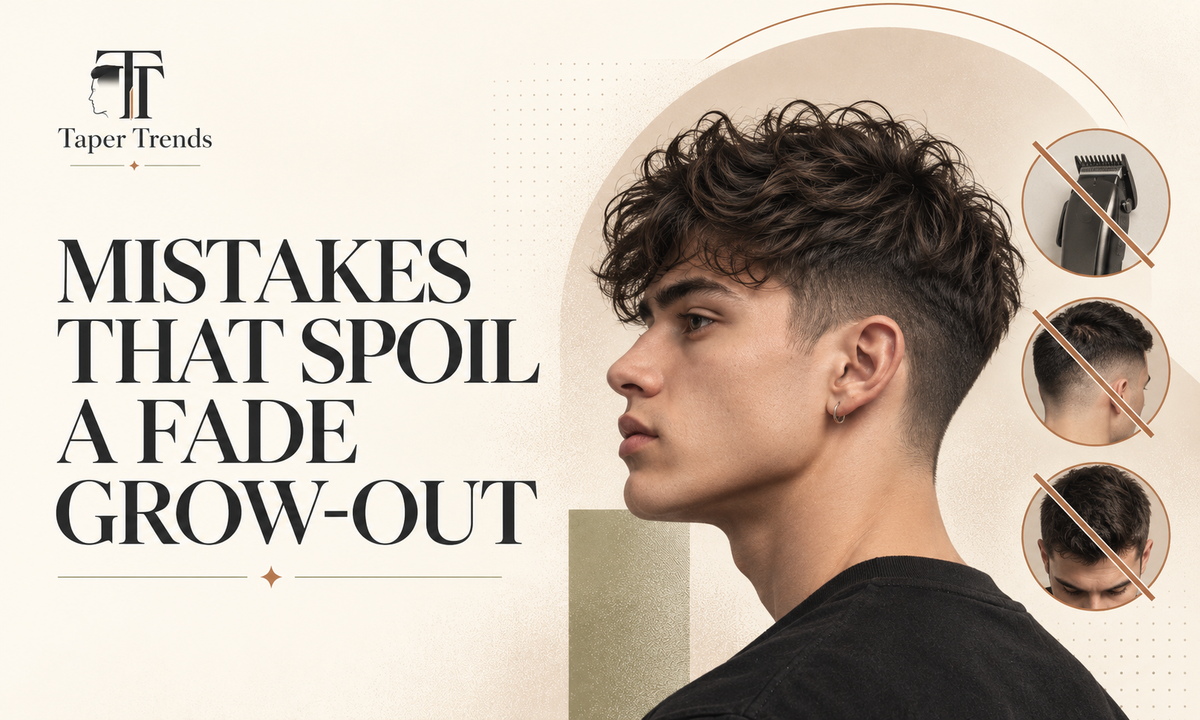
The mistakes that most often spoil a fade grow-out are clipping the sides at home, cutting the top short to match, and skipping the barber entirely. Each one removes length or adds a hard line, and every inch you lose has to be regrown. Pick one destination, cut less than you're tempted to, and let a barber handle corrections.
Overtrimming, DIY refades, and unclear haircut goals
| Mistake | What happens | Better move |
|---|---|---|
| Clipping the sides at home | Hard line and lost length | Wait for scissor shaping |
| Cutting the top noticeably shorter | Effectively restarts the grow-out | Ask for weight removal, not length |
| Letting the top run far ahead | Drags out the in-between stage | Keep the proportions sensible |
| Skipping the barber entirely | Shape collapses; more comes off later | Book cleanups every 4–6 weeks |
| Changing your target every visit | Barber can't plan the trims | Commit to one target and bring photos |
Highgate Cuts and Modern Grooming Co flag most of these. Highgate adds that men who skip the barber often lose more length by month three than small trims would have cost. If a slip-up has already happened, our how to fix a bad fade guide walks through the repair, and how to ask for a fade helps you avoid a repeat.
How can you keep hair healthy while growing out a fade?
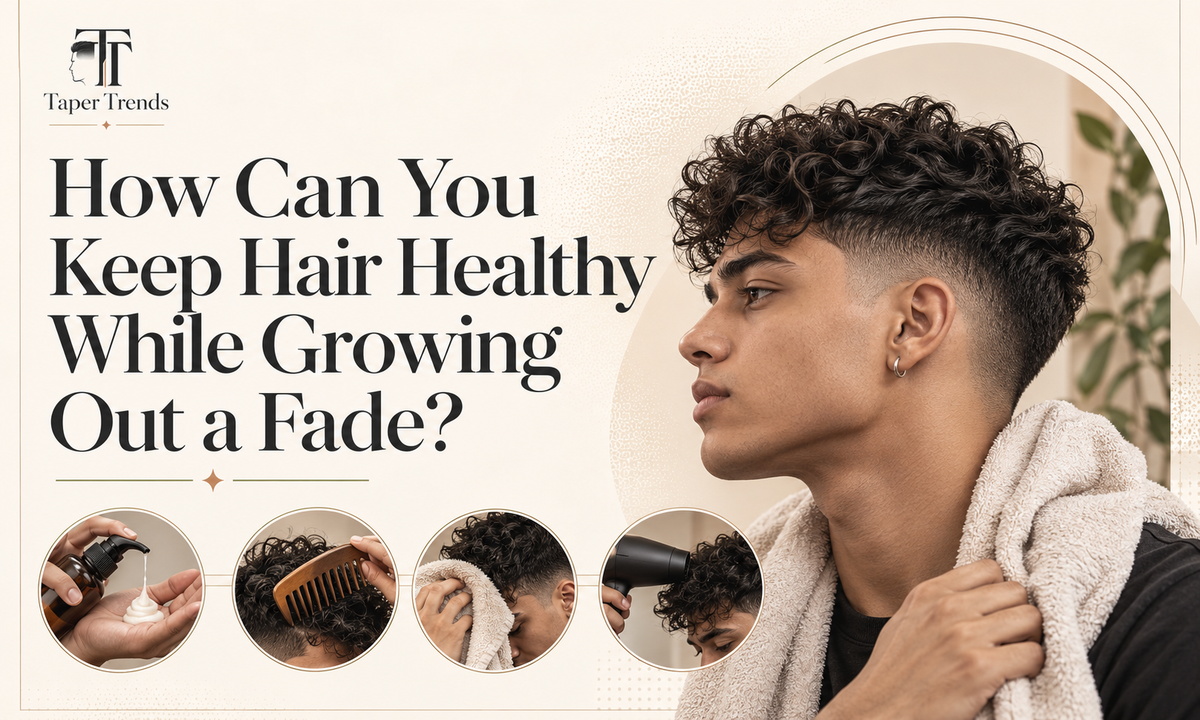
Good hair care reduces breakage and keeps growing hair manageable, but it won't make follicles grow faster. Wash according to your hair type, condition regularly, handle wet hair gently, and limit heat. Unusual hair loss is a separate issue: smooth, round bald patches can be an early sign of alopecia areata and are worth showing a dermatologist. If your hairline is changing, our guide to haircuts for a receding hairline covers styles that work with it.
Condition, detangle gently, and limit heat damage
The AAD's tips for healthy hair come down to five habits:
- Wash by need. Straight hair with an oily scalp may need daily shampoo, while dry, curly, or thick hair should be washed as needed and at least every two to three weeks.
- Condition by type. Apply conditioner to the ends of fine or straight hair, and through the full length of dry or curly hair.
- Detangle gently. Use a wide-tooth comb on wet hair, starting at the ends and working upward.
- Blot, don't rub. Wrap wet hair in a towel or T-shirt instead of scrubbing it dry.
- Keep heat low. Limit blow-drying and use a heat protectant.
For curly hair, the AAD's curly hair guidance also suggests a loose braid or a satin or silk pillowcase at night to reduce friction.
Frequently asked questions about growing out a fade
Will a fade grow back evenly if one side looks patchy?
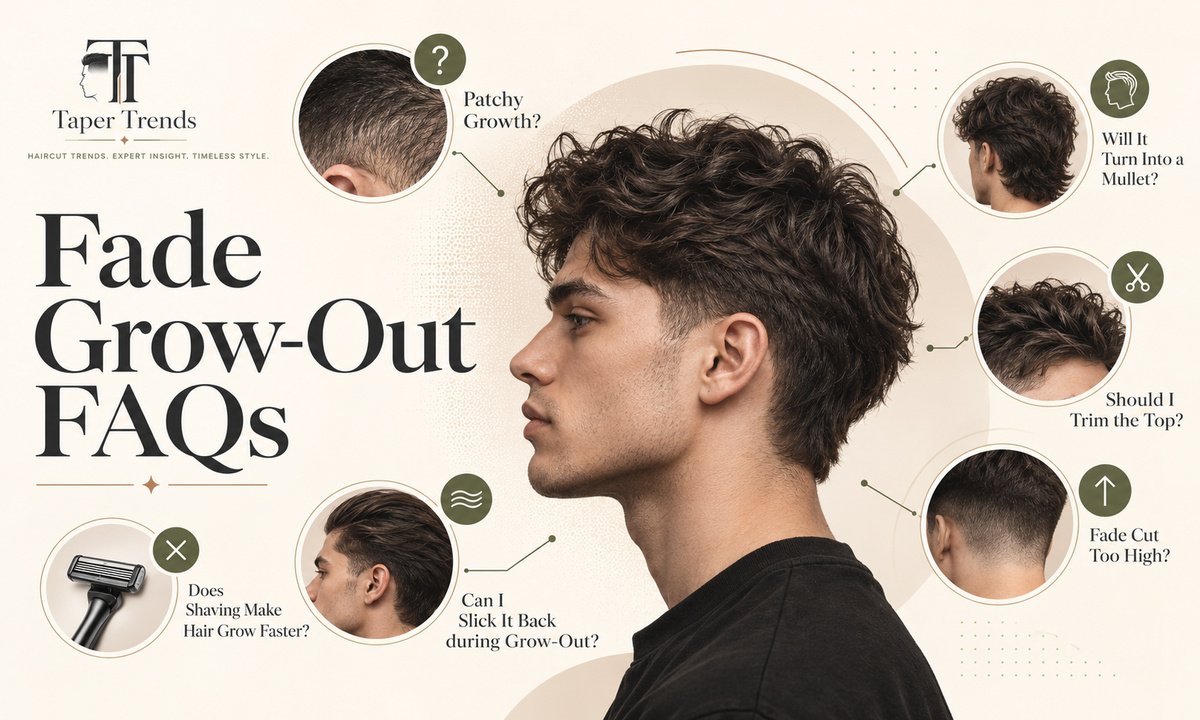
Usually, yes. Markcutit notes that cowlicks and a double crown can make certain spots stick out for a few weeks until the hair is long enough to lie down. Smooth, round bald patches are different. The AAD describes them as a common early sign of alopecia areata, so have a dermatologist look.
Related: How to fix a bad fade
Can you turn a grown-out fade into a mullet?
Yes, but do it on purpose. Highgate Cuts warns that leaving the back alone while the sides catch up can produce a mullet you never asked for. If you want one, say so and keep the nape length. If you don't, have the back checked against the sides at every visit.
Related: Low taper fade mullet · Mid taper fade mullet
Should you trim the top while the sides grow?
Only to protect the proportions. If the top looks heavy or is outgrowing your target style, ask for weight out rather than length. If it's already the length you want, leave it. A textured crop and a side part call for different top lengths, so check your target first.
Related: Textured fringe with a low taper · Side part low taper fade
Can you grow out a fade that was cut too high?
Yes, but hair has to regrow where it was removed before a lower shape can return, and no reshaping adds length. A barber can soften the line with conservative scissor work while you wait.
Related: How to fix a bad fade · Low vs mid vs high skin fade
Does shaving or buzzing your sides make them grow faster?
No. Mayo Clinic says shaving doesn't change hair's thickness, color, or rate of growth. Regrowth has a blunt tip that can feel stubbly and look thicker for a while. A buzz simply shortens what you've already gained.
Related: Haircut numbers and guard sizes
Can you slick back your hair while growing out a fade?
Not a polished slick-back yet. A loose, swept-back style becomes realistic once the top has some length and the sides can be pushed back, which BB's Barbers places around weeks 8 to 12. Before that, short sides tend to stick out instead of lying flat.
Related: Low taper fade slick back · Low taper fade comb over
The bottom line
The bottom line
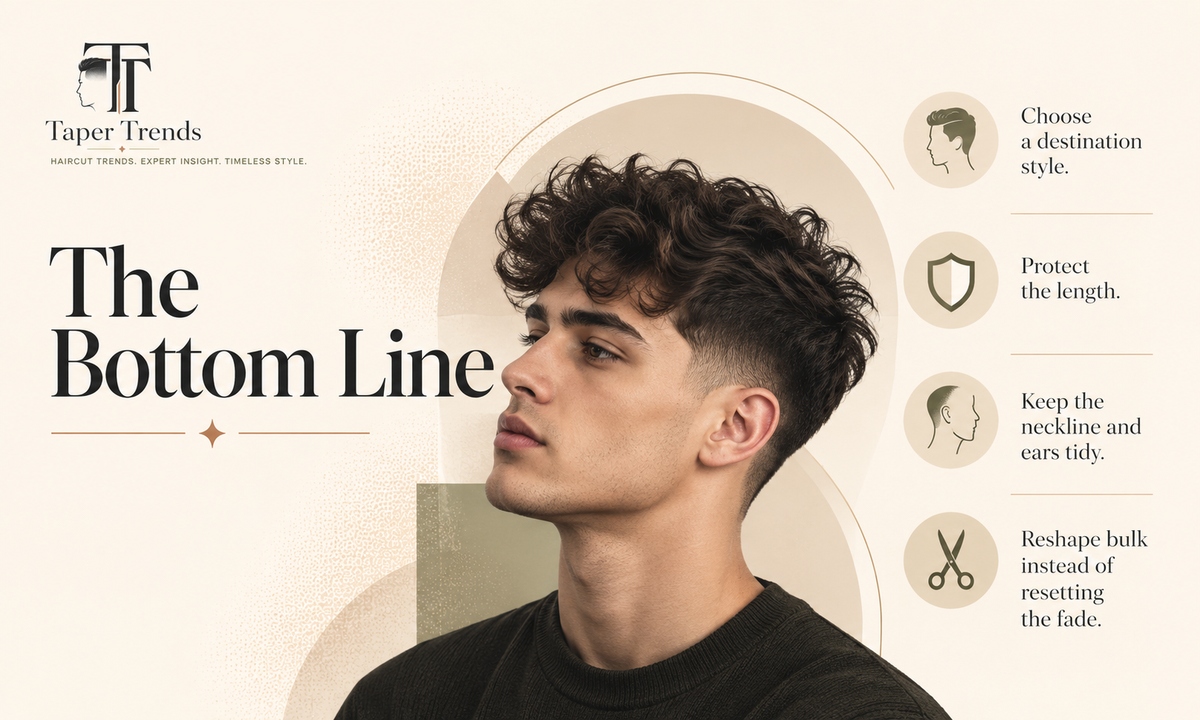
Growing out a fade is a shaping project more than a waiting game. Pick a destination, protect the length you gain, keep the neckline and ears tidy, and ask for bulk to be shaped instead of cut away. Judge progress by how your hair behaves rather than by the week count.
Before your next appointment, save two or three reference photos, bring the barber script, and book a cleanup instead of a cut.
Keep reading
Know your starting fade
Pick a place to land
Want more taper fade guides?
Browse clean, barber-ready breakdowns for every hair type.