For most men, the best haircuts for a receding hairline start with a textured crop, a French crop, a crew cut or a buzz cut. None of them hides the hairline. They work by softening the contrast between hair and skin at the temples, which is what makes recession stand out. Which one suits you depends on your recession pattern, how much hair is left at the front, your texture and how much styling you will put up with. A haircut changes how a hairline looks; it does not treat hair loss.
If you already know you want a soft side blend, start with our complete low taper fade haircuts guide, then read the broader taper fade guide and the low taper fade for thin and thick hair breakdown. This page is the decision guide that sits on top of all of them.
What are the best haircuts for a receding hairline?
The cuts barbers recommend most often for a receding hairline are short and either textured at the front or even all over: the textured crop, French crop, Caesar cut, crew cut and buzz cut. Working barbers such as CREATO Barber in Liverpool and Youssef Ouda in Montréal name the same core cuts. No single cut suits every hairline, so treat the table as a shortlist.
| Haircut | Best suited to | Main visual effect |
|---|---|---|
| Textured crop | Early recession, decent density at the front | Breaks up the front outline |
| French crop | Receding temples | Adds short forward coverage |
| Caesar cut | Mild to moderate recession | Softens the front with a short fringe |
| Crew cut | Early recession, low upkeep | Keeps short, balanced proportions |
| Buzz cut | Moderate or advanced recession | Evens out overall length |
| Low taper | Early recession, enough density at the sides | Keeps a soft side transition |
| Short quiff | Dense center hairline | Draws the eye upward |
| Clean shave | Extensive thinning, or simple preference | Removes the need for coverage |
These pairings reflect barber judgment, not clinical testing. If a name on the list is new to you, our taper haircut basics and types of fade haircuts guides explain the vocabulary, and the taper vs fade comparison clears up the most common mix-up before you sit down.
How do you choose the right haircut for your hairline?
Four things narrow the options faster than any ranked list: how far your hairline has moved, how much hair remains at the front and crown, how your hair naturally grows and curls, and how much time you will spend styling it each morning.
Is your hairline receding or naturally high?
A high forehead or a widow's peak is not, on its own, proof of hair loss. Recession means the hairline has moved back over time. Cleveland Clinic describes male pattern baldness as a hairline that moves farther back, often forming an M shape at the temples. Wild's Barbershop in Sheffield points out that some men are born with a widow's peak, while others only notice it as their hairline recedes.
The simplest test is comparison. Put a recent photo next to one from several years ago, taken from a similar angle. If the temples have deepened, the hairline is moving. You would be far from alone: the American Academy of Dermatology (AAD) reports that by age 50, more than half of white men show a visible sign of male pattern hair loss. If the change is recent or fast, a dermatologist can confirm what is happening.
Which hairline pattern do you have?
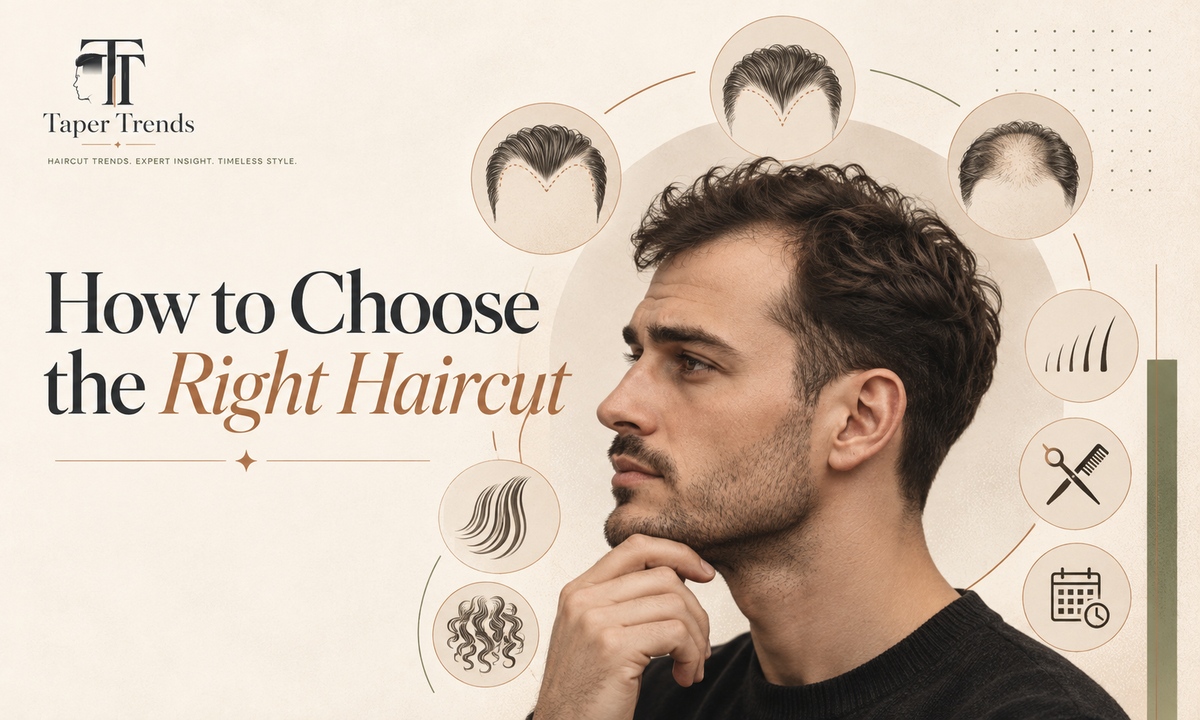
Check your hairline in daylight, on dry hair, from the front and both sides. Most men fit one of three patterns, and each calls for a different balance of coverage and shortness. Treat these as starting points, not rules tied to a particular Hamilton-Norwood stage.
M-shaped hairline and receding temples
The corners above the eyebrows have moved back while the center holds. If there is still reasonable density at the front, a short forward cut such as a French crop with a low taper or a textured fringe covers the corners without turning into a comb-over.
Widow's peak or uneven front hairline
You have two routes here. Forward texture softens the point, and Wild's Barbershop says a textured crop's fringe breaks up the V shape. Or you can remove the contrast entirely with a buzz cut over a taper or a high and tight, which The VOU recommends when the peak is pronounced and the corners sit far back. Our high taper fade for short hair guide shows what that tight finish looks like.
Frontal recession with crown thinning
Once the crown is thinning as well, density matters more than the shape of the hairline, and short, even lengths usually beat keeping length on top. The crown thinning section below covers that case.
How do hair density, curl pattern and upkeep change the choice?
Fine, low-density hair shows more scalp, so it usually needs a shorter or more textured cut. Thick or wavy hair leaves room for forward styling. CREATO Barber advises weighing hair type, density, face shape and upkeep together rather than choosing from photos alone.
- Fine, straight hair: ask for texture on top and use a light, matte product. Our low taper fade for straight hair and low taper fade for white guys guides cover finer textures and early recession.
- Wavy hair: there is room for forward styling, as in our low taper fade wavy hair and mid taper fade wavy hair guides.
- Curly or coily hair: curls dry shorter than they are cut, so ask how shrinkage and growth direction will affect the front. Start with curly low taper fade, high taper fade curly hair or low taper fade afro.
- Low upkeep: a buzz cut or tapered crew cut. Skin fades show regrowth quickly, Luxe Digital notes, so they mean more frequent visits. Our how often to get a haircut and skin fade vs taper fade guides help you plan that.
Which short haircuts work best for a receding hairline?
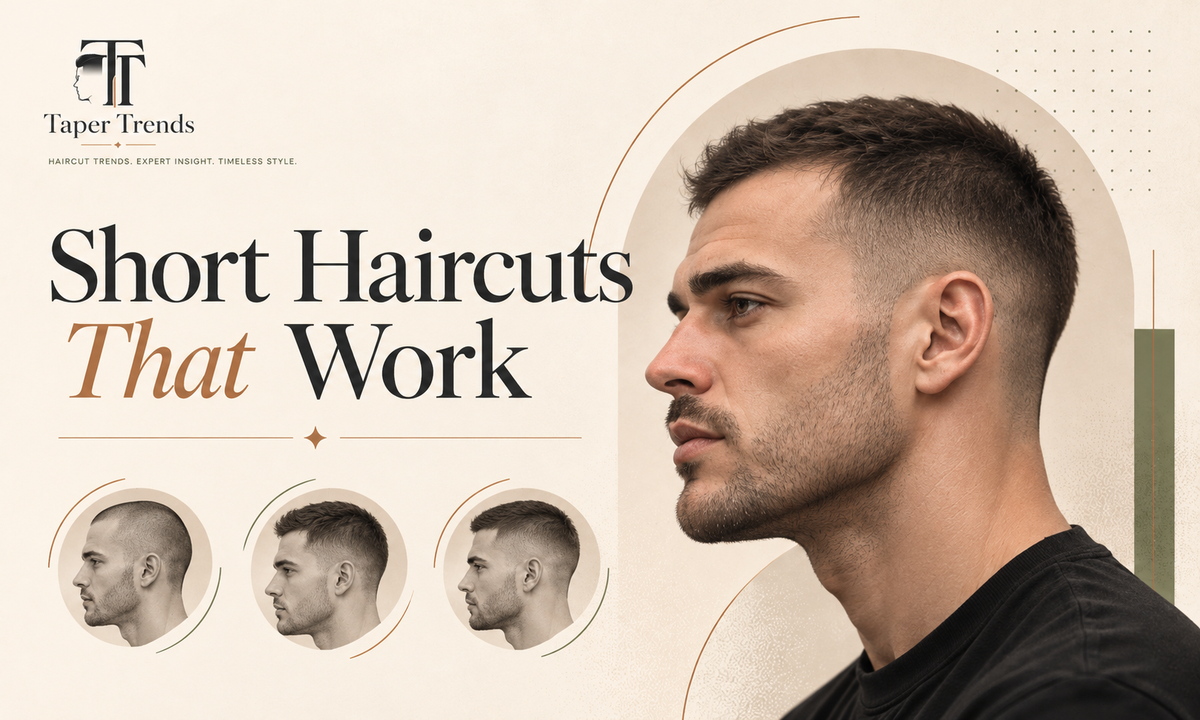
Short cuts narrow the gap between thin and dense areas, so the hairline reads as part of one shape instead of a hard edge. The trade-offs are scalp visibility, length on top and trim frequency. Our low taper fade for short hair guide goes through the face shapes and upkeep for each short top.
Buzz cut or clean shave
A buzz cut is one guard length all over. Choose the guard by how much scalp shows rather than going as short as possible. Ouda suggests starting at a #4, which leaves 13 mm on Wahl's guard scale, and going shorter only if you like the result. Our haircut numbers reference lists what every guard leaves, and our guides to the low taper fade buzz cut, mid taper buzz cut and high taper buzz cut show the buzz with a taper underneath.
A clean shave removes the contrast completely, but it needs a close-cutting clipper or razor and regular upkeep (see our best clippers for fades). A bare scalp also needs sun protection. The AAD recommends a broad-spectrum, water-resistant sunscreen with SPF 30 or higher and specifically mentions the top of the head.
Crew cut or Ivy League
A crew cut keeps the sides short and the top slightly longer, with the front left longest. Luxe Digital describes the Ivy League as a longer crew cut with enough length on top for a side part. That extra length only helps if the front is dense enough to cover the corners. See the mid taper fade for short hair guide for crew, crop and Caesar tops over a taper.
For a receding hairline, The VOU suggests a #3 or #4 on the sides, about an inch on top, and the front left longest so it can be brushed forward.
High and tight or close scissor taper
A high and tight takes the sides to skin or a #1, with a #3 or #4 on top. The VOU recommends it when the peak is pronounced or the corners sit far back. A close scissor taper keeps more length at the sides and a softer transition, and CREATO Barber says a low fade or taper often keeps better balance around the temples than a high one. Our low taper vs high taper fade comparison weighs exactly that trade-off, and the high taper fade guide shows the tight version.
Barbers disagree about fade height in general. The warning they share is narrower: a tight fade under a long or sparse top. Wild's Barbershop lists that combination among the styles that make recession more obvious, so avoid it and let your barber judge the height around your temples. If you prefer to keep some hair visible at the shortest point, a shadow fade is a gentler finish than a skin fade.
Which textured cuts can make a receding hairline less noticeable?
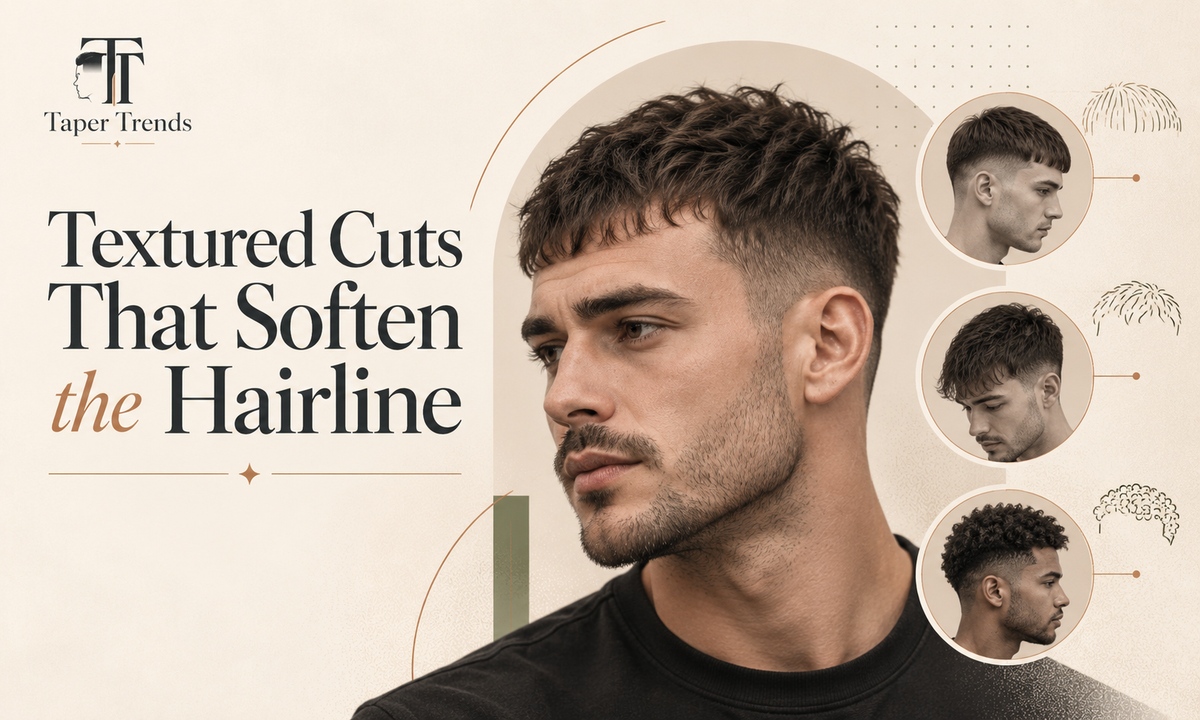
Forward texture breaks up the edge of the hairline, and that is what makes recession less visible. A short, broken fringe does the job without the long comb-over that tends to draw the eye. These cuts work best when there is enough hair at the front to move forward. For more fringe options, see low taper fade fringe, mid taper fade textured fringe, high taper fade textured fringe, drop fade textured fringe and burst fade textured fringe.
French crop versus Caesar cut
Barbers use these names loosely, so bring a photo. Trevor Moots, an Orlando barber and Wahl Pro educator interviewed by PureWow, says a Caesar is cut with a clipper guard, shows little texture and has a sharper, deeper hairline, while a French crop shows more texture and usually has a longer fringe. Luxe Digital describes the French crop as having a smoother top and a long, blunt fringe, so the terms overlap. Our French crop low taper fade guide sorts through the versions.
| French crop | Caesar cut | |
|---|---|---|
| Fringe | Longer, often covering much of the forehead | Short and straight |
| Top | Textured or smooth, depending on the barber | Even length, little texture |
| Front edge | Softer | Sharper and deeper |
For receding temples, the longer French crop fringe gives more coverage. Whichever you choose, CREATO advises a soft, broken fringe rather than a heavy straight line for a more natural finish.
Textured crop versus messy fringe
A textured crop uses short, choppy layers that hold their shape on thinner hair. Ouda says it is the cut he recommends most often to men whose hairline is starting to move, because a short fringe cut straight or slightly uneven fills the temple area without pretending it is full. The textured fringe with a low taper fade guide shows how it sits over clean sides.
A longer, messier fringe needs density. On sparse hair the strands separate and show scalp, especially in wind. Ask for the top to be point-cut for texture rather than cut blunt, since The VOU notes that a blunt cut tends to sit flat on fine hair. If you like the loose look, our low taper fade with fluffy hair and mid taper fade fluffy hair guides show how much density it takes.
Curly or coily forward crop
Curls can cover the front better than straight hair, according to Ouda, who suggests a short curly crop with the curls brought forward. Leave enough length at the front for the curls to sit forward after they shrink, and book a barber who regularly cuts curly or coily hair. Our curly low taper fade, mid taper fade curly hair and skin fade curly hair guides cover curl shrinkage and the blend underneath.
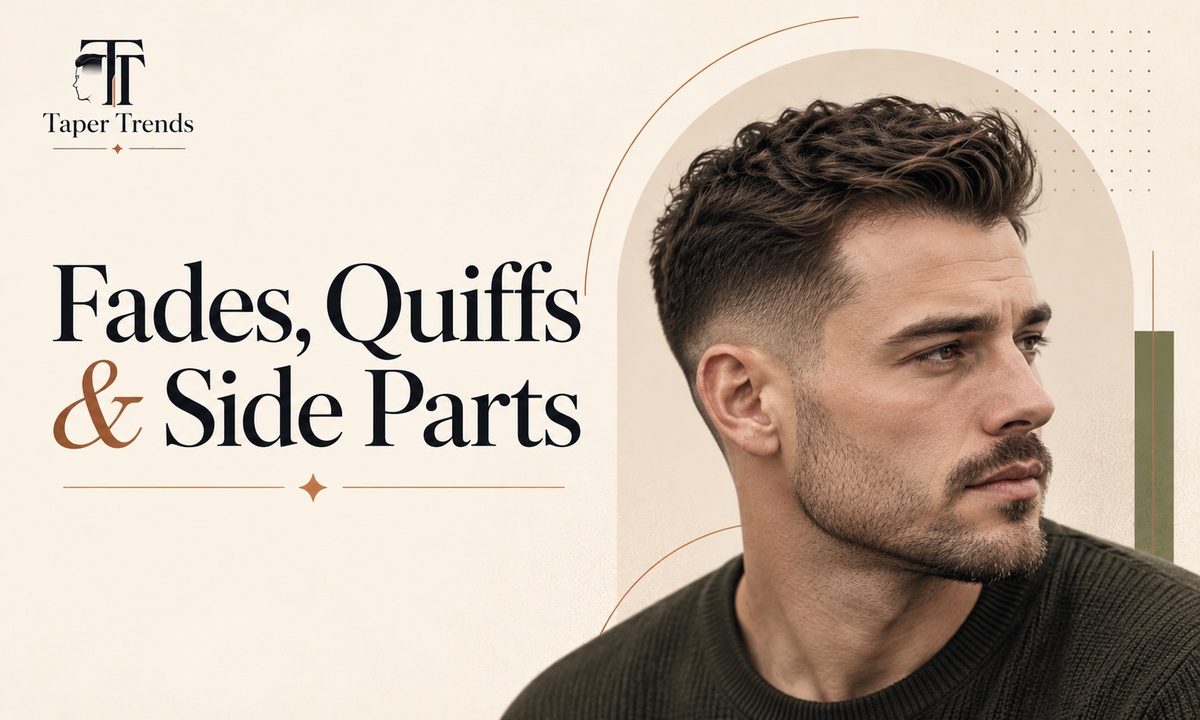
Can fades, quiffs and side parts work with a receding hairline?
Yes, when the top is dense and the fade stays low enough that the temples do not stand out. These styles keep more length than a crop but leave less room for error.
Low taper versus mid fade with a textured top
CREATO Barber says fade height should be set around your own hairline rather than copied from a template. Ouda prefers a low taper or a #1.5 to #2 on the sides, and he warns that a very high skin fade visually isolates an area that is already thin. Our low taper vs mid taper fade, low mid taper fade and low, mid and high skin fade guides compare the heights, and the temp fade guide covers keeping the temple blend natural.
Short quiff versus soft side part
A short quiff suits a dense center hairline. In Ouda's description, the fringe breaks the line while the center carries the volume. Brush it up and slightly forward with a matte product. The low taper fade blowout and blowout taper fade guides show how far lift can go.
A soft side part suits straight hair with enough density to hold a direction. CREATO recommends a natural part with texture and no severe, shiny finish. The VOU suggests about one and a half to two inches on top, brushed across and slightly up, with a soft parting rather than a shaved one. Ouda's warning is against a low part combed over the temple, which is a comb-over by another name. Our side part low taper fade, low taper fade middle part, mid taper fade middle part and low taper fade comb over guides cover each parting style and what works at the front.
Which haircuts can make a receding hairline look more noticeable?
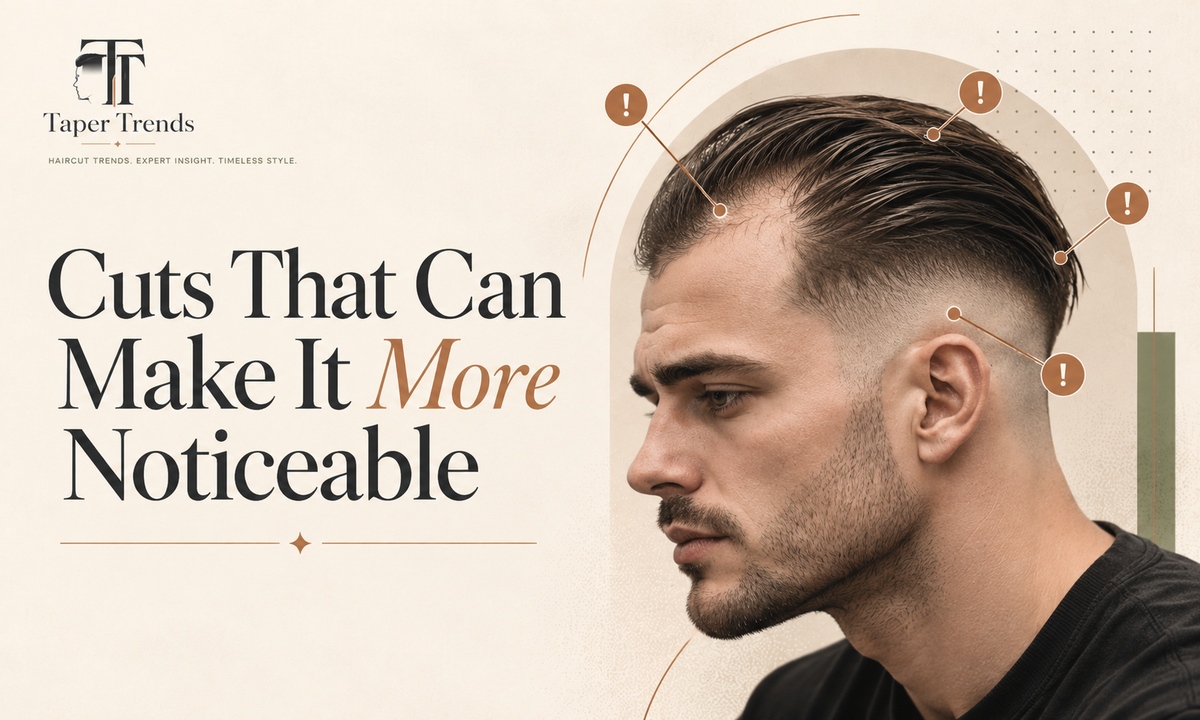
Styles that pull hair off the forehead, stretch sparse strands across it or put a hard edge at the front tend to highlight recession. Treat the list below as common barber warnings rather than fixed rules, because the effect depends on your own hair.
- A long, sparse comb-over catches the eye whenever it moves. A short, textured fringe covers more convincingly.
- A shiny, wet-look slick-back clumps strands together and shows scalp, Ouda says. A matte finish hides more. See our low taper fade slick back guide for how to soften the front.
- A sharp line-up on a receding front emphasizes the recession, in Ouda's view. Ask for a soft, natural edge instead; our low taper fade design guide covers keeping lines gentle.
- A very high skin fade under a long top isolates the top and exposes the temples. A low taper is the safer choice, and the skin fade guide explains what the finish exposes.
- Tight ponytails, braids and pulled-back styles can cause traction alopecia, according to the AAD, and the hairline is one of the first places it shows. Looser styles reduce the pull.
A slicked-back cut is not automatically wrong. The Wimpole Clinic, a UK hair restoration group, says it can work with a widow's peak or slight recession but advises against it once recession is more than slight. If a cut or a line-up has already gone wrong, our how to fix a bad fade guide explains what a barber can correct.
What should you tell your barber about a receding hairline?
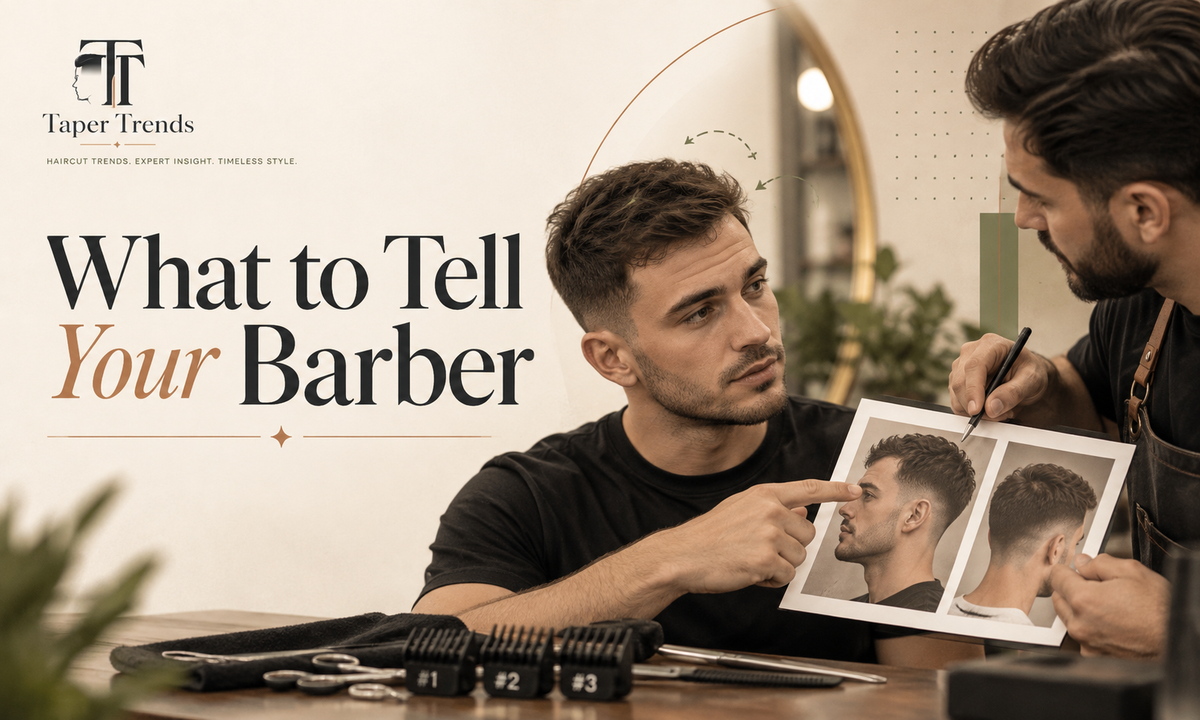
Describe what your hairline is doing and what you want the cut to do, then give three specifics: the length on top, the finish on the sides, and which way the front should go. Bring photos, but ask the barber to adapt them to your density rather than copy a cut designed for a different hairline. Our how to ask for a fade guide has word-for-word scripts, and the free barber brief generator builds a request you can show on your phone.
Clipper guards, top length and natural hairline edges
Name a guard number and a length instead of asking for “short.” Wahl's buying guide lists these cutting lengths for its guide combs:
| Guard | Length left |
|---|---|
| #1 | 3 mm |
| #1.5 | 4.5 mm |
| #2 | 6 mm |
| #3 | 10 mm |
| #4 | 13 mm |
Other brands, and the adjustable lever on many clippers, can change the result slightly, so confirm with your barber; our haircut numbers and guard sizes guide compares the major brands. For the top, Ouda suggests a 2 to 3 cm scissor cut with a low taper when the hairline recedes evenly, and an even #2 to #4 all over once it has moved far back.
Also ask the barber not to redraw or square off the front with clippers. Ouda says a hard outline on a receding line emphasizes the recession. Not every barber agrees, and The VOU documents professionals on both sides, so settle this in the chair before the clippers come out.
Reference photos and a clear barber request
- Take front and side photos of your own hairline in daylight, on dry hair, plus two or three reference cuts. CREATO suggests asking the barber to adapt the idea rather than copy it.
- Say whether you want the temples covered with a fringe or the shortness to look intentional.
- Give the top length, side style and front direction, then ask what pattern the barber sees before cutting.
A request might sound like this:
“My temples are receding and I want less contrast. About two inches on top, point-cut and brushed forward, a low taper on the sides, and please leave the front edge natural.”
Want to understand the taper you are asking for first? Our what a low taper fade looks like guide shows it from every angle, and low taper vs low fade explains why the exact wording matters.
How do you style and maintain a haircut with a receding hairline?
Keep the routine quick and light, and rebook before the corners grow back into view. The AAD recommends letting hair partly air-dry before styling and cutting back on long-lasting hold products, which can break hair when you comb through them.
- Towel-dry, or let your hair partly air-dry before you style it.
- Warm a pea-sized amount of matte clay in your palms and work it in from the back toward the front, so the least product lands at the hairline.
- Push the hair forward, up or across, depending on the cut.
- Check the shape each week and rebook based on how fast your hair actually grows. Estimates vary: Ouda suggests three to five weeks for a short cut, while Moots recommends every two to three weeks for a French crop.
Our guide to styling a low taper fade walks the routine through for every texture, the best hair products for fades roundup matches clay, fiber and powder to your finish, and how often to get a haircut helps you set a rebooking window. If you tidy the neckline yourself between visits, start with how to cut a fade and a pair from our clipper comparison, and use the haircut frequency calculator to check your timing.
What if your hairline is receding and your crown is thinning?
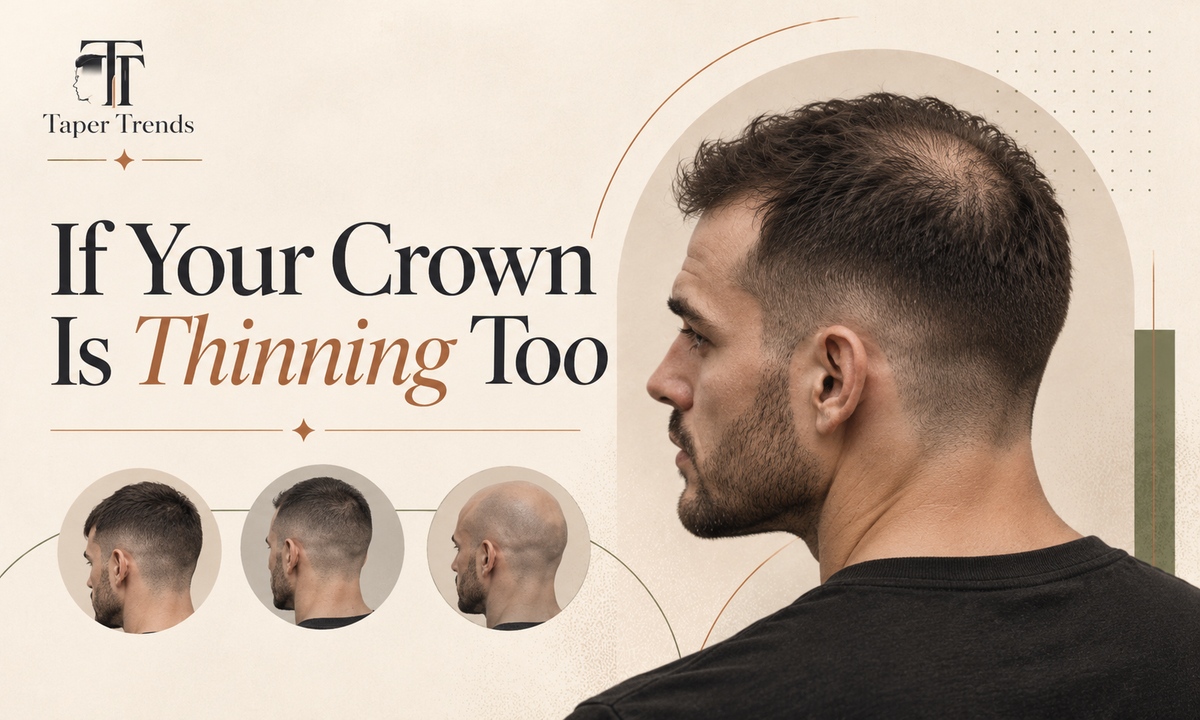
When the crown thins as well as the front, shorter and more even cuts usually work better, because the contrast between thick and thin areas becomes the main thing to manage. A buzz cut or high and tight is a reasonable next step. A clean shave is an option, not a requirement. Our different kinds of fades guide explains why receding temples and a thinning crown are not the same problem, and the thin and thick hair guide maps top styles to each thinning pattern.
| What you see | Options to raise with your barber |
|---|---|
| Mild temple recession, dense crown | Textured crop or crew cut |
| Noticeable recession, thinning front | Short textured top or a buzz cut |
| Recession plus substantial crown thinning | Even buzz cut or high and tight |
| Extensive thinning across the scalp | Clean shave, or a non-surgical option such as scalp micropigmentation |
Treat this table as a visual guide, not treatment advice. The International Society of Hair Restoration Surgery (ISHRS) describes scalp micropigmentation as a tattoo technique that places pigment in a stippled pattern to look like a shaved head. The Wimpole Clinic's rule of thumb: the further the hairline recedes, the shorter the hair should be. For the shortest options, compare the low taper buzz cut, high taper buzz cut and mid taper buzz cut.
Can a haircut stop a receding hairline, and when should you get help?
No. A haircut changes how a hairline looks, but it cannot stop male pattern hair loss, which DermNet attributes to a combination of androgens and genetic predisposition. If the recession is progressing, or the loss is sudden or patchy, a doctor can identify the cause and talk you through treatment.
The AAD lists two FDA-approved medications for male pattern hair loss: topical minoxidil, sold without a prescription, and finasteride, which needs one. It notes that treatment is optional and that men who start soon after noticing hair loss tend to get the best results. Finasteride can cause sexual side effects, which is why a dermatologist reviews your health before prescribing it. The NHS adds that neither treatment works for everyone, both work only while you keep using them, and it advises seeing a GP before visiting a commercial hair clinic.
Talk to a doctor or dermatologist if you notice:
- sudden or patchy hair loss, or more hair than usual coming out when you comb or wash it, which Mayo Clinic says can signal an underlying condition
- an itchy or painful scalp before or alongside patchy loss
- pain, stinging or crusting where you wear tight styles
- hair loss that is causing you real distress
Tight styles are worth a second look for the same reason. Our low taper fade with dreads and low taper fade for Black women guides both cover hairline-safe care and the early signs of traction to check monthly.
Go deeper: guides that pair with a receding hairline
Every guide below covers a cut, height or decision from this page in full, with photos, barber wording and upkeep.
- Low taper fade (the full guide)
The pillar guide to the soft side blend that suits early recession
- Taper fade
Types of taper, low vs mid vs high, and what to ask for
- Taper haircut basics
Classic, low, mid and high tapers, and how a taper differs from a fade
- Thin & thick hair
How the cut changes for fine, thinning, coarse and curly hair
- French crop
The forward-textured crop and fringe over a low taper
- Textured fringe
The broken, forward fringe version
- Low taper fade fringe
A longer front pushed forward over clean sides
- Low taper buzz cut
Buzzed top, low taper, guard lengths and upkeep
- Low taper, short hair
Crew cut to textured crop, face shapes and upkeep
- Low taper, medium length
Styles by texture and the barber brief
- Side part
The natural and hard-part versions over a low taper
- Comb over
The top combed across a part, and when it works
- Slick back
The swept-back top and how to soften the front
- Middle part
A center-parted curtain over a low taper
- Low taper, white guys
Finer, straighter textures and early recession
- Low taper, straight hair
Top styles, products and styling for straight hair
- Low taper, wavy hair
Keeping the waves on top over low, clean sides
- Curly low taper
Curls kept forward over a low taper
- Low taper fluffy hair
Loose, textured volume on top
- Low taper vs mid taper
Which fade height to pick, angle by angle
- Low taper vs high taper
Contrast, scalp exposure and upkeep compared
- Low mid taper fade
More contrast: the mid-temple starting point
- Mid taper fade
The balanced temple-height taper
- High taper fade
The high, localized taper and who it suits
- Mid taper buzz cut
A short buzzed top over a temple-height taper
- High taper buzz cut
A buzzed top over a high taper
- Mid taper, short hair
A temple-height taper under a buzz, crew or crop
- High taper, short hair
A temple-high blend under a cropped top
- Mid taper, textured fringe
A choppy fringe over a mid taper
- High taper, textured fringe
A broken fringe over a high taper
- Drop fade, textured fringe
A choppy fringe over a drop fade
- Skin fade
The fade taken to bare scalp, and when it exposes too much
- Skin fade vs taper fade
How each treats thinning hair and the temples
- Low, mid and high skin fade
Where each one stops and which suits your hair
- Shadow fade
The fade that ends in short visible hair, not bare skin
- Temp fade
The localized temple blend and how to keep it natural
- Types of fade haircuts
Height, finish, shape and coverage in one guide
- Different kinds of fades
Including receding temples versus a thinning crown
- How to ask for a fade
Word-for-word scripts and reference photos
- Haircut numbers
What every clipper guard leaves behind
- How often to get a haircut
Maintenance windows by style and hair type
- How to style a low taper
The at-home routine for every hair type
- Best hair products for fades
Clay, fiber, powder and more, matched to your finish
- Best clippers for fades
Clippers compared for home and pro use
- How to cut a fade
A beginner step-by-step guarded fade
- How to fix a bad fade
What a barber can correct after a cut goes wrong
- Low taper fade design
Line-ups, parts and designs, and keeping the edge soft
- Low taper vs low fade
Which to choose, by contrast and upkeep
- Taper vs fade
The core difference and how to choose
- Undercut vs fade
Which draws less attention to thinning, by where the hair is thin
Frequently asked questions about receding hairline haircuts
Does shaving your head make your hair grow back thicker?
No. Mayo Clinic says shaving does not change hair's thickness, color or rate of growth. Shaving leaves a blunt tip, so regrowth can feel coarse and look darker for a while. That comes from the cut end of the hair, not the follicle. Shaving your head is a style choice, not a treatment for pattern hair loss.
If you are weighing a close crop, our low taper fade buzz cut guide and the haircut numbers and clipper guard sizes chart show what each length leaves behind.
Do hats cause or worsen a receding hairline?
Ordinary hat use is unlikely to. A dermatologist interviewed by Cleveland Clinic says the topic is poorly studied, but two twin studies did not link wearing hats to worse thinning. Very tight or hot hats could, in theory, stress follicles, so a looser fit is the safer choice for daily wear. Pulling your hair back tightly under a hat is a separate traction risk.
Can hair fibers conceal a receding hairline?
Partly. Fibers cling to existing hair and make it look fuller, so they work best where some hair remains. The ISHRS says they can hide a bare area only if it is small and surrounded by hair of normal density. Apply them near the hairline but never on it, because too much looks caked. Match the shade to your hair, and expect fibers to wash out with shampoo.
Fibers sit on top of a good cut, not instead of one. Pair them with the lightweight finishes in our best hair products for fades roundup.
Can a beard help balance a receding hairline?
A beard changes how your face reads, but it does not hide the hairline. Youssef Ouda says a short, well-shaped beard often rebalances a high forehead better than any haircut, and The VOU suggests stubble or a beard to add some weight at the jaw. Grow one because you like it, not as camouflage.
The fade-to-beard join is its own decision, covered in our low taper fade with beard, mid taper fade with beard, high taper fade with beard and skin fade with beard guides.
What if one temple recedes more than the other?
Cut for the hairline you have instead of forcing symmetry. Ask your barber to assess density and growth direction on dry hair, from the front and in profile, then choose a fringe direction or part that works with the difference. If one side changed recently or the loss looks patchy, see a doctor, since Mayo Clinic says sudden hair loss can signal an underlying condition.
A softer, natural edge also helps here, which is the logic behind our temp fade guide and the low taper fade with wavesadvice on following a hairline's natural shape.
Can you wear braids or locs with a receding hairline?
It depends on tension. The AAD says braids and locs can cause traction alopecia when they are too tight, and the hairline is one of the first places it shows. Loosen braids around the hairline, choose thicker and shorter styles, limit how long you keep braids in, and change the style right away if you feel pain, stinging or crusting.
Our low taper fade with dreads and locs and mid taper fade with dreads guides cover hairline-safe care for loc wearers, and the low taper fade for Black women guide covers protecting thin edges.
Which receding hairline haircut should you try first?
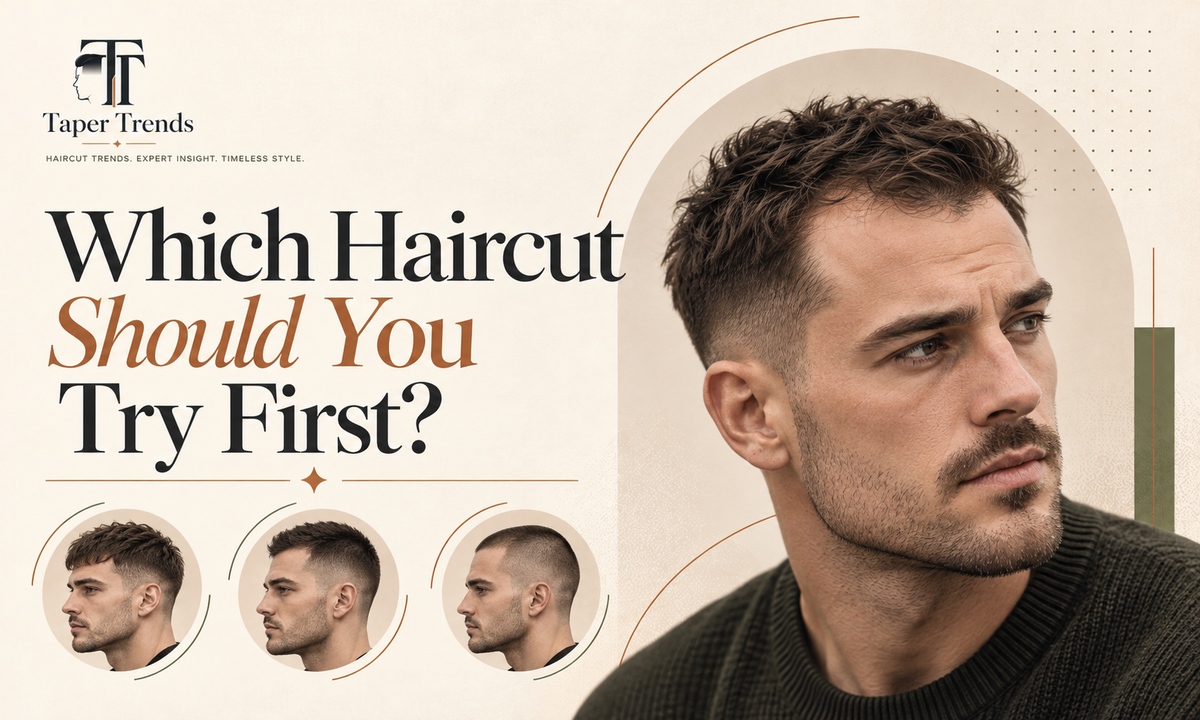
Start with a short textured crop or French crop if your temples are receding and the front still has hair. Choose a crew cut for a classic short style, or a buzz cut if you want almost no styling. If you are unsure, book a consultation first.
- Temples receding, front still dense: a textured or French crop with a soft, short fringe (see French crop low taper fade).
- Classic and low effort: a crew cut with tapered sides (see low taper fade for short hair).
- Minimal styling or a thinning crown: a buzz cut, starting at a longer guard (see low taper fade buzz cut).
- Not sure: show your barber your hairline on dry hair, front and side, and bring photos. The taper quiz and face shape detector can help you arrive with a shortlist, and our guide to the best fade for your face shape shows how each shape reads.
Wear the cut for a few weeks, adjust it at your next trim, and see a dermatologist if the change is sudden or you want to look into treatment. For the full set of options, keep the low taper fade pillar guide and the taper fade guide open alongside this one.
The bottom line
The best haircut for a receding hairline is the one that softens contrast at your temples with the density you actually have: a short textured crop or French crop when the front is still dense, a crew cut for a classic low-effort look, and a buzz cut when the crown is thinning too.
Keep any fade low, skip the sharp line-up and the long comb-over, and tell your barber exactly what your hairline is doing. A cut changes how recession looks, not whether it happens, so see a doctor if the loss is sudden, patchy or worrying you.
Want more taper fade guides?
Browse clean, barber-ready breakdowns for every hair type.