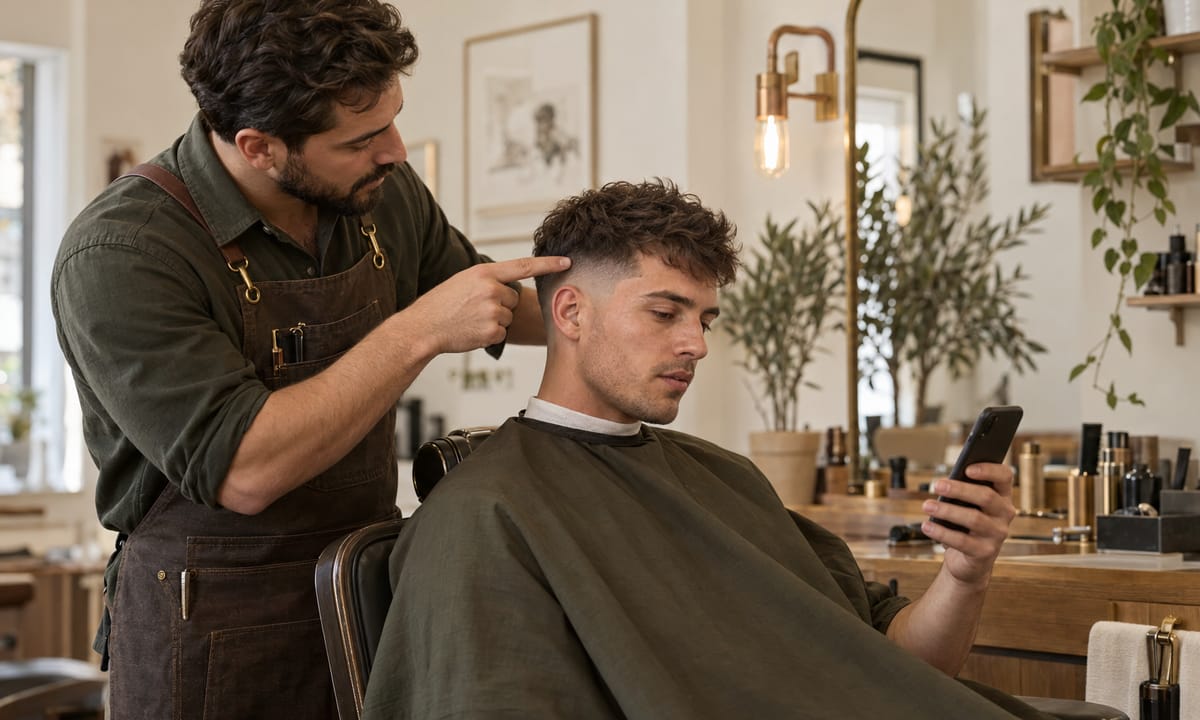
Low vs mid vs high taper at a glance
A taper's height is where the blend starts on the side of your head. Everything below that point gets gradually shorter toward the sideburns and neckline. The higher it starts, the more short hair shows and the stronger the contrast with the top.
| Height | Where it starts | Contrast | Upkeep | Best for |
|---|---|---|---|---|
| Low | Just above the ear | Subtle | Every 3–5 weeks | Offices, school codes, beards, covering the sides |
| Mid | Around the temples | Balanced | Every 3–4 weeks | Most hair types and face shapes; the safe default |
| High | Near the widest part of the head | Bold | Every 2–3 weeks | Short tops, coily hair, round faces, sharp looks |
See each height in full in our low taper fade guide, mid taper fade guide, and high taper fade guide, or move the slider on the taper height diagram.
How to choose your taper height
No single answer decides it. The quiz weighs six things, and it helps to know why each one matters before you sit in the chair.
- Contrast. This is the biggest factor, which is why it carries the most weight. If you want the cut to look clean but not obviously “faded,” go low. If you want a sharp line between short sides and a fuller top, go high.
- Where you spend your days. A low taper passes any dress code. A high taper is a statement, great where anything goes and harder to pull off in a conservative office.
- Upkeep. The higher the blend, the sooner regrowth shows, because more of the side starts near skin. If you can only get to a barber every five or six weeks, a low taper hides it best. The next haircut calculator works out a schedule for each height.
- Hairline. If your temples are receding, keeping length at the sides avoids exposing more of them. If the top is thinning, a lower taper keeps the sides from making the top look sparse by contrast.
- Face shape. Short sides take width away, which helps a round face and works against a long one. Not sure of yours? The face shape detector measures it from a selfie that never leaves your phone.
- Beard. A low or mid taper flows into a beard through the sideburns. A high taper with a full beard leaves a band of short hair between the two, which some people like and many don't.
Hair type matters less for height than for the top, but it nudges things: curly tops balance well over a mid blend, and coily hair holds its shape over a high one. If you don't know your type, the hair type identifier finds it, and the quiz picks it up automatically next time.
Taper vs fade: which one do you actually want?
People use the words interchangeably, and barbers don't. A taper shortens the hair only at the edges, around the sideburns and neckline, so most of the side keeps some length. A fade blends the whole band around the sides and back down short, often to skin. At the same height, a fade shows far more short hair.
If you like the clean look but want to keep coverage, you want a taper, and that's what this quiz recommends. If you want the sides properly short all the way around, ask for a fade at the same height. Our taper vs fade guide shows them side by side.
Choosing the bottom finish: skin or guard
Height decides where the blend starts. The bottom finish decides how short it ends. Skin at the bottom looks crisp and gives the most contrast, but regrowth shows as a dark shadow within a week or so, and it exposes any scars or bumps. A guard at the bottom, such as a #0.5 or #1, keeps a little length, grows out more evenly, and is gentler on sensitive skin.
The quiz picks skin only if you're happy with skin showing and nothing points the other way. Check what each guard leaves in the clipper guard size chart.
What if you're between two heights?
When two heights score within a couple of points, the result tells you which one came second. In that case, start with the lower of the two. Your barber can always take a taper higher at your next visit, but nobody can add hair back, and growing a high taper down takes weeks.
Frequently asked questions
Which taper height is the most versatile?
A mid taper. It has enough contrast to look deliberate, it suits most hair types and face shapes, and it grows out cleanly over three to four weeks. That's why the quiz falls back to mid when your answers don't lean either way.
Is a low taper fade professional?
Yes. A low taper only shortens the hair at the sideburns and neckline, so from the front it looks like a neat, classic cut. It's the safest choice for conservative offices and strict school dress codes, especially with a guard at the bottom instead of skin.
Does a high taper fade make your face look thinner?
It can make a round face look a little longer, because short sides take width away and draw the eye up to the top. It does the opposite for a long, narrow face, which is why the quiz leans lower for oblong faces. The top style matters as much as the height.
Which taper is best for a receding hairline?
Usually a low or mid taper with a soft front. Keeping some length at the sides stops the temples looking more open, and asking your barber not to line up the temples sharply avoids drawing a hard edge around them. A short, textured top helps too.
How do I know if a taper fade will suit me?
Almost everyone suits a taper at some height. Decide how much contrast you want, how often you can see a barber, and whether you'd rather keep length at the sides. Those three answers settle the height. The quiz above weighs them along with your hair type, face shape, and beard.
Can I switch from a low to a high taper?
Yes, and it's the easy direction: your barber simply takes the blend higher at your next visit. Going from high to low means waiting for the sides to grow, usually three to five weeks. If you're unsure, start lower and move up next time.