The reference points barbers use
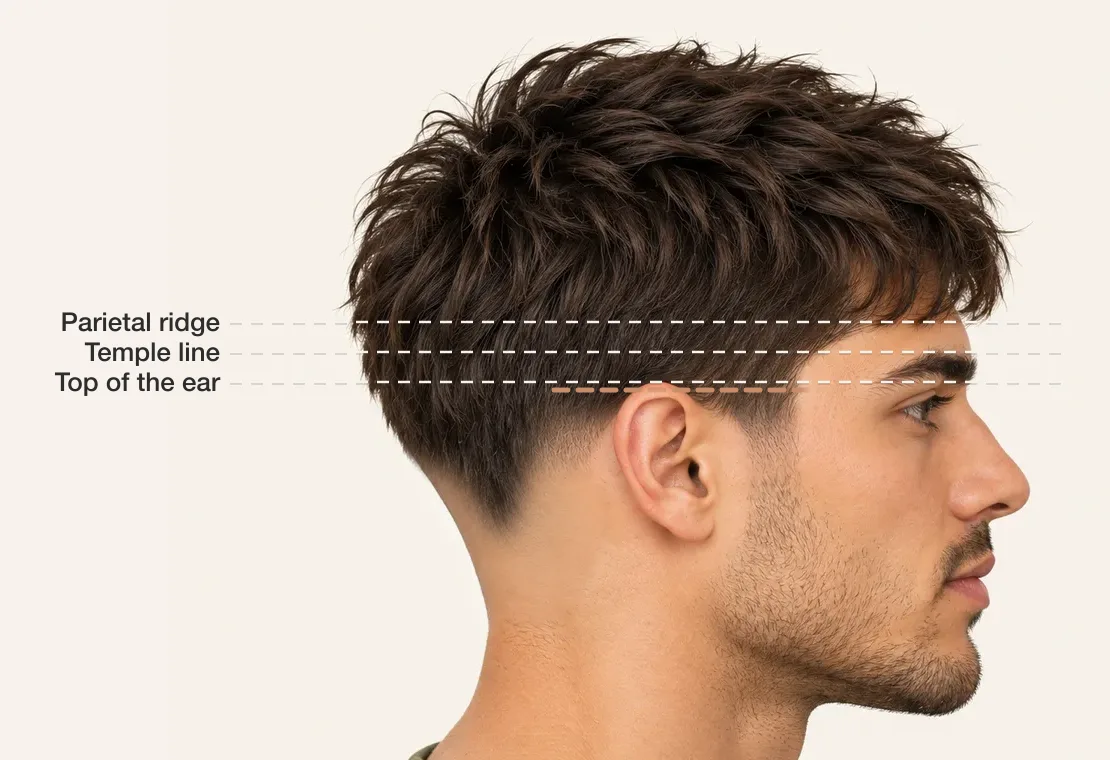
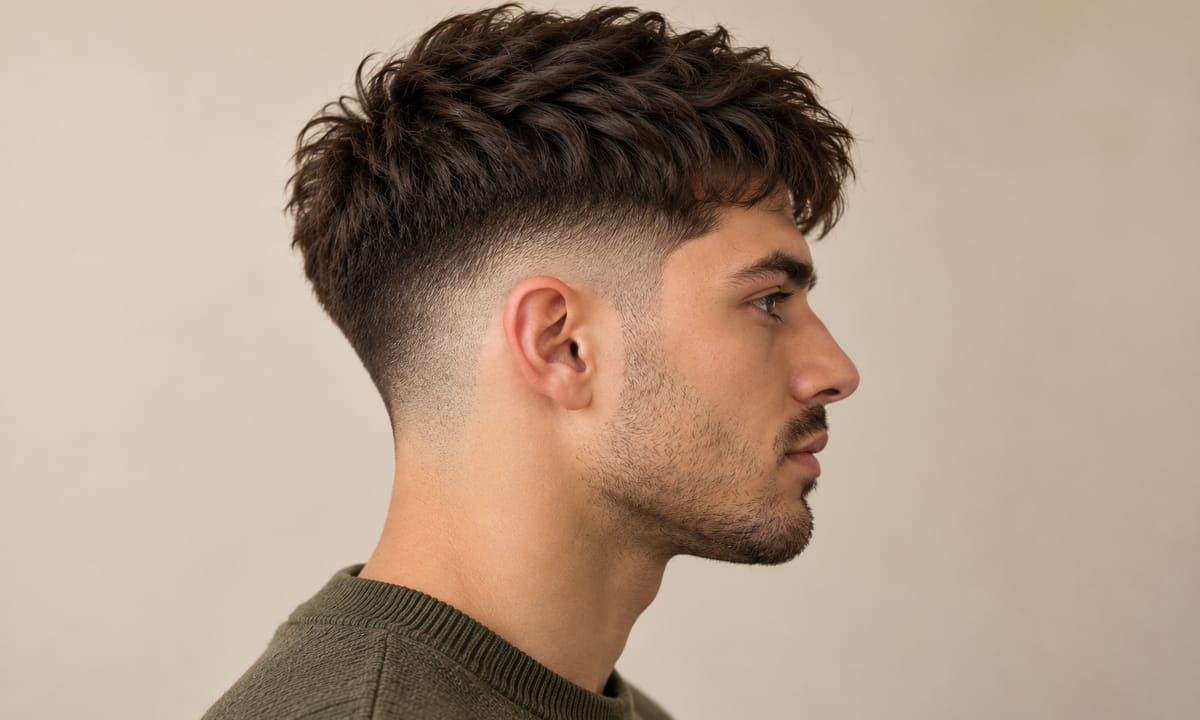
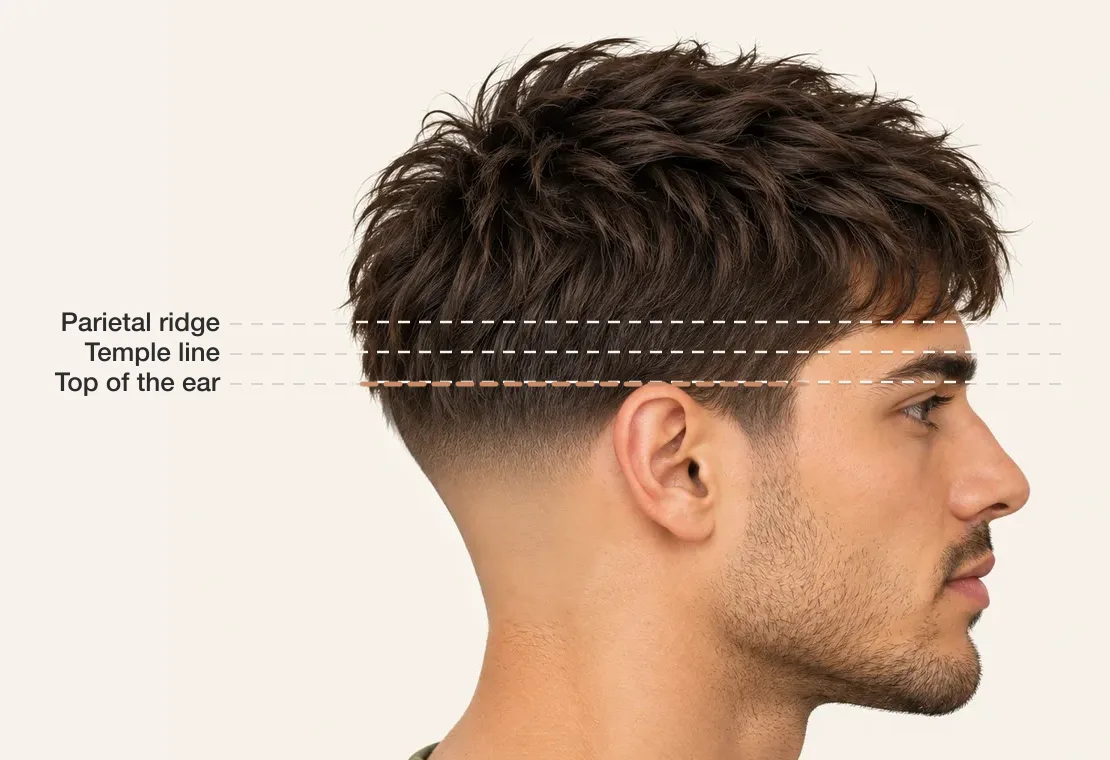
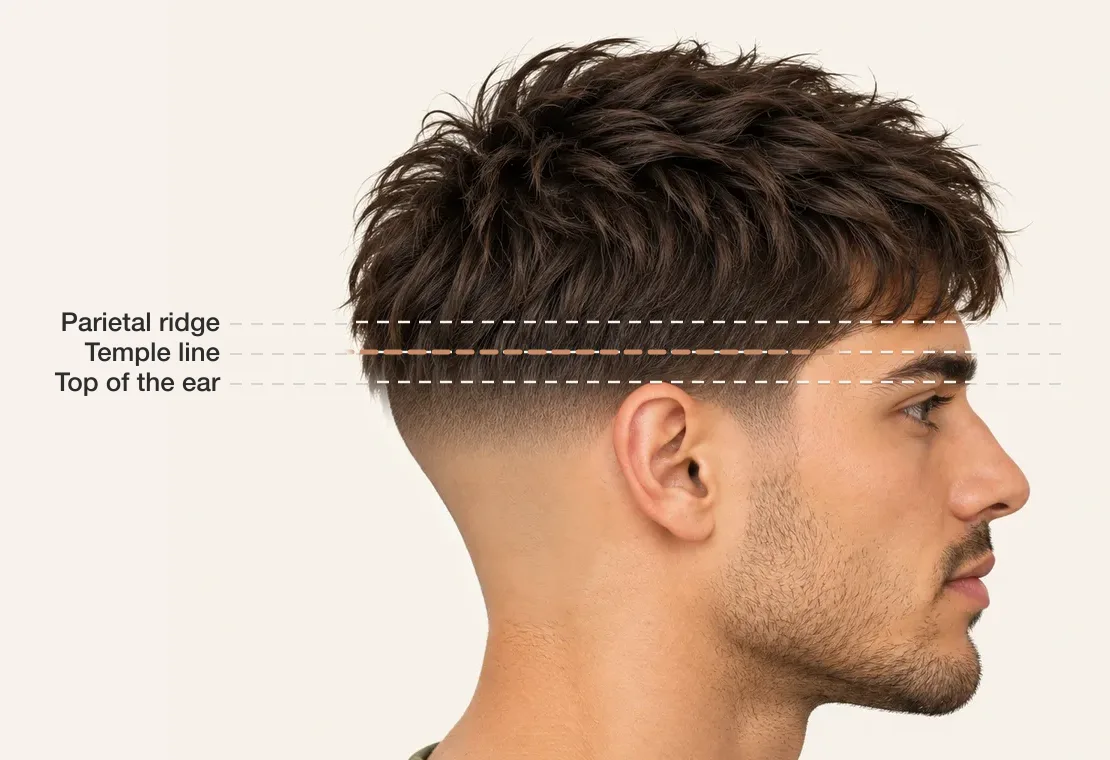
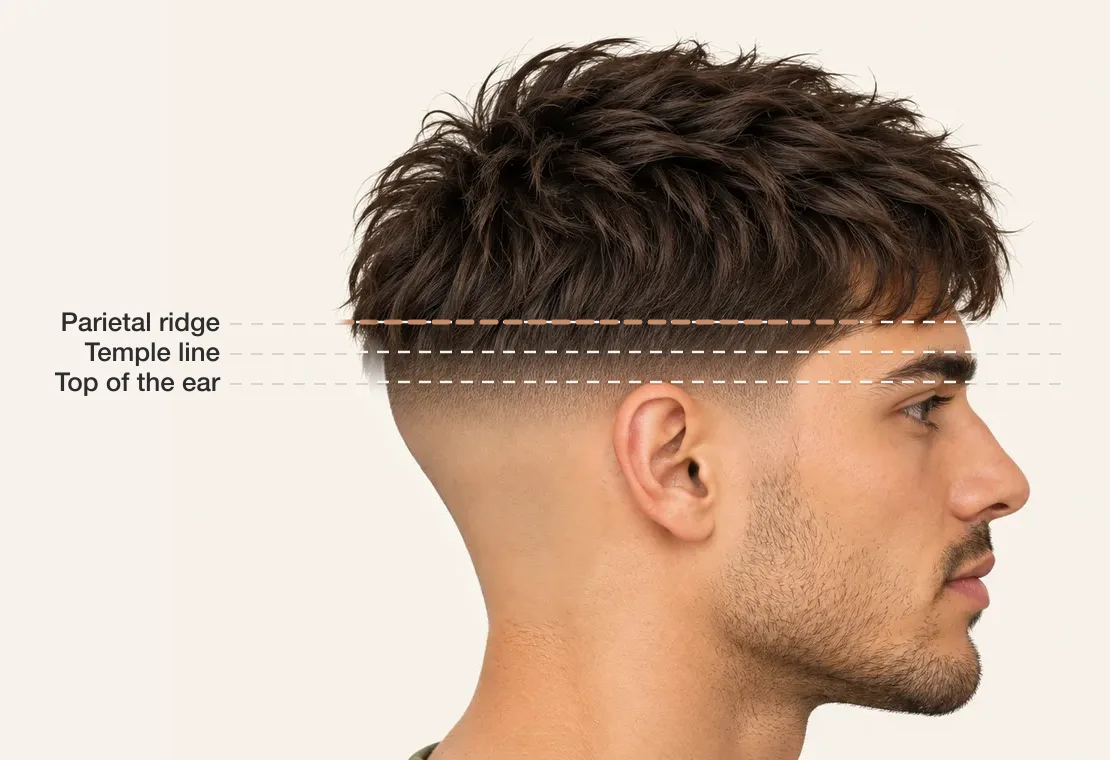
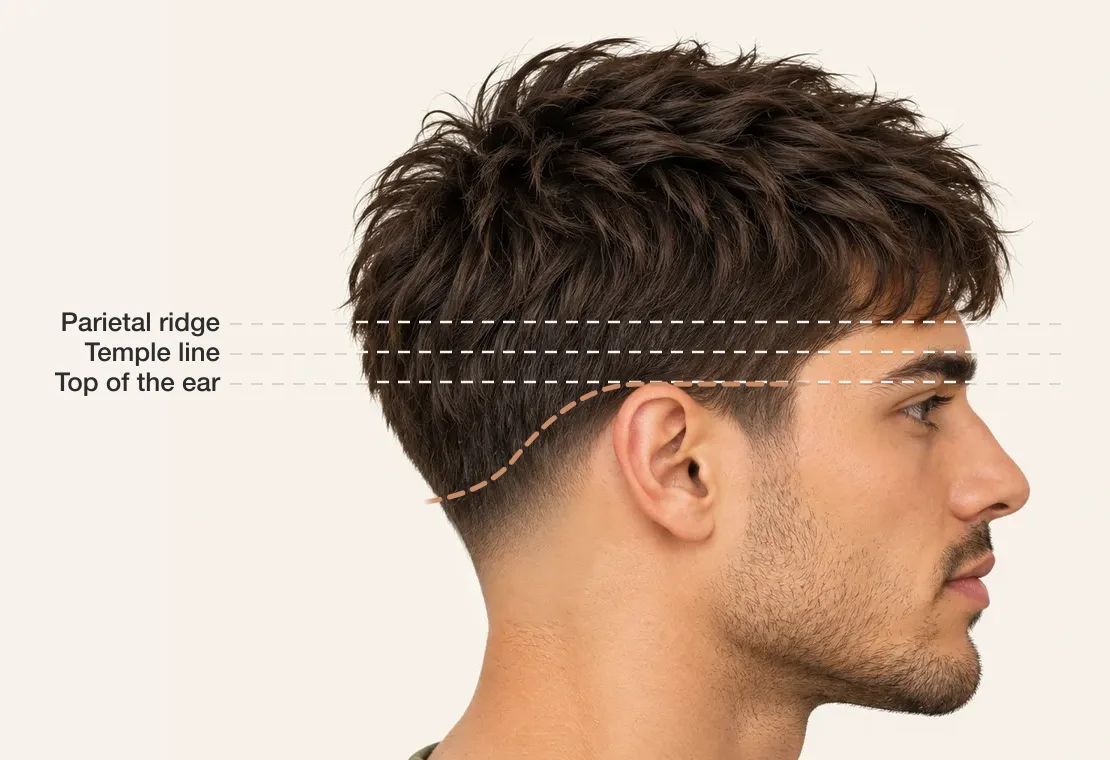
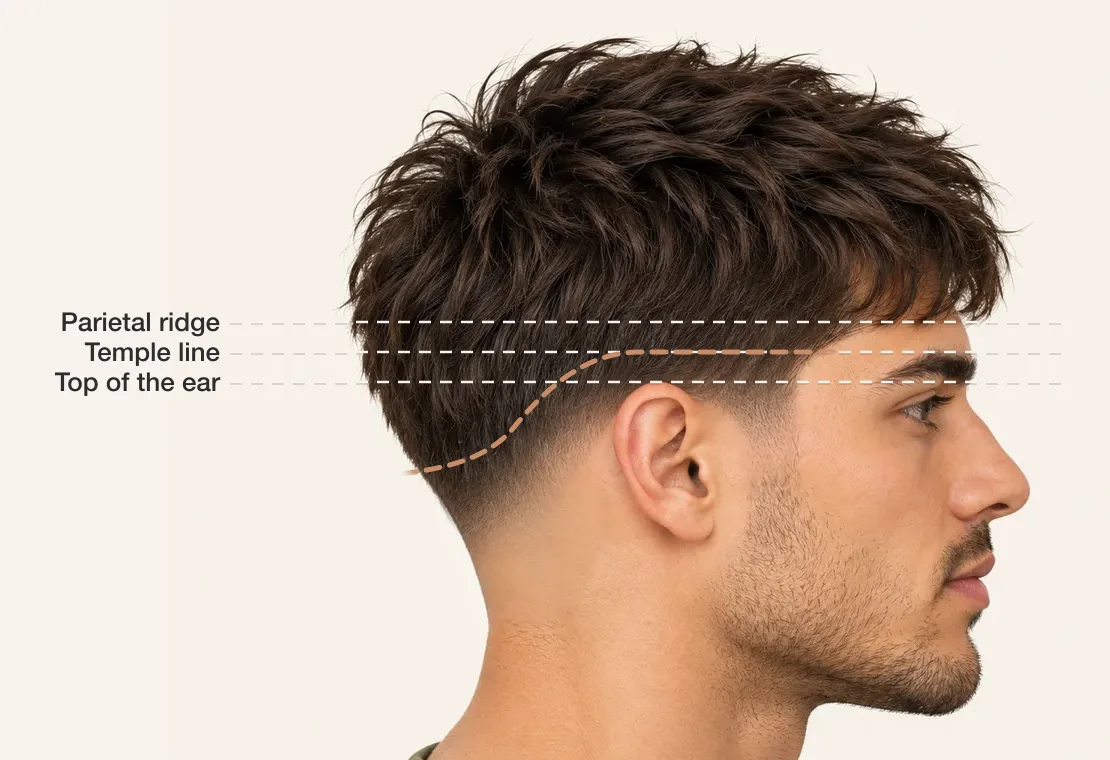
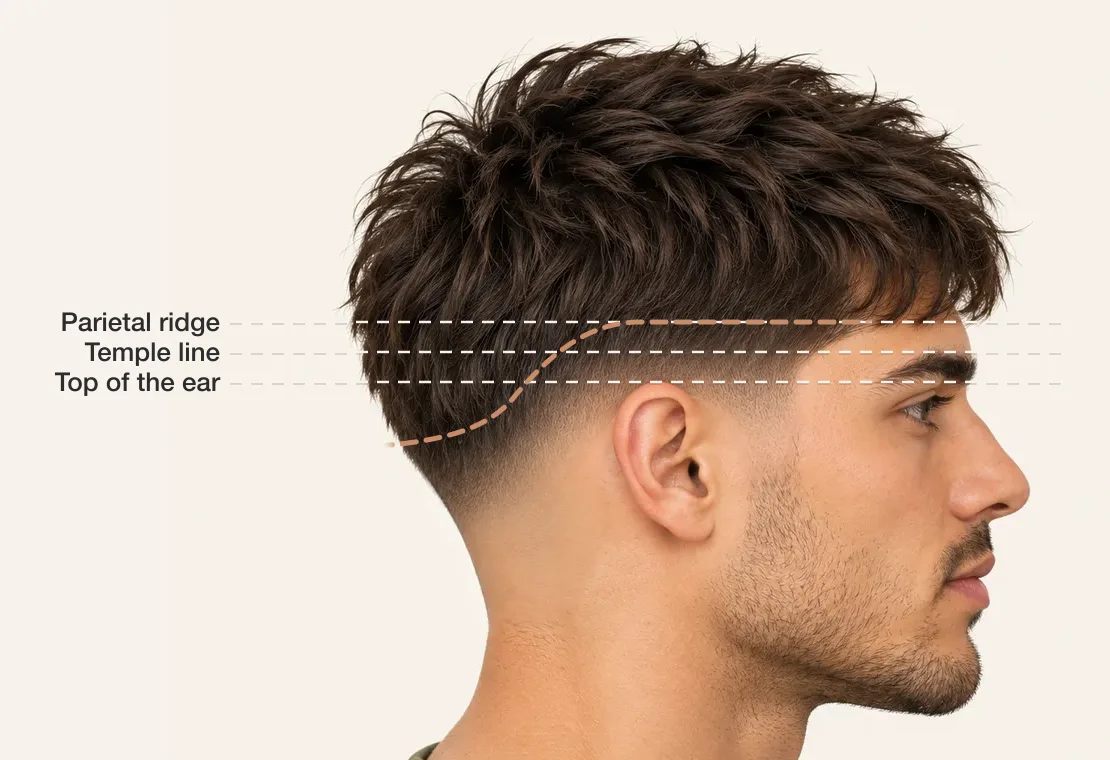
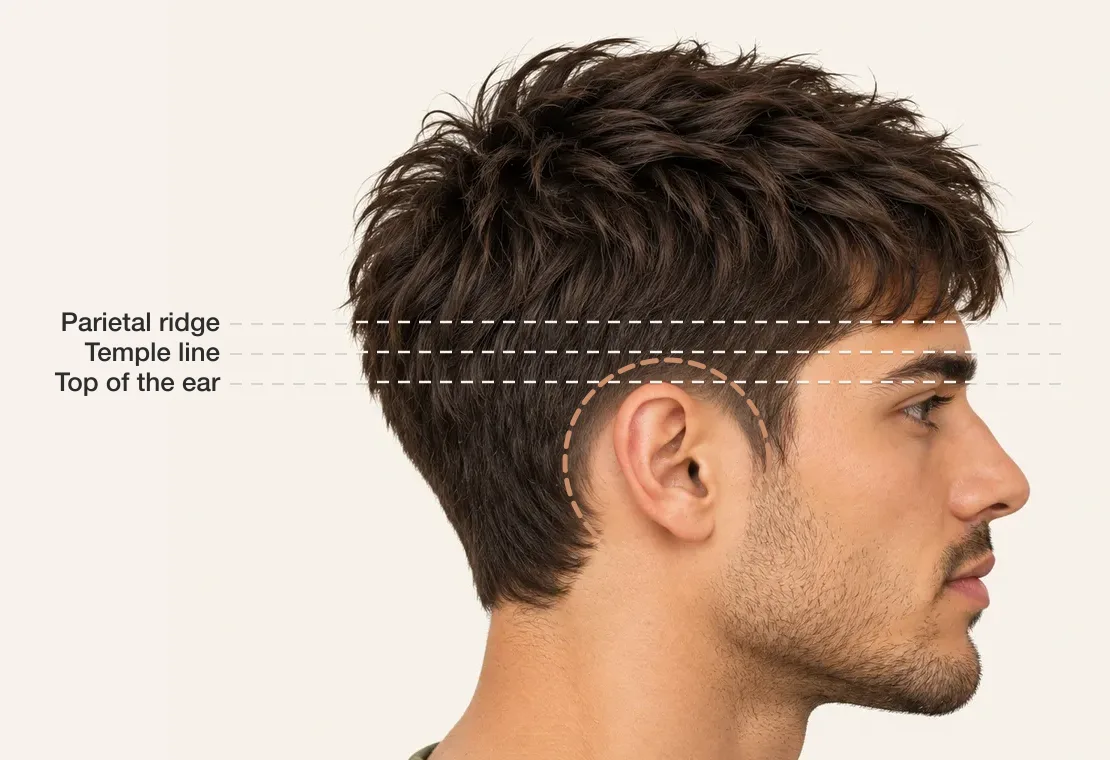
Barbers don't measure fades in inches from the ear. They use landmarks on the head that look the same on everyone, which is why “start it at the temple” means the same thing in any shop. The diagram marks three of them:
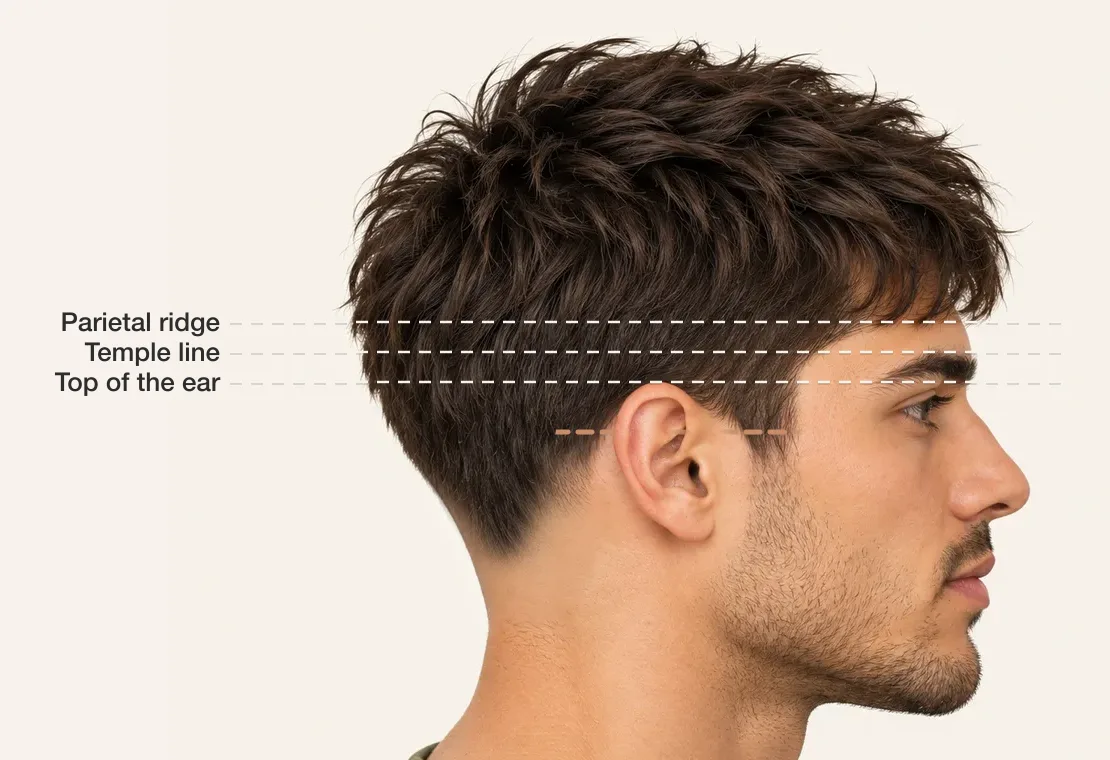
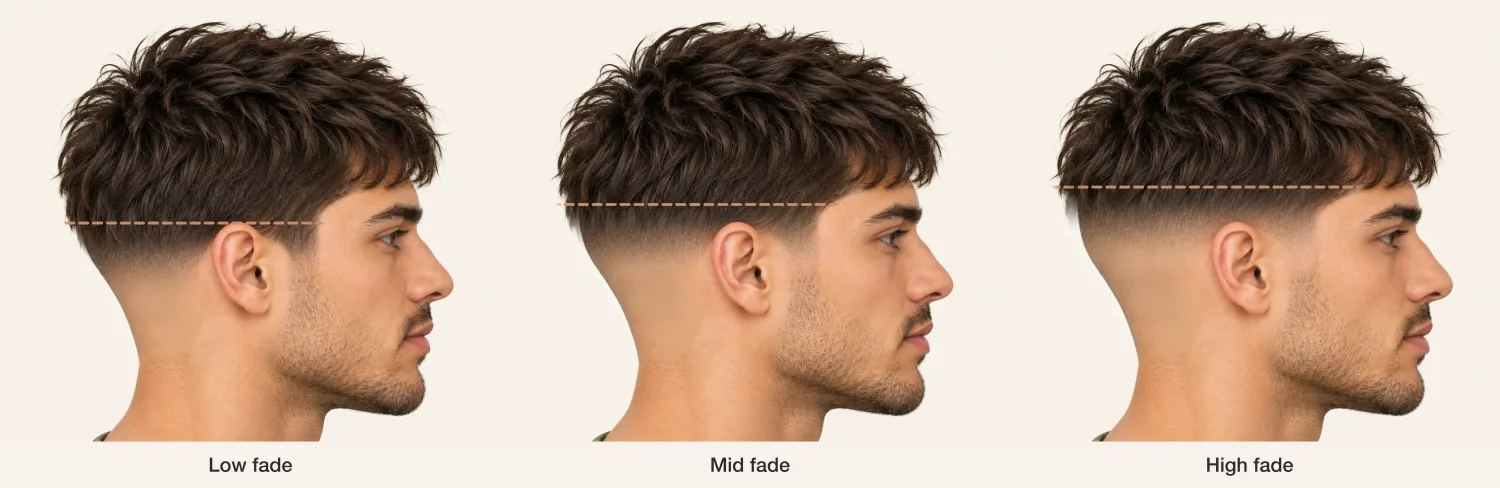
- Top of the ear (1). The lowest common starting point. A low taper or low fade starts just above it, so the short part barely shows from the front.
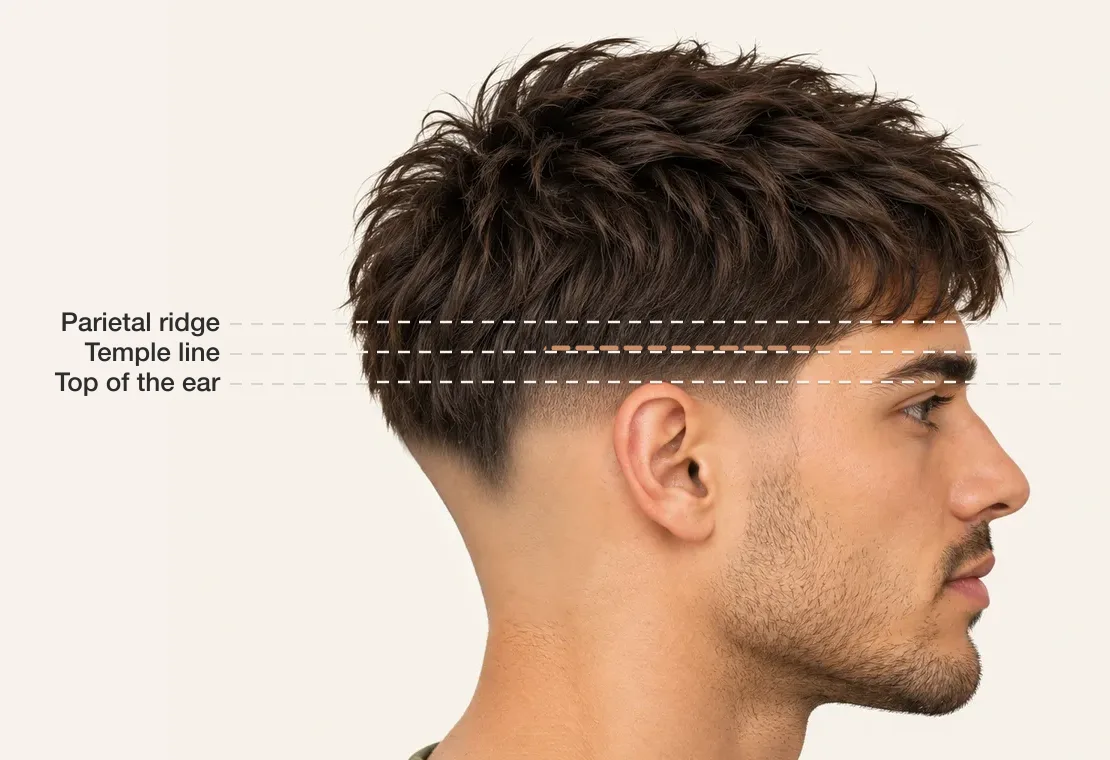
- Temple line (2). Level with the temples, around the outer corner of the eyebrow. Mid tapers and mid fades start here.
- Parietal ridge (3). The widest part of the head, where the sides start curving toward the top. High fades start just under it. Go above it and the cut becomes a very high fade or a disconnected undercut.
There's a fourth one at the back, the occipital bone: the bump at the back of the skull, roughly level with the top of the ears. It's where the back of a low or mid fade sits, and it's the line a drop fade curves down from.
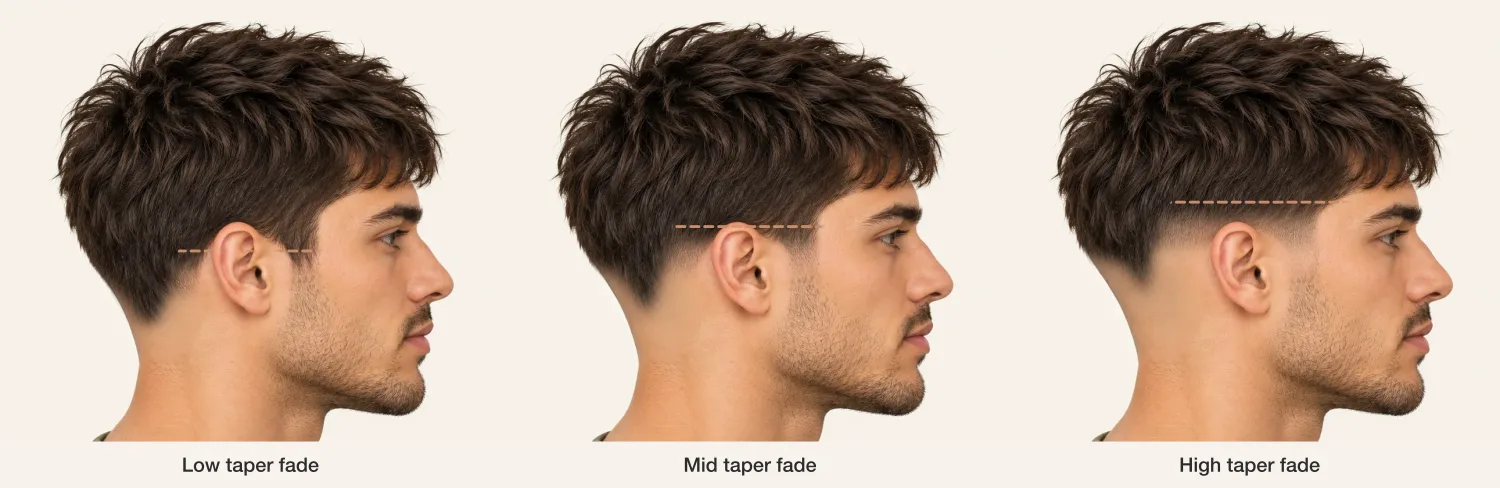
Low vs mid vs high taper
| Height | Starts at | Looks | Touch-ups |
|---|---|---|---|
| Low | Just above the ear | Subtle and clean | Every 3–5 weeks |
| Mid | Temple line | Balanced contrast | Every 3–4 weeks |
| High | Near the parietal ridge | Bold and sharp | Every 2–3 weeks |
Each height has a full guide with photos and barber instructions: the low taper fade, mid taper fade, and high taper fade. If you're torn between two, the taper quiz picks one from your hair, face, and routine.
Taper vs fade: same height, different area
This is the part most people get wrong, and it's the clearest thing the diagram shows. Set it to Mid and switch between Taper and Fade. The height doesn't move, but the area that goes short does.
A taper only shortens the hair close to the edges of your hairline: the sideburns, around the ear, and the neckline. The middle of the side keeps some length, so it looks tidy without looking freshly buzzed. A fade takes the entire band around the sides and back down short, usually to skin, so far more short hair shows at the same height. Our taper vs fade guide goes through when to ask for each.
Drop fade and burst fade
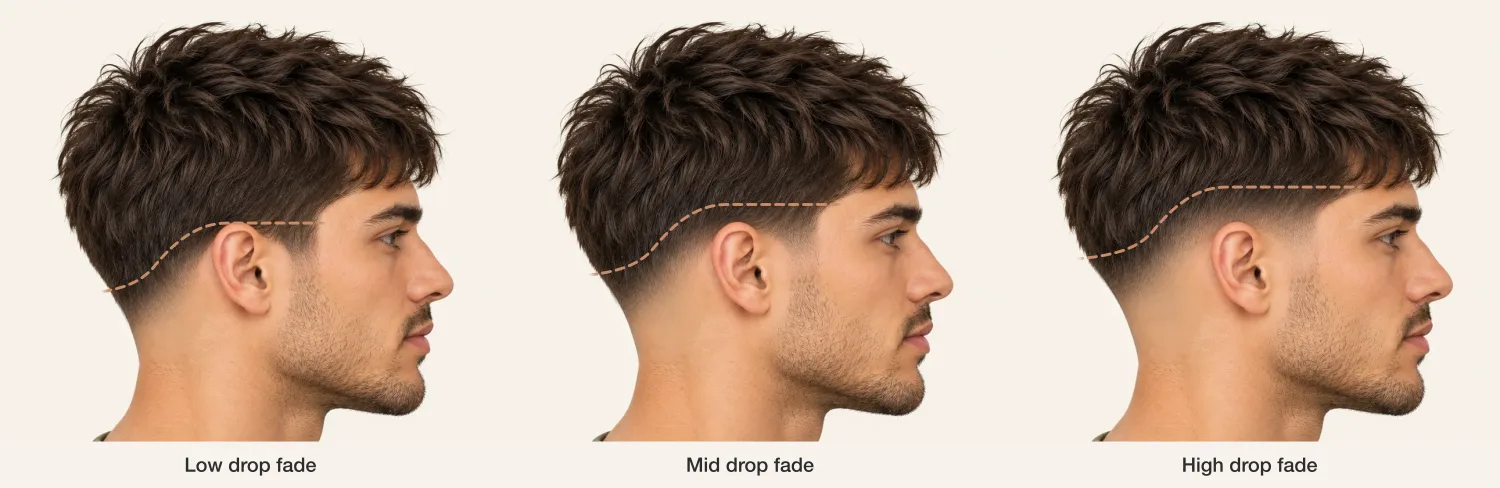
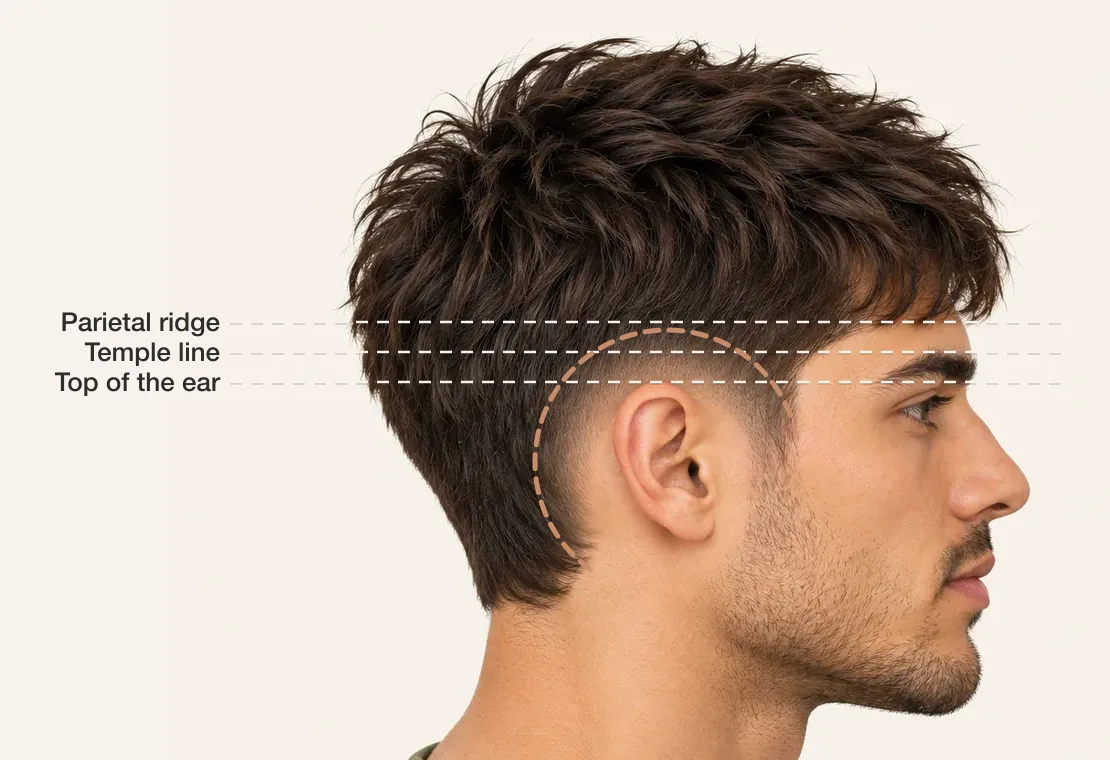
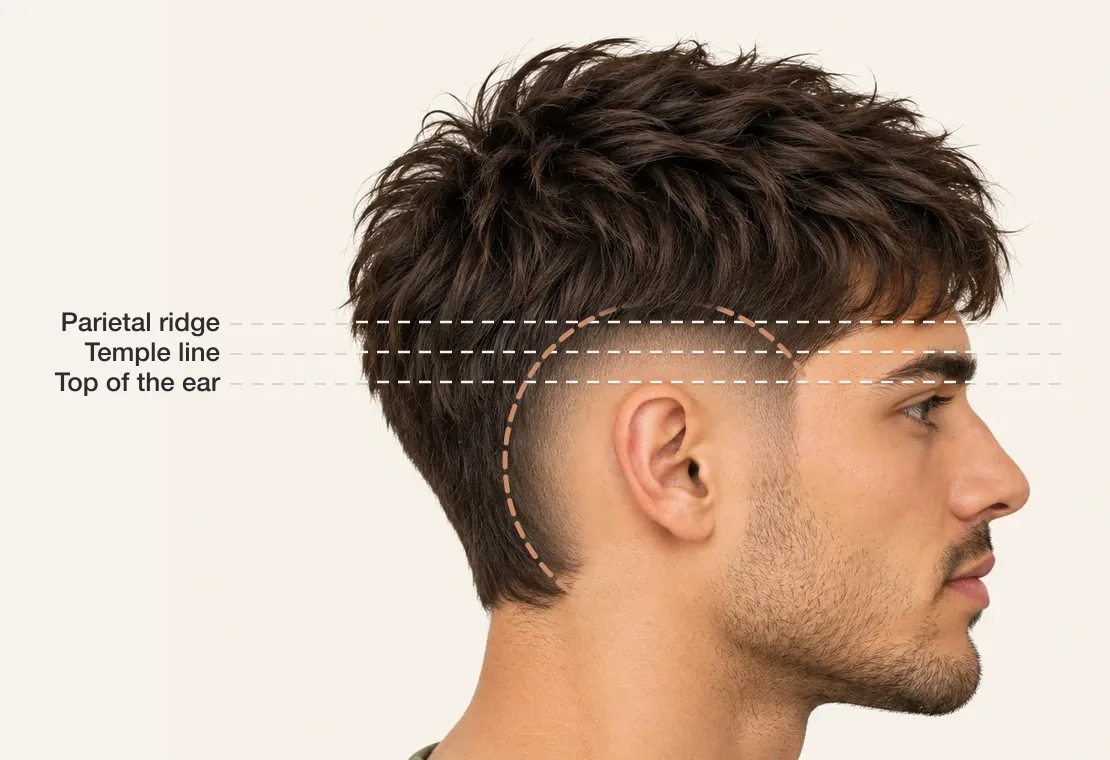
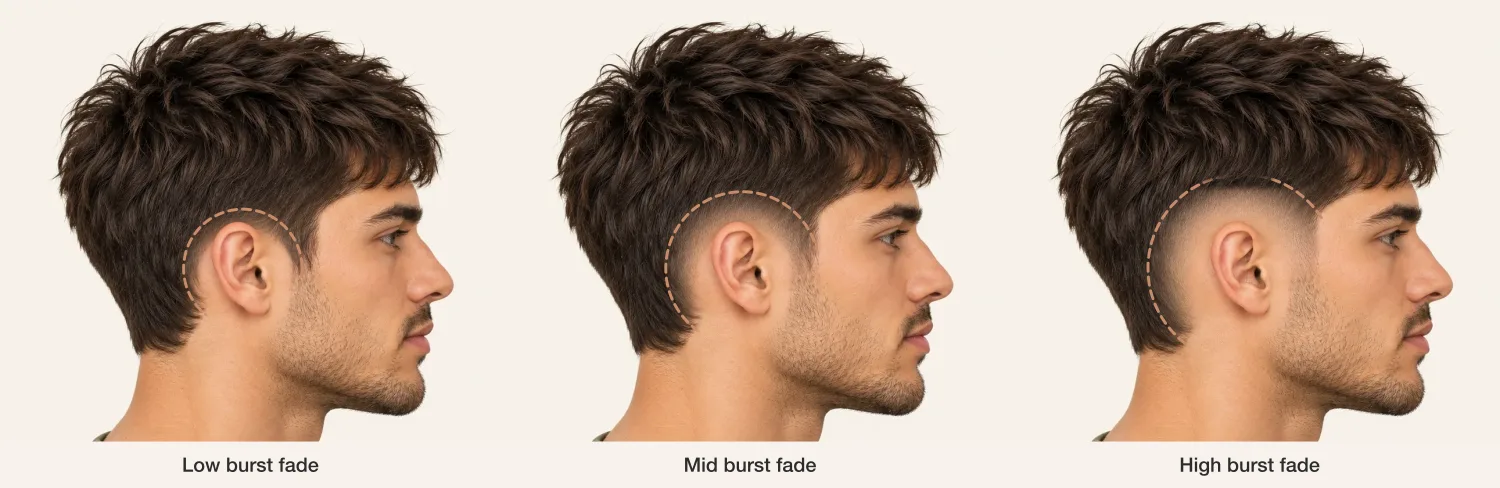
These change the shape of the line rather than its height. A drop fade runs level in front of the ear, then curves down behind it toward the nape, so the back of the head keeps more length and the cut follows the head's shape. A burst fade is a semicircle of short hair around the ear that leaves the back of the neck longer, which is why it pairs so often with mohawks and mullets.
See how the two compare in our drop fade vs burst fade guide, or read the drop fade and burst fade guides.
Skin vs guard at the bottom
The bottom finish decides how short the blend ends. With skin at the bottom, the shortest part is bare, shaved with a foil shaver or razor, for the most contrast. With a guard at the bottom, usually a #0.5 or #1, a little hair stays visible, the blend is softer, and regrowth shows less. Toggle it on the diagram, and check what each guard leaves in the clipper guard size chart.
How to use the diagram with your barber
Set the diagram to the cut you want and take a screenshot, or tap Download this diagram. Show it alongside a photo of the cut on hair like yours: the photo shows the overall look, and the diagram pins down exactly where the blend starts. Then build the rest of the request with the barber brief generator, which opens with your diagram's height already filled in.
Embed or download the diagram
You're welcome to use these diagrams on your own site or in your barbershop, as long as you credit Taper Trends with a link. Paste this code to embed the interactive version:
Or download a ready-made image of any state:
- Low taper fade · Mid taper fade · High taper fade · All three compared
- Low fade · Mid fade · High fade · All three compared
- Low drop fade · Mid drop fade · High drop fade · All three compared
- Low burst fade · Mid burst fade · High burst fade · All three compared
Frequently asked questions
Where does a mid taper start?
Around the temple line, roughly level with the outer corner of your eyebrow. From there the hair gets gradually shorter down to the sideburn and the neckline. A low taper starts lower, just above the top of the ear, and a high taper starts near the parietal ridge.
What's the difference between a low taper and a low fade?
They start at the same height, but a low taper only shortens the hair along the edges, at the sideburns, around the ear, and at the neckline. A low fade takes the whole band around the sides and back down short. Switch between Taper and Fade on the diagram to see it.
What is the parietal ridge?
It's the widest part of the head, where the sides stop running straight up and start curving toward the top. Barbers use it as the upper limit for a high fade, and it's also where the longer hair on top naturally sits out over the sides.
Is a drop fade the same as a taper?
No. A drop fade is a fade whose line curves down behind the ear toward the nape, so the back of the head keeps more length than a regular fade. A taper is shorter only at the edges. The two can be combined, which some barbers call a drop taper.
What height is a burst fade?
A burst fade isn't measured by height in the usual way. It's a semicircle of short hair around the ear, and its size is how far that arc reaches. A low burst hugs the ear; a high burst climbs further up the side. The back of the neck stays longer either way.
Which taper height is the most subtle?
A low taper with a guard at the bottom. It only shortens the hair at the sideburns and neckline, and the guard keeps a little length so there's no band of bare skin. From the front it reads as a neat, classic cut.