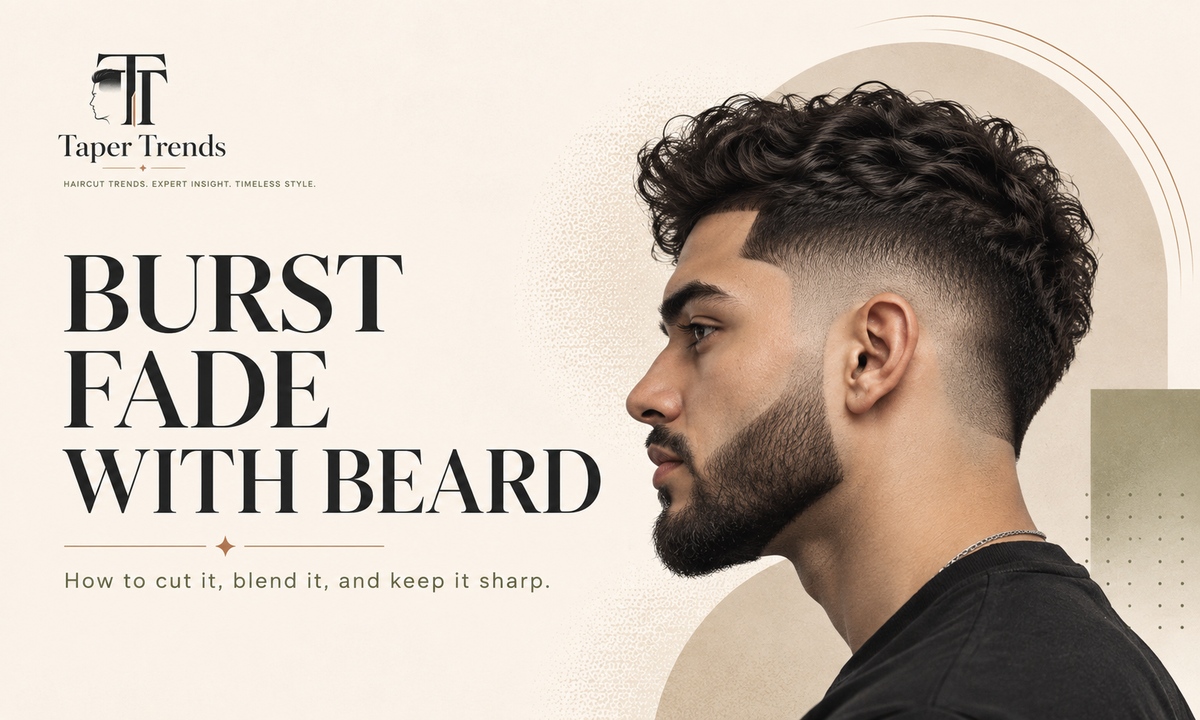
A burst fade with beard is a fade that curves in a half-circle around each ear and then carries that same gradient down through the sideburns into the beard, so the haircut and the facial hair read as one shape. The back of the head keeps its length. Most of the result is decided before the clippers start: fade height, how short the finish goes, and how far the fade reaches into the beard.
If you want the arc on its own first, our burst fade haircut guide covers the geometry. This page is about the join, the point where the hair stops and the beard starts, and how to make that point disappear. The low taper fade haircuts guide is the hub for every fade on the site if you want the wider picture.
What is a burst fade with beard?
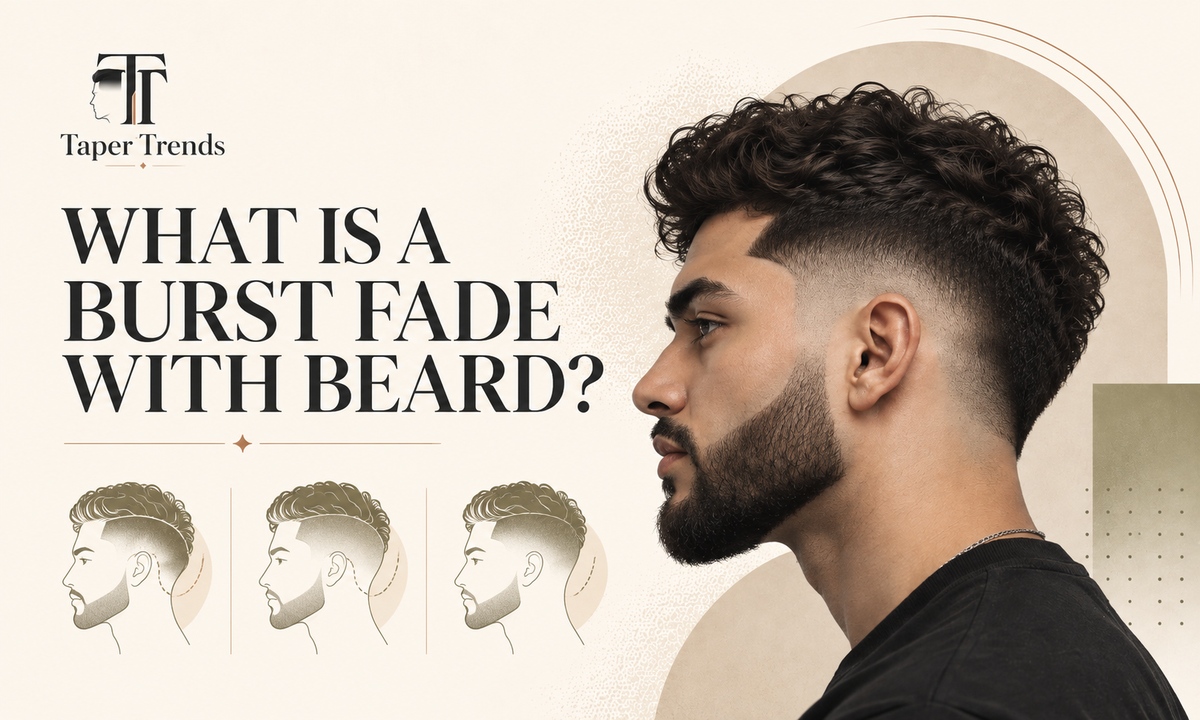
A burst fade is shaped as an arc around the ear rather than a line running level around the head. Hair is shortest beside the ear and gets longer as the curve moves up and back. Wez Jones, owner of Heartbreak Barber Club, told Modern Barber that the shape usually starts at the middle of the ear tip and fades outward in a circle, which he compares to a sunset.
The detail many guides skip is the back. In the same Modern Barber piece, Charles Rose, owner of Crate, tells barbers to drop the fade line just behind the ear, because a burst fade client still wants length at the back. If the fade keeps wrapping down to the nape, you are looking at a different cut, closer to the low taper drop fade.
Adding a beard changes one area: the sideburn. Instead of stopping the fade at the sideburn and leaving the beard as a separate block, the barber continues the gradient from the temple into the cheek. The shortest hair sits around the ear, and the beard gets fuller as it moves toward the jaw and chin. Barber's Take, a barber-led publication edited by licensed barber Sebastian Mondragon, describes the pairing as one continuous transition from temple to jawline, often sharpened with a line-up.
Burst fade vs. drop fade vs. taper fade
All three are fades, but they differ in where the shortest hair sits and how much length survives at the back. The burst stays concentrated around the ear, the drop fade keeps curving lower toward the nape, and a taper usually cleans up only the sideburns and neckline without going to skin. Our drop fade vs burst fade comparison goes deeper on the first two.
| Cut | Where the shortest hair sits | What happens at the back | Choose it if |
|---|---|---|---|
| Burst fade | A rounded arc around each ear | Keeps length | You want a visible curve and weight left behind the ear |
| Drop fade | Around the ear, then lower toward the nape | Faded down toward the neckline | You want a curved outline without extra back length |
| Taper fade | Sideburns and neckline, usually stopping short of skin | Mostly full | You want the quietest change |
Barber's Take draws the line between burst and drop the same way: the burst focuses on the sides around the ear, while the drop blends lower into the back, which is why a burst leaves more hair there. All three connect to a beard the same way at the sideburn. What differs is the shape above and behind the ear. “Taper” is the loosest word in the table, since some barbers use it for any fade that stops short of skin, and our taper vs fade explainer sorts that out. For the full lineup of fade shapes, see our guide to every kind of fade.
Why pair a burst fade with a beard?
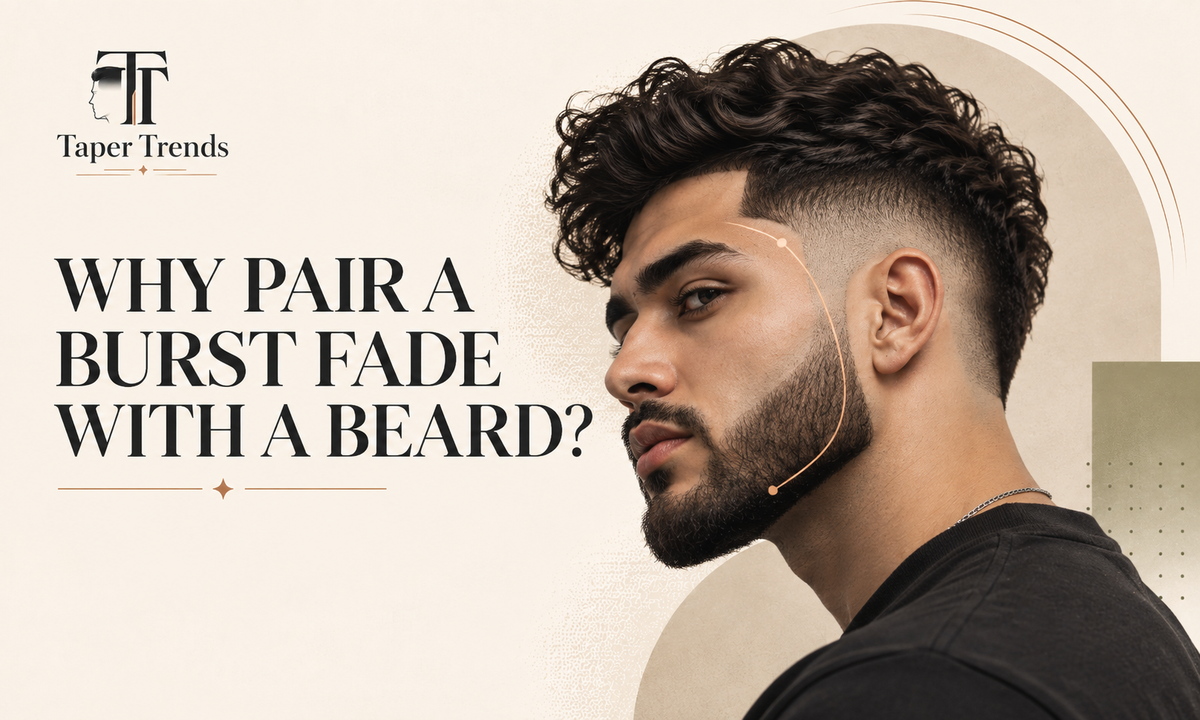
A burst fade pairs well with a beard because the arc around the ear gives the sideburn a natural place to blend, so the hair and beard look planned together instead of cut separately. The trade-off is precision. Both the curve and the beard join are on show, and both need a skilled barber and regular upkeep.
What the pairing does well
- One outlineThe eye follows the arc down the sideburn and along the jaw rather than stopping at a hard sideburn edge.
- Any beard lengthBarber's Take shows it under a short, clean beard with a textured top, and with a crew cut and trimmed beard it presents as a refined look that fits social and work settings. Our burst fade textured fringe guide covers that textured top in full.
- A flexible top“Burst” describes the sides only, so the same beard blend can sit under a crop, curls, a burst fade mohawk, a mullet, an Edgar cut, or a buzz.
Where it asks more of you
- Matching curvesThe curve has to match on both sides. Mondragon notes that almost any barber can add a drop to a fade, but a clean, symmetrical burst takes a skilled one.
- Thin or patchy beardsThey limit how close the blend can go. Fading a sparse beard to skin near the ear tends to expose the gaps.
- Edges that age firstMondragon puts the crisp life of a shape-up and groomed beard at roughly 5 to 10 days, so the outline needs attention sooner than the fade itself.
What you need before the cut
A burst fade with beard needs a clipper with a full guard set, a trimmer for the starting line and beard edges, a comb, and scissors for the top. Hair and beard should be clean and completely dry, because damp hair hides its true length and makes the arc harder to place accurately.
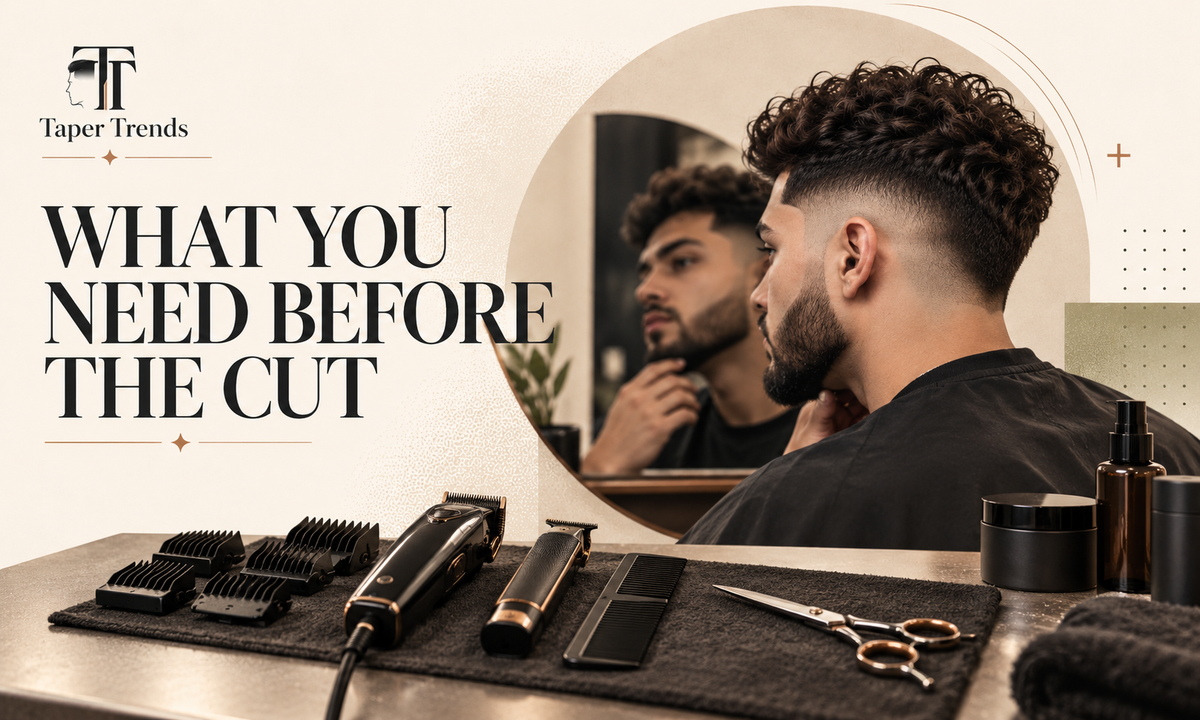
- Clipper and guardsGuards from about No. 0 to No. 4, plus the taper lever for the half-lengths in between. On the common guard scale, a No. 1 leaves about 1/8 inch, a No. 2 about 1/4 inch, a No. 3 about 3/8 inch, and a No. 4 about 1/2 inch.
- TrimmerSets the starting point of the arc and outlines the hairline, cheek line, and neckline.
- Beard trimmerIts own guards, so beard lengths are measured rather than guessed.
- Comb and scissorsA fine-tooth comb for lifting beard hair to see where each length changes, and scissors for tidying the top.
- Razor or foil shaverOnly if you want bare skin at the edges. If close shaving gives you bumps, a trimmer edge is gentler, and our burst fade guide for Black men covers razor bumps in detail.
- ProductsA matte clay, paste, or light cream for the top, and a beard oil, conditioner, or moisturizer matched to your skin type. Our guide to styling a low taper fade walks the wider styling routine.
- Mirrors and lightFor a home cut, two mirrors or a three-way mirror and strong side lighting, since the arc sits where you can't see it straight on.
How to cut a burst fade with beard, step by step
A burst fade with beard is cut in five stages: agree on the plan, set the arc around the ear, carry the gradient into the beard, sharpen the outlines, and style. Each stage sets the lengths the next one depends on, which is why a rushed first step usually shows up later as an uneven blend. The steps below follow how a barber works; if you're cutting your own, read the home-cutting FAQ first.
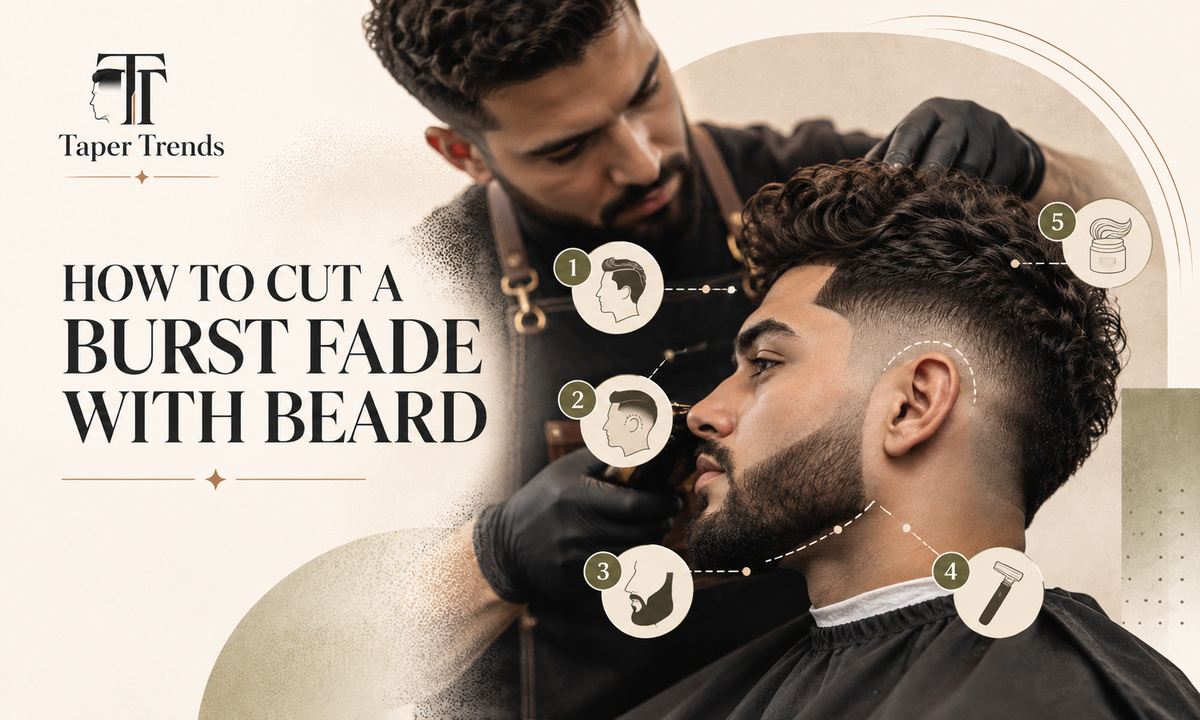
Step 1: Agree on the plan
Settle five things before any hair comes off: length on top, fade height (low, mid, or high), the shortest finish (skin or a shadow of stubble), how much length stays at the back, and how far down the beard the fade should reach. Kevin Luchmun, International Artistic Team Lead for Andis, tells Modern Barber that it's “always best to keep things slightly longer,” since a barber can always take more off later.
Bring front, side, and back photos rather than one dramatic side shot, and pick examples with hair and beard density close to your own. Before cutting, section the top out of the way with a clip so the sides can be worked cleanly.
Step 2: Set the arc around the ear
The sides come first. Wez Jones describes his process as laying down a base with a No. 2 guard, adjusted for hair density, then setting a starting point for the curve with a trimmer and building the circular shape upward from there. Charles Rose works down through his guards gradually so the fade doesn't end up higher than planned.
Work in short, overlapping strokes that follow the curve of the ear rather than running straight up the head, flicking the clipper out as each stroke ends, the same flick-out our guide to how to cut a fade breaks down. The usual failure is a visible ridge where one guard length meets the next. Luchmun advises stepping back regularly and looking at the cut from a distance, since the overall shape is hard to judge from inches away. Straight hair shows every transition, while curly and coily hair hides small unevenness, so straight hair rewards a slower pass. Our guides to the burst fade on straight hair and on curly hair go further on texture, and our drop fade for straight hair covers the same slower pass for a line that curves behind the ear.
By the end of this step, the arc should be visible and matched on both sides, with the back still carrying its length.
Step 3: Carry the fade into the beard
This is the step that makes the style. Start at the sideburn with the same length the hair fade finishes on beside the ear, then increase the guard length as you move down the sideburn into the cheek and toward the jaw. The beard should get gradually fuller from ear to chin. Going the other way, or starting the beard at a length that doesn't match the sideburn, leaves a hard band where the two meet.
Beard density decides how deep the blend can go. A thick, even beard can take the fade close to the skin near the ear without looking patchy. A thinner beard usually needs a softer, higher blend that keeps a little length at the sideburn. Lift the hair with a comb as you go to see exactly where each length changes, and stop the fade before it reaches any thin area on the cheek.
Done well, there's no obvious point where the haircut ends and the beard begins. The same sideburn-to-beard join under a level blend is walked through in our low taper fade with beard, mid taper fade with beard and high taper fade with beard guides.
Step 4: Line up the edges
With the blend finished, a trimmer or razor defines the hairline, the temple corners, the beard's cheek line, and the neckline under the jaw. Cut one side, then match the other against it. The curve of a burst fade makes small asymmetries easier to spot than they would be on a level fade.
Check the result from the front, both sides, and a distance before calling it done. If your skin reacts to close shaving, ask for the cheek line and neckline to be cut with a trimmer rather than taken to bare skin with a razor.
Step 5: Style the top and finish the beard
Dry the top and style it with a matte clay, paste, or cream depending on whether you want texture, height, or a smoother finish, then snip any stray hairs left over from the fade. Comb the beard in the direction of growth and work in a small amount of oil or conditioner. The American Academy of Dermatology suggests using beard products sparingly to avoid a greasy look, because you can always add more.
Choosing fade height for your beard, hair, and face shape
A burst fade with beard can suit most men once the fade height and beard blend are adjusted to fit. Beard density matters most, hair texture second, and face shape works best as a rule of thumb rather than a strict rule. An experienced barber will fine-tune all three after seeing your hair and beard in person.
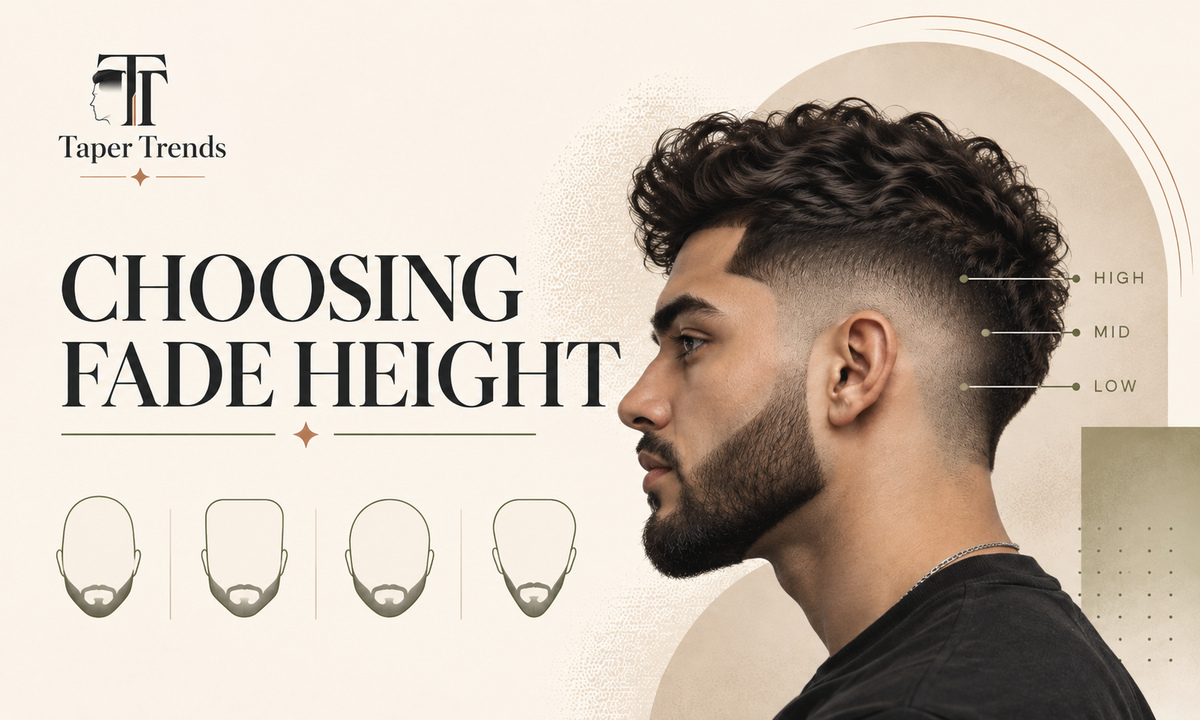
Start with the beard. A full, even beard supports a low burst with a tight blend at the sideburn. A patchy or light beard is better served by a higher, softer blend, or a stubble-length beard kept uniform so gaps don't stand out against a skin finish.
Texture comes next. Curly and coily hair holds the burst shape well and shows off the top, and it forgives small blending errors. Straight hair gives crisp lines but reveals every transition, so a slightly softer finish often looks cleaner. For the lowest-contrast version of the arc, a taper low burst fade stops short of skin entirely. A mid burst fade sits in the middle, and the high burst fade gives the most contrast.
Face shape as a starting point
For face shape, Mondragon's general fade guidance on Barber's Take is a reasonable starting point:
- OvalCan wear almost any height, with a mid fade giving the most styling options.
- RoundTends to look longer with a higher fade and some height on top.
- Square or angularUsually suits a lower fade, which softens a strong jaw instead of adding more angles.
- LongLooks more balanced with a lower fade and volume on top, since a high fade adds length.
- Heart-shapedOften suits a mid fade with a fuller top.
The beard can shift these rules. A fuller chin adds length to a round face, and a beard kept tight at the sides narrows a wide jaw. That is one more reason to agree on the beard blend and the fade height together.
How to keep a burst fade with beard sharp
A burst fade with beard needs a full re-fade every two to four weeks, depending mostly on how short the finish goes, and the outline needs attention sooner. The line-up and beard edges start to soften within about 5 to 10 days, so many men book a quick edge cleanup between full cuts.
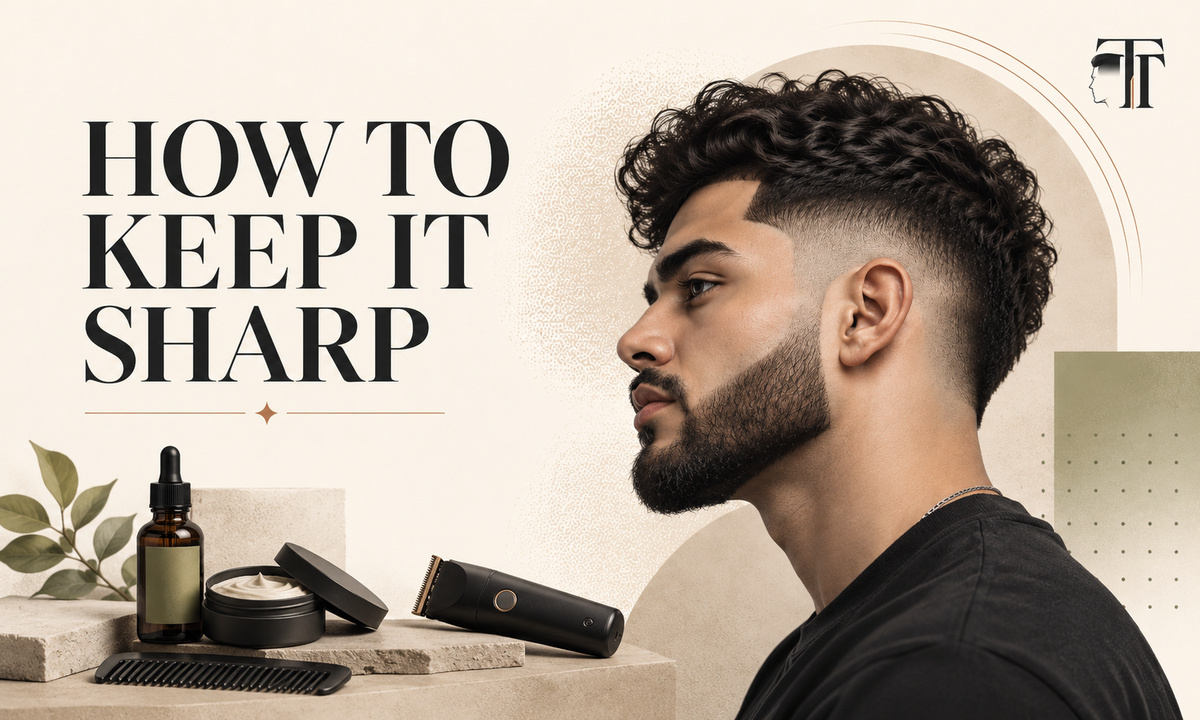
Mondragon's general refresh intervals for fades make a useful benchmark. Individual growth rate still decides where you land within each range.
| Finish | Typical full refresh |
|---|---|
| Skin fade | Every 10 to 14 days |
| Low or mid fade with a taper | Every 2 to 3 weeks |
| Tapered style with no skin work | Every 3 to 4 weeks |
A touch-up appointment, where the barber cleans the line-up, neckline, and edges without re-blending the sides, is usually quicker and priced differently from a full cut. Mondragon says these typically take about 15 minutes and run $10 to $20 in most cities, though shop prices vary.
At home, stick to the perimeter: the neckline, the stubble above the cheek line, and stray hairs around the ear. Leave the gradient itself alone. Mondragon sees clients try to clean up a blend with a guard one size shorter than the barber used, and the result is a visible step in the fade.
Beard care between cuts
The American Academy of Dermatology recommends washing your face and beard every day, then choosing a product by skin type: beard oil for normal or dry skin, beard conditioner if you're acne-prone, and a gentle moisturizer if your skin is sensitive. Massage it through to the skin, not only the hair tips, and try to stop touching and stroking the beard, which the AAD links to skin problems underneath.
For oil specifically, board-certified dermatologist Dr. William Huang of Wake Forest Baptist Health told NBC News Select that it helps by “making your beard hair softer and easier to style” while moisturizing the skin below. He also cautioned against alcohol-based beard oils containing ingredients such as isopropyl alcohol or propylene glycol, since they can dry the skin. A softer beard lies flatter against a fresh blend line, which is most of what keeps the join looking deliberate.
If flaking, bumps, or itching under the beard keep coming back despite a steady routine, the AAD advises seeing a board-certified dermatologist, since beard dandruff and acne need different treatment than simple dryness.
Styling the top between cuts
Reapply a small amount of the same clay or cream you were styled with, and resist adding more each day. Product buildup weighs the top down and makes a sharp fade look flat.
Mistakes that make the blend look unfinished
Most disappointing results come from a handful of avoidable errors:
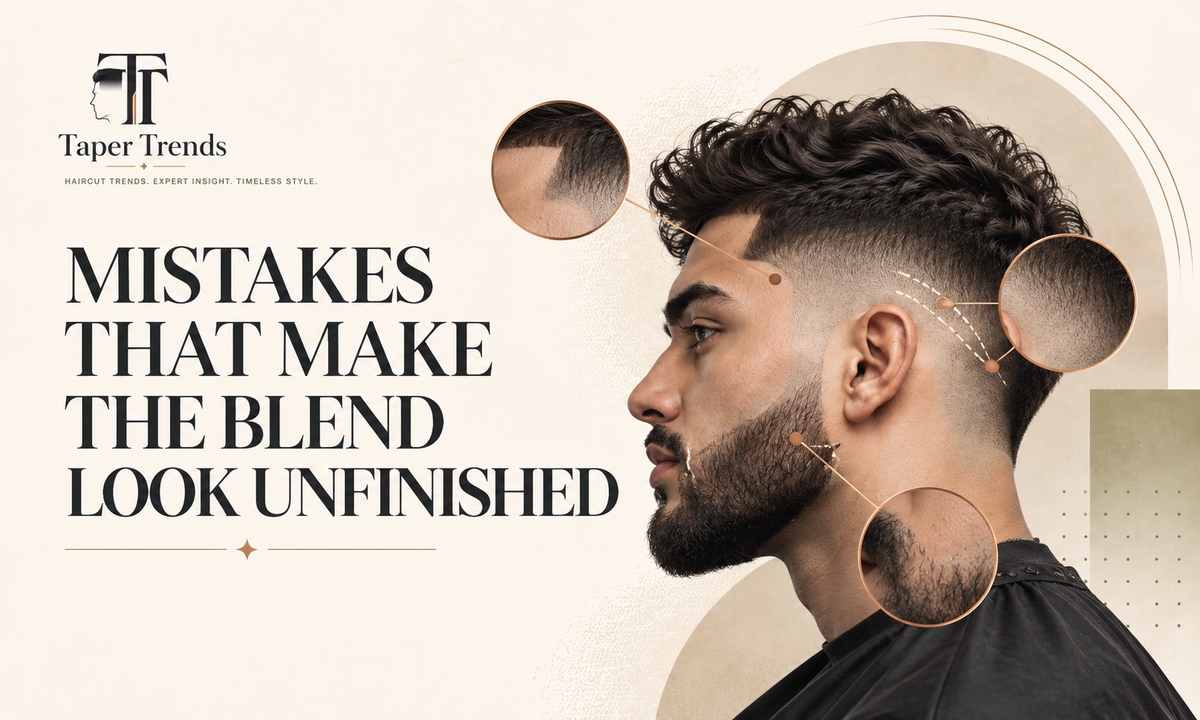
- Too short, too soonGoing too short or too high on the first cut. You can always go shorter next visit, but you can't put hair back.
- Wrong beard startIf the sideburn doesn't match where the hair fade ends, a band appears at the join no matter how good the rest of the fade is.
- Thin beard to skinIt draws attention to gaps instead of hiding them.
- One side at a timeFinishing one side before checking the other. On a curved fade, mismatched arcs are the first thing people notice.
- Home re-fadesEdges are fair game, but the gradient is the barber's job.
Burst fade with beard FAQs
Can I cut a burst fade with beard on myself?
You can, but a burst fade with beard is one of the harder fades to cut on your own head, because the arc sits behind and around the ear where you can't see it directly. Use two mirrors, start with a longer guard than you think you need, and check both sides before going shorter. Many men get the first cut done by a barber and only maintain the edges at home.
Will a burst fade work if my beard is patchy?
A burst fade can still work with a patchy beard, but the barber will usually keep the beard blend higher and softer instead of fading close to skin at the sideburn. A tight blend on sparse growth tends to highlight the gaps. Keeping the whole beard at an even stubble length is often the cleaner option until growth fills in.
Is a burst fade with beard appropriate for a professional workplace?
A burst fade with beard usually reads as professional in its low-contrast form: a low arc, a shadow finish rather than bare skin, a neat line-up, and a short or medium beard kept tidy at the edges. Workplace expectations vary, so check any written grooming or dress policy before choosing a higher, skin-finish version.
How do I ask my barber for a burst fade with beard?
Ask by name for a "burst fade," then give the specifics: fade height, skin or shadow finish, how much length to keep at the back, your plan for the top, and how far the fade should reach into the beard. Bring front, side, and back photos, and ask the barber to point out where the arc will start before cutting.
Can I grow my beard longer while keeping the burst fade?
Yes. The fade and the beard don't need to change at the same pace. Many men keep the sides on a regular schedule while letting the beard grow longer, and the barber refreshes only the blend line at the sideburn where the two meet. Tell your barber you're growing the beard so a routine cleanup doesn't take the length off.
Is a burst fade with beard the same as a beard fade?
No. A beard fade is the gradient within the facial hair itself, shortest at the sideburn and fuller toward the chin, and it can go under almost any haircut. A burst fade with beard is a specific combination: the curved burst on the sides plus a beard fade that picks up exactly where the arc ends. For the same beard join under a level taper, see our guides to the low taper fade with a beard and the high taper fade with a beard.
The beard-fade answer above points at several neighbours worth reading next: the low taper fade with a beard, the mid taper fade with a beard and the high taper fade with a beard guides show the same join under a level blend, and the drop fade with beard guide shows it under a curve that runs behind the ear, while the skin fade with beard guide takes the sides to bare skin. If you are choosing an arc height first, compare the taper low burst fade, the mid burst fade and the high burst fade. For the three skin heights side by side, our low vs mid vs high skin fade comparison shows where each bare section stops.
The bottom line
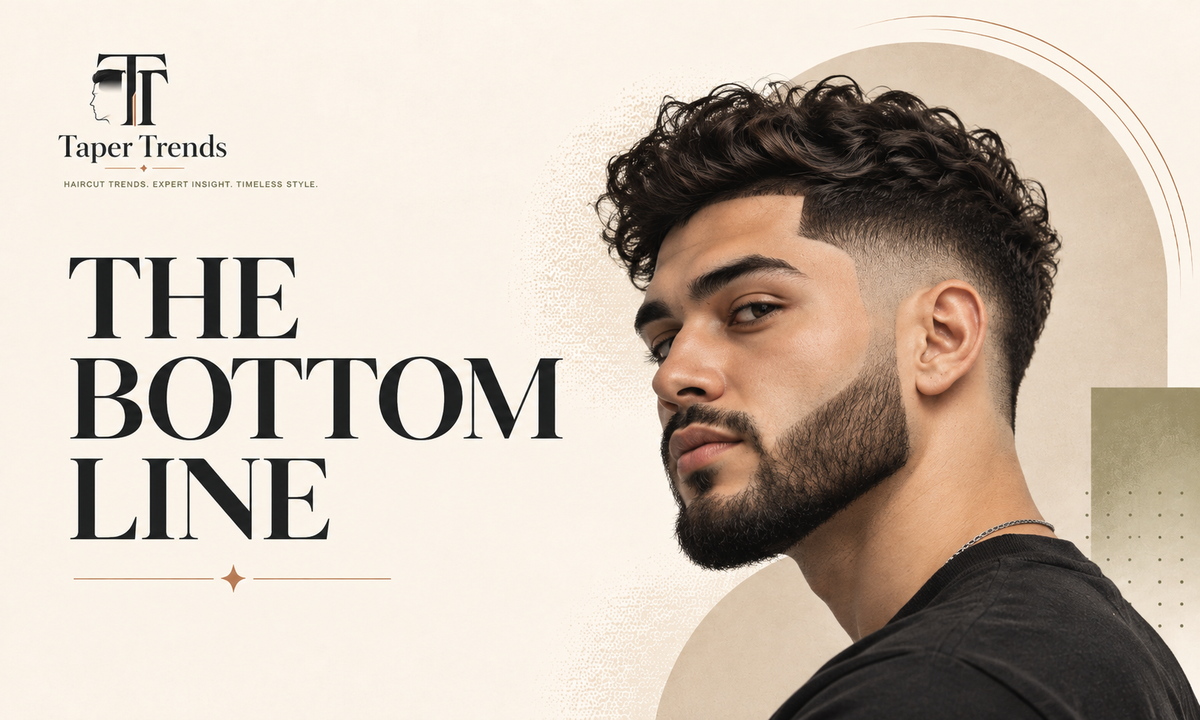
A burst fade with beard comes down to one clean curve that carries from the ear into the beard without a visible seam. Pick your fade height with your beard density in mind, start one step longer than you think you want, and bring photos from three angles. After that, the job is maintenance: an edge cleanup every week or two, a full re-fade every two to four weeks, and a daily beard routine matched to your skin.
Still comparing? The burst fade haircut guide covers the arc on its own, the full taper fade guide places low, mid and high side by side, and the low taper fade haircuts guide is the hub for every variation. For the closest burst neighbours, read the burst fade for Black men, burst fade curly hair, burst fade straight hair, burst fade mullet, burst fade mohawk, burst fade Edgar and burst fade textured fringe guides.
The bottom line
Match the sideburn to where the ear fade ends, let the beard get fuller toward the chin, and keep the blend softer if the beard is thin or patchy.
Start one step longer than you think you want, bring front, side and back photos, and leave the gradient to your barber between visits.
Want more fade guides?
Browse clean, barber-ready breakdowns for every fade shape and hair type.