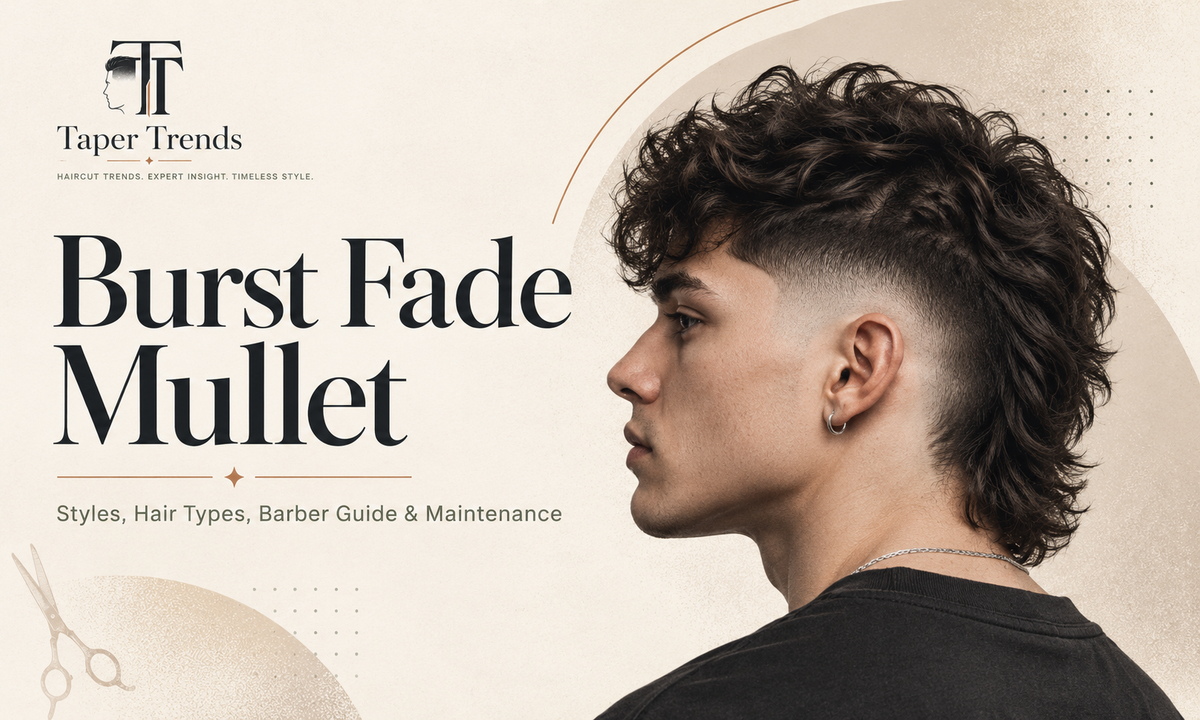
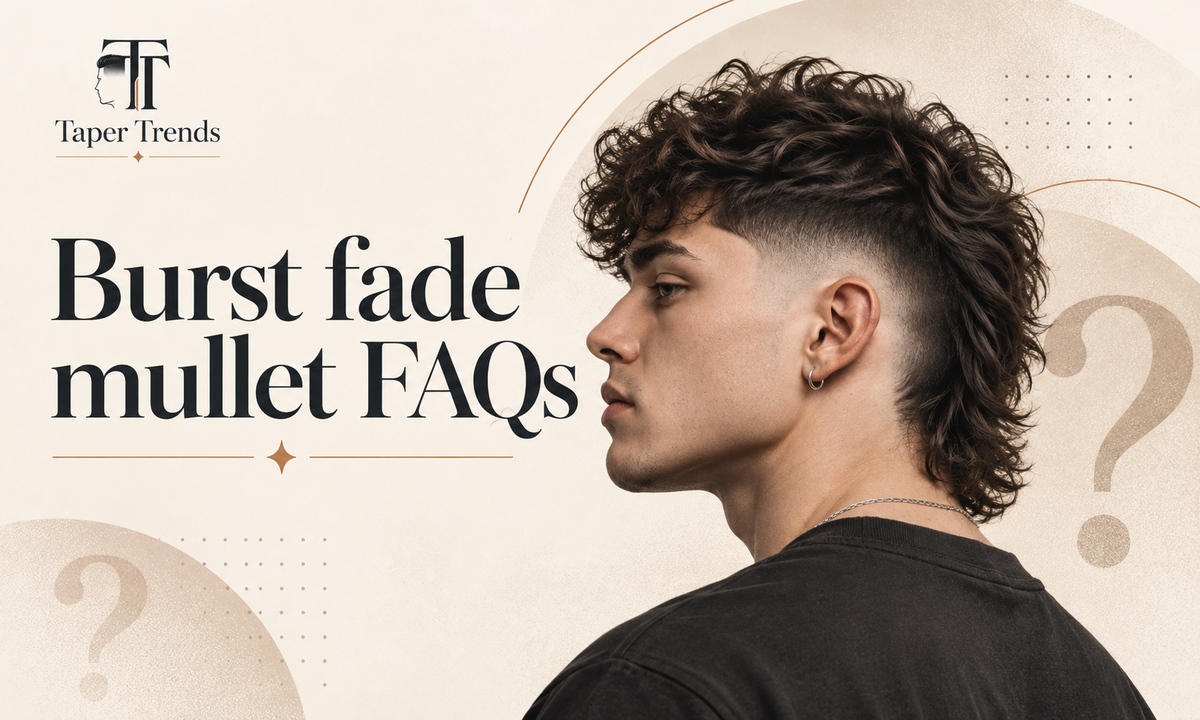
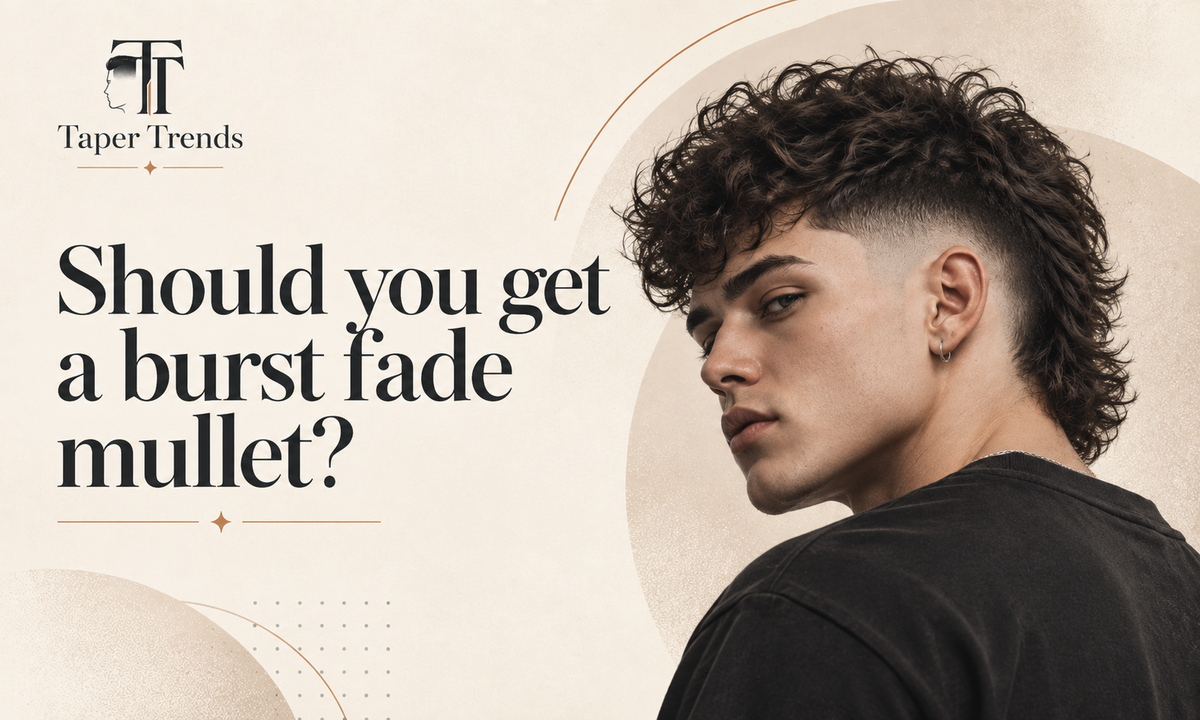
A burst fade mullet is a haircut that fades the hair in a curved arc around each ear while keeping length through the crown and down the back of the neck. That curve is what separates it from a mullet with ordinary faded sides. It works on straight, wavy, curly, and coily hair.
The fade height, the shortest length, and the amount of hair left at the back should suit your hair and how often you're willing to see a barber. If you want the underlying shape first, our complete burst fade haircut guide covers the arc on its own, our guide to every kind of fade haircut sets the burst beside the other ten, and the complete low taper fade haircuts guide covers the quieter end of the same spectrum.
What is a burst fade mullet?
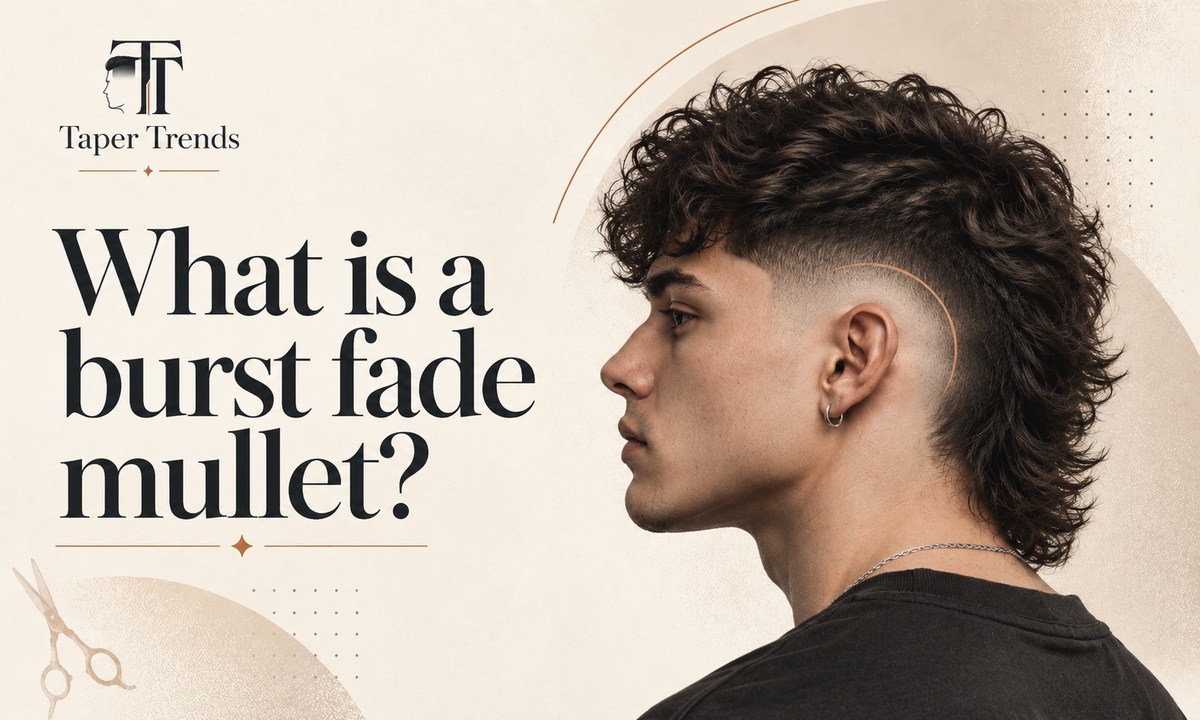
A burst fade mullet joins two separate ideas. The burst fade is a fade whose shortest point sits just behind the ear, with the graduation curving around the ear in a half-moon shape. The mullet is the silhouette: noticeably more length at the back than at the sides. Together they give sharp contrast at the sides and a long back.
The word “burst” describes the path the fade takes. It says nothing about how short the fade goes, which is a separate decision — the same shape-versus-depth split our taper vs fade explainer untangles, and the reason a taper low burst fade can share the same curve with far less contrast.
How do the burst fade and mullet work together?
The arc and the long back are two zones that share a border. In the technique taught by CADMEN Barber Academy, the barber places the shortest point directly behind and slightly above the ear, then blends into longer lengths moving outward along the curve. The arc bends downward in front of the ear and again toward the neckline, so hair lower down at the back can keep more length.
That geometry is why the burst suits a mullet so well. CADMEN describes the burst as creating a clean break between the faded side and the longer back section. A standard fade, which runs in a horizontal band around the sides and back, would cut straight through the hair a mullet depends on — which is why a low taper fade mullet keeps its blend low and tight rather than letting it travel around the head.
What makes it different from a regular mullet or standard fade?
| Cut | Sides | Back | Where the contrast comes from |
|---|---|---|---|
| Regular mullet | Varies; often scissor-cut or lightly tapered | Long | Length difference between sides and back |
| Standard fade | Graduated in a roughly horizontal band | Faded with the sides | Short sides and back against the top |
| Burst fade mullet | Faded in a curve centered behind the ear | Long | Tight ear area against a long top and back |
The burst fade mullet takes the sharpness of a fade and confines it to the area around the ear. That restriction is what lets the back stay long. If you want the same sharpness without the curve, a standard taper fade is the level-line version, and our low taper vs low fade comparison explains why the depth of the blend matters as much as its path.
Is a burst fade mullet right for your hair and lifestyle?
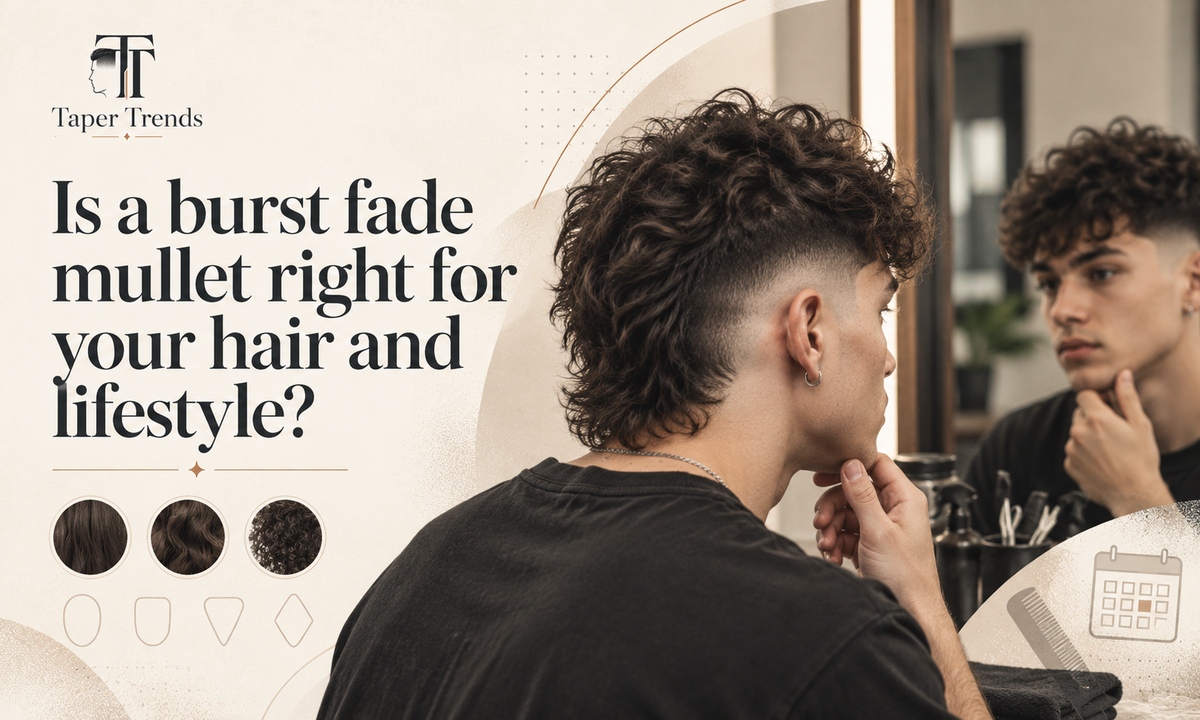
Whether a burst fade mullet will work for you depends mostly on four practical factors: your hair's texture and density, how much length you can grow at the back, how much contrast you want at the sides, and how often you can get the fade tidied. Face shape matters less than most haircut galleries suggest.
Which hair textures and densities work best?
No texture is ruled out. CADMEN describes the burst as a side technique that pairs with straight, wavy, curly, or coiled hair on top. It adds that the top style decides whether the cut looks balanced more than the texture does. What your texture changes is how the barber builds the top and back, and how the finished cut looks.
- Straight hair shows every line, so the arc needs clean blending. The back usually needs some layering, or it can hang like a solid block.
- Wavy hair tends to blend the top into the back on its own, which hides the join between the two zones.
- Curly hair gives strong contrast against a tight burst. The catch is shrinkage: curls look shorter dry than wet, so a back that seems long in the chair can look short once it dries.
- Coily hair shrinks even more, so the barber should leave extra length on top and at the nape. CADMEN notes the fade itself is cut the same way on tightly coiled hair, following the natural growth pattern.
- Fine or thinning hair often looks better with a lower, softer burst. A high skin finish exposes more scalp right next to a lighter top.
- Dense hair can usually carry a higher, sharper burst. It may need weight taken out of the back so the mullet doesn't puff outward.
Each of those textures has its own full guide here: how a blend sits on straight hair — and how the burst itself sits on it, in our burst fade for straight hair and drop fade for straight hair guides — on wavy hair, on curly hair — where our curly burst fade guide covers shrinkage and side weight in detail , on afro-textured coils — the texture our burst fade guide for Black men covers style by style , and on thick, straight Asian hair. For the density question specifically, our guide to fades on thin and thick hair covers how much contrast each density can actually hold.
How much hair do you need before getting one?
There's no single measurement, and online guides quote minimums that don't agree with each other. The fade can be cut from almost any length. The limit is the back: it needs enough visible length, after shrinkage, to look like a mullet and not just a short cut with neat sides.
Check the back of your head with a second mirror. If the nape already has some movement, a barber can usually shape a short mullet in one visit. If it's cropped close, you're growing into the style, and your first appointments will mostly involve cleaning up around the ears while the back catches up. A quick consultation settles the timing faster than any chart. While you wait, our guides to a fade with medium length hair and with long hair on top cover the awkward in-between stages.
How should face and head shape change the silhouette?
Treat face-shape charts as loose suggestions. A more useful idea is balance. Height at the crown and a higher burst draw the eye upward and make the head look longer. A lower burst with a fuller top keeps more width at the sides. Which one flatters you is a judgment best made in the chair, looking at your actual reflection — our guide to what a low taper fade looks like from every angle is a useful reference set for that conversation.
Head shape also affects the fade line itself. CADMEN's technique guide points out that the arc doesn't need to be perfectly symmetrical, because the position of the ear and the shape of the head change how the curve sits. A good barber shapes the arc to your head instead of copying a photo line for line.
What upkeep, dress-code, or skin-sensitivity issues matter?
A few things surprise people after the first cut.
- Regrowth shows fast on bare skin. The shorter the endpoint, the sooner regrowth shows; CADMEN notes that fine stubble appears on a skin-level section within two to five days.
- A softer endpoint buys time. A shadow or guard-length endpoint keeps the same curve but makes that regrowth far less obvious.
- Dress codes vary. Employers and schools set their own policies, so read the actual rules before assuming a version is acceptable.
- Shaving can irritate skin. If the barber takes the burst to skin with a razor or foil shaver, shaving irritation is possible. A clipper shadow finish avoids shaving entirely.
- Recurring bumps at the nape need a dermatologist. Bumps that keep returning on the back of the neck or scalp are worth showing to one.
On the skin points, the American Academy of Dermatology explains that razor bumps form when shaved hairs curl back into the skin, and notes that bumps which keep returning at the nape can be a separate condition, acne keloidalis nuchae, which needs medical treatment. Our guides to a high taper fade on Black hair and a high taper fade on an afro both cover bump-safe finishes in more detail.
Which burst fade mullet style should you choose?
Most burst fade mullet “styles” are the same haircut with different settings. Four choices create nearly all the variation you'll see online: how high the burst sits, how short it goes, how much length stays at the back, and what happens on top. Your texture isn't on that list because you don't choose it. It changes how each choice looks.
Should you choose a low, mid, or high burst?
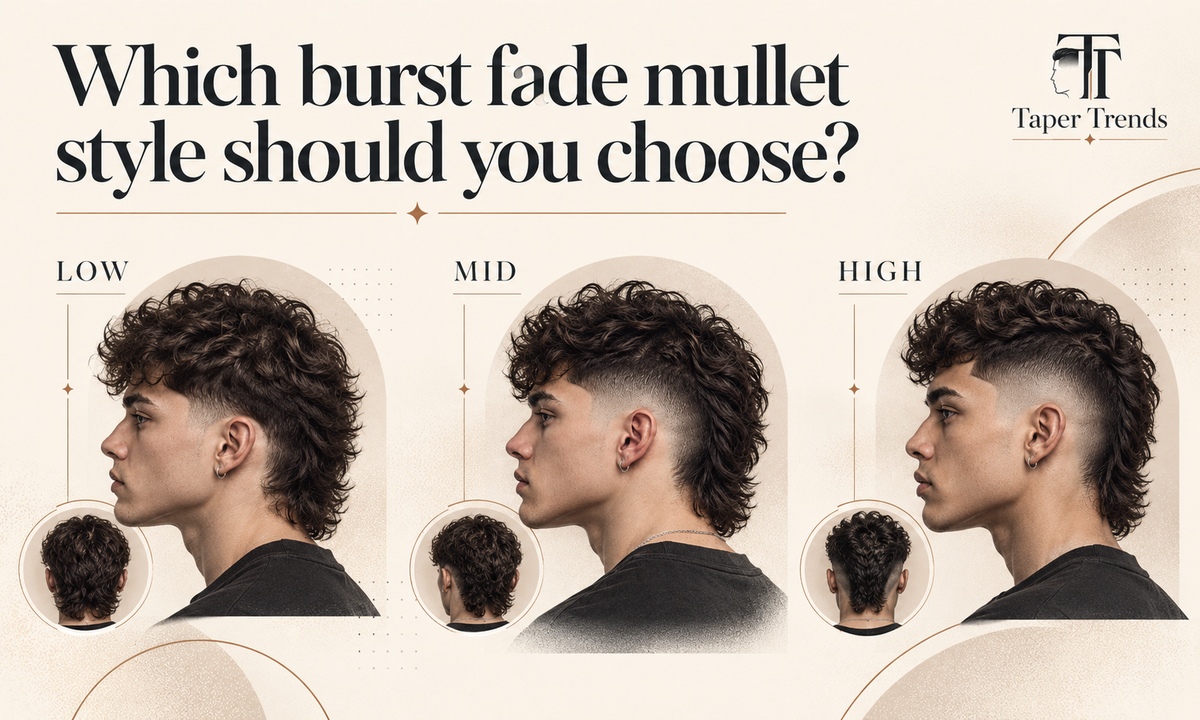
Burst height follows ordinary fade logic. CADMEN defines a low fade as ending near the ear, a mid fade at the midpoint of the side, and a high fade near the top of the side section. On a burst, height controls how far the curve climbs and how much scalp shows. The mid burst fade guide covers the middle setting on its own.
| Height | Where the arc reaches | Look | Trade-off |
|---|---|---|---|
| Low | Close around the ear | Subtle; easiest in conservative settings | Least contrast |
| Mid | About halfway up the side | Clear contrast with side weight left above | Larger area to show regrowth |
| High | Near the top of the side | Strongest contrast | Most scalp on show; least forgiving if the arc is misplaced |
A high burst also removes more of the side hair that visually links the top to the back. That pushes the overall shape closer to a mohawk. The same height-versus-contrast trade-off is laid out angle by angle in our low vs high taper fade comparison and the closer mid vs high comparison. If you land in the middle, the low mid taper fade and the full high taper fade guide both show what each starting point costs you in upkeep.
Skin, shadow, or guard: which endpoint should you choose?
The endpoint is the shortest length at the center of the arc, and it shapes the cut as much as height does. There are three options. Skin goes to bare scalp for maximum contrast. Shadow leaves a trace of very short but visible hair. Guard stops at a set clipper length, giving a softer curve that grows out gently — some barbers call a low-contrast version a burst taper.
“Burst fade” on its own doesn't specify any of these. CADMEN's burst fade guide recommends saying whether you want skin or a guard number at the lowest point.
How much length should you keep at the back?
Back length decides how strongly the cut reads as a mullet. A short back sitting around the collar, often called a baby mullet, looks like a tidy haircut with some attitude. A medium back that clearly passes the collar gives the classic silhouette. A long, layered back moves toward a shag mullet and takes the most time to grow — our guide to keeping real length over a taper covers how those layers are built.
Width counts as much as length. If the back section gets narrowed at trims, the shape slowly turns into a strip.
Which top or fringe shape changes the look most?
From the front, the top does most of the work, even when the arc and back stay the same. A textured fringe looks relaxed and needs little styling; the burst fade textured fringe covers it over this same arc. A quiff or brushback adds height and looks more deliberate. A blunt, straight-across fringe, like the Edgar-style cuts common in burst fade photos, gives a sharper, more graphic outline — and the burst fade Edgar covers that pairing, mullet back included. A forward French crop and a shorter fringe sit somewhere between the two.
Top length also changes how much the burst stands out. CADMEN notes that a very short top makes the burst read as a subtle detail and not the main feature. The top is also the easiest part to change at a later appointment without touching the fade or the back.
Burst fade mullet vs taper mullet, drop fade mullet, and burst mohawk
These names describe different parts of a haircut, which is why they get confused. “Burst” and “drop” describe the path of the graduation. “Taper” and “fade” describe how short it gets. “Mullet” and “mohawk” describe the hair left on the head. One cut can combine a term from each pair — swap the long back for a raised center strip and the same arc becomes a burst fade mohawk.
| Burst fade mullet | Taper mullet | Drop fade mullet | Burst fade mohawk | |
|---|---|---|---|---|
| Fade path | Curve centered behind the ear | Usually low around the ears and nape | Arc keeps dropping toward the neckline | Curve centered behind the ear |
| Shortest point | Skin, shadow, or guard | Short hair, never bare skin | Often skin | Skin, shadow, or guard |
| Hair kept | Top, crown, wide back | Top, crown, back, fuller sides | Top and crown; back depends on how low the drop runs | Narrow strip front to back |
| Time between visits | Short with a skin finish | Longer | Short with a skin finish | Short with a skin finish |
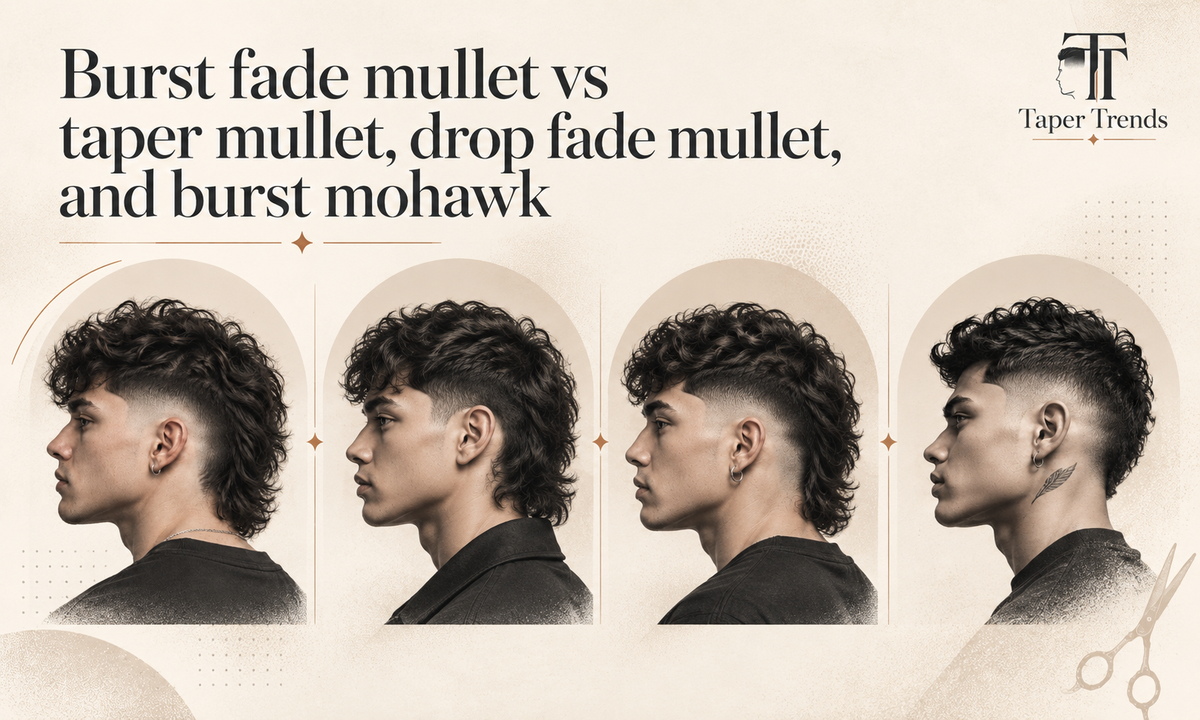
Burst fade mullet vs taper mullet
A taper mullet is the softer, lower-maintenance option. By CADMEN's definition, a taper shortens gradually but never reaches bare skin, while a fade does. CADMEN puts skin fade touch-ups at every one to three weeks. A taper typically holds its clean look for three to five weeks.
A burst with a guard endpoint sits between the two. It has the curve of a burst and the gentler grow-out of a taper. If that's the direction you're leaning, our low taper fade mullet, mid taper fade mullet and high taper fade mullet guides walk through the same silhouette at three different blend heights.
Burst fade mullet vs drop fade mullet
Both curve behind the ear, and some barbers use the two terms interchangeably. The difference is where the line goes next. A drop fade keeps descending behind the ear toward the neckline, with its lowest point at or near the center of the nape. A burst radiates from behind the ear in a fuller half circle and doesn't have to reach the neckline at all.
For a mullet, that difference is practical. A drop that runs low across the nape can remove length the back needs, while a burst leaves the back section alone more easily. Our low taper drop fade guide shows exactly how far that curve travels, and our drop fade mullet guide explains how to stop the drop behind the ear so the back keeps its length. Bring a photo so you and the barber mean the same thing, and see our drop fade vs burst fade guide for the side-and-rear check.
Burst fade mullet vs burst fade mohawk
The fade can be identical. The difference is how much hair survives between the two sides. CADMEN notes the burst pairs often with mohawks because clearing the sides emphasizes the center strip. A mohawk narrows the kept hair to a strip running from front to back, as our low taper fade mohawk guide lays out. A mullet keeps a wider section through the crown and down the nape. Hybrids exist, so judge a reference photo by its back view instead of its label.
What should you tell your barber?
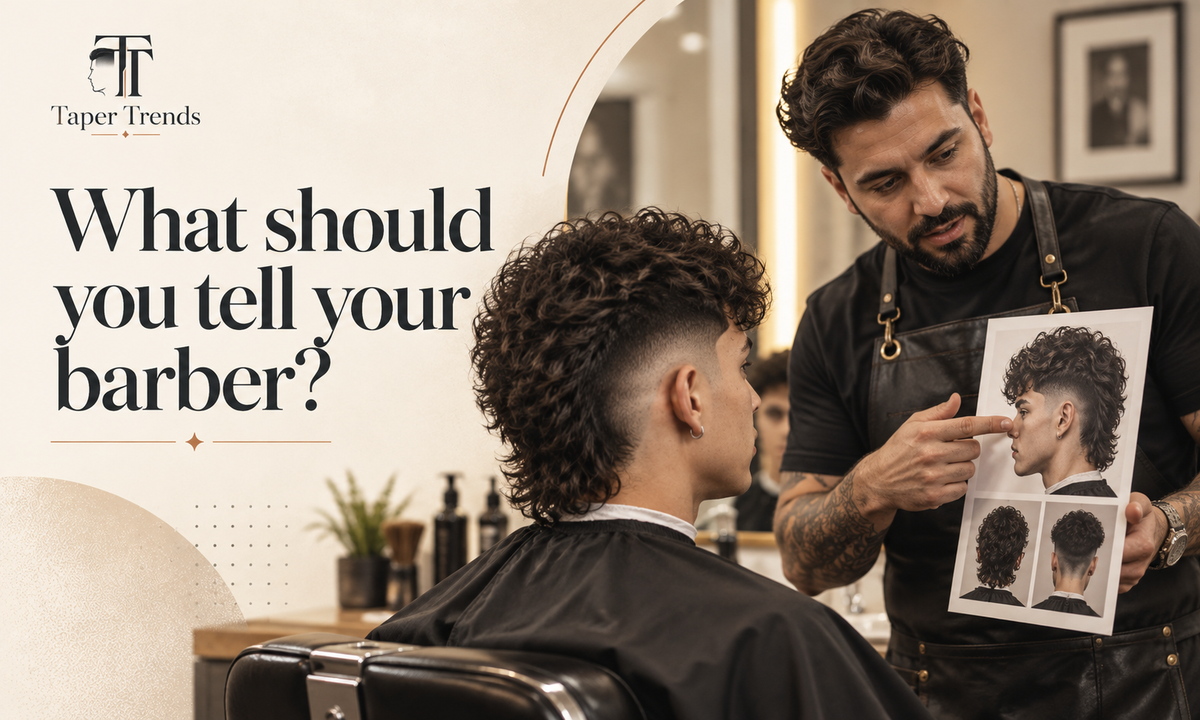
Tell your barber five things before the cut starts: where the burst should sit, how short it should go, how much length to keep on top and at the crown, how long and wide the back should stay, and how to finish the neckline. Then show photos from the side and back. “Burst fade mullet” on its own leaves too many decisions to the barber's guesswork.
What five points should you confirm before the cut starts?
- 1Burst height: low, mid, or high, described relative to your ear.
- 2Endpoint: skin, shadow, or a specific guard number.
- 3Top and crown: target length, and how much weight to leave for movement or curl.
- 4Back: how far down the nape it should reach, and how wide the section stays.
- 5Neckline and beard: tapered, squared, or left natural, and whether the burst should blend into a beard.
Said out loud, the whole brief fits in one sentence:
“A mid burst fade around the ear, taken to a one rather than skin, keep the crown long, leave the back past the collar and keep it wide, and fade the sideburn into the beard.”
Also say how often you can realistically come back. A barber who knows you'll return every five weeks may steer you toward a softer endpoint. If you're keeping the back long, tell the barber plainly that the back length stays unless you both agree otherwise. A quick “tidy up” at the back is the easiest way to lose a mullet. On the beard point, our burst fade with beard guide covers the curved join, and our low taper fade with a beard and high taper fade with a beard guides both cover the sideburn-to-beard blend in the detail one sentence cannot. Our drop fade with beard guide shows the join when the curve runs behind the ear instead, and our skin fade with beard guide shows it with the sides taken to bare skin. When the sides go all the way to bare scalp, our low vs mid vs high skin fade guide helps you pick the right height.
What reference photos should you bring?
Bring three angles. A front-only photo can't show the arc or the width of the back, and those are the two things that define this cut. A side profile shows the height and shape of the curve. A rear view shows how long and wide the back section is. A front or top view shows the fringe and crown styling.
Point at what you like in each photo, whether that's how high the arc climbs, how full the back looks, or the shape of the fringe. Two people can read the same picture very differently.
How do you style a burst fade mullet at home?
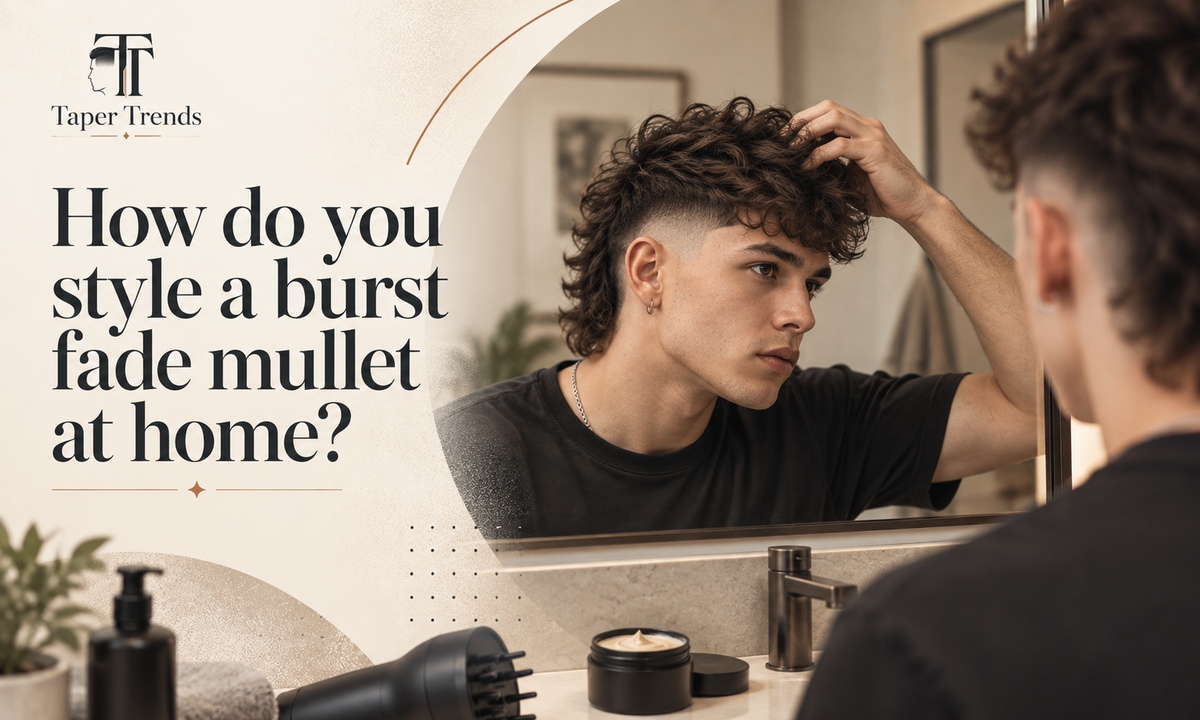
Styling a burst fade mullet mostly means working with your natural texture and keeping the shape the barber created. Product goes into the top and back; the faded sides need nothing. Start with less product than you think you need and add more only if the hair won't hold its direction. Our at-home styling routine for taper fades breaks the same steps down product by product.
How should you style straight or wavy hair?
- 1Start with damp, towel-dried hair.
- 2Warm a small amount of lightweight cream or paste between your palms and work it through the top and back, keeping it off the fade.
- 3For straight hair, blow-dry in the direction you want the hair to sit, lifting at the roots for crown volume.
- 4For wavy hair, scrunch and air-dry or use low heat. Waves usually need less product because the texture already provides shape.
If your waves want more movement than hold, our mid taper fade on wavy hair and fluffy hair guides cover the same drying technique on a longer top.
How should you style curly or coily hair?
- 1Apply curl cream or leave-in conditioner to damp hair so the curls clump together.
- 2Shape with your fingers or a wide-tooth comb or pick. A fine comb breaks up the pattern.
- 3Air-dry, or diffuse on low heat.
- 4On later days, refresh with a little water or leave-in instead of layering on more product.
If the back looks short once it dries, that's usually shrinkage. Resist asking for it to be trimmed to even things out. For a rounder, blown-out finish on the same texture, our curly blowout guide covers the diffusing routine, and our permed top guide covers the version where the curl is chemical rather than natural.
Which product type fits the finish you want?
| Finish you want | Product type | Works best on |
|---|---|---|
| Matte, piecey texture | Clay or matte paste | Straight or wavy tops, textured fringes |
| Soft movement, light hold | Cream or mousse | Wavy hair, longer backs |
| Defined curls | Curl cream or leave-in | Curly and coily hair |
| Height and polish | Pomade or firmer paste | Quiffs and brushbacks |
How do you maintain and grow out a burst fade mullet?
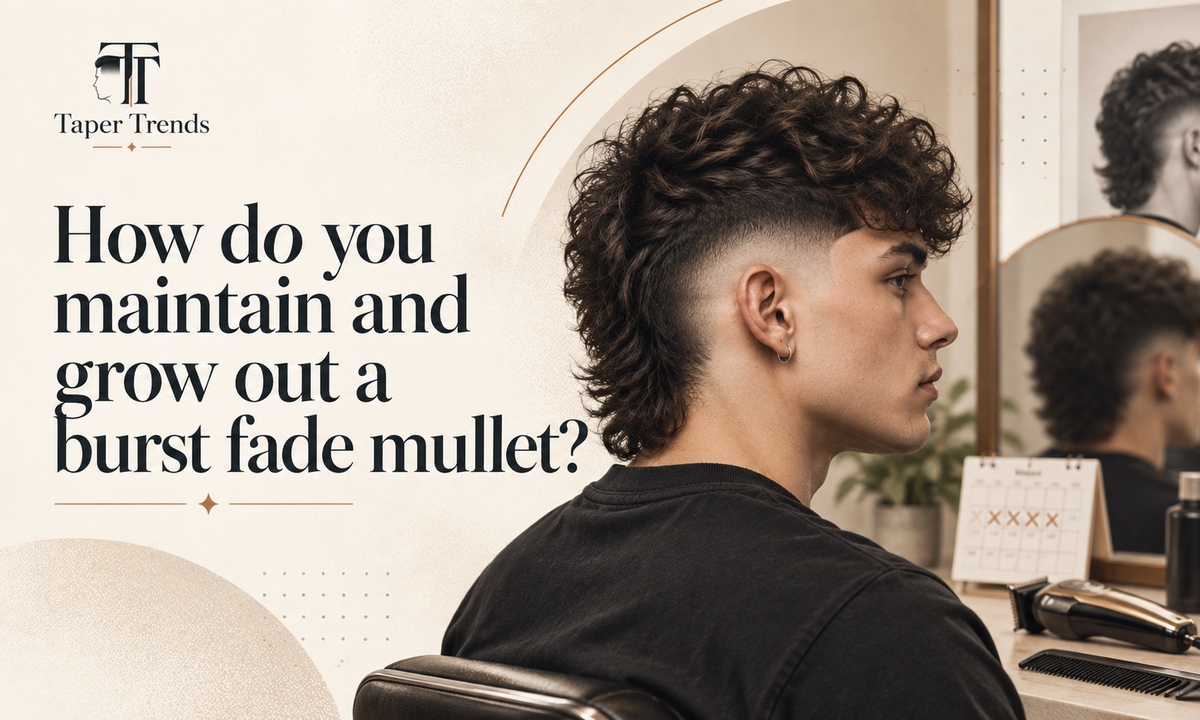
A burst fade mullet runs on two schedules. The faded area around the ear starts looking grown-out quickly and needs regular touch-ups, while the long back only needs occasional shaping. The fade doesn't grow faster than the back. A few millimeters of regrowth simply changes a skin finish far more than it changes hair that's several inches long.
How often should you refresh the fade?
CADMEN's two burst fade guides put the answer at about two to three weeks for a skin-level burst. One guide says most people notice regrowth behind the ear around week two, and the curve blurs noticeably by weeks three to four, recommending a touch-up every three weeks to keep the arc defined. The other adds that clients who want the arc at its sharpest usually rebook every two weeks.
A shadow or guard endpoint stays presentable for longer. How much blur you'll tolerate is your call. Ask whether your shop offers a shorter appointment that covers the sides only.
How do you grow it out without losing the mullet shape?
- 1Tell the barber at every visit that you're growing the crown and back.
- 2Limit cleanups to the burst area around the ears.
- 3Expect an awkward in-between stage at the nape. Trimming the back to get through it puts you back at the start.
- 4Have the layers reshaped occasionally so the back grows into a shape and not a heavy block.
What mistakes make the cut lose its shape?
| What you see | Likely cause | Fix |
|---|---|---|
| Short hair creeping into the back | Arc pushed too far back or dropped toward the neckline | Keep the arc centered behind the ear and let the back grow in |
| The cut looks like a mohawk | Too much width removed behind the ears and through the rear sides | Leave a wider back section at the next few visits |
| Flat, thin crown | Crown thinned too heavily | Stop thinning the crown and let the weight return |
| Back suddenly too short | A routine “tidy,” or curly hair judged while wet | State the back length at every visit; judge curl length dry |
| Arc height isn’t what you pictured | Only a front-view photo was shown | Bring side and rear references |
Burst fade mullet FAQs
Can you grow a burst fade mullet from a buzz cut?
Yes, but it takes patience. Let the crown and nape grow without trims while the barber cleans up only the area around the ears on early visits. The back is the slow part, because it has the furthest to go before it looks like a mullet. Curly and coily hair take longer to show that length because of shrinkage.
Is a burst fade mullet harder to cut than a regular fade?
A burst fade mullet takes more practice than a straight fade, because the barber blends along a curve instead of a horizontal line. CADMEN says a barber already strong at standard fades can usually learn it in a few practice sessions. The mullet adds a second job: leaving the back untouched. Look for a barber whose portfolio shows curved fades.
Can a burst fade mullet be subtle enough for work or school?
A burst fade mullet can be quite subtle. A low burst with a shadow or guard endpoint, a short back, and a tidy top looks far quieter than a high skin version. Whether it's allowed is a separate question. Employers and schools set their own dress codes, so read the actual policy before you book.
Can a burst fade mullet connect to a beard?
Yes. The burst can be blended down through the sideburns into a beard fade, so the side of the head and the beard look like one continuous transition. Mention it at the start of the appointment, because it changes how the barber handles the front of the arc. Also ask whether the shop does hair and beard in the same visit.
Can you switch from a burst fade mullet to a taper mullet later?
Usually, yes. Skip the skin-level touch-ups and let the faded area around the ears grow until there's enough hair for the barber to blend a taper that stops short of bare skin. The crown and back can stay as they are, so you keep the mullet shape while the sides soften.
On the school question above, our burst fade for boys guide covers subtler heights and finishes for a curved arc on a younger kid, mullet back included.
Should you get a burst fade mullet?
Get a burst fade mullet if you want sharp, clearly shaped sides alongside the length and character of a mullet at the back. With a skin finish, you'll also need to accept a touch-up every two or three weeks. Compared with a regular mullet, it gives a cleaner side profile, and you can dial the contrast up or down through height and endpoint.
If upkeep is the sticking point, soften the cut or choose a relative. A taper mullet keeps the same overall shape without bare skin and allows longer gaps between visits. A scissor-cut modern mullet drops the fade entirely and relies on length and layering. If you're undecided, start with a low burst and a guard endpoint — the taper low burst fade is exactly that cut. You can always go shorter at the next appointment, but you can't put hair back.
The bottom line
Burst names the path of the fade and nothing else. The arc is the part your barber owns; the height, the endpoint, the back length and the top are the parts you have to name before the first pass.
Bring a side photo and a back photo, confirm the five points, and say out loud that the back length stays. That one sentence does more to protect a mullet than any label does on its own.
Want more fade guides?
Browse clean, barber-ready breakdowns for every fade shape and hair type.