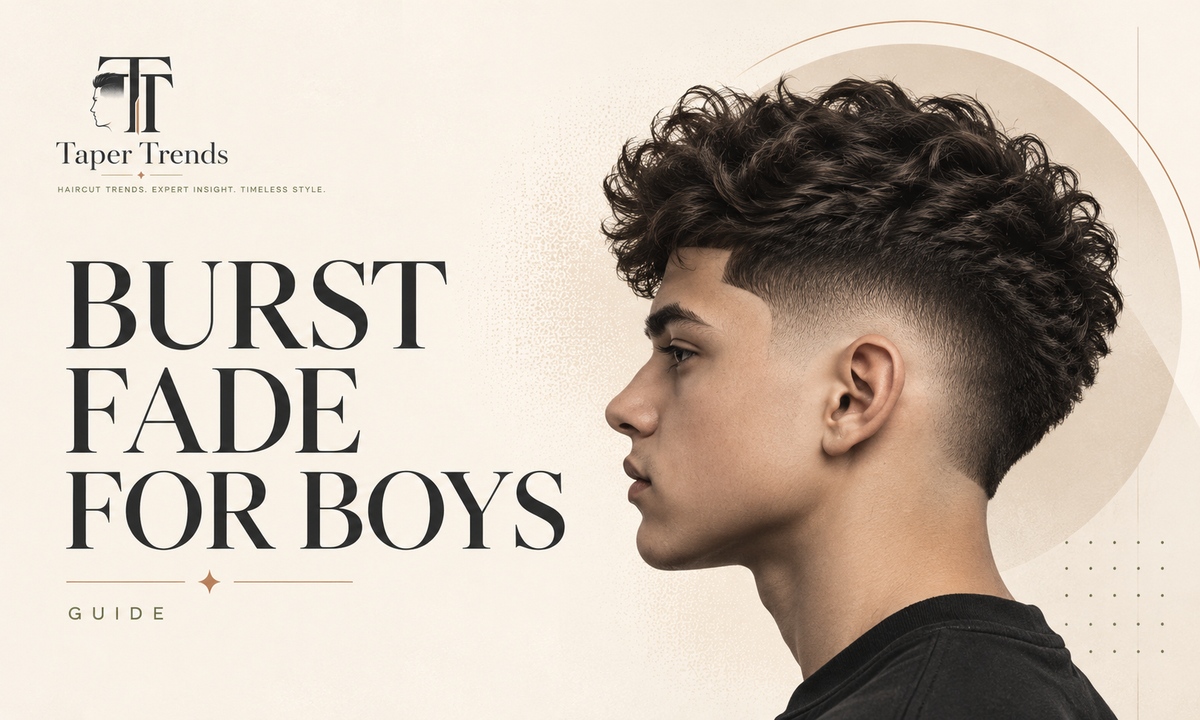
A burst fade for boys is a fade that curves around the ear in a half circle and leaves the back of the head longer than a standard fade would. That is the whole definition. How high the curve goes, whether it fades to skin, and what happens on top are separate choices, and they are where most barbershop misunderstandings start.
This guide takes those choices in the order a barber needs them, ending with exactly what to say once your son is in the chair. For the wider family of blended cuts and how they differ, our complete low taper fade haircuts guide covers every height and texture in one place, and our full burst fade guide walks through the same curved arc on adult hair.
What is a burst fade for boys?
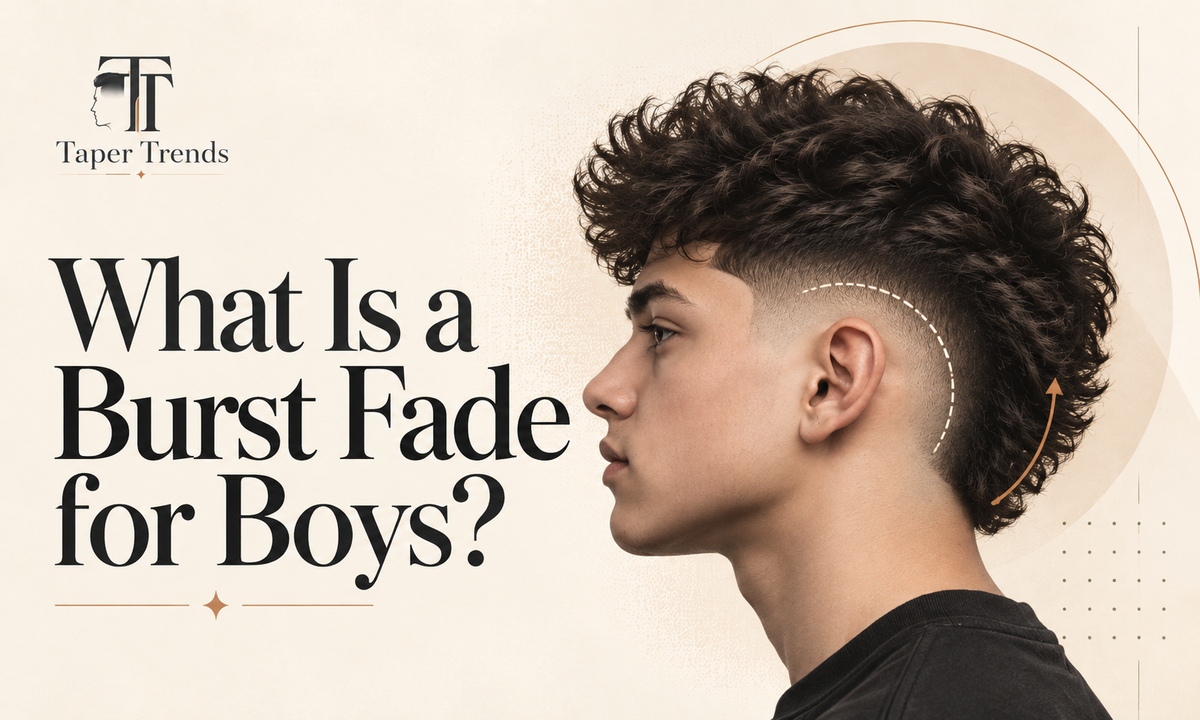
A burst fade is a fade pattern, not a complete haircut — one of several ways to answer the different kinds of fades question at the barbershop. The shortest hair sits in an arc around the ear, and the blend radiates outward from that point like half of a sunburst, which is where the name comes from. Behind the ear, the fade curves away instead of wrapping around the nape, so the back of the head keeps more length.
Because “burst” only describes that shape, the word tells a barber nothing about height, how short to go, or how long to leave the top. A burst fade can sit under a textured crop, curls, a faux hawk, a mohawk, or a mullet. Ask for “a burst fade” and nothing else, and you will usually get that barber's default version, which may look nothing like the photo you saved.
What makes the shape a “burst”?
Three features define it. The shortest point is centered over or just above the ear. The blend fans outward in a curve, toward the temple in front and toward the back of the head behind. And the fade stops behind the ear instead of continuing across the neckline.
That last feature changes the silhouette most. The back of the head and neck stays fuller, which is why burst fades pair so easily with mohawks and mullets. How the nape itself is finished, whether with a soft taper, a squared line, or mullet length, is still your decision.
Burst fade vs taper, drop fade, and regular fade
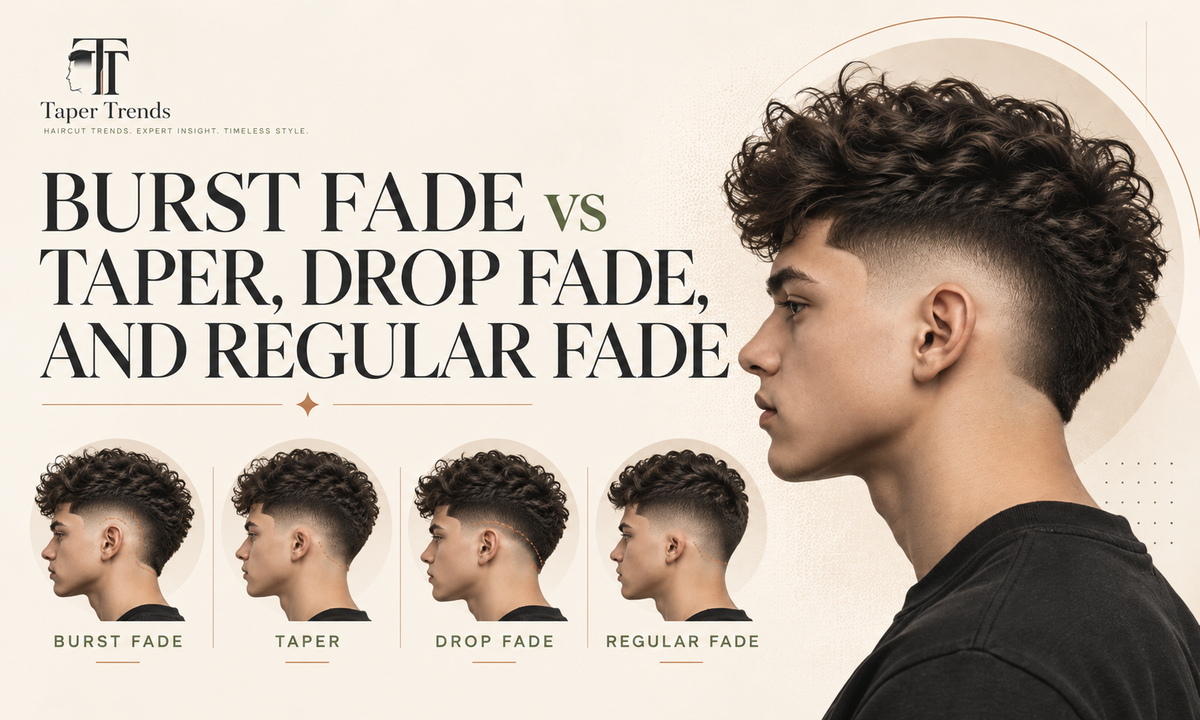
The fastest way to identify a burst fade is to look behind the ear. If the fade curves around the ear and stops, leaving the back longer, it is a burst fade. If the fade dips behind the ear and keeps going across the back of the head, it is a drop fade or a regular fade. If only the edges have been cleaned up, it is a taper. Our drop fade vs burst fade comparison walks through that behind-the-ear check in more detail.
Quick visual comparison
| Cut | Where the shortest hair sits | What happens at the back | Overall look |
|---|---|---|---|
| Burst fade | In an arc around the ear | Fade stops behind the ear; back stays longer | Rounded, side-focused shape |
| Drop fade | Around the ear, dipping lower behind it | Fade continues across the nape | Curved line running down and around the back |
| Regular fade | At a consistent height around sides and back | Back fades as much as the sides | Evenly short sides and back |
| Taper | Sideburns, around the ears, and nape | Most side and back length stays | Neat outline, little bulk removed |
None of these is the better haircut. A taper is the quietest and grows out with the least drama — our low taper fade haircut for boys guide covers that softer, longer-grow-out option in full. A regular fade gives uniformly short sides and back. A burst fade clears the area around the ear while keeping the back fuller, which gives it a more sculpted side profile. When judging a photo online, check whether the short area stops behind the ear and whether the hair at the back of the neck is clearly longer than the hair above the ear. If both are true, it is almost certainly a burst.
Which burst fade height and finish should you choose?
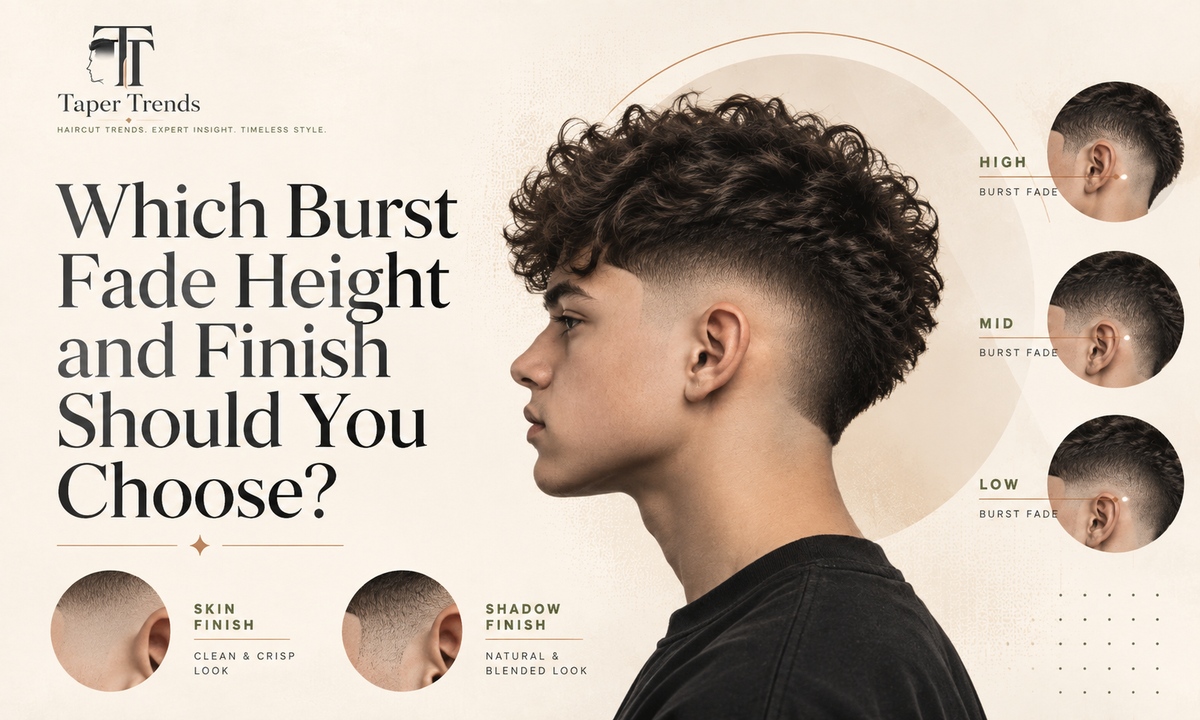
Choosing a burst fade means making two separate decisions. Height is how far up the head the fade climbs: low, mid, or high. Finish is how short the shortest point gets: skin, meaning bare scalp, or shadow, meaning a short clipper guard leaves visible hair. A low shadow burst and a high skin burst look like different haircuts, even though both are burst fades.
If you are unsure, start lower and softer — our taper low burst fade guide covers that gentler starting point in detail. A barber can take a fade higher or tighter next visit in a few minutes. Going the other way means waiting weeks for hair to grow back.
Low vs mid vs high burst fade
| Height | Where the arc peaks | How it looks | How grow-out shows |
|---|---|---|---|
| Low | Just above the ear | Most side coverage, softest contrast | Least obvious |
| Mid | Around the temple, partway up the side | Clearly visible arc, moderate contrast | Noticeable but gradual |
| High | Near where the side curves into the top | Most scalp on show, sharpest contrast | Most obvious |
Barbers do not all place these heights at exactly the same spot, so “mid” at one shop can look like “low-mid” at another — the same terminology gap our mid burst fade guide walks through. The simple fix is to touch the spot on your son's head where the arc should peak.
Age is not the deciding factor. Comfort is. Some kids love the clean feel of very short sides, and some hate how exposed it feels. Budget for touch-ups matters too, because higher fades lose their crispness faster.
Skin burst vs shadow burst
A skin burst takes the shortest section down to bare scalp, usually with a zero-gap clipper or a foil shaver. It has the strongest contrast and looks sharpest on cutting day, but it also looks grown-in soonest. Some children dislike the feel of bare skin at the sides, especially in cold weather. For the three skin heights side by side, our low vs mid vs high skin fade comparison shows where each bare section stops.
A shadow burst leaves a thin layer of visible hair at the shortest point. On standard clipper guard sets, a #0.5 leaves roughly 1/16 inch and a #1 roughly 1/8 inch. The contrast stays clear but softer, and the cut grows out more gradually. Height and finish combine freely: a low shadow burst is subtle and forgiving, and a high skin burst is dramatic and high-maintenance.
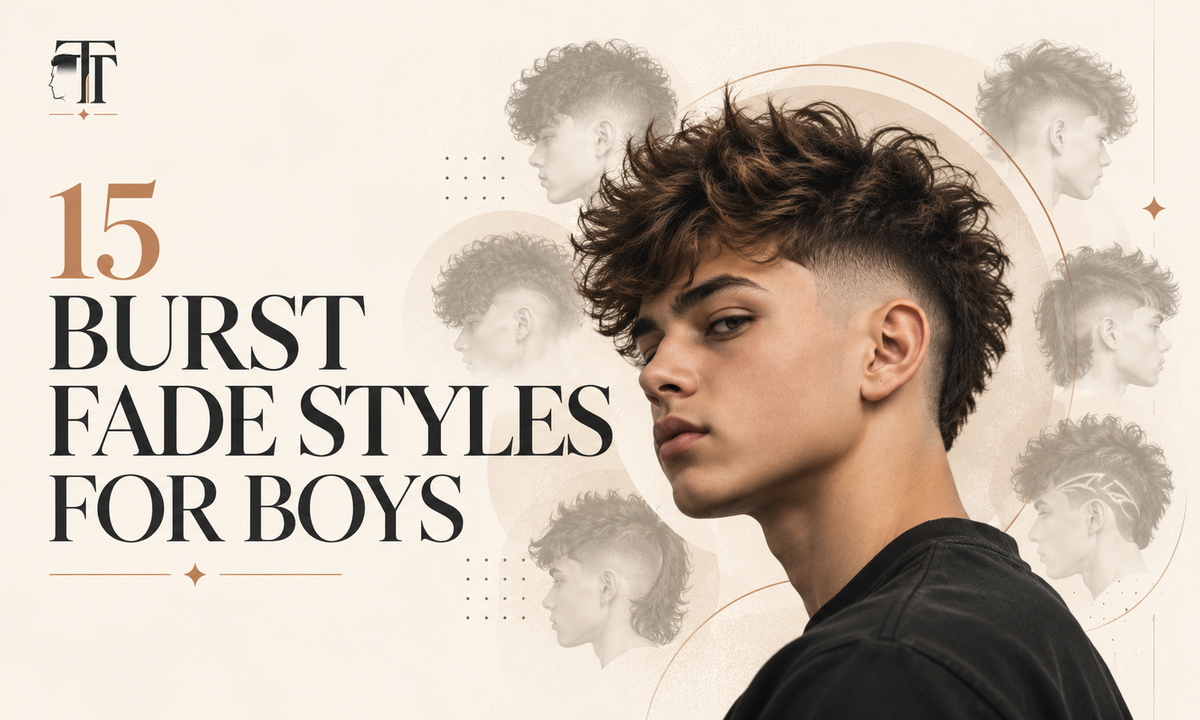
15 burst fade styles for boys
Each style below changes something that actually matters: height, finish, top shape, hair texture, or length at the back. The names are descriptions rather than official barbering terms, so bring a photo along with the name.
Classic and easy-to-style burst fades
1. Low shadow burst fade. The gentlest version. The arc stays just above the ear, the shortest point keeps visible hair, and the top is short and textured. A good first burst fade for a child who is unsure about short sides.
2. Classic mid burst fade. A mid-height arc under a short textured top. The curve is easy to see from the side without the stark contrast of a high fade, which makes it a sensible middle ground.
3. Short textured crop with a burst fade. The top is cut short, often around one to two inches, with texture worked in so it sits piecey rather than flat. It needs little more than a quick hand-through in the morning — the same low-effort top behind our burst fade textured fringe guide.
4. Crew cut with a burst fade. A classic crew cut top, slightly longer at the front and shorter toward the crown, over burst-faded sides. It is tidy, familiar, and needs only a comb.
5. Short fringe with a burst fade. The front is left long enough to fall forward in a short fringe while the burst keeps the sides clean. It sits best on straight or wavy hair that naturally falls forward.
Burst fades for straight, wavy, curly, and coily hair
6. Straight-hair textured burst. Straight hair shows every blend line, so the fade has to be smooth. The barber usually point-cuts texture into the top so it does not sit as one heavy block above the arc — our burst fade for straight hair guide runs through nine versions of that top, and our drop fade for straight hair covers the same textured tops over a line that dips behind the ear.
7. Wavy burst fade. Waves need enough top length to show their pattern, often around two inches. A low or mid burst keeps the contrast from overpowering a naturally loose top; the same length logic behind our low taper fade wavy hair guide applies here too.
8. Curly burst fade.The burst frames a rounded crown of curls. Many barbers who cut curls judge top length on dry hair, because curls spring up as they dry. Leave enough length for the curls to form — our burst fade curly hair guide covers styles by silhouette.
9. Coily burst fade.Coily hair can shrink substantially from its stretched length, so a top that looks long wet can sit much shorter dry. A barber experienced with textured hair will cut conservatively and connect the crown smoothly into the fuller back — our burst fade for Black men guide goes deeper on coils, twists, and locs for an older sibling or dad matching the cut.
10. Thick-hair burst with controlled crown weight. Dense hair can bulge at the crown once the sides are faded. The barber removes some bulk from the crown and upper sides so the top does not look wider than the fade below it.
Faux hawk, mohawk, mullet, and design versions
These are top and back hairstyles paired with a burst fade, not other names for the burst itself.
11. Faux hawk burst fade. The center strip is left longer and pushed up toward the middle while the burst clears the sides. It can be worn flat on school days or pushed up with a little product, and it sits close in spirit to our burst fade mohawk guide.
12. Burst fade mohawk.A narrower, taller strip down the center, usually styled upright with product. Keep the fade height moderate on a child's head, since a very high burst can make the strip look thin and severe. The full burst fade mohawk guide covers the barber brief and grow-out in detail.
13. Short burst fade mullet. Burst-faded sides, a short to medium top, and a back left a few inches longer so it rests on the neck. The back needs occasional trimming to look deliberate rather than overdue.
14. Longer burst fade mullet. The same idea with more length at the back, often past the collar. The contrast is the point, but it also means the sides show grow-out quickly while the back keeps lengthening. Our burst fade mullet guide covers both lengths and the settings that create each version, and our drop fade mullet guide shows the same back under a curve that dips behind the ear.
15. Burst fade with a line or simple design. A single line or simple shape cut into the faded area with a trimmer. Designs blur quickly as hair grows back, and some schools restrict shaved designs, so check the rules first. Our low taper fade design ideas guide has more placement inspiration if you want to see what a carved line can look like before committing.
How does hair type change a boys' burst fade?
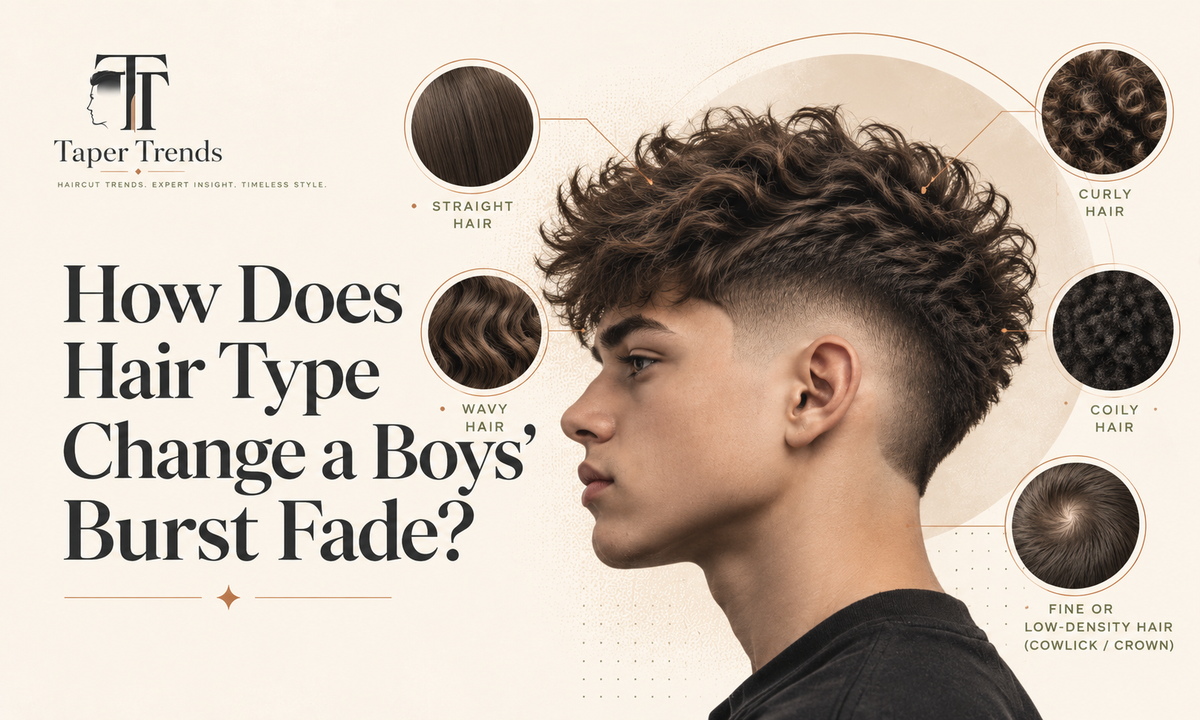
Hair texture, density, and growth direction shape a boys' burst fade more than face shape does. The same instructions produce different results on fine straight hair and dense coily hair, because blend lines, volume, and curl shrinkage behave differently. That is why a reference photo on a very different hair type can mislead both you and the barber.
| Hair type | What changes | What to ask for |
|---|---|---|
| Straight | Blend and weight lines are easy to see | A smooth blend and texture on top |
| Wavy | The wave pattern needs length to show | Enough top length to keep the waves |
| Curly | Curls shrink as they dry | Top length judged on dry hair |
| Coily | Shrinkage can be substantial | A conservative cut from a textured-hair barber |
| Fine or low density | Aggressive fading can look sparse | A lower fade and minimal thinning |
Straight and wavy hair
Straight hair makes the burst crisp but unforgiving. A rushed blend or a heavy ridge right above the arc shows from across a room, so ask for texture on top. With wavy hair, the bigger risk is cutting the top so short that the waves disappear, so agree on a length before the scissors come out. Our burst fade for straight hair guide covers the blend-line problem in more depth.
Curly and coily hair
Plan the top around how the hair sits once dry, not how it looks wet or stretched. Leave enough length for the curl pattern to form, and ask the barber to connect the crown into the longer back so the head shape stays rounded. For tightly coiled hair, a barber who regularly cuts textured hair is worth seeking out — our burst fade curly hair and burst fade for Black men guides both cover that consultation in more detail.
Fine hair, low density, cowlicks, and crown growth
Fine or thinner hair can look patchy under a high skin fade, so a low or mid shadow burst is usually safer — the same reasoning behind our guide to fine and thick hair on a low taper. Point out cowlicks and crown swirls before the cut starts so the barber can adjust where the arc sits.
How do you ask a barber for a boys' burst fade?
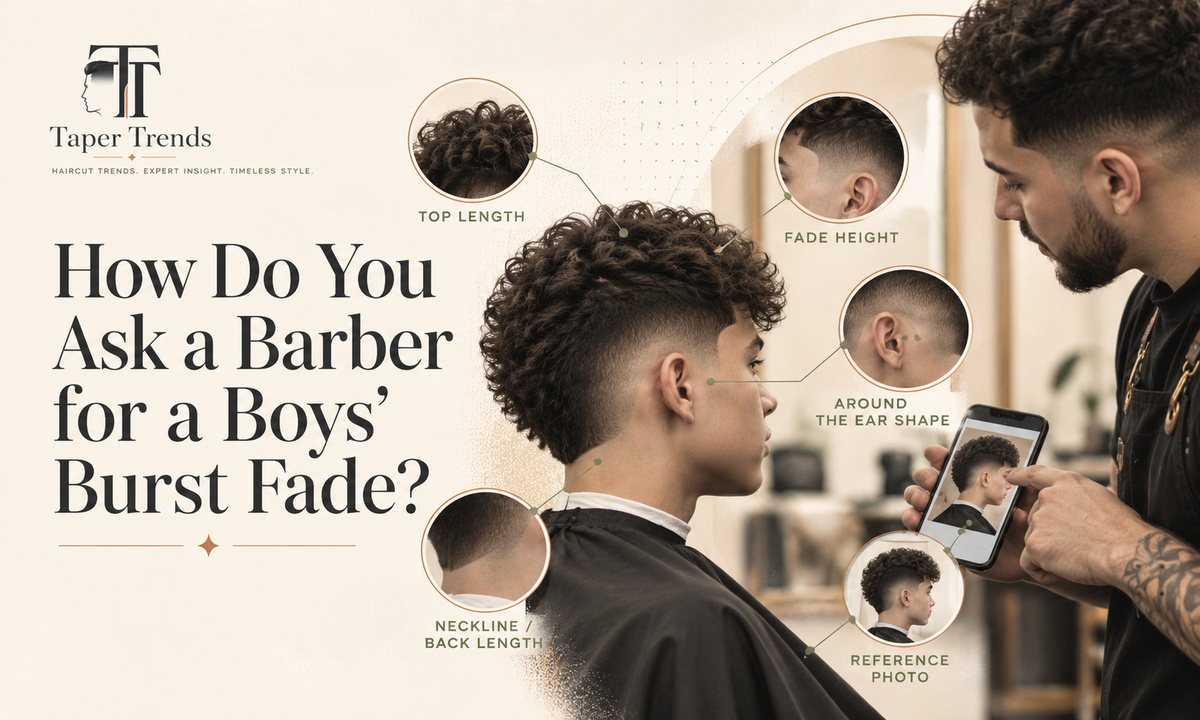
To ask for a boys' burst fade, bring a reference photo and answer six questions before the clippers start. Those answers cover everything the style name leaves out, and they remove most of the guesswork behind a disappointing cut. If you are also weighing a lower-contrast option for a boy who dislikes short sides, our mid taper fade for boys and high taper fade for boys guides walk through the same barber-conversation approach for those heights.
The 6 details to specify before the clippers start
- 1.Fade height: low, mid, or high. Point to where the arc should peak.
- 2.Shortest length: skin, or a guard number such as #0.5 or #1 for a shadow finish.
- 3.Top length and direction: roughly how many inches, and whether it goes forward, up, or to the side.
- 4.Behind the ears: how far back the fade reaches before it stops.
- 5.Back and nape: kept full, softly tapered, squared off, or left long for a mullet.
- 6.Line-up or design: a sharpened hairline, a simple line, or nothing extra.
Save a note like this on your phone and show it before the cut:
“Burst fade, low to mid, #1 at the shortest point. About two inches on top with texture, pushed forward. Stop the fade just behind the ear, keep the back full with a soft taper at the neck. No line-up, no design.”
What reference photo should you bring?
Bring at least two angles: a side view showing the arc around the ear, and a back or three-quarter view showing how the fade finishes. Choose hair similar in texture and thickness to your son's, styled the way he will actually wear it. Then tell the barber which parts you like, such as the height or the back shape, and ask them to adapt the rest to his hair.
How do you style a burst fade for boys?
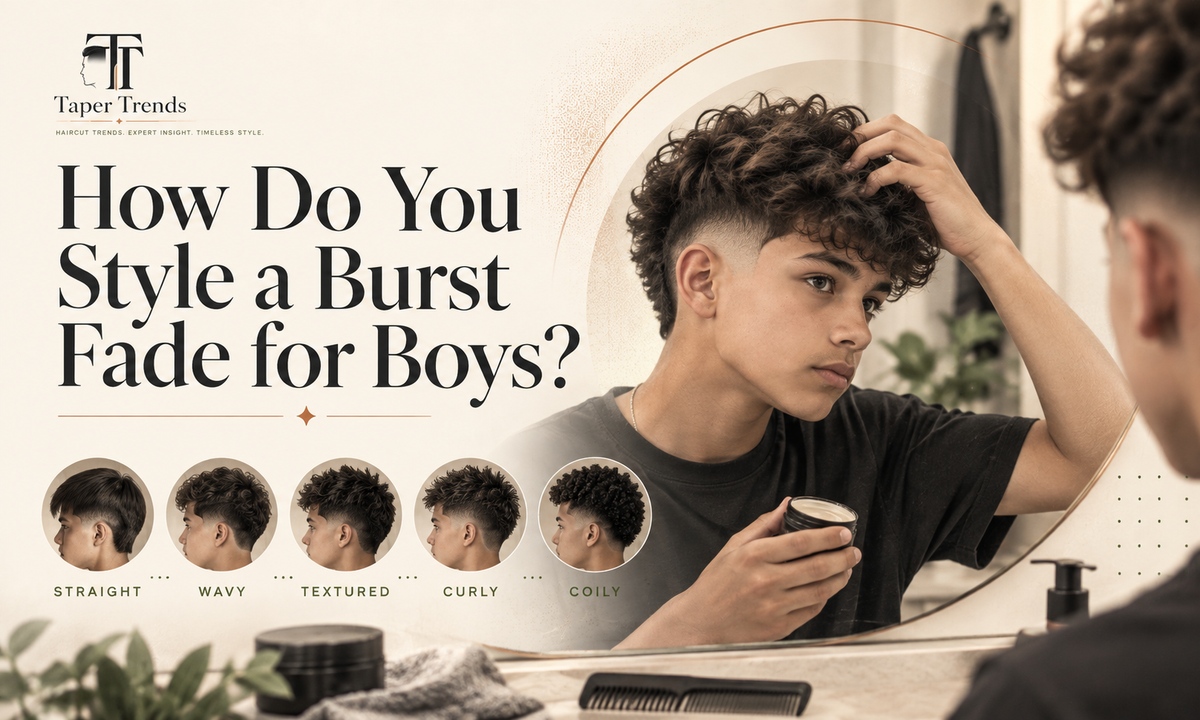
The faded sides of a burst fade need no daily styling. The routine depends entirely on the hair left on top, and for most short tops it takes under a minute. Keep products simple, use them only when the hair will not sit the way your son likes, and pick a routine he can eventually do himself. Our step-by-step guide to styling a low taper fade walks through the same basic routine by texture if you want more product-by-product detail.
Straight, wavy, or short textured tops
- 1.Start with slightly damp hair, after washing or with a splash of water.
- 2.Push the top into place with fingers or a comb in the direction it was cut.
- 3.If it will not hold, work in a small amount of light styling cream. Save firmer products for a faux hawk or mohawk.
When washing, the American Academy of Dermatology advises massaging shampoo gently into the scalp rather than the length of the hair, and wrapping hair in a towel instead of rubbing it dry.
Curly and coily tops
Curly and coily tops need gentle handling more than product. The same AAD guidance recommends combing damp hair with a wide-tooth comb, especially curly hair, without yanking, since pulling can break hair or pull it out. It also advises that children with dry or curly hair use a conditioner.
- 1.Wash or rinse, focusing shampoo on the scalp.
- 2.Apply conditioner and detangle gently with a wide-tooth comb or fingers while damp.
- 3.If curls look dry or frizzy, add a little leave-in conditioner or curl cream.
- 4.Air-dry where possible, or use low heat.
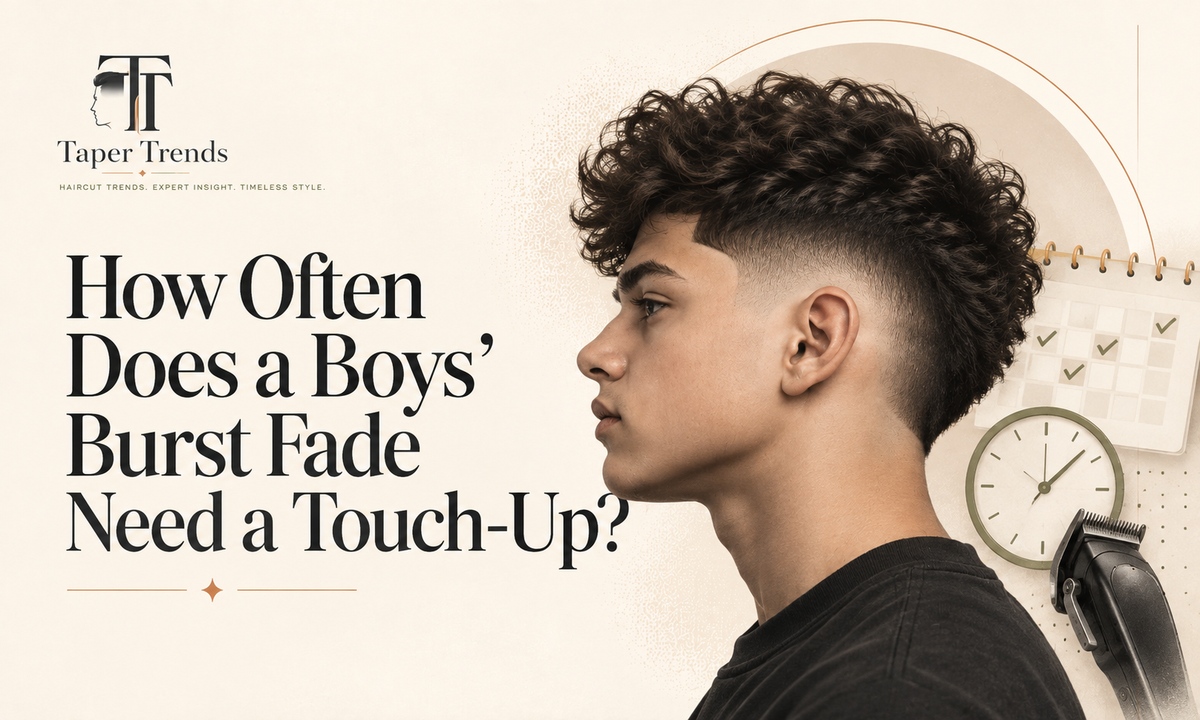
How often does a boys' burst fade need a touch-up?
There is no universal schedule for burst fade touch-ups. Many barbers suggest roughly every two to four weeks to keep a burst looking freshly cut, with skin and high burst versions at the shorter end. Families comfortable with a softer, grown-in look can often wait longer, especially with a low shadow burst, and growth rates differ from child to child.
| Burst fade version | Typical window to keep it crisp | Why |
|---|---|---|
| High skin burst | Around 2 weeks | Bare scalp shows new growth quickly |
| Mid burst, skin or shadow | Around 2 to 3 weeks | The arc softens at a moderate pace |
| Low shadow burst | Around 3 to 4 weeks, sometimes longer | Starts close to grown-in length |
| Burst with a design | Often within 2 weeks | Fine lines blur first |
These windows are general barber guidance, not rules. The practical test is simpler: when the arc no longer reads clearly from the side, it is time.
What grows out first?
The shortest area around the ear loses definition first, because a little growth changes very short hair far more visibly than it changes a longer top. A skin burst shows this sooner than a shadow burst, which starts closer to grown-in length. Next, extra bulk on the sides and crown starts to blur the arc into the rest of the hair. The top can usually go longer between cuts than the sides.
Common burst fade mistakes and edge cases
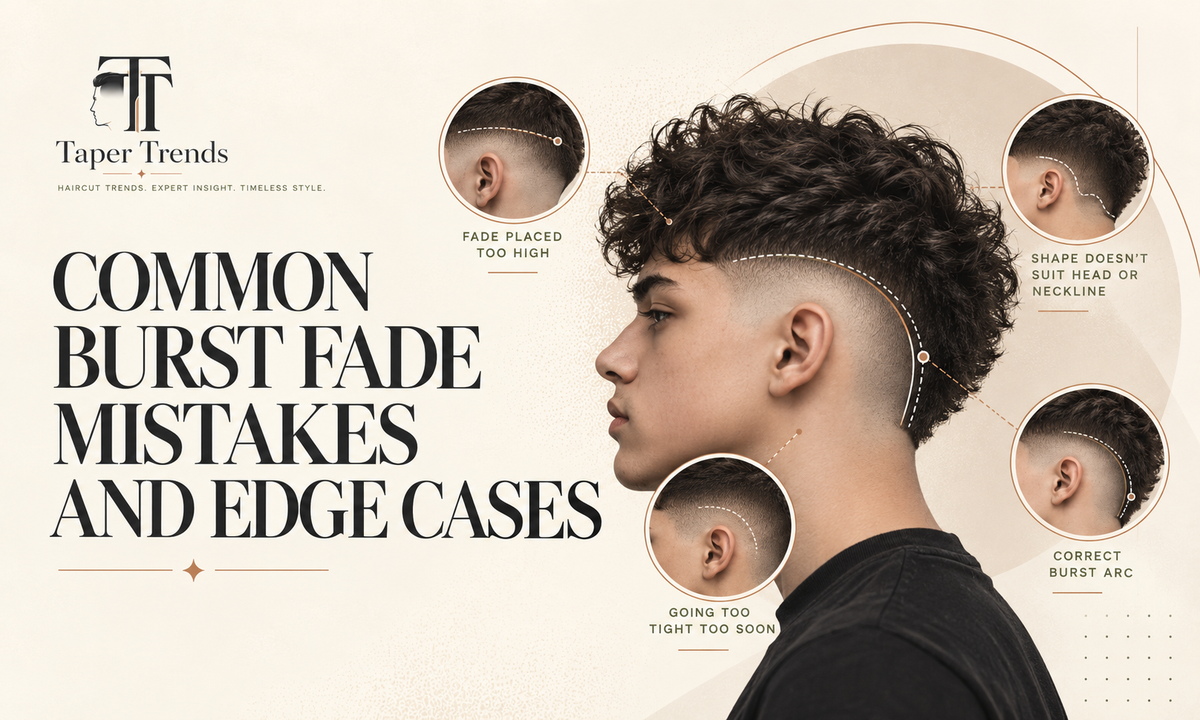
Most disappointing burst fades come from a gap between what the parent pictured and what the barber heard.
| Mistake | What it looks like | How to prevent it |
|---|---|---|
| Arc taken higher than intended | Far more scalp than expected | Point to the exact peak height |
| Fade run too far into the back | Looks like a drop or regular fade | Say where the fade stops behind the ear |
| Skin finish on a child who dislikes bare scalp | Upset child, cold or itchy sides | Choose shadow for a first burst |
| Cowlick or crown swirl ignored | Tufts that will not lie flat | Point out growth patterns first |
| Fine hair over-thinned | Top looks sparse | Ask the barber to keep density |
| Curly top cut to wet length | Top sits much shorter once dry | Ask for length judged dry |
| Hairline pushed back for a sharp line-up | Front looks receded as it grows | Ask to follow the natural hairline |
| Reference photo copied literally | Result does not match the photo | Use similar hair and let the barber adapt |
When might a different fade be easier?
A burst fade is not the right answer for every child. A low taper suits a boy who dislikes very short sides or a family that wants fewer barber visits, since the sides stay longer and grow out quietly. A regular low fade — covered alongside every other option in our different kinds of fades guide — gives uniform coverage without the sculpted arc. A plain crew cut is easiest when a child just wants something neat that needs no thought.
Frequently asked questions about burst fades for boys
Is a burst fade suitable for younger boys?
Yes, age alone does not decide whether a burst fade suits a boy. What matters more is whether he can sit still through clipper work near his ears, whether he likes short sides, and how often the family wants to visit the barber. A low or mid shadow version is the most forgiving first burst fade.
Can boys with curly hair get a burst fade?
Yes, curly hair works well with a burst fade. The barber should judge top length on dry hair, since curls shrink as they dry, and connect the crown smoothly into the fuller back. A barber experienced with curly and coily hair makes a noticeable difference.
Does a burst fade work on straight hair?
Yes, and the arc shows very clearly on straight hair. The trade-off is that straight hair also shows every uneven blend line, so the fade needs careful work and some texture on top to avoid a heavy ridge above the faded area.
Does a burst fade have to go down to skin?
No. “Burst” describes the curved shape of the fade, not how short it gets. A shadow burst leaves visible hair at the shortest point, which looks softer and grows out more gradually than a skin burst.
Is a burst fade allowed at school?
It depends on your school's current dress and grooming policy, so check the handbook. Shaved designs and extreme shapes are the parts most likely to be restricted. Many U.S. states have passed a version of the CROWN Act, which bans race-based hair discrimination, including in K-12 public schools, though coverage varies and these laws protect hair texture and protective styles rather than any particular haircut.
Can a burst fade be turned into a taper or regular fade later?
Usually, yes. As the short sections grow back, a barber can reshape the cut into a taper or a regular fade, although a taper may need a few weeks of extra length at the sides first — our low taper fade haircut for boys guide covers that softer, longer-grow-out option. With a mohawk or mullet, decide up front whether to keep the long sections.
Before the appointment
Save two reference photos, a side view and a back view, on hair similar to your son's. Write down the six details below. For a first burst fade, start with a low or mid shadow version. You can always go higher and tighter next visit, once you both know how he feels about it.
- Two reference photos: a side view showing the arc, and a back or three-quarter view showing where it stops
- Fade height: low, mid, or high
- Shortest length: skin, or a guard number for a shadow finish
- Top length and direction
- How far behind the ear the fade goes before it stops
- How the back and nape should be finished
- Line-up or design, and whether school rules allow it
The bottom line
A burst fade for boys is a shape, not a formula: an arc around the ear that stops behind it, leaving the back longer than a standard fade. Height and finish are separate calls, and hair type decides how the top is cut, not the other way around.
Settle the six details before the clippers start, start low and soft for a first burst, and book the next touch-up when the arc stops reading clearly from the side. If a burst turns out not to be the right fit, a mid taper or high taper grows out just as gracefully.
Want more taper fade guides?
Browse clean, barber-ready breakdowns for every hair type.